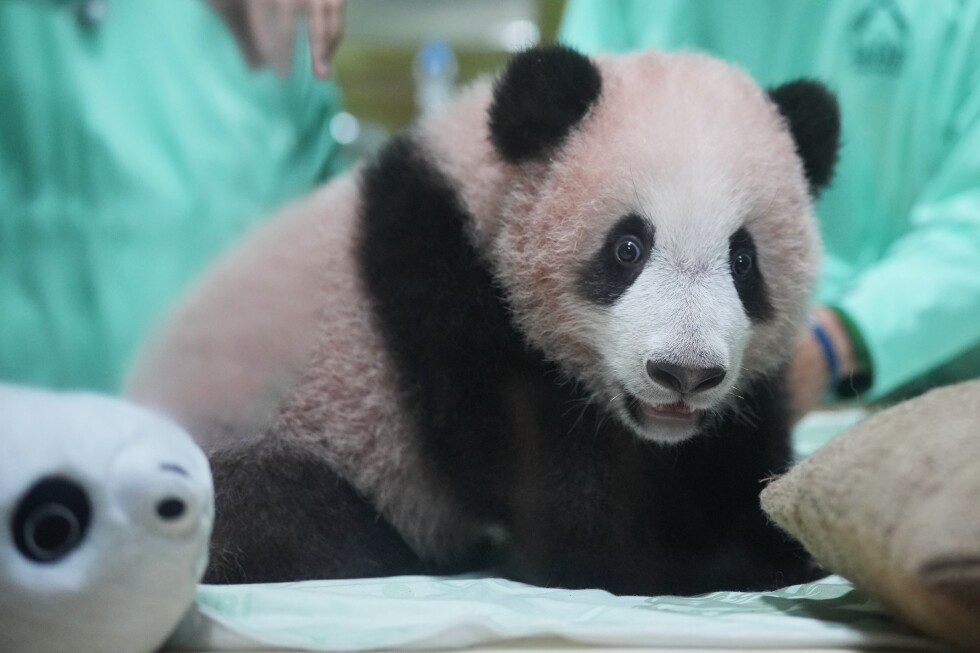
CISARUA, Indonesia — The very first giant panda cub ever born in Indonesian territory has passed a routine health assessment, with veterinary specialists confirming the young animal is developing steadily and in excellent health, just weeks ahead of his first public appearance at the Indonesian Safari Park outside Jakarta.
Named Satrio Wiratama and affectionately nicknamed Rio by caretakers, the 169-day-old cub has already hit key developmental milestones: he can walk independently, climb onto his mother’s back for play, and has begun nibbling on nutrient-rich bamboo shoots. He currently weighs 10 kilograms, or 22 pounds, putting his growth slightly ahead of the average pace for giant panda cubs his age, particularly when it comes to tooth development.
On Friday, veterinary teams carried out comprehensive checks of Rio’s sensory functions, including hearing and vision. All tests confirmed his senses are fully active, leaving veterinarians optimistic about his ability to adapt to the presence of crowds when he opens to visitors later this month.
“What matters most is that all of Rio’s senses are functioning properly,” explained Bongot Huaso Mulia, the lead veterinarian monitoring Rio’s growth. “He can already process changes in his environment, assess new surroundings, and adapt to the presence of more people, even tolerating moderate levels of noise. We will continue his gradual acclimation training to prepare him for public viewings.”
Rio was born on November 27 to 15-year-old parents Hu Chun and Cai Tao, who arrived in Indonesia in 2017 as part of a 10-year giant panda conservation partnership between Indonesia and China. The pair reside in a purpose-built enclosure, called the Panda Palace, at the Cisarua park located 70 kilometers, around 43 miles, outside Jakarta in West Java. The 5,000-square-meter hilltop facility features a three-tier living space, an elevator, dedicated sleeping quarters, on-site medical facilities, and separate indoor and outdoor play areas for the bears.
The two adult giant pandas have already developed a large following among Indonesian wildlife enthusiasts, and Rio’s birth sparked even more excitement across the country. Panda fans have flooded the park’s social media channels with requests for an early public appearance, making Rio’s debut one of the most anticipated local wildlife events of the year.
Rio’s name carries symbolic weight, representing the shared hope, resilience, and joint conservation commitment between Indonesia and China for protecting endangered species. As a global icon of wildlife conservation and China’s unofficial national mascot, giant pandas have long played a role in diplomatic exchange through Beijing’s international loan programs, a practice widely referred to as “panda diplomacy.”
Giant pandas are notoriously difficult to breed in captivity, so every successful birth is a major milestone for global conservation efforts. Fewer than 1,900 giant pandas remain in the wild, scattered across the mountainous habitats of China’s Sichuan, Shaanxi, and Gansu provinces. Rio was conceived through artificial insemination, a rare success that carries important implications for research.
According to Aswin Sumampau, president director of Taman Safari Indonesia, Rio’s birth does more than just add a new beloved member to the park’s panda family. It also contributes valuable new genetic data on giant pandas that will advance collaborative research between Indonesian and Chinese conservation scientists.
“This is the moment we have all waited years for,” Sumampau noted. “It is a small but meaningful victory for our team. We successfully bred a species that is extremely challenging to reproduce in captivity. To put this achievement in perspective, no giant panda cubs have been born in any ex-situ conservation facility around the world for the past two years. Taman Safari is proud to have achieved this milestone.”