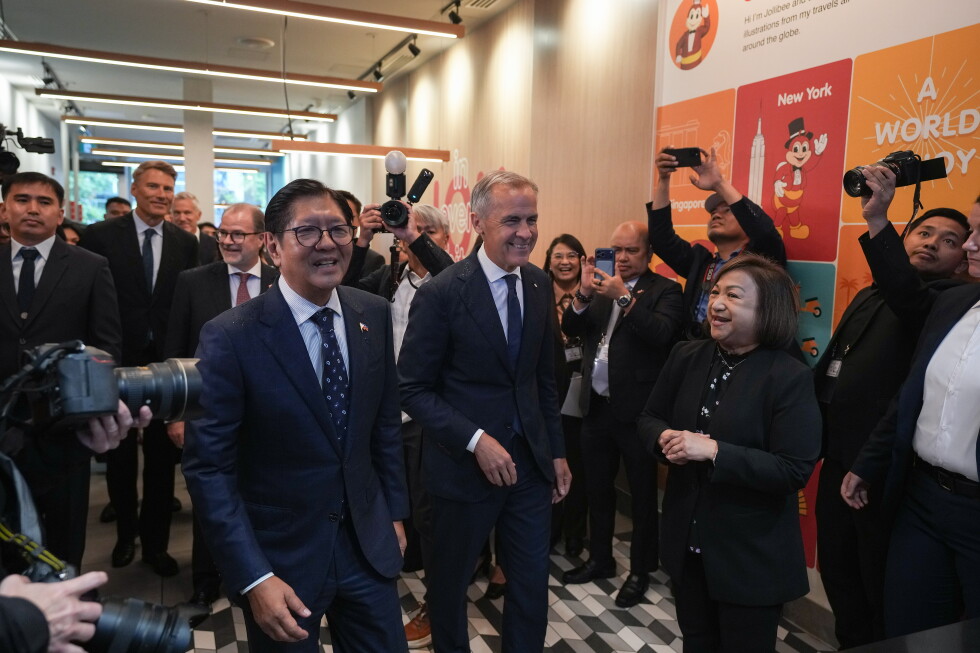
VANCOUVER, British Columbia – In a diplomatic move aligned with Canada’s broader strategy to expand economic engagement beyond its traditional reliance on the United States, Canadian Prime Minister Mark Carney and Philippine President Ferdinand Marcos Jr. have committed to strengthening bilateral collaboration across trade, energy, and security sectors during their meeting on Thursday. This agreement marks a key milestone in Canada’s deepening involvement in the dynamic Indo-Pacific region.\n\nAddressing the long-standing people-to-people connection between the two nations, Carney emphasized that the 1 million-strong Filipino community in Canada forms an integral social and economic backbone of the country. He noted that a targeted strategic partnership between Ottawa and Manila would deliver mutual gains on two pressing global priorities: bolstering regional energy security and expanding access to critical minerals, resources that are essential to the global transition to clean energy and advanced manufacturing supply chains.\n\nMarcos echoed Carney’s positive outlook, stating that the two nations share aligned global ambitions and common strategic goals that create a strong foundation for enhanced cooperation.\n\nDuring the talks, the two leaders laid out clear next steps for bilateral collaboration: they formally committed to advancing negotiations toward a comprehensive Canada-Philippines free trade agreement, deepening defense and maritime cooperation across the Indo-Pacific, and leveraging the tight-knit Filipino-Canadian community to drive stronger people-to-people and economic ties.\n\nCurrently, Canada is pursuing two parallel trade tracks in Southeast Asia: a bilateral deal with the Philippines and a separate broader agreement with the Association of Southeast Asian Nations (ASEAN) bloc. Carney has set an ambitious target to finalize these negotiations ahead of his scheduled November visit to Manila, where Marcos will assume the rotating chair of the annual ASEAN summit, providing a high-profile platform to announce progress on trade cooperation.\n\nThis push for diversified trade ties stems from a deliberate policy shift by the Carney administration. The prime minister has set a national goal to double Canada’s non-U.S. exports over the next 10 years, a target shaped by ongoing trade frictions and persistent American tariffs that have created uncertainty for cross-border investment and slowed business confidence in bilateral trade channels.
标签: Asia
亚洲
-

Campaigners and scholars demand answers from British Museum following disclosures
A bombshell investigation by independent outlet Middle East Eye has pulled back the curtain on the British Museum’s deceptive practices around changes to its Middle Eastern exhibits, triggering widespread calls for an independent probe into alleged ethical breaches, political interference, and misleading public statements. The report, published Wednesday, confirms that the institution’s 2024 decision to scrub the terms “Palestine”, “Palestinian”, and “Israeli occupation” from its public displays was not, as museum leadership had repeatedly claimed, the outcome of audience research or a routine gallery update — it was a direct response to months of targeted lobbying by pro-Israel advocacy groups.
Internal documents and email correspondence obtained by MEE directly contradict multiple public statements made by British Museum director Nicholas Cullinan earlier this year. In February, Cullinan claimed he had no knowledge of a formal complaint letter submitted by UK Lawyers for Israel, despite the correspondence being addressed directly to his work email and explicitly flagged for his attention by museum staff. He also insisted the terminology changes were completed months before his February comments as part of a long, deliberative curatorial review during a scheduled gallery refresh. But the investigation reveals that some of the alterations were implemented mere hours after a single complaint was lodged by pro-Israel activists.
The British Museum has repeatedly denied intentional erasure of Palestinian identity, releasing a repeat of its February statement to MEE in response to the new investigation, claiming “it is simply not true” that it removed the term Palestine, noting that it retains the wording in some historic and contemporary galleries. But campaigners and academic experts say the contradictions in Cullinan’s public accounts and the internal evidence raise fundamental questions about the institution’s commitment to transparency, curatorial independence, and ethical governance.
Campaign group Culture Unstained, which has previously challenged the British Museum’s ties to fossil fuel giant BP, has warned that Cullinan and the museum’s leadership likely violated the Museum Association’s formal Code of Ethics. The code requires all UK museums to base institutional decisions on professional best practice, maintain open and transparent governance, and prioritize public benefit. A spokesperson for Culture Unstained told MEE the investigation confirms the museum “has been swayed by undue political influence which has then undermined ethical and curatorial rigour”, adding that Cullinan’s misleading statements were deliberately crafted to confuse the public and obscure the actual decision-making process.
Leading archaeology professor Dan Hicks of the University of Oxford, author of *The Brutish Museums*, a prominent work critiquing colonial-era museum practices, told MEE the leaked emails cast serious doubt on the museum’s commitment to academic integrity and proper procedure. As public research institutions, Hicks explained, changes to gallery interpretation at major cultural institutions must be rooted in curatorial expertise and open consultation with all relevant stakeholder and community groups. In this case, he argued, unplanned top-down reactions to random social media complaints bypassed established institutional protocols, resulting in poorly considered changes to public content. Hicks called for an immediate, full public accounting from the museum, noting “the degree of redaction and sustained silence in the British Museum’s replies to MEE’s story is hard to understand. What could there possibly be to hide?”
Palestinian Ambassador to the United Kingdom Husam Zomlot said he was never convinced by Cullinan’s February 2025 reassurance during a phone call that “nothing had changed” regarding Palestinian terminology in the museum’s displays. “From day one, the British Museum’s story did not add up,” Zomlot told MEE, emphasizing that the erasure of Palestinian historical identity carries severe stakes amid the current conflict in Gaza. “This is absolutely existential for us in light of the ongoing genocide.”
Peter Leary, deputy director of the Palestine Solidarity Campaign, connected the museum’s decision to the broader context of Israel’s military campaign in Gaza, noting that just last week a United Nations independent inquiry confirmed Israel is deliberately targeting and killing Palestinian children as part of a strategy to eliminate Palestinian national future. “This chilling evidence indicates that pro-Israel groups have been simultaneously working to eliminate all mention of their past,” Leary said, urging the museum to reverse the changes and address its problematic conduct rather than “collaborate with efforts to expunge Palestinians and their history.”
The investigation also uncovered existing internal dissent among British Museum staff, who have previously raised alarms that the institution’s public position on the terminology changes is contradictory, and that pre-approved, standard responses were already available to address complaints about Israeli-Palestinian content without altering permanent displays. Staff also reported being kept completely in the dark about the museum’s 2025 hosting of an event marking the 77th anniversary of Israel’s independence, and said that management has refused to issue a public apology or respond meaningfully to a staff letter demanding clarification and a break in institutional ties to Israeli cultural organizations.
A spokesperson for campaign group Energy Embargo for Palestine accused Cullinan of repeated deception of both staff and the public, saying the scandal “makes a mockery of the pretence that the British Museum is in any way impartial or apolitical.” The spokesperson noted that the museum already holds a vast collection of Palestinian artifacts that are never put on public display, at a time when Israel has destroyed hundreds of Palestinian cultural sites and artifacts during its military campaign in Gaza, and killed or displaced countless Palestinian cultural heritage workers. “The British Museum’s culture of greed, exploitation, and corruption causes real-world pain and suffering, and we will hold them to account,” the spokesperson added.
MEE reached out to both the Museum Association and the British Museum for comment ahead of publication. The British Museum only provided a reprint of its February statement, while the Museum Association did not send a response before the investigation went live.
-
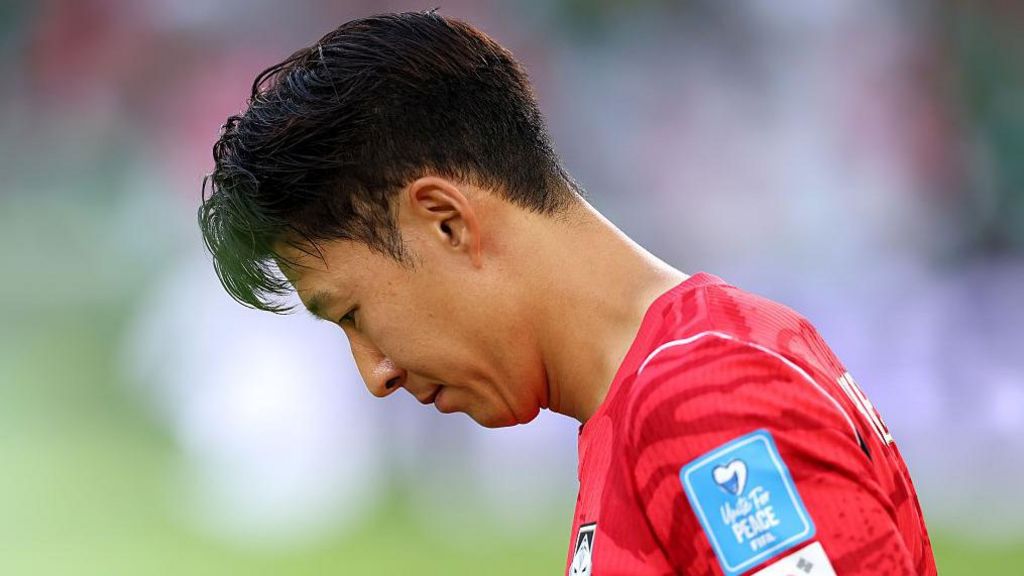
South Korean football is dead, say furious fans, as they demand sweeping reform
An unexpected early group-stage exit from the 2026 FIFA World Cup has plunged South Korean football into crisis, triggering widespread fan anger, the resignation of head coach Hong Myung-bo, and renewed demands for sweeping systemic reform of the country’s top football governing body.
When the national team touched down at Seoul’s Incheon Airport following their 1-0 knockout loss to South Africa, hundreds of furious supporters gathered to confront the delegation. Blasting drums and chanting for Hong to step down immediately, the crowd made their frustration unmistakable — with some followers tracking the coach all the way to his vehicle, even as a smaller group of fans gathered to cheer on the players trailing behind. One fan captured the collective mood, telling the BBC that criticism of Hong had been simmering long before the tournament kicked off, with constant calls for him to step aside even in the pre-World Cup buildup.
Hong, once one of South Korea’s most beloved football icons — he captained the 2002 co-hosted national side to a historic fourth-place finish, the country’s best ever World Cup result — had been a controversial figure from the moment he took the senior head coach role in 2024. This marked his second tenure leading the national team, and many supporters never forgave his underperformance at the 2014 World Cup, where a 4-2 thrashing by Algeria went down as one of the most humiliating results in the country’s football history — a mark only surpassed by this year’s early exit. His appointment came after the dismissal of former head coach Jurgen Klinsmann, who was sacked just shy of one year on the job following a disappointing run at the 2023 AFC Asian Cup. Reports at the time indicated multiple high-profile international candidates, including current Canadian head coach Jesse Marsch, were widely viewed as stronger, more qualified contenders for the role.
Yet Hong was ultimately selected, with critics immediately alleging the decision was driven by personal connections rather than merit. Allegations quickly emerged that the appointment was shaped by close personal ties between Hong and senior Korea Football Association (KFA) leadership, including KFA chairman Chung Mong-gyu, a Hyundai Group scion who shares an alma mater with the coach. These claims gained major traction when Park Joo-ho, a former national player and member of the KFA’s own coach recommendation committee, publicly alleged the hiring process was completely rigged. “Nothing was done as part of the formal process,” Park stated in a viral YouTube video, noting that candidates were never given a fair, equal evaluation. The KFA rejected Park’s claims, insisting it followed all due protocol, and threatened legal action against him, but his statements won backing from major figures in South Korean football, including legendary former Manchester United midfielder Park Ji-sung. “People have lost all trust in the KFA, and regaining that trust will take many years,” Park Ji-sung told local media.
A government audit launched in late 2024 later confirmed these concerns, finding that both Klinsmann’s ousting and Hong’s appointment lacked any meaningful transparency. The audit concluded that an unauthorised KFA technical director interviewed Hong at the explicit instruction of Chairman Chung, long before the full board was asked to approve the hire — turning the board’s vote into nothing more than a ceremonial rubber-stamp. South Korean parliament summoned Chung for questioning twice over the findings, with one ruling party lawmaker directly calling out alleged “alumni cartels” tied to a specific university within KFA leadership. The government recommended disciplinary action against three top KFA executives, including Chung, and called for a complete restart of the head coach hiring process. The KFA, however, challenged the recommendation and won a court suspension of the ruling, allowing Chung to retain his post and begin a fourth consecutive term in 2025, with Hong staying on as head coach amid ongoing doubt.
Heading into the 2026 World Cup, a promising opening win — a 2-1 come-from-behind victory over the Czech Republic, South Korea’s first opening match win at a World Cup in 16 years — briefly quelled criticism. But back-to-back uninspired losses to Mexico and South Korea sent the team packing early. For fans and analysts, the defeat exposed deep flaws in Hong’s tactical approach, most notably his shocking decision to leave team captain and global star Son Heung-min on the bench as a substitute. Hong’s strained relationship with Son, the first Asian player to win the English Premier League Golden Boot, had long been a point of frustration: he left Son off the 2012 Olympic roster and hinted at stripping him of the captaincy ahead of this tournament. Sports critic Choi Dong-ho argued Hong never leveraged Son’s talent, leaving the star isolated on the front line with little supporting play and relying only on late substitutions rather than adjusting tactics to turn matches around.
Son, who currently boasts a star-studded squad alongside PSG’s Lee Kang-in and Bayern Munich’s Kim Min-jae, issued a public apology to supporters after the exit, writing on Instagram: “To be honest, it’s hard to accept the reality… I believe what the fans are feeling wouldn’t be all that different from what I’m feeling.” Just days after the team’s return, Hong announced he would step down, taking full responsibility for the result. “The entire responsibility rests entirely with me,” he stated. South Korean President Lee Jae Myung has called for a full formal investigation into the KFA’s practices, writing on social platform X that “When favouritism and cronyism take precedence over competence in selecting a commander, the result is as clear as day. This appears to be the result of deep organisational and personnel failures.”
For many South Koreans, the early exit has laid bare a decades-long decline that stands in stark contrast to the 2002 World Cup high, when co-hosting the tournament lifted the nation’s spirits amid recovery from the Asian financial crisis. Today, the gap with regional rival Japan has grown increasingly stark: after the exit, South Korea dropped to 32nd in the FIFA rankings, its lowest position in four years, while Japan climbed to 17th to become the highest-ranked Asian team. Critics like Choi argue the root of the problem extends far beyond Hong, pointing to a rotating cast of more than 10 head coaches since 2002 that has prevented the national team from building consistent experience or a long-term strategic identity. “It feels as though South Korea starts from scratch every four years,” Choi noted.
Now, fans and political leaders alike are united in calling for a full overhaul of the KFA, demanding greater transparency, merit-based hiring, and a commitment to long-term development. One anonymous fan summed up the growing public mood: “Young people today already fight to compete in an unfair world. Even in sport, where fairness should matter most, we’ve watched football administrators ignore that basic principle. People will not accept this any longer.”
-

A mayor in Japan announced her maternity leave – and got the whole country talking
Thirty-five-year-old Shoko Kawata, mayor of the small scenic town of Yawata south of Kyoto, is about to make unprecedented history in Japanese politics: she will become the first Japanese sitting mayor to take maternity leave. What she expected would be a routine announcement of personal leave has instead thrown her into the center of a fierce national conversation, a conversation that cuts to the core of Japan’s ongoing struggles with falling birth rates, gender representation in public office, and outdated workplace norms.
Kawata, who made history three years ago as Japan’s youngest female city mayor when she took office at 33, has always navigated a heavily male-dominated political landscape. As of 2025, just 4% of Japan’s 1,720 municipal leaders are women, and the country ranks 118th out of 146 nations on the World Economic Forum’s 2025 Global Gender Gap Index – the lowest performer among G7 countries. Even with Japan’s first female prime minister in office, successive governments have faced widespread criticism for failing to implement meaningful policies to remove barriers that keep women out of politics. A 2025 Cabinet Office survey explicitly named pregnancy, the pervasive cultural assumption that politics is a male sphere, and systemic harassment as the top obstacles holding women back from public service.
Because no existing legal framework outlines maternity leave provisions for locally elected officials in Japan, Kawata cannot take formally recognized maternity leave. Instead, she has arranged for her 62-year-old deputy mayor Shigeto Nose to act as interim mayor during her four-month absence: two months leading up to her mid-September due date, and two months following childbirth. Nose, a father of two who never took parental leave himself and now sees his own son-in-law taking six months of leave to care for his second child, will hold full mayoral authority during Kawata’s leave, with a weekly remote check-in to discuss major municipal matters. Kawata’s in-office colleagues, who have an average age of 39, have all voiced full support for her decision.
Public reaction, however, has been sharply divided, with thousands of posts on X and dozens of YouTube videos weighing in on the debate. Supporters argue that Kawata’s choice breaks new ground for working women across Japan, pointing out that Japanese society has long failed to build institutional support for pregnant people in public and professional life. Many praise her for normalizing the idea that women do not have to choose between holding public office and building a family, noting that her precedent will make it easier for other women to pursue political careers in the future.
Critics, by contrast, have labeled her decision irresponsible. Some argue that if she wanted to have a child, she should have done so before running for office, while others demand that she resign for taking an extended leave from public duties or that her salary be cut during her time away.
Kawata has pushed back firmly against these criticisms. She remains unapologetic about her choice to start a family while serving in office, noting that barring elected officials from taking maternity leave effectively excludes all women of childbearing age – women in their 20s through 40s – from holding public office. “We really need to create a society where it’s so common for women to do both – and not have to choose between working and having a family,” she said in an interview with the BBC.
Former Akitakata city mayor Shinji Ishimaru framed the debate as an opportunity for constructive change, noting that while most people agree maternity leave is a positive right, the conversation needs to focus on creating clear systems to ensure public services are not disrupted when elected officials take leave. Kawata’s groundbreaking move has already shone a bright spotlight on the gaps in Japan’s workplace policies, even for elected officials, and is pushing the country to confront long-held cultural norms that have held back gender equality for decades.
-
Israeli bill to restrict call to prayer passes preliminary parliament reading
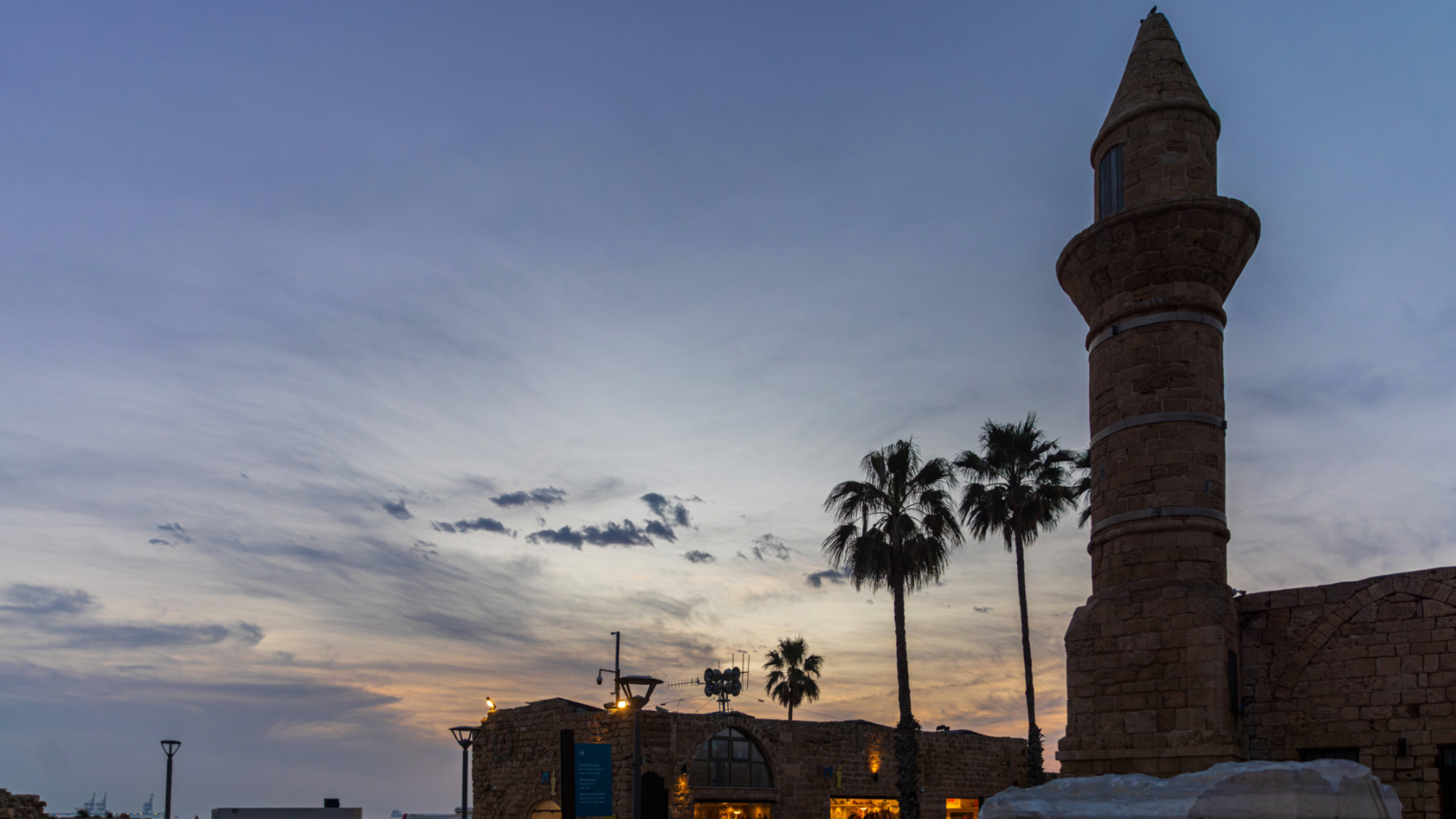
On Wednesday, a contentious Israeli bill that would impose strict new restrictions on the Muslim call to prayer, known as the adhan, cleared its first major legislative hurdle, passing a preliminary reading in the Knesset by a vote of 50 to 36. The legislation, tabled by lawmaker Zvika Fogel of the far-right party led by National Security Minister Itamar Ben Gvir, now moves to a parliamentary committee for further review before advancing to a series of additional votes required to become law. If enacted, the bill would require all mosques to obtain official government approval to install and operate loudspeaker systems for the adhan, which is called five times daily.
Permits would be issued at the discretion of Israeli authorities, with eligibility tied to a set of criteria including maximum noise levels, required sound-mitigation infrastructure, geographic location of the mosque, proximity to residential neighborhoods, and documented impact on local residents. The bill also grants Israeli police broad authority to immediately shut down any unapproved or non-compliant sound systems, allows for full confiscation of audio equipment after repeated violations, and imposes steep financial penalties: up to 50,000 Israeli new shekels (approximately $16,700) for operating without a permit, and up to 10,000 shekels (around $3,300) for violating permit terms. Ben Gvir and Fogel have framed the proposal as a necessary public health measure, arguing the volume of the adhan constitutes intrusive noise pollution that harms nearby communities.
The legislation has triggered fierce condemnation from Palestinian leaders, rights advocates and religious communities, who decry it as an deliberate attack on Islamic religious practice and a declaration of religious war. Speaking to Middle East Eye, Khaled Zabarqa, a human rights lawyer based in Lod, called the framing of the adhan as a mere noise problem a direct insult to Muslim religious identity. “By justifying this proposed legislation, the Israeli government is laying the groundwork for a religious war within the country,” Zabarqa said, noting the bill forms part of a wider state-led campaign to “Judaise public space” by erasing non-Jewish religious symbols. He added that targeting the adhan and mosque minarets specifically, which anchor the Islamic and Palestinian identity of public spaces across historic Palestine, makes the legislation’s discriminatory goals clear, warning that Palestinian communities will not accept the targeting of their core religious rituals.
The Palestinian Authority’s Jerusalem Governorate has also joined in condemnation, warning that the bill could have severe ramifications for the Al-Aqsa Mosque, one of Islam’s holiest sites located in occupied East Jerusalem. While the legislation’s text does not explicitly state whether it would apply to Al-Aqsa – a site that Israel annexed in 1980 in a move unrecognized by the international community, which universally classifies East Jerusalem as occupied Palestinian territory – Palestinian officials warn the law sets a dangerous precedent for further interference at the site. “The proposed law exposes the true nature of the occupying state as an apartheid system that uses its legislative tools to impose religious persecution,” the governorate said in an official statement.
Omar Rajoub, director of the Jerusalem Governorate’s media office, emphasized that the bill is not a targeted response to noise pollution, but part of a long-running policy to erode Palestinian religious and cultural identity, particularly in Jerusalem. “In Jerusalem in particular, the proposed legislation comes amid an unprecedented escalation in measures targeting the city’s Islamic character,” Rajoub told Middle East Eye, pointing to ongoing Israeli incursions into Al-Aqsa, restrictions on Muslim worshippers’ access, removals of senior Islamic religious leaders and mosque caretakers, and growing interference in the independent administration of Islamic religious affairs. Rajoub added that the bill’s impact extends far beyond noise regulation, as it would formalize Israeli state control over the internal affairs of mosques and open the door to even more raids and restrictions under the cover of legal authority.
-
‘His death has killed a part of me’: The Ethiopians awaiting execution in Saudi Arabia
Deep inside Saudi Arabia’s overcrowded Khamis Mushait detention center in Aseer province, hundreds of Ethiopian migrants sit on death row, trapped in harrowing conditions and dreading the early-morning knock that will mark their final day. On April 21, that knock came for three young men from Ethiopia’s war-scarred Tigray region, whose desperate search for a better life ended in execution by beheading.
The executed men — Kibrom Gebremariam, 30, Tsigabu Hagos, 26, and Kidane Angesom — were among hundreds of thousands of Tigrayans who have fled their home region since the 2020–2022 civil war, which killed hundreds of thousands, displaced millions, and left the local economy in ruins. Crossing the Gulf of Aden and traversing war-torn Yemen to reach Saudi Arabia, the three carried small amounts of khat, a mild stimulant widely consumed and legal in Ethiopia and Yemen. They had no idea that possession of the plant is classified as a serious drug offense under Saudi law, carrying an automatic death sentence.
Human Rights Watch records show the three men were arrested between 2023 and 2024, held in a series of detention facilities before being transferred to Khamis Mushait to await execution. They are not alone. On June 23, just two months after their deaths, five additional Ethiopian nationals were executed for non-violent drug crimes, according to multiple on-the-ground sources. Many foreign detainees report being forced to confess to crimes they did not commit, after being beaten and coerced into signing Arabic-language documents they cannot read.
Hailay Berhane (a pseudonym granted for his safety), a Tigrayan migrant currently held on death row at Khamis Mushait, shared a firsthand account of the system’s abuses with Middle East Eye via a smuggled phone on the encrypted messaging app Imo. Three years ago, he was detained in the violent border region of Rago, where Saudi border guards have been repeatedly accused of indiscriminately shooting unarmed migrants. “They handed me 41kg of drugs and forced me to believe it was mine, and made me sign documents that I don’t even understand,” Berhane said. In the three years since his arrest, he has appeared in court three times — each hearing lasting only minutes, none with a translator to help him defend himself.
“Foreign nationals who are on death row in Saudi Arabia are, most of the time, subjected to grossly unfair trials,” explained Yared Hailemariam, a prominent Ethiopian human rights advocate. Recent data from Amnesty International confirms this pattern: Saudi Arabia has executed nearly 100 people already this year, at least 61 of them for drug-related offenses. The organization’s latest report warns that “foreign nationals have borne the brunt of Saudi Arabia’s ruthless use of the death penalty for drug-related offences, frequently after grossly unfair trials.” At least 63 Ethiopian detainees are held in a single ward at Khamis Mushait alone, all at imminent risk of execution for non-violent drug crimes. Across Saudi Arabia, local officials and human rights defenders estimate as many as 200 Ethiopian citizens are currently on death row — a figure many prisoners believe is significantly undercounted.
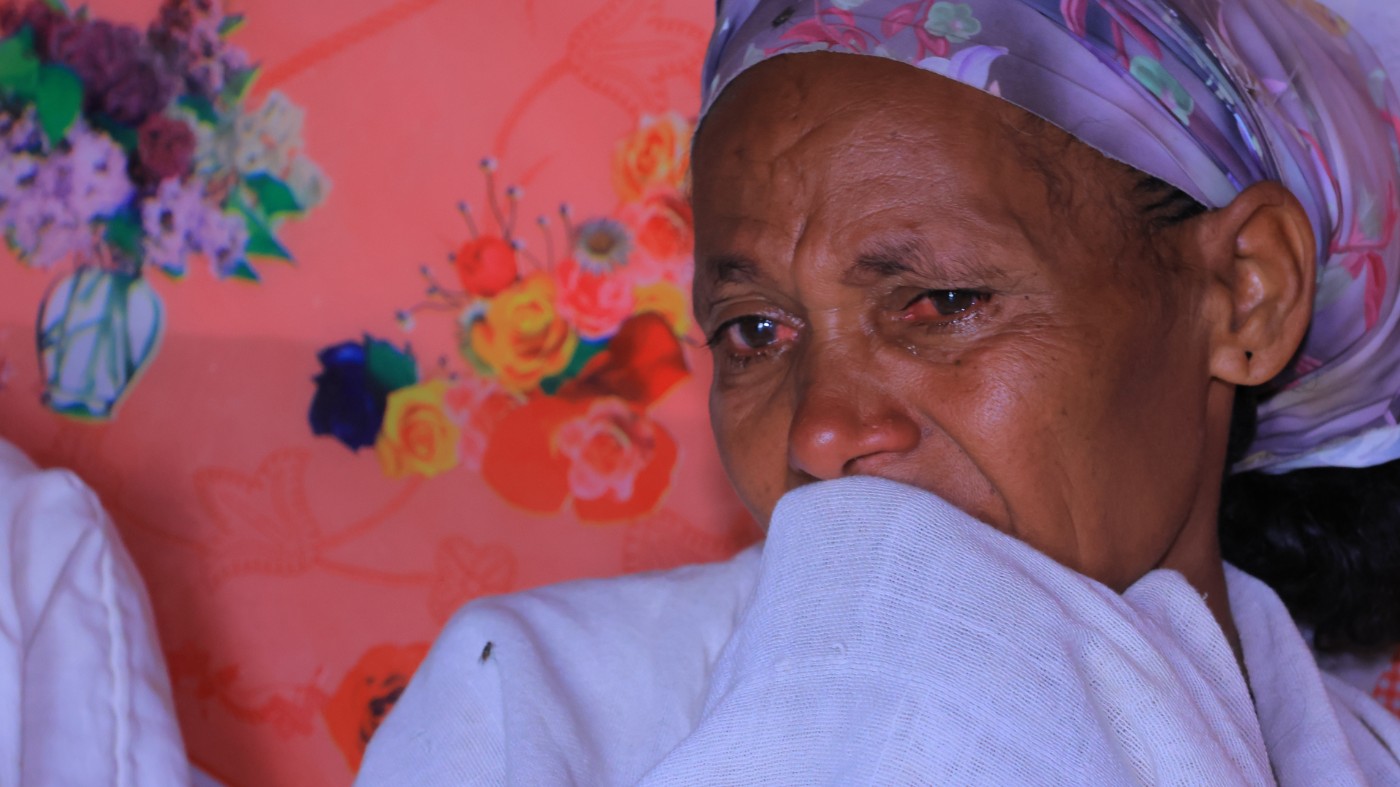
For the families of the three men executed in April, the grief is compounded by unanswered questions and a lack of closure. Back in Tigray’s Egela district, Kibrom Gebremariam’s family has already lost one son to migration: his older brother Merhawi was killed by Yemeni security forces three years ago, after crossing the border in 2020. “We anticipated Kibrom’s wedding, not his death. His murder has become an open wound for us,” said Gimja Gebremariam, Kibrom’s heartbroken mother. The 30-year-old had left Tigray 12 years earlier, fleeing a village with almost no economic prospects, dreaming of building a life that would let him support his family. He spoke to his father just one day before his execution, promising he would soon be home. His father, 60-year-old Gebremariam Gebrezgiabher, has been bedridden with shock since receiving word of his son’s beheading from fellow prisoners. “His death has killed a part of me and is made worse by the fact that I have nothing to bury,” he said. Saudi authorities have not released the men’s bodies to their families, leaving them unable to hold a proper burial.
For Tsigabu Hagos’ family in Tigray, the pain is just as raw. The 26-year-old was the only son among eight children, who left in 2020 hoping to build a business and lift his family out of poverty. “He wanted to have his own business, be self-sufficient and live a productive life,” his father Hagos Gebremeskel said, glancing at his son’s photo on a mobile phone. His mother Letekristos Gebretsadkan still struggles to process the loss: “I never thought they would kill my son. I wonder how much our son had been tortured before he was killed, if the family would ever get justice, if we would at least get the body of our son back.”
The flow of migration out of Tigray continues, even after the formal end of the war in 2022. Decades of political instability, armed conflict, and economic collapse have left youth unemployment at catastrophic levels, and many young people still face forced conscription into regional conflicts. Even the execution of her brother has not dissuaded Tsigabu’s 20-year-old sister Masho Hagos, who had to suspend her high school studies during the war, from planning her own journey to Saudi Arabia.
“Political instability, armed conflict and economic crisis are the major factors affecting the life of Ethiopian youths,” Hailemariam explained. “They are also forcefully recruited for military training and deployed as soldiers for both internal conflicts and cross-border war.”
Religious leaders from Tigray’s Catholic and Orthodox churches, as well as the president of the Tigray region, have issued formal appeals to Saudi Arabia to grant clemency to the hundreds of Ethiopian death row prisoners. Human rights organizations including Human Rights Watch and Amnesty International are calling on Saudi Arabia’s international partners to intervene immediately to halt the executions.
“Saudi Arabia’s willingness to execute foreign migrants for non-violent offences following trials that denied them basic due process reflects a profound disregard for their rights and lives,” said Nadia Hardman, senior refugee and migrant rights researcher at Human Rights Watch. “Saudi Arabia’s partners should urgently intervene before it is too late.”
Back in his Tigray village, Kibrom Gebremariam’s father has only one plea: an end to the wave of deaths that has shattered so many young Ethiopian lives, as migrants search for safety and opportunity abroad. “That must end,” he whispered, overcome by grief. For the hundreds of men still waiting on death row in Khamis Mushait, that intervention cannot come soon enough. “Every time the security guards knock on the door, we feel that our names will be called,” one unnamed prisoner told Middle East Eye.
-
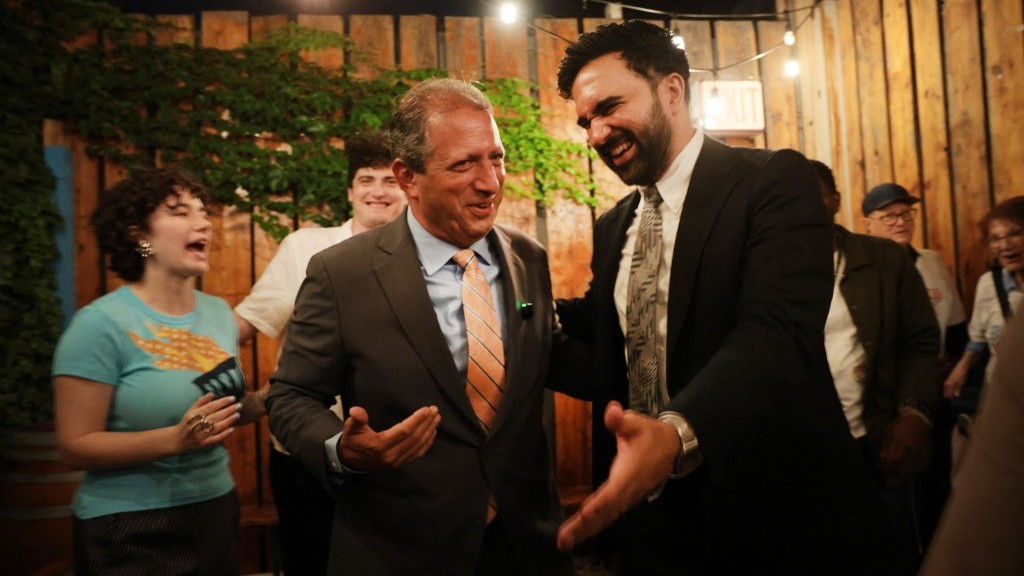
Israeli press alarmed as criticism of Israel becomes winning recipe in US politics
A growing wave of primary election victories by left-wing Democratic candidates critical of Israel has sent shockwaves through Israeli media and pro-Israel advocacy circles, with commentators warning that unwavering backing for Israel can no longer be counted on as a path to political success in U.S. Democratic politics.
The most high-profile of these upset wins came Tuesday in Colorado, where democratic socialist Melat Kiros defeated 15-term incumbent pro-Israel U.S. Representative Diana DeGette. Kiros’s triumph is not an isolated outlier: it follows a string of similar wins by left-wing candidates who have openly challenged Israel’s outsized influence on American policy, condemned the ongoing military campaign in Gaza, and labeled Israel an apartheid state. Prior to Kiros’s win, three democratic socialist candidates endorsed by New York Mayor Zohran Mamdani claimed victory in their primaries, alongside one winner in a Philadelphia congressional primary and another in the Democratic primary for Washington, D.C.’s mayoral race.
The Democratic Socialists of America, a left-leaning faction that regularly challenges establishment Democratic candidates in primary contests, has rapidly emerged as a formidable force shaping the direction of the broader American left. For Israeli political and media institutions, however, these results are far more than a footnote in domestic U.S. politics. Israeli outlets have universally framed the upset wins as clear evidence that Israel’s standing among U.S. voters — and particularly among Democratic base voters — is crumbling in the wake of Israel’s concurrent military operations across Gaza, Lebanon, Syria, and Iran.
In a Thursday editorial from The Jerusalem Post, a publication whose owner has longstanding close ties to Israeli Prime Minister Benjamin Netanyahu, editors warned that the Democratic Party is drifting steadily further from its decades-long bipartisan alignment with Israel. “Who would have thought that we would ever be looking back nostalgically on the days when the anti-Israel ‘Squad’ in the US Congress numbered only four people?” the editorial read.
The Squad, the informal caucus of progressive Democratic lawmakers first formed with four founding members — Alexandria Ocasio-Cortez, Ilhan Omar, Ayanna Pressley, and Rashida Tlaib — first rose to prominence for pushing the Democratic Party leftward on issues including healthcare, climate justice, racial justice, and Palestinian rights. Nearly all of the newest wave of primary-winning candidates have built their campaign platforms around a shared set of progressive priorities that go beyond domestic policy: alongside calls for universal healthcare, a universal basic income, and publicly operated grocery stores, they demand an end to U.S. military aid to Israel, a halt to what they term the genocide in Gaza, and formal recognition of Israel as an apartheid state.
The Jerusalem Post framed the string of left-wing upsets as a fundamental “Israel problem” for the Democratic Party, arguing that the growing influence of these candidates is already reshaping the party’s core priorities, altering how sitting Democratic politicians engage with the topic of Israel, and rewrites the rules of public debate around the U.S.-Israel relationship. That sense of anxiety is echoed across Israeli media, including another leading outlet, The Times of Israel.
One Times of Israel contributor compared the recent democratic socialist wins in New York to the 1917 Russian Revolution that established the Soviet Union, framing the results as an urgent “cautionary tale” for pro-Israel groups. Another writer at the outlet argued that the resounding primary victories prove a new generation of Democratic voters has fundamentally turned against Israel.
These election results align with a dramatic, well-documented shift in U.S. public opinion toward Israel. Recent polling from the Pew Research Center finds that nearly 80 percent of Democratic and independent voters hold critical views of Israel’s policies. A June 24 survey from Quinnipiac University further underscores this shift: 48 percent of all American voters say the U.S. is “too supportive” of Israel, compared to just 38 percent who say current levels of support are appropriate, and 7 percent who say the U.S. is not supportive enough.
The Jewish Telegraphic Agency noted that New York’s recent primary results have felt far more seismic than Mamdani’s own upset win for New York City Hall last November. “Being staunchly anti-Israel is no longer a road block to success in Democratic politics… This is the first time that incumbent congressmen have lost their seats in campaigns in which they were repeatedly attacked for being too supportive of Israel,” the outlet reported. Regardless of the local issues that shaped each individual race, the JTA added, the success of candidates who openly criticized both Israel and the powerful pro-Israel lobbying group American Israel Public Affairs Committee (AIPAC) sends an unmistakable, transformative message to the party.
The Free Press, a pro-Israel publication founded by Bari Weiss — the current controversial editor-in-chief of CBS News — framed the primary upsets as part of a growing ideological civil war within the Democratic Party, pitting the party’s old, pro-Israel establishment guard against an insurgent grassroots left it describes as “virulently anti-Israel”.
Even among more liberal Israeli outlets, the implications of the shift are clear. In an opinion piece for Haaretz, one writer noted that “The new mayor [Mamdani] has remade his city’s politics, at the expense of pro-Israeli incumbents who were tossed aside”, adding that much of the “political ammunition” used against those incumbents was “Made in Israel” — a reference to growing anger over Israel’s military actions in Gaza. Another analysis in Haaretz argued that the victories of Israel-critical Democrats demanding a break from the long-standing status quo of the U.S.-Israel relationship are “now a feature of Democratic Party demands rather than a bug”. The analysis added that Democratic voters are not only frustrated with the Israeli policies AIPAC defends, but also with AIPAC’s outsized role as an outside spender in Democratic primary races — spending often fueled by mega-donors from the Republican party.
-
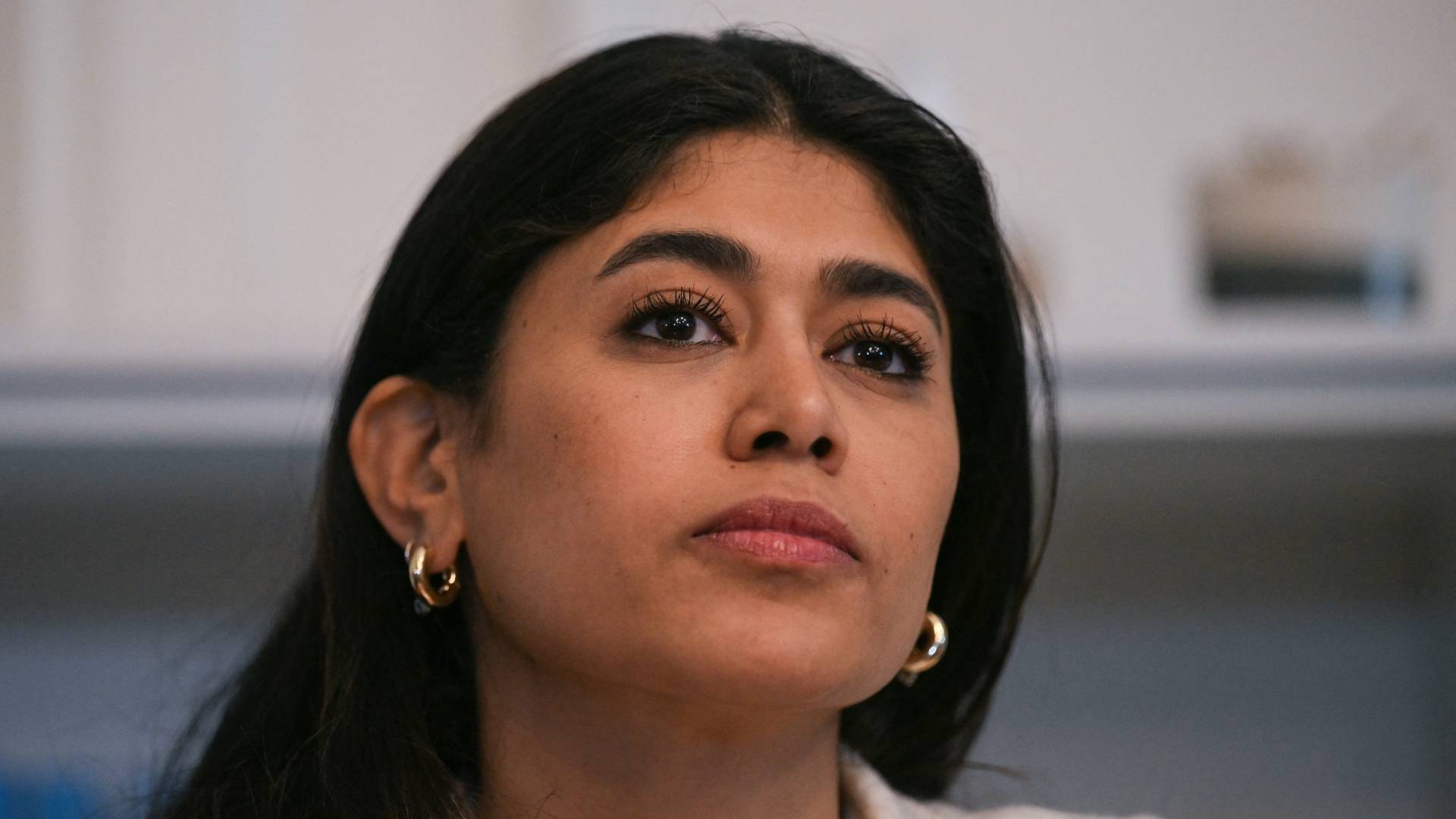
Rima Hassan denounces ‘political and judicial harassment’ over Israel criticism
When French-Palestinian politician Rima Hassan made history in June 2024 as the first person of Palestinian heritage elected to the European Parliament from France, she did not anticipate the coordinated campaign of targeting that would quickly follow. Just months after taking office, the Left Group MEP, affiliated with France’s left-wing La France Insoumise (LFI) party, is set to stand trial on Tuesday on charges of “apology for terrorism” — a French criminal offense that penalizes speech deemed to endorse or glorify terrorist acts.
In an exclusive interview with Middle East Eye on the eve of her trial, Hassan framed the prosecution as nothing less than an organized effort to muzzle her for speaking out against Israel’s occupation of Palestinian territory and allegations of genocide. Her case is far from an isolated incident: over the past two years, 16 separate judicial proceedings have been launched against the outspoken advocate, 13 of which have already been thrown out for lack of merit.
The current charges stem from a post Hassan shared on the social platform X back in April 2025. The post featured a quote from Japanese militant Kozo Okamoto, convicted of involvement in the 1972 Lod Airport attack in Israel that left 26 people dead. It read: “Kozo Okamoto: I gave my youth to the Palestinian cause. As long as there is oppression, resistance will not only be a right, but a duty,” alongside images of the Japanese and Palestinian flags.
In a pre-trial statement, Hassan’s team clarified that the quote was intended to highlight a long-recognized principle of international law: the right of occupied peoples to resist foreign colonial rule. To avoid any misinterpretation of her words, Hassan deleted the post shortly after publishing it. The complaint that led to prosecution was filed by far-right National Rally MP Matthias Renault, France’s interior minister, the European Jewish Organization (OJE), and the League Against Racism and Anti-Semitism (Licra), with public prosecutors — who operate under the oversight of France’s executive branch — moving forward with the case.
Hassan alleges that the pressure she has faced extends far beyond routine legal proceedings, with what she describes as grossly disproportionate investigative tactics that violate her status as an elected representative. When she was taken into police custody in April, authorities violated her parliamentary immunity — a legal protection designed to shield MEPs from state interference and protect their freedom of speech — holding her for more than 13 hours. During questioning, she was subjected to invasive, irrelevant interrogation about her identity, ethnic origins, and religion.
“This way of proceeding is part of a political climate in which Palestinians, or people perceived as such, are too often regarded as suspects before they are regarded as citizens,” Hassan told MEE. “This reflex, fuelled by Islamophobia and anti-Palestinian racism, constructs the dangerous figure of the ‘enemy within’,” she added, echoing the label already applied to her by much of France’s established political class.
Through her legal team and independent French outlet Mediapart, Hassan has uncovered details of sweeping surveillance measures mobilized against her. Authorities ordered retroactive surveillance of her mobile phone starting at the beginning of the year, and requested full travel data from French rail operators SNCF and Thalys, airline Air France, and Europol to map every movement she made between January and early March. Hassan notes that such invasive tactics are typically reserved for investigations into the most serious organized crime, not alleged speech offenses.
Compounding the abuse, false claims that Hassan possessed illegal narcotics were leaked to the press during her detention, in a deliberate violation of investigation confidentiality. French investigative outlet Le Canard Enchainé reported that the leak was directly coordinated by Sacha Straub-Kahn, spokesperson for France’s Ministry of Justice. “The objective was clear: to divert the political debate, tarnish my reputation, and plant suspicion in public opinion,” Hassan said. After her release, she clarified that she only carried CBD for medical purposes, framing the leak as a coordinated disinformation operation designed to undermine her standing. “When rumor replaces facts, democracy itself is weakened,” she added.
Following Hassan’s complaint over the breach, Paris prosecutors opened an investigation into the leak, and France’s justice minister referred the matter to the General Inspectorate of Justice. Straub-Kahn has since filed a defamation suit in response to the allegations.
Hassan’s case is not an anomaly, but the most high-profile example of a broader crackdown on pro-Palestine speech in French politics, particularly targeting members of the left-wing LFI party. In 2024 alone, left-wing politician Anasse Kazib was summoned by police as part of an anti-terror probe over pro-Palestine tweets; LFI Member of Parliament Sebastian Delogu was suspended from the National Assembly for 15 days and had his pay cut in half for two months after waving a Palestinian flag during a session; and Mathilde Panot, LFI’s leader in the National Assembly, was summoned for questioning over the party’s October 7 statement on the Israel-Gaza war, with a probe into alleged “apology for terrorism” that was ultimately dismissed. Ahead of 2024 municipal elections, three LFI mayoral candidates who publicly supported Palestine were targeted in a smear campaign linked to an Israeli private intelligence firm.
Official data from France’s Ministry of Justice confirms the sharp escalation in crackdowns: the number of “apology for terrorism” prosecutions tripled between October 2023 and November 2024, compared to the nine months prior. Marc Trevidic, a former anti-terrorism investigating judge with nine years of experience in Paris, has publicly denounced what he calls a widespread “misuse of anti-terrorism legislation” by French magistrates. “We are witnessing a genuine abuse, a completely perverted use of the law,” Trevidic stated in a 2024 interview with TRT France.
For Hassan and her legal team, the trial exposes a dangerous inversion of accountability: “Those who denounce a genocide are being prosecuted, rather than those responsible of committing it,” the team argues. “This judicialisation of public debate seeks to make any criticism of the policies pursued by the Israeli government politically costly. It is a way of silencing a political voice rather than responding to it democratically,” Hassan said. “All these measures follow the same logic: creating a climate of intimidation in order to discourage civic engagement.”
Hassan has filed multiple legal challenges to the alleged investigative abuses, and is pushing for a full acquittal in her July 7 trial. Beyond her own case, she says she hopes the high-profile proceeding will spark a broader public reckoning with the crackdown on pro-Palestine speech in France. “The facts alleged against me do not justify this procedure,” she said, “but beyond my personal situation, I hope this trial will lead to a collective awakening.”
-
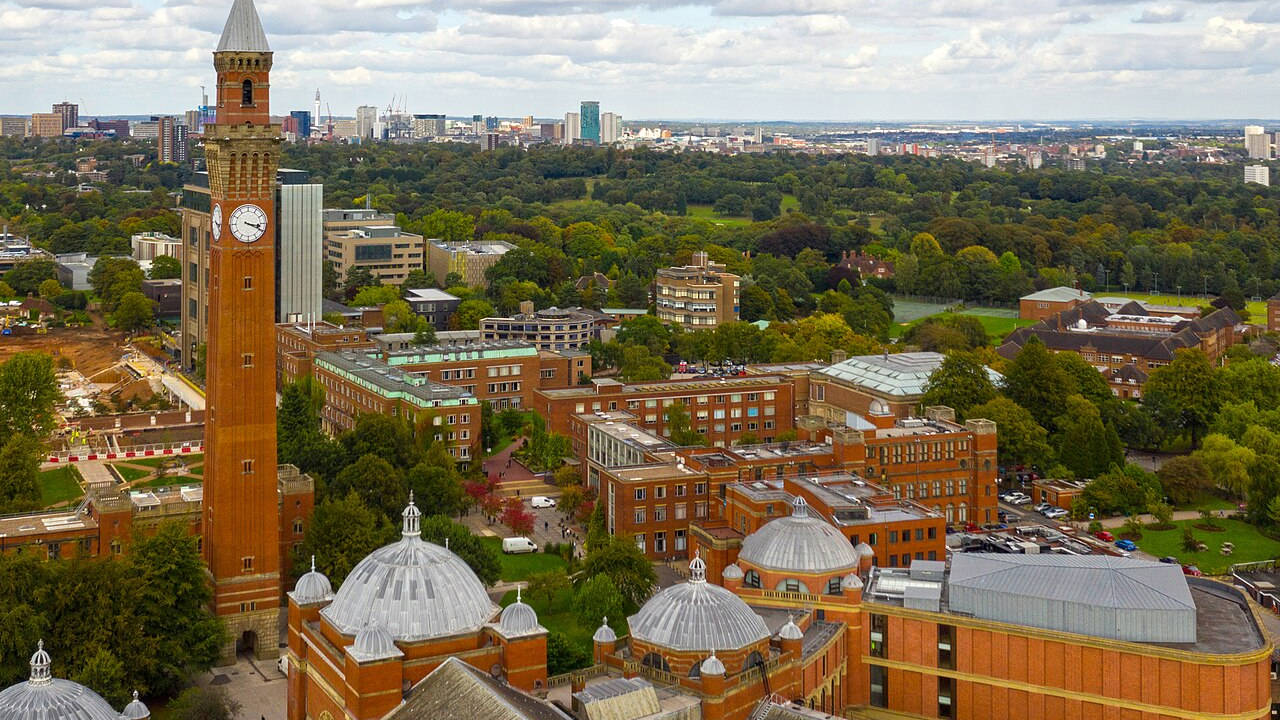
Birmingham University weakens restrictions on investing in arms companies
In a move that has ignited widespread criticism across UK higher education, the University of Birmingham has become the first major British university to roll back ethical restrictions on weapons industry investments, amid growing global scrutiny of commercial ties to Israel’s military campaign in Gaza, Middle East Eye can exclusively reveal.
The West Midlands-based institution has abandoned its 2022 responsible investment framework, which included formal exclusion criteria for arms firms and other high-polluting or harmful industries. Under the old policy, any company deriving more than 10% of its revenue from weapons system development, as well as all manufacturers of entire weapon systems, cluster munitions and anti-personnel landmines, were barred from the university’s investment portfolio. Tobacco, oil and mining companies were also excluded, with the university committing to minimize indirect investments in firms that failed to meet its ESG standards.
That policy has now been replaced with a softer set of so-called “investment principles”, adopted in June and obtained by Middle East Eye, that removes all formal exclusion lists. The new framework only requires that “financially material” environmental, social and governance (ESG) factors be integrated into investment selection, monitoring and stewardship processes. As part of the policy update, the university has also tapped global banking giant JP Morgan to serve as its outsourced chief investment officer (OCIO), handling day-to-day investment decision-making.
The new rules only mandate compliance with existing UK legal restrictions: bans on anti-personnel mines and cluster munitions, and UK obligations prohibiting trade in chemical and biological weapons, alongside general adherence to international sanctions regimes. Beyond that legal baseline, the policy states that for any investment with material exposure to high-risk activities, the OCIO simply needs to provide a rationale for the holding, outline existing risk controls, and explain its approach to managing ESG risks. No automatic exclusion applies to arms firms, tobacco, or fossil fuel companies that were previously barred.
University administrators have pushed back against criticism, arguing the policy update does not represent a weakening of responsible investment standards. In a statement, a university spokesperson said no changes have been made to the institution’s actual investment portfolio following the rule change, and that the university still sets all core objectives and constraints for its holdings, with the OCIO only managing routine day-to-day decisions within those boundaries.
The spokesperson added that the revised framework strengthens oversight and transparency, shifting from a rigid fixed exclusion list to clear, principle-based expectations that cover legal compliance, ESG integration, stewardship, voting, climate action, human rights and governance. They noted the university has been a signatory to the United Nations Principles for Responsible Investment (UNPRI) since 2019, and the update merely aligns policy with the practical operation of its current delegated, pooled-fund investment model.
That explanation has done little to appease student leaders, who have condemned the rollback as a betrayal of institutional commitments to human rights. Antonia Listrat, president of the university’s official Guild of Students, called the decision a devastating signal to the campus community. “This sends a devastating message to students and staff who believe our university should uphold human rights and invest in education, not the arms trade,” Listrat said. “Students voted for their university to strengthen its ethical standards, not make it easier to profit from companies connected to armed conflict.”
The rollback is not the first time the University of Birmingham has faced backlash over its ties to the arms trade linked to Israel’s campaign in Gaza. Even under the previous stricter investment rules, the institution maintained a formal partnership with Rolls-Royce, a manufacturing giant that produces primarily civilian goods but also supplies military equipment to the Israeli army. In 2019, Birmingham also joined four other UK universities to launch a strategic partnership with BAE Systems, the UK’s largest arms manufacturer, which produces components for F-35 fighter jets that the Israeli military has deployed extensively in its Gaza operations.
Across the UK higher education sector, the University of Birmingham’s move runs counter to a growing trend of institutions tightening arms investment restrictions in response to mass student protests calling for divestment from firms linked to Israeli human rights violations in Gaza. Most recently, Queen’s University Belfast announced it would divest all holdings tied to Israel in June 2025, joining a growing list of institutions adopting stricter ethical rules.
Instead of loosening restrictions, Birmingham has taken a hardline approach to pro-divestment and pro-Gaza student activism on campus: the university launched legal action against student protesters occupying campus ground to demand divestment in July 2024. That hardline stance mirrors actions taken by the London School of Economics, which evicted its own pro-Gaza encampment of protesters the same year.
Investigations by Middle East Eye in recent months have exposed extensive hidden investments in arms and firms linked to Israeli human rights violations across other top UK institutions. In October 2024, MEE revealed that the University of Oxford held indirect investments in at least 49 companies flagged by the United Nations and leading human rights organizations for their role in illegal Israeli activities in occupied Palestinian territories. A February 2025 investigation further found that the University of Cambridge’s endowment fund had more than £140 million ($189 million) invested in a fund that held shares in firms linked to Israeli human rights abuses, including tech firm Palantir Technologies, construction giant Caterpillar and aerospace manufacturer GE Aerospace.
The policy shift at Birmingham also comes amid conflicting actions by the UK national government, which imposed a partial arms embargo on Israel in September 2024, but simultaneously approved $169 million in new military exports to the country, including more than 8,600 separate munitions categorized as “bombs, grenades, torpedoes, mines, missiles and other similar munitions.”
Since the 7 October 2023 Hamas attack that killed 1,200 people in southern Israel, Israeli military operations in Gaza and the West Bank have killed more than 73,000 Palestinians and wounded an additional 170,000, according to latest health authorities in the region, triggering a widespread humanitarian crisis and global calls for a ceasefire and an end to arms sales to Israel.
-
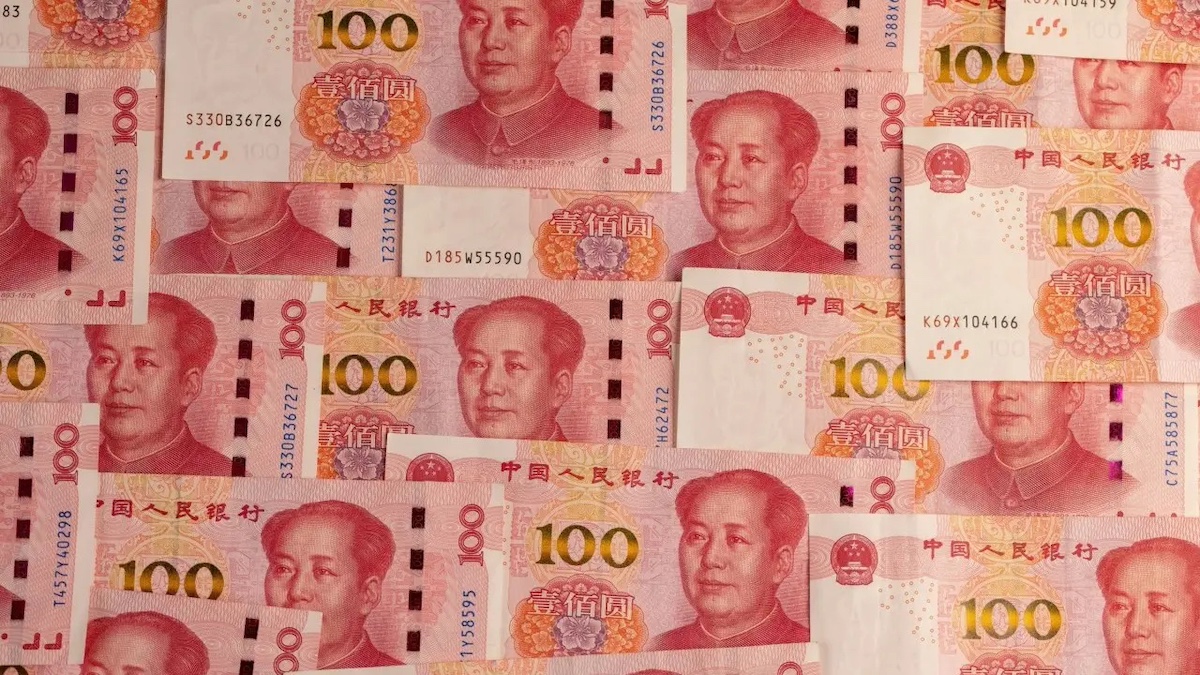
Plaza Accord 2.0 talk won’t fix anybody’s China problem
In a recent call for coordinated global action on trade imbalances, German Chancellor Friedrich Merz has emerged as the most high-profile advocate for a second Plaza Accord, a scheme designed to deliberately push up the value of China’s yuan to erode what he frames as the country’s unfair export advantage. Merz claims the Chinese currency is undervalued by roughly 30%, alleging Beijing deliberately keeps it cheap to flood global markets with artificially low-priced goods. He warns that state-subsidized overcapacity in key Chinese manufacturing sectors is destabilizing a global economy still recovering from years of successive shocks. Merz’s grievances are far from isolated in European leadership: European Central Bank President Christine Lagarde has previously estimated the yuan’s undervaluation at around 16%, while European Commission President Ursula von der Leyen has publicly described China’s current export competitive edge as fundamentally unsustainable for the global trading system.
Despite this broad European criticism of China’s currency and trade practices, economic analysts broadly agree that a 1985-style currency pact modeled after the original Plaza Accord – which forced a sharp appreciation of Japan’s yen to correct US trade imbalances – is deeply unlikely to resolve the grievances European leaders have raised, and carries major risks of unintended consequences. There are two core structural flaws in the proposal from the outset: first, China is not a member of the Group of Seven, the bloc that orchestrated the original 1985 agreement among major advanced economies. Second, the 2026 global financial system is unrecognizable from the mid-1980s landscape, making a four-decade-old framework a poor fit for modern challenges.
Attempting to force a sharp, rapid appreciation of the yuan would carry significant downside risks for the global economy, experts warn. A sudden revaluation would exacerbate China’s already persistent deflationary pressures, deepen long-running structural imbalances in the country’s economy, and worsen the ongoing crisis in its struggling property sector. Many analysts argue that the economic damage from a forced yuan revaluation would ultimately outweigh any perceived benefits from reducing China’s export competitiveness, for both China and its global trading partners.
History also directly undermines the case for Merz’s proposal, as the original Plaza Accord failed to deliver long-term benefits and triggered severe economic harm for Japan. Bill Mitchell, a leading currency expert at Australia’s University of Newcastle, points out that the United States is highly unlikely to succeed in bullying China into accepting a currency deal on the terms it forced on Japan in the 1980s. Mitchell notes the original accord was extremely economically disruptive, directly contributing to Japan’s massive 1980s asset bubble and the decades of stagnation that followed, with little to no lasting economic gain for the United States.
Another major complication is that Merz’s proposal puts it on a potential collision course with US President Donald Trump’s own competing trade plan, the self-named “Mar-a-Lago Accord”, which attempts to revive a global trade framework that no longer exists in modern markets. Neither leader’s political track record suggests a coordinated US-Eurozone effort to pressure China on currency would proceed smoothly. Trump has long favored unilateral transactional pressure over multilateral coordinated diplomacy, making joint action unlikely.
For its part, Beijing has closely studied the economic fallout of the 1985 Plaza Accord, which it views as the starting point of Japan’s decades-long stagnation. Chinese leaders have repeatedly made clear they have no interest in repeating Japan’s experience, a position that shapes the country’s ongoing tight management of the yuan via daily central bank fixings and strict capital controls. Chinese officials have also stressed that meaningful, externally forced revaluation is completely off the table until the yuan becomes fully convertible under Beijing’s policy timeline.
Merz and Trump also underestimate the significant political and economic leverage Chinese President Xi Jinping holds to resist external pressure, a stark contrast to the position of Japanese Prime Minister Yasuhiro Nakasone in the 1980s. Xi also has a factually defensible argument: Chinese authorities have actively intervened to prop up the yuan’s value in recent months, even as domestic deflationary pressures would normally drive the currency lower.
Today’s global power dynamics also make the original Plaza Accord playbook unworkable. The 1985 agreement succeeded because the US held overwhelming dominance over the then-Group of Five, and Japan relied heavily on access to American consumers to fuel its export-led growth. Today, US global economic influence has eroded significantly: years of Trump-era tariffs and ongoing geopolitical tensions over Iran have left the US more isolated internationally and its domestic economy more exposed to global shocks. By contrast, China is now the world’s largest trading nation, while the European Union’s 27 member states remain deeply divided on China policy and are still grappling with post-pandemic economic fragility. Germany alone runs a roughly 90 billion euro ($102 billion) annual trade deficit with China, leaving Berlin with very little bargaining leverage to force concessions from Beijing.
Beyond currency dynamics, Merz faces far more pressing structural challenges to European industrial competitiveness. The real “China Shock 2.0” is not driven by exchange rates, but by the rapid rise of Chinese technology leaders in cutting-edge strategic sectors, from electric vehicle giant BYD to artificial intelligence innovator DeepSeek. These companies’ growing global market share is already reshaping Europe’s industrial landscape: German automaker Volkswagen is reportedly considering closing four domestic factories and cutting 100,000 jobs as Chinese brands expand their global footprint.
Analysts stress that European industrial weakness cannot be blamed solely on Chinese competitiveness. Europe’s own weak domestic demand and longstanding industrial complacency are major contributing factors. As Volkswagen shareholder Ingo Speich noted in comments to Reuters, “The high costs are merely a symptom, not the cause… the root cause is weak sales.” His point underscores a core reality: unless European manufacturers develop products that global consumers actually want, debates about currency valuation and cost-cutting will do little to reverse declining market share. Volkswagen’s predicament is a microcosm of Europe’s broader challenge in an era of rising Chinese industrial power. While a stronger yuan might have boosted European manufacturers decades ago, China’s rapid ascent up the global value chain has completely altered this calculation. Today, China’s competitive advantage in electric vehicles, batteries, solar energy and advanced manufacturing stems from industrial policy, economies of scale and technological innovation, not cheap labor or undervalued exchange rates. Even a 10 to 20% yuan appreciation would not erase these competitive advantages, though targeted higher trade barriers might alter market dynamics at the margin.
China is now accelerating structural shifts that are reshaping the entire global economy. When China joined the World Trade Organization in 2001, it unleashed a wave of low-cost, subsidized exports of basic goods like textiles, furniture and entry-level electronics. Today’s phase of Chinese export growth is far more consequential: China is now targeting high-value growth sectors including electric vehicles, clean energy and advanced manufacturing, reshaping competitive dynamics in the industries that will define the 21st century global economy.
Addressing this new wave of Chinese industrial competition requires far more than symbolic currency diplomacy, analysts argue. Chris Bradley, an analyst at the McKinsey Global Institute, notes that advanced economies need to pursue a deep transformation of domestic productivity, invest in innovation, specialize in less cost-sensitive high-value sectors, and implement policies that create a more level global playing field. Bradley’s analysis finds that a 30% boost to domestic productivity, combined with cost convergence in equipment, energy and raw materials, and faster execution of industrial projects modeled on China’s “speed to market” could close between 30 and 80% of the current cost gap between Western and Chinese manufacturers. Bradley adds that achieving a sustainable new global trade equilibrium requires advanced economies to specialize in future-defining industries, revive domestic innovation, and overhaul outdated industrial policy frameworks to address modern competitive distortions. In short, Europe’s core challenge is not just China’s economic rise – it is Europe’s own need to adapt to a new global economic order.
For the euro area, China’s current deflationary pressures and manufacturing glut create unique spillover risks. Valentina Aprigliano, an economist at the Bank of Italy, explains that “For the euro area, the most immediate transmission channel operates through import prices.” Weak domestic price growth in China, combined with robust manufacturing output, is exported abroad via lower-priced imported goods. This channel is particularly impactful for the euro area, which imported more than 430 billion euros in manufactured goods from China in 2025. Import volumes from China grew across most product categories in 2024 and 2025, while per-unit import values declined sharply, especially in 2025.
This dynamic has led many analysts to warn that Europe is at risk of misdiagnosing its trade problems with China. Focusing on currency valuation only addresses surface-level symptoms, not the underlying competitiveness gap between European and Chinese manufacturers. Given China’s ongoing industrial policy momentum, it is no longer credible to argue that yuan appreciation would halt China’s ascent up the global value chain, nor would exchange rate shifts suddenly restore Western Europe’s industrial dominance. A currency agreement alone cannot rebalance EU-China trade, or US-China trade for that matter.
Scott Kennedy, an economist at the Washington-based Center for Strategic and International Studies, notes that China’s high-tech industrial drive has made enormous, uneven progress across key sectors over the past few decades. “These advances have directly translated into enhanced international power and influence for China. The United States and like-minded countries need to respond pragmatically to maximize the opportunities and minimize the risks resulting from these developments,” Kennedy said.
Exchange rate shifts will not slow the momentum behind China’s Made in China 2025 industrial strategy. Chinese firms like BYD, which now outsells Tesla globally, and AI firm DeepSeek, which has upended competitive dynamics among Silicon Valley’s leading technology giants, demonstrate that Beijing’s top-down industrial strategy is delivering tangible results. These successes stem not from an undervalued currency, but from coordinated long-term investment to dominate strategic growth sectors.
Beijing’s latest Five-Year Plan pledges to accelerate China’s technological development and its ongoing structural pivot toward a consumption-led growth model. Keyu Jin, an economist at the Hong Kong University of Science and Technology, explains that this shift is “not only about rebalancing growth, but also about anchoring it more firmly at home. Domestic demand offers insulation from external shocks, and along with developed capital markets, it can go a long way toward strengthening autonomy.”
Jin notes that China currently faces a striking paradox: it is among the world’s most dynamic technological powers, delivering accelerating breakthroughs in artificial intelligence, electric vehicles and advanced manufacturing, yet overall economic growth continues to slow. The reason is no mystery: as China’s latest Five-Year Plan recognizes, the country is undergoing a broad structural transition, not a temporary cyclical slowdown. The old investment and export-led growth model is giving way to a new consumption and innovation-led model that has not yet fully taken hold, and the transition is proceeding more slowly than many global investors would like. Economists broadly agree that Xi must accelerate the transition to convince global markets that technological self-sufficiency and ambitious industrial policy are not just core priorities, but achievable long-term goals.
The yuan’s value plays a complex role in Xi’s current strategic priorities. A stable or gradually appreciating yuan serves three key Beijing policy goals: it reduces the risk of offshore defaults among heavily indebted Chinese property developers, supports the long-term goal of yuan internationalization to establish it as a major global reserve currency, and helps manage trade tensions with Washington, where the Trump administration remains highly sensitive to any hint of competitive devaluation. A firm yuan also helps China avoid importing additional inflation from global commodity markets: in May, Chinese producer prices rose 3.9% year-on-year, a “bad inflation” dynamic also being felt in Japan as Middle East geopolitical conflict drives up global commodity prices.
Still, Beijing is increasingly sensitive to global perceptions that it is boosting American living standards at the expense of Chinese domestic growth. Premier Li Qiang’s recent “China Opportunity 2.0” branding at the Summer Davos forum reflects this sensitivity, a narrative that would be far harder to sell if Beijing allowed the yuan to weaken significantly while pursuing its 4.5 to 5% annual economic growth target.
The yen’s recent dramatic slide to a 40-year low against the dollar adds another layer of complexity to the situation. With the Trump administration taking a largely hands-off approach to the yen’s decline, Beijing may feel it has greater political cover to allow the yuan to drift lower gradually. The yen’s 3.1% drop against the dollar has created broader regional currency ripples, and could tempt Chinese policymakers to test the limits of their currency management just as Merz and other European leaders push for a new Plaza Accord.