标签: Asia

亚洲

  • Takeaways from AP and Lee’s report on how soybean farmers were impacted by tariffs, Iran war

    Takeaways from AP and Lee’s report on how soybean farmers were impacted by tariffs, Iran war

    For years, soybean producers across the U.S. Midwest have navigated a steady stream of financial challenges, and two recent global disruptions have pushed their profit margins to a breaking point, a joint investigation by Lee Enterprises and The Associated Press has found. What began as slow, long-term shifts in commodity markets and production costs has been compounded by trade policy conflicts and a new Middle East war, leaving many producers in precarious financial positions.

    As one of the United States’ most valuable agricultural exports, soybeans form the backbone of Midwest farm incomes, with uses ranging from livestock feed and human food products to clean energy biofuels. But for years, market conditions have worked against American producers. Global soybean supplies have hit consecutive record production levels in recent seasons, driven largely by Brazil’s rise to overtake the U.S. as the world’s top soybean producer years ago. This global glut has kept soybean prices consistently depressed, according to agricultural economists.

    “Global production just keeps hitting record after record after record,” explained Chad Hart, an agricultural economist at Iowa State University. “Large supplies across the global market have directly pushed prices down.”

    At the same time that selling prices have stayed low, production costs for Midwest soybean farmers have climbed steadily. U.S. Department of Agriculture (USDA) data shows that core farm expenses, including seed and pesticide, have risen incrementally for years. Operating costs for soybean production have remained at elevated levels since 2020, and are projected to climb again by 2026, the agency reports. Beyond input costs, skyrocketing Midwest cropland values have added extra pressure: most regional producers rent at least a portion of their farmland, according to Joana Colussi, a research assistant professor in agricultural economics at Purdue University, meaning higher land values translate directly to higher annual rental costs.

    These pre-existing financial strains were severely worsened by the 2025 U.S.-China trade war sparked by sweeping tariffs imposed by the Trump administration in April of that year. China, which was the top purchaser of U.S. soybeans for decades, responded with retaliatory tariffs and effectively halted purchases of American soybean shipments, cutting off a critical export market for Midwest producers and dragging soybean prices even lower.

    By late 2025, the two world powers reached a trade agreement that required China to purchase 12 million metric tons of U.S. soybeans by January 2026, followed by annual purchases of at least 25 million metric tons over the subsequent three years. China has met its initial purchase target, and the Trump administration rolled out a $12 billion temporary aid package in December to support farmers affected by the trade dispute. Even with these interventions, however, lasting damage has already been done, according to producers and analysts.

    The American Soybean Association estimates that even after accounting for federal assistance, Midwest farmers lost nearly $75 per harvested acre of soybeans from the 2025 crop. Beyond immediate near-term losses, the trade conflict also accelerated a long-term shift that has weakened U.S. market share: China has increasingly turned to Brazil and other competing soybean exporters to meet its demand, eroding the U.S.’s longstanding dominance in the global soybean export market.

    “Global competitors of U.S. soybean producers were the clear winners from the trade war,” noted Joseph Glauber, former chief economist at the USDA between 2008 and 2014. “The U.S. no longer holds the dominant position in global soybean exports that it once did.”

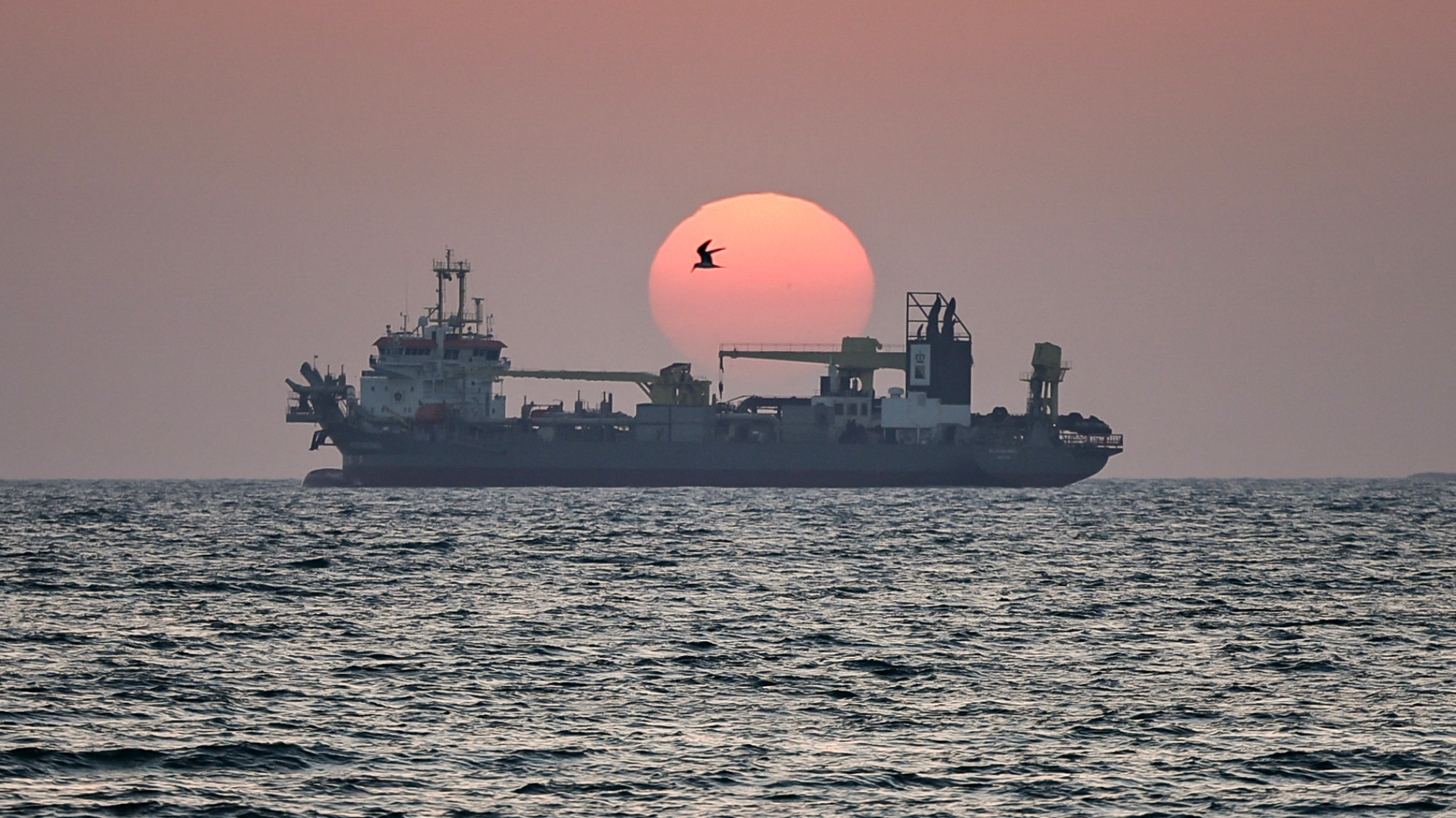
    Just as farmers began adjusting to the aftermath of the trade war, the outbreak of conflict between the U.S., Israel and Iran created a second wave of cost shocks. After joint attacks on Iran on February 28, shipping traffic through the Strait of Hormuz — a critical global chokepoint for oil and commodity shipping — came to a near-standstill, sending global oil prices soaring. The disruption also halted exports of nitrogen fertilizers produced in the Persian Gulf, cutting off access to key fertilizer ingredients and sending prices skyrocketing. Urea, the most widely traded nitrogen fertilizer, saw particularly steep price increases.

    While soybeans do not require nitrogen fertilizer to grow, nearly all Midwest soybean producers rotate their crops with corn, which relies heavily on nitrogen inputs. The Middle East supplies roughly half of the world’s urea, and Qatar and Saudi Arabia rank among the top sources of U.S. fertilizer imports, according to the American Farm Bureau Federation.

    A two-week ceasefire between the U.S. and Iran was announced on April 7, including an agreement to reopen the Strait of Hormuz. However, shipping traffic has remained slow amid ongoing disagreements over Israeli military actions in Lebanon, and urea prices still remain far higher than pre-conflict levels. While many producers purchased fertilizer ahead of the 2026 spring planting season, farmers who delayed their purchases are now stuck paying premium prices.

    The conflict also pushed gasoline and diesel prices sharply higher, adding extra costs for farm equipment and transportation of crops. While oil prices have fallen slightly since the ceasefire was announced, the disruption will have long-lasting financial impacts for farmers, according to Seth Goldstein, senior equity analyst at investment research firm Morningstar. Critical export facilities for oil, chemicals and other key commodities in the Middle East were damaged or destroyed during the conflict, he explained, and it will take months if not years for global supply chains to return to normal operations. For Midwest soybean farmers already operating on razor-thin or negative margins, every additional cost increase adds to the growing financial pressure.

  • UAE-China conference boosts trade and investment ties

    UAE-China conference boosts trade and investment ties

    On April 13, 2026, the UAE-China Business Promotion Conference kicked off in China under the theme “From Vision to Value”, bringing together cabinet ministers, senior government officials and top industry executives from both nations to chart new paths for cross-border collaboration, investment and innovation. The high-level gathering was held alongside the official visit of Sheikh Khaled bin Mohamed bin Zayed Al Nahyan, Crown Prince of Abu Dhabi, who led a senior UAE delegation to the country.

    As a landmark outcome of the conference, delegates from the two sides signed 24 bilateral Memorandums of Understanding, a move widely expected to deepen and expand the already robust economic, trade and investment partnership between the UAE and China.

    In his keynote opening address, Thani bin Ahmed Al Zeyoudi, the UAE’s Minister of Foreign Trade, highlighted the critical role of the conference in fortifying bilateral cooperation and unlocking untapped growth opportunities for both economies. “The UAE and China share a decades-long, deeply rooted economic partnership, forged over years of collaboration and anchored in a shared commitment to shared prosperity,” Al Zeyoudi stated.

    The minister also shared an encouraging milestone for bilateral trade: non-oil bilateral commerce between the two nations crossed the $100 billion threshold for the first time in 2025, surging by a record 24.5 percent year-over-year to hit $111.5 billion. “We will continue advancing close coordination across priority sectors to deliver sustainable economic outcomes that benefit the people and businesses of both our countries,” he added.

    Current trade data underscores the strength of the bilateral relationship: China has retained its position as the UAE’s largest trading partner, contributing roughly 11 percent of the UAE’s total non-oil trade volume and holding the top spot as a source of UAE imports. For its part, the UAE remains China’s largest single trading partner across the Middle East and Africa, accounting for more than one-fifth of China’s total non-oil trade with the entire region over the past 10 years.

    The conference was co-hosted by the UAE Ministry of Foreign Trade and China’s Ministry of Commerce, with co-organization support from the Embassy of the United Arab Emirates in Beijing and the China Chamber of Commerce for Import and Export of Machinery and Electronic Products.

  • The Telegraph deletes story falsely claiming Erdogan threatened to invade Israel

    The Telegraph deletes story falsely claiming Erdogan threatened to invade Israel

    A major British newspaper has been forced to retract and remove a false story that incorrectly claimed Turkish President Recep Erdogan threatened a military invasion of Israel, after the outlet acknowledged the report relied on decontextualized, years-old comments that had been misrepresented to create a false narrative.

    The Daily Telegraph first published the incendiary report on Sunday, claiming that Erdogan had attacked Israeli Prime Minister Benjamin Netanyahu over Israeli airstrikes in southern Lebanon, describing the Israeli leader as “blinded by blood and hate”. The newspaper further alleged that Erdogan warned Turkey could launch military action against Israel, saying “just as we entered Libya and Karabakh, there is nothing to prevent us doing it” and that there was “no reason” not to attack.

    However, the claims fell apart almost immediately when it was revealed that the quotes used in the story were pulled from a 2024 speech Erdogan delivered at a local ruling AK Party gathering in the Turkish coastal city of Rize, and were taken completely out of their original context. In the full, original remarks, Erdogan emphasized that Turkish military strength was necessary to constrain Israeli actions against Palestine, not that Turkey was planning an imminent invasion. His full comment read: “We must be very strong so that Israel can’t do these ridiculous things to Palestine. Just like we entered Karabakh, just like we entered Libya, we might do similar to them.”

    By Monday, the Turkish government issued an official statement rejecting the false report as “entirely unfounded”. Ankara stressed that the misleading claims did not reflect reality and were part of a deliberate narrative designed to destabilize the already volatile Middle East region.

    “In line with its long-standing state tradition and vision, the Republic of Türkiye has consistently assumed a leading role – both in our region and beyond – in advocating for an end to bloodshed, the protection of civilians, and the establishment of lasting peace,” the statement read. It added that manipulative content meant to distort Turkey’s well-documented humanitarian and peace-focused stance in the region should not be trusted, noting that Turkey would continue to stand as a voice for justice and peace across the Middle East.

    Shortly after the Turkish government’s condemnation, The Daily Telegraph removed the article from its platforms, including a widely shared post of the false claim on X (formerly Twitter). A senior editor for the outlet admitted on X that “We’ve taken the story down. The quotes looks like they were old or made up all together.”

    Despite the rapid retraction, the damage was already done: the false report had already been picked up and republished by multiple Israeli news outlets by Monday morning, including major publications *Jerusalem Post* and Maariv.

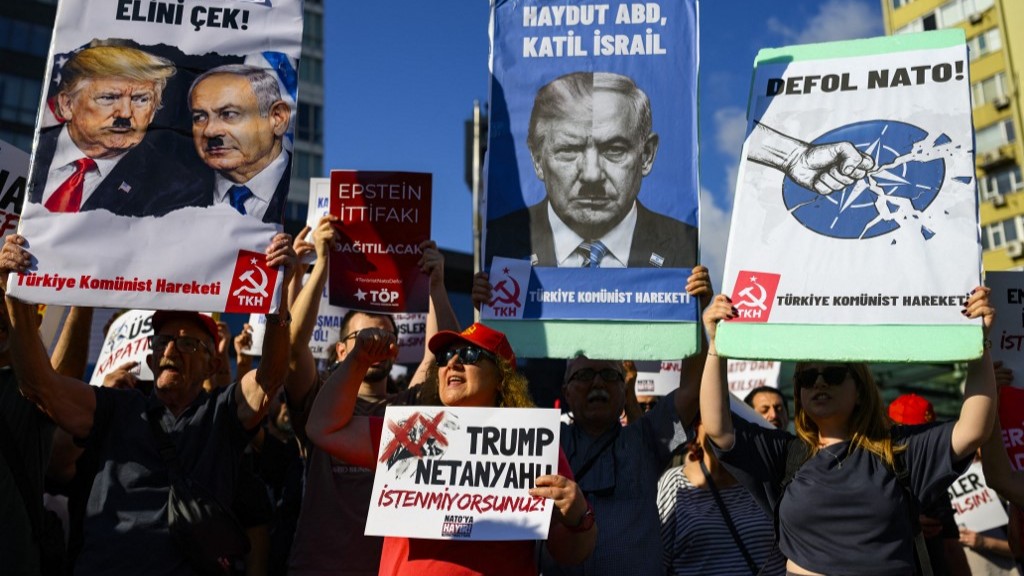
    The spread of this misinformation comes at a moment of already sharply escalating tensions between Israel and Turkey. Over the past week, the two countries’ leaders have exchanged increasingly harsh verbal attacks, deepening a growing geopolitical rift between Ankara and Jerusalem. In a recent post on X, Netanyahu accused Erdogan of “massacring his own Kurdish citizens” and “accommodating Iran’s terror regime and its proxies”. Turkey responded with equally fierce condemnation, with senior officials in Ankara labeling Netanyahu the “Hitler of the era” in reference to Israel’s ongoing military assaults in Gaza and across the broader Middle East.

  • Iran war as a cage Trump can’t escape

    Iran war as a cage Trump can’t escape

    Forty-four days into the Trump administration’s military campaign branded “Operation Epic Fury” against Iran, the catastrophic aftermath of the opening strike demands a hard reassessment of Washington’s strategy — a question that the US war planners have so far failed to ask themselves: What did the United States actually expect to happen after taking such drastic action?

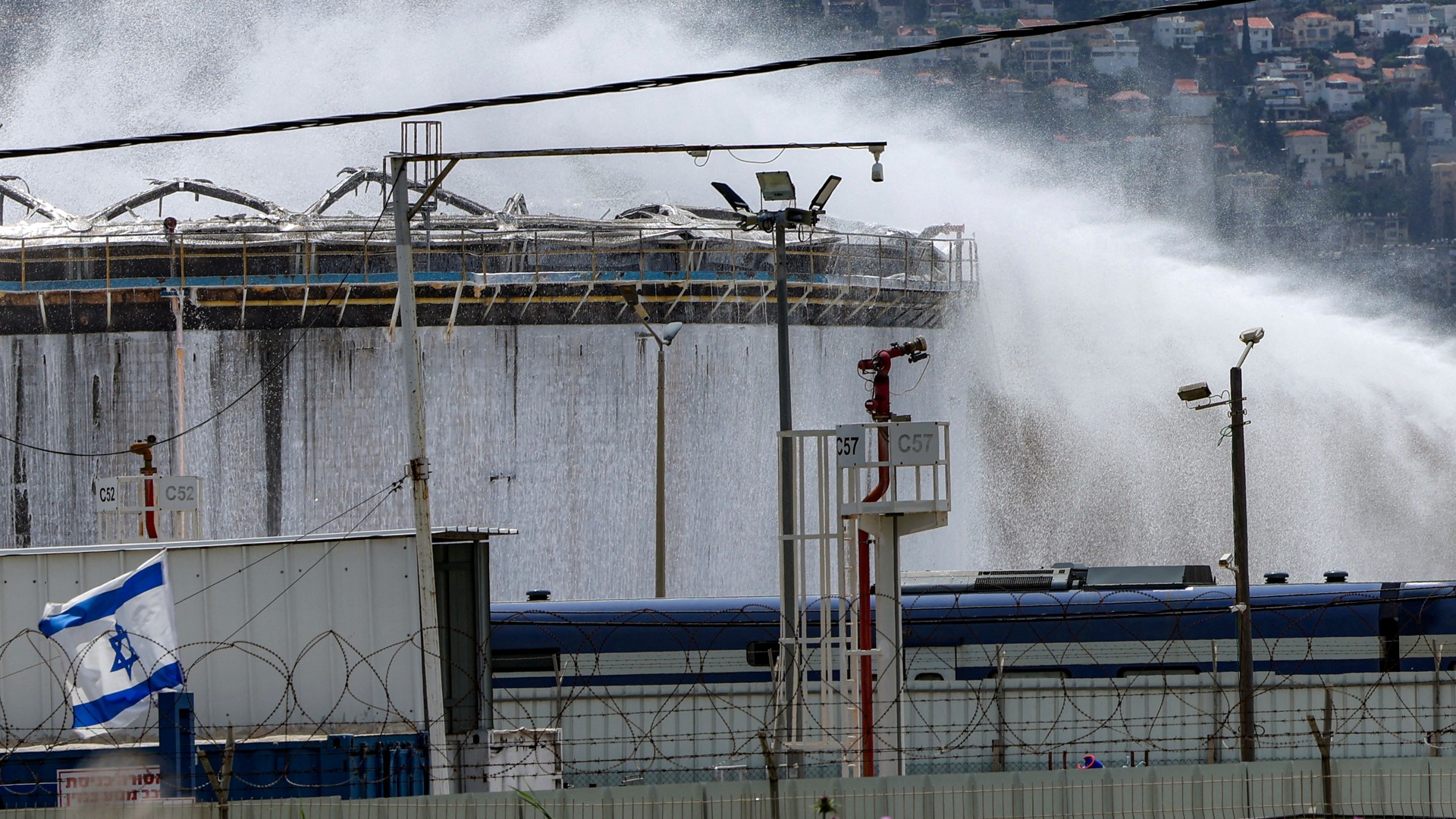
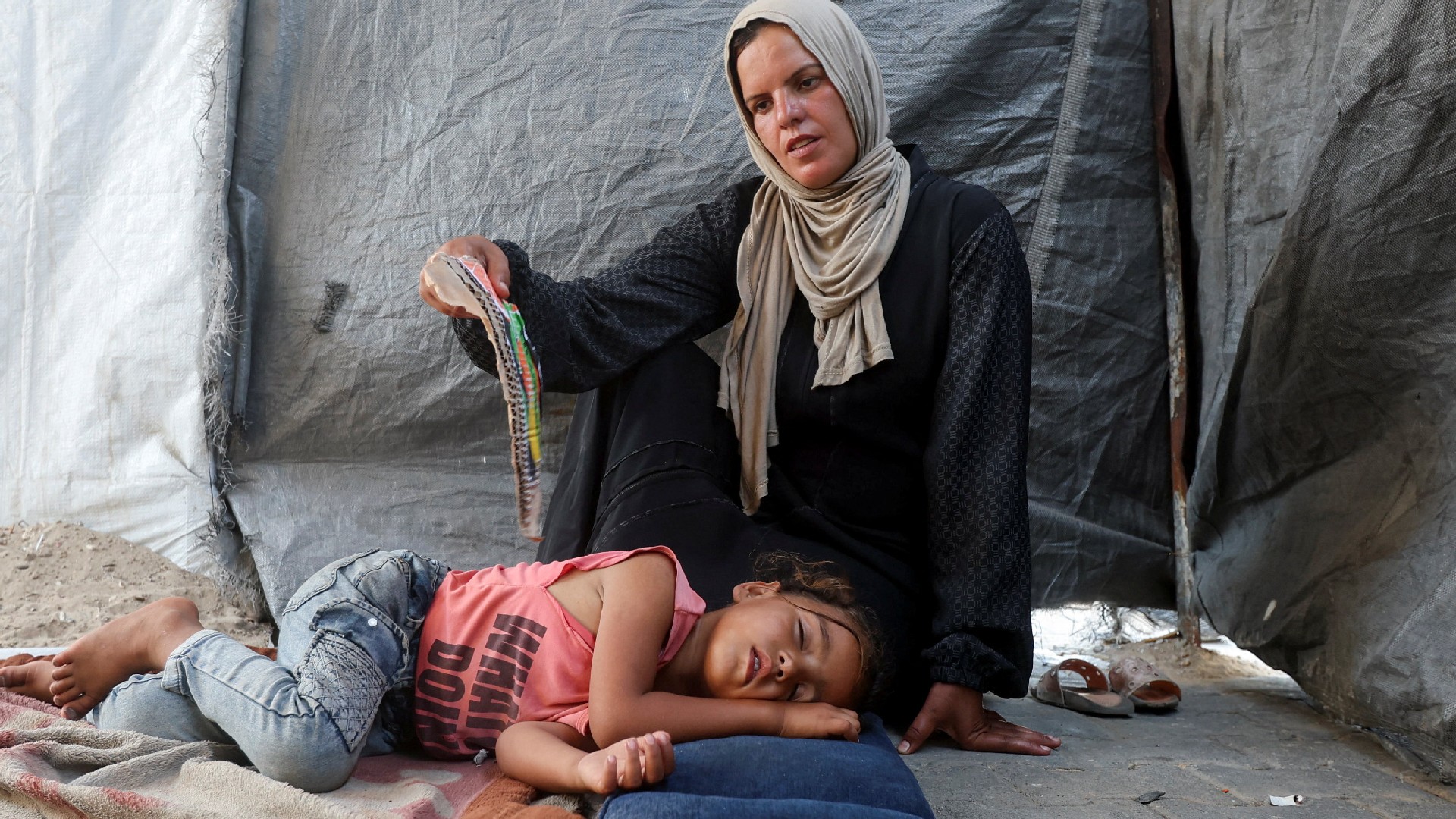
    The operation’s first strike killed Iran’s long-time Supreme Leader Ali Khamenei, triggering an overwhelming retaliatory response: hundreds of ballistic missiles and thousands of drones launched by Iran across the Middle East. The human cost is staggering: thousands killed across Iran and Lebanon, dozens of fatalities in Israel and Gulf Arab states, and millions displaced from their homes. The Strait of Hormuz, the critical global energy chokepoint through which roughly 20% of the world’s oil and natural gas supplies transit, has become an active war zone.

    The highest-level direct talks between Washington and Tehran held in Islamabad, the first such engagement since the 1979 Islamic Revolution, ended after 21 hours of marathon negotiations with no breakthrough agreement. Now, at this critical juncture, it is time to soberly examine the three main strategic options on the table for the United States.

    The first option is doubling down on existing pressure through a full naval blockade of all Iranian ports, which US Central Command has announced will go into effect at 10 a.m. ET Monday. This approach follows the long-standing flawed logic that if force has failed to deliver results, the only solution is to apply more force. This is not a new argument: the author heard the same reasoning in 2003, when the architects of the Iraq invasion promised that ousting Saddam Hussein would spark a wave of democratic transformation across the Middle East. It was repeated again during the final years of the Afghanistan war, when successive administrations insisted that one more troop surge would force the Taliban’s capitulation after two decades of conflict.

    History shows that maximum pressure consistently produces one outcome: it maximizes human suffering while failing to deliver meaningful strategic gains. Since the outbreak of hostilities, global oil prices have already surged more than 31%, and leading energy analysts warn that elevated prices could remain in place through the end of 2026 even if fighting stops tomorrow. Damage to energy infrastructure and long-term disruption to global shipping routes cannot be repaired overnight.

    A full naval blockade does not only target Iran’s government. It raises energy costs for major importing economies from Japan to South Korea to Germany and India, and it directly harms American consumers at gas pumps. It also hands a major geopolitical advantage to China, which has already positioned itself as a neutral broker in the conflict.

    For Iran itself, the conflict has handed the ruling regime a powerful unifying tool: a foreign adversary rallying the population against external attack, even as the Iranian people hold deep, genuine grievances against their government. War planners appear to have ignored a basic question: When a foreign power bombs your cities, kills your top leader, and blockades your ports, do you turn against your own government, or do you rally against the foreign aggressor?

    The second option on the table is further military escalation to achieve the stated original goal of regime change. The US and Israel launched the initial strikes with two stated objectives: to overthrow Iran’s existing government and eliminate the country’s nuclear and ballistic missile programs. Six weeks on, though the Iranian regime has suffered heavy damage, it has not collapsed.

    Iran’s AMAD nuclear weapons project was previously suspended under a fatwa (religious edict) against nuclear weapons issued by Khamenei himself. With Khamenei killed in the US strike, that restraint no longer exists, and the hardliners that now hold power do not share his theological opposition to nuclear weapons. The long-held fantasy that US air power alone can install a compliant regime that accepts all American terms has now been put to the test, and it has failed completely.

    Iran has not surrendered. Instead, it has launched retaliatory attacks across the region, disrupted global energy trade, and rallied its remaining network of regional proxies. Hezbollah entered the conflict within days of the first strike, and the Houthi movement in Yemen has resumed drone and missile attacks on US and Israeli-flagged shipping in the Red Sea. Any further escalation, including a ground invasion to reopen the Strait of Hormuz by force, would go down as one of the most consequential strategic blunders in modern US history — a remarkable distinction given Washington’s track record of failed intervention in the Middle East.

    The third, and only viable path forward, is a negotiated exit that requires Washington to abandon its maximalist demands and embrace diplomatic realism. The Islamabad talks collapsed after Iran rejected the Trump administration’s set of non-negotiable red lines: a complete end to all uranium enrichment, the dismantling of all major enrichment facilities, the surrender of all existing highly enriched uranium, an end to financial support for regional militant groups, and the unconditional reopening of the Strait of Hormuz with no transit fees.

    This list of demands amounts to a call for the total surrender of an undefeated adversary. Despite decades of pressure, Iran has survived the 1980s eight-year war with Iraq, decades of harsh international sanctions, the targeted assassination of its top generals and nuclear scientists, and six weeks of intense aerial bombardment. For its part, Iran is demanding full recognition of its sovereignty over the Strait of Hormuz, war reparations, and a comprehensive regional ceasefire that includes Lebanon. The two sides’ positions are far apart today, but that does not mean negotiation is impossible — it only means neither side has yet felt enough pressure to make the compromises necessary for a politically survivable deal at home.

    A negotiated settlement remains the only option that avoids either a generations-long military quagmire or a broader regional war that draws in global powers Russia and China. But for this path to succeed, Washington must do what it has rarely been willing to do: separate its core national security interests from its unrealistic maximalist wish list. Preventing Iran from acquiring a functional nuclear weapon is a legitimate core security interest for the United States. Demanding that Tehran dismantle every uranium centrifuge, pay war reparations, surrender control over the Strait of Hormuz, and abandon all regional influence is not a negotiating position — it is a demand for unconditional surrender from a country that has not been defeated.

    US Vice President Vance has left open the slim possibility that a deal could still be reached, saying “We’ll see if the Iranians accept it” — a statement that can charitably be described as far from a constructive diplomatic overture. Third-party mediators remain available, however: Pakistan, which has emerged as a key go-between in the talks, has committed to continuing its facilitation role, and Oman, which has a long history of serving as a quiet back channel between Washington and Tehran, also stands ready to help. The open question now is whether the Trump administration has the strategic patience to make use of these existing diplomatic pathways.

    Looking at the long history of US policy failure in the Middle East, a clear pattern emerges: the problem has never been a lack of military power. The US has repeatedly demonstrated it has unparalleled capacity to destroy existing regimes and infrastructure. What it has consistently failed to plan for is the day after military action ends. What comes after the blockade is implemented? If the Iranian regime collapses, who will fill the power vacuum in a country of 93 million people that shares borders with Iraq, Afghanistan, Pakistan, Turkey and the Caucasus?

    While Iran’s retaliatory strikes against Gulf Arab states (many of which had worked to improve ties with Tehran in recent years) have left the country more diplomatically isolated, isolation does not equal regional stability. A collapsed Iranian state would create an unprecedented humanitarian catastrophe and a geopolitical power vacuum that would drain American resources and attention for a generation.

    Today, Washington faces three clear choices: escalate to full-scale war, pursue a negotiated compromise, or accept a prolonged stalemate that erodes the global economy and American global credibility at the same time. None of these options offers a perfect outcome. But the least bad option, the one that Washington’s hawkish policymakers find most politically humiliating, remains the best path: a negotiated deal that does not require total Iranian capitulation, that allows both sides to claim some form of domestic political victory, and that reopens global shipping lanes before the economic damage to the global economy becomes irreversible.

    Realism has never been popular in Washington’s political culture. But compared to the catastrophic alternatives on offer, it has one distinct advantage: it has the potential to be right.

  • Hainan entering a golden era for the fashion industry

    Hainan entering a golden era for the fashion industry

    As China’s southern tropical island province gears up to launch its latest major fashion gathering, veteran industry figure Hu Bing has outlined an ambitious vision to cement Hainan’s place as a rising global fashion capital, positioning the destination as a dynamic bridge connecting emerging Chinese designers with the international stage.

    Hu, a celebrated Chinese model who holds multiple prestigious fashion ambassador roles ranging from the British Fashion Council to London Fashion Week and China International Fashion Week, shared his outlook in an interview ahead of the 2026 Hainan Funteen Fashion Week, which opens Sunday at Haikou’s historic Qilou Old Street. The event comes just ahead of this year’s China International Consumer Products Expo, where Hu serves as fashion lifestyle officer, kicking off Monday.

    Central to Hu’s optimism is the transformative impact of the Hainan Free Trade Port (FTP) development, which has already reshaped the island’s economic and industrial landscape. He emphasized that the fashion sector is inherently intertwined with cross-border economic openness and expanding trade volumes. The FTP policy framework has supercharged Hainan’s duty-free consumer market, unlocked new growth in international trade, and drawn hundreds of global premium brands to establish a local presence, steadily lifting the island’s profile as a fashionable, globally connected destination.

    On the critical topic of helping indigenous Chinese design gain traction on the global stage, Hu drew an insightful parallel between two distinct performance art forms: Peking Opera and Western opera. Just as both art forms retain their unique cultural identities while resonating with audiences across borders, Hu argued that local Chinese designers must hold fast to their deep cultural roots, while also mastering the universal visual and narrative language of global fashion that allows international audiences to connect with and embrace their work.

    The choice of Qilou Old Street, a protected cultural heritage site, as the main venue for 2026 Funteen Fashion Week is a deliberate decision that Hu praised as a masterstroke. Top-tier international fashion weeks from Paris to Milan have long leveraged historic architecture to add one-of-a-kind character to their events, and Haikou’s Qilou district delivers an unparalleled combination of textured facades, natural lighting, and organic spatial flow that weaves centuries of local history with a contemporary global aesthetic. Hu noted that the opening show’s venue design intentionally echoes Hainan’s signature ocean breezes and the open, welcoming spirit that defines the FTP’s mission.

    For emerging design talent, Hu stressed that the Hainan FTP offers a uniquely powerful launchpad: the policy framework cuts through red tape for cross-border industry exchanges, enabling young Chinese creators to showcase their work to global buyers and audiences while making it far easier for international fashion talent to access the huge Chinese market.

    Drawing on his decades of industry connections, Hu laid out his personal commitment to advancing Hainan’s fashion ambitions: he will leverage his extensive global networks to help emerging Chinese designers use Hainan as a stepping stone to showcase at London Fashion Week, while also attracting leading international designers to bring their work to Hainan’s growing roster of fashion events.

    Hu pushed back against the narrow view that fashion is solely about apparel, arguing that the sector is a reflection of the zeitgeist, the changing spirit of the times. With its fast-growing economy, unique geographic advantages, and growing global attention, Hainan is perfectly positioned to build a world-class international fashion week, he said. He added that deepening partnerships with established events like China International Fashion Week will help the island build an inclusive platform that nurtures young designers from every corner of the globe.

    When asked to sum up Hainan’s emerging international fashion identity in just a few words, Hu chose two terms: nurturing and regeneration. He highlighted Hainan’s early embrace of sustainable fashion practices, which aligns fully with the most important global industry trends today. With nearly 40 years of experience working across every segment of the global fashion industry, Hu said he is fully committed to helping build a high-quality Hainan International Fashion Week that can one day stand alongside the “Big Four” global fashion hubs of Paris, New York, London and Milan as a fifth iconic global fashion landmark.

  • A third of Holocaust survivors in Israel living in poverty, study finds

    A third of Holocaust survivors in Israel living in poverty, study finds

    A groundbreaking joint study conducted by two leading Israeli welfare organizations has exposed a devastating humanitarian crisis: more than one in three Holocaust survivors residing in Israel are currently living below the poverty line, with their economic insecurity and mental health trauma dramatically exacerbated by the ongoing US-Israeli military conflict against Iran.

    The findings, released publicly on Monday by the Eran Association — Israel’s largest non-profit organization dedicated to providing mental and emotional health support — and the Foundation for the Welfare of Holocaust Victims, paint a grim portrait of neglect and crisis for a population that already carries generations of trauma from the Nazi genocide. The conflict, which began on February 28 when US and Israeli forces launched a large-scale offensive against Iranian targets, has prompted a surge in urgent need among the elderly survivor community. Eran’s data confirms that the organization has received more than 11,600 calls for help from survivors since the outbreak of hostilities — a staggering increase compared to just 3,200 calls received across the entire year of 2026, before the war began.

    Physical danger has compounded the economic and emotional pressure: Eran confirms that the homes of at least 50 Holocaust survivors across Israel have sustained damage from Iranian retaliatory strikes, which targeted Israeli territory and Gulf Arab states following the initial US-Israeli attack. For survivors already in fragile health and unstable financial situations, the war has rapidly worsened living conditions over the past month. Thirty-six percent of survivors surveyed now report they depend entirely on charitable aid to afford basic food staples, while 27 percent have been forced to skip meals entirely, either due to unaffordable costs or limited mobility that prevents them from accessing grocery stores.

    Pre-existing structural vulnerabilities have been laid bare by the conflict. More than 65 percent of Israel’s estimated 70,000 Holocaust survivors live alone, struggling with chronic loneliness that has been amplified by wartime disruption to care services. Many survivors shared harrowing accounts of helplessness during air raid sirens, including one bedridden woman who was left stranded alone above ground when her caregiver fled to an underground bomb shelter without assistance for her. In another troubling incident shared with Eran, an 87-year-old survivor contacted her local municipal government for guidance on reaching a bomb shelter located hundreds of meters from her home, only to be told she “needed to run” to the shelter with no additional support offered.

    “These calls are heartbreaking. It’s very difficult,” said David Koren, chief executive officer of Eran Association, in an interview following the report’s release. Beyond immediate wartime fear, survivors contacting the hotline described reactivated trauma from their experiences during the Holocaust, alongside persistent anxiety, grief, and unmet needs related to age-related disability and chronic illness.

    This crisis is not new: it is the culmination of years of systemic neglect, pre-dating the current conflict. Back in December 2026, Israel’s public broadcaster Kan released an investigation revealing that some 5,000 Holocaust survivors were on waiting lists for public housing assistance. The investigation found that 2,500 survivors had died over the preceding five years while waiting for state-supported housing support to materialize. Most of these waiting list survivors were immigrants from the former Soviet Union, who do not qualify for state pensions in Israel.

    Speaking after the Kan investigation was published, Yasmin Sachs Friedman, chair of the Israeli parliament’s special committee on Holocaust survivor welfare, acknowledged the state’s failure to address the crisis. “The data is very, very difficult, and what are we waiting for? The average age is 87,” Friedman said. “I understand that the state has failed and will not be able to create immediate housing solutions for Holocaust survivors.” The new study from Eran and the Foundation for the Welfare of Holocaust Victims puts renewed pressure on the Israeli government to address the unmet needs of the last generation of Holocaust survivors, even as the country remains absorbed by the ongoing conflict with Iran.

  • Blooming Heze, more than blooms

    Blooming Heze, more than blooms

    Nestled in eastern China’s Shandong Province, the city of Heze has long been known as China’s peony capital, where sprawling fields of layered, fragrant blooms draw visitors every spring. But in mid-April 2026, the city proved it offers far more than just picturesque floral displays, when it played host to the 2026 Heze Peony International Communication Forum on April 11.

    The event drew a diverse crowd of guests from every corner of the globe, who traveled to Heze not just to admire the peonies in full spring bloom, but to engage in open, people-to-people cross-cultural exchange rooted in the shared connection of the city’s iconic flower. Attendees spanned multiple sectors and backgrounds: from international journalists and media professionals covering China’s cultural development, to foreign students and educators studying at Chinese institutions, all united by a curiosity to deepen their understanding of Chinese culture and people-to-people ties.

    Organized around the central theme of peony as a cultural bond, the forum created intentional space for informal dialogue and firsthand connection, allowing global guests to move beyond secondhand narratives and experience Heze’s unique cultural heritage directly. What began as a celebration of one of China’s most beloved traditional flowers has grown into a platform for building global mutual understanding, proving that floral culture can serve as a soft, accessible entry point for cross-border friendship and collaboration. For Heze, the forum marks another step in positioning the city as a welcoming hub for international exchange, where ancient cultural traditions meet modern global dialogue.

  • ‘Ping-pong diplomacy’ carries forward friendship

    ‘Ping-pong diplomacy’ carries forward friendship

    Fifty-five years after the groundbreaking exchange that opened the door to formal China-US relations, a special commemorative event honoring the historic “Ping-Pong Diplomacy” initiative was convened Sunday, April 13, at Shanghai University of Sport. The gathering brought together a rare group of individuals who witnessed the landmark 1971 exchange firsthand alongside young delegates from both China and the United States, with a shared goal of revitalizing and sustaining the people-to-people friendship that defined the original diplomatic breakthrough.

    Held more than half a century after a chance encounter between Chinese and American ping-pong players at the 1971 World Table Tennis Championships sparked the unorthodox diplomatic overture, the event marked a key moment to reflect on the legacy of people-to-people exchange in bridging geopolitical divides. Chinese President Xi Jinping sent a congratulatory message to the commemorative event, underscoring the enduring significance of the 1971 breakthrough for bilateral relations.

    The 1971 exchange, which saw American table tennis players invited to visit China for a series of friendly matches, became a defining example of “sports diplomacy” that set the stage for then-US President Richard Nixon’s historic official visit to China the following year, and eventually the formal establishment of diplomatic ties between the two nations. Today, as bilateral relations face new complexities, organizers and attendees of the 55th anniversary event emphasized that the core spirit of Ping-Pong Diplomacy — building mutual understanding through informal, people-centered exchange — remains as relevant as ever.

    By bringing together the generations who witnessed the original moment and young leaders who will shape the future of China-US ties, the event aims to carry forward the legacy of friendship laid out 55 years ago, reinforcing the idea that shared cultural and people-to-people connections can serve as a stable foundation for bilateral cooperation even amid political tension.

  • Witnesses reunite at 55th anniversary of China-US Ping-Pong Diplomacy

    Witnesses reunite at 55th anniversary of China-US Ping-Pong Diplomacy

    Fifty-five years after a groundbreaking people-to-people exchange that altered the course of China-US relations, key witnesses from both nations gathered in Shanghai on April 13 to celebrate the anniversary of the iconic China-US Ping-Pong Diplomacy. Hosted at Shanghai University of Sport, the opening of the Shanghai leg of the anniversary event featured an official welcome ceremony followed by friendly exhibition table tennis matches, reviving the spirit of the historic 1971 exchange.

    Shanghai holds a special place in the legacy of Ping-Pong Diplomacy. When the US table tennis team made their landmark trip to China in 1971 — the first group of American athletes to visit the country in decades — Shanghai served as one of the most memorable stops on their itinerary. The team competed in friendly matches at Jiangwan Stadium, and was greeted by warm, enthusiastic crowds on the city’s streets, laying the early groundwork for the eventual normalization of relations between the two countries through people-to-people connection.

    This year’s gathering brought surviving original witnesses from both sides back to the city where they once helped make history. Among the American attendees were Judy Louise Hoarfrost, Jan Carol Berris, Connie Mae Sweeris and her husband Dell Arthur Sweeris, who joined Chinese table tennis veterans Yao Zhenxu and Xu Yinsheng, alongside a contemporary US table tennis delegation. Over the course of the event, participants shared personal anecdotes from the 1971 visit, reflecting on how the small, informal exchange of the 1970s grew into a 55-year tapestry of cultural and people-to-people ties between China and the United States.

    For Hoarfrost, who was just 15 years old and the youngest member of the 1971 American team, the 1971 trip left an unerasable mark on her life, with Shanghai holding a particularly lasting impression. Now on her 10th visit to China, she noted that the city has undergone dramatic, transformative change over the past five and a half decades — but the warm hospitality that the Chinese people showed her in 1971 remains just as heartfelt and unchanged today.

  • Philippines accuses Chinese fishermen of dumping cyanide in South China Sea

    Philippines accuses Chinese fishermen of dumping cyanide in South China Sea

    Long-running territorial friction in the South China Sea has entered a new phase of escalation after Manila formally accused Chinese fishermen of deliberately dumping cyanide in waters around the Spratly Islands, a contested archipelago at the heart of competing regional sovereignty claims.

    In an official press briefing Monday, Philippine National Security Council (NSC) Assistant Director-General Cornelio Valencia framed the alleged activity as a deliberate act of sabotage targeting Filipino military personnel stationed at Second Thomas Shoal. According to Valencia, the cyanide poisoning first began last year, with the explicit goal of wiping out local fish populations to cut off a critical food supply for troops based in the area. Beyond threatening food access, he added, the toxic contamination poses direct health risks to military personnel and could damage the coral reef ecosystems that provide structural support to the BRP Sierra Madre, the World War II-era vessel intentionally grounded at the shoal in 1999 to assert the Philippines’ territorial claim.

    Philippine Navy Spokesperson Rear Admiral Roy Vincent Trinidad laid out what Manila says is evidence backing the accusation: Filipino forces seized 10 bottles of cyanide from small sampan boats linked to larger Chinese fishing vessels in three separate incidents across February, July, and October 2024. He also confirmed that last month, troops observed another sampan crew dumping substances near the shoal, and follow-up laboratory testing of water samples confirmed the presence of cyanide.

    Cyanide fishing is a banned practice across most of Southeast Asia, including under Philippine law. The technique, historically used to stun fish for the lucrative live reef trade, causes irreversible harm to coral reefs and marine ecosystems, making it illegal in most international and regional fishing frameworks.

    China has immediately and forcefully rejected the accusation, dismissing it as a baseless fabrication. Chinese Foreign Ministry spokesperson Guo Jiakin called the claim “completely unbelievable and not even worth refuting”, countering that the Philippines has a long record of illegal harassment against Chinese vessels engaged in legitimate, routine fishing activity in the area.

    Valencia confirmed that Philippine officials raised the allegation during a recent diplomatic meeting with Beijing but have yet to receive a formal response. The NSC is preparing a full report for the Philippine Department of Foreign Affairs, which could serve as the foundation for an official diplomatic protest. In the meantime, the Philippine Navy and Coast Guard have been ordered to ramp up patrols across the disputed Second Thomas Shoal region.

    The latest exchange of accusations comes amid years of steadily escalating tensions between the two countries in the South China Sea, a strategically critical waterway that holds some of the world’s richest fishing grounds and untapped offshore energy reserves. More than half of the world’s global fishing fleet operates in the South China Sea, and the waterway carries an estimated $3 trillion in annual international trade. Sovereignty over the sea is disputed by six parties: China, the Philippines, Vietnam, Malaysia, Brunei, and Taiwan. China claims nearly the entirety of the South China Sea as its sovereign territory, a claim that was ruled to have no legal basis under international law by a 2016 tribunal ruling under the United Nations Convention on the Law of the Sea (UNCLOS) — a decision Beijing has repeatedly refused to recognize.

    Tensions around Second Thomas Shoal, in particular, have spiked repeatedly in recent years. China’s coast guard has made repeated attempts to block Philippine resupply missions to the small outpost on the BRP Sierra Madre, and a violent confrontation in June 2024 saw Chinese coast guard personnel armed with melee weapons board Philippine navy vessels near the shoal, leaving multiple Filipino sailors injured.

    In recent months, the Philippines has deepened military cooperation with extra-regional powers in response to growing tensions with Beijing. Last week, Manila held joint maritime exercises with the United States and Australia in the disputed South China Sea, leading into the annual Balikatan military exercises, which will include Japan as a full participating member for the first time this year. Beijing has repeatedly condemned these multinational drills, arguing they unnecessarily raise geopolitical tensions in the region. In a further sign of expanding defense ties, the Philippines signed a military agreement with France in March that will see a 15 to 20-person French contingent deploy to participate in the upcoming April 20 Balikatan exercises.