ALTAY, China – Against a backdrop of long-standing international controversy over human rights violations against ethnic minority communities, China has convened a high-profile international gathering in its northwestern Xinjiang Uyghur Autonomous Region aimed at showcasing the country’s economic development push for the strategically located territory.
The one-day International Conference for Trans-Altai Subregional Cooperation, held Wednesday in the border city of Altay, brought together senior officials from Kazakhstan, Mongolia, Russia and multiple other regional countries. Attendees are scheduled to hold working sessions focused on expanding cross-border trade and building out new economic partnership frameworks for the resource-rich, landlocked Trans-Altai zone.
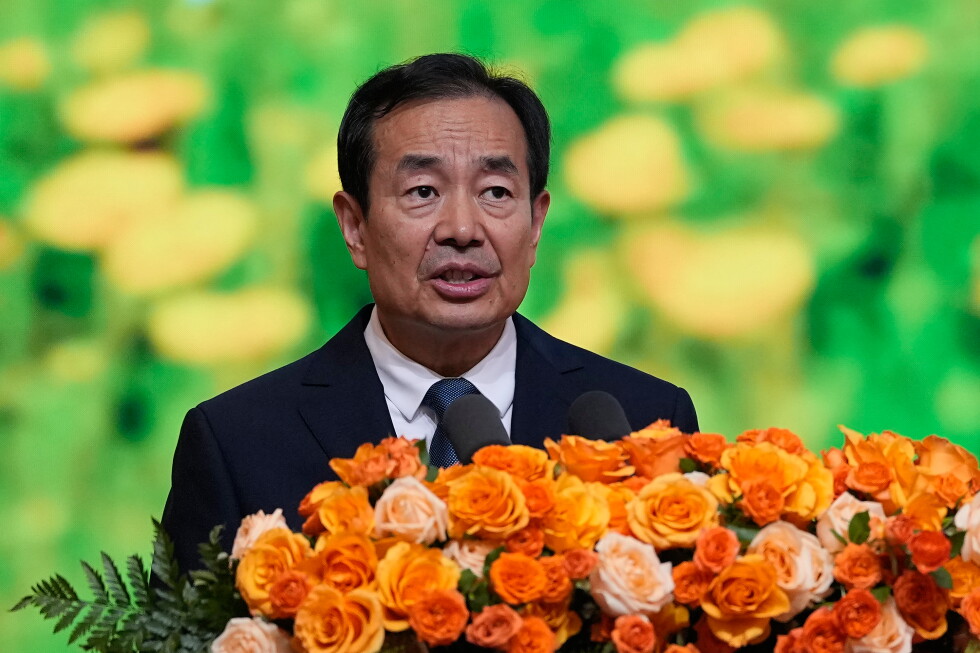
In his opening address to the conference, Chen Xiaojiang, the top Communist Party official in Xinjiang, framed the region’s current growth trajectory as clear proof of the success of Beijing’s governing model. “Xinjiang has become a vivid epitome of China’s rapid economic development and fully reflected the significant advantages and vitality of China’s governance,” Chen stated, adding that regional authorities have laid out ambitious plans to roll out dozens of large-scale infrastructure projects—including expanded railway networks and upgraded air transport connections—to support long-term growth. Beijing also aims to scale up development of Xinjiang’s core core sectors: coal, crude oil, natural gas and cotton, among other resource and agricultural industries.
Like many of China’s inland western provinces, Xinjiang lags far behind the country’s wealthy, industrialized eastern coastal regions in economic output and household income. Official 2020 data underscores this gap: rural residents in Xinjiang recorded an average per capita annual income of just 13,052 yuan, equivalent to roughly $1,927, compared to 31,930 yuan ($4,714) for rural households in eastern China’s prosperous Zhejiang province. This persistent economic inequality has been cited by Beijing as one of the underlying drivers of past social unrest in the region, which Beijing has used to justify sweeping security crackdowns starting in 2017.
Following isolated attacks carried out by a small group of Uyghur extremists that culminated in widespread unrest, Beijing launched a broad crackdown that saw an estimated 1 million or more ethnic minority residents—overwhelmingly Uyghurs, a mostly Muslim Turkic ethnic group—detained in a network of extrajudicial internment camps across the region. Chinese authorities have long defended the detentions as necessary counterterrorism and anti-extremism measures designed to root out separatist and violent extremist ideology.
By 2021, Beijing announced that it had closed the vast majority of the formal detention camps, but independent investigations and leaked documents have confirmed that many of the facilities were simply repurposed into standard prisons. A data leak shared with the Associated Press revealed that thousands of Uyghur detainees have been handed down lengthy prison sentences on what independent policy experts widely agree are fabricated or grossly exaggerated charges linked to separatism or religious extremism.
Even for ethnic minority residents not held in formal detention, human rights advocates report widespread, systematic coercion. The London-based human rights organization Global Rights Compliance found that forced participation in state-run labor programs remains pervasive across southern Xinjiang, the region’s area with the largest concentration of Uyghur residents, and that the scope of this forced labor has expanded under China’s current five-year national economic development plan.
Beijing has repeatedly pushed back against global criticism of its policies in Xinjiang, arguing that what it labels “anti-China forces” have deliberately distorted and exaggerated conditions in the region. Chinese authorities maintain that all counterterrorism and anti-extremism measures applied in Xinjiang do not target specific ethnic, religious or regional groups, but are focused solely on protecting national security and public safety across the region.