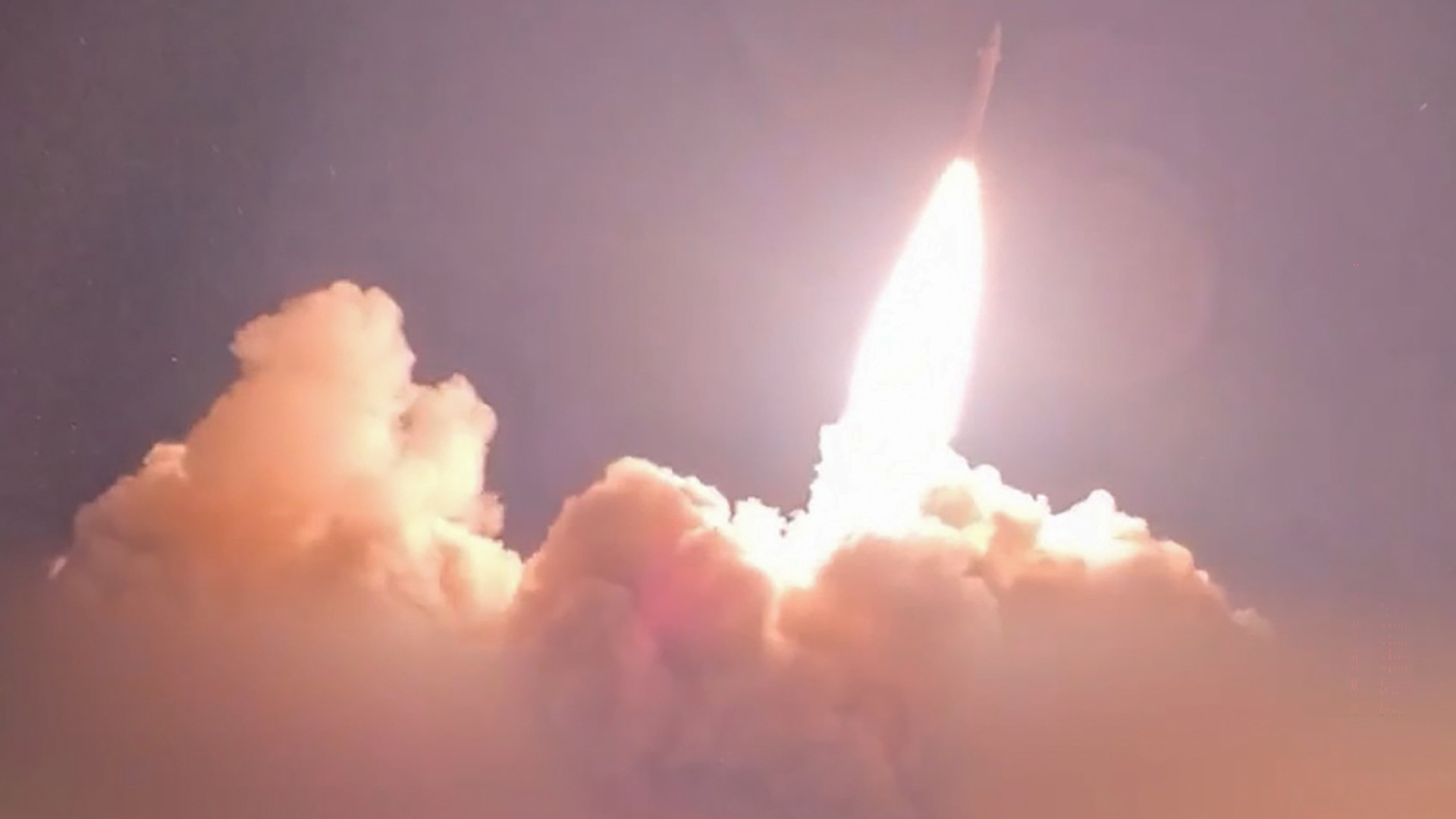
A sharp escalation of conflict across the Middle East unfolded on Friday, as Iran’s Islamic Revolutionary Guard Corps (IRGC) announced it had targeted a United States special operations command center near Syria’s al-Tanf border outpost, marking the first reported Iranian attack on Syria-linked US positions since the US-Israeli campaign against Iran began in late February. The strike, which Iran framed as retaliation for the recent killing of Iranian soldiers in the southeastern city of Iranshahr, was detailed in a statement carried by Iran’s Tasnim News Agency, but independent verification of the IRGC’s claim remains unavailable through Middle East Eye. A Syrian military source speaking to Reuters clarified that while an Iranian attack did occur in the al-Tanf area – a strategic zone located near Syria’s triple border with Jordan and Iraq, from which the US military confirmed its withdrawal earlier this year – the strike did not actually hit the former base compound, and no casualties or material damage were recorded. Syria has long sought to insulate itself from the widening regional conflict, with President Ahmed al-Sharaa reaffirming in March that the country would remain neutral unless directly attacked. The IRGC’s cross-border strike came as the US military carried out its sixth straight night of bombing operations across Iran, extending a campaign that resumed on June 22. Fresh strikes on Friday targeted Iranshahr Airport in southeastern Iran, damaging critical infrastructure including electrical facilities and a fuel storage tank that sparked a widespread power outage in the area. Iranian state television reported that at least one civilian was wounded in the attack. Additional US strikes on bridges across southern Iran killed at least seven civilians, Iranian state media confirmed, with at least five key crossings damaged, including the vital Gariveh Bridge in Hormozgan province’s Khamir County. Explosions were also reported Friday in the southeastern port city of Chabahar, and a separate US strike on a residential neighborhood in the southern coastal city of Bandar Abbas left one person dead and eight injured, according to local media. These escalating military moves come even as the White House has signaled openness to diplomatic de-escalation. White House Press Secretary Karoline Leavitt stated Thursday evening that President Donald Trump remains “open to diplomacy” and that backchannel talks between US and Iranian officials are continuing despite soaring tensions. As of Friday, Iran’s Ministry of Health reported that the ongoing US bombing campaign has left at least 38 people dead and more than 400 injured across the country. Ministry spokesperson Hossein Kermanpourm confirmed that the casualty toll includes one child and three women killed, with an additional nine children and 22 women wounded. The IRGC’s retaliatory actions extended across the region Friday, with drone and missile attacks targeting US military assets positioned in multiple neighboring Gulf states. Kuwait’s military announced its air defense systems activated to intercept “hostile missile and drone attacks” launched from Iranian territory. In Bahrain, national emergency sirens were activated across the country, with the interior ministry urging civilians to seek shelter in the nearest safe location. Tasnim News Agency reported that Iran’s strike targeted US helicopters and a reconnaissance aircraft at Bahrain’s Sakhir Air Base. Early Friday, multiple explosions shook Qatar’s capital city of Doha, after Qatari authorities confirmed they intercepted an incoming missile attack. Qatar’s interior ministry reported one child was wounded by falling shrapnel from the interception operation. The IRGC also confirmed it targeted a US maritime surveillance radar installation in Oman. Jordan’s military announced three Iranian missiles bound for Jordanian territory were successfully intercepted, with no casualties or damage reported. In northern Iraq’s Kurdish region, the US-led international coalition shot down multiple drones over the city of Erbil, according to local Kurdish counterterrorism forces. Parallel to the cross-border escalation between Iran and the US, Israeli forces are moving to solidify their control over southern Lebanon, with Israeli daily newspaper Maariv reporting that the Israel Defense Forces has begun constructing a new line of permanent military outposts along the southern part of the country. This development adds another layer of instability to an already fractured region.
标签: Asia
亚洲
-
Chinese AI model takes US tech industry by surprise with abilities rivaling Claude and ChatGPT
On Friday, the U.S. technology landscape was caught off guard by the launch of a cutting-edge new artificial intelligence model from China, a development that underscores how Chinese startups focused on publicly available open-source AI are rapidly closing the gap with Silicon Valley’s most dominant AI players.
The new release, Kimi K3, comes from Beijing-based AI startup Moonshot, led by chief executive Yang Zhilin—a Pink Floyd enthusiast who earned his doctorate in artificial intelligence and machine learning at Carnegie Mellon University in Pittsburgh. Industry analysts and AI evaluators say the model now rivals top-tier closed-source models from leading U.S. developers Anthropic and OpenAI.
Anastasios Angelopoulos, co-founder and CEO of independent AI evaluation platform Arena, called the Kimi K3 launch “the single biggest release of the year,” adding that it marks a turning point where open-source Chinese AI models have begun to outperform closed alternatives developed in the United States. The new model already claimed the top spot on Arena’s rankings for front-end coding capability, a key benchmark for measuring large language model performance, and Angelopoulos noted on social media that additional ongoing testing is expected to confirm K3’s position among the global industry’s highest-performing models.
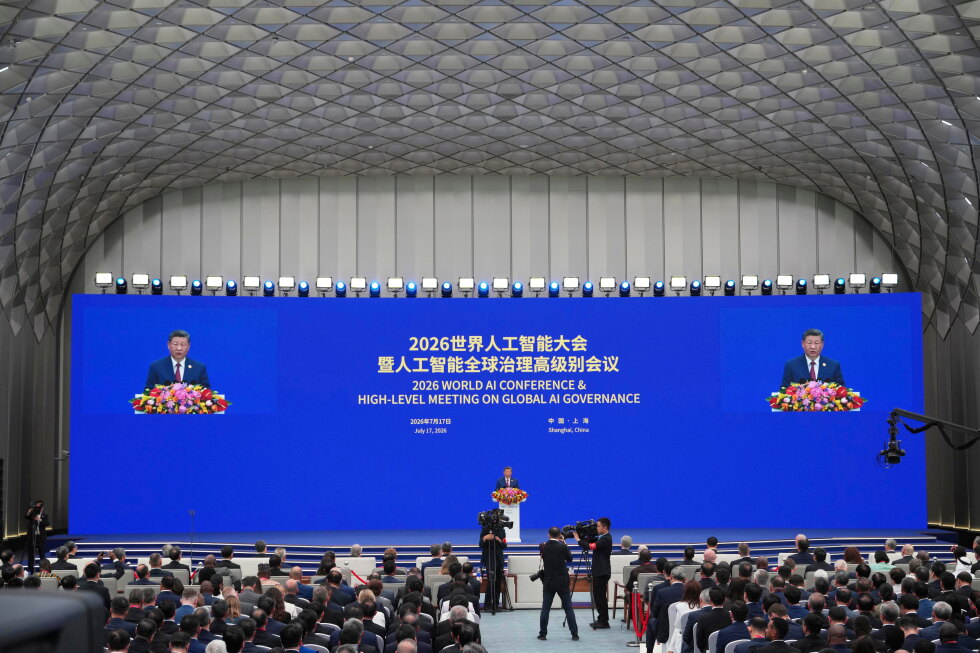
The launch was strategically timed to coincide with the opening of China’s annual World Artificial Intelligence Conference in Shanghai, where Chinese President Xi Jinping delivered the opening address. U.S.-led export restrictions have long blocked Chinese firms from accessing cutting-edge foreign AI hardware and technology, a pressure that has accelerated domestic innovation and deepened the AI and technology rivalry between the world’s two largest economies. During his address, Xi emphasized that AI development should not be a one-nation solo performance, but a collaborative global symphony, a comment widely interpreted as a rebuke to U.S. export curbs on technology sharing.
Kimi K3 is the second high-profile open-source AI launch from a major Chinese startup in as many months. Last month, leading Chinese AI firm Zhipu (Z.ai) unveiled its flagship GLM-5.2 model, which has already been adopted by software developers across the globe. Developers report that the model delivers performance nearly on par with top U.S. offerings at a far lower price point.
The market excitement surrounding Kimi K3 echoes the widespread industry disruption that followed the January 2025 launch of another Chinese open-source model from DeepSeek. Not all analysts agree that the hype is justified, however: prominent tech analyst Patrick Moorhead noted on social media that the reaction to K3 is an “overreaction shockingly similar” to the response to DeepSeek’s release last year. Even so, Moorhead acknowledged that while the rising competition could benefit the broader AI ecosystem, it poses significant revenue pressure on market leaders Anthropic and OpenAI.
At the week’s Shanghai conference, Chinese tech giant Huawei also showcased its new Atlas 950 SuperPoD AI computing system, a clear signal that China has built out robust domestic AI hardware capacity despite U.S. restrictions on imports of advanced chips from U.S. manufacturers including Nvidia. While Moonshot has not publicly disclosed what hardware it used to train Kimi K3, the startup is an official partner of Huawei. According to research published Friday by Bank of America analysts, while Kimi K3 carries the highest price tag of any major Chinese AI model released to date, it still costs only half as much as OpenAI’s top-tier GPT-5.6 Sol model.
The rising competitiveness of Chinese open-source AI has amplified long-running tensions between U.S. and Chinese developers. Top U.S. AI firms Anthropic and OpenAI, along with many U.S. policymakers, have accused Chinese AI developers of illicit “distillation”—a training technique that uses outputs from a more powerful existing model to train a smaller, less capable alternative—to steal their technology. Beijing has repeatedly dismissed these claims as entirely unfounded. Back in February, Anthropic formally accused DeepSeek, Moonshot and a third Chinese AI lab, MiniMax, of running coordinated campaigns to illicitly extract Claude’s core capabilities to improve their own models. While Anthropic noted that distillation can be a legitimate training method when done ethically, the company argues that it becomes problematic when competitors use it to acquire cutting-edge capabilities in a fraction of the time and cost required for independent development.
Notably, the flow of AI innovation between the two countries runs in both directions. San Francisco-based startup Anysphere, developer of the widely used coding tool Cursor, has openly acknowledged that one of its flagship products is built on Moonshot’s earlier K2.5 open-source model. Elon Musk’s aerospace firm SpaceX is currently finalizing a $60 billion acquisition deal for Cursor, expected to close later this year.
For Yang Zhilin, Kimi K3’s landmark performance is a milestone that bridges the U.S.-China tech divide. Yang earned his PhD from Carnegie Mellon in 2019, where he made foundational contributions to machine learning research and was known for his love of classic rock. His former academic adviser at CMU, Russ Salakhutdinov—who previously served as director of AI research at Apple—expressed pride that transcends geopolitical rivalry, writing on social media: “What a huge win for the open-source community! It feels like just yesterday Zhilin was graduating from my lab at CMU.”
Open-source AI development makes core model architecture and weights publicly accessible for any developer to examine, modify and build into new tools. Proponents argue this open approach accelerates global innovation, while critics warn that making powerful high-capacity AI models freely available creates unmanageable safety and national security risks.
-
Israeli Trump ally backs Argentina over Falklands after England’s World Cup defeat
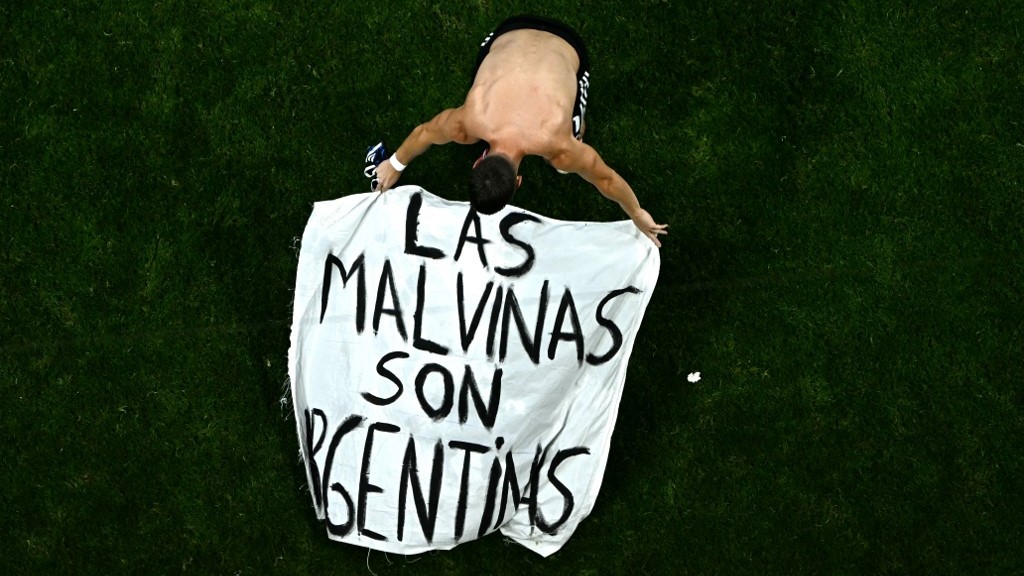
A post-World Cup semi-final political gesture has ignited a transatlantic diplomatic firestorm, linking a decades-old sovereignty dispute to ongoing Middle East alliance tensions. After Argentina’s 2-1 World Cup semi-final victory over England in Atlanta, Argentine players unfurled a banner reading “Las Malvinas son Argentinas” — “The Malvinas are Argentine” — reawakening the long-running sovereignty dispute over the South Atlantic archipelago, known to Britain as the Falkland Islands. The incident is now under formal review by FIFA, the global governing body of football, which prohibits overt political messaging during official tournament matches.
The call for a major U.S. policy shift on the dispute came from Marc Zell, chairman of Republicans Overseas Israel, an Israeli-American conservative Republican leader. Zell has leveraged the on-pitch demonstration to urge former U.S. President Donald Trump to abandon Washington’s long-standing neutral stance on the Falklands question, framing the move as leverage against the United Kingdom for its refusal to join a U.S.-Israeli military campaign against Iran, which Zell labeled “a dastardly betrayal”.
Writing on social media, Zell argued that the Trump administration should re-evaluate U.S. policy toward the Falklands/Malvinas in recognition of Argentina’s pro-U.S. and pro-Israel alignment, a stark contrast to Britain’s rejection of participation in conflict in the Strait of Hormuz. “FIFA may fine them. The British press is outraged. But Argentina has been a steadfast friend of the United States and of Israel — and friends deserve to be heard,” Zell stated, adding that “The Malvinas question deserves a serious answer from Washington.”
Notably, Zell’s call received immediate backing from Argentina’s strongly pro-Israel president Javier Milei, who has made unwavering support for Israel a core tenet of his foreign policy agenda. Milei has stood with Israeli Prime Minister Benjamin Netanyahu throughout the military campaign in Gaza, has publicly explored converting to Judaism, and has pledged to move Argentina’s Israeli embassy from Tel Aviv to Jerusalem — a move aligned with U.S. Republican policy priorities. Responding to Zell, Milei affirmed that his administration is making steady diplomatic progress toward reclaiming sovereignty over the Falklands, South Georgia, the South Sandwich Islands, and their surrounding maritime areas, dismissing critics of the move as immature.
“While some are busy throwing tantrums befitting a terminally mononeuronal teenager, we, through the diplomatic route, are getting closer every day to the recovery of the Malvinas Islands, Georgias, and South Sandwich Islands, and the surrounding maritime space,” Milei said. Zell later thanked Milei for publicly endorsing his position, cementing the unusual alignment between the conservative American-Israeli activist and the Argentine president on the sovereignty issue.
British officials issued a blunt rejection of the sovereignty claim immediately after the banner was displayed. “The World Cup might not be ours, but the Falkland Islands definitely are,” a UK government spokesperson stated.
The dispute over the archipelago stretches back more than two centuries. Britain first claimed the islands in 1765, when a British ship landed on the territory, and reasserted its sovereignty claim in 1833. Argentina has contested British control of the islands since its independence, and the dispute erupted into open armed conflict in 1982, when Argentina’s ruling military dictatorship launched an invasion of the islands. The 74-day war that followed killed 649 Argentine troops, 255 British service members, and three Falkland Island civilians, ending with British retention of control over the territory. In a 2013 referendum held on the islands, 99.8 percent of participating voters opted to remain a British overseas territory.
-
Why are there sanctions on Iran and when could they be lifted?
Against a backdrop of fresh U.S. military strikes on Iranian targets in early 2026, former President Donald Trump has ramped up pressure on Tehran, calling on congressional Republicans to attach new Iranian sanctions to a long-delayed bill targeting Russia for its invasion of Ukraine. This latest demand comes as Western sanctions on Iran, one of the broadest and longest-running embargo regimes in modern global history, have already reshaped Iran’s economy, political trajectory, and its standing on the world stage for decades.
As independent outlet Middle East Eye outlines in a comprehensive breakdown, the modern sanctions regime against Iran did not emerge overnight. Its roots stretch back to November 1979, just months after the Iranian Revolution ousted the Western-backed Shah. When Iranian students seized the U.S. Embassy in Tehran and held 52 American hostages for 444 days, Washington responded by freezing more than $8 billion in Iranian assets held by U.S. financial institutions. By April 1980, that initial freeze expanded into a full ban on all imports of Iranian goods and services to the U.S.
The 1981 Algiers Accords resolved the hostage crisis, leading to eased restrictions and the return of most frozen assets. But just three years later, Washington reimposed sweeping restrictions, slapping an arms embargo on Iran and formally designating the Islamic Republic a “state sponsor of terror.” That move followed the 1983 bombing of U.S. and French barracks in Beirut, which Washington blamed on Iran-backed Hezbollah, cementing a adversarial framework that would shape policy for decades.
Through the 1990s, sanctions expanded dramatically as global fears grew over Iran’s emerging nuclear program. In 1995, President Bill Clinton issued executive orders imposing a total ban on all U.S. trade and investment with Iran. The following year, Congress passed the Iran and Libya Sanctions Act, which introduced groundbreaking “secondary sanctions” that penalized foreign companies investing in Iran’s energy sector, effectively cutting Iran off from most of the global oil trade. While provisions targeting Libya were later scrapped, the act has been reauthorized repeatedly by Congress ever since.
By the mid-2000s, multilateral sanctions joined unilateral U.S. measures. The U.N. Security Council imposed its first set of restrictions on Iran in 2006, after the International Atomic Energy Agency referred Tehran to the body over its uncooperative uranium enrichment program. Through the 2010s, the Security Council expanded those measures, focusing on an arms embargo and asset freezes for individuals and firms tied to Iran’s nuclear work. Unlike U.S. sanctions, U.N. measures are legally binding on all member states, though Russia has repeatedly rejected key provisions. In 2008, the Western-backed Financial Action Task Force blacklisted Iran over alleged money laundering and terrorist financing ties, further isolating it from the global financial system; today, Iran remains one of only three countries on the FATF blacklist, alongside Myanmar and North Korea.
Pressure escalated further in 2012, when the SWIFT global banking network cut off Iranian financial institutions at Washington’s behest, deepening Iran’s financial isolation. That same year, the EU – then the largest buyer of Iranian oil – introduced its own oil embargo and asset freezes over nuclear concerns. The EU has since expanded sanctions to target Tehran over its 2022 and 2026 anti-government protests and its military support for Russia’s invasion of Ukraine.
The most significant breakthrough in the standoff came in 2015, when world powers reached the Joint Comprehensive Plan of Action (JCPOA), a landmark nuclear agreement between Iran, the U.S., UK, France, Germany, Russia, China, and the EU. The deal went into effect in January 2016, requiring Iran to cap its uranium enrichment activities and open all its nuclear facilities to rigorous international inspections in exchange for broad sanctions relief. The JCPOA unlocked tens of billions of dollars in frozen Iranian assets and allowed Iran to resume full oil exports, marking the most significant diplomatic normalization between Iran and the West in decades.
That progress unraveled just two and a half years later, when then-President Trump withdrew the U.S. from the JCPOA in May 2018 and reimposed all U.S. secondary sanctions. Trump argued the original agreement, negotiated by the Obama administration, still left Iran able to develop a nuclear weapon and would spark a regional nuclear arms race. Iran responded by gradually increasing its uranium enrichment beyond the JCPOA’s limits, eroding the core constraints of the deal.
In 2020, the U.S. attempted to trigger a JCPOA “snapback” mechanism to reimpose expired U.N. sanctions, but the move was widely rejected as unlawful by all other remaining JCPOA signatories, and U.N. sanctions were lifted as scheduled. The dynamic shifted again in August 2025, when France, Germany, and the UK reversed their position amid growing concerns over Iran’s expanding uranium stockpile, triggering the snapback to reimpose U.N. sanctions over the strong objections of China and Russia. The UK, now independent of EU policy after Brexit, imposed its own set of targeted sanctions in 2023, designating the powerful Iranian Revolutionary Guards Corps (IRGC) – a core institution of the Iranian state – for sanctions over alleged hostile activities globally.
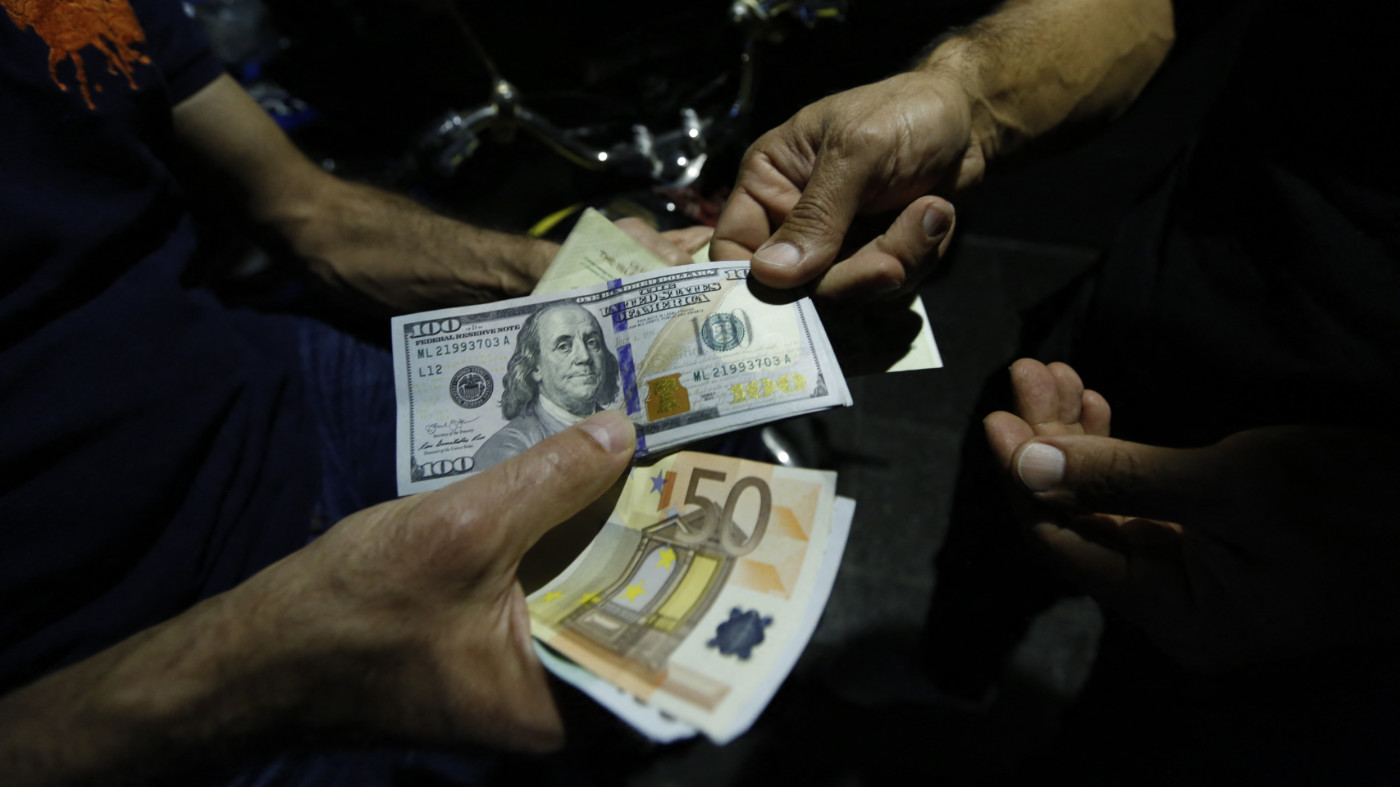
For nearly half a century, sanctions have gutted Iran’s economy, even though the country holds one of the world’s largest reserves of oil and natural gas. Cut off from formal global energy markets, Iran now relies on a “shadow fleet” of aging tankers to sell discounted crude on the black market, with most shipments going to China. While international law technically exempts humanitarian goods like food and medicine from sanctions, most global banks and shipping firms avoid handling even these transactions due to steep compliance and legal risks, exacerbating shortages and pushing inflation to crippling levels. That economic pressure was a core driver of the widespread anti-government protests that shook Iran in January 2026.
Following the outbreak of open hostilities between the U.S., Israel, and Iran in late February 2026, sanctions have become the central bargaining chip in negotiations to end the conflict. In mid-June, the two sides signed a Memorandum of Understanding (MoU) that outlined a path to sanctions relief: the U.S. would terminate all unilateral and multilateral sanctions against Iran on a negotiated schedule and release billions in frozen Iranian assets held in banks around the world. Shortly after the deal, Iranian lead negotiator Mohammad Ghalibaf announced that an agreement had been reached to unlock $12 billion in frozen Iranian funds. Trump later confirmed the deal, but claimed the funds would only be released to buy food exclusively from U.S. farmers – a condition Tehran has rejected outright.
As part of the June MoU, Washington issued a 60-day waiver for Iranian oil exports, and Iran agreed to cap uranium enrichment and reopen the strategically vital Strait of Hormuz to commercial shipping. But the fragile agreement has already collapsed: after renewed hostilities broke out between the two sides, Trump declared the ceasefire “over,” canceled the oil sanctions waiver, reimposed a military blockade on Iranian ports to stop covert oil exports, and hit Tehran with a new round of restrictions.
Even if a new final peace deal is reached, lifting the full panoply of Western sanctions faces significant political and procedural hurdles. First, most U.S. sanctions are codified in congressional legislation, meaning they require approval from both the Senate and House of Representatives to be overturned – and many lawmakers in both parties have long held hawkish positions on Iran and have blocked previous sanction relief deals. Second, the IRGC’s designation as a terrorist organization by the U.S., EU, and UK means that even if broad sanctions are lifted, global businesses will still face severe legal barriers to trading with any entity tied to the group, which permeates almost every sector of Iran’s economy. Third, lifting U.N. sanctions requires approval from all five permanent members of the Security Council: while China and Russia have long supported ending sanctions, the U.S., UK, and France remain hesitant to fully roll back measures. For its part, the EU has signaled it is open to lifting nuclear-related sanctions if Iran verifiably curbs its enrichment program, but removing all EU sanctions requires unanimous approval from all 27 member states, and EU foreign policy chief Kaja Kallas has indicated that sanctions imposed over Iran’s human rights record will remain in place even after a nuclear deal.
-
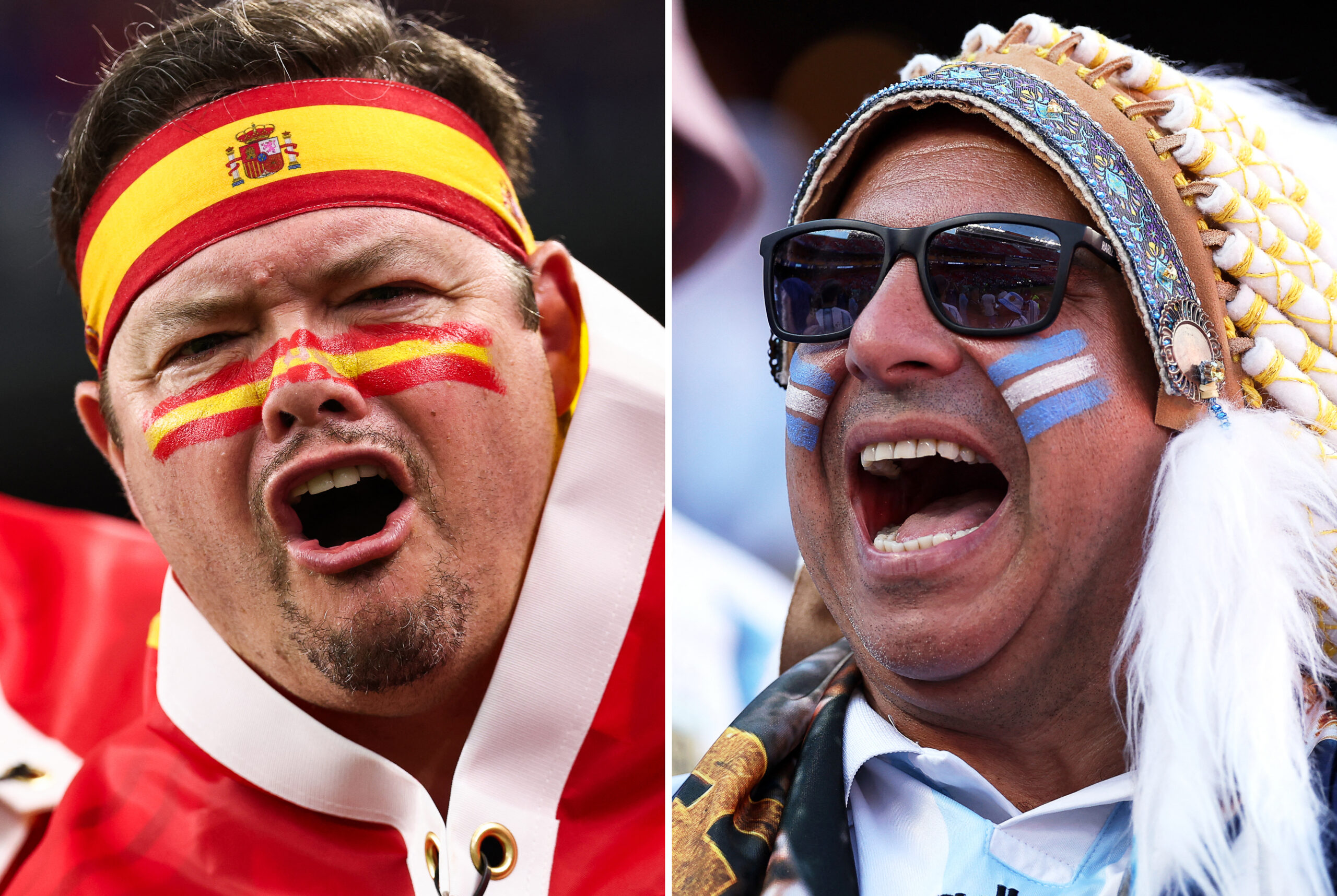
Why the World Cup final has morphed into a debate on Palestine and Israel
As global football communities and sports networks engage in heated debates over the outcome of the 2026 FIFA World Cup final, the showdown between Spain and Argentina has transformed into far more than a contest for the sport’s most prestigious trophy or a battle for national bragging rights. Across social media platforms, from viral TikTok clips to widely shared X posts and memes, thousands of fans worldwide have framed Sunday’s final as a de facto referendum on political solidarity with Palestine, amid the ongoing Israeli military campaign in Gaza that has drawn widespread global condemnation.
Many online observers have framed the match in stark political terms: “Pro-Palestine vs Pro-Israel,” one X user posted of the upcoming clash. Tensions have risen online as Argentina faces widespread criticism from pro-Palestinian advocates, who link the defending 2022 champions to Israel due to the close political alignment between the current Argentinian government and Tel Aviv. Argentinian President Javier Milei has publicly declared himself “sincerely proud to be the most Zionist president in the world,” a statement that has drawn significant international attention and backlash. Last week, Israeli Prime Minister Benjamin Netanyahu openly confirmed his support for Argentina in the final during a podcast interview, specifically citing Milei as “a great friend of Israel” as the reason for his backing. Israeli politicians further amplified this connection on Wednesday, taking to social media to publicly celebrate Argentina’s semi-final victory over England.
On the opposite side, Spanish Prime Minister Pedro Sánchez has earned a reputation as one of Europe’s most prominent and vocal advocates for Palestinian statehood and rights. Under Sánchez’s leadership, Spain officially recognized the State of Palestine as a sovereign nation in 2024, implemented a full arms embargo on Israel, and has consistently pushed for a permanent ceasefire to end the humanitarian crisis in Gaza. This clear political stance has won Spain widespread support from pro-Palestinian fans globally, with many sharing footage of Sánchez’s 2024 recognition announcement alongside posts declaring “Full support to Spain in the World Cup Final.”
“You have a team that is literally endorsed by Netanyahu… That doesn’t look good… Against the team that is representing the country in Europe that is most outspoken against the genocide in Gaza,” one TikTok user posted, echoing a sentiment shared by thousands of other fans. “We were all rooting for Argentina four years ago, but some more fucked up shit happened, and we don’t feel that way anymore.” Another X user expanded on this framing, writing, “This Sunday’s World Cup final is about more than just football. It’s a battle between good and evil: between one of the countries that has been among the strongest supporters of Palestine and the world’s most Zionist country, in the words of its own president.”
The political framing has extended beyond government leadership to the players themselves. A viral video of Spanish young star Lamine Yamal waving the Palestinian flag during FC Barcelona’s La Liga title celebration parade in May has been widely reshared by pro-Palestinian fans, who contrast this public display with the silence of Argentina’s global icon Lionel Messi on the Israel-Gaza conflict. Critics of Argentina have also highlighted Messi’s past brand partnerships with Israeli companies, as well as photographs from FC Barcelona’s 2013 “Peace Tour” to Israel and Palestine, which show Messi posing with then-Israeli Prime Minister Benjamin Netanyahu and former Israeli President Shimon Peres at the Western Wall. These images have been heavily promoted by Israeli official channels, sparking backlash from pro-Palestinian activists. However, other observers have noted that Messi also met Palestinian President Mahmoud Abbas in the occupied West Bank during the same tour, arguing that the football star should not be held personally responsible for an official club trip organized by FC Barcelona.
This politicization of football is not a new development during this 2026 World Cup, with Palestine taking center stage in multiple matches throughout the tournament. In one notable earlier incident, Argentinian fans waved Israeli flags at Egyptian head coach Hossam Hassan after he celebrated his team’s first ever knockout stage victory by entering the pitch carrying a Palestinian flag. During Spain’s 2-0 semi-final win against France, Oscar-winning Spanish actor Javier Bardem made headlines after he was filmed accepting a Palestinian flag from a fan in the stands. When asked for a message to the Palestinian people, Bardem pressed his hand to his heart and responded simply, “Existence is resistance,” and later reaffirmed “Spain stands with Palestine” in a separate video posted during the team’s round-of-16 match against Portugal.
Beyond the debate over Palestine solidarity, Argentina has also faced online criticism over widespread perceptions of unfair bias from FIFA in favor of the defending champions. The wave of international criticism has prompted many Argentinian fans to push back online, working to clarify that Milei’s hardline pro-Zionist stance does not reflect the views of the general Argentinian public, many of whom hold pro-Palestine views. Other Argentinian supporters have pushed back against what they call an oversimplification of the match, pointing out that Argentina recognized Palestine as a free and independent state all the way back in 2010, under then-president Cristina Fernández de Kirchner, far earlier than Spain’s 2024 recognition.
Dyab Abou Jahjah, president of the Hind Rajab Foundation, offered a nuanced perspective on the politicization of the final in a post Wednesday. “Sport has always been intertwined with politics, and it always will be. But reality is more complex than that,” he wrote. “Argentina is not Israel. Argentina is not Zionist. It cannot be reduced to any ideological camp… On Sunday, I will still be supporting Spain, out of genuine gratitude for that explicit solidarity. But I will not approach the match as a fanatic or an ideologue. If Argentina plays as brilliantly as they did today, they will deserve to win.”
-
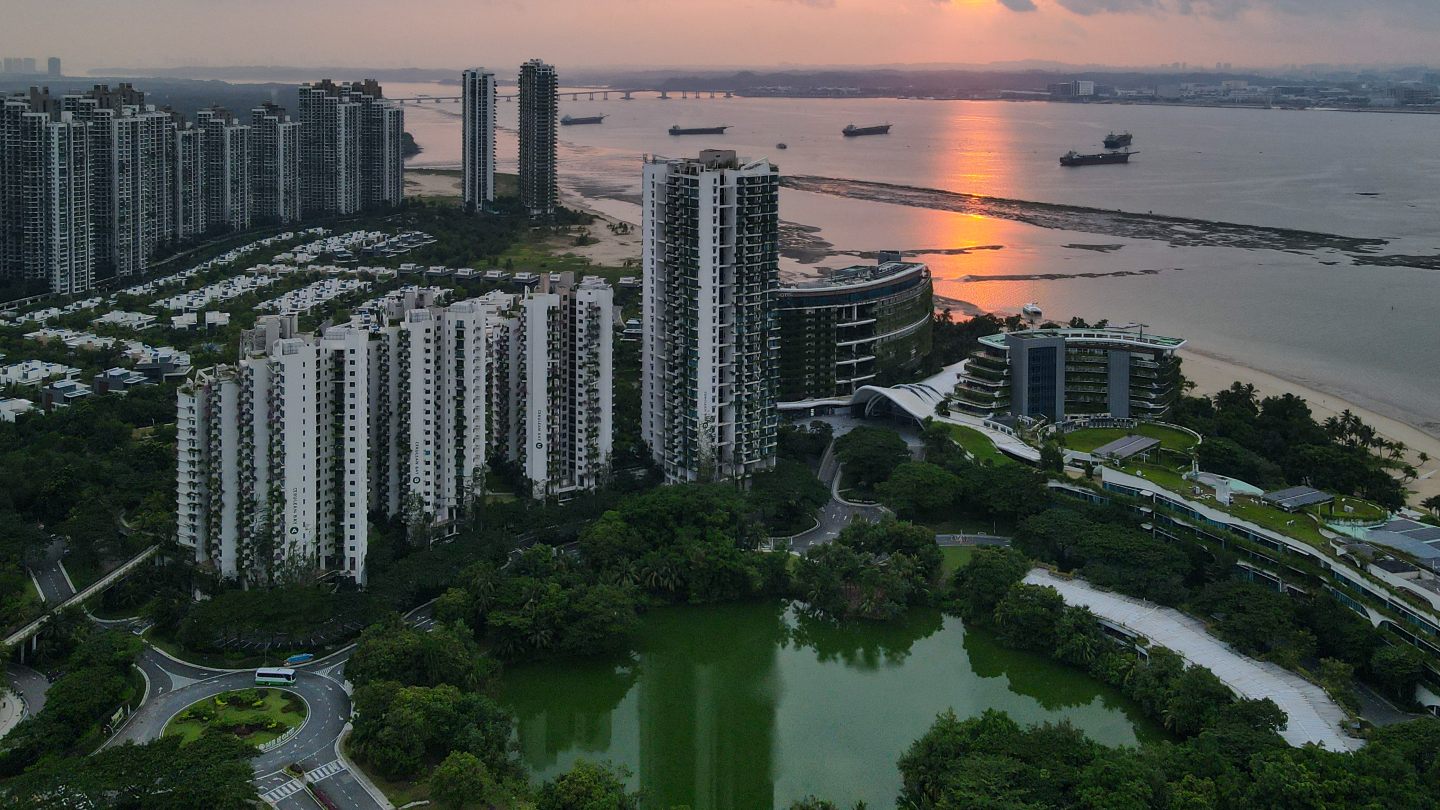
Malaysia vows to deport Israelis found in digital nomads community
Malaysian Prime Minister Anwar Ibrahim has announced a hardline policy that any Israeli nationals discovered within the country’s borders will face immediate deportation, a stance rooted in the nation’s decades-long non-recognition of the state of Israel. The prime minister’s remarks came in response to unfolding allegations that Israeli citizens have secretly joined a high-profile tech-focused digital nomad community in the southern Malaysian state of Johor, triggering an official multi-agency investigation into the project. The initiative under scrutiny is Network School, a physical tech community venture founded by former Coinbase chief technology officer and American investor Balaji Srinivasan. Marketed on its official platform as a “frontier community of techno-optimists” focused on translating online digital networks into tangible startup-focused societies, the project is based in Forest City — a massive $100 billion reclaimed land development in Johor. The investigation was launched after social media users raised claims that a number of participants in Network School held Israeli citizenship, entered Malaysia under dual nationality by using passports from third countries, and thus violated the country’s immigration rules. In an official statement released Tuesday, Malaysia’s Ministry of Home Affairs confirmed it had opened the probe into the community. Following the allegations, Israeli media outlet Ynet reported that Malaysian authorities had already started cross-checking the identities of all foreign nationals associated with the project. Onn Hafiz Ghazi, chief minister of Johor state, has directed the home ministry and other relevant enforcement bodies to conduct a full, comprehensive review of the venture’s operations. His instruction lays out clear terms for the probe: investigators must verify the identities and nationalities of all people linked to the project, examine their travel documentation and the alleged use of second passports, confirm the validity of their entry passes, cross-check their stated purpose for visiting against their actual activities in the state, and ensure all activity aligns with Malaysian law. “The state will not allow any parties to use Johor as a base to spread ideologies or movements that are against the law, sovereignty and interests of Johor and Malaysia,” Onn Hafiz Ghazi told local media. To date, Malaysian immigration officials have completed preliminary checks on 266 foreign nationals from 40 different countries connected to the Forest City community, and have confirmed that all of those screened hold valid immigration documentation. No Israeli nationals have been publicly identified as part of the ongoing investigation, and authorities have not released any updates on final findings. As a Muslim-majority Southeast Asian nation, Malaysia has never maintained formal diplomatic relations with Israel. The country’s longstanding policy bars holders of Israeli passports from entering the country without exceptional, special government approval, though it does not currently have formal legislation banning dual citizens of Israel and other nations from entering using their non-Israeli passports. Malaysia’s position on Israel has remained consistent since it gained independence from British colonial rule in 1957, and the country has long been one of the most outspoken supporters of Palestinian statehood and rights in the Southeast Asian region. Prime Minister Anwar Ibrahim, who has repeatedly and harshly criticized Israel’s ongoing military campaign in Gaza as genocidal, reaffirmed the country’s unwavering support for the Palestinian cause in his comments on this investigation. “If we find any Israeli, we will deport them immediately because we do not recognise Israel,” Anwar told local media. The prime minister added that if the investigation confirms the presence of Israeli nationals in Network School, immediate action will follow: “If it turns out that the claims are true, they will be deported immediately. All relevant authorities are already conducting an investigation into the matter.”
-
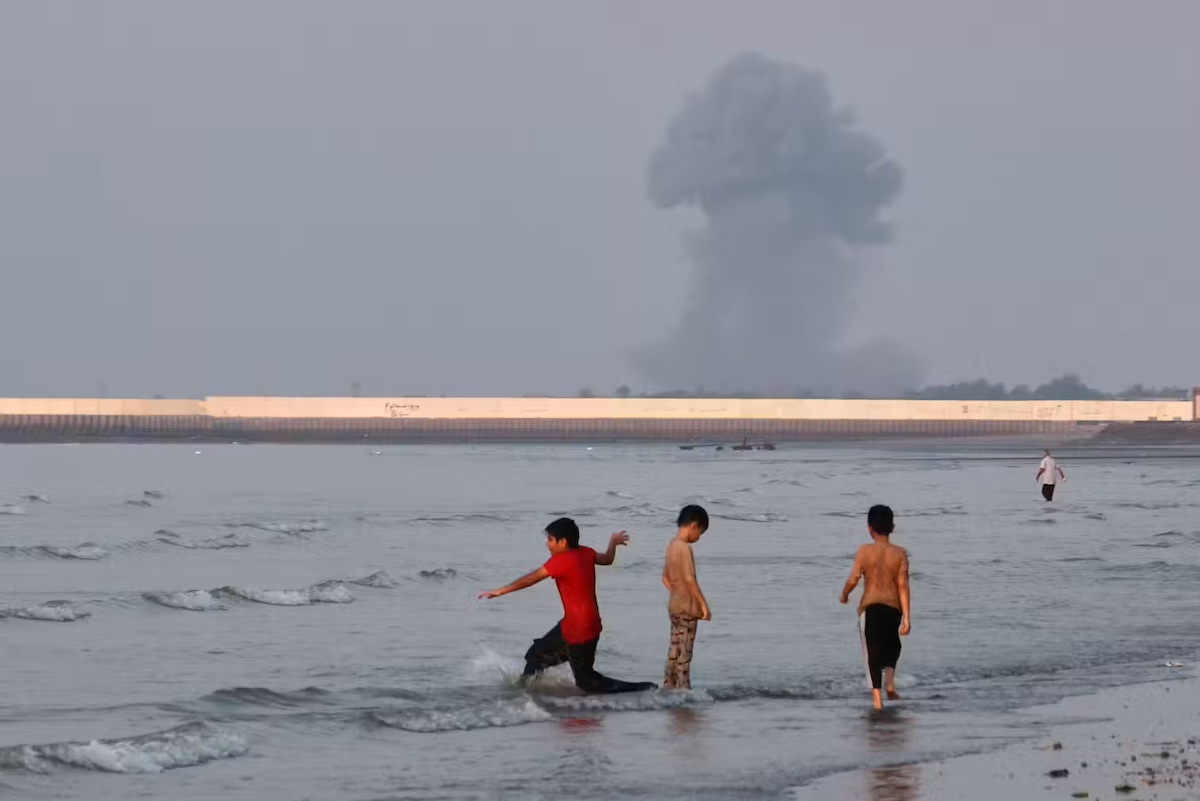
Trump has no good escalation options left against Iran
Just over a year ago, former U.S. President Donald Trump delivered a blunt, dismissive remark to Ukrainian President Volodymyr Zelensky in the Oval Office amid Ukraine’s war against Russian invasion: *“You don’t have the cards.”* Today, that line has flipped: it is Trump, now locked in a tense military standoff with Iran, who finds himself holding no winning hand over control of the world’s most critical energy chokepoint, the Strait of Hormuz.
Militarily, Iran cannot match the full conventional power of the United States. But Tehran has mastered asymmetric tactics to exert outsized leverage over the 21-mile-wide waterway, through which roughly 20% of the world’s daily oil and gas supplies, plus large global shipments of critical industrial commodities including sulphur, ammonia, urea and helium, pass. No matter how many public declarations Trump issues guaranteeing open commercial transit, he lacks the ability to enforce that guarantee.
This week, the U.S. resumed air bombardments targeting Iranian positions along the strait in an attempt to break Tehran’s control. But military analysts warn the situation could spiral into far broader conflict if Trump is pushed into a corner by his own political and military positioning.
### How Iran Turned Geopolitics Into Leverage
Iran’s power over the strait stems from a core asymmetric warfare strategy: acting as a disruptive spoiler. Every day the strait remains effectively closed to unimpeded transit, it ratchets up economic and political pressure on the U.S. and its Persian Gulf partner states to end hostilities.The Islamic Revolutionary Guard Corps (IRGC), Iran’s elite military force, has already demonstrated its ability to disrupt commercial shipping at will over the past week, using drones and missile strikes to threaten vessels. Despite sustained U.S. bombardments since the outbreak of the current conflict, the majority of Iran’s missile emplacements along the strait have been restored and are fully operational once again.
This persistent threat has had a direct impact on global shipping: major international insurers including Lloyd’s of London have either refused to underwrite policies for voyages through the strait, or hiked premiums to prohibitive levels that make commercial transit unprofitable. Beyond disrupting shipping, the IRGC has carried out large-scale strikes across every Gulf state this week, inflicting severe damage on dozens of U.S. military bases stationed across the region. The long-held perception among Gulf monarchies that hosting U.S. military forces would guarantee their national security has been completely dismantled by these attacks.
### Why Broader Escalation Remains a Clear Risk
A cold hard reality shapes the current standoff: there is no purely military solution that will force the Strait of Hormuz open permanently. At the same time, neither the Iranian regime nor the Trump administration has an interest in spiraling into large-scale escalation, as both face massive potential losses. U.S. military operations alone have already topped $100 billion in costs, with no clear strategic gains to show for the spending.But the domestic calculus on both sides pushes toward greater conflict. In Tehran, hardline factions have been emboldened by a wave of national mourning following the death of long-serving Supreme Leader Ali Khamenei, leaving them far more willing to pursue prolonged conflict than pragmatic leaders in other capitals. Analysts assess that Iranian hardliners can withstand a U.S. naval blockade and sustained bombardment for many more months, and the Iranian regime is actually in a stronger strategic position today than it was when the war began, even as the conflict remains unpopular with the majority of the Iranian public.
For Trump, meanwhile, political pressure to be seen as a winner is intense. And with many of the conventional institutional checks and balances that limit presidential war power having been weakened in recent years, the risk of reckless, unplanned escalation is very real. Trump has repeatedly threatened to strike Iranian civilian critical infrastructure, including power grids and desalination plants – a move that would almost certainly prompt Iran to retaliate against energy infrastructure across Gulf states. Such a retaliation would have immediate, long-lasting impacts on the global economy, as seen when Iran targeted Gulf energy sites earlier in the conflict.
If escalation proceeds even further to target the more than 400 desalination plants that supply nearly all of the Gulf’s drinking water, the humanitarian consequences would be catastrophic. Iran could also pressure the Houthi movement in Yemen to abandon its current limited blockade of Israeli shipping in the Bab el-Mandeb Strait, the critical chokepoint at the southern end of the Red Sea that carries 10% of all global trade, and resume attacking all commercial vessels transiting the waterway. Until now, the Houthis have held back from broader attacks, in large part because they reached a detente with neighboring Saudi Arabia after years of war. But that ceasefire is now teetering, following this week’s airport attack that the Houthis have blamed on Saudi Arabia.
### A Ground Invasion Would Be A Catastrophic Failure
History and geography make any U.S. ground campaign against Iran a disastrous proposition. Air power alone has never achieved regime change, and for all its unmatched military might, the U.S. has not won a major interstate war in more than 80 years. A full escalation against Iran would require deploying U.S. ground troops, echoing the 2003 invasion of Iraq. But even a coalition of hundreds of thousands of troops failed to bring lasting stability to Iraq after the invasion, and Iran is nearly four times larger than Iraq.Assembling the massive force required to control even just Iran’s mountainous southern coast is effectively inconceivable. What is more, the spread of modern drone technology has created a new era of asymmetric warfare that Iran is far better positioned to exploit than the U.S. Iran has built up a deep, self-sufficient domestic military industrial base that has allowed it to create a far more balanced fight against the world’s most powerful military than many analysts predicted. For any U.S. force attempting to occupy even limited territory such as the Iranian coast or key Kharg Island energy terminal, the opposition would be formidable and sustained.
Even the most extreme outcome, the deployment of U.S. tactical nuclear weapons, remains a small but non-negligible risk – a move that would open a Pandora’s box of unforeseen catastrophic consequences for the entire global order.
In the end, what is Trump’s least bad option? Allowing Iran to cement its new level of control over the Strait of Hormuz sets a dangerous precedent for global maritime security, but analysts argue it remains the better outcome compared to the catastrophic costs of further escalation.
-
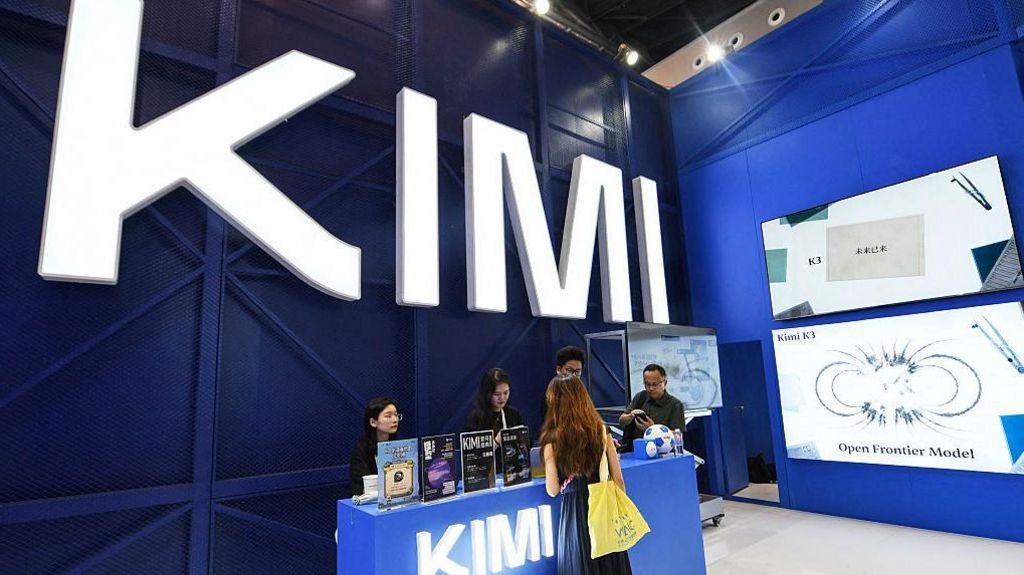
China’s Moonshot AI claims Kimi K3 can rival OpenAI and Anthropic
At the 2026 World Artificial Intelligence Conference held in Shanghai on Friday, Chinese artificial intelligence startup Moonshot AI made a landmark announcement that is shaking up global AI development: the official unveiling of Kimi K3, an advanced generative model packing 2.8 trillion parameters, a metric that defines a model’s scale and computational processing capacity. Backed heavily by Chinese tech giants Alibaba and Tencent, Moonshot AI positions Kimi K3 as the most capable flagship model the company has ever built, and it is set to upend long-held industry assumptions about the global AI capability gap.
Kimi K3 is scheduled to be released as an open-source model on July 27, marking a major milestone for the global AI ecosystem: it will become the world’s first open-source model in the three-trillion-parameter range, meaning developers around the world will be able to freely download, run, and customize the model for their own use cases. Unlike closed, proprietary AI systems developed by leading U.S. firms such as OpenAI and Anthropic, Kimi K3’s open architecture enables global users to modify the framework to support advanced reasoning tasks and complex software development projects. Moonshot AI also highlights a unique design feature: the model is engineered to operate with minimal human supervision, making it well-suited for sustained long-horizon tasks in engineering and large-scale coding work.
Independent third-party evaluations from leading AI benchmarking bodies Artificial Analysis and Arena.ai confirm that Kimi K3 delivers performance on par with top-tier U.S. AI models, including OpenAI’s GPT series and Anthropic’s Claude family. In blind human-preference testing, the new Chinese model even outperformed Anthropic’s Fable system to claim the top rank in web interface engineering, a key practical capability for modern software development.
The unveiling of Kimi K3 comes at an extraordinarily sensitive moment for the global AI sector. Just weeks prior, the U.S. government forced American AI developer Anthropic to temporarily pull its flagship Fable and Mythos models from circulation over severe cybersecurity concerns. While Washington has since reversed that withdrawal order, the incident underscores how the U.S. now frames cutting-edge AI as critical national infrastructure, labeling frontier AI models as core national security assets that fall under strict export controls, particularly for advanced AI hardware and software.
Despite these U.S. restrictions on AI-related hardware sales to Chinese firms, Kimi K3’s rapid development makes clear that Chinese AI companies are advancing independently and effectively navigating regulatory barriers set by Washington. The breakthrough also challenges long-standing Western narratives that Chinese AI developers lag significantly behind their American peers, showing that China’s domestic AI ecosystem is closing the capability gap at a far faster pace than many analysts predicted.
While Kimi K3’s unprecedented size means that running the model locally requires substantial computing infrastructure, its open-source release is already expected to deliver a major disruption to the commercial AI business models that dominate Silicon Valley. The announcement has already triggered immediate market shifts: shares of Moonshot AI’s domestic Chinese competitors Zhipu and MiniMax tumbled sharply on the Hong Kong stock exchange following the reveal, dropping approximately 27% and 16% respectively as investors reassess the competitive landscape for Chinese generative AI.
-
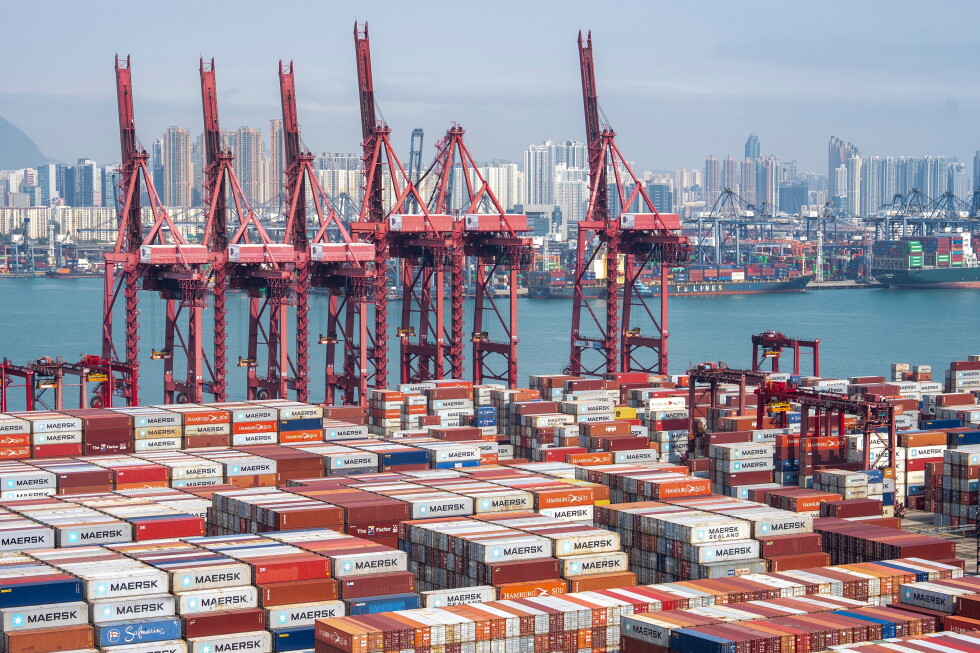
US lets Hong Kong emergency declaration lapse, lifting some sanctions as Trump order stays
In a development that has stirred mixed interpretations across Beijing and Washington, the United States has allowed a 2020 national emergency declaration tied to Hong Kong to expire, resulting in the partial lifting of targeted sanctions — but the core executive order that stripped the semi-autonomous city of its preferential US trading status remains fully in effect.
The sequence of moves unfolded over the weekend, with China’s foreign ministry first announcing that Washington had confirmed it would end the 2020 President’s Executive Order on Hong Kong Normalization, a statement that initially fueled speculation that Hong Kong’s lost trade privileges could be restored. That reading was quickly clarified by a US State Department spokesperson, who told the Associated Press that while former President Donald Trump allowed the attached national emergency declaration to expire, Executive Order 13936 — the policy that revoked Hong Kong’s special trade status — remains active. The order explicitly states that Hong Kong no longer maintains sufficient autonomy from Beijing to justify differential trade and legal treatment separate from mainland China.
The US Office of Foreign Assets Control confirmed Friday that the expiration of the national emergency prompted it to delist individuals sanctioned under the declaration. However, most of those affected will remain subject to penalties: a senior anonymous Treasury Department spokesperson confirmed that 39 out of the 48 individuals removed from the emergency declaration sanction list have been moved to a separate sanction roster maintained under the 2020 Hong Kong Autonomy Act. High-profile figures including current Hong Kong Chief Executive John Lee and former leader Carrie Lam were among those transferred, the spokesperson confirmed. The Treasury spokesperson framed the non-renewal of the national emergency as part of broader US sanctions modernization efforts, designed to eliminate duplicate penalties and streamline enforcement for greater effectiveness.
Executive Order 13936 was originally signed by Trump during his first presidential term in July 2020, a response to Beijing’s implementation of a sweeping national security law for Hong Kong. Beijing has repeatedly defended the law as a critical measure to restore stability after months of large-scale anti-government pro-democracy protests in 2019, which represented the most significant challenge to Sino-Hong Kong governance since the 1997 handover of the former British colony to Chinese rule. The order revoked all preferential trade and travel treatment for Hong Kong that had been in place for decades, aligned with US national security, foreign policy, and economic interests at the time.
Full ramifications of the US policy adjustment are still coming into focus, with the White House directing all media inquiries on the lapse of the national emergency to the Treasury Department. Early official reactions from Chinese officials have leaned positive: China’s Commerce Ministry noted Friday that the US move fulfills commitments made on Hong Kong during bilateral trade talks held in Madrid last year. “The U.S. side’s actions represent an important step in fulfilling the consensus reached during the bilateral economic and trade talks. China appreciates it,” the ministry said in an official statement.
Hong Kong’s local government also framed the shift as a positive development. “Safeguarding Hong Kong’s prosperity and stability serves the common interests of China and the U.S. and also aligns with the general expectation of the international community,” the government said in a statement, adding that it hopes Washington will continue to respect China’s sovereignty over Hong Kong and the city’s rule of law, eventually leading to a full resumption of normal economic and trade ties.
The policy shift comes two months after a face-to-face meeting between Trump and Chinese President Xi Jinping in Beijing, and is being widely interpreted as a small signal of warming bilateral relations ahead of Xi’s planned visit to the US later this year. The move follows another recent goodwill gesture: earlier this month, a high-profile pastor from China’s underground Christian community who had been detained since October was released from custody after Trump raised his case directly with Xi during their Beijing meeting.
However, conflicting initial interpretations of the policy change between Beijing and Washington have left uncertainty about the long-term trajectory of ties on Hong Kong. Six years after the national security law was enacted, dozens of leading pro-democracy activists remain imprisoned, including former media tycoon Jimmy Lai. International critics of the law argue that the civil liberties and independent judicial system Beijing pledged to preserve for 50 years following the 1997 handover have eroded sharply in recent years.
This report includes contributing reporting from Associated Press writer Joshua Boak in Washington, and has been updated to correct earlier misreporting that incorrectly stated the entire executive order would not be renewed.
-
Fears grow for Sahrawi prisoner entering sixth week of hunger strike in Morocco
As a long-imprisoned Sahrawi independence activist enters his sixth week without food behind bars in Morocco, global and regional human rights organizations are sounding the alarm and demanding his immediate release.
Naama Asfari launched an indefinite hunger strike on June 8 while being held at Kenitra Prison, located north of Morocco’s capital Rabat. His protest targets Moroccan authorities, demanding they comply with multiple United Nations rulings that have ordered his freedom after more than 14 years in detention.
Asfari’s incarceration traces back to his participation in the 2010 Gdeim Izik protest camp, a mass gathering of native Sahrawi in Morocco-occupied Western Sahara. The camp was organized to draw international attention to systemic human rights violations, widespread poverty, and systemic discrimination that Sahrawi communities have endured under Moroccan rule.
Erected in October 2010 on the outskirts of Laayoune, Western Sahara’s largest city, the protest camp was violently dismantled by Moroccan security forces in November that same year. Official and independent reports differ on casualty counts: rights groups estimate up to 36 civilian protesters were killed during the operation, while roughly 3,000 additional Sahrawi were arrested. Moroccan authorities confirm that 11 police officers also died in the unrest.
The violent crackdown drew broad international condemnation, and many regional analysts now point to the Gdeim Izik incident as an important precursor to the wave of pro-democracy Arab Spring uprisings that swept across North Africa and the Middle East just weeks after the camp was cleared.
Following the crackdown, Asfari and dozens of other Sahrawi protest organizers were convicted of charges tied to the deaths of the Moroccan police officers. But United Nations bodies have repeatedly challenged the validity of these convictions. The UN Committee Against Torture (CAT) has confirmed that the statements used to convict Asfari and his co-defendants were obtained through torture and coercion, and has formally called on Morocco to overturn all convictions in the case. In 2023, the UN Working Group on Arbitrary Detention also issued an official opinion ordering Asfari’s immediate release.
As his hunger strike enters its sixth week, Asfari’s family has shared alarming updates on his declining health. The activist has lost roughly 9 kilograms (nearly 20 pounds) since starting the strike, and he has refused to be examined by prison medical staff and halted his daily out-of-cell exercise.
The International Service for Human Rights (ISHR), an independent global rights watchdog, has become one of the most prominent voices calling for action. The organization reiterated its demand that Morocco implement both the CAT ruling and the 2023 UN Working Group order. In a formal statement, ISHR said, “ISHR is gravely concerned by the risks posed to Asfari’s health and calls on the Moroccan authorities to take urgent steps to safeguard his life and physical integrity.”
The case unfolds against a decades-long unresolved dispute over the status of Western Sahara. Morocco has occupied most of the territory since 1975, following the withdrawal of colonial power Spain. The indigenous Sahrawi people claim full sovereignty over the territory, and the Algeria-backed Polisario Front has waged a campaign for independence, including an armed struggle that spanned decades. Today, hundreds of thousands of Sahrawi refugees reside in camps in southwestern Algeria, while Sahrawi independence activists remaining in occupied Western Sahara face consistent political repression from Moroccan authorities, a pattern widely documented by international human rights groups.