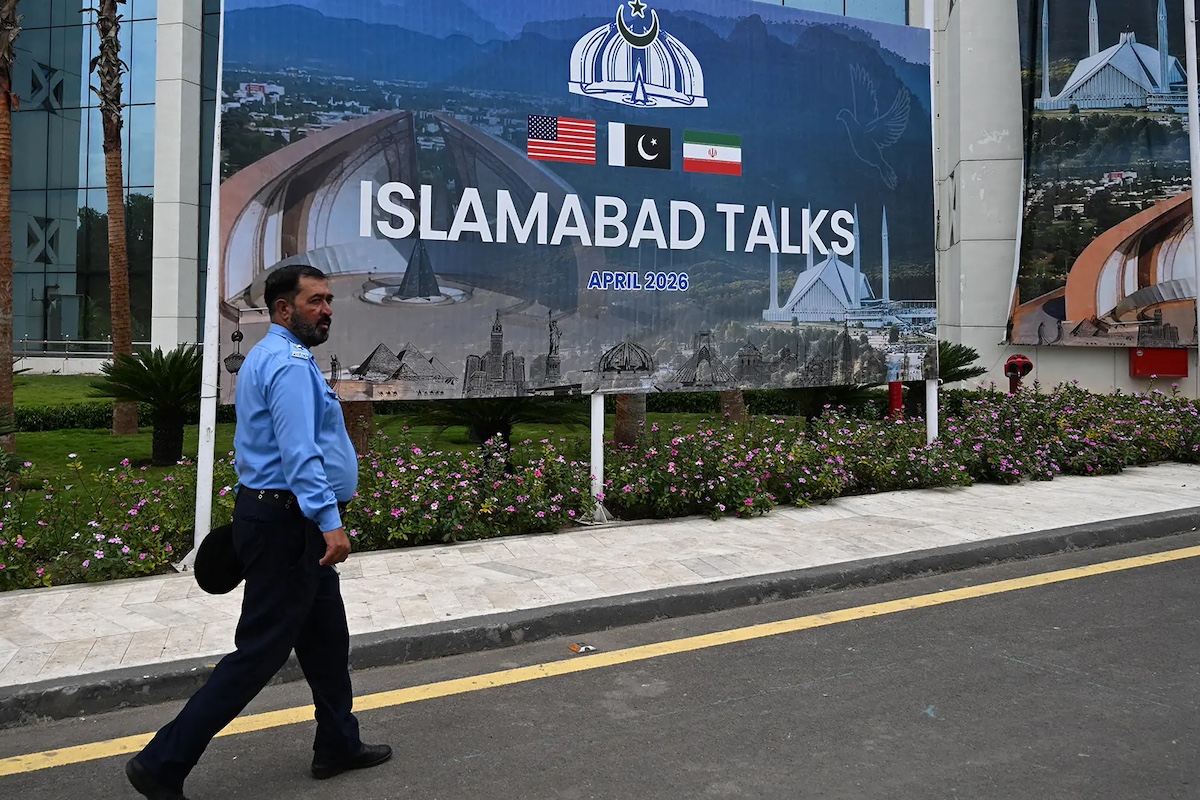
On June 15, the United States and Iran announced a landmark memorandum of understanding that stands to reshape regional security dynamics across the Middle East, marking one of the most consequential diplomatic breakthroughs in the region in recent years. U.S. President Donald Trump confirmed the framework agreement had been finalized, announcing two immediate confidence-building measures: the full reopening of the Strait of Hormuz, a critical global energy chokepoint, and the lifting of the U.S. naval blockade on the waterway. Iranian officials have echoed confirmation of the deal, noting that formal negotiations over outstanding sticking points will continue over the next 60 weeks, with a formal signing scheduled to take place in Geneva on June 19.
The agreement followed weeks of behind-the-scenes diplomacy, with Pakistan taking a central role as the lead intermediary that brought the two long-hostile parties back to the negotiating table. Pakistani Prime Minister Shehbaz Sharif, whose government led the mediation effort, announced the ceasefire ahead of the official U.S. confirmation, capping off weeks of intensive engagement with Iranian authorities, Gulf regional states, and U.S. diplomatic teams. While Qatar and other regional actors also contributed heavily to de-escalation efforts, Islamabad ultimately emerged as the primary channel for direct dialogue between Washington and Tehran.
Pakistan’s prominent role in the deal was neither a random outcome nor an inevitable assignment. For decades, Oman has served as a quiet backchannel between the U.S. and Iran, and Qatar has built a reputation as one of the Middle East’s most active neutral mediators. However, the crisis that preceded this agreement, sparked by U.S. and Israeli strikes on Iranian targets, escalated into a multifaceted threat touching maritime security, global energy markets, and broad regional stability that directly impacted Gulf states including Qatar, creating a need for a new mediation channel.
As tensions mounted, Pakistan’s role grew increasingly visible. Early rounds of high-stakes talks between senior American and Iranian delegates were hosted in Islamabad, and in the final push to avoid further military escalation, Pakistan’s Chief of Army Staff Field Marshal Asim Munir traveled directly to Tehran to hold security-focused talks with Iranian leadership. Pakistani diplomats and security officials simultaneously maintained constant communication with other key regional stakeholders, including Saudi Arabia, Qatar, and Turkey, while keeping U.S. counterparts updated at every step of the process.
While the framework agreement was the product of collaborative effort across multiple negotiating parties, Pakistan carved out a unique and central role thanks to its specific diplomatic advantages. Unlike many other potential mediators, Pakistan maintained established working relationships with both Washington and Tehran at a time when direct communication between the two principal parties had broken down almost entirely. Its geographic proximity to Iran, longstanding security ties to both sides, and broad regional diplomatic reach made it an ideal trusted intermediary when the urgency to de-escalate grew.
Another key strength of Pakistan’s mediation effort was the unprecedented coordination between its civilian political leadership and military security institutions. Prime Minister Sharif provided public political leadership and set the overarching diplomatic framework for the talks, while General Munir leveraged his established regional security contacts to engage directly with Iranian defense and decision-making circles. In a crisis centered on military escalation, deterrence, and security risks, direct communication between security establishments proved just as critical as traditional diplomatic negotiations, allowing Islamabad to deliver clear, credible messages that addressed both political and security concerns for all parties.
The resulting document is not a full, permanent peace treaty, but a foundational framework designed to halt immediate escalation and create space for detailed negotiations on unresolved core issues. Even so, bringing the two bitter rivals to this point represents a significant diplomatic achievement on its own.
Beyond the immediate gains of a ceasefire and the reopening of the Strait of Hormuz, the agreement marks a notable shift in Pakistan’s global diplomatic profile. For years, Pakistan’s international standing has largely been defined by domestic security challenges, economic instability, and regional rivalries. This breakthrough offers a new narrative: Pakistan as a reliable, effective facilitator of high-stakes diplomacy during a major regional crisis.
Pakistan’s role also fits into a growing global trend: as competition between major world powers intensifies, middle powers are increasingly carving out space to shape global outcomes through proactive mediation. Qatar led groundbreaking negotiations between the U.S. and the Taliban, Oman has repeatedly provided backchannels between Washington and Tehran during past periods of tension, and Turkey brokered the Black Sea Grain Initiative during the Russia-Ukraine conflict. What unites all these cases is not massive military power, but broad diplomatic access: states that maintain working relationships across competing blocs are uniquely positioned to resolve crises that larger powers cannot address directly.
Unlike traditional mediators that only provide a venue for talks, Pakistan took a comprehensive approach, combining high-level political outreach, security-to-security engagement, and in-person hosting of negotiating sessions in Islamabad. This expanded role explains why the country became increasingly central to the process as the crisis moved from open confrontation to negotiated de-escalation. In recent years, Pakistan has deepened its diplomatic engagement with Gulf states, maintained stable ties with Tehran, and expanded its diplomatic outreach beyond South Asia, giving it greater flexibility to respond to regional crises. For a country dependent on energy imports, the reopening of the Strait of Hormuz also carries direct, tangible economic benefits.
Still, the breakthrough carries significant risks that cannot be overlooked. The current document is only a memorandum of understanding, not a comprehensive final settlement. The most contentious core issues – including U.S. sanctions relief, the long-term rules for Hormuz shipping, and the future of Iran’s nuclear program – remain unresolved. Disagreements have already emerged over the scope of the framework: Iranian officials claim the deal covers all active fronts including Lebanon, while Israeli officials have offered a far more narrow, cautious interpretation of the agreement’s terms. These differences could complicate negotiations over the coming 60 days.
For Pakistan, the outcome of the next phase of talks will shape its new diplomatic reputation. If negotiations succeed, Islamabad’s standing as a trusted regional mediator will grow substantially. If talks collapse, as many past Middle East diplomatic agreements have done amid intractable unresolved disputes, Pakistan will face greater diplomatic challenges, having invested significant political capital in the process.
Regardless of the final outcome, the framework agreement will be remembered for more than just its attempt to end a dangerous military confrontation. It also marks a turning point: the moment Pakistan demonstrated it can serve as an effective diplomatic bridge between competing major powers in a rapidly shifting regional and global order.