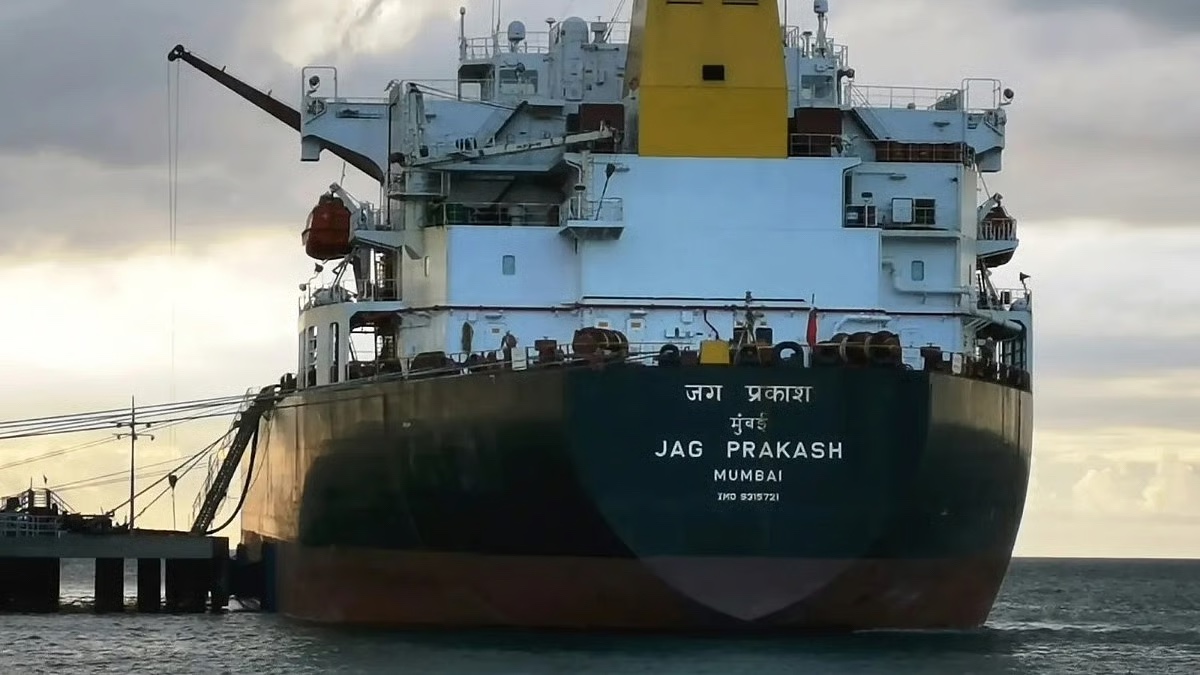
Global financial markets reacted swiftly and predictably to the newly announced US-Iran peace deal: crude oil prices plummeted, stock markets around the world rallied, and investors have already begun projecting the potential inflation relief that could follow if the Strait of Hormuz fully reopens to shipping and global energy supplies return to normal operations.
However, deVere Group founder and CEO Nigel Green argues that the mainstream market consensus still underestimates the far-reaching implications of this diplomatic breakthrough. If the agreement is successfully sustained – a critical caveat that cannot be overlooked – the largest economic gains will not flow to Iran, the United States, or European economies. Instead, Asia will emerge as the primary beneficiary.
This advantage extends far beyond the region’s obvious gains from lower global oil prices, though that benefit is substantial. Between 85% and 90% of all crude oil transported through the Strait of Hormuz, one of the world’s most critical chokepoints for global energy trade, is ultimately delivered to Asian markets. No other region is as reliant on the unimpeded flow of energy, commerce, and capital through the Gulf region, making any resolution of tensions there disproportionately impactful for Asian economies.
Roughly one-fifth of total global oil consumption passes through the strait, alongside a large share of the world’s liquefied natural gas (LNG) trade. When tensions disrupted shipping through the corridor earlier this year, Asian economies bore the brunt of the fallout. Data from earlier this month confirmed that increased shipments of US crude to Asia were nowhere near enough to offset the lost Gulf supplies during the peak of the crisis, while Asian LNG markets also faced major supply disruptions and price volatility as energy flows tightened.
For this reason, the full reopening of the Strait of Hormuz represents far more than just the resumption of regular oil shipments. It restores a vital economic lifeline to the world’s most energy-dependent growth region.
India offers a clear illustration of the scale of potential gains. As the world’s third-largest crude oil importer, with roughly 85% of its total crude demand met by overseas purchases, India is uniquely positioned to see immediate benefits from falling energy costs. Any sustained drop in oil prices eases domestic inflationary pressure, strengthens the country’s current account position, provides support for the rupee, and improves the Indian government’s fiscal balance. Few major advanced or emerging economies have such a direct, clear link between lower oil prices and accelerated economic growth, meaning India could see a significant economic boost without implementing major domestic policy reforms or transformative breakthroughs.
These positive spillover effects reach far beyond India. Japan imports more than 90% of its total oil demand, while South Korea sources the majority of its crude from Middle Eastern producers. Lower oil and LNG costs directly improve industrial competitiveness, protect corporate profit margins, and reduce cost-of-living pressure for household consumers.
China may actually benefit more than current market pricing suggests. As the world’s largest crude importer, bringing in roughly 11 million barrels of oil per day, China has navigated years of slowing domestic growth, soft consumer demand, and pressure on industrial profitability. A lasting reduction in energy costs would provide broad, meaningful support to manufacturing supply chains across the country. Equally important, reduced geopolitical instability in the Gulf eliminates a major source of uncertainty for one of China’s most critical trade and energy routes. For Chinese policymakers, this increased predictability may be almost as valuable as the direct savings from cheaper oil.
Southeast Asian economies also stand to gain. Vietnam, Thailand, the Philippines, and Indonesia all stand to benefit from lower import costs and reduced inflationary pressure. A more stable energy market supports governments, consumers, and businesses alike, while also boosting the region’s appeal as a destination for multinational corporations continuing to diversify their global manufacturing operations across Asia.
Even so, focusing solely on oil price shifts risks overlooking a bigger, underreported story. The most consequential long-term impact of a lasting US-Iran agreement may lie in its effect on regional monetary policy across Asia. During the height of the Hormuz crisis, central banks across Asia and the globe were forced to adjust their policy outlooks to account for renewed inflation risks tied to spiking energy costs. A sustained drop in oil prices rewrites this policy calculus: lower inflation creates new room for policymakers to support economic growth, loosen financial conditions, and reduce cost pressure on households.
This shift should draw particular attention from global investors. For years, Asian equities have struggled to compete with the strong gravitational pull of US markets. Persistently higher US interest rates, a stronger US dollar, and repeated global geopolitical shocks have consistently tilted investor preference toward American assets. But a combination of lower energy prices, easing inflation, and improved growth prospects could strengthen the case for increasing exposure to Asian equities at a time when global investors are already actively searching for opportunities outside of overbought US markets.
There are also broader strategic implications to consider. For years, investors have framed analysis of Asian economies through the persistent lens of trade disputes, supply chain disruptions, tariffs, and geopolitical rivalry. While these themes are unlikely to disappear entirely, a durable US-Iran agreement would deliver something global markets have seen very little of in recent years: a meaningful reduction in geopolitical friction. For a region that depends more heavily on cross-border trade, stable shipping lanes, and imported energy than any other, this reduction in risk carries enormous value.
That said, caution remains the prudent approach for market participants. Investors have well-founded reasons to remain wary. Some will frame the deal as a historic diplomatic breakthrough, while others dismiss it as a temporary truce that allows all sides – particularly the White House – to claim a political win while delaying difficult negotiations over Iran’s nuclear program, sanctions enforcement, and regional influence ambitions. The history of Middle Eastern diplomacy is full of agreements that sparked initial optimism before collapsing against entrenched political realities, so investors should resist the urge to treat lasting peace as a foregone conclusion.
Even so, they should not underestimate the scale of potential economic benefits if the agreement holds, even partially. Global markets have largely focused on the immediate impact of the deal on oil prices, but Asia should be preparing for sustained, broad-based growth. If the agreement endures, the region could receive the most significant externally driven economic stimulus it has seen in years – one that simultaneously lowers energy costs, eases inflationary pressure, supports cross-border trade, and improves overall financial conditions. This confluence of positive economic shocks is a rare opportunity that does not come along often.