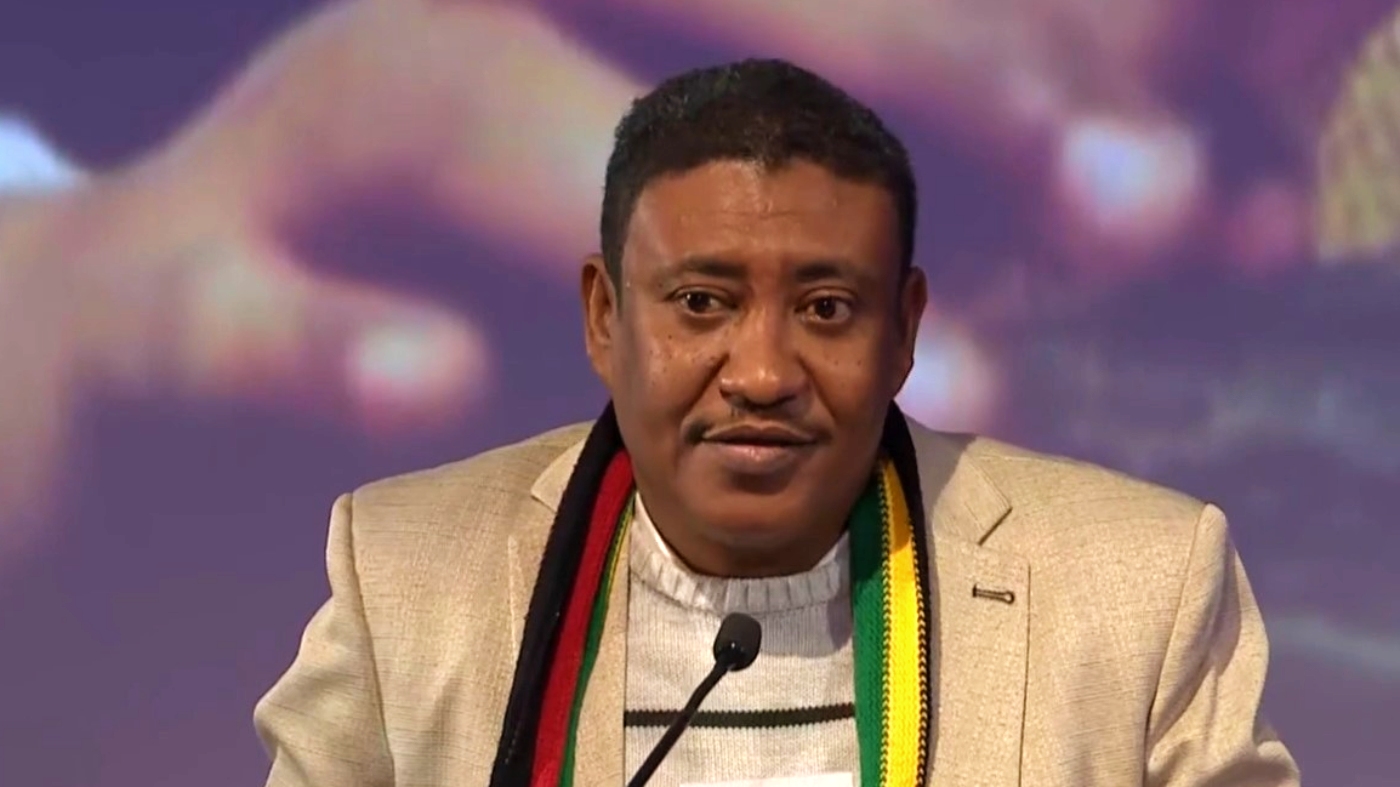
An award-nominated Sudanese journalist has been blocked from entering the United Kingdom to attend a prestigious London-based journalism awards event, in a decision that has drawn widespread criticism from media leaders and highlighted deepening barriers for Sudanese travelers amid the ongoing crisis in their home country.
Mohammed Amin, a correspondent for Middle East Eye (MEE), was shortlisted for the 2024 One World Media Journalist of the Year Award in recognition of his brave, on-the-ground reporting from Sudan, where a brutal civil war has displaced millions and left much of the country in chaos. He was scheduled to attend the upcoming awards ceremony next Wednesday, where his work would be formally recognized alongside other leading international correspondents.
However, in a notice delivered to Amin last Thursday, the UK Home Office rejected his application for an eight-day visitor visa. Officials justified the refusal by claiming they were unconvinced Amin had a genuine purpose for his trip, and asserted there was no guarantee he would leave the UK at the end of his visit. This ruling came despite formal sponsorship for the trip from MEE and a formal invitation from the One World Media Awards organizing committee, and leaves no route for appeal or administrative review of the decision.
For Amin, the outcome is not just a personal disappointment—it is a deeply unreasonable and contradictory policy that undermines the UK’s own stated commitments to transparency around Sudan’s crisis. A veteran reporter who has previously traveled to the UK multiple times to accept major journalism awards, most recently in 2022 when he received the Rory Peck Trust’s Martin Adler Prize without any visa issues, he expressed frustration at the Home Office’s assessment. “There’s a contradiction between British journalists, who consider what is happening in Sudan, and the UK government, which organises conferences about Sudan [in London] but denies visas for journalists,” he said.
He added that the blanket barriers placed on Sudanese travelers reflect a profound lack of understanding of the catastrophe unfolding in his home country, where the ongoing conflict between the Sudanese Armed Forces and Rapid Support Forces has left hundreds of thousands dead, millions displaced, and millions more facing acute hunger. Amin noted that Sudan’s war has already been largely overshadowed by other high-profile conflicts across the globe, and visa denials like his only push the crisis further out of global view.
Leaders of the One World Media Awards echoed that criticism. Interim director Chinwe Kalu-Uma called the refusal deeply disappointing, noting that Amin has continued to report from inside Sudan at great personal risk specifically to draw global attention to the crisis. “His absence from our London ceremony is itself a story about the barriers Sudanese people face, not only in their own country, but in being seen and heard beyond it,” Kalu-Uma said in a statement to MEE.
MEE editor-in-chief David Hearst also condemned the decision, arguing that the UK holds unique historic responsibility to shine a light on developments in Sudan. “That Britain of all places should deny a visa to an award-winning Sudanese journalist after a war that has devastated the country defies belief,” Hearst said. “Britain has a historic responsibility that the truth comes out about what is happening in Sudan and it is failing on all these fronts. Mohammed’s work should be encouraged and praised by the British government, and he should not be treated as an unwelcome guest.”
The visa refusal is far from an isolated incident. Since the outbreak of Sudan’s civil war in April 2023, Sudanese applicants have faced drastically increased scrutiny and barriers to UK entry. In 2024, the UK government implemented a so-called “visa brake” that blocks all new student visa applications from nationals of Sudan, alongside Afghanistan, Cameroon and Myanmar. Even for non-student visitor applicants like Amin, the process has become prohibitively difficult.
Because the British Embassy in Khartoum has remained temporarily closed since the war began, Amin was forced to travel across the border to the British High Commission in Uganda simply to complete his in-person interview, an added burden that displaced Sudanese journalists and citizens routinely face. He argued the entire system is structured to discriminate against Sudanese applicants who have already been displaced by the conflict.
Amin’s record of groundbreaking reporting has already driven tangible change in Sudan. Over the past year, his work has covered the bloody siege of el-Fasher, the role of the drug captagon in funding the civil war, and the targeting of the marginalized Kanabi community by all warring parties. When he published a viral report on the al-Tekeina village’s resistance to sustained attacks by the RSF, a delegation led by Sudan’s transitional prime minister visited the village just one day later—the first official government visit to the community in more than 60 years—and pledged funds for reconstruction.
When contacted for comment by MEE, a Home Office spokesperson stated that all visa applications are assessed on their individual merits in line with published policy, and that the department follows longstanding policy of not commenting on individual cases.