标签: Africa

非洲

  • A breast cancer survivor knits prostheses in Kenya as silicone ones are costly

    A breast cancer survivor knits prostheses in Kenya as silicone ones are costly

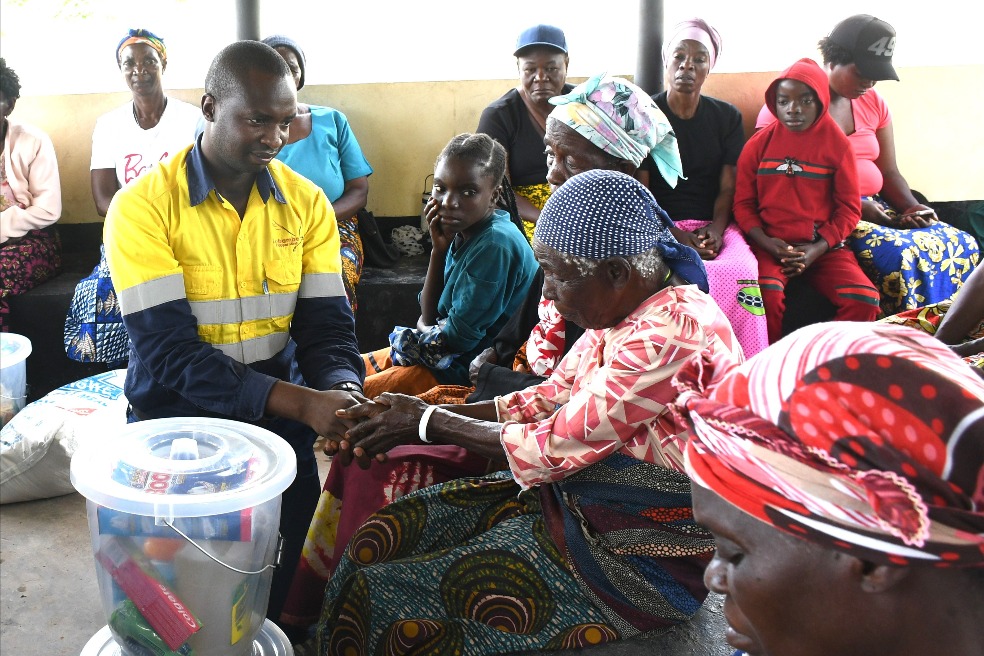
    In the Kenyan town of Thika, a remarkable story of resilience and compassion unfolds as breast cancer survivor Mary Mwangi transforms lives through an unexpected medium: knitted prostheses. What began as personal therapy during her recovery has evolved into a movement restoring dignity to thousands of women who have undergone mastectomies without reconstructive surgery.

    Following her cancer diagnosis, Mwangi initially anticipated the worst. However, during recovery, she discovered that knitting provided not just distraction but profound therapeutic value. In 2017, she began creating hats and scarves before encountering another woman crafting breast prostheses. This inspired her to establish the New Dawn Cancer Warriors collective, where survivors now produce affordable alternatives to expensive silicone implants.

    These hand-knitted prostheses, priced at just $10 per breast—approximately one-sixth the cost of silicone options—represent a critical innovation in a country where breast cancer constitutes the most frequently diagnosed cancer among women. With approximately 6,000 new cases identified annually in Kenya, and 40% of the population living below the poverty line, accessible solutions are desperately needed.

    The prostheses consist of yarn exteriors filled with pillow-soft fiber, providing comfort and natural appearance beneath clothing. For many Kenyan women who previously resorted to stuffing bras with clothing material, these creations represent both physical normalcy and emotional restoration.

    Nancy Waithera, a high school science teacher, described her diagnosis as making “everything turn dark,” particularly following her husband’s recent death. Discovering Mwangi’s prostheses before her surgery provided crucial psychological preparation. “My dignity was restored,” Waithera affirmed after wearing her prosthesis to church for the first time.

    Medical experts confirm the significance of such initiatives. Surgeon Daniel Ojuka from Kenyatta National Hospital cancer treatment center notes that mastectomy remains the most affordable option for most Kenyan women, as reconstructive surgery isn’t covered by national health insurance. The emotional impact of waking post-surgery is profound, with many patients experiencing severe distress.

    Beyond physical products, Mwangi’s collective provides community support that proves vital for recovery. Member Eglah Wambui emphasized knitting’s therapeutic benefits, noting how it redirects focus from disease to creation. The community aspect addresses concerning mental health challenges; Wambui recalled one woman who tragically took her own life during treatment due to depression.

    Having distributed over 600 prostheses in three years through organizational partnerships, Mwangi’s group demonstrates how grassroots innovation can address healthcare gaps. More importantly, it spreads a crucial message: “There is life after cancer, and cancer is not a death sentence,” Mwangi declares. “I’m a living testimony.”

  • The devastating conflict where both sides have reasons to keep fighting

    The devastating conflict where both sides have reasons to keep fighting

    A Sudan Airways jet touched down at Khartoum International Airport on February 1, 2026, marking only the second commercial arrival since 2023. The 160 passengers erupted in celebration—hugging, cheering, and capturing selfies—as they stepped onto the tarmac of a capital city shattered by nearly three years of civil war. This symbolic moment occurred just weeks after Prime Minister Kamil Idris declared 2026 would be “the year of peace,” with the military-led government announcing its return to Khartoum.

    The scene contrasts starkly with the reality witnessed by BBC reporters months earlier. The airport terminal showed extensive damage, with unexploded munitions littering runways days after the Sudanese army recaptured it from the paramilitary Rapid Support Forces (RSF). Khartoum remains the epicenter of a conflict that erupted in April 2023, transforming government districts into blackened shells and forcing the administration to relocate to Port Sudan on the Red Sea.

    The devastation extends throughout the capital: ministries, banks, and office blocks stand burned and hollowed. The presidential palace remains too damaged for use, while the British embassy bears pockmarked bulletproof glass testimony to intense firefights. The UN describes Sudan as plunged into “an abyss of unfathomable proportions,” with widespread destruction, famine, and human rights violations affecting millions.

    This conflict represents a fundamental power struggle between the Sudanese Armed Forces (SAF) and the RSF—a paramilitary force originally created by ousted dictator Omar al-Bashir as his personal guard. Following Bashir’s 2019 removal, tensions between RSF leader Gen Mohamed Hamdan Dagalo (Hemedti) and army chief Gen Abdel Fattah al-Burhan erupted into full-scale warfare.

    The war has weaponized longstanding ethnic divisions, particularly between nomadic Arabs from the south and west (core RSF supporters) and Nile Valley Arabs from urban areas (traditional ruling class). In Darfur, RSF Arab militias have committed atrocities against non-Arab populations that UN experts say show “hallmarks” of genocide.

    International dimensions complicate the conflict further. Documented evidence suggests the United Arab Emirates supplies weapons to the RSF—a claim Abu Dhabi officially denies. Meanwhile, Sudan’s military employs Turkish and Iranian drones while receiving backing from Egypt, Qatar, and Saudi Arabia.

    Diplomatic efforts led by the Quad nations (US, Saudi Arabia, UAE, and Egypt) face significant obstacles. While the RSF has verbally accepted a peace roadmap beginning with a humanitarian truce, neither side has formally responded, and fighting has intensified rather than diminished. Army chief Burhan insists he cannot agree to any plan unless the RSF accepts surrender conditions.

    The conflict has created the world’s worst humanitarian crisis, with 25 million facing acute food shortages and 12 million displaced. Analysts fear even a ceasefire would be temporary without addressing fundamental issues: the military’s economic control, representation for marginalized regions, and accountability for widespread atrocities.

    With both sides viewing the conflict as existential and foreign powers continuing their support, many experts predict a prolonged war. Some officials compare the situation to America’s 20-year conflict in Afghanistan, while analysts warn of potential “balkanization” of Sudan if fighting continues for another decade or more—a scenario with devastating implications for the entire region.

  • At least 200 dead in a Congo coltan mine collapse, authorities say, as rebels dispute toll

    At least 200 dead in a Congo coltan mine collapse, authorities say, as rebels dispute toll

    A catastrophic mine collapse at a coltan mining operation in eastern Congo’s Rubaya region has resulted in massive casualties, with conflicting reports emerging about the actual death toll. Congolese authorities reported at least 200 fatalities from Tuesday’s incident, while the M23 rebel group controlling the mine claims only five deaths occurred.

    The Congolese Ministry of Mines confirmed the collapse occurred at the Rubaya mines, which have been under M23 control since the group seized the town in May 2024. This represents the latest in a series of mining disasters plaguing the mineral-rich but conflict-ridden eastern territories of the Central African nation.

    Fanny Kaj, a senior M23 official, vehemently disputed the government’s account, asserting that the incident resulted from ‘bombings’ rather than a structural collapse. ‘I can confirm that what people are publishing is not true. There was no landslide; there were bombings, and the death toll isn’t what people are saying. It’s simply about five people who died,’ Kaj stated.

    However, firsthand accounts from miners at the site contradict the rebel narrative. Ibrahim Taluseke, a miner who participated in recovery efforts, reported helping retrieve over 200 bodies from the rubble. ‘We are afraid, but these are lives that are in danger,’ Taluseke revealed. ‘The owners of the pits do not accept that the exact number of deaths be revealed.’

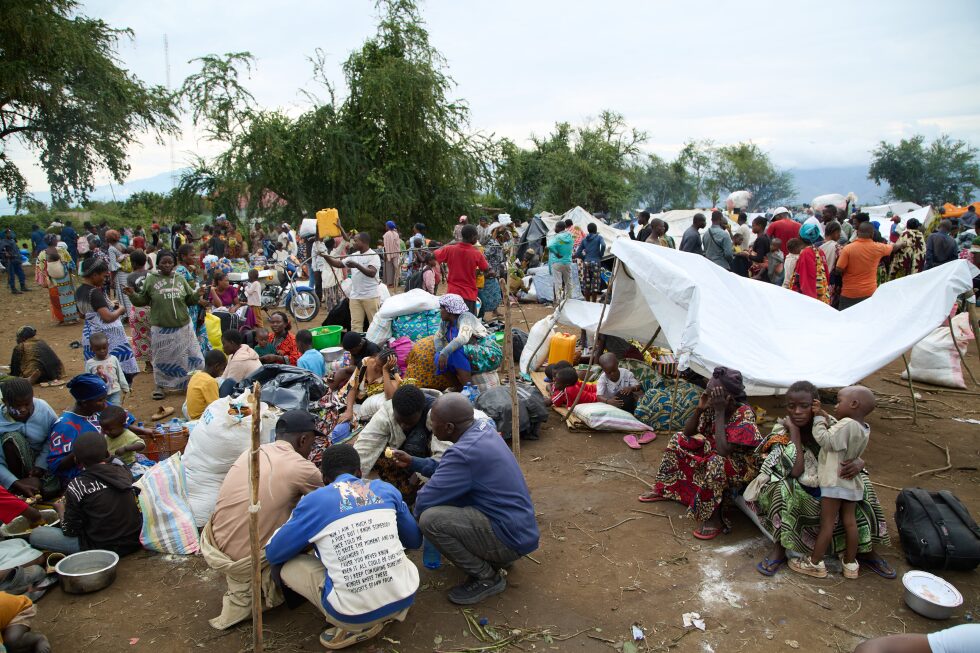
    The Rubaya mining region sits at the heart of eastern Congo’s protracted humanitarian crisis, where violence between government forces and various armed groups has displaced over 7 million people, including more than 300,000 since December alone. The M23 rebels, allegedly backed by Rwanda, have intensified the conflict through their recent resurgence.

    Coltan mining represents a critical economic activity for the region, with Congo supplying approximately 40% of global production in 2023 according to U.S. Geological Survey data. The black metallic ore contains tantalum, an essential component in manufacturing smartphones, computers, and aircraft engines. Since capturing Rubaya, M23 rebels have imposed taxes on coltan trade and transport, generating an estimated $800,000 monthly according to UN reports.

    The tragedy occurs amidst ongoing peace negotiations between Congolese and Rwandan governments, brokered by the United States. While the diplomatic process continues, fighting persists across multiple fronts in eastern Congo, resulting in continued civilian and military casualties. The recent agreement also facilitates increased access to critical minerals for U.S. government and American companies.

    This incident follows a similar collapse last month that claimed over 200 lives, highlighting the dangerous working conditions and regulatory challenges in rebel-controlled mining territories.

  • Allen’s record-breaking century powers NZ into World Cup final

    Allen’s record-breaking century powers NZ into World Cup final

    In a breathtaking display of power hitting, New Zealand’s Finn Allen rewrote the record books with a devastating 33-ball century to crush South Africa by nine wickets in the T20 World Cup semi-final. The Black Caps’ spectacular chase of 170 runs was completed with a staggering 43 balls to spare, booking their place in Sunday’s final against yet-to-be-determined opponents.

    Allen’s monumental innings, featuring 10 fours and 8 sixes, shattered the previous T20 World Cup record held by Chris Gayle (47 balls against England in 2016) by an incredible 14 deliveries. The 26-year-old’s blistering knock also equaled the third-fastest century in men’s T20 international history, demonstrating complete dominance from the moment he took strike.

    The victory was set up by New Zealand’s bowlers who reduced South Africa to 77-5 before Marco Jansen’s rescue mission of 55 not out from 30 balls helped the Proteas post 169-8. However, this total proved grossly inadequate against Allen’s assault, particularly during the powerplay where New Zealand raced to 84-0 in just six overs.

    Allen shared a 117-run opening partnership with Tim Seifert (58 off 33) before accelerating dramatically, smashing 42 runs from just 11 deliveries during his 56-run stand with Rachin Ravindra. The climax came when Allen hammered Jansen for five consecutive boundaries to seal the emphatic victory.

    “I’m sure my parents were up watching the whole game. Hopefully they’re proud,” Allen said post-match. “It was an extremely impressive start from our bowlers. They set the game up for sure.”

    The defeat marked another heartbreaking semi-final exit for South Africa, who entered the match as tournament favorites with an unbeaten record. Their top order collapsed early, with Quinton de Kock (10) and Ryan Rickelton (0) falling to consecutive deliveries in the second over, while Aiden Markram (18) and David Miller (6) failed to capitalize on dropped chances.

    South African captain Temba Bavuma acknowledged Allen’s dominance: “Finn Allen is a nightmare for a captain. He only faced about four dot balls. Every other ball he was scoring. In areas where there were gaps, he was able to find them.”

    The victory avenged New Zealand’s group stage loss to South Africa and sets up a potential final against either England or Australia. For South Africa, the defeat extends their unfortunate record in World Cup knockout matches, having now lost three of their four T20 World Cup semi-finals and four of their last five knockout games across formats.

  • Regulator contacts Meta over workers watching intimate AI glasses videos

    Regulator contacts Meta over workers watching intimate AI glasses videos

    The UK Information Commissioner’s Office (ICO) has initiated formal communications with Meta following disturbing revelations about the handling of sensitive user content captured through the company’s AI-powered smart glasses. This development comes after a joint investigation by Swedish publications Svenska Dagbladet and Goteborgs-Posten uncovered that outsourced workers in Kenya had access to highly personal recordings, including intimate moments and private activities.

    According to the investigation, data annotators employed by Nairobi-based outsourcing firm Sama reviewed unfiltered content from Meta’s Ray-Ban smart glasses, which included footage of individuals using toilets, engaging in sexual activity, and changing clothes. One worker reportedly stated, ‘We see everything – from living rooms to naked bodies,’ highlighting the severe privacy implications.

    Meta acknowledged that contracted workers sometimes review user content to enhance the AI experience but emphasized its commitment to data protection. ‘When people share content with Meta AI, like other companies we sometimes use contractors to review this data to improve people’s experience with the glasses,’ the company told BBC News. Meta claims to employ privacy filters, including face blurring technology, though sources indicated these measures frequently failed.

    The Ray-Ban Meta glasses feature recording capabilities activated either manually or through voice commands, with a visible light indicator signaling active recording. However, users may not fully comprehend that their content could undergo human review, as detailed in Meta’s extensive privacy policies that few thoroughly read.

    The ICO expressed significant concerns, stating: ‘Devices processing personal data, including smart glasses, should put users in control and provide for appropriate transparency. Service providers must clearly explain what data is collected and how it is used.’ The watchdog is now seeking clarification on Meta’s compliance with UK data protection laws.

    This incident raises broader questions about the ethical implications of AI-powered wearable technology and the responsibility of tech giants to protect user privacy amidst rapid technological advancement. Previous reports have already documented concerns about smart glasses being used for non-consensual recording, particularly affecting women.

    Sama, the outsourcing company involved, has a complicated history with content moderation services. Previously designated as an ‘ethical’ B-corp, the company faced criticism and legal action from former employees regarding its content moderation practices and has since discontinued such services.

  • Nigeria halts Christian pilgrimages to Holy Land over Middle East conflict

    Nigeria halts Christian pilgrimages to Holy Land over Middle East conflict

    The Nigerian government has implemented an immediate suspension of all religious pilgrimages to Israel and the occupied West Bank, responding to heightened security risks stemming from escalating Middle Eastern tensions. This decisive action was formally declared by the Nigerian Christian Pilgrim Commission (NCPC), the official agency overseeing Christian pilgrimage operations nationwide.

    The commission’s official statement emphasized that this preventive measure aims to safeguard the ‘safety and comfort’ of Nigerian pilgrims amidst rapidly deteriorating regional security conditions. The current crisis erupted following targeted U.S. and Israeli military strikes in Iran that resulted in the death of Supreme Leader Ayatollah Ali Khamenei, triggering retaliatory attacks by Iran against Israeli territories and U.S.-allied Gulf states.

    This security-driven suspension encompasses both government-coordinated pilgrimages and privately organized tour operations, effectively halting thousands of annual religious journeys. Aviation disruptions have compounded the situation, with multiple Middle Eastern countries closing their airspace and numerous flight cancellations stranding travelers across the region.

    Nigeria’s pilgrimage tradition represents a profound aspect of the nation’s religious fabric, particularly for its substantial Christian population concentrated in southern regions. Each year, thousands of Nigerian Christians undertake spiritually significant journeys to biblical sites in Jerusalem, Bethlehem, and Nazareth, often with financial support from state governments. Many participants save for years to undertake these pilgrimages, with Easter typically representing a peak travel period.

    The travel disruption has additionally affected Nigerian Muslims attempting to reach Mecca for Umrah pilgrimages, though unlike the fixed-date Hajj, Umrah can be performed throughout the year. Personal accounts illustrate the human impact of these travel restrictions, with prospective pilgrims like Alhaji Zaharaddeen Abubakar stranded in Kano after having secured travel arrangements. Travel industry representatives confirm that some passengers were already boarded and preparing for departure when flights were abruptly canceled.

  • Nigerian doctors suspended over death of Adichie’s son

    Nigerian doctors suspended over death of Adichie’s son

    Nigeria’s medical regulatory body has taken decisive action against three physicians following the tragic death of renowned author Chimamanda Ngozi Adichie’s 21-month-old son. The Medical and Dental Council of Nigeria (MDCN) has issued provisional suspensions against the director of Euracare Hospital in Lagos and two other doctors pending a disciplinary tribunal’s final determination.

    The incident occurred on January 7th when Nkanu Adichie-Esege, one of Adichie’s twins, experienced severe complications during preparatory medical procedures. The family alleges medical negligence occurred, claiming healthcare professionals denied oxygen to their son and administered excessive sedation that resulted in cardiac arrest.

    Dr. Munir Bature, publicity secretary for the Nigeria Medical Association, confirmed the suspensions to BBC, noting that the practitioners could potentially face permanent license revocation depending on the tribunal’s findings. The accused doctors have maintained silence regarding the allegations.

    Euracare Hospital released a statement expressing “deepest sympathies” to the family while simultaneously denying any wrongdoing. A formal inquest into the circumstances surrounding the child’s death is scheduled to commence on April 14th at the Yaba Magistrate Court in Lagos, where medical experts and hospital representatives will provide testimony.

    This case has ignited nationwide conversations about patient safety standards within Nigeria’s healthcare infrastructure. In response to public outcry, the health ministry acknowledged existing “systemic challenges” and announced the establishment of a national task force dedicated to “clinical governance and patient safety” improvements.

    Medical council representatives have encouraged citizens to report perceived medical misconduct, emphasizing their commitment to investigating such claims thoroughly. The outcome of this case could establish significant precedents for medical accountability and patient rights in Nigeria’s evolving healthcare landscape.

  • Funding for Africa clean energy financing surges despite fewer project approvals

    Funding for Africa clean energy financing surges despite fewer project approvals

    NAIROBI, Kenya — Africa’s premier clean energy financing mechanism is poised for substantial growth, with plans to escalate its funding capacity to $2.5 billion within the next two years. This ambitious expansion signals accelerating momentum behind the continent’s transition to sustainable energy solutions.

    The African Development Bank’s Sustainable Energy Fund for Africa (SEFA) has demonstrated remarkable progress, with contributions surging to $88 million in 2025—a significant increase from $54.3 million the previous year. This upward trajectory reflects renewed investor confidence in Africa’s renewable energy sector, predominantly fueled by support from European Union member nations.

    Joao Duarte Cunha, overseeing the bank’s Renewable Energy Funds Division, revealed the fund’s strategic projections: “Based on our extensive projects pipeline, we anticipate capital mobilization reaching $2.5 billion. By 2030, we expect our portfolio to yield over $10 billion in commercial capital mobilization.”

    The fund’s operational performance has been particularly strong recently, with 27 projects approved over the past two years. In 2024 alone, SEFA sanctioned 14 renewable energy initiatives across Kenya, Nigeria, Burkina Faso, Ethiopia, and Chad. These projects will contribute approximately 840 megawatts of generating capacity and establish 1.5 million new electricity connections.

    Notably, eight of these initiatives were classified as green baseload projects—essential for meeting minimum national energy demands—while two involved green mini-grids and four focused on energy efficiency improvements.

    International support continues to strengthen SEFA’s mission. Germany committed $40.1 million during last year’s COP 30 climate summit in Brazil, while Italy announced a $5.9 million contribution. These investments will advance SEFA’s universal energy access objectives and support its green hydrogen program.

    Kevin Kariuki, Vice President for Power, Energy, Climate and Green Growth at the African Development Bank Group, emphasized SEFA’s growing impact: “SEFA is demonstrating its catalytic value through accelerated approvals, disbursements, and expanding influence across the continent.”

    The fund’s innovative approach extends beyond traditional utility-scale projects. SEFA is actively investing in decentralized energy platforms, including mini-grid developers and private equity funds specializing in distributed energy solutions. Additionally, the organization is piloting new financing mechanisms for clean cooking technologies and commercial bank partnerships.

    Cunha highlighted the fund’s evolving strategy: “Demand for catalytic financing continues to grow exponentially. We remain deeply committed to driving Africa’s energy transition and achieving universal energy access by 2030 through meaningful innovation in the clean energy space.”

  • South Africa’s long-serving former defence minister and former Robben Island prisoner dies

    South Africa’s long-serving former defence minister and former Robben Island prisoner dies

    South Africa mourns the loss of distinguished liberation struggle veteran Mosiuoa Lekota, who passed away at age 77 following an extended illness. His political party, Congress of the People (Cope), confirmed the demise of the former defense minister and anti-apartheid campaigner in an official communiqué.

    Lekota’s legacy is deeply intertwined with South Africa’s journey to democracy. As a prominent figure in the fight against institutionalized racial segregation, he endured imprisonment alongside Nelson Mandela on the notorious Robben Island. His political career spanned decades of service, beginning as a leader within the African National Congress (ANC) where he contributed significantly to the liberation movement.

    President Cyril Ramaphosa, current leader of the ANC, honored Lekota as both “a freedom fighter and a servant of the people” whose life exemplified “resilience, courage, and steadfast belief in justice.” These accolades underscore Lekota’s monumental role in shaping post-apartheid South Africa.

    Beyond his activism, Lekota established an impressive governmental career. He holds the distinction of being South Africa’s longest-serving defense minister, overseeing the nation’s military affairs from 1998 to 2008. Additionally, he chaired the ANC for ten years and became the inaugural premier of the Free State province following the democratic transition in 1994.

    His later political journey saw him diverge from the ANC to establish Cope, demonstrating his continued commitment to political principles despite changing affiliations. Lekota’s passing marks the conclusion of an era for South Africa’s liberation generation, leaving behind a complex legacy of struggle, service, and political evolution.

  • Africa’s tourism sector records robust growth

    Africa’s tourism sector records robust growth

    Africa’s tourism sector demonstrated exceptional performance in 2025, achieving the world’s strongest growth in international tourist arrivals according to the latest UN Tourism Barometer. The continent welcomed 81 million international visitors, representing an 8% increase from 2024 and outperforming all other global regions including Asia-Pacific, Europe, the Americas, and the Middle East.

    Despite this robust expansion, industry executives are calling for substantial governmental intervention and strategic investments to fully capitalize on the sector’s untapped potential. Andy Payne, CEO of Inzalo Investment Holdings, emphasized tourism’s unique capacity to drive economic transformation and address youth unemployment across the continent. “Tourism is the ultimate solution. Resources are limited. Tourism is unlimited. It can make a massive difference,” Payne stated, highlighting the need for balanced collaboration between private enterprise and public policy.

    Infrastructure development emerged as a critical priority, with MSC Cruises South Africa’s Managing Director Ross Volk identifying transportation integration as fundamental to boosting intra-African tourism. “If we want to compete at a global level, we need to make sure that we have the best,” Volk asserted, pointing to inadequate airline connectivity, underdeveloped railway networks, and insufficient port facilities as major impediments to growth.

    South African Tourism Minister Patricia de Lille underscored the increasingly competitive global landscape, warning that passive approaches would yield limited results. “If we are going to wait for things to fall into our lap, it’s not going to happen. I travel around the world and the competition is stiff,” de Lille remarked, advocating for open skies policies, enhanced flight connectivity, and visa-free travel within Africa.

    Industry leaders unanimously stressed the necessity of long-term, conversion-focused strategies that transcend political transitions. Tshifhiwa Tshivhengwa of the Tourism Business Council of South Africa emphasized the importance of maintaining commitment to development plans despite changes in government leadership. Adriaan Fourie of the Cape Town and Western Cape Convention Bureau added that African nations must adopt sales-oriented approaches, focusing on creating tangible conversion opportunities rather than分散 efforts across less impactful priorities.