标签: Africa

非洲

  • South Africa’s anti-apartheid veteran and ex-defense minister Mosiuoa ‘Terror’ Lekota dies at 77

    South Africa’s anti-apartheid veteran and ex-defense minister Mosiuoa ‘Terror’ Lekota dies at 77

    JOHANNESBURG — South Africa’s political landscape is in mourning following the passing of Mosiuoa “Terror” Lekota, the renowned anti-apartheid stalwart and former defense minister, who died at 77 after an extended illness. His political organization confirmed his demise on Wednesday, marking the end of an era for South African politics.

    Lekota’s legacy as a formidable opponent of white minority rule was forged during his eight-year imprisonment on Robben Island (1974-1982), where he shared incarceration with Nelson Mandela and other legendary freedom fighters. His activism continued relentlessly even after his release, resulting in additional detentions for his unwavering opposition to apartheid.

    Following South Africa’s historic democratic transition in 1994, Lekota ascended to significant leadership roles, serving as Defense Minister from 1999 to 2008 and occupying the national chairmanship of the ruling African National Congress. His political trajectory took a dramatic turn in 2008 when he severed ties with the ANC following the contentious removal of President Thabo Mbeki, who had previously lost the party presidency to Jacob Zuma.

    In a bold political maneuver, Lekota established the breakaway Congress of the People (COPE) party, which achieved remarkable success in the 2009 elections by capturing over 7% of the national vote and securing 30 parliamentary seats. This schism substantially weakened the ANC’s electoral dominance, drawing away numerous disaffected members and officials.

    Despite his monumental contributions to strengthening multiparty democracy, internal factionalism within COPE precipitated its gradual decline, culminating in the party’s failure to win any legislative representation in the 2024 elections. Lekota’s departure from active politics in 2025, prompted by health considerations, preceded the ANC’s own historic loss of parliamentary majority that same year.

    Political leaders across the spectrum have paid tribute to Lekota’s enduring legacy. Bantu Holomisa, Defense Deputy Minister and opposition leader, praised Lekota for fundamentally transforming South Africa’s opposition landscape by establishing a credible alternative to ANC hegemony, noting that he and other ANC dissidents remained committed to the original principles of the liberation struggle.

  • Some West African farmers turn to TikTok as part of agriculture’s changing image

    Some West African farmers turn to TikTok as part of agriculture’s changing image

    DAKAR, Senegal — A digital agricultural revolution is unfolding across West Africa as farmers leverage social media platforms like TikTok to transform traditional farming practices and market access. What began as entertainment platforms have evolved into vital business tools for millions of agricultural producers throughout the region.

    Pape Fall, a Senegalese farmer, exemplifies this transformation. Initially using TikTok for football highlights and humorous content, Fall now conducts most of his business through the platform. His profile features looped videos showcasing cucumber harvests set to Senegalese rap music, complete with availability details and contact information. This digital approach has enabled him to directly connect with buyers, bypassing traditional intermediaries.

    The phenomenon represents a significant shift in how agriculture is perceived and practiced in a region historically plagued by food insecurity and poverty. While foreign funding reductions from U.S. and other international donors have exacerbated challenges, social media has emerged as an unexpected solution, providing both educational resources and market opportunities.

    According to Abbie Phatty-Jobe, digital agriculture specialist at U.K.-based research firm Caribou, “Social media is democratizing access to information for farmers.” Caribou’s research, the first to examine regional farmers’ TikTok usage, has helped establish a network of 24 agricultural influencers across 11 African countries, reaching approximately 5 million people with content that translates scientific research into practical farming advice.

    The platform’s impact extends beyond marketing. Fall credits TikTok tutorials with improving his cultivation techniques, specifically mentioning advice from a Moroccan farmer about cucumber stem management that significantly increased his yields. This knowledge exchange occurs across continents, with farmers from North Africa to Asia sharing best practices.

    Regional preferences vary significantly: West African farmers favor TikTok’s video format and local language support, while East African producers prefer Facebook’s text-based posts due to higher literacy rates. Successful entrepreneurs like 29-year-old Nogaye Sene have built substantial businesses through these platforms, with Instagram and TikTok generating 70% of her clients for farmland management services targeting both local residents and diaspora investors.

    However, challenges persist. Sene warns of widespread online scams involving fake farming consultants, while researcher Nicolas Paget notes that approximately 80% of farmers lack smartphones capable of running these applications. Even those with access face prohibitive data costs, with West African data packages being more expensive than European equivalents.

    Despite these barriers, the organic adoption of existing social platforms appears more effective than customized solutions. As Paget observes, “Farmers are using existing apps in very creative ways and adapting them to their needs”—a testament to the innovative spirit driving agricultural digitalization in West Africa.

  • Goodbye officer, hello touchscreen – a vision for policing in Ethiopia

    Goodbye officer, hello touchscreen – a vision for policing in Ethiopia

    Ethiopia has inaugurated its first unmanned police station in Addis Ababa’s Bole district, marking a significant milestone in the country’s Digital Ethiopia 2030 initiative. The innovative facility features partitioned booths equipped with computer tablets instead of traditional front desks, creating an unusually quiet environment devoid of the typical commotion of police stations.

    Commander Demissie Yilma, head of the police technology expansion department, demonstrated the system to BBC reporters. Users select incident categories—crime, traffic reports, or general concerns—enter details via tablet, and subsequently connect with remote officers via video call rather than chatbots. This hybrid approach combines digital automation with human oversight, ensuring immediate response coordination with patrol units when necessary.

    The pilot station recorded modest initial usage with just three reports in its first week—a lost passport, financial fraud case, and routine complaint. Authorities anticipate increased adoption as public awareness grows. Prime Minister Abiy Ahmed has championed the initiative as part of broader efforts to make ‘law enforcement institutions competent and competitive’ through digital reform.

    This innovation addresses both accessibility challenges and personnel constraints, potentially expanding police services to underserved areas. However, it emerges against a complex backdrop: Ethiopia trails continental peers in digital transformation due to historically low internet penetration rates and periodic connectivity disruptions stemming from recent conflicts and political instability.

    The national digital strategy aims to overhaul public services including identity systems, payments, and judicial administration. Recent telecommunications sector liberalization has accelerated mobile payment adoption in the local currency, while government services migration online continues progressively.

    Technology policy analyst Zelalem Gizachew notes measurable progress: ‘Digital payments have boomed with trillions of birr moving through electronic transactions. Broadband access has expanded sharply, and over 130 government services have been digitized.’

    Yet significant challenges persist. UNESCO data indicates 79% of Ethiopians lack internet access, creating adoption barriers. Senior software engineer Birhan Nega Cheru acknowledges efficiency gains—reduced paperwork and office visits—but highlights cybersecurity vulnerabilities and exclusion risks for digitally illiterate, elderly, rural, and low-income populations.

    The station remains an experimental prototype operating in a controlled environment with officer assistance. Its future expansion depends less on technological sophistication than organic public adoption without guided facilitation. This quiet room in Bole represents both a practical test case and symbolic manifestation of Ethiopia’s broader digital ambitions intersecting with everyday civic life.

  • Mahmood to stop study visas from four countries due to ‘abuse’

    Mahmood to stop study visas from four countries due to ‘abuse’

    The United Kingdom has announced stringent visa restrictions targeting nationals from Afghanistan, Cameroon, Myanmar, and Sudan in response to what authorities describe as systematic abuse of immigration pathways. Home Secretary Shabana Mahmood unveiled the policy shift that will suspend study visas for these countries while additionally terminating skilled work visa provisions for Afghan citizens.

    Official statistics reveal alarming patterns of asylum claims originating from these nations. Data indicates that 95% of Afghan students who entered the UK since 2021 subsequently filed asylum applications, while Myanmar students demonstrated a sixteen-fold increase in asylum claims. Students from Cameroon and Sudan showed over 330% growth in asylum applications during the same period.

    The Home Office justification centers on preserving the integrity of Britain’s asylum framework, noting that approximately 13% of all asylum claims now originate from individuals who initially entered through study visas. Government analysis further indicates that asylum seekers from these four nations disproportionately cite destitution in their applications, with currently 16,000 individuals from these countries receiving state support.

    A government spokesperson emphasized: “This decisive action against visa exploitation ensures Britain maintains its capacity to uphold its proud tradition of assisting those with legitimate humanitarian needs.”

    The policy transformation follows mounting political pressure to address immigration levels, particularly from right-leaning factions including the Conservative Party and Reform UK. This hardening stance has manifested through recent measures including the reduction of refugee protection periods to 30 months and successful negotiation of deportation agreements with Angola, Namibia, and Democratic Congo through visa leverage tactics.

    Home Secretary Mahmood characterized the move as “an unprecedented decision to refuse visas for those nationals seeking to exploit our generosity,” vowing to “restore order and control to our borders.” The changes will be formally implemented through Immigration Rules revision on March 5th.

    Despite these restrictions, the UK maintains its position as the sixth-largest recipient of UNHCR-referred refugees globally, demonstrating continued commitment to international protection obligations alongside enhanced immigration enforcement.

  • Belgium detains three suspected Cameroon separatists in war crimes probe

    Belgium detains three suspected Cameroon separatists in war crimes probe

    Belgian authorities have detained three individuals suspected of leading the Ambazonia Defence Forces (ADF), a separatist militia engaged in Cameroon’s protracted Anglophone conflict. The arrests, executed following coordinated operations in Antwerp and Londerzeel, form part of an extensive investigation into potential war crimes and crimes against humanity.

    According to the Belgian federal prosecutor’s office, these suspects are believed to have orchestrated fundraising activities for armed struggles and weapons procurement from Belgian territory. The investigation, initiated during the summer of the previous year, targets expatriates allegedly constituting the ADF’s leadership cadre in Belgium.

    This development represents an international escalation in addressing Cameroon’s devastating internal conflict, which has persisted for nearly a decade. The crisis originated in 2016 when legal and educational professionals protested against the compulsory use of French in courts and schools within English-speaking regions. The subsequent declaration of independence for the theoretical state of Ambazonia in 2017 ignited full-scale hostilities between separatist factions and government forces.

    The United Nations documents catastrophic humanitarian consequences, with over 6,500 fatalities and approximately 490,000 individuals displaced from their homes. An additional 1.5 million people require urgent humanitarian assistance amid ongoing violence. Human rights organizations have consistently documented widespread atrocities perpetrated by both separatist militants and state security forces.

    These European arrests follow similar judicial actions in Norway and the United States, indicating growing international concern regarding the conflict’s dimensions. Cameroon’s President Paul Biya, maintaining power for over four decades, asserts that his administration has undertaken substantial measures to resolve the crisis. Nevertheless, his government faces persistent criticism regarding its handling of the conflict and restrictions on political freedoms.

  • Is it time to trust South Africa as World Cup ‘favourites’?

    Is it time to trust South Africa as World Cup ‘favourites’?

    The narrative of South African cricket in World Cup tournaments has long been defined by agonizing near-misses and spectacular collapses under pressure. From the Sydney rain of 1992 to Grant Elliott’s final-over heroics for New Zealand in 2015, and most recently, the catastrophic loss to India in the 2024 final where they needed just 26 runs from 24 balls, the Proteas have perfected the art of heartbreak.

    Yet, a profound shift appears underway. Fresh from a triumphant World Test Championship victory against Australia at Lord’s in June 2023, the South African squad arrives at the T20 World Cup semi-final in Kolkata with an unblemished record of seven consecutive wins. This formidable run has compelled even the traditionally cautious team management to embrace the ‘favorites’ label ahead of their crucial clash against New Zealand.

    Coach Shukri Conrad expressed a newfound confidence, stating, ‘I’m glad that we’re favourites… it’s easy being an underdog.’ This sentiment reflects a transformed mentality within the camp, significantly influenced by the painful lessons of the 2024 final defeat. Captain Aiden Markram, who struggled personally in the previous tournament, has emerged as a dominant force, currently ranking as the tournament’s third-highest run-scorer with 263 runs at a strike-rate of 175.16. Former captain Faf du Plessis attributes this explosive form to Markram’s development in the high-pressure environment of the Indian Premier League.

    The team’s success has been built on remarkable all-round performance. South Africa boasts the tournament’s highest batting run-rate and best bowling economy, with their pace attack of Marco Jansen, Kagiso Rabada, and Lungi Ngidi having taken more powerplay wickets than any other side. Their only true test came in a dramatic double-super-over victory against Afghanistan, which Conrad believes significantly strengthened team cohesion.

    Despite these strengths, questions remain about their composition. The team lacks a specialist wrist-spinner, relying instead on left-arm spinner Keshav Maharaj and Markram’s part-time off-breaks, resulting in the fewest spin overs bowled among semi-finalists. However, Conrad emphasizes their strategy of ‘fashioning’ a wicket-taking attack suited to their resources, highlighting Ngidi’s deceptive slower balls and the effectiveness of seamer Corbin Bosch in the middle overs.

    As they prepare to face New Zealand, the Proteas carry not just the hope of a nation but the weight of history. With former England captain Michael Vaughan noting they ‘look ready’ and pointing to their Test championship win as a critical psychological boost, South Africa stands on the cusp of rewriting their cricketing destiny. To emulate India’s 2024 achievement of winning the T20 World Cup unbeaten, they must now conquer their final two hurdles, beginning with the Black Caps in Kolkata.

  • 26 Doctors without Borders workers remain unaccounted for in South Sudan a month after attacks

    26 Doctors without Borders workers remain unaccounted for in South Sudan a month after attacks

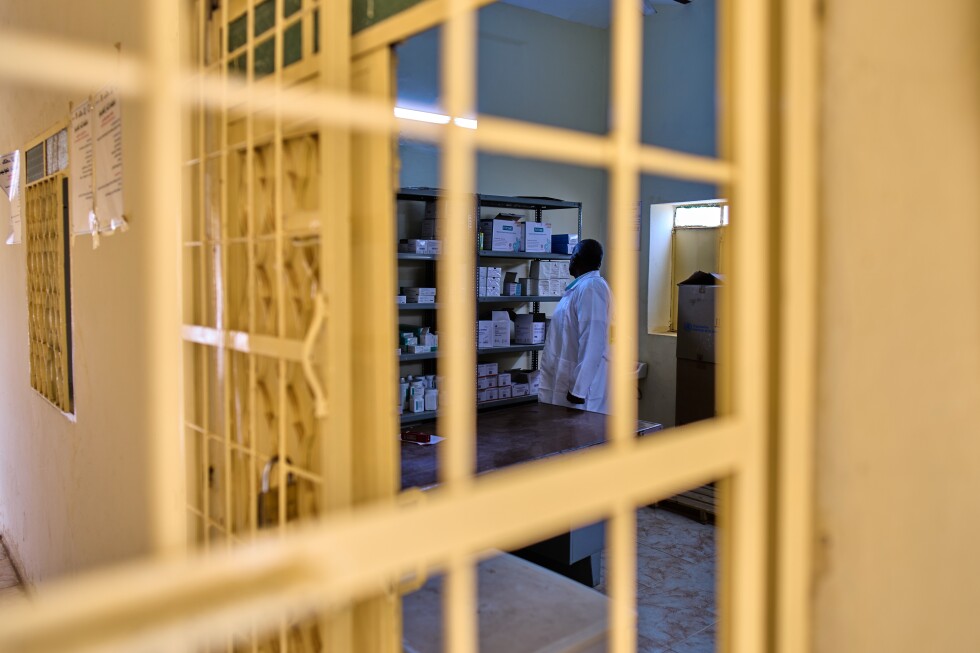
    NAIROBI, Kenya — In a distressing development from South Sudan’s conflict zones, Doctors Without Borders (MSF) has reported that 26 of its medical personnel remain unaccounted for following violent attacks on their facilities in Jonglei State one month ago. The incidents occurred on February 3rd when government forces bombed an MSF hospital in Lankien while unidentified assailants raided another medical facility in Pieri.

    Both targeted facilities were situated in opposition-controlled territories where intensified fighting has displaced approximately 280,000 civilians since December. Medical staff were forced to evacuate alongside local populations into remote rural areas where aerial bombardments and armed clashes continue to create dangerous conditions.

    The humanitarian organization expressed grave concerns over the missing staff members, noting that communication remains impossible due to both security constraints and limited network connectivity across the region. Colleagues who have managed to establish contact describe scenes of widespread destruction, extreme hardship, and ongoing violence.

    This attack represents part of a alarming pattern of violence against humanitarian operations in South Sudan. MSF facilities have been targeted ten times within the past twelve months, significantly undermining healthcare delivery in conflict-affected regions. The organization’s head of mission in South Sudan, Yashovardhan, emphasized that medical workers must never be targets and expressed profound concern for both staff and affected communities.

    The current violence escalation began in December when opposition forces captured multiple government outposts in north central Jonglei, prompting a government counteroffensive in January that reclaimed most lost territory. Displaced civilians near the Ethiopian border have reported horrific violence and severe shortages of basic necessities during their flight to safety.

  • Anglican divisions deepen as rebel clerics pick rival to first female leader

    Anglican divisions deepen as rebel clerics pick rival to first female leader

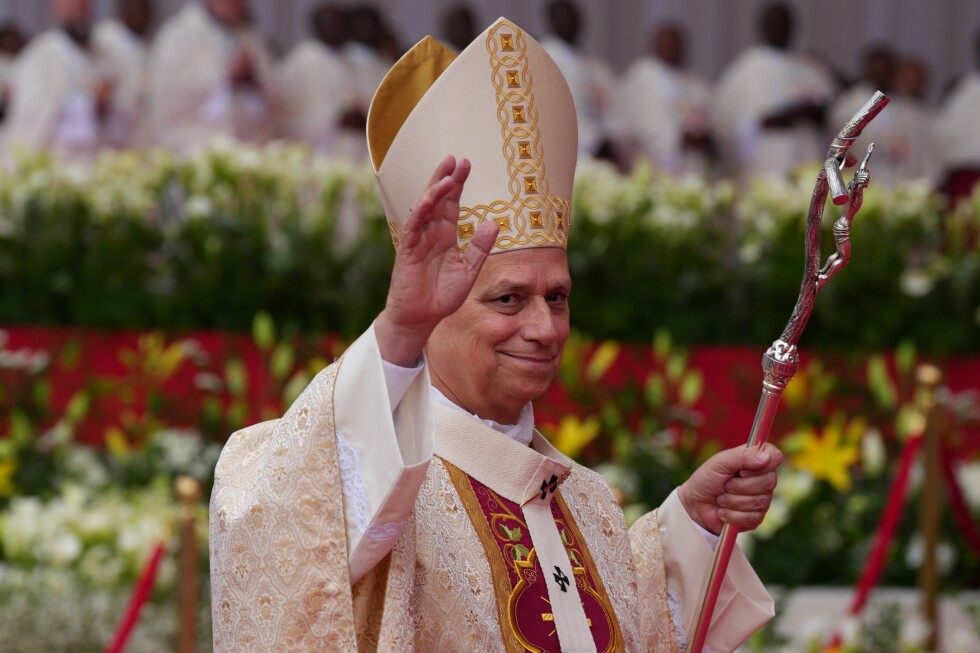
    A profound theological rift within the global Anglican Communion has reached a critical juncture as conservative clergy convene in Abuja, Nigeria, to elect an alternative spiritual leader in direct opposition to the historic appointment of Dame Sarah Mullally as the first female Archbishop of Canterbury. This unprecedented move by the Global Anglican Future Conference (Gafcon) threatens to formalize a schism within the 95-million-strong denomination, the world’s third-largest Christian communion.

    The four-day summit, organized by Gafcon’s self-described ‘authentic Anglicans,’ represents a calculated challenge to the Church of England’s progressive leadership. While Archbishop-elect Mullally prepares for her official installation later this month at Canterbury Cathedral, traditionalist leaders are establishing a parallel hierarchy based on conservative theological principles that reject female ordination and LGBTQ+ inclusion.

    This confrontation stems from longstanding doctrinal disagreements that intensified in 2023 when Gafcon repudiated the leadership of then-Archbishop Justin Welby over proposals to bless same-sex couples. The organization, drawing significant support from African churches but with substantial presence in the Americas and Australia, now claims to represent the majority of global Anglicans—though this assertion remains contested.

    Within Nigeria itself, perspectives reflect the global divide. At Lagos’s Vining Memorial Church Cathedral, congregants expressed polarized views. Bunmi Odukoya supported Mullally’s appointment, stating, ‘The work of God is an individual thing. If you’re called—you can be a man, you can be a woman—you need to fulfill the calling of the Lord.’ Conversely, Uche Nweke maintained traditional opposition: ‘When you look at the Bible and the apostles, there was no woman in there.’

    Ecclesiastical historians like Diarmaid MacCulloch, Oxford University’s Emeritus Professor of Church History, characterize Gafcon’s actions as ‘a schism, even if they don’t want to say that,’ describing the election of a rival leader as ‘a very aggressive thing to do.’

    The institutional structure of the Anglican Communion, historically maintained through four ‘Instruments of Communion’ led by the Archbishop of Canterbury, now faces unprecedented strain. Bishop Anthony Poggo, Secretary General of the Anglican Communion, acknowledges the limited options when ‘one part of the family refuses to follow established processes,’ conceding, ‘It saddens us.’

    Despite the escalating conflict, some voices advocate reconciliation. Nigerian youth pastor Alexander Olasinde, while disagreeing with the Church of England’s liberal stance, emphasizes shared spiritual goals: ‘All of us as Christians have one goal, and that is to make it to heaven. We need to find common ground.’

    The upcoming Anglican Consultative Council meeting in June will address proposals to broaden leadership structures to better reflect the Communion’s global nature, but Gafcon’s boycott ensures these discussions will occur without conservative representation, potentially deepening the divide within this historically influential Christian tradition.

  • What to know about the deadly shooting at a Texas bar and the gunman

    What to know about the deadly shooting at a Texas bar and the gunman

    AUSTIN, Texas — Authorities are investigating a deadly weekend shooting in Austin’s entertainment district as a potential act of terrorism after a gunman opened fire on crowded nightlife venues, killing two young victims and injuring fourteen others before being fatally shot by police.

    The incident occurred early Sunday along Sixth Street, a popular nightlife destination adjacent to the University of Texas campus. According to law enforcement officials, the suspect—identified as 53-year-old Ndiaga Diagne—initially drove past Buford’s Backyard Beer Garden before circling back and firing shots from his SUV at pedestrians and patrons. After a brief pause, Diagne parked his vehicle, exited with a rifle, and resumed shooting until responding officers neutralized him within one minute of the initial emergency call.

    Investigative sources revealed the suspect wore clothing featuring an Iranian flag design and the phrase “Property of Allah.” The shooting followed recent military actions by the U.S. and Israel against Iran, though authorities emphasize it is premature to definitively establish motives.

    Diagne, originally from Senegal, entered the United States in 2000 on a tourist visa and obtained lawful permanent residency in 2006 through marriage to a U.S. citizen. Police confirmed he legally purchased both firearms used in the attack several years prior in San Antonio.

    The victims were identified as Savitha Shan, 21, and Ryder Harrington, 19—a Texas Tech University fraternity member. University President Jim Davis confirmed several affected individuals belonged to the “Longhorn family,” referencing the university’s mascot.

    Austin Mayor Kirk Watson praised the rapid police response, stating officers “definitely saved lives” by preventing further casualties. The FBI, Bureau of Alcohol, Tobacco, Firearms and Explosives, and Homeland Security officials have joined the ongoing investigation.

  • Conservative Anglican leaders meet in Nigeria, facing debate on a possible breakaway

    Conservative Anglican leaders meet in Nigeria, facing debate on a possible breakaway

    The global Anglican community stands at a critical juncture as deep theological divisions threaten to unravel centuries of religious unity. Conservative leaders representing the Global Fellowship of Confessing Anglicans (Gafcon) convened in Abuja, Nigeria this week for a four-day summit that could determine the future of one of Christianity’s largest denominations.

    Simultaneously, the historic Anglican Communion based in England announced a revised restructuring plan aimed at decentralizing authority from its traditional Canterbury headquarters. This proposed reorganization would distribute leadership more broadly across global regions, acknowledging that the majority of Anglicans now reside in Global South nations rather than England.

    Gafcon, predominantly composed of conservative Anglican provinces from Africa, Asia, and Latin America, has vehemently opposed liberal theological developments including same-sex marriage and LGBTQ+ clergy ordination within Western Anglican churches. Archbishop Laurent Mbanda of Rwanda, Gafcon’s chairman, previously called for a fundamental ‘reordering’ of the Anglican Communion, envisioning a reformed ‘Global Anglican Communion’ governed by an elected council rather than the traditional authority of the Archbishop of Canterbury.

    The current gathering in Abuja represents a potential watershed moment, where Mbanda’s proposal could be adopted, modified, or rejected entirely. Bishop Paul Donison, Gafcon’s general secretary, emphasized that last year’s proposal was ‘not the final word’ and required careful deliberation among the more than 400 clergy, bishops, and lay members attending the conference.

    Despite these fractures, the Anglican Communion maintains approximately 85 million members across 165 countries through 40 autonomous provinces. The denomination traces its origins to the Reformation-era Church of England, spreading globally through British colonialism and subsequent missionary efforts.

    The timing of these developments coincides with the recent installation of Archbishop Sarah Mullally as the first female Archbishop of Canterbury. While some conservative leaders criticized her appointment based on gender, primary objections centered on her positions regarding LGBTQ+ issues, despite her affirmation of traditional church marriage definitions.

    As both factions pursue divergent paths—Gafcon toward potential separation and the historic communion toward decentralized cooperation—the coming days may determine whether Anglicanism can maintain its global unity or undergo its most significant schism since the Reformation.