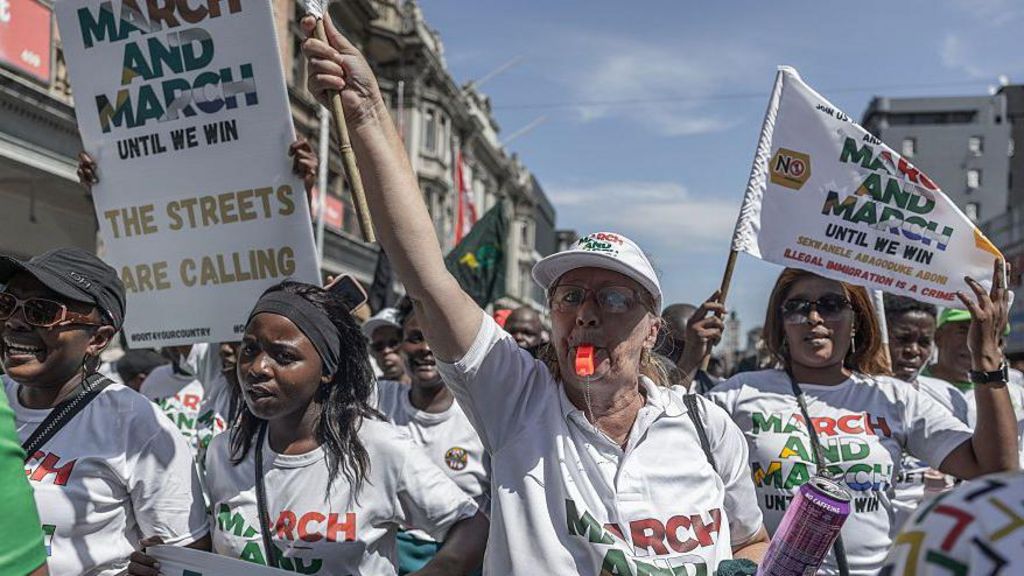
A wave of xenophobic harassment targeting African migrants in South Africa has sparked diplomatic backlash, with Ghana officially calling in South Africa’s senior diplomatic representative to respond to targeted attacks against its citizens, raising alarms across the continent over escalating anti-immigrant violence.
The controversy ignited after viral video clips circulated on social media earlier this week, showing self-appointed anti-immigrant vigilante groups confronting and assaulting people they accused of residing in South Africa without legal authorization. One widely shared clip shows members of these groups accosting a Ghanaian national, demanding to inspect his immigration documentation. Even after the man produced valid, legal paperwork, the vigilantes continued to question the documents’ legitimacy before telling him to leave the country and ‘go fix your own country.’ Ghana’s foreign ministry confirmed that the Ghanaian man is in South Africa with full, legal immigration status.
Following the emergence of the video, Ghanaian authorities stepped in quickly to support the targeted citizen. Ghana’s High Commission in Pretoria released footage of its top envoy, Benjamin Quashie, meeting with the man to offer consular assistance. While urging all Ghanaian migrants living in South Africa to remain law-abiding and respect local regulations, Quashie acknowledged the deeply stressful and dangerous environment the confrontations have created.
Ghana’s Ministry of Foreign Affairs confirmed it had formally summoned Thando Dalamba, South Africa’s acting high commissioner to Ghana, to deliver an official protest over the string of recent xenophobic attacks targeting foreign nationals, including Ghanaian citizens. In an official statement released Thursday, the ministry emphasized that ‘such conduct undermines the dignity and rights of law-abiding citizens.’ Ghanaian Foreign Minister Samuel Okudzeto Ablakwa also held a direct conversation with his South African counterpart, Ronald Lamola, who expressed regret for the incidents and pledged to launch a full, thorough investigation into the attacks.
South African officials have also publicly condemned the vigilante actions. Acting Police Minister Firoz Cachalia stressed that no private individual or organized group has the right to seize legal authority into their own hands, regardless of any grievances or frustrations community members may hold.
Xenophobic tension and anti-immigrant violence are not new challenges for South Africa, where anti-foreigner sentiment has simmered for decades, occasionally flaring into deadly outbreaks that have left dozens dead and displaced thousands of migrants over the years. According to official South African statistics, approximately 2.4 million documented migrants reside in the country, accounting for just under 4% of its total population, though analysts estimate a far larger number of people live in the country without formal immigration status. Most cross-border migrants come from neighboring Southern African nations including Lesotho, Zimbabwe and Mozambique – countries with long histories of supplying migrant labor to South Africa’s economy – while smaller numbers originate from West African nations like Ghana and Nigeria.
The latest incidents have already drawn broader concern across the African continent, with regional observers calling for South African authorities to take decisive action to protect foreign residents and crack down on violent vigilante groups targeting migrants.