Nestled in the heart of Addis Ababa, a city already recognized as Africa’s diplomatic capital for housing the African Union (AU) headquarters and the United Nations Economic Commission for Africa, Ethiopia is making an ambitious push to solidify its standing as the continent’s preeminent diplomatic and global events hub. This push centers on a major expansion project for the Addis International Convention Center (AICC), with the East African nation turning to long-standing Chinese infrastructure partners to deliver one of the largest conference facilities on the continent.
The expansion initiative marks the second phase of the AICC’s development, launching just over 12 months after Ethiopian Prime Minister Abiy Ahmed inaugurated the first phase of the complex in March 2025. The project, which underscores the deepening bilateral cooperation between Ethiopia and China on large-scale infrastructure and urban modernization, is scheduled to break ground within the next two years and reach full completion by 2032, according to Kirubel Kefyalew, AICC’s deputy chief executive officer and chief marketing officer.
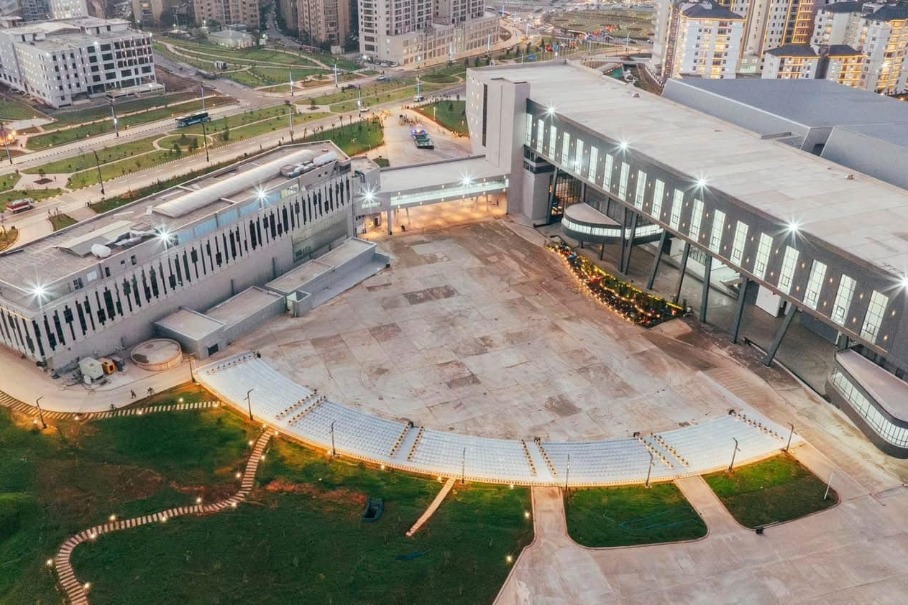
At the core of the expansion is a cutting-edge domed main conference hall built to accommodate over 5,000 attending delegates. The upgrade will also add two new large-scale exhibition halls, eight additional modern meeting rooms, and Class-A international standard office spaces to the existing complex. The current AICC already spans 19 hectares of prime land in Addis Ababa, featuring two large multipurpose halls that can each hold more than 4,000 attendees, alongside eight flexible configurable meeting spaces and a 15,000-square-meter open-air amphitheater that enables the venue to host large outdoor exhibitions and public events. Supported by advanced digital connectivity and integrated full-service event management, the existing facility is already equipped to host everything from high-level intergovernmental summits to industry trade fairs, corporate retreats and cross-continental cultural events.
To further improve visitor experience for international delegates, the expansion plan also includes an adjacent standardized hotel apartment complex, located a convenient 15-minute drive from Addis Ababa’s Bole International Airport, the main air gateway for travelers entering Ethiopia.
Kefyalew noted that Ethiopia is drawing on its decades of successful collaborative partnerships with Chinese firms to advance the project, pointing to a track record of Chinese-backed megaprojects across the country including the original AU headquarters complex, major expansions to Bole International Airport, and dozens of other critical infrastructure developments that have shaped Ethiopia’s modern growth. “We are looking to work with Chinese companies to achieve this vision, building on successful cooperation in megaprojects,” he said, confirming that Ethiopian officials are already in active discussions with Chinese business leaders to formalize the partnership.
Recent municipal urban renewal initiatives across Addis Ababa have already boosted the city’s attractiveness as an events destination, with upgraded arterial road networks, new pedestrian walkways, dedicated cycling lanes, and expanded public green spaces creating a more modern, accessible urban environment for visitors and locals alike.
The push for a world-class expanded convention center signals a broader strategic shift for Ethiopia: moving beyond simply hosting ad-hoc diplomatic gatherings to positioning itself as a competitive, leading player in the global Meetings, Incentives, Conferences and Exhibitions (MICE) industry. This transition is expected to drive substantial growth in business tourism, generate much-needed foreign exchange earnings, and stimulate expansion across Ethiopia’s hospitality, transportation, and professional service sectors, according to Kefyalew.
“With these developments, Addis Ababa is steadily emerging not only as a gateway to Africa, but also as a leading destination for global conferences and exhibitions,” he added. The AICC itself is a tangible example of evolving Sino-Ethiopian cooperation, he noted, fitting into a wider trend of Chinese-backed infrastructure projects across Africa that tie physical development to expanded trade, deeper diplomatic engagement, and broad-based urban modernization.
Since the opening of the first phase of AICC, the venue has already hosted eight major national and international events, marking a strong early start to its goal of establishing Addis Ababa as a premier global conference destination. The venue is purpose-built to host high-level summits, trade fairs, corporate meetings, and cultural events, with premium amenities including dedicated VIP lounges, fully equipped media and translation centers, breakout meeting spaces, and enterprise-grade digital connectivity.
Leveraging Addis Ababa’s natural diplomatic advantage as the seat of the AU and UN’s regional economic body, the expanded AICC will position the Ethiopian capital to compete directly with long-established African MICE destinations, including South Africa’s Cape Town and Johannesburg, Kenya’s Nairobi, and Rwanda’s Kigali, for the opportunity to host major international global events.