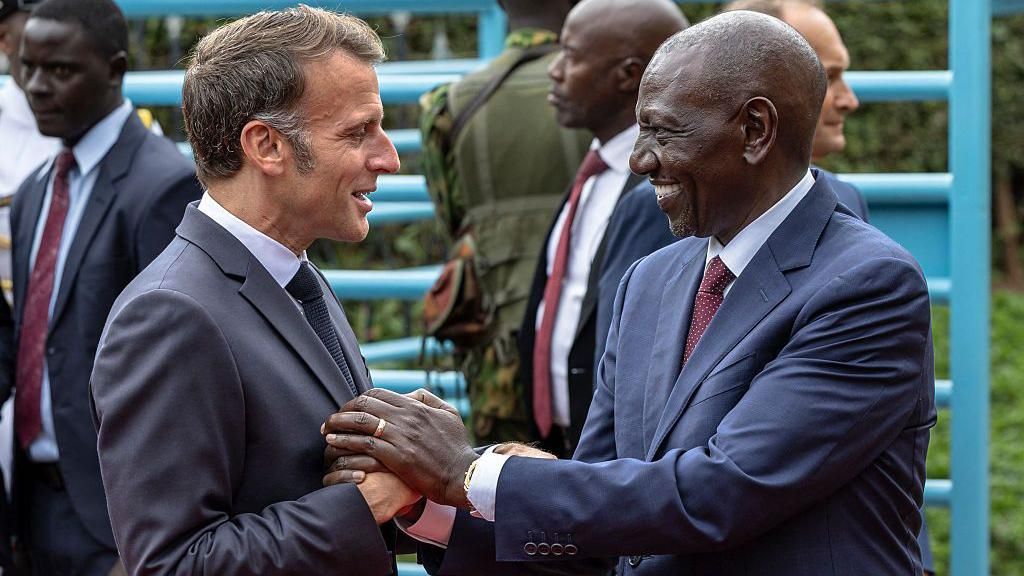
In a landmark shift marking a profound reorientation of France’s engagement with the African continent, French President Emmanuel Macron joined Kenyan President William Ruto to co-host the first-ever Africa Forward Summit in Nairobi, Kenya’s capital, this week. The gathering represents a strategic break from decades of Paris-centered or Francophone Africa-only summits, coming amid growing anti-French sentiment and eroding French influence in its traditional West African former colonial sphere. Over 30 African heads of state, top business leaders including Nigerian billionaire Aliko Dangote, and executives from major French firms gathered for the two-day event focused on expanding cross-continental economic partnership.
Macron used his opening address to announce a $27 billion package of new French investments across priority African sectors, ranging from energy transition, digital innovation and artificial intelligence, to the blue maritime economy and sustainable agriculture. The French president emphasized that the investment initiative is projected to generate an estimated 250,000 new jobs on both the African continent and in France, framing the partnership as a two-way street rather than a one-sided donor relationship. “Africa is succeeding. It’s the youngest continent in the world… and needs investment to become more self-reliant,” Macron told attendees at the Nairobi Convention Centre. He added that France is not only seeking to invest in African markets, but is actively encouraging leading African business leaders to expand their investments into the European country.
The summit comes against a decades-long backdrop of criticism that France has maintained neocolonial-style political, economic and military control over its former African colonies decades after they gained independence in the 1960s. Tensions have boiled over in recent years in West Africa, where military juntas that seized power in Burkina Faso, Mali and Niger all expelled French counter-insurgency troops and pivoted to closer security ties with Russia; none of the three nations’ leaders are in attendance at the Nairobi summit. France now only maintains one operational military base on the continent, based in Djibouti at the entrance to the Red Sea. Ahead of the summit, Macron defended the drawdown of French military presence, framing the withdrawal from unwelcome stations as a deliberate step respecting African sovereignty, not a defeat. “When our presence was no longer wanted after the coups, we left. I’m convinced that we must let these states and their leaders, even putschists, chart their own course,” he said.
By choosing to co-host the summit in English-speaking Kenya rather than a traditional Francophone African nation, French officials are sending a clear signal that Paris is expanding its African partnerships beyond its old colonial sphere. Kenyan Foreign Minister Musalia Mudavadi framed the location as a deliberate rejection of the colonial-era divisions that split African nations into Anglophone, Francophone and Lusophone blocs, which he argued have long hindered cross-continental integration. “Having this summit being held in a non-French-speaking African country on the continent, to me, is a very, very big message that we should not be looking at engagements on the basis of the official languages that are spoken in those countries,” Mudavadi told the BBC. He added that the summit, which covers both peace and security and broad economic cooperation, is a deliberate move to “start speaking as one” and focus on the future rather than rehashing colonial history. Kenyan officials note that as a former British colony, Kenya shares no direct colonial history with France, making it an ideal neutral diplomatic bridge for the event, a point echoed by Foreign Affairs Principal Secretary Korir Sing’oei, who described Kenya as a natural “bridge-builder” for pan-African engagement.
Analysts broadly frame the summit as a deliberate strategic repositioning for France, which is competing with growing influence from other global powers including China, Russia and Turkey across the African continent. Gilles Yabi, a Senegal-based independent political analyst specializing in Franco-African relations, told the BBC that the shift reflects not just a reaction to deteriorating ties in West Africa, but a long-running recognition that France needs to pursue new, dynamic markets beyond its traditional sphere of influence. “It’s not only a reaction of France to the deteriorating relationship with some countries in West Africa. It’s also a trend that has been there for some time because France realises that it has to look for new markets, dynamic markets and looking beyond traditional former colonies of West and Central Africa,” Yabi explained.
Beverly Ochieng, a senior analyst at global risk advisory firm Control Risks, argues that France is moving away from reliance on military influence toward a soft-power and economic engagement strategy. “France is repositioning and softening its presence and reputation. Rather than relying mainly on military influence, she believes that France is increasingly using business, investment and soft power to maintain its relevance on the continent. France is looking to leverage already recognisable commercial brands, cultural presence and its weight in the European Union to mobilise economic initiatives,” Ochieng explained.
For Kenya, the summit offers significant potential economic and diplomatic gains: France is already Kenya’s fourth-largest source of foreign direct investment, with French brands including retail giant Carrefour already well-established across Nairobi’s more affluent neighborhoods, and French firms active in Kenyan transport, energy and retail infrastructure. Kenyan officials are actively seeking new foreign investment in infrastructure, renewable energy and digital technology, and have already held early exploratory talks with French counterparts about potential future cooperation on nuclear energy to diversify Kenya’s long-term energy mix. Last month, Nairobi also approved a new five-year renewable defense cooperation agreement with France, covering intelligence sharing, Indian Ocean maritime security and joint disaster response operations.
The summit was not without controversy: during a public event, Macron drew criticism on social media after he interrupted a speaker to chide audience members for holding side conversations, saying “There is a total lack of respect” and urging disruptive attendees to move their discussions to private meeting rooms. Some social media users slammed the outburst as evidence that France has not abandoned its old colonial habit of lecturing African partners, while others argued the French president was well within his rights to call for order during formal proceedings.
Macron struck a clear new tone for Franco-African relations in an address at the University of Nairobi ahead of the summit’s official opening, stressing that Paris now recognizes Africa’s demand for full sovereignty and no longer seeks to dictate policy to African nations. “Africa needs investment to become more sovereign. This is a continent that I no longer want France to view as a private preserve, where business leaders supposedly have all the rights or guaranteed contracts simply because it’s Francophone Africa,” Macron said. “The continent no longer… needs or wants to hear European leaders telling them what their countries need.” French Ambassador to Kenya Arnaud Suquet noted that France has long-standing ties with the East African nation, saying “it is not as if France has just discovered Kenya yesterday” ahead of the high-profile gathering, framing the summit as a deepening of already robust bilateral relations.