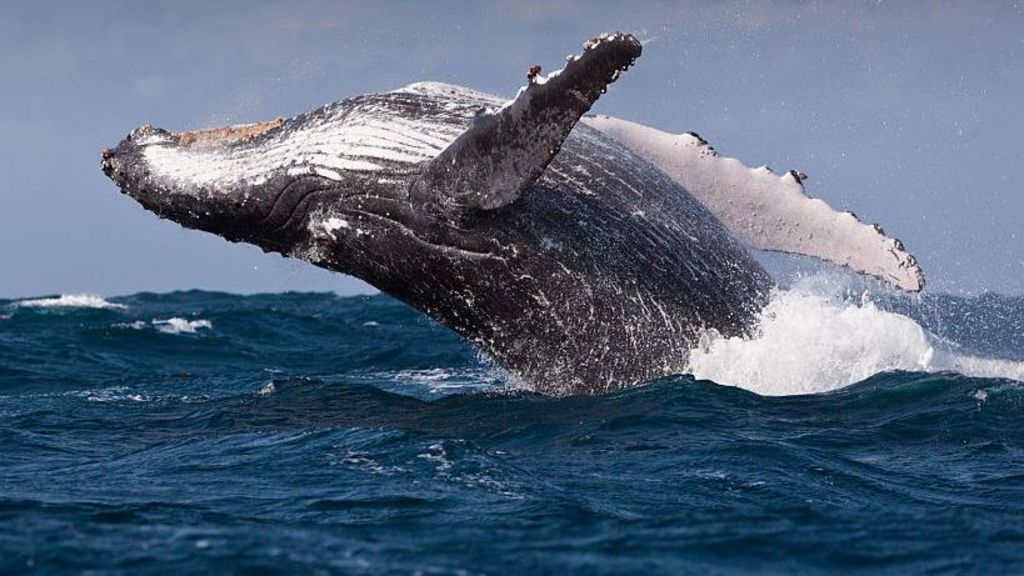
Geopolitical instability unfolding across the Middle East has triggered an unexpected ecological crisis off South Africa’s south-western coast, where a sharp redirection of global shipping lanes has drastically raised the threat of fatal collisions between commercial vessels and endangered whale populations, leading marine scientists have warned.
The cascading security crisis in the Red Sea and Gulf of Aden, which began when Houthi rebels seized a British-flagged cargo ship off Yemen in 2023, has forced the majority of container and cargo vessels traveling between Asian and European markets to abandon the direct Suez Canal route and instead detour around the southern tip of Africa via the Cape of Good Hope. This shift has accelerated dramatically amid escalating regional tensions between the U.S.-Israel bloc and Iran, pushing shipping volumes far higher than pre-crisis levels.
New data from the International Monetary Fund’s PortWatch monitoring tool, cited by Agence France-Presse, shows that between March and April 2024, an average of 89 commercial vessels transited the Cape of Good Hope each week – nearly double the 44 vessels recorded in the same two-month period in 2023. This sudden doubling of maritime traffic has overlapped directly with critical feeding and migration habitats for multiple whale species native to the Western Cape region, creating a high-stakes risk scenario that scientists say is already unfolding.
Professor Els Vermeulen, chief scientist at the University of Pretoria’s renowned Whale Unit, recently presented her team’s groundbreaking research to the International Whaling Commission, outlining the growing danger. Vermeulen explained that her researchers mapped detailed distribution models for all major whale populations along the Western Cape coastline, then cross-referenced these habitats with the newly diverted shipping lanes to identify overlapping high-risk zones.
One of the biggest challenges to addressing the threat, Vermeulen noted, is the widespread phenomenon of “cryptic mortality” that hides the true scale of whale collisions. Most ship strikes occur far offshore in deep waters, and mortally wounded whales almost always sink to the ocean floor rather than washing ashore for recovery and documentation. This lack of onshore evidence makes it extremely difficult to collect accurate data on how many whales are killed each month by collisions, leaving scientists without a clear picture of just how severe the crisis has become.
Despite the data gap, Vermeulen has outlined actionable preliminary measures to reduce collision risk. She recommends minor adjustments to current shipping lanes to move traffic away from the densest whale habitats, as well as mandatory speed limits for vessels transiting the region during peak whale migration and feeding seasons. Still, Vermeulen emphasized that long-term, effective solutions will not be possible until more comprehensive population and collision data is collected.
To fill this critical knowledge gap, Vermeulen and her team are planning a systematic aerial and marine survey of offshore whale populations across the Western Cape. The ambitious project will require significant financial and logistical support, which the team is currently working to secure. Vermeulen told the BBC she has been encouraged by the widespread public and institutional interest in collaborating to address the crisis.
“It’s been nice to see how much people want to come together to solve this,” she said. “So now the onus is on the scientific community to come up with reliable data on the offshore whale population that can guide effective policy and industry action.”