标签: Africa

非洲

  • Four toddlers stabbed to death at Ugandan nursery school

    Four toddlers stabbed to death at Ugandan nursery school

    A horrific morning attack at a Kampala early childhood education center has left East Africa reeling, after a suspected assailant stabbed four young children to death in what Ugandan police have described as an unspeakably brutal act.

    The victims, three boys and one girl between two and three years old, died at the scene immediately following the assault, according to national police spokesperson Racheal Kawala. Investigators confirmed the attacker used multiple bladed weapons to carry out the violence at the Ggaba Early Childhood Development Program School, located in Kampala’s upscale Ggaba suburb.

    Police have taken a 39-year-old male suspect into custody for questioning, following a chaotic scene where enraged parents who had rushed to the school after hearing news of the attack attempted to lynch the suspect before law enforcement intervened. As of Tuesday (local time), investigations are still ongoing to uncover the attacker’s motive, full background, and any additional details connected to the crime.

    Kawala shared that the suspect had recently visited the nursery school to inquire about enrolling a child, and was instructed to return on Thursday. He completed the admission payment before turning on the young children, launching the fatal attack before 11 a.m. local time (8 a.m. GMT). First responders were alerted via an emergency distress call and arrived at the campus within minutes.

    In total, 14 children were present at the school at the time of the attack. The remaining 10 unharmed children have all been safely returned to their families. Forensic investigators remain on site processing evidence, while the campus remains cordoned off by law enforcement. By sunset, a heavy, somber mood hung over the area, where distraught parents, anxious community members, and shaken school staff had gathered throughout the day.

    Uganda’s Inspector General of Police Abas Byakagaba visited the attack site shortly after the incident, and issued a public statement urging citizens to remain calm as the investigation progresses. He added that official updates on the case will be released to the public as more information is confirmed.

    The shocking, senseless killing of young children at a learning facility has sent immediate shockwaves across Uganda, sparking urgent new conversations and widespread public concern over the safety of students and young learners across the East African nation.

  • Congo says its mpox outbreak is over after 2 years and more than 2,200 suspected deaths

    Congo says its mpox outbreak is over after 2 years and more than 2,200 suspected deaths

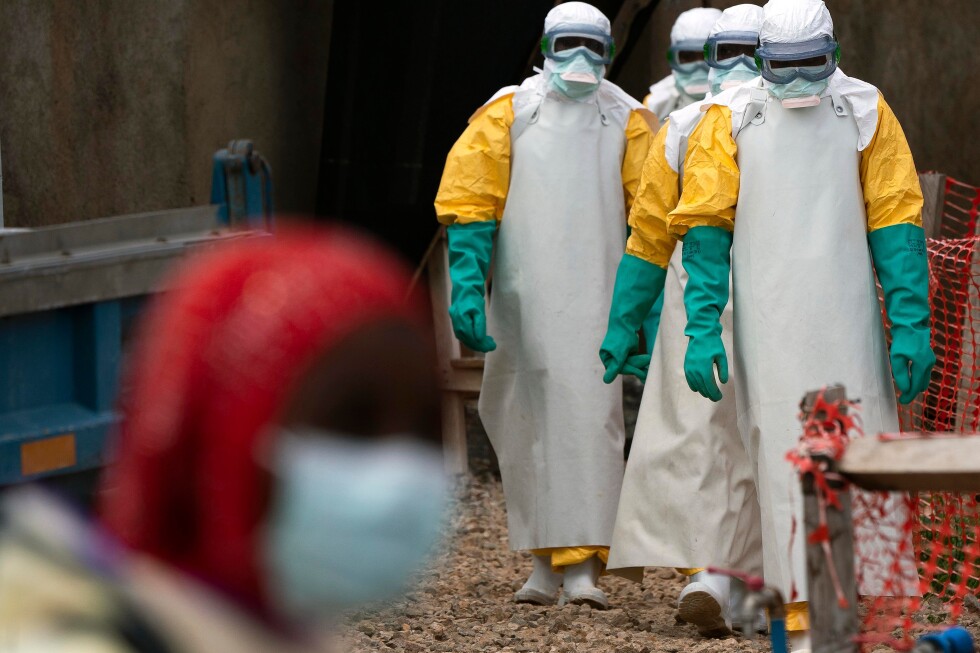
    CAPE TOWN, South Africa – After two years of widespread transmission that claimed thousands of lives, the Democratic Republic of Congo (DRC) formally announced the end of its devastating mpox outbreak on Thursday, lifting the classification of the virus as a national public health emergency.

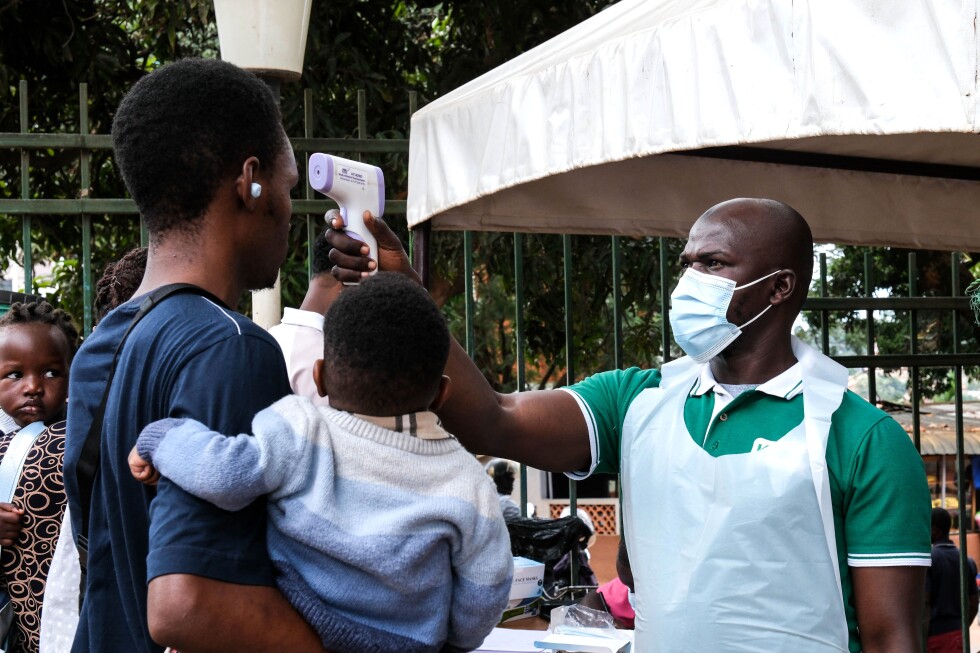
    Congolese Health Minister Roger Kamba confirmed the declaration to reporters, stating that national health authorities had formally determined the outbreak had been brought under control. The central African nation bore the brunt of a resurgent mpox wave that emerged in 2024, with transmission spilling across DRC’s borders into neighboring countries and prompting the World Health Organization (WHO) to declare the event a global health emergency that same year. The WHO rolled back that global emergency designation in September 2024.

    Data from the Africa Centers for Disease Control and Prevention (Africa CDC) shows that between 2024 and 2025, the DRC recorded more than 161,000 suspected mpox cases, with approximately 37,000 of those cases confirmed via laboratory testing. Across the outbreak, 2,286 deaths were suspected to be linked to mpox, though only 127 of those fatalities were verified through diagnostic testing.

    First documented by researchers in 1958, when pox-like lesions were observed in research monkey colonies, mpox (formerly called monkeypox) long remained a rare zoonotic infection restricted largely to central and West Africa. For decades, nearly all confirmed human cases occurred in people who had close direct contact with infected wild animals.

    That epidemiological pattern shifted dramatically in 2022, when scientists confirmed for the first time that mpox could spread through close sexual contact. That discovery came as the virus sparked unexpected outbreaks across more than 70 countries that had never previously reported sustained local mpox transmission, triggering a global public health response.

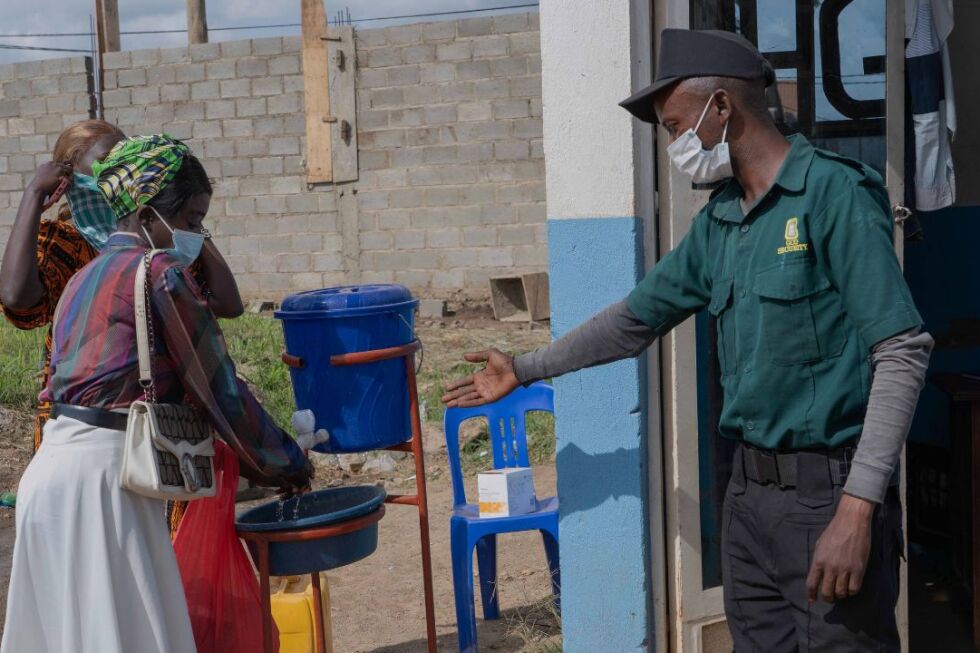
    According to WHO guidance, the most prevalent symptoms of mpox infection include the development of a characteristic rash and fever, though the virus can cause severe complications in vulnerable populations in some cases. The vast majority of infected people eventually make a full recovery with appropriate care.

    This reporting is part of AP News’ Africa Pulse coverage, supported by a grant from the Gates Foundation. The Associated Press maintains full editorial independence over all its content, with public transparency standards for philanthropic partnerships available on AP.org.

  • First group of 12 deportees from the US arrives in Uganda, lawyers say

    First group of 12 deportees from the US arrives in Uganda, lawyers say

    On Thursday, the first group of 12 people deported from the United States touched down on Ugandan soil, marking the first known arrivals after the two nations finalized a bilateral deportation transfer deal, the Uganda Law Society confirmed this week.

    The group arrived via a chartered private flight, and the Ugandan legal advocacy organization harshly condemned the process that delivered the deportees, calling the transfer an “undignified, harrowing and dehumanizing” act that effectively amounted to dumping unwanted people in the East African nation. It has launched a legal push to block further transfers, labeling the arrangement an “international illegality” and arguing the deportees have been left vulnerable to unaccountable private actors on both sides of the Atlantic Ocean with no oversight or protection.

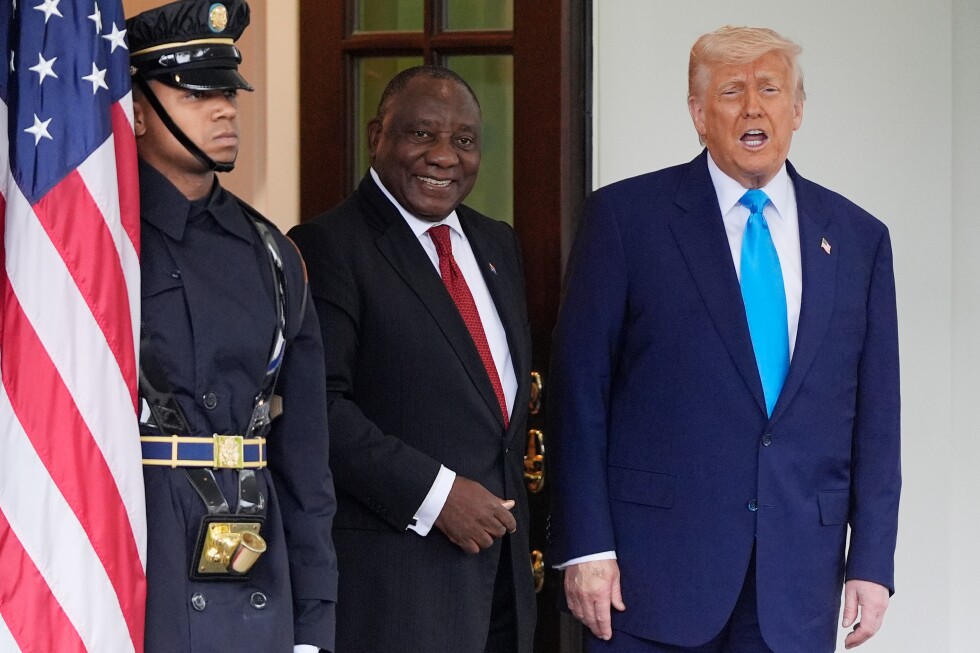
    This first transfer of deportees is part of former U.S. President Donald Trump’s sweeping immigration crackdown, a policy designed to cut flows of undocumented migration into the U.S. while removing people who have already entered the country illegally, particularly those with criminal convictions. The policy targets people who cannot be readily deported directly to their home countries by resettling them in agreed third-party nations.

    U.S. federal agencies including the State Department and Department of Homeland Security have defended third-country deportation deals as a necessary mechanism to speed up the removal of undocumented people from U.S. territory. But the policy has faced sustained legal challenges in both U.S. courts and courts in the nations that receive deportees, and has sparked widespread global criticism over humanitarian risks.

    The core of the controversy stems from the fact that many deportees transferred under these deals have no cultural, social or family ties to the third-party countries where they are sent, leaving them stateless and isolated. The high-stakes debate gained national attention in the U.S. earlier this year when federal officials briefly considered moving Kilmar Abrego Garcia, a Salvadoran migrant at the center of a heated national migration dispute, to Uganda under the agreement, before reversing the plan.

    To date, the U.S. has signed similar third-country deportation arrangements with at least seven different African nations, spanning from West Africa’s Ghana to the southern African kingdom of Eswatini. Publicly released State Department details show the U.S. agreed to provide Eswatini with $5.1 million in exchange for accepting up to 160 deportees. As of this reporting, there is no public information confirming whether Uganda received similar financial compensation for agreeing to take deportees.

    Details around the 12 new arrivals remain scarce: officials have not released information about their identities, citizenship or countries of origin. Okello Oryem, Uganda’s Minister of State for Foreign Affairs, told reporters he was traveling at the time of the arrival and had not been briefed on the landing. A spokesperson for the U.S. Embassy in Kampala, Uganda’s capital, also declined to answer questions about the deportees’ current welfare or status.

    This development contradicts earlier statements from Oryem, who told the Associated Press last month that Uganda was preparing to receive multiple planeloads of deportees from the U.S. He framed the bilateral deal at the time as an act aligned with pan-African solidarity and humanitarian principle, designed to repatriate African people who were living without documentation in the U.S. Ugandan officials have also previously stated the agreement only covers non-criminal deportees of African origin, but that detail has not been confirmed for the 12 people who arrived this week.

  • Burkina Faso forces killed twice as many civilians as jihadists, rights group says

    Burkina Faso forces killed twice as many civilians as jihadists, rights group says

    For years, the landlocked West African nation of Burkina Faso has stood at the epicenter of the Sahel region’s escalating security crisis, a conflict that has shattered communities and pushed millions into displacement. A new, sweeping 316-page investigation from Human Rights Watch (HRW) has uncovered damning new findings: between January 2023 and August 2025, Burkina Faso’s government forces killed more than twice as many civilians as extremist jihadist groups operating in the country, with both sides responsible for systematic war crimes and crimes against humanity.

  • Over 1,800 killed since junta seized power in Burkina Faso, rights group says

    Over 1,800 killed since junta seized power in Burkina Faso, rights group says

    Three years after Ibrahim Traoré seized power in a military coup in Burkina Faso, a damning new investigation from Human Rights Watch (HRW) has uncovered staggering civilian casualties, including allegations of systematic war crimes and crimes against humanity perpetrated by both state forces and armed jihadist groups. Between January 2023 and August 2025 alone, the rights organization documented 57 separate violent incidents that left 1,837 civilians dead, among them dozens of children. More than two-thirds of these deaths — 1,255 in total — are attributed to the Burkinabé military and its allied civilian militias, while the remaining killings are linked to Islamist insurgent groups active in the region.

    The report’s most significant legal finding holds that Traoré and six senior military commanders may bear command responsibility for these grave human rights abuses, and recommends that all seven be formally investigated for their alleged roles. Five top jihadist leaders are also named as potentially culpable for violence against civilian populations. The BBC reached out to Burkinabé junta officials for comment on the new findings; authorities have repeatedly rejected past accusations of indiscriminate civilian killings by their forces.

    When Traoré’s junta seized power in September 2022, ousting the interim military leader Paul-Henri Sandaogo Damiba who had taken power just nine months prior, its core stated justification was a promise to more effectively defeat a decade-long Islamist insurgency linked to al-Qaeda that has seized control of large swathes of Burkina Faso’s territory and destabilized neighboring countries. But the HRW report, which draws on rigorous open-source intelligence analysis — including verified photos, video footage, satellite imagery, and firsthand interviews with hundreds of witnesses and survivors — paints a far grimmer picture: that all parties to the conflict have systematically violated international humanitarian law.

    “All sides are responsible for the war crimes of willful killing, attacks on civilians and civilian objects, pillage and looting, and forced displacement,” the report concludes. It specifically accuses the Traoré-led junta of committing “horrific abuses,” failing to hold any perpetrators accountable for civilian deaths, and actively blocking independent reporting to conceal the scale of suffering among trapped populations. Philippe Bolopion, HRW’s executive director, emphasized the gap between the scope of the crisis and global indifference: “The scale of atrocities taking place in Burkina Faso is mind-boggling, as is the lack of global attention to this crisis.”

    One of the deadliest single incidents documented by the investigation dates to December 2023, when military forces and allied militias allegedly killed more than 400 civilians in the northern border town of Djibo. A 35-year-old survivor who spoke to researchers described losing her two daughters immediately in the attack, while she and her nine-month-old infant suffered bullet wounds. She recounted a militia fighter telling his comrades, “Make sure no-one is breathing before heading out.” Many survivors described the mass killings as “butchery,” and researchers confirmed that nearly all who lost family or escaped violence carry permanent, severe psychological trauma from their experiences.

    The militias that work alongside the Burkinabé military, known as the Volunteers for the Defence of the Fatherland (VDP), are civilian recruits the junta enlisted to bolster counter-insurgency operations. The report also documents allegations that the junta has forced political critics to join the VDP as a form of punishment. Traoré has publicly defended this forced conscription policy, arguing that “individual freedoms [are] not superior to national freedom” and that “a nation is not built on indiscipline and disorder.”

    Since the military government took power, counter-insurgency operations have increasingly targeted civilian communities in response to attacks by JNIM, al-Qaeda’s regional affiliate and the largest active jihadist group in the country. For ordinary Burkinabé, this has created an untenable catch-22: civilians told HRW they feel “caught between a rock and a hard place,” threatened with execution by JNIM for suspected collaboration with the state, and targeted by government forces for alleged ties to insurgents. For its part, JNIM has carried out widespread campaigns of violence and intimidation to control local communities, deliberately targeting civilians who refuse to submit to the group’s authority. In one high-profile 2024 attack, JNIM fighters shot dead at least 133 people and injured more than 200 in less than two hours, according to the report.

    In line with its findings, HRW is calling on the International Criminal Court (ICC) to open an immediate preliminary investigation into all alleged crimes committed by all parties to the conflict since September 2022. The organization is also urging international partners and donor countries to impose targeted sanctions on senior Burkinabé officials and suspend all military cooperation with the Traoré government.

    Despite his authoritarian rule and the allegations of mass atrocities, 38-year-old Traoré has built a large popular following across the African continent, buoyed by his vocal pan-Africanist politics and sharp criticism of Western neocolonial influence. Like neighboring Mali and Niger, both of which are also controlled by military juntas, Burkina Faso has cut most security cooperation with Western nations — particularly former colonial power France — since Traoré took power, and has turned to Russia for military support. Even with this new partnership, the ongoing insurgency and civilian death toll have continued to rise with no sign of abating.

  • Machete-wielding man attacks Ugandan nursery school, killing 4 children

    Machete-wielding man attacks Ugandan nursery school, killing 4 children

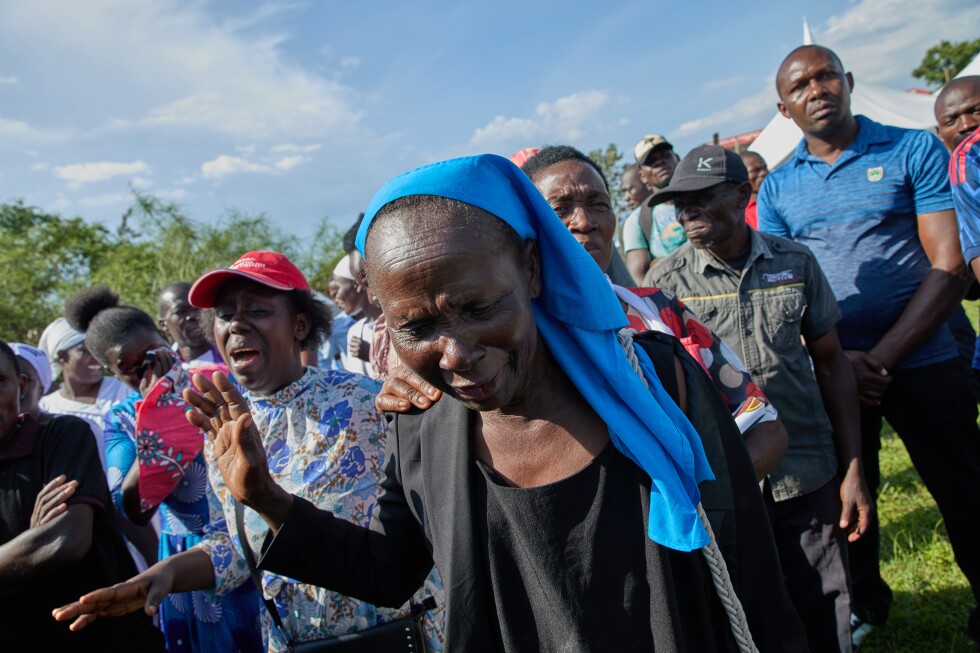
    On a quiet Thursday in Uganda’s capital Kampala, a brutal act of violence shattered a local early childhood education center, leaving four young children dead and the entire community reeling from shock and grief, police officials have confirmed.

    According to local newspaper the Daily Monitor, the attacker gained entry to the Gaba Early Childhood Development Program by hiding his true identity and posing as a parent of one of the school’s students. Upon first entering the facility, he made his way to the administrative offices and held a short, unremarkable conversation with the facility’s lead administrator. What happened next would turn a routine school day into a tragedy: after stepping back outside the building, he locked the school’s main gate and turned his weapon on the defenseless children inside.

    In an official statement, police confirmed that the assailant “brutally stabbed and killed four juveniles” in the frenzied attack. Local broadcaster NTV obtained and aired surveillance footage from the area, which captured heartbreaking scenes of grieving parents weeping openly near the school gates after learning the fates of their children.

    As word of the attack spread through the neighborhood, a large, angry crowd quickly gathered outside the facility, with many in the crowd intent on inflicting vigilante violence on the suspect. To prevent further bloodshed and secure the crime scene, police were forced to fire warning shots into the air to break up the crowd and take the suspect into custody safely.

    Police spokesperson Kituuma Rusoke confirmed to the Associated Press in an interview that the attacker is now in police custody, and added that investigators have not yet established a clear motive for the senseless violence. For residents of Kampala, a city of approximately 3 million people, this unthinkable attack on young children is a highly unusual event, leaving many struggling to process how such violence could occur at a place meant to nurture and protect young learners.

  • Explosions at Burundi ammunition depot kill 13 civilians – army

    Explosions at Burundi ammunition depot kill 13 civilians – army

    A sequence of devastating blasts at a Burundian military ammunition storage facility has left at least 13 people dead and 57 others injured, according to official updates from the Burundian army. The incident, which unfolded on Tuesday evening in the Musaga suburb of Bujumbura — the East African nation’s most populous urban center — was triggered by an electrical malfunction, army spokespersons confirmed.

    The force of the consecutive explosions was powerful enough to hurl shrapnel and wreckage more than five kilometers (three miles) from the blast site, leaving a wide trail of destruction across surrounding residential areas. Along with the human casualties, the blasts destroyed military infrastructure and equipment, while dozens of civilian homes and private vehicles sustained severe damage.

    The affected military logistics depot sits in a heavily populated residential zone, positioned adjacent to both a separate military base and Mpimba Central Prison, one of the city’s main correctional facilities. One inmate at the prison was killed when a blast fragment struck the facility, and multiple other detainees were left injured, according to accounts shared with the BBC. In another residential neighborhood in northeast Bujumbura, Gisandema, a bomb fragment destroyed a private home and killed a domestic worker employed at the property. Local witnesses have shared additional accounts of two civilian fatalities near the depot, including a young woman who was killed by shrapnel as she fled the area with a crowd of other residents.

    Thick plumes of dark smoke billowed over the city of more than 1 million residents, triggering widespread panic across local communities. Multiple residents reported that blasts continued intermittently from roughly 18:15 local time (16:15 GMT) through midnight, forcing hundreds of families to abandon their homes to seek safe shelter elsewhere. One resident who spoke to the BBC recalled sustaining a foot injury from falling shattered glass during the incident, while other local residents say they are waiting for official confirmation that the area is safe before they can return to rebuild their daily routines.

    Burundian military officials have extended formal condolences to the families of those killed and shared sympathy with people injured in the blasts. They have called on local residents to remain calm, and urged anyone encountering unexploded ordnance to report it immediately to authorities. Burundi’s President Evariste Ndayishimiye also released a public message of condolence via the social platform X, confirming that national authorities are mobilizing to support affected communities.

    Early informal accounts from witnesses and security sources had varied on the death toll, with some sources initially reporting higher casualty numbers, before the army released its official, updated count.

  • A rare school in Kenya is empowering teenage mothers with education and child care

    A rare school in Kenya is empowering teenage mothers with education and child care

    Nestled in Kenya’s Kajiado County, just south of the capital Nairobi, Greenland Girls Secondary School stands out as a revolutionary lifeline for young women who have been forced out of mainstream education by teenage pregnancy. Unlike any other institution in the country, this unique boarding school caters exclusively to adolescent mothers, providing them with free secondary education and on-site childcare for their children — opening a door to opportunity that would otherwise remain locked for most.

    For 19-year-old Valarie Wairimu, a top-performing student at the school who dreams of becoming a doctor, the daily routine revolves around balancing coursework and caring for her infant son, Kayden. When break time hits at Greenland, Wairimu does not head to the courtyard or dorms to relax like her peers at other schools. Instead, she grabs a quick snack, hurries to the school’s on-site nursery, where nannies have been caring for Kayden while she attended class, and feeds her son before her next lecture. Wairimu’s path to Greenland was not easy: raised by a single father with a younger brother to support, she could not afford to care for her newborn after becoming pregnant. It was her grandmother who connected her to the school’s national referral network, which works with teachers and community leaders across Kenya to reach young mothers in need, even in far-flung regions like the western part of the country where Wairimu’s family lives.

    Founded in 2015 and operated by the nonprofit organization Shining Hope for Communities, Greenland currently serves 310 students and cares for more than 80 of their children, ranging from newborn infants to walking toddlers. Nearly all students attend via full or partial grants, removing the financial barrier that pushes millions of young Kenyan women out of schooling each year. Most students come from low-income backgrounds across the country, and many were pushed into pregnancy through sexual assault or forced child marriage — abuses that remain widespread in parts of rural Kenya. In many cases, students face rejection from their own families and local communities, which often stigmatize teenage mothers and bar them from returning to school. According to school manager Paul Mukilya, outreach teams frequently have to negotiate with community elders to secure permission for pregnant girls and young mothers to enroll at Greenland. Once students arrive, the institution provides far more than just classroom education: it offers free psychological counseling, mentorship, and practical parenting training to help young women rebuild their confidence and care for their children. While students attend classes, trained staff handle childcare, and caregivers work with mothers who once saw their children as an overwhelming burden to develop positive parenting skills.

    Kenyan law criminalizes sexual activity with minors under 18, but a gap in the legislation means only male perpetrators can face criminal charges, leaving young pregnant girls with no legal recourse and often bearing the social blame for their situation. Greenland supports students through court processes and liaises with local authorities to intervene in cases of unlawful underage forced marriage, standing as a legal advocate for vulnerable young women.

    The need for this model of education could not be more urgent in Kenya, a nation with one of the fastest-growing youth populations on the African continent. Official 2024 Kenyan national statistics recorded more than 125,000 live births to adolescent mothers under the age of 19. Decades of research have repeatedly documented the link between teenage pregnancy and school dropout: a 2015 study from the Population Council, a global health and development think tank, found that two-thirds of teenage mothers in Kenya left school because of their pregnancy. As recently as 2022, research organization IDinsight confirmed that unintended pregnancy remains the second-leading cause of girls dropping out of secondary school, surpassed only by an inability to pay school fees.

    Development experts praise Greenland as a replicable model for closing Kenya’s gender equity gap in education. “Every girl who gets pregnant and drops out during their school time must be allowed reentry,” explained Dr. Githinji Gitahi, chief executive of Amref Health Africa, a leading African development organization. “Special schools are important in supplementing the general scalable policy framework. We should focus on these schools that are helping to close the equity gap.”

    Thanks to overwhelming demand from young mothers across the country, Greenland is preparing to expand: a second campus is set to open in Kilifi County along Kenya’s coast, where rates of teenage pregnancy and school dropout are particularly high. To date, the school has already helped hundreds of young women graduate secondary school, and many have gone on to build successful professional careers in fields ranging from government to medicine.

    For students like 20-year-old Mary Wanjiku, who hopes to become a lawyer after graduation, what makes Greenland most transformative is the stigma-free learning environment it provides. “People used to judge me because I got pregnant,” Wanjiku said, whose son is now 18 months old. “The moment I came here, I was received with love.”

  • New funding transforms lives by expanding electricity access across Africa

    New funding transforms lives by expanding electricity access across Africa

    Deep in the pre-dawn darkness of Nairobi’s dense informal settlement of Mathare, Agnes Mbesa reaches up to flick on a single bare bulb suspended from her corrugated tin roof. Just a few years ago, the mother of three would have relied on a dim, smoke-choked kerosene lamp to navigate her small home. Today, electricity not only illuminates her living space but powers the small neighborhood shop she runs from her front veranda, transforming her ability to earn a living.

    “Before we had power, we had to shut down the shop as soon as dusk fell — it was just too dark to work,” Mbesa explained. “Now customers stop by even late into the evening, and I can bring in extra income that I never could before.”

    Hundreds of kilometers away in the lakeside village of Sori, in western Kenya, fisherman Samuel Oketch shares this story of transformation. When a community solar mini-grid was installed to serve his remote settlement, Oketch invested in a electric freezer to store his daily catch. Previously, he was forced to sell all his fish immediately at cut-rate prices to middlemen who controlled cold storage. Today, his catch can be preserved and transported to higher-value markets in larger nearby towns, cutting out exploitative brokers and boosting his household income.

    “These small, quiet changes add up to everything,” Oketch said. “Electricity opens up choices we never had before. Now my wife can sell our fish directly, without being ripped off by the brokers who used to hold all the power with their freezers.”

    The firsthand accounts from Mbesa and Oketch put a human face on a decades-long global push to expand energy access across Africa, where hundreds of millions of people still live without reliable power. Right now, more than 730 million people across the globe lack access to any electricity at all, and nearly 80% of that population lives in Africa. Widespread energy poverty holds back progress across every sector of development: it limits access to modern health care, stifles educational opportunity, blocks digital connectivity, and stunts the creation of small businesses and formal jobs.

    To accelerate progress toward universal energy access, major international institutions and philanthropic organizations have announced billions in new financing for renewable energy projects across sub-Saharan Africa, unveiled in coordinated actions this March. The European Investment Bank committed more than $1.15 billion to support a range of projects, including utility-scale hydropower, wind and solar farms, and expansion of both national and community-level power grids.

    “This funding represents Europe’s unwavering commitment to deliver cleaner, more affordable, and more reliable energy to hundreds of millions of people across Africa,” said European Investment Bank President Nadia Calviño.

    The Rockefeller Foundation followed that announcement with a pledge of an additional $10 million in investment, made public during the Africa Energy Indaba conference in Cape Town, South Africa. The funding will be deployed in partnership with the Global Energy Alliance for People and Planet to strengthen national electrification strategies and support policy reforms that expand private and community-led energy solutions across at least 15 African nations.

    “African governments are leading the transformation of their own energy sectors, committing to national energy compacts and investing in homegrown solutions that meet their people’s needs,” said William Asiko, senior vice president at the Rockefeller Foundation.

    These new investments fold into the broader Mission 300 initiative, led jointly by the World Bank and the African Development Bank. The ambitious campaign set a target to connect 300 million people across sub-Saharan Africa to electricity by 2030, relying on a mix of national grid expansion and decentralized solutions like community mini-grids and household-level off-grid solar systems.

    For most of sub-Saharan Africa, national power grids are often overstretched, unreliable, and do not reach many remote and low-income communities. That gap has turned decentralized mini-grids into a fast-growing and effective alternative. These small, community-managed systems, most often powered by solar or hybrid renewable sources, generate and distribute power locally, eliminating the need for costly large-scale transmission infrastructure to reach isolated areas.

    Off-grid systems, by contrast, operate independently at the household level, with affordable stand-alone solar kits that give individual families access to power even when they are located far from any centralized infrastructure. These solutions have become critical for closing electricity gaps in the rural and informal settlement communities that are most often left behind by national grid expansion.

    To hit the 2030 target, Mission 300 is providing tailored support to countries across the continent: governments in Malawi and Liberia receive technical assistance to refine their national energy plans, expand transmission networks, and improve the reliability and efficiency of power distribution. In Côte d’Ivoire, Nigeria, and Senegal, the initiative provides local currency financing and pooled procurement support to drive down costs and speed up project deployment.

    Andrew Herscowitz, CEO of the Mission 300 Accelerator at RF Catalytic Capital, warned that scaling access to meet the 2030 goal will require sustained long-term financing and strengthened local implementation capacity, including improved impact monitoring and better aligned policy support to speed up new connections.

    “Energy access is the foundational key that unlocks human potential and broad-based economic development,” Herscowitz noted.

    Kenya, one of the early beneficiaries of Mission 300 funding, has already seen dramatic gains under the initiative. Since 2017, the country has received support from the World Bank, African Development Bank and partner organizations for its Last Mile Connectivity program, which targets households located near existing grid infrastructure — particularly those in rural areas and informal urban settlements — as the country works toward universal electricity access by 2030.

    The results have been staggering: national rural electricity access jumped from less than 7% in 2010 to roughly 68% in 2023. Across eastern and southern Africa, where only 48% of the total population and just 26% of rural residents currently have access to power, World Bank programs aim to expand access across up to 20 countries over the next seven years through a portfolio of renewable energy projects.

    Mbesa, the Mathare shopkeeper, received her grid connection in 2021 through the Last Mile Connectivity Project, which covered the standard $115 connection fee for eligible low-income households and small businesses located near existing transformers. In remote communities like Oketch’s village, which lies far beyond the reach of the national grid, the program has supported the deployment of off-grid solutions including solar mini-grids and stand-alone household systems.

    For Mbesa, the tangible impact of that connection is impossible to overstate. The small bulb above her shop has extended her working hours, and the electricity has let her children study after dark instead of stopping when the sun goes down.

    “Electricity changes everything,” she said. “Once you have it, life finally starts moving forward.”


    The Associated Press receives philanthropic funding for its climate and environmental coverage, but retains full editorial control over all independent content. AP’s standards for partnership with philanthropic organizations, a full list of supporters, and details of funded coverage areas are available at AP.org.

  • DR Congo declares national holiday after reaching World Cup for first time in 52 years

    DR Congo declares national holiday after reaching World Cup for first time in 52 years

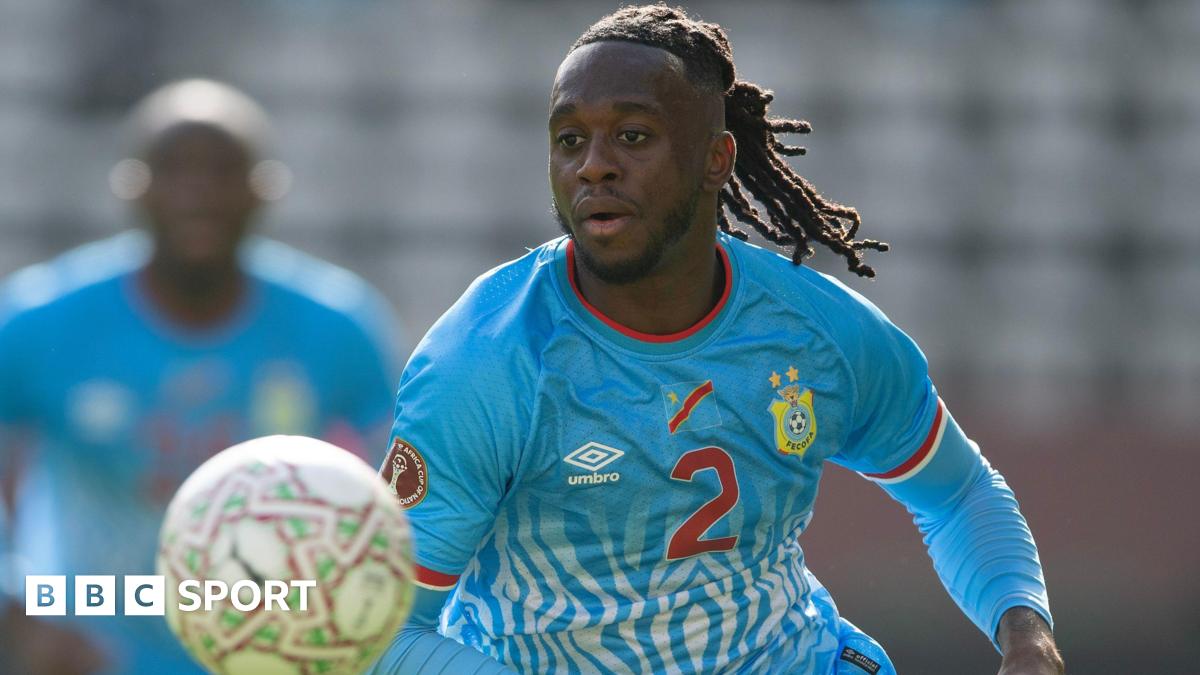
    Jubilation erupted across the Democratic Republic of Congo (DRC) this week after the national men’s football team, the Leopards, booked their first place at the FIFA World Cup in more than half a century, prompting the government to declare an immediate national public holiday to honor the historic achievement.

    The dramatic qualification came in an inter-confederation playoff against Jamaica on Tuesday, where former Manchester United defender Axel Tuanzebe, a Congolese native born in conflict-torn Bunia, netted the winning goal in the 100th minute of extra time to seal a 1-0 victory. When the final whistle blew, elated fans poured into the streets of the capital Kinshasa in the early hours of Wednesday morning, waving national flags, chanting slogans, and celebrating a moment decades in the making.

    Within hours of the win, DRC’s Ministry of Labour and Employment announced that Wednesday would be a nationwide public holiday, allowing all Congolese citizens to mark the “momentous” victory “in unity, fervour and national pride”. Most businesses, banks and retail outlets across Kinshasa shut their doors for the day to accommodate celebrations, though a small number of workplaces continued operations as normal, due to the very short notice of the holiday announcement, which was made at 8 a.m. local time on Wednesday itself.

    This milestone marks only the second time DRC has qualified for the World Cup. The nation’s only previous appearance came back in 1974, when the country was still known internationally as Zaire. The Leopards will kick off their 2026 World Cup campaign against Portugal — led by global superstar Cristiano Ronaldo — in Houston, United States, on June 17, before facing Colombia and Uzbekistan in the group stage. The 2026 tournament, expanded to 48 teams and co-hosted by the U.S., Mexico and Canada, will see DRC join nine other African nations in the finals.

    For a country that has endured decades of persistent armed conflict, with renewed violence escalating in the eastern region over the last two years following territorial advances by the M23 rebel group, the historic win has offered a rare moment of collective national joy. One Congolese supporter spoke to the BBC amid the Kinshasa celebrations, saying, “Whatever we may be feeling at the moment, amidst pain and war and occupation, this victory makes us proud… I feel so emotional and happy.”

    Tuanzebe, whose hometown of Bunia sits at the center of the ongoing unrest, called his game-winning goal “without a doubt the most important” of his entire professional career. “I’m so grateful to have scored that goal for the team, for the nation. I realise the magnitude of what it represents and the joy it brings to people,” he said after the match.

    Notably, the congratulations have crossed tense regional political divides. Even as diplomatic relations between DRC and neighboring Rwanda remain sharply strained, with Rwanda widely accused of backing the M23 insurgency — a claim Rwandan authorities deny — the Rwandan government issued a public message of celebration for DRC’s qualification. Deputy government spokesperson Jean Maurice Uwera wrote in a post on X, “Leopards stepping up for Africa! Congratulations DR Congo, go make the continent proud on the world stage.”

    In the Kinshasa neighborhood of Kingabwa, jubilant fans took to the streets chanting “Christiano Ronaldo is next”, already looking ahead to the team’s opening group stage match against the five-time Ballon d’Or winner’s side this summer.