标签: Africa

非洲

  • More than 1,700 Brits who fell ill in Cape Verde join action against Tui

    More than 1,700 Brits who fell ill in Cape Verde join action against Tui

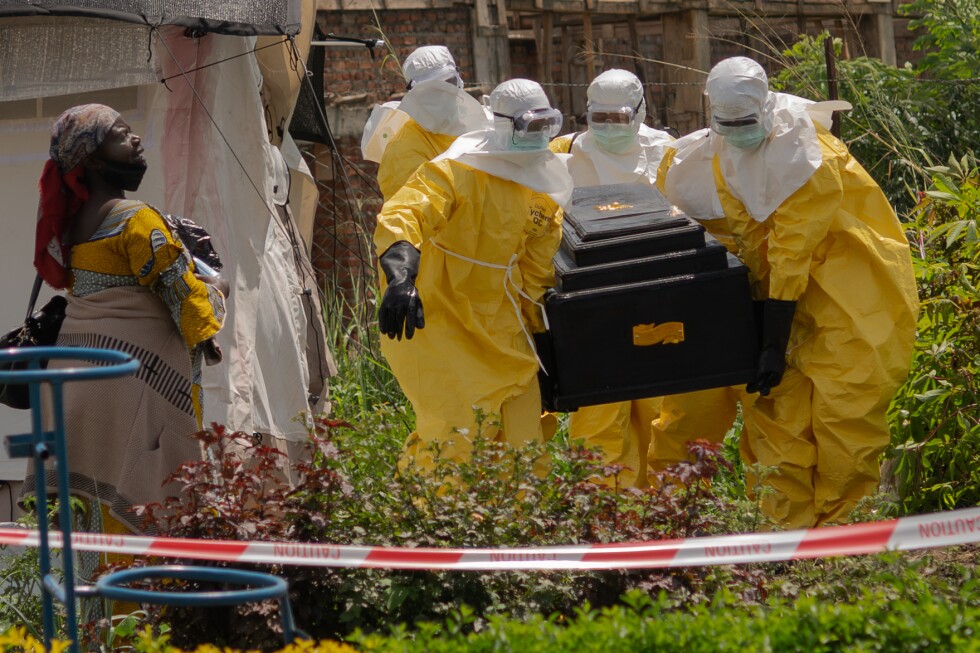
    A growing mass legal action against major European travel operator Tui has now drawn more than 1,700 claimants who fell ill during all-inclusive package holidays to the popular West African destination of Cape Verde, with law firm representatives confirming an updated death toll of eight British nationals linked to post-travel illnesses.

    Leading the multi-claimant personal injury suit, UK-based law firm Irwin Mitchell says new inquiries are still coming in as recently as two weeks ago, indicating that safety issues at popular Cape Verde resorts frequented by Tui holidaymakers have not been resolved months after official health warnings were issued. Lead solicitor Jatinder Paul described the case as unprecedented in his decades of personal injury practice, noting that no other similar claim has involved this many affected claimants or such a high number of fatal outcomes.

    Clairmants have reported a range of serious gastrointestinal and parasitic infections contracted during their stays, including E. coli, salmonella, shigella, and cryptosporidium. Vulnerable groups including infants as young as six months old are among those affected. In February 2026, the UK Health Security Agency (UKHSA) issued an official public warning to British travellers over trips to Cape Verde, confirming that between October 2025 and February 2026 alone, 112 cases of shigella and 43 cases of salmonella had been linked to travel to the archipelago. Both infections cause severe diarrhea, abdominal cramping, and high fever, and can turn life-threatening for vulnerable people.

    Cape Verde, a former Portuguese colony off the coast of West Africa, has grown into one of the most popular winter sun destinations for European travellers seeking warm weather and golden sandy beaches. Tui, one of the largest tour operators serving the region, has brought more than one million British holidaymakers to the islands since 2022 alone.

    Lawyers have collected on-the-ground evidence of systemic hygiene failures at multiple resorts popular with Tui packages. Video footage reviewed by the BBC shows multiple hazards: undercooked food served at hotel buffets, swarms of flies surrounding open buffet stations, and visible mould growing inside guest rooms.

    Two high-profile fatal cases highlight the severity of the risks. Sixty-four-year-old Elena Walsh from Birmingham travelled to the five-star RIU Cabo Verde resort on a Tui package in August 2025. She developed acute illness just two days into her trip and died in a local hospital within 48 hours of falling sick. Her son, Sean Walsh, recalled the rapid and shocking deterioration of his mother’s health, urging other travellers to avoid booking trips to Cape Verde despite its reputation as a budget-friendly sunny destination. “People can go and be fine, but my mum wasn’t. I just don’t want anyone else to go through what our family has,” he said.

    A second 64-year-old traveller, Karen Pooley from Lydney, developed acute gastric illness during her Tui-booked two-week Cape Verde holiday in October 2025. After falling ill, she slipped on water leaking from a faulty fridge while rushing to the bathroom, breaking her leg. She was airlifted to a hospital in Tenerife for advanced care but died the next day from sepsis and multi-organ failure. Her daughter, Liz Pooley, holds Tui fully responsible for her mother’s preventable death. “No family should have to FaceTime their mum on a Friday and plan her funeral by the next Friday. This should never have happened,” she told reporters.

    RIU Hotels and Resorts, which operates the resort where Walsh stayed, has pushed back against the claims, releasing a statement asserting that “the health and safety of guests are our main priority” and that all its Cape Verde properties “follow the strictest international health and hygiene standards, certified by external prestigious consultancy firms specialised in health and safety.”

    Tui, for its part, says it is currently conducting its own internal investigation into the claims. The company told reporters it is “not in a position to provide a formal statement at this stage” as it still has not obtained access to the full official Cape Verde public health report into the outbreaks, which remains unpublished. The tour operator added that it provides targeted support to any customer who becomes unwell while staying at partner resorts, arranging access to appropriate medical care and assistance when needed.

    Lawyers for the claimants say they are pursuing full damages from Tui, arguing the company had a core responsibility to ensure package holidays it sells do not expose customers to life-threatening health hazards. If an out-of-court settlement cannot be reached, Paul says the case will proceed to the UK High Court, where claimants are seeking millions of pounds in total compensation for illness, loss of life, and emotional harm.

  • Seven Eritrean players fail to return home after international match

    Seven Eritrean players fail to return home after international match

    Eritrean football has just etched its name into the history books, securing a spot in the Africa Cup of Nations qualifying group stages for the first time in 19 years. But the landmark 4-1 aggregate victory over Eswatini last week has been overshadowed by a stunning development: seven members of the national squad have vanished after the win, failing to return home with their remaining teammates, a senior source close to the team has confirmed to the BBC.

    Of the 24 players called up for the decisive qualifying tie, only 10 were based inside Eritrea when the squad was assembled. According to local sources who spoke to BBC Tigrinya from Asmara, Eritrea’s capital, just three of those domestic-based players – including team captain Ablelom Teklezghi – have completed their journey back to the country. While the exact whereabouts of the seven missing players remain unconfirmed, multiple regional reports indicate some have been spotted in South Africa, where the team stopped over before the scheduled return flight. High-profile absentees include starting goalkeeper Kubrom Solomon and veteran winger Medhanie Redie, two key contributors to the historic qualification win.

    Eritrea’s state-run media, which typically gives extensive, celebratory coverage to national team sporting successes, has remained uncharacteristically silent on the team’s return after the qualifying victory. Sources close to the Eritrean Sports and Culture Commission confirm that official fanfare and a public reception for the returning squad were fully planned, but all events were abruptly scrapped once news of the players’ disappearance broke.

    The commission’s social media spokesperson, who had posted regular updates throughout the team’s qualifying campaign, only shared photos of a reception held for returning squad members at the Eritrean embassy in Cairo, Egypt, where the team stopped en route to Asmara. All players visible in those posted images are the ones who ultimately continued their journey to the capital.

    This wave of player absconding is not an isolated incident for Eritrean international football. For more than two decades, repeated waves of Eritrean players have refused to return home after competing in fixtures abroad, with cases ranging from small groups of players to almost entire squads disappearing on international trips.

    The pattern stretches back to 2009, when the entire senior Eritrean national team – except for the head coach and one team official – failed to return from a competition held in Kenya. In 2013, 15 players and the national team doctor were granted asylum in Uganda after going missing following an international tournament. Two years later, 10 senior squad members refused to fly home after playing a World Cup qualifying tie in Botswana. Most recently, in 2019, seven players from Eritrea’s under-20 national side disappeared after the team competed in an East African regional championship in Uganda.

    This recurring trend is rooted in broader political and migration dynamics. Human rights organizations have repeatedly labeled the Eritrean government in Asmara as highly repressive, a characterization that Eritrean authorities have consistently rejected. Despite having a small national population, hundreds of thousands of Eritreans have fled the country to seek asylum abroad in recent decades, a trend that has extended to athletes competing internationally.

    For Eritrean football fans, the moment was supposed to mark a turning point. The upset victory over Eswatini had raised widespread hopes that the nation’s football program was on the cusp of a renaissance after 19 years of failing to reach AFCON qualifying group stages. Instead, the news of the missing players has matched a now-familiar, disappointing pattern that has long plagued Eritrean football on the international stage.

  • Ladysmith Black Mambazo’s ‘wise elder’ dies aged 77

    Ladysmith Black Mambazo’s ‘wise elder’ dies aged 77

    The global music community is mourning the loss of Albert Mazibuko, a core member of the iconic South African choral ensemble Ladysmith Black Mambazo, who passed away at the age of 77. The group confirmed via an official Facebook post that Mazibuko died on Sunday following a brief, unexpected illness, closing out a more than 50-year career with the legendary vocal group.

    Born and raised in uMnambithi — the eastern South African town formerly known as Ladysmith — Mazibuko’s path to music began under unusual circumstances. He left formal schooling at a young age to take up full-time work on a local farm, long before his cousin and the group’s founder, Joseph Shabalala, invited him to join Ladysmith Black Mambazo in 1969. From that point on, he became an integral part of the ensemble’s artistic identity and global rise.

    Ladysmith Black Mambazo carved its unique niche by blending indigenous Zulu musical and dance traditions with isicathamiya, a distinctly South African a cappella style defined by soft harmonies and gentle, shuffling dance movements. Just one year after Mazibuko joined, a breakout 1970 radio performance landed the group their first major recording contract. By 1973, they released *Amabutho*, the first album in African music history to reach gold sales status.

    The ensemble’s global breakthrough came in 1986, when American singer-songwriter Paul Simon tapped Ladysmith Black Mambazo to feature on his critically acclaimed, multi-platinum album *Graceland*. The collaboration catapulted the group to international fame, though it also sparked controversy: Simon faced widespread criticism for violating the global cultural boycott of apartheid-era South Africa. Throughout the brutal decades of state-enforced racial segregation, Mazibuko and his bandmates used their platform to spread messages of hope and unity, pushing back against the oppression of the apartheid regime.

    In a 2015 interview with the BBC’s *Soul Music*, Mazibuko opened up about the daily fear and hardship of life under apartheid. Recalling his time working at a local cotton factory, he described constant police harassment centered on the pass laws — the apartheid system’s tool for restricting Black South Africans’ movement. “If you don’t carry it, you’re arrested. In my life I was so afraid of being arrested… even now I’m afraid,” he shared.

    Over his decades-long tenure, the group earned five Grammy Awards and cemented its status as one of South Africa’s most celebrated cultural exports. In tributes shared publicly this week, current and former band members remembered Mazibuko as a generous, warm-hearted mentor to the group’s younger generation. “He loved traveling the world, spreading the mission and music of Ladysmith Black Mambazo,” the group’s official statement read. “He never tired of talking about the group’s history and its desire to spread ‘peace, love and harmony’ everywhere people had ears to listen.”

    At the time of Mazibuko’s death, the current Ladysmith Black Mambazo lineup — a mix of veteran and emerging young musicians — was in the middle of a cross-country U.S. tour that launched in February. Their final scheduled U.S. performance of this run is set to take place this coming Friday.

  • Churches and politicians in South Sudan call for ‘lasting peace’ in Easter messages

    Churches and politicians in South Sudan call for ‘lasting peace’ in Easter messages

    Thousands of Christian worshippers across South Sudan gathered for traditional Easter processions over the holiday weekend, but the tone of this year’s celebrations was defined by urgent appeals for an end to persistent bloodshed and the establishment of lasting peace. The joint calls from both senior church leaders and top government officials come as escalating sporadic violence across the young nation has sparked repeated international warnings that South Sudan could be on the brink of sliding back into full-scale civil war, less than 10 years after a five-year civil conflict formally ended.

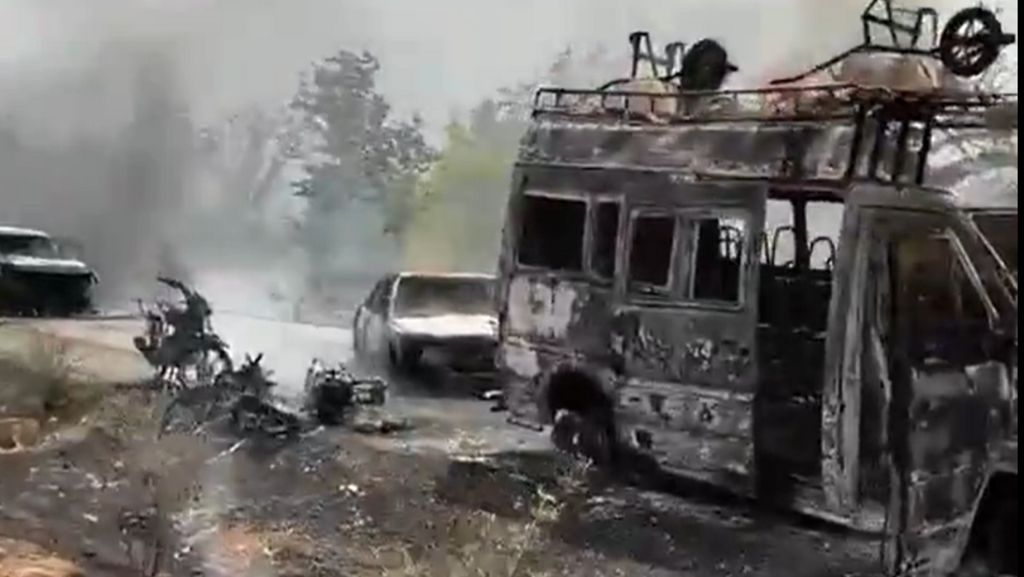
    The most recent high-profile act of violence occurred just one week before Easter, when unidentified gunmen attacked a mining site in Jebel-Iraq, a region located southwest of the capital Juba, leaving 74 mine workers dead. In the wake of the massacre, government representatives and opposition figures have traded blame, with neither side taking responsibility for the attack, deepening public distrust amid already rising tensions.

    At the principal Easter mass held at Juba’s St Theresa’s Cathedral, lead celebrant Santo Loku Pio delivered a blunt rebuke of the violence that has become entrenched in South Sudan’s public life. “Christians don’t practice hatred, they don’t practice violence that leads to the death of someone or somebody, and many other things that destroy life,” Pio told the assembled congregation. He issued a direct call to ordinary citizens to reject orders to carry out violence: “If you are told to go and kill, refuse, even if it means losing your job,” he said, urging attendees to “be a man or woman of peace.”

    Turning his address to the country’s ruling leadership, Pio called for a fundamental shift in governance. “Be good leaders – good governors, good commissioners, good ministers and good servants of the society. It is time for us to rise above violence, let us do the right thing and I think peace will reign,” he added, framing the call for peace as central to the spiritual meaning of Easter.

    South Sudan’s President Salva Kiir echoed the call for national unity and reconciliation in an Easter message read on his behalf by his press secretary at St Theresa’s Cathedral. Kiir emphasized that the Easter holiday serves as a reminder that hope persists even in the darkest of times. “Let us forgive one another, and support one another, and work hand in hand, and build a country that reflects the strength and dignity of its people,” the statement read.

    Other senior religious leaders across the country joined the appeal for urgent action. Justin Badi Arama, Archbishop of the Episcopal Church of South Sudan and Anglican Primate, told worshippers at Juba’s All Saints Cathedral that the nation must “persevere and work for lasting peace.” “We need urgent action to end violence in South Sudan and restore human dignity across our nation,” he said. In the southwestern city of Yambio, Eduardo Hiiboro Kussala, Bishop of the Catholic Diocese of Tombura-Yambio, centered his message on the sanctity of life. “We want to pray for protection of life and we want to tell everybody that God is the source of life,” he said.

    The collective calls for peace come against a backdrop of growing political unrest. Former First Vice-President Riek Machar, the leader of the main opposition faction Sudan People’s Liberation Movement/Army In Opposition (SPLM/A-IO), is currently under house arrest and facing trial on charges of treason, war crimes, and crimes against humanity, all of which he denies. Machar’s party has denounced the proceedings as a “political witch-hunt” designed to dismantle the 2018 peace accord that brought the 2013–2018 civil war to an end. Last week, the United States Embassy in South Sudan issued a statement demanding Machar’s release, along with other detained opposition politicians, calling the move a critical prerequisite for holding free, fair, and successful national elections and a key step toward advancing long-term peace and accountability.

    South Sudan, the world’s youngest sovereign nation, gained independence from Sudan in 2011, but has struggled with persistent political instability and intercommunal violence in the years following sovereignty. International observers and United Nations officials have repeatedly warned that escalating tensions between the ruling government and opposition, paired with rising intercommunal killings, could push the country back into a widespread civil conflict that would have devastating consequences for the nation’s 11 million people.

  • Somalia set for ‘historic’ first offshore oil drilling

    Somalia set for ‘historic’ first offshore oil drilling

    Decades of political instability and persistent conflict have long blocked Somalia from tapping its vast untapped offshore hydrocarbon reserves, but the East African nation is finally poised to turn that page this week, with the arrival of a Turkish state-owned drilling ship expected at its Arabian Sea territorial waters on Friday.

    This long-awaited exploratory operation comes on the heels of a successful 2024 seismic survey conducted by a Turkish research vessel, which mapped out high-potential deep-water sites for initial drilling. The milestone is the result of a formal energy cooperation agreement between Somalia and Turkey signed in 2024, cementing a partnership that has grown steadily over more than a decade of Turkish investment in the Horn of Africa nation.

    Somalia’s Petroleum Minister Dahir Shire framed the launch of the country’s first-ever offshore drilling project as a transformative moment for the country in a post on social media platform X, calling it “a historic milestone in our offshore energy journey” that opens “a new chapter” for the Somali energy sector. “This signals Somalia’s readiness to move into exploratory drilling, beginning with our most promising offshore prospects,” Shire added, noting that the government is committed to ensuring any energy revenues generated will be directed toward broad national prosperity and improved public welfare for all Somali citizens.

    The vessel leading the operation is the Turkish Petroleum Corporation’s (TPAO) drilling ship *Çağrı Bey*, which is embarking on its first international mission for the state-owned energy firm. Once anchored, it will conduct deep-water drilling at the hydrocarbon-rich sites identified in last year’s survey.

    Somalia’s Foreign Ministry has emphasized that successful discovery of commercial oil reserves would not only unlock the country’s massive offshore resource potential, but also position Somalia as a new competitive regional energy player and provide a critical boost to the country’s ongoing post-conflict economic recovery. Somali Foreign Minister Ali Omar reinforced this perspective earlier this week, noting that the collaborative drilling campaign further solidifies Turkey’s standing as a “trusted long-term partner” for Somalia’s development efforts.

    Turkey’s Energy Minister Alparslan Bayraktar echoed that mutual benefit ahead of his upcoming official visit to Somalia, stating that any significant oil or gas discovery from the project would deliver major economic gains for three parties: Somalia, the broader East African region, and Turkey. Ankara has built deep political, economic and security ties with Somalia over the past 12 years, expanding its engagement steadily; it established a large military base in the country in 2017 and has grown its presence there in recent years.

    Industry researchers have long estimated that Somalia holds billions of barrels of untapped oil reserves, but decades of civil war, political fragmentation and security instability have prevented large-scale exploration and development of these resources for generations. If this initial drilling campaign yields successful results, analysts say it could open a new era of energy development for one of Africa’s most conflict-affected nations.

  • DR Congo agrees to take deportees from the US

    DR Congo agrees to take deportees from the US

    The Democratic Republic of Congo (DRC) has entered into a new agreement with the United States that will see the central African nation accept non-Congolese migrants deported from U.S. territory, with the policy set to take effect this month, senior Congolese government officials have confirmed.

    In an official statement released Sunday, the DRC’s Ministry of Communication announced that a temporary reception framework for incoming deportees has already been established, and purpose-built accommodation facilities have been secured in the capital city of Kinshasa. According to the statement, all logistical and technical support for the program will be covered by the U.S. government, and the Congolese state will not incur any financial costs related to the reception scheme.

    To date, Congolese authorities have not publicly disclosed how many third-country deportees – individuals who are neither citizens of the deporting country, the U.S., nor the receiving country, DRC – they expect to take in under the agreement. The deal makes DRC the latest African nation to participate in the Trump administration’s broad crackdown on unauthorized immigration, a policy that has already seen the U.S. arrange third-country deportations to multiple other African states.

    Addressing growing concerns from human rights groups that DRC would eventually transfer received migrants to their home countries, where many face credible risks of persecution, Congolese officials stressed that no such secondary transfers are currently planned. The statement framed the decision to accept third-country migrants as aligned with DRC’s long-standing commitments to upholding human dignity, advancing international solidarity, and protecting the fundamental rights of all migrants. Congolese authorities also emphasized that the scheme is not intended to act as a permanent relocation program, nor does it represent an outsourcing of U.S. migration policy to African soil.

    The BBC reached out to both the U.S. State Department and the Department of Homeland Security for comment on the new agreement, but had not received a response as of publication.

    Since taking office in January 2025, President Donald Trump’s administration has pursued a aggressively hard-line stance on immigration, deporting dozens of migrants to third-party countries as part of this policy agenda. The practice has drawn widespread condemnation from human rights campaigners, many of whom have raised serious questions about the legal standing of the third-country deportation scheme.

    DRC now joins a growing list of African nations already participating in the program, including Eswatini, Ghana, and South Sudan. Just last week, eight migrants from various African nations were deported by the U.S. to Uganda under the same policy framework.

    A minority report released by the U.S. Senate Committee on Foreign Relations estimates that the Trump administration had likely spent more than $40 million (approximately £30 million) on third-country deportation operations as of January 2026, though the full total cost of the program remains officially unknown. The report also notes that the U.S. has provided more than $32 million in direct funding to five participating nations: Equatorial Guinea, Rwanda, El Salvador, Eswatini, and Palau.

    The new migration deal comes as the U.S. is currently negotiating a separate minerals agreement with DRC, which aims to secure greater American access to the central African country’s abundant reserves of strategically critical metals, including cobalt, tantalum, lithium, and copper. During the Trump administration, the U.S. also mediated a landmark peace agreement between DRC and neighboring Rwanda, though consistent implementation of the deal has remained an ongoing challenge for both nations.

  • Nigerian army rescues 31 held hostage in Easter church attack

    Nigerian army rescues 31 held hostage in Easter church attack

    On a Sunday morning ahead of the Easter holiday, armed attackers targeted a church in the northwestern Nigerian community of Ariko, Kaduna State, leaving multiple civilians dead and dozens held captive in a brazen act of violence that has underscored the persistent security crisis plaguing the region. In the aftermath of the assault, Nigerian military forces announced they have successfully recovered all 31 civilian hostages taken during the attack, though discrepancies have already emerged over the final civilian death toll. Official security force statements confirm five civilians were killed when gunmen opened fire during Easter worship celebrations, but a local church leader initially placed the confirmed death count at seven. According to the Nigerian army’s official account, responding military personnel engaged the attacking gunmen in an intense close-quarters firefight that eventually forced the assailants to retreat from the area, abandoning their hostages and the remains of those they had killed. Military officials added that the fleeing attackers sustained heavy losses during the clash, with visible blood trails along their escape routes confirming significant casualties among the insurgents. Despite the military’s claims of a rapid, effective response to the attack, local media reports quoting area residents tell a different story, claiming the gunmen were able to carry out their assault and operate in the area for an extended period before security forces arrived to confront them. In the wake of the rescue operation, additional military troops have been deployed to the region to track down the surviving attackers and bolster local security protections for civilian communities. Military authorities have also called on local residents to share any intelligence that can help advance counter-insurgency operations targeting the armed groups driving widespread insecurity across northern Nigeria. This church attack is not an isolated incident: kidnappings for ransom and targeted attacks on civilian communities are endemic across northern Nigeria, where the national government has struggled for years to contain overlapping security threats from jihadist insurgent networks and criminal armed gangs known locally as bandits. In a separate, coordinated counter-offensive announced just days after a mass abduction of village residents in Zamfara State, Nigeria’s military confirmed it had killed 65 bandits during a major operation in the state, per reporting from the Agence France-Presse news agency. Police had already confirmed earlier that dozens of local residents were abducted from multiple villages in Zamfara earlier that same week, and a regional manhunt had been launched immediately after the kidnapping was reported. The persistent targeting of religious communities in Nigeria, including Christian congregations celebrating major holidays, has drawn international scrutiny in recent years. During the final year of former U.S. President Donald Trump’s administration, the White House raised formal concerns over the treatment of Christian communities in Nigeria and called on the Nigerian national government to take more aggressive action to improve security and protect Christian populations. Trump went as far as to publicly claim that a “Christian genocide” was ongoing in the country, an accusation that Nigerian government officials firmly rejected, noting that Muslims, Christians, and people of no religious affiliation have all been killed in widespread attacks across the country’s northern regions. In a show of international support for Nigeria’s counter-insurgency efforts, U.S. military personnel were deployed to Nigeria earlier this year in February to provide specialized training for local security forces and share intelligence support to aid the fight against Islamist militants and other armed criminal groups.

  • Middle East conflict drives record fuel price hikes across Africa

    Middle East conflict drives record fuel price hikes across Africa

    The ongoing conflict in the Middle East has triggered an unprecedented ripple effect across African economies, most of which depend entirely on imported petroleum products, pushing fuel prices to historic levels that leave ordinary consumers bearing the full brunt of rising global energy costs. In Southern and East Africa in particular, two nations have rolled out the steepest monthly fuel price adjustments recorded in modern history, according to regional energy officials.

    South Africa’s Department of Mineral and Petroleum Resources confirmed that new price hikes took effect Wednesday: gasoline rates rose by 3.06 South African rand (roughly $0.18) per liter, while diesel prices increased between 7.37 and 7.51 rand per liter. Even more dramatic increases hit illuminating paraffin, a critical off-grid energy source for millions of low-income South African households, which jumped 11.67 rand per liter. To offset some of this strain for consumers while maintaining broader economic stability, South Africa’s finance ministry implemented a temporary 3-rand-per-liter cut to the general fuel levy, running from April 1 to May 5, department spokesperson Lerato Ntsoko confirmed.

    Neighboring Malawi followed with an even larger proportional adjustment, rolling out a maximum 35 percent increase for core petroleum products that also took effect Wednesday. Lucas Kondowe, chair of the Malawi Energy Regulatory Authority, explained that the persistent upward pressure from Middle East conflict-driven volatility has upended longstanding industry pricing norms. Where suppliers traditionally use the prior month’s average global price to set local rates, today’s volatile market has led all suppliers to switch to a far shorter two-week average from the current month, accelerating price jumps for end users. Under the new rates, Malawi’s gasoline and diesel now hit 6,672 kwacha ($3.86) per liter, ranking among the highest fuel prices on the entire African continent.

    South Africa and Malawi are far from isolated cases: energy regulators across the continent have hiked pump prices to pass along soaring import costs to consumers. Tanzania has raised fuel prices by roughly 33 percent, while Ghana increased gasoline by 15 percent and diesel by nearly 19 percent. Even in Nigeria, Africa’s largest crude oil producer, the continent’s biggest refinery operated by Dangote Petroleum announced a fresh price hike in late March, lifting Premium Motor Spirit costs from 1,175 to 1,245 Nigerian naira ($0.85 to $0.90) per liter. The conflict has pushed global Brent crude prices above $100 per barrel, forcing the local adjustment. Other nations that have rolled out significant fuel price increases in recent weeks include Mauritania, the Gambia, Mali, Botswana, Ethiopia and Zimbabwe.

    To buffer low-income and vulnerable households from the growing impact of the conflict, a small number of governments have rolled out targeted support measures beyond South Africa’s fuel levy cut. Kenya for instance has reiterated that its existing fuel stabilization fund and longstanding government-to-government fuel import deal continue to work to moderate extreme price spikes and maintain consistent domestic supply. But even with these localized interventions, global bodies warn the damage extends far beyond energy markets. The United Nations Conference on Trade and Development (UNCTAD) has issued an urgent alarm that disruption to critical global energy shipping routes has amplified economic pressure across every region, including Africa. A rapid UNCTAD assessment found ship traffic through the Strait of Hormuz, one of the world’s most vital energy chokepoints, has dropped to near a standstill, with transits plummeting nearly 95 percent. The International Energy Agency estimates that between 25 and 30 percent of global crude oil production and 20 percent of global liquefied natural gas supplies normally pass through the narrow waterway. “This has disrupted a large share of global energy supplies, driving fuel and transport costs higher and feeding inflationary pressures across economies worldwide,” the UN body noted in its latest update.

  • ‘I adore her now’: Mother learns to cope with child’s autism in a country with little help

    ‘I adore her now’: Mother learns to cope with child’s autism in a country with little help

    Two years ago, Martha Ongwane, a 33-year-old mother living in Mzuzu, northern Malawi, stood on the brink of an unthinkable act. She had poured poison into a cup, prepared to end the life of her young autistic daughter Rachael, overwhelmed by despair that had consumed her family. Today, that dark chapter feels like a distant nightmare. As Martha chops maize for the national staple nsima on her living room floor, four-year-old Rachael climbs giggling onto her lap, wrapping her arms around her mother’s face in a warm embrace – a transformation that would have been impossible just a few years ago.

    When Rachael was first diagnosed with autism, the young girl presented severe behavioral challenges: she was non-verbal, struggled to stay seated, and often bit herself or others. With no access to guidance or support, Martha slowly crumbled under the weight of caregiving, sinking into deep depression. Neighbors in her community shunned the family, blaming Martha for Rachael’s behavior and demanding she lock the child inside their home. Widespread misunderstanding of neurodevelopmental disorders left Martha completely isolated, with nowhere to turn for help.

    “I told myself it would be better if she died because that would mean she would rest and that would be the end of our problems,” Martha recalled softly, staring down at her hands. “[But] my heart didn’t let me. I changed my mind and cried so much.”

    The turning point came when the family was referred to Saint John of God, a Catholic Church-funded non-profit organization that provides community-focused mental health services and runs a school for children with special educational needs. For Martha and her husband, the organization became a lifeline: they received specialized counseling, connected with a peer support network, and Rachael began accessing tailored behavioral and educational support. One year later, the change in Rachael is staggering. When her name is called in class at the Saint John of God school, she jumps up eagerly, grabs her friend’s hand, and joins in group singing – a far cry from the non-verbal, overwhelmed toddler of two years ago.

    But Martha and Rachael’s happy ending remains a rare exception in Malawi, a lower-income east African nation facing a catastrophic shortage of autism resources and awareness. According to the World Health Organization, over 60 million people globally live on the autistic spectrum, a neurodevelopmental condition that affects how the brain processes information, communicates, and builds relationships, varying widely in presentation and intensity from person to person. While many autistic people possess unique strengths including intense focus, exceptional memory, and innovative thinking, low- and middle-income countries like Malawi rarely prioritize neurodevelopmental support, leaving most affected families to cope alone.

    Currently, Malawi’s population of more than 22 million people is served by just two developmental pediatricians and three consultant psychiatrists nationwide. There is no term for autism in Chichewa, the country’s most widely spoken language; the condition is typically lumped under translations meaning “mentally challenged” or “troublesome,” reinforcing deep-seated stigma. Widespread misconceptions, including the common belief that autism is caused by witchcraft, push many desperate families to seek unproven, sometimes harmful treatments from traditional healers instead of clinical care.

    Natasha Lusinje, a mother living outside the capital Lilongwe, 300 kilometers south of Mzuzu, represents this all-too-common reality. Her five-year-old son Shalom is non-verbal and cannot feed himself, and repeated community claims that the boy was cursed by witchcraft led Natasha to turn to a traditional healer for a cure. Granted rare access to the process, BBC Africa Eye documented the healer’s unfounded claim that autism comes in two forms: one from God that cannot be changed, and one from Satan that she can cure. She classified Shalom as the latter, charged Natasha 26,500 kwacha ($15), and put the boy through three weeks of daily herbal baths, forced herbal drinks, and skin cutting treatments. When no improvement appeared, the healer simply admitted she had failed. Natasha brought Shalom home, still clinging to the belief that a cure will come, with no access to the evidence-based support her son needs.

    Saint John of God is working to reverse these harmful narratives one community at a time. The organization hosts regular autism awareness sessions, bringing together Christian and Muslim religious leaders to unpack common misconceptions and explain that practical, evidence-based support can drastically improve outcomes for autistic people. Christopher Mhone, a program lead at Saint John of God, argues that the systemic failure to address autism is a national failure. “For a woman to come to a point where she feels like she should kill her child – as a nation we have failed her. Her burden has become so impossible to bear that she does not have the emotional and psychological capacity to cope,” he said.

    Currently, almost all autism support in Malawi is provided by non-governmental and charity groups. The national Disability Act does not even mention autism, a gap Mhone says reflects the general invisibility of the condition. “If you don’t know you have this problem, there’s no way you can begin to sort it out,” he explained. The BBC reached out to Malawi’s Health Minister Madalitso Baloyi to request comment on national autism provision, but received no response.

    At its Mzuzu facility, Saint John of God currently supports more than 600 children and young adults with disabilities a year, including people with Down syndrome, cerebral palsy, and autism. Mhone says the organization’s goal is to reframe public understanding of disability: “Disability is ability, in a different way. And if society begins to understand that, then there will be less stigmatisation, and they will be looking at the positive things that can come out of those with disabilities.”

    For Martha, the joy of having her thriving daughter comes with a quiet guilt, and a mission to help other families avoid the despair she faced. “When I look at her, I feel so guilty. Every day I think about the fact that my daughter could have been dead,” she said. “I adore her now.” She has shared her story publicly in the hope that more families will learn that support is available, and that no one has to walk the path of caring for an autistic child alone.

  • Congo to receive third-country deportees from the US under new deal

    Congo to receive third-country deportees from the US under new deal

    KINSHASA, Democratic Republic of Congo – The Congolese government announced Sunday it has agreed to accept deported migrants from the United States under the Trump administration’s controversial third-country deportation program, making it the latest African nation to sign on to the controversial policy framework. According to an official statement released by the Congolese Ministry of Communications, the first group of deportees is scheduled to arrive in the country before the end of this month. The government did not release additional details, including an exact arrival date or the total number of migrants that will be transferred to Congolese territory.

    Congo’s government framed the arrangement as a temporary commitment, emphasizing that the agreement aligns with the country’s stated dedication to upholding human dignity and advancing international solidarity. The statement also clarified that the deal will impose no financial burden on Congolese public finances, with the U.S. government covering all logistical costs associated with the migrant transfers.

    This new agreement puts Congo among at least eight African nations that have now reached similar third-country deportation deals with the U.S. Many of these participating nations have already been heavily impacted by other Trump administration policies, including sweeping restrictions on trade, foreign aid and legal migration pathways. Recent data from a report compiled by Democratic staff of the U.S. Senate Foreign Relations Committee shows the Trump administration has allocated at least $40 million in public funding to deport roughly 300 migrants to third-party countries outside the migrants’ native nations.

    Human rights lawyers and migration activists have raised widespread concerns over the structure and ethics of these deals with African partner states. Multiple nations that have already agreed to the pacts are led by notoriously repressive regimes with documented poor human rights records, including Eswatini, South Sudan and Equatorial Guinea.

    A central point of controversy is that many of the migrants being transferred via these programs already hold formal protection orders from U.S. immigration judges, which bar the U.S. from deporting them back to their home countries due to extreme safety risks including violence, persecution, and threats to their lives. Unlike some previous agreements that have allowed for blanket transfers, the Congolese government has confirmed it will not implement automatic, mass transfers of incoming deportees. Instead, officials noted every migrant’s case will undergo individual review, with assessments conducted in alignment with Congolese national law and domestic national security requirements.