标签: Africa

非洲

  • Kenya disputes UN report on rape allegations against its Haiti personnel

    Kenya disputes UN report on rape allegations against its Haiti personnel

    A long-simmering dispute between Kenya and the United Nations has boiled over into public view, after Nairobi formally pushed back against a published UN report that accuses Kenyan troops serving in the Haiti security mission of involvement in sexual abuse and exploitation, including assaults on minor children.

    The Kenya-led Multinational Security Support Mission (MSS) was first deployed to Haiti in 2024, following a formal authorization from the UN Security Council. The deployment’s core mandate was to support Haitian authorities in quelling the rampant gang violence that has plunged the Caribbean nation into years of humanitarian and security crisis. Plagued by persistent underfunding, operational hurdles, and recruitment shortfalls, the 2,500-person target for the mission was never met, and the force ultimately failed to rein in the widespread bloodshed terrorizing Haitian communities. The MSS has since been phased out and replaced by a larger international contingent, the Gang Suppression Force, as international efforts to stabilize Haiti continue.

    Last week, a public report from UN Secretary-General António Guterres linked Kenyan officers serving with the MSS to four separate incidents of rape and other sexual violence. Three of the reported victims are children: one 12-year-old and two 16-year-olds. The UN report notes that all four allegations were shared with the MSS force commander, and adds that investigations carried out by the Office of the United Nations High Commissioner for Human Rights found the claims to be credible and substantiated. The document emphasizes that any form of sexual exploitation and abuse by peacekeeping or security mission personnel constitutes a fundamental breach of the trust extended by local communities to the UN and its international partners, and the UN confirms the allegations remain under formal review.

    In response to the public release of the report, Kenya’s Foreign Minister Musalia Mudavadi submitted a formal letter of protest to UN chief António Guterres, pushing back firmly against the claims. Mudavadi noted that the allegations first emerged back in August of last year, and that Kenyan authorities launched an immediate, full inquiry into the claims shortly after they were raised. The inquiry’s results, he said, found the accusations completely unsubstantiated.

    “No formal complaints were filed with any national or international authority, and we shared the findings of our investigation transparently with both Haitian government bodies and relevant UN agencies,” Mudavadi stated in the letter. The minister added that all Kenyan personnel serving with the MSS have consistently adhered to every code of conduct and operational rule mandated for the mission, and no official inquiry has ever produced evidence of misconduct by Kenyan troops.

    Despite widespread domestic opposition to the deployment and the well-documented operational and financial challenges that hampered the mission, Mudavadi reaffirmed that Kenya’s participation in the MSS reflected the East African nation’s steadfast commitment to supporting international efforts to restore peace and security to Haiti.

    The dispute comes as international stakeholders continue to grapple with how to address Haiti’s ongoing security collapse, which has left hundreds of thousands of people displaced and millions in need of humanitarian assistance, with gangs controlling large swathes of the capital Port-au-Prince and other major urban centers.

  • US approves non-critical staff to leave embassy in Nigeria on security grounds

    US approves non-critical staff to leave embassy in Nigeria on security grounds

    The United States has given authorization for non-emergency diplomatic personnel and their family members to depart its Abuja-based embassy in Nigeria, a move triggered by what Washington describes as a rapidly worsening nationwide security landscape.

    Released on Wednesday, the updated State Department travel guidance also urges all American citizens to rethink any planned trips to Nigeria, pointing to pervasive threats of terrorism, spontaneous civil unrest and widespread kidnapping. At least 23 high-risk Nigerian states have been bumped to the agency’s strictest warning category, which strictly prohibits any travel to those affected regions.

    This new advisory lands in the middle of a sharp uptick in fatal attacks across multiple parts of the West African nation, and it comes even as the US and Nigeria have expanded their long-standing bilateral security partnership in recent years. For years, Washington has collaborated closely with Abuja on counter-terrorism operations, maritime domain security, cross-border intelligence sharing and military training. Most recent joint efforts have included targeted surveillance and reconnaissance support, plus the provision of aircraft and helicopters that Nigerian forces now deploy against Islamist insurgents and violent armed factions.

    The decision to draw down non-essential embassy staff lays bare a stark disconnect: deep strategic military cooperation between the two nations has not translated to improved safety for ordinary civilians navigating daily life across large swathes of Nigeria. The travel advisory explicitly warns US citizens that violent attacks can strike with little to no advance warning in public gathering spots, including open-air markets, hotels, houses of worship, educational institutions and major transportation hubs.

    As of Thursday, the US embassy in Abuja has not released details on when the departing staff will leave the country, nor has it clarified whether the order applies exclusively to American personnel or extends to Nigerian staff employed at the mission. Nigerian federal authorities have also not yet issued an official public response to the new directive.

    In previous cases, Nigerian officials have pushed back against similar high-level travel warnings, arguing that such blanket advisories overlook tangible security gains made in some regions and risk unfairly damaging the country’s global reputation. There are growing local concerns that this latest warning will deal an additional blow to Nigeria’s already fragile economic recovery goals: the government is currently actively courting foreign direct investment, and restrictions could discourage diaspora travel, derail planned international conferences and disrupt ongoing international development projects across the country.

    US officials also pointed to a growing dangerous trend in the country: increasing collaboration between transnational extremist groups and local criminal gangs, a shift that has significantly complicated counter-insurgency and stability efforts across Nigeria. While the country as a whole remains classified at Level 3 (“reconsider travel”) in the updated advisory, the 23 states upgraded to Level 4 (“do not travel”) include multiple northwestern and central states: Plateau, Jigawa, Kwara, Niger and Taraba. They join long-standing Level 4 states in the northeast, including Borno and Yobe, which have borne the brunt of a 15-year Islamist insurgency.

    Weeks of recurrent violence linked to armed banditry, intercommunal clashes and retaliatory attacks have killed dozens of civilians in Plateau and Benue states alone in recent weeks. In the northeast, Boko Haram and its offshoot, the Islamic State West Africa Province (ISWAP), continue to launch regular attacks on civilian communities, military convoys and humanitarian aid workers, with the worst violence concentrated in Borno.

    As violence spreads beyond long-established conflict hotspots and public frustration with government inaction grows among Nigerian citizens, many see the US travel warning as a stark wake-up call: urgent action is needed to restore full security across the country and rebuild public and investor confidence, both domestically and internationally.

  • Benin is holding an election for a new president as security worsens and critics denounce clampdown

    Benin is holding an election for a new president as security worsens and critics denounce clampdown

    On Sunday, April 12, nearly 8 million eligible voters across Benin will head to the polls to select a new president, bringing to a close 10 years of governance under outgoing leader Patrice Talon, whose tenure leaves behind a deeply mixed national legacy. The race, which pits ruling coalition candidate and former finance minister Romuald Wadagni against sole opposition contender Paul Hounkpè, unfolds against a backdrop of robust macroeconomic growth, rising concerns over democratic erosion, and an escalating jihadi insurgency in the country’s northern borderlands.

    Wadagni, 49, is widely recognized as Talon’s handpicked successor, entering the election with significant structural advantages. In January’s parliamentary vote, all opposition parties failed to meet the controversial 20% electoral threshold required to win legislative seats, leaving Talon’s two allied allied political factions in full control of all 109 seats in the National Assembly. Further, the opposition’s most high-profile potential candidate, Renaud Agbodjo of The Democrats party, was barred from running after failing to collect the required number of parliamentary endorsements — a requirement critics argue was deliberately designed to exclude major rivals from the ballot. For Fiacre Vidjingninou, a political analyst at the Lagos-based Béhanzin Institute, these barriers leave the field tilted heavily in Wadagni’s favor, with the ruling candidate also boosted by cross-faction support from influential establishment figures and a clear, verifiable record of economic policy.

    “Ten years at the Finance Ministry have given him something rare in African politics: a quantified record — verifiable and difficult to dismantle in a serious debate,” Vidjingninou explained.

    Under rules governing the 2024 election, a candidate must win an absolute majority of at least 50% of the vote to claim an outright victory in Sunday’s first round. If no candidate hits that threshold, a runoff election between the top two finishers will be held on May 10.

    Wadagni has centered his entire campaign on the strong macroeconomic performance Benin recorded during Talon’s tenure, which overlapped with his 10 years leading the finance ministry. Data from the International Monetary Fund shows Benin’s economy expanded by 7% in 2023, placing it among the most consistent high-growth economies in West Africa. For nearly a decade, the country sustained robust growth driven by agricultural output, cross-border trade, and a major expansion of the port in Cotonou, which transformed Benin into a critical trade transit hub for landlocked neighbors across the region. Major infrastructure upgrades have also been rolled out across the country during this period. However, these economic gains have not been equally distributed: widespread poverty remains entrenched in rural areas and the underdeveloped northern region, leaving many voters disillusioned with the status quo.

    Critics of the outgoing administration have highlighted a clear democratic backslide during Talon’s tenure, marking a departure from Benin’s longstanding reputation as one of West Africa’s most stable pluralist democracies. Since taking office in 2016, Talon has overhauled electoral rules and been accused of weaponizing the national justice system to sideline political opponents. In November 2023, a constitutional reform extended presidential terms from five to seven years, created a new senate partially appointed by the sitting president, and raised the electoral threshold for parliamentary representation, further limiting opposition access to power. Leading global human rights organizations Amnesty International and Human Rights Watch have documented a sustained crackdown on dissent under Talon, including arbitrary detention of opposition figures, strict limits on public protests, and growing pressure on independent media outlets. In recent years, widespread protests over soaring living costs were violently suppressed by government security forces.

    Compounding political tensions is a growing security crisis that has threatened stability for years. In December 2023, a faction of military officers launched a failed coup attempt to oust Talon’s government, part of a broader wave of attempted and successful military takeovers across West and Central Africa, most of which have followed a pattern of disputed elections, constitutional controversy, security failures, and widespread youth discontent. A core grievance cited by the coup plotters was the rapid deterioration of security in northern Benin, where the country has faced growing spillover violence from the jihadi insurgencies raging in neighboring Burkina Faso and Niger. The tri-border region is the operational heart of Jama’at Nusrat al-Islam wal-Muslimin (JNIM), an al-Qaida-affiliated extremist group, and security cooperation has collapsed since both neighboring states fell under military junta rule in recent coups. Last year alone, an extremist attack on northern military outposts killed 54 Beninese soldiers.

    Vidjingninou notes that while the failed coup damaged the outgoing administration’s narrative of steady governance, the climate of uncertainty could ultimately work to Wadagni’s advantage. “In a context perceived as unstable, cautious voters tend to choose continuity and familiarity over the risk of the unknown,” he said.

    Voter opinions ahead of Sunday’s vote are deeply divided. Roch Gbenou, a civil servant based in Cotonou, identified two top priorities: more equitable wealth distribution and the restoration of democratic freedoms, which he said “appear to have been substantially restricted” in recent years. Gbenou added that he has little confidence the election will produce meaningful change, suggesting “it will ultimately only serve to legitimize a choice already made.” By contrast, Mathias Salanon, a retired police officer, praised Talon’s tenure and expressed hope that the next president will build on his progress to stabilize national economic and political life. “In more than 50 years of my life I have not seen such a fierce will to develop the country as during President Patrice Talon’s 10 years,” he said. For Cotonou resident Sofiath Akadiri, the most pressing issues are expanded access to affordable health care, quality education, and formal employment, alongside broader demands for social justice and a return to established democratic norms.

  • Hundreds march in Senegal’s capital over broken government promises and rising costs

    Hundreds march in Senegal’s capital over broken government promises and rising costs

    On a mid-week day in Dakar, Senegal’s coastal capital, thousands of demonstrators filled the streets to voice growing frustration with the country’s new ruling administration, as a crippling national debt crisis pushes daily living costs to unsustainable levels for ordinary citizens. The demonstration was a coordinated effort between Senegal’s most influential labor unions and the Front for the Defense of Democracy and the Republic (FDR), a major opposition political coalition, bringing together workers, union activists, and government critics from across the political spectrum.

    Mody Guiro, leader of the National Confederation of Senegalese Workers — the nation’s largest union body — told reporters the current government has broken a landmark agreement struck one year prior. Under that deal, unions agreed to pause all planned strike action in exchange for commitments to raise public sector wages and improve national working conditions. For its part, the Senegalese government argues that a historic debt crisis inherited from the previous ruling administration has stripped the state of discretionary funding needed to fulfill these pledges.

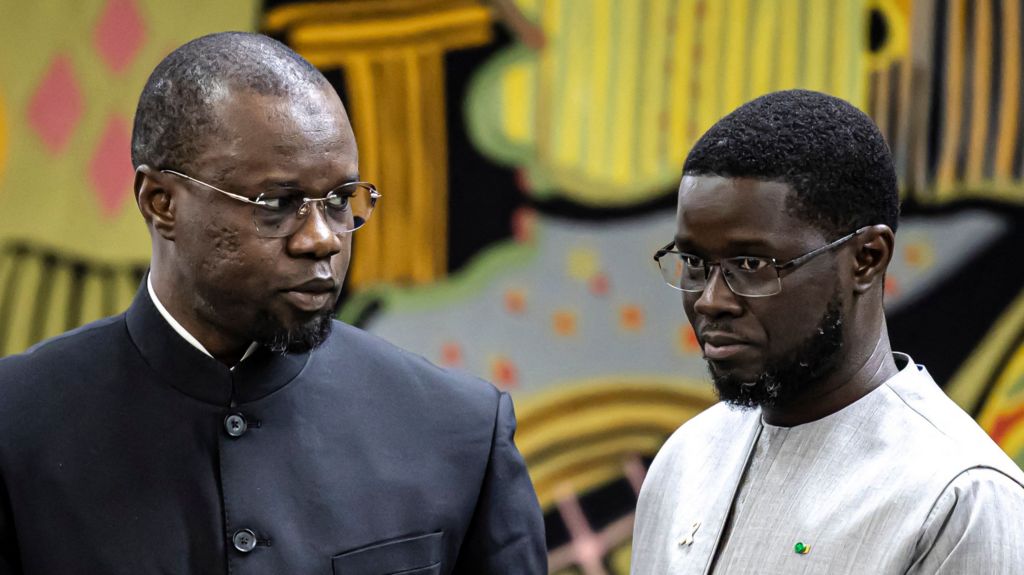
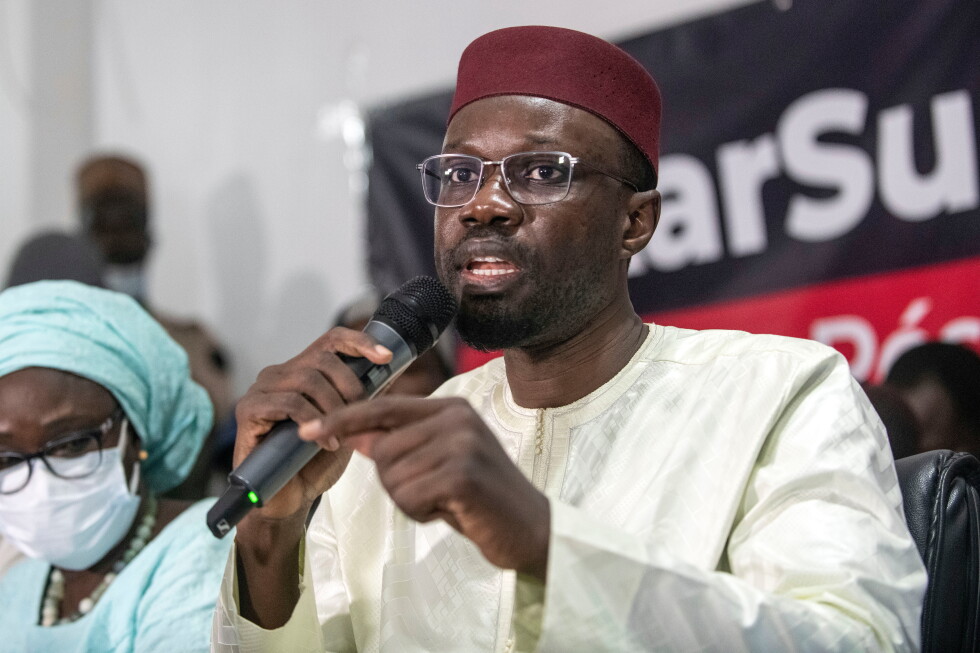
    Many protesters wore identifying red scarves and branded union headwear, carrying hand-painted signs that called for the reinstatement of thousands of laid off public employees and sharp cuts to personal income tax rates. Some groups chanted overt calls for the removal of Prime Minister Ousmane Sonko, the country’s second-highest ranking official.

    Sonko and President Bassirou Diomaye Faye’s administration took office in April 2024 on a wave of popular support, fueled by campaign promises of sweeping transformative reform. Their platform centered on rooting out systemic corruption, expanding employment opportunities for Senegal’s large youth population, and ensuring the nation captures maximum economic benefit from its abundant natural resource reserves. To date, however, the ruling PASTEF party’s reform agenda has hit significant roadblocks.

    A 2025 official government audit confirmed that the previous administration left the country with a total public debt of $13 billion — a figure far larger than had been previously disclosed to the public. That debt burden has pushed Senegal’s debt-to-GDP ratio to approximately 132%, one of the highest debt levels recorded on the African continent. Ongoing negotiations with the International Monetary Fund to secure a new economic bailout program have stalled in recent months as the country’s fiscal outlook continues to deteriorate.

    Worsening economic conditions have amplified daily hardship for millions of Senegalese people, with the nation’s youth population bearing the brunt of the crisis. Roughly 75% of Senegal’s total population is under the age of 35, making youth unemployment one of the country’s most pressing social issues. Tensions have already boiled over once this year: in February, student protests over unpaid government financial aid at Senegal’s leading public university were met with a violent crackdown by security forces, which left one student dead.

    Speaking at Wednesday’s demonstration, youth activist Mohamed Fall emphasized that widespread frustration has ground daily life across the country to a halt. “The country is at a standstill. It is essential that the government finds solutions to revive Senegal’s economy instead of picking fights everywhere,” Fall said.

    For many demonstrators, the anger stems directly from unmet campaign promises. Pape Laobe Samb, a former 12-year veteran employee of the Port of Dakar, is one of more than 700 port workers laid off since the start of 2025 as part of the Faye administration’s push to overhaul bloated state institutions. “This is not what they promised people. They said they were going to create jobs and develop the country but they did the complete opposite,” Samb told the Associated Press in an interview at the protest.

    The newly appointed director of the Port of Dakar, who took the post shortly after Faye’s inauguration, has framed the layoffs as a necessary clean-up of irregular, patronage-based contracts left behind by the previous government. Unions push back against this narrative, arguing that nearly all the terminated workers were affiliated with the previous ruling party, and that the mass firings were an unlawful, politically motivated purge rather than a genuine institutional reform.

  • Gambia appoints British barrister to prosecute gruesome Jammeh-era crimes

    Gambia appoints British barrister to prosecute gruesome Jammeh-era crimes

    Almost a decade after former Gambian leader Yahya Jammeh suffered an unexpected electoral defeat that forced him from power after 22 years of authoritarian rule, survivors of his regime’s systematic human rights violations have finally secured a landmark step in their long fight for accountability.

    British barrister Martin Hackett, a seasoned international war crimes prosecutor with decades of experience investigating grave atrocities, has been named The Gambia’s inaugural special prosecutor to pursue individuals implicated in the widespread repression, enforced disappearances, and extrajudicial killings that marked Jammeh’s time in office. Jammeh fled to exile in Equatorial Guinea in early 2017, after regional military intervention compelled him to step down following his rejection of the 2016 election results.

    Hackett will lead a purpose-built new office tasked with adjudicating cases from the Jammeh era, a period that documentation has confirmed was rife with systematic human rights abuses. His appointment comes years after the West African nation established the Truth, Reconciliation and Reparations Commission (TRRC), a transitional justice body created to map the full scale of alleged violations committed under Jammeh’s rule. The TRRC collected harrowing firsthand testimony from hundreds of victims, former state security agents, and other witnesses before delivering its final report to current President Adama Barrow in 2021. In that report, the commission explicitly named the individuals most responsible for abuses and formally recommended criminal prosecution, while also stressing the urgent need for reparations for survivors—warning that inaction would cement a culture of impunity in The Gambia.

    To date, the TRRC has begun rolling out phased compensation disbursements, starting with victims of abuses that took place in the immediate aftermath of the 1994 coup that brought Jammeh to power. Yet for the vast majority of survivors, financial reparations remain a secondary priority to holding perpetrators legally accountable for their crimes.

    The TRRC’s investigation highlighted dozens of high-profile atrocities, among them the 2004 assassination of independent journalist Deyda Hydara, a killing that drew international condemnation of press freedom violations in The Gambia. Another of the most shocking cases uncovered was the execution of more than 50 mostly West African migrants, who were killed by state security forces on false charges of plotting a coup against Jammeh.

    Before Hackett’s appointment, a small number of lower-level perpetrators had already faced conviction outside The Gambia under the principle of universal jurisdiction. Multiple former members of the Junglers—Jammeh’s notorious paramilitary death squad—have been sentenced to prison in Germany and the United States for their roles in atrocities.

    Hackett brings extensive international credibility to the new role, having previously served with the UN-backed Special Tribunal for Lebanon and led investigations into war crimes committed by senior military commanders during the Kosovo conflict. Legal and transitional justice observers widely view his appointment as a definitive turning point toward establishing full domestic accountability for decades of abuse.

    Gambian Attorney General Dawda Jallow confirmed that Hackett was selected from a large pool of qualified applicants and will serve a four-year mandate in the role. Jammeh, now 60 years old, has repeatedly denied all allegations of wrongdoing during his rule. He refused to cooperate with the TRRC’s investigation and remains in exile in Equatorial Guinea, beyond the reach of Gambian judicial authorities for the time being.

  • Nigeria begins mass trial of 500 terrorism suspects

    Nigeria begins mass trial of 500 terrorism suspects

    Seventeen years after the Boko Haram insurgency first ignited in Nigeria’s northeast, the West African nation has launched one of the largest mass terrorism prosecutions in its history, moving to try more than 500 people linked to widespread militant violence that has torn through communities across the country.

    For decades, a glaring gap in Nigeria’s counterterrorism efforts has left families and affected communities frustrated: despite thousands of deaths and widespread displacement from bombings, raids, and ransom kidnappings, very few people accused of involvement in militant attacks have ever faced legal prosecution. Many detained suspects have spent years behind bars without ever appearing in court, fueling public anger and persistent rumors that accused militants are often quietly released to return to violent activity.

    That long-standing inaction took a sharp turn on Tuesday, when the mass trial opened at Nigeria’s capital Abuja’s High Court. According to federal Attorney General Lateef Fagbemi, 227 suspects were formally arraigned before a panel of 10 judges on the opening day, with the full proceedings set to unfold in successive phases. Extraordinary security measures were put in place for the session: suspects were transported in heavily armored convoys escorted by a combined force of military personnel, police officers, and intelligence agents, while international observers, representatives from human rights organizations, and members of the Nigerian Bar Association were granted access to monitor the process.

    The charges brought against the defendants cover a wide range of alleged ties to militant activity. While most of the accusations are linked to direct participation in attacks across northern Nigeria, other suspects face counts of facilitating terrorism through financing militants, trafficking illegal arms, and providing critical logistical support. In an early development, five of the accused have already received prison sentences ranging from seven to 20 years after entering guilty pleas, admitting to crimes including selling livestock, supplying food, and sharing intelligence with militant networks.

    In a statement ahead of the proceedings, Attorney General Fagbemi emphasized that the unprecedented scale of the trial demonstrates the Nigerian federal government’s unwavering commitment to ending decades of unaddressed militant violence. “The federal government is committed to ensuring that due process is followed while bringing those involved in terrorism to justice,” he said.

    The opening of the trial comes as Nigeria continues to grapple with near-daily militant violence. Just one day after the proceedings began, gunmen suspected to be linked to local kidnapping gangs and Islamist militant networks raided rural villages in Shiroro district of Nigeria’s western Niger State, killing at least 20 residents, according to local witnesses and AFP reporting. Since the Boko Haram insurgency first emerged in 2009, insecurity has spread far beyond the northeast, leaving vast rural areas across the country vulnerable to frequent attacks, kidnappings for ransom, and gang violence that has killed hundreds of people just in 2026 alone.

    Security analysts have broadly welcomed the mass trial as a turning point in Nigeria’s long fight against insurgency. Retired army major Bashir Galma, a leading Nigerian security expert, told the BBC that the proceeding marks a “positive development” and a “significant milestone” for the country’s counterterrorism efforts. He noted that for years, Nigerians have repeatedly raised demands to resolve the backlog of unprosecuted terror suspects held in long-term detention. “This will bring some level of peace for people whose loved ones were killed or injured,” Galma said, adding that the trial also addresses long-circulating rumors that suspects are regularly released to resume their terrorist activity.

    Even with this progress, Galma cautioned that some defendants may still be released in the coming months, as many of the suspects were arrested years ago, a legal circumstance that judges are required to consider during sentencing.

  • Cameroon ‘military contractors’ killed in Russia-Ukraine war – BBC confirms leaked message

    Cameroon ‘military contractors’ killed in Russia-Ukraine war – BBC confirms leaked message

    The ongoing conflict in Ukraine has taken on a new, underreported dimension with the confirmation that dozens of citizens from across the African continent have died after being recruited to fight alongside Russian forces, sparking growing outcry over deceptive recruitment practices and government inaction.

    For Cameroon, the development marks the first implicit confirmation of its nationals’ involvement in the war, after a diplomatic source verified to the BBC the authenticity of a leaked foreign ministry note that acknowledged 16 Cameroonians had been killed while serving as military contractors for Russia. The leaked document, dated March 5 and addressed to the Russian Embassy in Cameroon, has not been addressed publicly by Russian officials, as multiple attempts to secure comment from the embassy went unanswered.

    Cameroon’s government has faced sharp public criticism for its months-long silence on the issue, and has yet to issue a formal public statement acknowledging the deaths. In a low-key development on Monday, the country’s foreign ministry sent a brief statement to state-owned broadcaster CRTV that listed the names of 16 Cameroonians said to be resident in Russia. The broadcast, which aired Monday evening, only asked relatives of the listed individuals to contact authorities for an urgent matter, offering no further context that would confirm the deaths.

    This quiet confirmation aligns with earlier findings from All Eyes on Wagner, an independent research group that tracks global mercenary activity, which estimated that 94 Cameroonians had died in the conflict between 2023 and 2025. Internal government documents obtained by Reuters also reveal that Cameroon’s defense ministry raised alarm over the issue as early as March 2025, when the defense minister issued a memo expressing concern over active-duty soldiers leaving the country to enlist in the war, and ordering unit commanders to step up monitoring of personnel.

    The crisis stretches far beyond Cameroon’s borders. Ukrainian intelligence officials estimate that more than 1,700 individuals from 36 different African countries have been recruited to fight for Russia in Ukraine. Multiple African governments have already documented deaths, missing persons, and deceptive recruitment rings targeting their citizens.

    Ghana, another West African nation that has been heavily impacted, has publicly called on Russia to halt all recruitment of its citizens, confirming that at least 55 Ghanaians have been killed in the conflict. In Kenya, authorities have cracked down on criminal recruitment networks that lured job seekers with false promises of well-paying work abroad. Kenya’s foreign ministry confirmed in February that more than 600 suspect recruitment agencies have been shut down, with official data showing 16 Kenyans remain missing in Russia and 47 have returned home after escaping deployment to the front lines in Ukraine.

    Zimbabwe has also reported 15 of its citizens killed after being recruited, with more than 60 still trapped in active combat zones. Earlier this year, South Africa successfully repatriated 17 of its citizens who told officials they had been tricked into deploying to Ukraine’s Donbas region to fight for Russia, and were left stranded after being pushed to the front lines.

    The widespread recruitment of African nationals has prompted growing regional concern, with governments scrambling to crack down on illegal networks and hold those responsible accountable for the deceptive tactics that have left hundreds of families facing grief and uncertainty over missing loved ones.

  • Attacks on 2 villages in northern Nigeria leave at least 20 people dead, residents say

    Attacks on 2 villages in northern Nigeria leave at least 20 people dead, residents say

    In north-central Nigeria, a pre-dawn coordinated attack on two rural communities has left local officials and residents at odds over the number of casualties, deepening concerns over the West African nation’s worsening security crisis. Multiple local witnesses confirmed the assault unfolded in the early hours of Tuesday, targeting the villages of Bagna and Erena in the Shiroro district of Niger state, roughly 250 kilometers — a four-hour drive — from the country’s capital Abuja.

    Jibrin Isah, a long-time Erena resident, described the chaotic, sudden nature of the incursion. “They arrived on motorbikes and immediately opened fire,” Isah said. “It was a total surprise; most people were still asleep in the early hours when the attack began.”

    Accounts of the death toll diverge sharply between local communities and law enforcement officials. Residents put the confirmed death count at no fewer than 20 people, with an unknown number of additional civilians still unaccounted for in the attack’s aftermath. Muhammad Tukur, another Erena resident, confirmed the community’s count to the Associated Press, stating that the final number of fatalities would likely exceed 20.

    However, local police have released a far lower casualty count. In an official statement, Niger state police spokesperson Wasiu Abiodun confirmed three security-linked deaths: two volunteer vigilante members and a driver assigned to the area’s joint security task force. Abiodun added that several other people were wounded during the hours-long operation.

    Witnesses reported that the gunmen held control of the two villages for multiple hours, looting residential properties and forcing hundreds of local residents to abandon their homes and seek refuge in safer adjacent communities.

    As Africa’s most populous nation, Nigeria has grappled with an interconnected, multi-front security crisis for more than a decade, particularly across its northern and north-central regions. Long-running insurgent activity in the country’s northeast has killed tens of thousands of people and displaced millions, according to United Nations estimates. Beyond insurgent violence, the region also faces frequent outbreaks of violence rooted in long-simmering resource disputes: conflicts over land and grazing access between mostly Muslim Fulani herding communities and largely Christian farming populations regularly escalate into deadly mass clashes. Criminal gangs focused on ransom kidnapping also operate widely across rural north-central and northwestern states, taking advantage of weak security presence to target communities.

  • Madagascar declares state of emergency over severe fuel shortages linked to Iran war

    Madagascar declares state of emergency over severe fuel shortages linked to Iran war

    As spillover effects from the ongoing conflict between Israel and Iran continue to roil global energy markets, the Indian Ocean island nation of Madagascar has implemented a 14-day nationwide state of energy emergency to address crippling fuel shortages that threaten public order and critical infrastructure. The presidential office confirmed the measure was approved during a cabinet meeting Tuesday, prompted by growing concerns that unaddressed supply gaps could spark widespread civil unrest. Unlike many larger economies, Madagascar generates the vast majority of its electrical power from petroleum-fueled plants, and relies almost entirely on fuel imports from the Middle East – a supply chain that has been severely disrupted by regional conflict, even after the announcement of an overnight two-week ceasefire between warring parties. The ongoing instability has already put Madagascar in a precarious position: just last year, prolonged outages of power and clean water access fueled youth-led demonstrations that escalated into broad political unrest, ultimately culminating in a military takeover of the country. As of this report, the Malagasy government has not released a full list of specific policy actions it will implement under the new emergency powers, but officials note the declaration grants expanded authority to stabilize the national power sector, reduce the impact of ongoing disruptions, regulate consumer fuel use, and guarantee that core public services remain operational. So far, official fuel prices have not been raised since the supply crisis began, but widespread shortages have become commonplace, with local media documenting drivers waiting in multi-hour queues to access petrol stations. News of the state of emergency triggered panic buying at multiple retail fuel locations across the country Wednesday, with some stations reportedly implementing temporary customer fuel rationing to stretch limited existing supplies. The majority of Madagascar’s crude oil and fuel imports originate from Oman, located adjacent to the Strait of Hormuz – the world’s most critical chokepoint for global energy shipping, which has faced persistent disruption since the outbreak of expanded regional conflict in late February. Even with the recent ceasefire announcement, global crude prices remain significantly higher than pre-conflict levels, and energy analysts warn that repairing damaged supply infrastructure and production capacity in the Middle East could take months, or even multiple years, to complete. Madagascar is far from alone in grappling with this crisis across the African continent: multiple other African nations have rolled out urgent policy measures in recent weeks to offset the economic impact of disrupted energy supplies. Policy responses across the region have ranged from adjusting fuel pricing through subsidies or rate hikes to mandatory national electricity rationing. Most recently, The Gambia announced an immediate halt to all non-essential official travel for government employees, a policy that was first implemented just days earlier by Senegal. To the south, Zambia has temporarily eliminated all import taxes on petrol and diesel shipments, while Botswana moved to scrap national fuel levies for six months to ease cost burdens for consumers. As regional governments scramble to mitigate the fallout, the ongoing energy crisis continues to test the stability of import-dependent economies across the African continent, with Madagascar’s emergency declaration marking the most high-profile response to date.

  • Rwanda tries to protect farmland in Africa’s most densely populated nation

    Rwanda tries to protect farmland in Africa’s most densely populated nation

    On a crisp chilly morning in Kigali, the hum of bulldozers and rhythmic clatter of construction work drown out the soft thud of farmers’ hoes against the soil. For Rwanda, a nation that holds the title of Africa’s most densely populated country, this sensory clash represents a growing crisis: how to balance booming urban expansion with the critical need to safeguard shrinking agricultural land and shore up long-term food security.

    For 84-year-old Mukarusini Purisikira, the crisis is deeply personal. A lifelong farmer who fled to neighboring Congo to escape the 1994 Rwandan genocide, she returned home to find her family’s sprawling hillside farm seized for residential and commercial development. Today, she cultivates maize and sweet potatoes on a plot barely larger than a small cottage, a patch that barely produces enough to put food on her table. Standing near her crops, she glances nervously at construction idling on a nearby ridge: “It is all I have,” she says.

    Now, Purisikira and other small-scale Rwandan farmers have a new layer of protection. Starting in September 2024, the Rwandan government launched an ambitious initiative to map all officially designated agricultural land across the country, leveraging satellite imagery to track unauthorized development that encroaches on protected farm and forest land. With Rwanda’s national population projected to hit 22 million within the next two years, and global fertilizer prices spiking sharply following the outbreak of the Iran war that has disrupted global supply chains, food security has become a top policy priority for the government.

    In Kigali, the nation’s capital, city planners have already locked in 22% of the total land area specifically for agricultural use under the city’s updated master development plan. To enforce the new protections, authorities have imposed strict penalties for unauthorized encroachment: fines of up to $3,000 and prison sentences of as long as six months for violators. Multiple unapproved construction projects have already been demolished to enforce the rules, though stakeholders connected to the buildings declined to speak publicly over fears of government retaliation. Moving forward, the government plans to add drone surveillance to its monitoring toolkit, enabling real-time tracking of unauthorized land use across the country.

    City officials acknowledge that unmet housing demand creates strong economic pressure to approve new construction projects, but they argue that prioritizing agriculture will deliver greater long-term value. “Farming will be even more productive” than unplanned urban expansion, city data projections show, especially as domestic food demand continues to climb alongside population growth. City leaders argue that with targeted innovation, productive farming can thrive on smaller, more efficiently managed plots of land.

    Emma-Claudine Ntirenganya, a spokeswoman for the Kigali mayor’s office, explained that the pressure on farmland extends far beyond the capital. While most of Kigali’s current food supply is sourced from other districts across Rwanda, those rural agricultural areas are also losing land to development at a rapid pace. Over the past year, the national government has printed and publicly distributed detailed maps across all Rwandan districts, clearly marking land zoned for agriculture and land open for construction, to bring transparency to land use rules.

    Ntirenganya says the initiative is rooted in a new vision of “urban agriculture” that redefines how Rwandans think about farming within city limits. “We will be able to show Kigalians that they can also do agriculture and be productive,” she explained. To model this approach, the city administration is already building a demonstration greenhouse on the roof of its headquarters, and now requires all developers applying for new building permits to integrate green spaces and community gardens into their project designs.

    Beyond protecting existing open land, Kigali has become a testing ground for innovative, space-efficient urban farming techniques. Vertical farms, which grow leafy greens, strawberries and other produce in stackable modular plastic containers, have gained traction among local entrepreneurs. Christian Irakoze is the co-founder of Eza Neza, which translates to “grow well,” a local startup that installs small-scale vertical farms across Kigali. During a visit by the Associated Press, reporters saw one vertical farm growing 600 plants in vertical rows stretched along just 50 meters of perimeter wall, proving the model can produce significant amounts of food in minimal space.

    Irakoze describes his work as a fundamental shift from traditional large-scale rural farming to a flexible, accessible system that fits urban contexts. “It is a different way of thinking about farming, from traditional large-scale upcountry farming to something smaller, modular, and that anyone can really do,” he said. To reduce reliance on volatile imported agricultural inputs, Irakoze’s company uses locally sourced manure and volcanic sediment in place of commercial potting soil, adapting farming practices to buffer against global market shocks. “We really have to find ways to find our own solutions, whether through inputs like fertilizers or seeds. Some of these global events are always a reminder that we should definitely have some alternatives,” he added.

    A group of young Rwandan agronomists are also working to spread adoption of hydroponics, a soil-free farming technique that uses nutrient-infused water to grow crops, maximizing output per square meter of land. “The population is increasing, yet our land is not increasing. We make sure that we find solutions that can help farmers to overcome that, and then they produce more,” explained Richard Bucyana, one of the agronomists leading the training program. Bucyana echoed Irakoze’s view that local, homegrown solutions like those being rolled out in Rwanda help insulate the country from global supply chain disruptions, and called on other African governments to prioritize agricultural self-sufficiency. “African governments should start thinking how they can be self-sustainable,” he said.