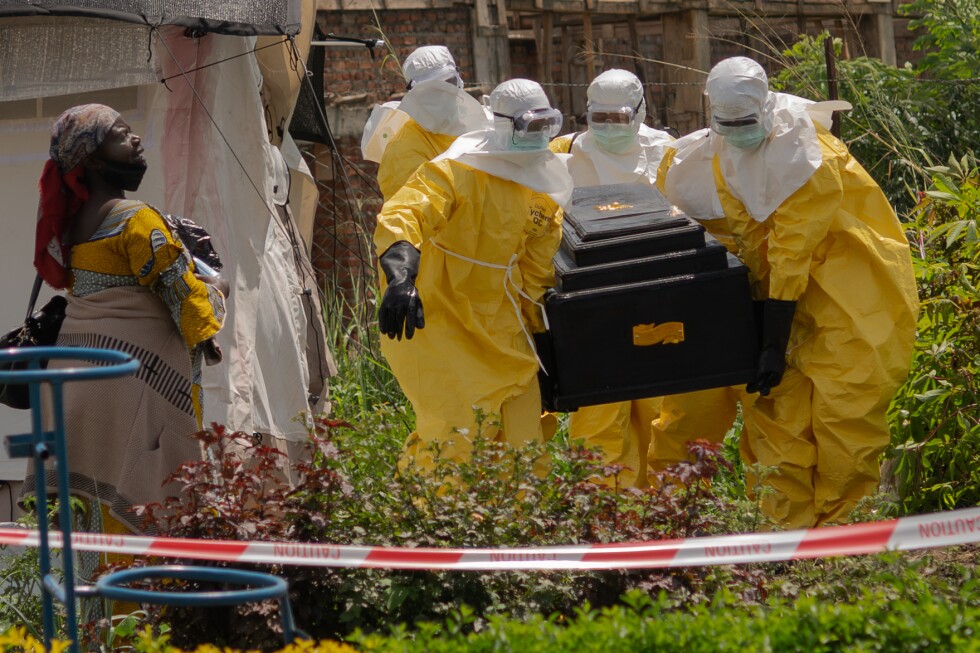
A fast-growing, deadly Ebola outbreak in the Democratic Republic of the Congo has triggered global public health alarm, prompting the postponement of the upcoming India-Africa Forum Summit that was set to open next week in New Delhi.
The announcement, released Thursday in a joint statement by India’s Ministry of External Affairs and the African Union, cited the rapidly evolving public health crisis across parts of the African continent as the core reason for the delay. The decision was made to guarantee full participation of African heads of state and key stakeholders, while prioritizing the continent’s urgent public health response. New Delhi has reaffirmed its unwavering solidarity with affected African nations, pledging full support to the African Centres for Disease Control and Prevention-led response efforts to contain the outbreak.
The outbreak itself, caused by the rare Bundibugyo strain of Ebola, has spread rapidly through eastern Congo’s conflict-stricken Ituri province, overwhelming underfunded and understaffed local health systems. As of the latest official updates, 139 suspected deaths and nearly 600 suspected cases have been recorded, but international health experts warn the true scale of the crisis is far larger than official counts. The London-based MRC Centre for Global Infectious Disease Analysis estimates actual cases could already exceed 1,000, and the World Health Organization has confirmed it has not yet identified patient zero, the initial source of the outbreak.
Making the crisis far more dangerous, no approved vaccine or targeted treatment exists for the Bundibugyo strain. The virus spread undetected for weeks after its first recorded death, as public health authorities initially tested for the more common Zaire strain of Ebola and returned false negative results. Aid workers and health responders are now playing a dangerous catch-up game to curb transmission, but systemic challenges have blocked effective action.
Ituri province, the current epicenter of the outbreak, is already grappling with a years-long humanitarian crisis driven by persistent interethnic conflict and attacks by armed groups linked to the Islamic State, including the Allied Democratic Forces and CODECO militia. More than 920,000 people have been internally displaced in the province, and years of underfunding and recent international aid cuts have gutted already weak local health infrastructure and disease surveillance capacity. The International Rescue Committee reported it was forced to suspend surveillance activities in three out of five Ituri districts over the past year due to funding shortfalls, leaving communities blind to early spread of the virus.
Ground reports from response teams paint a grim picture of the situation on the ground. Even after almost 20 tons of emergency aid was airlifted to Bunia, the site of the first recorded death, doctors report treating suspected Ebola patients in general hospital wards with outdated personal protective equipment, due to a total lack of dedicated isolation space. At Bambu General Hospital, suspected Ebola patients share open wards with patients suffering from other injuries and illnesses. At Mongbwalu General Hospital, where around 30 suspected cases are currently receiving care, the medical director told the Associated Press that staff are untrained in Ebola response, lack proper protective gear, and are on the brink of being completely overwhelmed if case numbers continue to rise.
Local residents, already reeling from years of security crises, described growing anxiety as the virus spreads. “It’s truly sad and painful because we’ve already been through a security crisis, and now Ebola is here too,” said Justin Ndasi, a Bunia resident. Even as some residents have begun wearing face masks, supplies of protective gear have become increasingly scarce, and many public spaces including schools and churches remain open, with few public health prevention measures like handwashing stations in place. Near the Uganda border in Mongbwalu, gold mining operations continue as normal, creating further risks of cross-border transmission; two confirmed cases have already been recorded in Uganda.
In mid-August, the World Health Organization officially declared the outbreak a Public Health Emergency of International Concern, the highest level of global public health alert. WHO Director-General Tedros Adhanom Ghebreyesus warned this month that he is deeply concerned by the “scale and speed” of the epidemic, with WHO experts noting the outbreak likely began two months earlier than initially detected, and could last at least two more months. Ongoing insecurity in the region continues to hamper response efforts: just this week, an ADF attack in an Ituri village killed at least 17 civilians, further disrupting emergency response work.
As Congo and global health partners scramble to scale up response, the impact of the outbreak is already rippling across international events, with the India-Africa summit becoming the first major diplomatic gathering to be postponed due to the crisis.