On the morning of May 1, as South Africa paused to observe the Labor Day public holiday, leading South African infectious disease specialist Lucille Blumberg logged into her work email and encountered an urgent alert that would launch a rapid, cross-continental disease investigation. The message came from a public health colleague based in the United Kingdom, who was monitoring disease activity across remote South Atlantic British overseas territories. It detailed a worrying situation: a passenger from a Dutch cruise ship sailing thousands of miles across the Atlantic had been medically evacuated and admitted to a Johannesburg hospital for suspected pneumonia, with multiple other passengers and crew on the vessel already showing symptoms of illness.
The passenger had been evacuated from the ship off Ascension Island, one of the British territories the UK-based colleague monitors, and Blumberg was asked to lead the follow-up investigation into the mysterious illness. Within hours, Blumberg and a team of specialists from South Africa’s National Institute for Communicable Diseases were mobilized, putting aside holiday plans to race against the clock to identify the cause of the growing outbreak on board the MV Hondius cruise liner.
“Even though it was a public holiday, we moved, we moved really fast,” Blumberg recalled in an interview with the Associated Press. “It was busy. There were many conversations. There were online discussions, and there was laboratory testing happening at the time.” In what would become a defining display of global public health collaboration, the team achieved a breakthrough in less than 24 hours, confirming the evacuated patient was infected with hantavirus, a rare pathogen carried and spread by rodents.
### A Methodical Process of Elimination
When the elderly British patient first arrived at the private Johannesburg hospital, he was in critical condition, and clinicians had no clear answer for what was causing his severe respiratory illness. By the time he was evacuated from the ship, two elderly Dutch passengers who had fallen ill on the cruise had already died, but the full scope of the outbreak had not yet come into focus. Health authorities on Ascension Island had only reported a cluster of pneumonia-like illnesses to the World Health Organization (WHO) without identifying a root cause.
Initially, Blumberg and her team prioritized the most likely causes of a respiratory outbreak on a cruise ship. Their first working theories were Legionella, a common bacterium linked to cruise ship and hotel pneumonia outbreaks that causes Legionnaires’ disease, and avian influenza, since the ship’s itinerary included stops at South Atlantic islands where bird flu is well documented. “Legionella is well described in outbreaks in hotels and on cruise ships, and influenza certainly is. These people had visited islands where avian influenza is well documented,” Blumberg explained.
Initial tests for both pathogens came back negative. The team ran a full panel of tests for dozens of other common respiratory illnesses, and all of those also returned negative results. It was only when the team shifted their focus to the ship’s full itinerary and the profile of passengers that a new lead emerged: the MV Hondius had sailed from Argentina, and most passengers on board were avid bird watchers who had spent time exploring remote areas of South America that are home to large rodent populations.
### Global Collaboration Drives Rapid Diagnosis
The new clue led the South African team to test for a less common but well-documented pathogen in southern South America: hantavirus, specifically the Andes strain that is endemic to parts of Chile and Argentina. Their work was greatly accelerated by close collaboration with hantavirus specialists based in South America and the United States, with the WHO coordinating cross-border communication between experts. “You can get onto a Zoom online and ask your questions and get advice. This is not something every day. So that was quite extraordinary,” Blumberg noted of the international cooperation.
By Saturday morning, just two days after the initial alert, Blumberg contacted the director of South Africa’s only laboratory equipped to test for hantavirus. Within hours, the lab director had mobilized her team on the weekend to process the samples. “I said, we want to do hanta, and she said, ‘yeah, I’m coming,’” Blumberg recalled. That same afternoon, initial tests on the evacuated patient’s blood samples came back positive for hantavirus. The team ran a second round of confirmatory testing to rule out error, and the positive result was upheld.
### Confirmation Paves the Way for Targeted Outbreak Response
The positive diagnosis, which also confirmed the pathogen was the Andes hantavirus strain, allowed the WHO to immediately alert the cruise ship leadership and formally declare a hantavirus outbreak on board. Unlike most hantavirus strains, which cannot spread easily between humans, the Andes variant can pass from person to person, making rapid identification critical to implementing appropriate safety measures. After the diagnosis, Blumberg’s team also moved quickly to test tissue samples from a deceased Dutch passenger, one of the two who had died earlier in the outbreak. The woman had disembarked at St. Helena to accompany her husband’s remains before traveling to South Africa where she later died, and her posthumous test also returned positive for hantavirus.
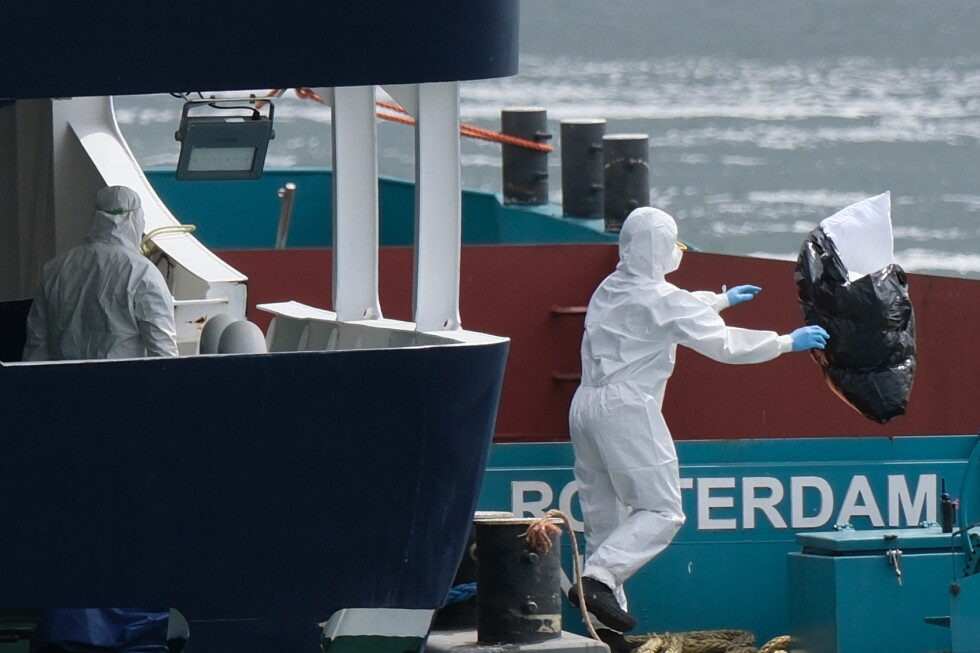
“It was a bit of a wow moment,” Blumberg said. “And at least once you know what you’re dealing with, it’s much easier to respond.” As of the latest update from South Africa’s health ministry, the British patient who was the first confirmed case is now recovering in hospital and showing steady improvement. Meanwhile, the MV Hondius has completed its journey to its home port of Rotterdam in the Netherlands, where the vessel was thoroughly disinfected and all remaining crew have disembarked for monitoring.
With 25 years of experience responding to disease outbreaks around the world, Blumberg framed the rapid identification of the cruise ship hantavirus as a case study in effective public health practice. “I’ve been doing outbreaks for 25 years. That’s what we do. We do them every day,” she said. “I think the important thing was to respond immediately to a question that clearly was urgent and then to take it from there.”