标签: Africa

非洲

  • Nigerian court convicts more than 300 in mass terrorism trial

    Nigerian court convicts more than 300 in mass terrorism trial

    ABUJA, Nigeria – In a landmark legal action aimed at cracking down on rising violent extremism across the country, a Nigerian court based in the capital Abuja has convicted 386 terrorism suspects following a high-stakes mass trial that concluded Friday after four days of proceedings.

    The mass hearing launched Tuesday, with a large share of the defendants entering guilty pleas to charges filed by federal prosecutors. All convicts were processed by a special panel of 10 judges, with the harshest sentences handed down reaching 20 years of prison time.

    Speaking to reporters immediately after the ruling, Nigeria’s Attorney General outlined the scope of the outcome: out of 508 total terrorism-related cases brought before the panel, the prosecution secured convictions for 386 defendants. “This result delivers long-awaited accountability, and it sends an unambiguous message that we will not tolerate terrorist activity on our soil,” the attorney general told the press.

    The high-profile conviction comes as Nigeria grapples with a protracted, multifaceted security crisis concentrated primarily in its northern regions, where a 13-year insurgency led by radical armed groups has devastated local communities and fueled widespread instability. The northeastern insurgency, first launched in the early 2010s, remains the deadliest center of violence, led by two prominent factions: the original Boko Haram militant network, and its breakaway offshoot, the Islamic State West Africa Province, which aligns ideologically and operationally with the global Islamic State extremist movement.

    Violent extremism has also spread beyond the northeast in recent years. In northwestern Nigeria, bordering the Niger Republic, the IS-affiliated Lakurawa militant group has launched repeated attacks on civilian and government targets. Tensions between pastoral and agricultural communities also remain a persistent flashpoint: recurring disputes over access to land and grazing rights between predominantly Muslim Fulani herders and mostly Christian farming populations often escalate into deadly, large-scale clashes across north-central and northwestern states. Organized criminal gangs specializing in kidnapping for ransom also operate with impunity across much of northern Nigeria, driving further insecurity.

    The United Nations estimates that more than a decade of insurgency in northeastern Nigeria alone has left tens of thousands dead and displaced millions more from their homes, creating one of the world’s worst humanitarian crises that continues to evolve as violence spreads to new regions. Nigerian officials say the mass conviction is a key step in demonstrating the government’s commitment to restoring stability and holding perpetrators of violence accountable.

  • Iran war dampens Easter season for millions in Ethiopia as gas and food prices rise

    Iran war dampens Easter season for millions in Ethiopia as gas and food prices rise

    ADDIS ABABA, Ethiopia – As millions of Ethiopian Orthodox Christian worshippers gathered across the capital to mark Good Friday this week, the quiet solemnity of the annual religious observance gave way to growing economic uncertainty, with cascading global disruptions from conflict in the Middle East triggering crippling fuel scarcity and soaring food prices that have dampened holiday preparations across the country.

    Unlike the majority of Christian communities worldwide, who celebrated Easter on April 5, Ethiopian Orthodox Christians follow a unique ancient calendar that places their Easter observance on the coming Sunday. Good Friday marks the end of Abiy Tsom, a rigorous 55-day period of communal fasting and prayer that culminates in a peaceful vigil, where worshippers don traditional white woven garments to gather, seek forgiveness from one another, and prepare for the joy of Easter. This year, however, economic strain has disrupted decades-old communal holiday traditions.

    The most visible disruption has hit the traditional practice of slaughtering animals for shared Easter feasts, a central part of the holiday’s communal celebration. Multiple residents in Addis Ababa report that prices for sacramental animals have nearly doubled in the lead-up to this year’s observance. Livestock sellers explain the steep price hike stems directly from spiking transportation costs, as fuel shortages have made moving cattle, sheep and poultry from rural grazing areas to urban markets far more expensive than in previous years.

    Samuel Teshome, an Addis Ababa resident, told reporters his family can no longer afford to purchase a sheep for their holiday feast, a tradition his household has kept for generations. Another local resident, Sirawdink Admaus, added that even the cost of a small rooster – a more affordable alternative for many working families – has also nearly doubled, putting even modest holiday meals out of reach for thousands.

    Worshippers and workers alike are also grappling with a widespread national fuel shortage. Fuel stations across Addis Ababa and surrounding regions sit nearly empty, with only a handful able to keep limited supplies in stock. Desperate business operators have turned to unregulated black market suppliers, where fuel costs are marked up far beyond official government prices, worsening the economic strain on households and industries.

    For public transport workers like minibus driver Tefera Aragaw, the fuel crisis has gutted his livelihood in the lead-up to the holiday. Aragaw told reporters he and other drivers have waited three straight days and nights at local fuel stations, with no guarantee they will be able to purchase any fuel at all. The lost work days have already erased critical income, leaving him expecting a quiet, muted celebration with his family.

    In response to the worsening crisis, Ethiopia’s federal government has implemented emergency cost-cutting measures to stretch limited fuel supplies. Most non-essential public servants have been permitted to work from home to cut down on commuting-related fuel use, and authorities have moved to prioritize fuel allocations for critical emergency and essential services, including healthcare and public safety.

    The ongoing economic strain in Ethiopia comes as global commodity markets continue to roil in the wake of escalating conflict between Iran and Israel, with supply chain disruptions driving up energy and food costs across much of the developing world.

  • Prince Harry sued for defamation by charity Sentebale he co-founded

    Prince Harry sued for defamation by charity Sentebale he co-founded

    Court records have revealed a stunning development in the long-running rift at Sentebale, the African youth-focused charity once co-chaired by Britain’s Prince Harry, Duke of Sussex: the organization itself has launched a defamation suit against the royal and a former fellow trustee.

    The case, which was formally filed with UK courts on March 24, names Prince Harry and Mark Dyer, another ex-trustee of the organization, as defendants, with the legal claim categorized as covering defamation through both libel and slander. No additional supporting court documents have been made public as of yet, and neither representatives for Prince Harry nor Sentebale’s current leadership have issued any further comment clarifying the specific details behind the legal action.

    The conflict that led to this lawsuit stretches back months, rooted in a bitter power struggle over the charity’s strategic and operational management. Prince Harry exited Sentebale alongside his co-founder, Prince Seeiso of Lesotho, and a group of aligned trustees in March 2025, following heated disagreements with Sophie Chandauka, the charity’s sitting chair. The acrimony of the split played out largely in public view, prompting a formal regulatory probe by the UK Charity Commission.

    That investigation ultimately concluded that fault for the breakdown lay with all parties involved. The regulator also issued sharp criticism over the decision to air internal disputes openly, noting that the public conflict had caused measurable harm to Sentebale’s mission and reputation.

    Founded in 2006 by Prince Harry and Prince Seeiso, Sentebale operates across Lesotho and Botswana, with a core mission to advance the health, mental wellbeing, and life outcomes for vulnerable young people across southern Africa, particularly those living with HIV and AIDS. The organization has drawn high-profile royal and celebrity support for nearly two decades, making this internal split and subsequent lawsuit an extraordinary turn of events for a charity focused on impactful on-the-ground development work.

  • Chimpanzees in Uganda locked in vicious ‘civil war’, say researchers

    Chimpanzees in Uganda locked in vicious ‘civil war’, say researchers

    For eight years, a once-cohesive, record-sized community of wild chimpanzees in Uganda has been consumed by brutal internal conflict, leaving dozens dead and offering anthropologists groundbreaking new perspective on the evolutionary roots of human warfare, according to a new study published in the journal *Science*.

    The study centers on the Ngogo chimpanzee population in Kibale National Park, which for decades hosted nearly 200 chimpanzees living in relative harmony. Though the large community was informally split into two clusters researchers labeled the Western and Central groups, the subpopulations interacted peacefully, shared resources, and even socialized for generations. That quiet stability began to unravel in 2015, when lead researcher Aaron Sandel, an anthropologist at the University of Texas at Austin and co-director of the Ngogo Chimpanzee Project, first observed clear polarization between the two clusters.

    Ordinary chimpanzee disputes typically resolve quickly, Sandel explained: after posturing, screaming, and short chases, rivals often reconcile through grooming and cooperative behavior. But the 2015 confrontation was different. Instead of reconciling, the two clusters avoided one another for six weeks, and every subsequent interaction grew more hostile and aggressive. By 2018, the split was complete, and what followed has been one of the longest and deadliest instances of intra-group chimpanzee violence ever documented. Since the formal split, researchers have recorded 21 targeted lethal attacks, leaving at least seven adult Central males and 17 Central infant chimpanzees dead. The research team notes the true death toll is likely higher, as many bodies are never recovered. “These were chimps that would hold hands,” Sandel said. “Now they’re trying to kill each other.”

    While the exact root cause of the conflict remains unclear, researchers have identified three sequential catalysts that disrupted the community’s social fabric. The first came in 2014, when five adult males and one adult female died from unknown causes, breaking key social bridges between the two clusters. The following year, a shift in the community’s alpha male leadership aligned with the first prolonged period of separation; the study notes that changes to dominance hierarchies often increase aggression and social avoidance in chimpanzee groups. The final blow came in 2017, when a respiratory outbreak killed 25 chimpanzees, including one of the last remaining individuals that maintained close social ties with both clusters. A year later, the groups fully separated into rival factions.

    Beyond documenting the unprecedented conflict, the study’s authors say their findings challenge common assumptions about the origins of human conflict. Chimpanzees, humanity’s closest genetic relatives, do not organize conflict around human ideological constructs like religion, ethnicity, or political ideology. Yet in the Ngogo split, individuals that spent decades living, feeding, grooming, and patrolling together became lethal enemies solely based on their new group membership. This leads researchers to argue that inter-group relational dynamics may play a larger causal role in human conflict than mainstream scholarship often acknowledges.

    James Brooks, a researcher at the German Primate Center who was not involved in the study, called the findings a critical warning for human societies. “Humans must learn from studying the group-based behaviour of other species, both in war and at peace, while remembering that their evolutionary past does not determine their future,” Brooks wrote in a commentary on the study for *Science*.

  • Mali backs Morocco’s plan for disputed Western Sahara, ending support for the Sahrawi Republic

    Mali backs Morocco’s plan for disputed Western Sahara, ending support for the Sahrawi Republic

    In a significant shift that reshapes the geopolitical landscape of North Africa, the West African nation of Mali announced Friday its formal endorsement of Morocco’s controversial plan to resolve the decades-long Western Sahara dispute, committing to the framework that grants regional autonomy under permanent Moroccan sovereignty. As a core component of this new policy, Mali’s transitional ruling government has formally withdrawn its prior recognition of the pro-independence Sahrawi Arab Democratic Republic (SADR), joining a growing bloc of African nations, the former U.S. Trump administration, and a majority of European Union member states that have thrown their support behind Rabat’s proposal.

    The official announcement was made in a public statement published by Mali’s Ministry of Foreign Affairs, which emphasized that “the Republic of Mali supports the autonomy plan proposed by Morocco as the only serious and credible basis for resolving this dispute and considers that genuine autonomy under Moroccan sovereignty is the most realistic solution.”

    The Western Sahara conflict, one of the world’s longest-running unresolved territorial disputes, has its roots in the end of Spanish colonial rule over the territory in 1975. A vast phosphate-rich coastal desert roughly equal in size to the U.S. state of Colorado, the territory is claimed by both Morocco and the Polisario Front, a pro-independence movement that represents the indigenous Sahrawi people and maintains its base of operations out of Sahrawi refugee camps in southwestern Algeria. For decades, the two sides have clashed over control of the region, with competing claims to full sovereignty over the territory.

    Most recently, the international community has coalesced around a new framework for negotiations, anchored by a United Nations Security Council resolution adopted in October 2025 that elevated Morocco’s autonomy plan to the central position in global conflict resolution efforts. The resolution does not set a binding outcome for the territory’s final status, but it explicitly characterizes the Moroccan initiative as a “serious, credible, and realistic” foundation for reaching a lasting political settlement, and designates the plan as the official basis for future negotiations between parties.

    Consistent with past Security Council resolutions on the issue, the 2025 text makes no reference to a full self-determination referendum that would include independence as a voting option — a solution that has long been the non-negotiable demand of the Polisario Front and its international backers, which include Algeria, Russia, and China.

    In recent years, Western Sahara has moved beyond a frozen conflict zone to emerge as an attractive destination for cross-border investment, as global firms from Europe and the United States have shown growing interest in developing the territory’s untapped economic potential. Key sectors drawing outside investment include commercial fishing, large-scale agricultural development, and cross-border infrastructure projects that would enable transmission of renewable wind and solar energy generated in the region, turning the disputed desert territory into a growing hub for clean energy development.

  • Popular Tanzanian musician Matonya charged with rape in Kenya

    Popular Tanzanian musician Matonya charged with rape in Kenya

    One of East Africa’s most recognizable bongo flava musicians, Sefu Shabani — professionally known as Matonya — has been taken into custody and formally charged with rape in Kenya, Kenya’s top prosecutorial body confirmed this week. The 43-year-old entertainer, who has built a cross-regional fanbase over a 15-year career of hit releases, has publicly denied the accusation against him.

    In an official statement published to the social platform X, Kenya’s Director of Public Prosecutions (DPP) outlined details of the musician’s first court appearance, which took place Thursday in the coastal Kenyan city of Mombasa. Prosecutors allege the alleged assault occurred two days prior, on Tuesday, inside a private apartment in Nyali — a popular beach resort district just outside Mombasa city center. Following the hearing, the court granted the artist bail set at 500,000 Kenyan shillings, equal to roughly $3,900. As a condition of his release, Matonya was ordered to surrender his Tanzanian travel passport to authorities.

    The DPP noted that officials moved to impose these bail conditions to ensure the musician remains within the court’s jurisdiction for the duration of legal proceedings. Immigration departments across Kenya have already been instructed to add a border alert for Matonya to prevent any unapproved departure from the country before the case concludes. To date, Tanzanian government officials have not released any public comment on the arrest or upcoming legal process.

    Matonya is a household name in East African popular music, best known for his contributions to bongo flava — the iconic homegrown Tanzanian music genre that blends Swahili-language lyrics, romantic melodies, modern urban beats, and traditional influences from the coastal region’s taarab folk music. Rising to mainstream fame roughly 15 years ago, he has maintained a consistent touring schedule across Tanzania, Kenya and neighboring countries, with fan-favorite tracks including *Vaileti*, *Anita*, *Siamini*, *Taxi Bubu* and *Mapito* still drawing large crowds at his live performances.

    News of the star’s arrest has already sparked heated public debate across social media platforms and within Tanzania’s tight-knit music industry. While some fans and industry peers have publicly called for collective support for Matonya and emphasized that he is presumed innocent until proven guilty, stressing the importance of following full due process, other voices have pushed back to highlight the gravity of rape charges and insisted that any person accused of sexual violence must face full accountability to deliver justice for the alleged survivor.

  • Kenya anticipates export boom as it awaits crucial tax waiver

    Kenya anticipates export boom as it awaits crucial tax waiver

    Across Kenya’s vibrant agricultural export sector, anticipation has reached a fever pitch as May 1 approaches — the date when China will implement a sweeping zero-tariff policy covering a broad range of eligible African exports. Industry leaders and producers across the country are framing this policy shift as an unprecedented opportunity that could reshape long-standing trade dynamics between Africa and the world’s second-largest economy, opening access to a massive, fast-evolving consumer market that many had only partially tapped into before.

    On March 23, Kenya took its first formal step under the new framework, flagging off an inaugural zero-tariff consignment from the Standard Gauge Railway Nairobi Terminus. According to the country’s Ministry of Investments, Trade and Industry, the shipment included 54 containers loaded with fresh avocados, processed avocado oil, roasted Kenyan coffee, and green beans, bound for the Port of Mombasa before sailing for China. This symbolic departure marked the start of what many hope will be a new era of bilateral trade between the two nations.

    Joel Mwiti Kobia, managing director of Kenyan exporter Nutri Nuts and Fruits, noted that shifting consumer trends in China have already created ideal conditions for African agricultural products to thrive. China’s rapidly expanding middle class, driven by rising incomes, rapid urbanization, and growing public awareness of health and nutrition, is increasingly seeking out premium, nutrient-dense food products. “African products, often positioned as natural, organic, and sustainably sourced, are perfectly placed to meet this growing demand,” Kobia explained.

    Kobia’s own company has already seen explosive growth in Chinese demand for its products, even before the zero-tariff policy took effect. When Nutri Nuts and Fruits began exporting macadamia nuts to China in 2021, it shipped just one 16-metric-ton container. By 2025, annual exports had surged to 120 tons, a clear reflection of how quickly Chinese consumer appetite for Kenyan agricultural goods has grown. With import tariffs set to drop from 15 percent to zero, Kobia projects that exports will more than double again in the near term, potentially hitting 250 tons annually. Beyond boosting corporate revenue, he added, the growth will create new jobs in local processing facilities and raise household incomes for smallholder farmers across Kenya’s production belts.

    Margaret Njoki, head of commercial for fresh and frozen produce at Vertical Agro Group, echoed that optimism, particularly for Kenya’s fast-growing avocado sector. Her company became the first Kenyan firm to export frozen avocados to China in 2021, followed by fresh avocado shipments in 2022. What started as a cautious, small-scale entry into an unfamiliar new market has quickly transformed into a major growth stream, as Chinese demand for Kenyan avocados has skyrocketed over just a few years.

    Currently, Vertical Agro Group exports dozens of containers of avocados to China during peak production season, but Njoki said the real industry breakthrough will come once zero tariffs are implemented. “Right now, we compete with established suppliers from Peru and Mexico, but lower tariffs will let us offer more competitive pricing, allowing us to grow both the volume and quality of our exports to China,” she said. Like Kobia, she emphasized that the benefits will spread across the entire avocado value chain: more farmers will be incentivized to expand avocado production, creating new employment opportunities and lifting rural incomes across the country.

    Even Kenyan tea producers, who have long been sidelined from the Chinese market despite Kenya’s status as one of Africa’s largest tea exporters, are expressing newfound optimism. For decades, Kenya’s top tea export destinations have been European nations and South Asian markets such as Pakistan, with price competitiveness keeping most producers out of China’s large consumer market. That could soon change, according to Kelvin Mbugi of Kenya Tea Packers Limited.

    “Currently, we cannot meaningfully enter the Chinese market because our prices are not competitive,” Mbugu explained. “But with zero tariffs, we will not only be able to deliver our high-quality Kenyan tea — we will also gain a clear pricing advantage.” Kenyan tea exporters are already positioning specialty, health-focused teas to capture Chinese consumer interest: products such as antioxidant-rich purple tea and anti-aging marketed white tea align perfectly with the growing preference for wellness-oriented products among China’s middle class. While the market is still in early stages of development, Mbugi projects that annual Kenyan tea exports to China could gradually climb to 100 tons as consumer awareness grows.

    For larger established exporters such as Kenya Nut Company Limited, the zero-tariff policy opens the door to a strategic shift beyond low-margin bulk commodity exports, toward higher-value branded finished products. Currently, the company exports premium macadamia nuts, dried fruits, and coffee to major global markets, and executives say zero tariffs will make it easier to pursue strategic partnerships to build market share in China’s premium retail segment. Instead of shipping raw unprocessed produce, the company plans to focus on value-added goods such as roasted nuts, packaged healthy snacks, and specialty coffee — products tailored to meet the demands of China’s growing upscale consumer market.

    The opportunities created by the new policy are not limited to traditional food and agricultural exports either. Smaller manufacturers are already exploring entry into China with niche specialty products. Irene Nzovo, a producer of pet food including beef hide dog chews and camel-derived pet products, already has a strong foothold in European and U.S. markets, and said zero tariffs will remove a key barrier to scaling up supplies and reaching more Chinese customers.

    The zero-tariff policy covers 53 African countries that maintain diplomatic relations with China. By eliminating import duties, the framework is designed to deliver mutual benefits: it will lower retail prices for Chinese consumers while boosting the competitiveness of African goods and driving growth in African export volumes.

    Still, industry leaders have highlighted key steps Kenya must take to fully capitalize on the opportunity. Erick Rutto, president of the Kenya National Chamber of Commerce and Industry, emphasized that smallholder farmers and new exporters need targeted training to help them meet China’s strict sanitary and phytosanitary standards, which are required to access the Chinese market. Rutto also called for closer collaboration between the private sector and financial institutions, to make affordable financing accessible to exporters looking to scale up production and increase bulk export capacity.

  • Humanitarian crisis escalates in Darfur as aid needs soar

    Humanitarian crisis escalates in Darfur as aid needs soar

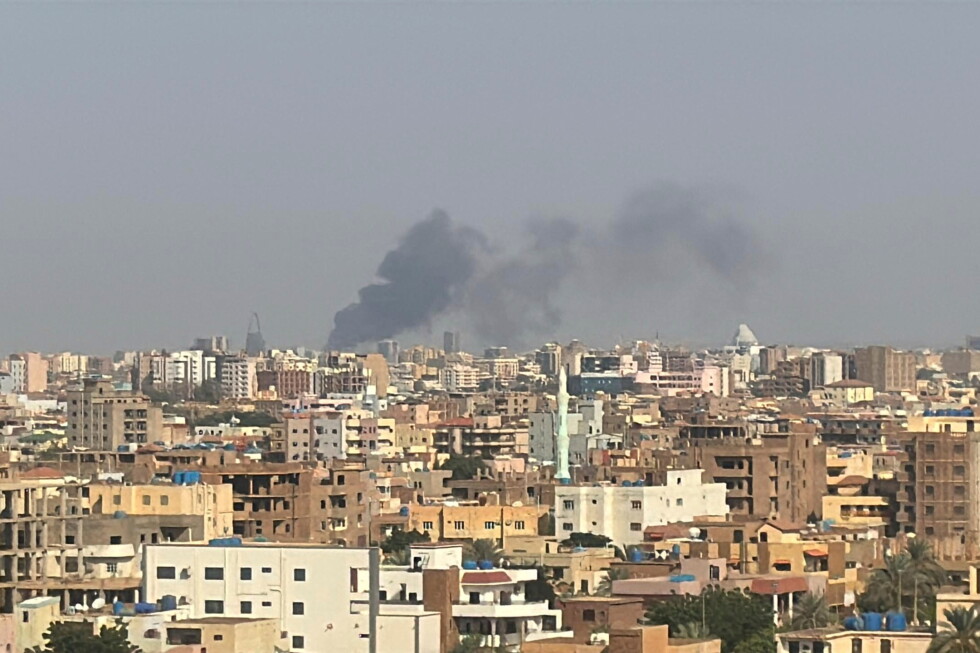
    As Sudan’s brutal civil conflict enters its third year, having first erupted between the Sudanese Armed Forces and the Rapid Support Forces on April 15, 2023, the Darfur region has become the epicenter of one of the world’s most devastating humanitarian emergencies, with aid organizations warning that growing unmet needs have far outstripped the scale of the global response.

    Data from the International Rescue Committee underscores the staggering scope of the crisis: more than 12 million Sudanese people have been forced from their homes since fighting began, and roughly 34 million people – equal to two-thirds of the country’s entire population – now require urgent life-saving humanitarian assistance. Survivor accounts and on-the-ground reports from humanitarian groups paint a grim picture of daily life in Darfur, where displaced families face repeated cycles of violence, chronic shortages of food and clean water, and almost non-existent access to life-sustaining medical care.

    “The humanitarian situation in Darfur, and across Sudan as a whole, is extremely dire,” explained Ali Almohammed, emergency health manager for Doctors Without Borders (Medecins Sans Frontieres, MSF). He characterized the crisis as driven by four interconnected failures: the complete breakdown of civilian protection, mass population displacement, the widespread destruction of health infrastructure, and a gaping chasm between overwhelming unmet need and the limited aid currently available.

    In extended remarks to China Daily, Almohammed emphasized that women and children bear the brunt of the ongoing conflict, facing amplified risks of disease, severe malnutrition, targeted violence, and total lack of access to essential life-saving care as fighting grinds on with no end in sight. A March 30 MSF report further highlights that danger persists even after civilians escape active frontline combat zones: women and girls face persistent threats of gender-based violence on travel routes, in public markets, while collecting food in agricultural fields, and even within the overcrowded displacement camps that are supposed to serve as safe havens.

    Firsthand survivor testimonies included in the report lay bare the daily terror facing displaced communities. “Every day, when people go to the market, there are four or five cases of rape. When we go to the farm, this happens,” a 40-year-old woman from Sudan’s Jebel Marra region told investigators. Another survivor, sheltering in an internally displaced persons camp near Nyala, described the constant fear that shapes every daily activity: “Our life is so difficult here. We went outside the camp, and when we went outside, they attacked us and they raped us … This is happening to girls, every day — every day, in our area.”

    These accounts reflect a broader protection crisis that compounds existing humanitarian hardship: even the most basic tasks of searching for food, water, and other necessities put vulnerable women and children at heightened risk of further violence, deepening the scale of the emergency.

    According to Almohammed, the most pressing unmet needs are fundamental life-saving support: guaranteed safe access to healthcare, sufficient food supplies, malnutrition treatment, clean drinking water, emergency shelter, essential pharmaceutical stocks, protection services, and mental health support for trauma survivors. Among the most recent wave of people displaced from North Darfur and El Fasher, demand has spiked for emergency trauma care, reproductive health services, and confidential, specialized support for survivors of sexual violence.

    Across Darfur, the region’s already weak health system has been pushed to total collapse. MSF data shows that in the hardest-hit conflict zones, an estimated 70 to 80 percent of all health facilities are either fully shuttered or operating at barely functional levels, crippled by catastrophic shortages of medical staff, essential drugs, vaccines, and life-saving medical equipment.

    Successive waves of displacement from El Fasher and the Zamzam camp have completely overwhelmed already fragile services in host communities such as Tawila, Almohammed explained. “This is not just a question of some shortages,” he said. “It is a structural mismatch between massive needs and a very limited operational response.”

    Children suffer the most acute, long-lasting harm from the ongoing catastrophe. “They are being displaced, exposed to violence, pushed into malnutrition, and cut off from routine healthcare, vaccination, education and protection services,” Almohammed noted. The MSF report quantifies this harm for minors: in South Darfur, 20 percent of all documented sexual violence survivors are under the age of 18, including 41 children younger than five. In Tawila, 27 percent of survivors treated by MSF in late 2025 were also minors.

    Overcrowded emergency shelters, inadequate sanitation, limited food access, and extremely low vaccination coverage have triggered a surge in preventable infectious diseases, Almohammed added, with rising cases of measles, malaria, cholera, and acute respiratory infections across the region. At the same time, conflict-related trauma injuries and life-threatening maternal health complications continue to climb.

    The psychological toll of the conflict is as severe as the physical damage, aid workers warn. “People are not only surviving bombardment, displacement and hunger; many have witnessed killings, lost relatives, and in many cases endured direct violence,” Almohammed said. “Without psychosocial and mental health services, the response is incomplete.”

    MSF stresses that survivors require a full suite of targeted, confidential care: clinical treatment for injuries, emergency contraception, prevention and treatment of sexually transmitted infections, dedicated child protection services, and clear, functional referral pathways for ongoing care.

    As Sudan prepares to mark the third anniversary of the outbreak of war, humanitarian organizations are urgently calling for expanded international support to scale up life-saving assistance and reestablish civilian protection across Darfur. Without immediate, decisive global action, they warn, the crisis will continue to escalate, pushing millions more vulnerable people into life-threatening danger.

  • Africa sees Middle East ceasefire deal as test of trust

    Africa sees Middle East ceasefire deal as test of trust

    A 14-day temporary ceasefire between the United States and Iran has sparked cautious hope across the African continent, where policymakers and geopolitical analysts are framing the agreement as a make-or-break trust-building exercise that could reshape global energy security and economic stability for many African nations.

    African heads of state and continental institutions have broadly welcomed the pause in hostilities, which comes after weeks of escalating tensions between the two powers that sent shockwaves through global energy markets. For African economies, a durable end to Middle East hostilities would bring much-needed relief: it would stabilize disrupted fuel supply chains, ease upward pressure on already volatile commodity prices, and prevent further damage to key international trade routes that underpin African trade activity.

    Yet cautious optimism has been tempered by sharp warnings over the ceasefire’s inherent fragility, coming on the heels of a deadly Israeli air strike in Lebanon that killed more than 200 people just one day before the truce took effect. Analysts warn that escalating violence in connected regional conflict zones could derail the fragile agreement before confidence-building can take root.

    Gordon K’achola, founder of the Africa Center for Diplomatic Affairs, emphasized that the two-week truce fills a critical role as a preliminary confidence-building step to test whether Washington and Tehran are willing to work toward a long-term, sustainable settlement after weeks of market-rattling tension. “The 14 days are a trust-building exercise for both sides,” K’achola explained. He added that while the temporary truce creates a vital opening for diplomatic negotiations, its ultimate success hinges on full commitment to halting hostilities from all parties embedded in the broader Middle East conflict. “You can’t have a halfway ceasefire. If it is a ceasefire, it has to be implemented in full,” K’achola said, noting that continued fighting in Lebanon or other regional hotspots could erode faith in the diplomatic process almost immediately.

    For African nations, particularly the continent’s large group of net oil-importing countries that have faced months of fuel supply uncertainty, the ceasefire already offers a degree of much-needed economic relief. Beyond the immediate truce, K’achola argued the entire crisis has served as a critical wake-up call for African governments: he urged leaders to accelerate efforts to diversify their national energy portfolios and scale up investment in domestic renewable energy capacity, to insulate African economies from future geopolitical shocks originating in global energy markets.

    The African Union released a formal statement on Wednesday affirming that the truce creates a rare opening to de-escalate broader Middle East tensions and reduce the harmful cross-border spillover effects that have already driven sharp increases in fuel and commodity prices across most African countries. The bloc also openly praised the diplomatic work of regional and international mediators who negotiated the terms of the ceasefire.

    African Union Commission Chairman Mahmoud Ali Youssouf noted that sustained, inclusive dialogue remains the only path to locking in the tentative progress achieved through the truce, stressing that only continued diplomatic engagement can deliver a durable, comprehensive peace agreement. South African President Cyril Ramaphosa joined in welcoming the ceasefire, calling it an essential milestone toward rebuilding long-term regional stability in the Middle East. “We further call on all countries to respect international law and sovereignty and the territorial integrity of all nations,” Ramaphosa said.

    Egyptian President Abdel Fattah El-Sisi also issued a statement Wednesday welcoming the ceasefire, calling on negotiating parties to work toward a permanent agreement that would bring the broader conflict to a close. He expressed hope that the temporary pause in fighting would pave the way for a lasting settlement that restores full security and stability to the Middle East region, and unlock progress toward the development and prosperity that the region’s people have long aspired to.

    Looking ahead, K’achola noted that the next two weeks will be a decisive period that will determine whether the tentative ceasefire can evolve into a formal, sustainable peace process. “Every party in this negotiation must walk out feeling that they have had a victory. It has to be a careful give-and-take if this ceasefire is to hold,” he said.

  • In Congo, an unconventional Christian movement has existential lessons for the troubled nation

    In Congo, an unconventional Christian movement has existential lessons for the troubled nation

    KINSHASA, DRC — For half a century, one of the most influential religious and liberation movements in modern African history has operated in relative global obscurity, even as it grew to count millions of followers across the continent and beyond. Its founder, Simon Kimbangu, spent 30 years behind bars, dying in exile after Belgian colonial rulers labeled his work a threat to their rule. Today, as the Democratic Republic of Congo grapples with its worst territorial crisis since independence in 1960, Kimbangu’s legacy of nonviolent, homegrown Black liberation is being reclaimed as a guiding light for the nation.

    Kimbangu, a former lay Baptist catechist, launched his ministry in 1921, when what is now the DRC was the personal colony of Belgium’s ruling monarchy, its rubber, timber, and mineral resources plundered to rebuild Europe after World War I. Rejecting colonial representations of God as a white European figure, Kimbangu framed the divine through the traditional Kikongo deity Nzambi, positioning himself as God’s earthly envoy and the Black embodiment of the Holy Spirit. His message of self-determination and spiritual liberation drew tens of thousands of oppressed Congolese plantation workers, who flocked to his base in the small village of Nkamba, southwest of Kinshasa, seeking healing and hope.

    Alarmed by the movement’s rapid growth, colonial authorities arrested Kimbangu after just five months of public ministry, charging him with inciting insurrection. Though sentenced to death, Belgium’s King Albert I commuted the sentence to life imprisonment, and Kimbangu was exiled more than 1,600 kilometers to what is now Lubumbashi in the country’s southeast. He died in prison in 1951 at the age of 64, never having tasted freedom after his arrest. Today, only a handful of official photos exist, showing a bald, stern-faced prisoner in plain, austere prison garb.

    Against all odds, the movement Kimbangu founded survived and thrived. Officially named the Church of Jesus Christ on Earth Through the Prophet Simon Kimbangu, it is now estimated to have between 6 and 17 million members, most based in the DRC, with congregations as far afield as Belgium. Nkamba, the small village where Kimbangu began his work, is now recognized as the church’s spiritual seat, dubbed the “New Jerusalem” by believers, who make regular pilgrimages there to honor their founder. In 2023, the Congolese government officially designated April 6 a national public holiday, Kimbangu Day, to celebrate his lifelong struggle for African self-consciousness and liberation. Many Congolese now draw parallels between Kimbangu and Nelson Mandela, noting both endured decades of imprisonment for fighting oppression, even as Kimbangu remains largely unknown outside Central Africa.

    Distinct from both traditional Christianity and imported African religious movements, the Kimbanguist Church has retained its core founding principles of independence, nonviolence, and equity. It prohibits polygamy, a practice widely accepted in many Congolese communities, prioritizes peaceful conflict resolution, and invests heavily in local schools and community social programs. Unlike many older Christian denominations in the region, it also elevates women to positions of senior leadership, a practice rooted in the critical role Kimbangu’s wife Marie Muilu played in keeping the movement alive during her husband’s three decades of imprisonment. “Women are ministering in the church. They have a key role to play because the church is so thankful for what the wife of Simon Kimbangu did when her husband was in prison,” explained André Kibangudi, a senior church elder. “We should have more female leadership.”

    Today, as Congo confronts a devastating armed rebellion in its eastern provinces, Kimbangu’s legacy has taken on new urgency. Since January 2025, the Rwanda-backed M23 rebel group has seized control of Goma, the largest city in North Kivu, and occupied much of the mineral-rich province, displacing hundreds of thousands of civilians and stoking fears of national fragmentation. President Félix Tshisekedi, who has positioned his administration as a champion of Congolese sovereignty, has courted the Kimbanguist movement, and his prime minister, Judith Suminwa, is a member of the church, a reflection of the group’s massive political influence and voter base. Tshisekedi has recently offered U.S. companies unprecedented access to eastern Congo’s untapped mineral reserves, estimated to be worth more than $24 trillion, in exchange for American support to counter the M23 rebellion. The move has drawn fierce criticism from activists and opposition figures, who warn it risks eroding Congolose sovereignty and intensify great power competition for resources in the region, where Chinese firms already dominate mineral extraction.

    For Congolese analysts and religious leaders, the current crisis demands a return to Kimbangu’s core values of self-sacrifice and commitment to collective liberation. “The first challenge for African leaders, or Congolese leaders, is that they are not free,” said Bwatshia Kambayi, a prominent Congolese historian and former higher education minister who has drawn parallels between the struggles of Mandela and Kimbangu. “African leaders, they do not realize that they have a slavery mindset. We are independent, but we are not free.” Kambayi argues that today’s Congolese political elite, many of whom prioritize personal wealth over public good, have fallen far short of Kimbangu’s example: “The elite running Congo are poor men who want to live as rich people. This is not the fight of Simon Kimbangu. None of them has reached the level of fighting for people’s freedom, for people’s liberty.”

    Kimbanguist pastors across the country echo that sentiment, framing the movement’s nonviolent, community-centered ethos as a model for a nation divided by conflict. “What Congo’s leaders can learn from Kimbangu is that the guy didn’t work for himself. He sacrificed himself to free people who had been in slavery, who had been suffering,” said Paul Kasonga, a Kimbanguist pastor who serves millions of adherents in Mongala province. For ordinary believers, Kimbangu’s message of liberation for all Congolese remains as urgent today as it was a century ago. “The lesson that people can learn from the church is that the prophet, the founding prophet, fought for people’s rights,” said Toussaint Mungwala, a Kimbanguist pastor in Kwilu province who converted to the movement from Catholicism in the 1980s. Even decades after his death, Kimbangu’s unheralded struggle continues to shape the identity and future of the Congolese nation.