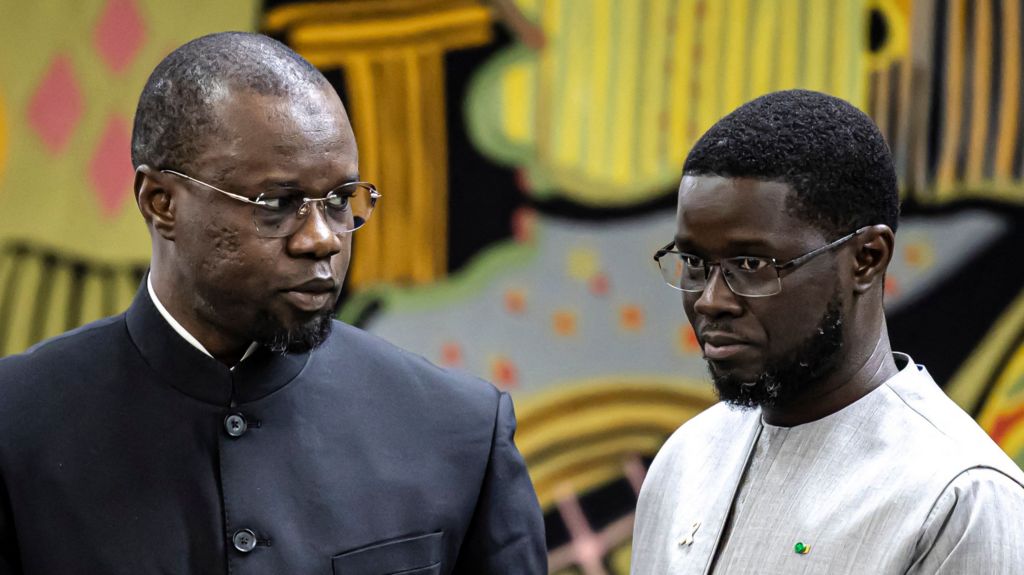
West African nation Senegal has been thrown into sudden political turmoil this week, after President Bassirou Diomaye Faye announced the immediate dismissal of Prime Minister Ousmane Sonko and the full dissolution of the country’s sitting government. The dramatic move, which followed months of growing public and private friction between the two top political leaders, was formalized in a surprise presidential decree read live on national television by a senior aide to Faye.
The decree explicitly confirmed that Sonko’s tenure as prime minister had been terminated, alongside the end of service for all sitting cabinet ministers and state secretaries that made up the administration. News of the dismissal quickly sparked public reaction, with Sonko — a firebrand populist who retains massive popularity among Senegal’s large youth demographic — taking to social media to share a measured response, saying he would “sleep with a light heart” following his exit from office.
The political split comes at a particularly fragile moment for Senegal, which is already grappling with severe economic headwinds. Data from the International Monetary Fund shows the country’s total public debt has ballooned to 132% of its gross domestic product, putting growing pressure on the new administration that took power just over a year ago.
The break between Faye and Sonko is one of the most surprising political turnarounds in recent African politics, given the deeply intertwined origins of their rise to power. Faye, a relatively unknown political figure before 2024, would likely never have won the presidency without Sonko’s full-throated backing. Sonko, who built the left-wing Pastef party into a major opposition force and was the early favorite to win the 2024 presidential election, was ultimately barred from running over a controversial defamation conviction. Instead of abandoning the race, Sonko tapped Faye as his replacement and threw the full weight of his political machine behind his candidacy.
Remarkably, the pair secured a shocking election victory just 10 days after both were released from prison, where they had been held on political charges ahead of the vote. But the good political fortune that carried them to power quickly fractured, with public and private tensions simmering for months. Reports from inside the ruling party have confirmed Faye repeatedly criticized Sonko for what he called “excessive personalization” of power within Pastef, while Sonko hit back by publicly accusing Faye of a “failure of leadership” for refusing to defend him against political attacks.
The dismissal came directly after a heated parliamentary session Tuesday, where Sonko launched open, direct criticism of Faye’s leadership, pushing the long-running tensions into a public break. By Tuesday evening, hundreds of student protesters had gathered in the streets of Dakar, Senegal’s capital, to voice their support for Sonko, signaling that the political rift could deepen in the coming days as the country prepares for a new administration to be formed.
The upheaval leaves Senegal at a crossroads, with unresolved economic challenges and a ruling movement now split between its two most popular leaders, raising questions about the country’s near-term political and economic stability.