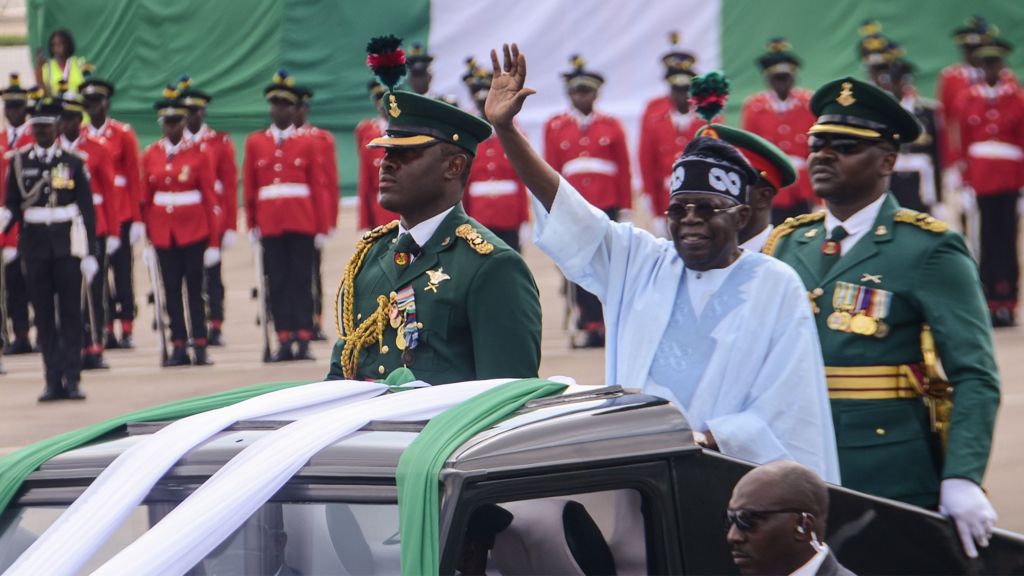
A high-stakes treason case has taken shape in Nigeria, where six individuals—including a retired senior military officer and an active-duty law enforcement official—have been formally charged with plotting to overthrow democratically elected President Bola Tinubu in a 2025 attempted coup. The charges were brought by Nigeria’s Attorney General before the Federal High Court in Abuja, the nation’s capital, with all six defendants scheduled to make their first appearance before Justice Joyce Abdulmalik this Wednesday.
A seventh prominent figure named in the court documents, Timipre Sylva—a former state governor and one-time Nigerian oil minister—remains at large and has not yet been taken into custody in connection with the plot.
Rumors of an impending coup against Tinubu’s administration first emerged publicly in October 2025, when the Nigerian government unexpectedly called off a large-scale military parade planned to mark the country’s 65th Independence Anniversary. Officials initially cited unspecified security threats to justify the abrupt cancellation, but public speculation almost immediately connected the move to a brewing insurrection against the sitting government. At the time, Nigeria’s military leadership issued a public denial of any coup plot threat, but just three months later in January 2026, the armed forces announced that 16 officers would face trial before a military tribunal for their alleged roles in the attempt to oust the president. To date, it remains unclear whether the new charges filed in the Federal High Court— which include additional counts of terrorism and money laundering alongside the core treason charges—are supplementary to the ongoing military prosecutions or represent a separate legal proceeding.
The full roster of defendants named in the Attorney General’s case is as follows: retired Major General Mohammed Ibrahim Gana; retired Navy Captain Erasmus Ochegobia Victor; Ahmed Ibrahim, a serving police inspector; Zekeri Umoru, an electrician employed at the Presidential Villa in Abuja; civilian Bukar Kashim Goni; and Abdulkadir Sani, an Islamic cleric. None of the six defendants have yet issued any public comment in response to the allegations against them.
According to official court documents, the six accused “conspired with one another to levy war against the state to overawe” President Tinubu and his administration. Court papers identify the alleged overall leader of the coup plot as Colonel Mohammed Alhassan Ma’aji, who was already taken into custody along with other undisclosed accomplices earlier this year. Prosecutors further allege that all six defendants had advance knowledge of Colonel Ma’aji’s “treasonable act” but deliberately concealed this information from Nigerian law enforcement and security authorities. Additional charges include the deliberate suppression of critical intelligence, with prosecutors arguing the defendants acted with the explicit intent of destabilizing the Nigerian state by withholding information that could have prevented planned terrorist activity tied to the coup.
Financial allegations also form a core pillar of the prosecution’s case: prosecutors claim that illicit funds were exchanged among the co-conspirators to finance terrorist operations connected to the overthrow attempt.
Under Nigerian criminal law, treason is classified as one of the most severe criminal offenses, carrying harsh maximum penalties that include life imprisonment. This high-stakes case unfolds against a backdrop of Nigerian democratic stability: the country has maintained unbroken civilian rule since 1999, when military rule formally ended. In public statements repeatedly issued over the years, Nigeria’s armed forces have consistently emphasized their unwavering loyalty to civilian-led governance and reaffirmed their institutional commitment to upholding the country’s democratic framework.