标签: Africa

非洲

  • Separatists in Cameroon announce a 3-day pause in fighting for pope’s visit

    Separatists in Cameroon announce a 3-day pause in fighting for pope’s visit

    YAOUNDE, Cameroon – In a surprising gesture ahead of Pope Leo XIV’s upcoming visit to the Central African nation, coalitions of English-speaking separatist insurgents have declared a 72-hour pause in hostilities to open secure passage for civilians, religious pilgrims, and official delegations during the papal trip.

    The Unity Alliance, a umbrella organization bringing together multiple separatist factions operating in Cameroon’s restive western regions, released an official statement late Monday confirming the ceasefire. The announcement notes the temporary halt to fighting honors the “profound spiritual importance” of Pope Leo XIV’s visit, prioritizing the safety of all those planning to participate in papal events.

    As of Tuesday, Cameroon’s national government has not issued an immediate formal response to the ceasefire declaration, following a request for comment from the Associated Press. Last week, government spokesperson René Sadi reaffirmed that state officials had completed “all necessary arrangements” to guarantee a safe and successful visit for the pontiff.

    Decades of underlying tension erupted into open armed conflict in 2017, when separatist groups launched an independence rebellion seeking to carve out a sovereign state for Cameroon’s English-speaking minority, separated from the country’s French-speaking majority. Since the conflict began, fighting has plagued the North-West and South-West regions, leaving more than 6,000 people dead and forcing more than 600,000 residents to flee their homes, according to data from the International Crisis Group, an independent non-profit conflict analysis organization.

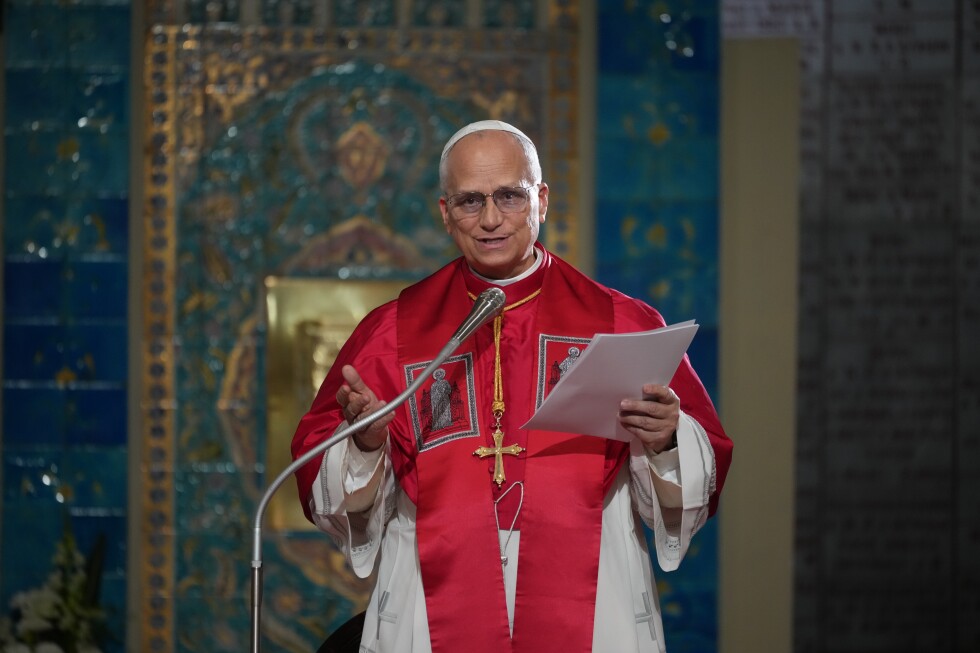
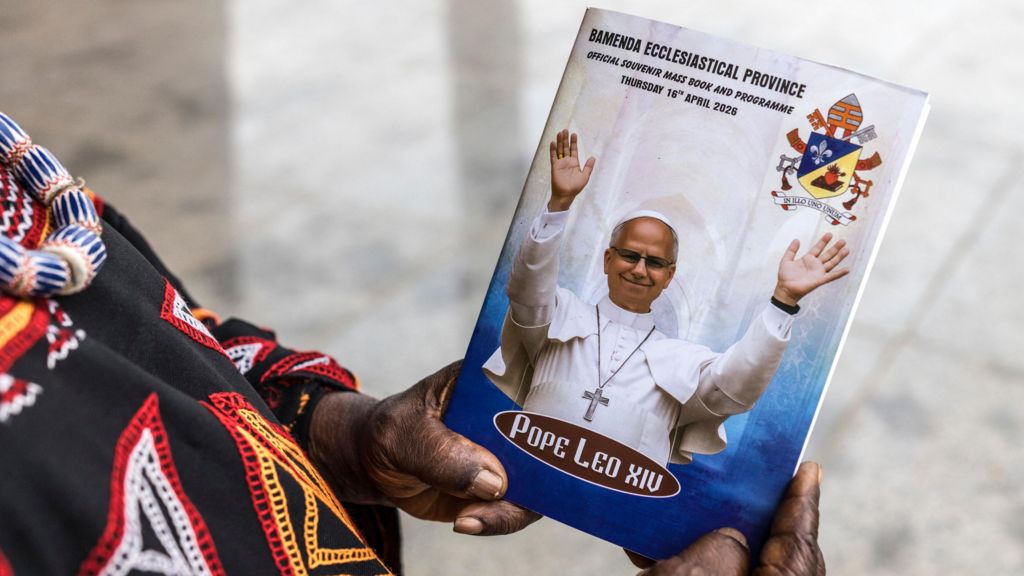
    Pope Leo XIV launched a four-nation tour of Africa earlier this week, starting his journey in Algeria before moving on to Cameroon, where he is scheduled to land in the capital Yaoundé on Wednesday. On Thursday, he will lead a high-profile peace gathering in Bamenda, the urban center that has become the epicenter of the separatist conflict.

    Unity Alliance spokesperson Lucas Asu emphasized in the statement that the ceasefire “reflects a deliberate commitment to responsibility, restraint, and respect for human dignity, even in the context of ongoing conflict.” Asu also clarified that the papal visit should be framed exclusively as a spiritual event, and should not be interpreted as an endorsement of any Cameroonian political faction or governing authority.

    While the frequency of deadly separatist attacks has declined in recent years, the long-running conflict remains far from resolved. Brokered peace talks mediated by international third parties have stalled in recent months, with both the Cameroonian government and separatist leaders repeatedly accusing one another of negotiating in bad faith.

    The roots of the current crisis stretch back to Cameroon’s colonial legacy. After World War I, the former German colony of Cameroon was split into two administrative zones, controlled by France and the United Kingdom respectively. In a 1961 UN-supervised referendum, the British-administered English-speaking regions voted to reunify with French Cameroon to form a single independent nation. Separatist leaders argue that since unification, English-speaking communities have faced systematic political and economic marginalization at the hands of the Francophone-dominated national government.

    This report includes contributions from correspondent Banchereau, who reported from Dakar, Senegal.
  • Cameroon separatists to pause fighting ahead of Pope visit

    Cameroon separatists to pause fighting ahead of Pope visit

    As Pope Leo XIV continues the second day of his landmark 11-day tour across four African nations, a remarkable development has unfolded in violence-wracked Cameroon, where armed Anglophone separatist groups have agreed to a three-day ceasefire to open a “safe travel passage” ahead of the pontiff’s upcoming visit.

    The ceasefire, announced by the Unity Alliance — a coalition of major armed secessionist groups active in Cameroon’s two English-speaking regions — will come into effect ahead of Pope Leo’s arrival on Wednesday. In an official statement, the alliance framed the pause in hostilities as a recognition of the “profound spiritual importance” of the papal visit, and a commitment to protecting civilian life and facilitating smooth movement for pilgrims and attendees gathering for the papal events. The statement emphasized that the decision reflects a deliberate commitment to responsibility, restraint, and respect for human dignity, even amid years of ongoing conflict. The alliance also added that the visit should remain strictly spiritual and pastoral in nature, warning against any attempts to politicize the historic occasion.

    Cameroon’s francophone-dominated national government has not yet issued an official comment on the ceasefire announcement, though local authorities have confirmed that comprehensive security measures have already been put in place to protect the pontiff and all visitors at scheduled event locations across the country. Local preparations in Bamenda, the capital of Cameroon’s North-West region and the focal point of the separatist conflict where Pope Leo will hold a key peace gathering, are already well underway: street billboards featuring portraits of Pope Leo and Cameroonian President Paul Biya have been erected across the city, and officials have confirmed that all papal event sites will be open to visitors free of charge.

    The conflict in Cameroon’s Anglophone regions erupted nearly a decade ago, when separatist movements launched an armed campaign for secession from the country’s majority French-speaking government. The violence has claimed at least 6,000 lives and displaced hundreds of thousands of civilians from their homes. A 2019 national dialogue convened by the Cameroonian government failed to resolve the standoff, leaving the region locked in a cycle of persistent violence. Pope Leo’s planned stop in Bamenda is widely viewed as a symbolic outreach by the Catholic Church to advance peace and reconciliation in the divided region, where he is scheduled to host a special peace gathering at the city’s Saint Joseph’s Cathedral.

    Pope Leo launched his 11-day African tour on Monday, with his first stop in Algeria — marking the first ever papal visit to the North African nation, which is predominantly populated by Sunni Muslims. Algeria also holds deep personal significance for the new pontiff: it is the birthplace of St Augustine, and Pope Leo is the first pope from the religious order that follows St Augustine’s teachings. Currently based in Annaba, where St Augustine served as bishop centuries ago, the pontiff visited the archaeological site of the ancient city of Hippo Regius on Tuesday, and is scheduled to lead a public Mass at the Basilica of Saint Augustine later that same day.

    After concluding his stop in Cameroon, Pope Leo will continue his tour with visits to Angola and Equatorial Guinea, adding up to 11 stops across four African nations overall. This trip marks only his second major foreign visit since he was elected to the papacy in 2025, and it underscores the growing global importance of the Catholic Church in Africa. Latest 2024 demographic data shows that Africa is home to roughly 288 million Catholics — accounting for more than one-fifth of the global Catholic population, a share that continues to grow steadily year over year.

  • Jepchirchir withdraws from London Marathon

    Jepchirchir withdraws from London Marathon

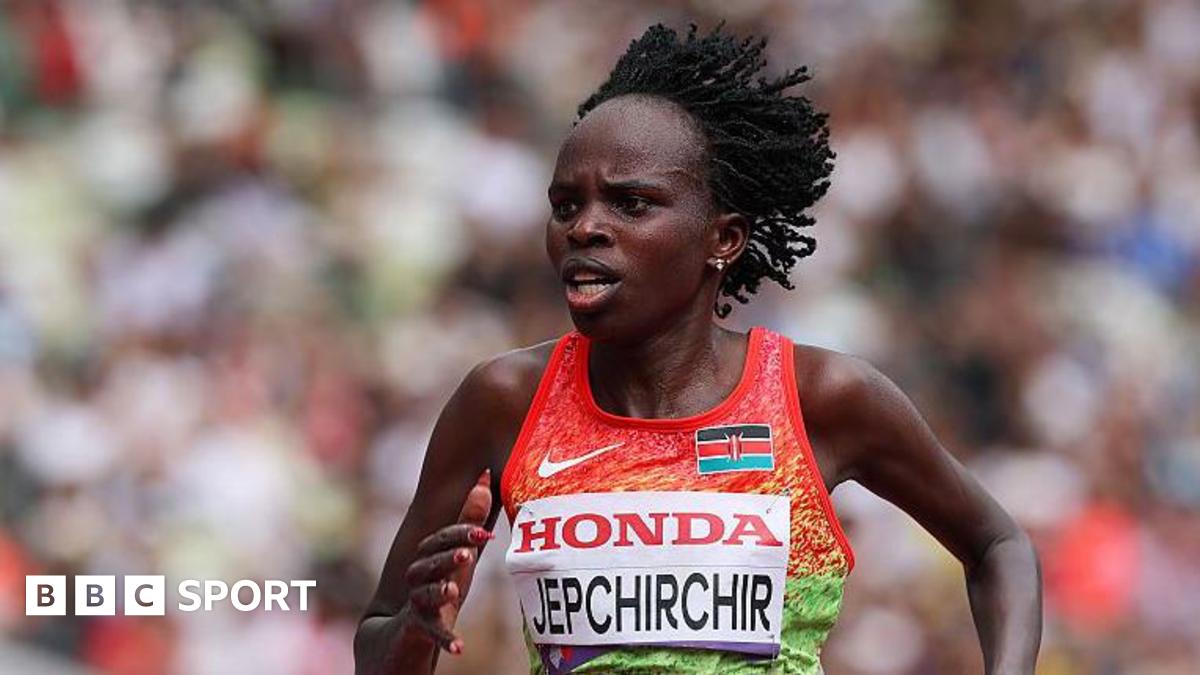
    One of women’s distance running’s biggest champions will not be on the start line for this month’s London Marathon, as defending winner Peres Jepchirchir has confirmed her withdrawal from the 2025 event due to a lingering injury.

    The 32-year-old Kenyan, who boasts an elite resume that includes gold at the Tokyo 2020 Olympics, a world championship title, and a women-only world record run at last year’s London Marathon, was diagnosed with an unspecified stress fracture after she crossed the line in second place at the Valencia Marathon last December. The injury forced an unexpected pause to her winter training block, which Jepchirchir says has left her unprepared to compete at the top level required for the World Marathon Major.

    In an official statement shared with race organizers, Jepchirchir explained that she was only able to return to structured training in late January. “I know that to be competitive at the London Marathon you have to be at your top level and despite my best efforts, I’m just short of that due to my lack of training,” she said.

    This marks the second consecutive year that the elite distance runner has been forced to pull out of the London race; an ankle injury kept her sidelined from the 2023 event, before her historic 2:16:16 world record victory in 2024.

    Jepchirchir’s withdrawal adds to the list of high-profile athletes missing from the April 26 start line. Sifan Hassan, the women’s marathon gold medalist at the 2024 Paris Olympics, previously announced her exit from the race after suffering an Achilles injury.

    Despite the losses of two of the women’s field’s top contenders, race organizers are still expected to deliver one of the most competitive fields in the event’s history, with dozens of the world’s top distance runners set to compete for the title and prize purse.

  • Benin Finance Minister Romuald Wadagni elected president with vast majority of votes

    Benin Finance Minister Romuald Wadagni elected president with vast majority of votes

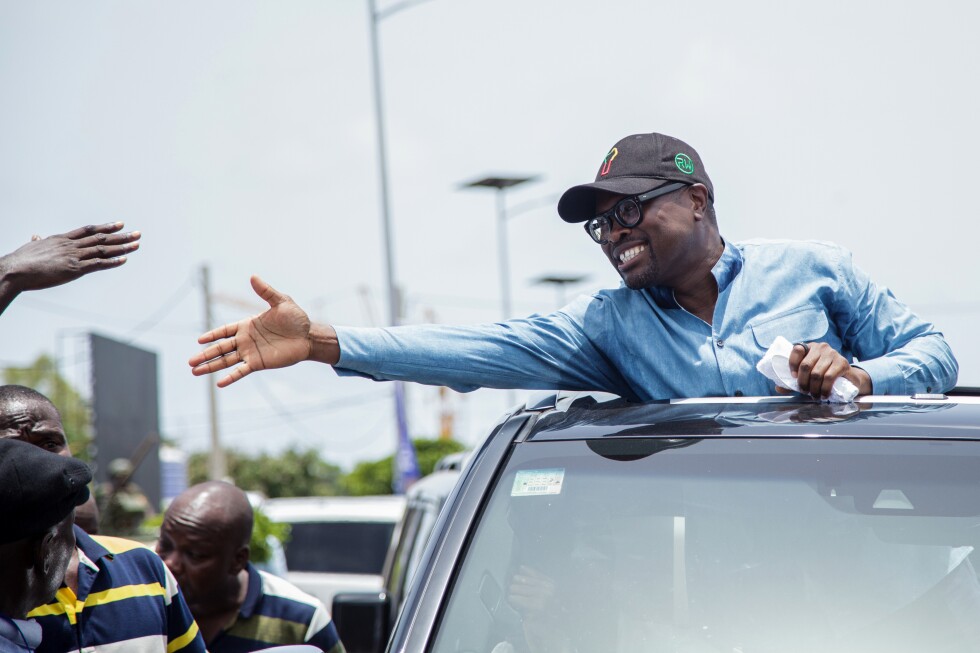
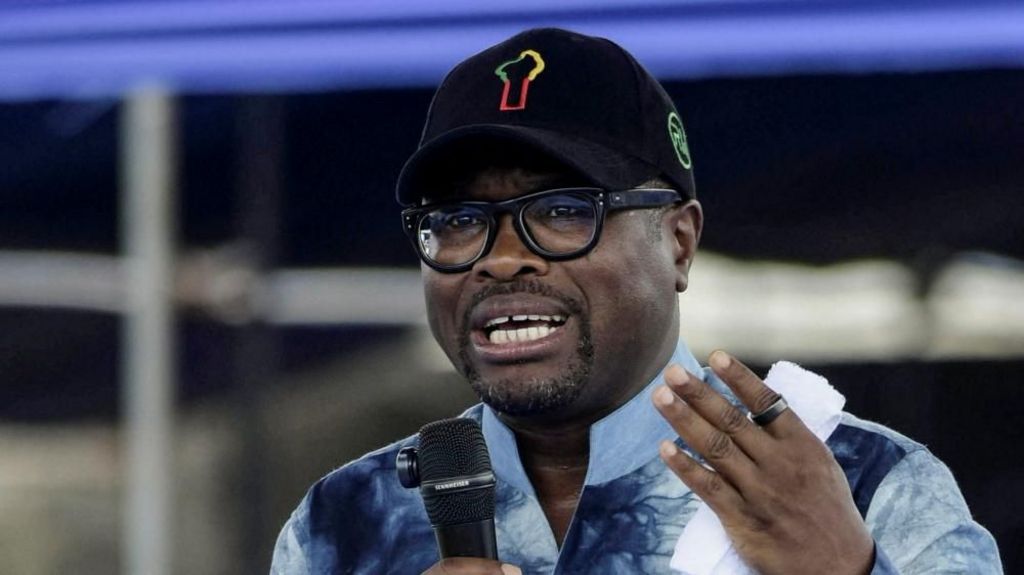
    COTONOU, Benin — In an outcome that matched pre-election predictions, Benin’s outgoing President Patrice Talon’s hand-picked successor, Finance Minister Romuald Wadagni, has claimed a landslide victory in Sunday’s presidential election, according to official announcements from the West African nation’s electoral body.

    Sacca Lafia, president of Benin’s Independent Electoral Commission, confirmed the preliminary results in a national televised address late Monday, noting Wadagni secured more than 94% of the vote based on counts from over 90% of polling stations across the country. Turnout for the election reached 58.75%, Lafia added. The unofficial results now await formal validation from Benin’s Constitutional Court, with a final ruling expected in the coming weeks.

    The only opposition candidate on the ballot, Paul Hounkpè, had already conceded defeat prior to the official announcement, having captured just 5.95% of the counted vote. At 49 years old, Wadagni was widely framed as Talon’s anointed heir ahead of the vote. Talon, who has held the presidency since 2016, is required to step down at the end of his second term in May, ending a decade in office marked by a deeply divided legacy.

    Long seen as one of West Africa’s most stable democratic nations, Benin has faced growing international scrutiny over political rights under Talon’s leadership. The outgoing president leaves office with a mixed record: he has overseen steady macroeconomic growth that drew international investment, but he also faces persistent accusations of systemic opposition suppression, alongside a rising jihadist insurgency that has destabilized the country’s northern border regions.

    Amnesty International and Human Rights Watch have both documented a sustained crackdown on political dissent during Talon’s tenure, including arbitrary arrests of opposition figures, new restrictive rules on public assembly, and growing pressure on independent media outlets to align with the government. Structural barriers to opposition participation have drawn particular criticism in recent electoral cycles. In January’s parliamentary vote, opposition parties failed to meet a requirement of 20% voter support in every electoral district to gain representation, leaving Talon’s two allied political parties in control of all 109 seats in the National Assembly.

    The pattern of exclusion extended to the presidential vote: Renaud Agbodjo, leader of the main opposition party The Democrats, was entirely barred from competing in Sunday’s election after failing to secure the required number of parliamentary endorsements. Critics argue this eligibility threshold was deliberately designed by ruling party allies to block opposition candidates from accessing the ballot, clearing the path for Wadagni’s overwhelming victory. Political analysts had forecast this outcome months in advance, noting the systematic sidelining of opposition voices left no credible challenge to Talon’s chosen successor.

  • Vote counting underway in Benin’s presidential polls

    Vote counting underway in Benin’s presidential polls

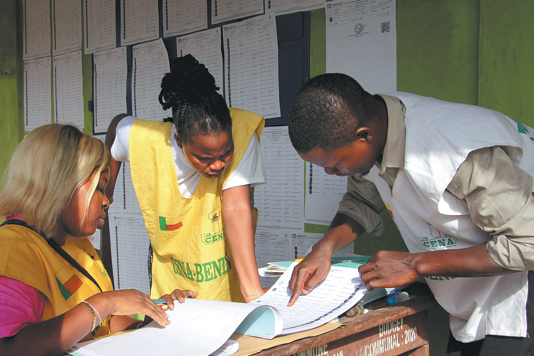
    COTONOU, Benin – Hours after polling stations closed across the West African nation of Benin on Sunday, election officials have begun tallying ballots for the first round of the country’s 2026 presidential election, according to on-the-ground observations from Xinhua News Agency in Cotonou, Benin’s economic hub.

    All 16,000+ polling stations opened punctually at 7 a.m. local time and wrapped up voting operations by 4 p.m., triggering the immediate start of the counting process as outlined in Benin’s electoral regulations. Sacca Lafia, president of Benin’s Autonomous National Electoral Commission (ANEC), the independent body overseeing the nation’s elections, confirmed that preliminary general results trends will be released to the public within 48 hours of polling station closure.

    Nearly 7.9 million registered voters were eligible to cast ballots in this election, which will select a new head of state to succeed outgoing President Patrice Talon, whose five-year term is set to conclude on May 23. Under Benin’s constitution, the president and vice president are elected via direct universal suffrage to serve a single seven-year term.

    Just two candidate tickets are contesting the top office this cycle. The ruling coalition’s ticket is led by incumbent Finance Minister Romuald Wadagni, with running mate Mariam Chabi Talata, the current vice president of Benin’s National Assembly. Challenging them is the opposition ticket from Cowry Forces for an Emerging Benin, headlined by party leader Paul Hounkpe and his running mate Rock Hounwanou.

    Wadagni has centered his campaign on his track record over the past decade leading Benin’s finance ministry, highlighting the country’s consistent economic expansion under his oversight. Benin posted 7% gross domestic product growth in 2025, cementing its position as one of West Africa’s most stable and high-performing economies. If no candidate earns an absolute majority of valid votes in Sunday’s first round, a runoff election between the top two finishers will be held on May 10.

    Reports from polling stations across Cotonou and its surrounding suburbs, visited by Xinhua correspondents, confirm that voting proceeded without major incidents, unfolding smoothly and peacefully across all monitored sites. Armand Bognon, a representative of a local civil society observer platform that deployed 1,721 independent observers nationwide – 1,200 assigned to fixed polling posts and 521 mobile monitors to cross-check multiple locations – confirmed that voting operations launched on time across every region of the country.

    While the process remained orderly, voter turnout was relatively low through the morning and midday hours, with many voters arriving later in the day than expected. Multiple polling stations reported moderate attendance throughout the day, with a number of electors opting to attend Sunday religious services before casting their ballots.

    Outgoing President Talon cast his own vote at a Cotonou polling station, and spoke to reporters after voting, expressing broad satisfaction with the calm, collaborative atmosphere that marked the election. “Since late last year, we have completed a full cycle of electoral processes to renew the country’s political leadership across legislative, municipal and now presidential levels,” Talon said. “What I have observed is not just an extraordinary atmosphere, but one marked by fraternity and conviviality.”

    He added, “This gives us confidence that Benin is evolving and reaching a new stage in its history. Whoever wins this election will take the country even further. For me, the best is yet to come for Benin.”

  • Benin’s Wadagni wins presidency by landslide

    Benin’s Wadagni wins presidency by landslide

    Provisional electoral results from Benin confirm a landslide win for incumbent Finance Minister Romuald Wadagni in the country’s 2026 presidential election, capping a race shaped by widespread expectations of victory and the absence of a credible opposition challenger. According to the national electoral commission, with 90% of all ballots processed, Wadagni has captured over 94% of the vote, a margin large enough that the final outcome is described as irreversible.

    At 49 years old, Wadagni entered the race as the clear favorite after Benin’s main opposition bloc, the Democrats, was barred from fielding a candidate. Under Benin’s electoral rules, all presidential hopefuls must secure formal sponsorship from a minimum number of sitting elected officials to appear on the ballot. The Democrats’ nominee failed to meet this requirement, leaving only independent candidate Paul Hounkpè as Wadagni’s formal competitor. Hounkpè conceded the race early on Monday, even before vote counting concluded, and publicly congratulated Wadagni on his projected win. In his concession statement, Hounkpè emphasized that democratic governance relies on mutual respect and a willingness to transcend partisan divides.

    Wadagni was handpicked as the ruling party’s candidate by outgoing two-term president Patrice Talon, who was constitutionally ineligible to run for a third term in office. Preliminary official data puts national voter turnout at 58.75%, a figure that comes amid widespread public perception that the election was little more than a procedural formality, given the lack of a major opposition contender.

    Despite being widely regarded as one of West Africa’s most stable democracies in a region that has seen a string of military coups in recent years, Benin now faces pressing challenges that the incoming president will be forced to address immediately. Foremost among these is worsening insecurity linked to jihadi insurgency in the country’s northern regions. Last April, an attack claimed by JNIM, an al-Qaeda-affiliated extremist group, killed 54 Beninese soldiers, and a similar strike just one month before the election claimed 15 more military lives. The deteriorating security crisis was also cited as a core justification by soldiers who staged an attempted coup in Benin just four months prior to the election. Beyond security, Wadagni will also need to tackle the country’s long-standing issue of chronic poverty, which disproportionately impacts communities in northern Benin. The country of 15 million people will swear in its new president following the formal validation of the election results by national authorities.

  • Pope Leo XIV in Algeria to walk in footsteps of his spiritual father, St. Augustine

    Pope Leo XIV in Algeria to walk in footsteps of his spiritual father, St. Augustine

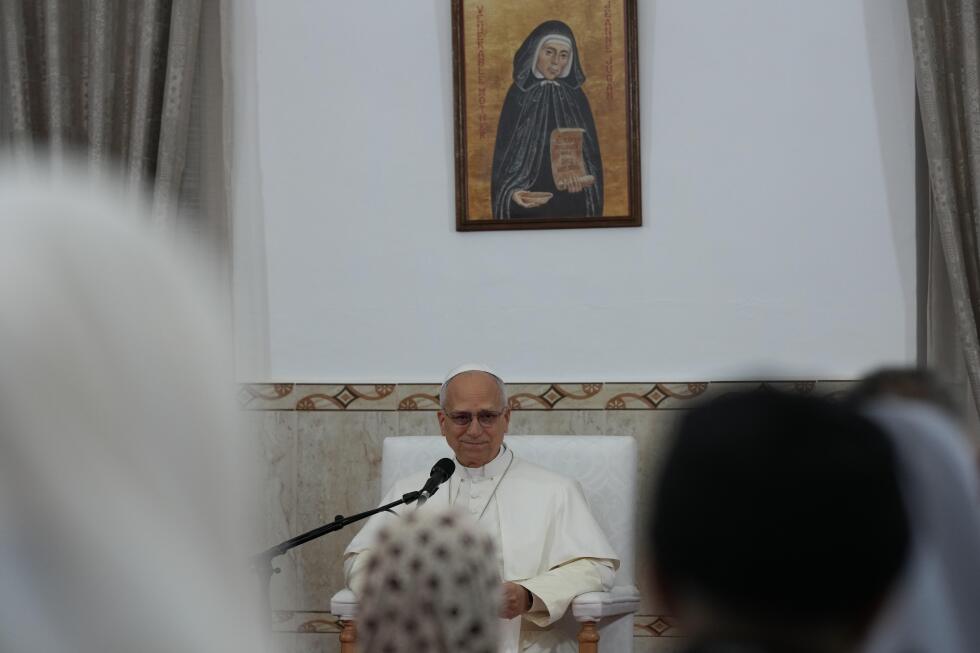
    On just his second full day in Algeria, marking the first ever papal visit to the North African nation, Pope Leo XIV traveled to Annaba — modern-day Hippo — to walk in the footsteps of his greatest spiritual inspiration, St. Augustine. This pilgrimage is far more than a diplomatic stop: it is a deeply personal homecoming for the first American pope, who has anchored his pontificate to the legacy of the fifth-century Christian theologian, and comes against the backdrop of a growing public feud with U.S. President Donald Trump over Leo’s calls for peace amid the U.S.-Israel conflict with Iran.

    Leo has long tied his papacy to Augustine, identifying himself as a “son of St. Augustine” the night of his election and repeatedly citing the theologian’s teachings in his first year in office. For this trip, which is centered on advancing a message of interfaith harmony between Christians and Muslims, Leo is framing Augustine as a timeless model of bridge-building across ideological and religious divides.

    The visit also reframes a key figure in Western thought, drawing long-overdue attention to Augustine’s North African origins. Though Augustine is widely framed through a Eurocentric lens as one of the most influential European Christian thinkers, he spent nearly his entire life in what is now Algeria. Born in 354 CE to a Berber mother and Roman father in Thagaste — modern-day Souk Ahras, near Algeria’s border with Tunisia — Augustine was educated in Carthage (part of modern-day Tunisia) and taught rhetoric there before leaving for Italy in 383 CE. After his conversion to Christianity in Milan, he returned to North Africa just a few years later, founded a monastery in Hippo, served as a bishop, and wrote his most iconic works — including *Confessions* and *The City of God*, cornerstones of the Western intellectual canon — before his death in Hippo. Only five years of his life were spent on Italian soil.

    Scholar Catherine Conybeare, an Augustine expert at Bryn Mawr College in Pennsylvania, explores this underemphasized African identity in her new book *Augustine the African*, which examines how Augustine viewed himself as a North African looking toward Rome as the center of his faith, yet grappled with insecurity over his Punic-accented Latin. Conybeare notes that the narrative of Augustine’s legacy was shaped for centuries by European successors who relocated his remains to Pavia, Italy, after his death — leaving only one forearm relic in Annaba’s St. Augustine Basilica. “One of the most important thinkers in the Western intellectual tradition actually came from Africa, spent almost his whole life in Africa,” Conybeare told the Associated Press. “How does that change things?”

    Algerian President Abdelmadjid Tebboune welcomed the pope, expressing the nation’s “immense pride” in Augustine, calling him “a cherished son of this land, which having been his first cradle, proudly became his initial resting place.”

    For Leo, the pilgrimage is the fulfillment of a long-held promise. He told reporters on the papal plane that he had planned this stop as the first trip of his pontificate, having announced as early as the previous May that he wanted his first international journey as pope to be to Africa. Multiple advisors immediately pointed him toward Algeria, given his deep ties to Augustine. Though other travel priorities intervened, Leo ultimately kept the commitment. This is not his first visit to the region: he traveled to Annaba twice before while serving as superior of the Augustinian religious order, which was founded in 13th-century Italy in Augustine’s honor.

    Leo emphasized that Augustine’s legacy offers a critical model for a divided world today. The saint, he said, represents “a very important bridge in interreligious dialogue” that global communities urgently need. “We must always seek bridges to build peace and reconciliation,” he said. “This journey, then, truly represents a valuable opportunity to continue with the same voice, with the same message, that we wish to convey: to promote peace, reconciliation, respect and consideration for all peoples.”

    During his time in Annaba, the pope toured the archaeological ruins of ancient Roman Hippo, including the theater, market, thermal baths, and the foundations of the original basilica where Augustine preached and the adjoining baptistry. He also met with a local order of nuns and the small Augustinian community based in the city, before closing the day with a Mass at the 19th-century Basilica of St. Augustine, which houses Augustine’s remaining forearm relic. The site draws thousands of pilgrims annually, including Muslim visitors, a testament to the shared cultural heritage Leo seeks to highlight.

    This coverage of religion by the Associated Press is supported through a collaboration with The Conversation US, with funding from Lilly Endowment Inc. The AP retains sole responsibility for all content.

  • Can this man broaden the appeal of a South African party seen by some as ‘too white’?

    Can this man broaden the appeal of a South African party seen by some as ‘too white’?

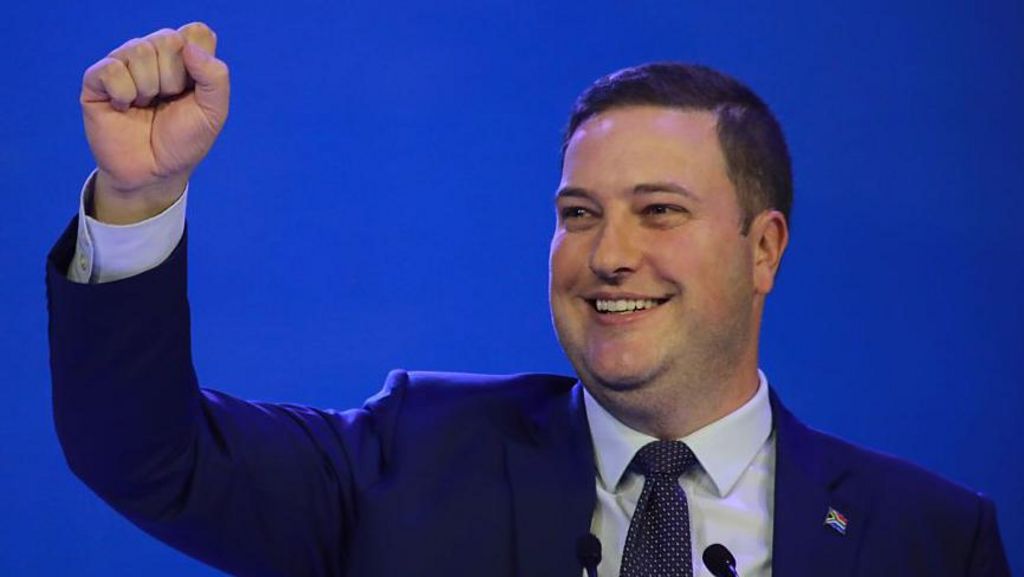
    On Sunday, South Africa’s main opposition Democratic Alliance (DA) ushered in a new political chapter with the election of 39-year-old Geordin Hill-Lewis as its national leader, tasking him with solving a decades-old impasse that stumped all three of his immediate predecessors: breaking the party’s longtime reliance on narrow core support drawn primarily from white voters and other racial minority groups.

    Nearly 30 years after the formal end of apartheid in 1994 and the birth of South Africa’s multiracial “Rainbow Nation” project, deep racial fault lines still shape the country’s political landscape. For the DA to eventually claim national power, Hill-Lewis — who succeeded outgoing leader John Steenhuisen — must build bridges across these divides and win meaningful support from the country’s Black majority, who make up roughly 80% of the total population.

    Since the 2014 general election, the DA’s national vote share has stagnated at roughly 20%. The 2024 national election marked a major political shift, as long-ruling African National Congress (ANC) saw its support drop below 50% for the first time since the end of apartheid, forcing the party into a fragile national coalition government that includes the DA and eight smaller political parties. However, the DA’s entry into national power masked its persistent demographic gap: the party still only secured just under 22% of the national vote.

    Hill-Lewis has openly acknowledged the party’s trust deficit with majority Black voters. In an interview with public broadcaster SABC on Monday following his election, he emphasized that closing this trust gap would be his top priority. Speaking to reporters shortly after, he made clear that winning the confidence of more Black South Africans would be a “main focus of mine.”

    The new DA leadership ticket offers a notable shift from previous iterations: Hill-Lewis was elected alongside senior Black politicians including Gauteng provincial party leader Solly Msimanga, Siviwe Gwarube and Solly Malatsi, creating what Hill-Lewis described as “by far the most diverse and young group of leaders the DA has had in its history.” Notably, Gwarube is the only woman to secure a senior leadership position, leaving significant gender imbalance unaddressed in the new party hierarchy.

    This push for greater racial diversity comes after a high-profile failed effort a decade prior. The party’s first Black leader, Mmusi Maimane, resigned from his post in 2019 after just four years in office, claiming the DA was “not the vehicle best suited to take forward the vision of building” a united South Africa.

    Hill-Lewis argued that longstanding rigid racial political silos in South Africa are beginning to fracture, a trend he called encouraging. On policy, the new leader has not yet released a new policy platform designed to broaden the party’s base, but he has signaled he will double down on messaging around government competence and addressing South Africa’s crippling crime crisis. He also clarified the DA’s stance on the ANC’s flagship Black Economic Empowerment (BEE) policy: the party remains opposed to the current framework, but is committed to demonstrating it is genuinely invested in advancing the economic interests of Black South Africans.

    Political observers have framed the new leadership lineup as a promising turning point for the DA. Dr Levy Ndou, a political analyst, noted that Hill-Lewis’ election alongside a cohort of young, diverse leaders “ushers in a new era” and could prove to be a “very good thing” for the party. Ndou added that while race has always been a defining challenge for the DA, the new leadership slate finally “resembles a party that is multiracial.”

    A notable break from his predecessor’s path, Hill-Lewis — who currently serves as mayor of Cape Town — has chosen not to accept a cabinet position in the current ANC-led coalition government, opting to retain his local government post. This unusual positioning puts him in a unique political position: he must navigate the DA’s fraught working relationship with the ANC in national government while leading the party into upcoming local government elections, expected to take place between late 2026 and early 2027, where the DA will campaign directly against the ANC across much of the country.

    The DA has long been a fierce critic of the ANC on economic and foreign policy, and the uneasy national coalition has already faced multiple major hurdles, though both parties have so far managed to maintain the power-sharing arrangement.

    A veteran of DA politics who joined the party at just 18 years old, Hill-Lewis has been groomed for top leadership within the organization for nearly two decades. Fellow political analyst Sandile Swana described him as a product of the DA’s internal leadership pipeline. Hill-Lewis first made political history in 2011, when he was elected to parliament at 24, becoming the youngest lawmaker in South Africa at the time. A decade later, he again made history when he was elected as Cape Town’s youngest ever mayor.

    While he has ruled out a cabinet post for himself, Hill-Lewis made clear he intends to maintain strict oversight of DA politicians serving in the coalition cabinet, announcing that performance reviews will be carried out in the coming months. “No-one is entitled to any office or position. It must be earned through performance,” he said, adding that leadership changes will be made if performance does not meet expectations.

  • Ghana appoint ex-Man Utd assistant Queiroz as coach

    Ghana appoint ex-Man Utd assistant Queiroz as coach

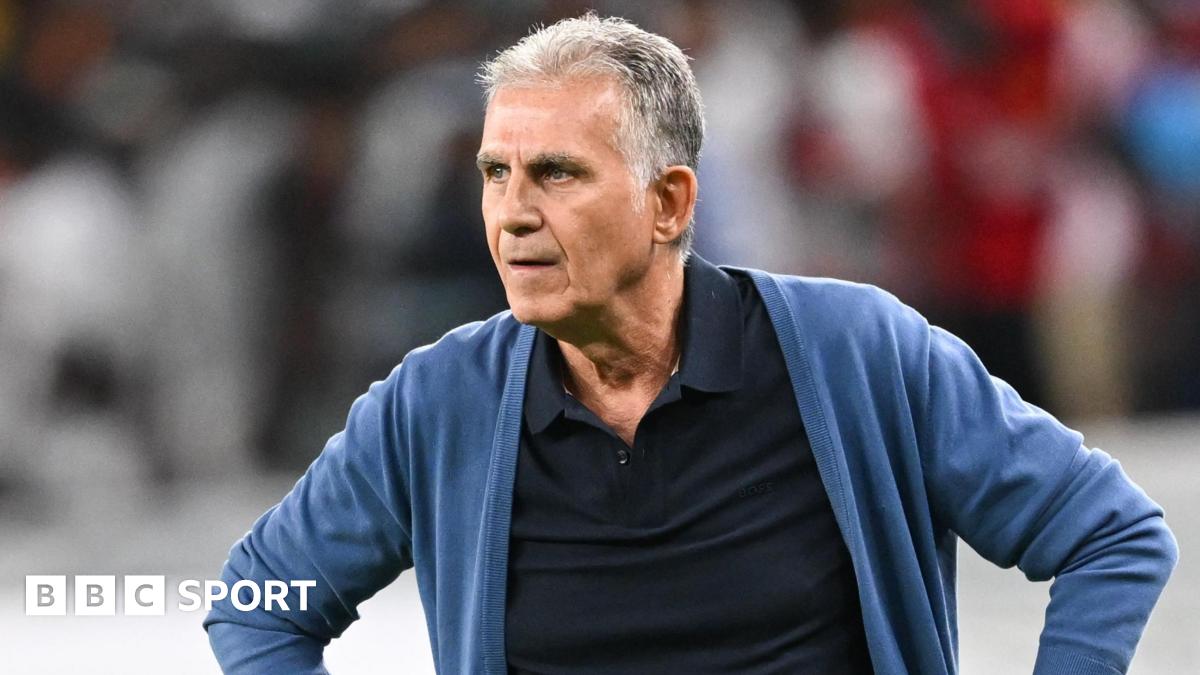
    Veteran football tactician Carlos Queiroz, a familiar name in top-tier global football management, has been named the new head coach of Ghana’s men’s national team, the Black Stars, as they prepare for the 2026 FIFA World Cup co-hosted by the United States, Canada and Mexico this summer. The 73-year-old Portuguese coach steps into the role vacated by Otto Addo, who was dismissed from the position on March 31 following underwhelming results that included back-to-back friendly losses to Germany and Austria, as well as a stunning failure to qualify for the 2025 Africa Cup of Nations.

    Queiroz brings decades of elite coaching experience to the Ghanaian side, with a resume that includes two separate stints as assistant manager to Sir Alex Ferguson at English Premier League giants Manchester United. His first spell at Old Trafford ran from 2002 to 2003, and he returned to the club between 2004 and 2008, a tenure that separated his time as head coach of Spanish powerhouse Real Madrid. Most recently, Queiroz held the top job with Oman’s national team, but he departed the role last month after the side failed to secure a spot at the 2026 World Cup.

    Born in Mozambique, Queiroz is no stranger to the World Cup stage: if he leads Ghana through this summer’s tournament, it will mark his fifth appearance as a national team head coach at football’s biggest global event. He previously guided Portugal to the round of 16 at the 2010 World Cup, and led Iran at the past three consecutive editions of the tournament. Beyond these roles, Queiroz has held senior coaching positions with national teams across four continents, including stints with Egypt, Japan, Colombia and South Africa, and he first took charge of the Portuguese national team in the early 1990s.

    In a statement announcing his appointment, Queiroz emphasized his commitment to the new role, saying: “I accept this mission with the same passion and commitment that have guided me throughout my career. Ghana is a nation of talent, pride, and footballing soul. I arrive with respect for its history and belief in its future.”

    Ghana has been drawn into Group L for the 2026 World Cup, and will kick off its tournament campaign against Panama on June 17. The side will then face back-to-back tough matches against England on June 23 and Croatia on June 27 as it vies for a spot in the knockout stage of the competition.

  • Senegal has first conviction under law toughening punishment for homosexual acts

    Senegal has first conviction under law toughening punishment for homosexual acts

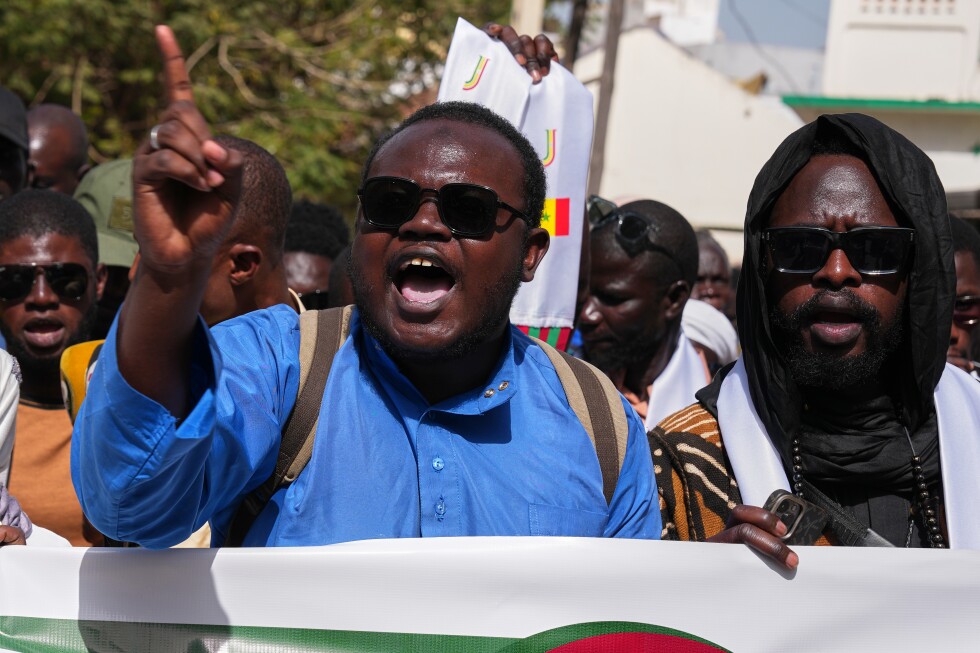
    In a landmark and deeply concerning ruling that marks a turning point for LGBTQ+ rights in West Africa, a Senegalese court has handed down the first conviction under a controversial new legislation that drastically escalates criminal penalties for same-sex relations between consenting adults. \n\nThe conviction was issued Friday by a court in Pikine-Guédiawaye, a densely populated suburb of the Senegalese capital Dakar. The defendant, a 24-year-old laborer whose identity has not been released to the public, was arrested earlier this month on charges of “acts against nature and public indecency.” Following the hearing, the judge sentenced him to six years of imprisonment and ordered a fine of 2 million CFA francs, equivalent to roughly 3,300 U.S. dollars.\n\nAs a majority-Muslim nation of 17 million people, Senegal joins a growing wave of African countries that have moved in recent years to enact harsher restrictions targeting members of the LGBTQ+ community. The new law, enacted earlier this year, raises baseline prison sentences for same-sex activity to a range of five to 10 years, a major increase from the previous penalty structure.\n\nBeyond criminalizing consensual same-sex relations, the legislation also introduces punitive measures for what the text describes as the “promotion” or “financing” of homosexuality. Rights advocates widely view this provision as a deliberate attempt to shut down civil society organizations that provide support, legal aid, and healthcare access to sexual and gender minorities across the country.\n\nIn an interview with the Associated Press on Monday, Larissa Kojoué, a researcher with global rights organization Human Rights Watch, warned that the new law has already fostered a pervasive atmosphere of “constant fear” for LGBTQ+ Senegalese. Kojoué added that law enforcement arrests targeting queer people have become far more aggressive, noting that officers now operate with explicit backing from the country’s state apparatus.\n\nThe conviction in Senegal fits into a broader, disturbing pattern of anti-LGBTQ+ policy across the African continent. Currently, more than half of the continent’s 54 sovereign nations — 32 in total — retain laws that criminalize consensual same-sex sexual acts. In several countries, including Somalia, Uganda, and Mauritania, individuals convicted of homosexual acts can legally be sentenced to death.