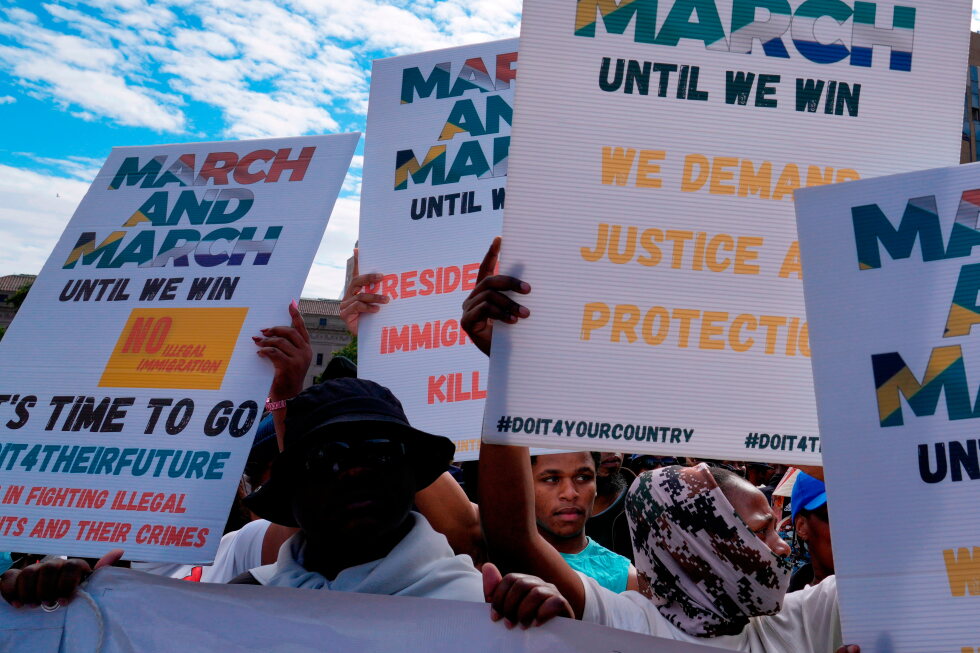
CAPE TOWN, South Africa – As anti-immigrant demonstrations and anti-foreigner sentiment spread across Africa’s most industrialized economy, South African President Cyril Ramaphosa has pledged to address widespread public concerns over unauthorized migration, following multiple reports of targeted xenophobic violence that have drawn condemnation from neighboring nations. In a nationally televised address dedicated exclusively to the escalating crisis, Ramaphosa acknowledged the deep social and economic tensions that have pushed migration to the top of the national political agenda, a moment that comes after protest groups demanding stricter border controls issued a June 30 deadline for all undocumented foreign nationals to leave the country and formally requested negotiations with the sitting government.
South Africa carries a long, painful history of violence rooted in anti-migrant anger, most infamously a 2008 wave of xenophobic assaults that left more than 60 foreign-born residents dead, according to documentation from international human rights organizations. In recent months, organizations calling for a sweeping government crackdown on unauthorized immigration have gained significant public traction through a rolling series of nationwide protests, framing the presence of undocumented migrants as a direct strain on South Africa’s already struggling public systems. Protesters argue that unauthorized workers are worsening the country’s already record-breaking unemployment rate, which already sits at cripplingly high levels, while adding unmanageable pressure to overburdened public health and education services that struggle to serve South Africa’s 62 million citizens.
In his address, Ramaphosa conceded that the frustrations driving these protests hold legitimate weight. “Many South Africans are raising difficult but legitimate questions,” he stated. “These concerns are real. They deserve to be heard, and they deserve to be addressed.” But the president drew a clear line between public grievance and vigilantism, emphasizing that the government would not tolerate private groups taking enforcement of immigration law into their own hands. “Only authorized government officials can act against violations of our law,” he added, issuing a warning that a number of activist groups were deliberately inciting social unrest and stoking intercommunal tension.
There are currently no official government statistics quantifying the total number of undocumented migrants residing in South Africa, but independent estimates place the population between 2 million and 5 million. For decades, South Africa’s status as the most economically developed nation in Southern Africa has made it a magnet for migrant workers fleeing economic instability and political unrest across the continent, with large migrant communities hailing from neighboring states including Zimbabwe, Mozambique and Lesotho, as well as further afield nations such as Nigeria, Ghana, Malawi and Ethiopia.
In recent weeks, multiple source countries have spoken out after confirming their citizens have been targeted in violent xenophobic attacks. Last month, Ghana completed the repatriation of roughly 300 of its citizens from South Africa, and announced it would offer additional voluntary return trips for any Ghanaian nationals facing threats to their safety. Earlier this week, the Mozambican government confirmed that five of its citizens were killed in suspected xenophobic attacks in Mossel Bay, a coastal town on South Africa’s southern shore.
Since South Africa’s current coalition government took office in 2024, immigration policy has been a central priority for the administration. Government data shows that more than 100,000 undocumented migrants have been deported over the past two years, and Ramaphosa confirmed Sunday that border enforcement officials turned away roughly 450,000 people attempting to cross into South Africa without valid documentation over the past 12 months. The president admitted that South Africa’s previous migration management framework suffered from critical “weaknesses,” and pledged that the current government would take “decisive” action to reform the system. Even as he promised action, Ramaphosa issued a national appeal for unity, urging South Africans not to turn against one another amid the ongoing debate over migration policy.