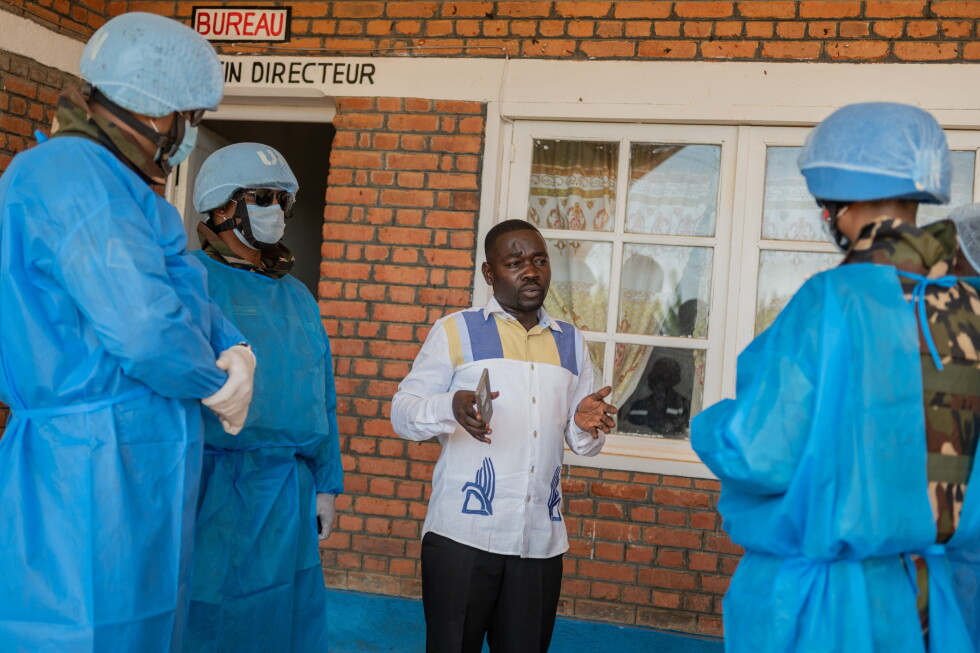
In the gold-mining town of Mongbwalu, located in the eastern Democratic Republic of the Congo’s Ituri province, a devastating Ebola outbreak of the rare Bundibugyo strain has spread unchecked for weeks, overwhelming local healthcare workers who already face systemic challenges that threaten both their work and their lives. At the heart of the response is Mongbwalu General Referral Hospital, where medical director Dr. Richard Lokudu has spent every working hour treating a steady stream of infected patients — even responding to suspected case alerts in the dead of night — yet he has received almost no compensation for his frontline work.
This outbreak, which health authorities trace back to Mongbwalu’s bustling mining sector, caught regional officials completely off guard after spreading silently through communities for more than a month before detection. Today, it has become one of the deadliest Ebola events the country has faced in recent years, with Congolese health officials confirming 452 total cases and 82 deaths as of reporting. A single day this week saw 71 new infections, a marker that officials say confirms widespread active transmission across local communities.
Mongbwalu’s unique economic and living conditions have created the perfect environment for Ebola, which spreads through close contact with infected bodily fluids including blood, sweat, feces, and vomit, to multiply rapidly. Thousands of migrant gold miners flock to the town to work in dangerous, cramped pit and cave mines, then reside in overcrowded informal camps with limited access to clean water, sanitation, or basic health guidance. Compounding this risk is widespread community skepticism about the virus, with many residents distrusting medical authorities and avoiding care — a trend that has already cost the lives of multiple frontline health and response workers who were exposed while trying to contain the spread.
For the workers on the ground, the daily struggle extends far beyond the risk of infection. Many have gone months without pay or promised hazard allowances, even as they sacrifice all personal time to respond to the crisis. “During the first week, we did not even have time to go home and eat. The second week was the same. We only eat once a day, what amounts to breakfast in the evening,” explained Alice Bamuhinga, a nurse at the Mongbwalu hospital. Dr. Lokudu echoes the frustration of his colleagues, noting that frontline teams deserve fair compensation and regular pay for the risks they take. “It is one thing to be far away and hear statistics being reported, but what is happening on the ground is enormous. People are sacrificing their rest and comfort for this cause. There should be recognition that they deserve compensation,” he said. To date, the Congolese government has not responded to requests for comment on the delayed payments.
The outbreak is also being fought with almost no dedicated resources, years of underinvestment in the country’s public health system have left regional facilities ill-equipped to handle a large-scale infectious disease event. Unlike more common Ebola strains, the Bundibugyo variant has no approved vaccines or targeted treatments, leaving clinicians only able to manage patients’ symptoms as they wait for outcomes. When the outbreak was first officially confirmed by the Congolese Ministry of Health on May 15, local hospitals had no ability to test for the specific strain — a gap that allowed the virus to gain a critical foothold, according to World Health Organization Director-General Tedros Adhanom Ghebreyesus. International aid groups have scrambled to deploy support to the region, but critical supplies including personal protective equipment, masks, gloves, boots, and symptom-managing medications were in acute short supply in the critical early weeks of the response.
“There has been an erosion of the health system. There has not been investment in the health system, and this has been going on for years,” said Heather Kerr, country director for the International Rescue Committee in Congo.
Even as the outbreak worsens, frontline workers continue to navigate barriers that extend beyond resource gaps. Ongoing conflict between the Congolese government, the Rwanda-backed M23 rebel group, and Islamist militant factions has restricted movement into affected communities, leaving many response teams unable to reach remote areas to investigate new case alerts. “Despite the alerts we receive and the teams we have on site, we lack the means to travel into the field. As a result, there are alerts we are unable to investigate,” Dr. Lokudu explained.
For many local residents, the outbreak has already brought irreversible loss. Asero Jeanne, a 52-year-old Mongbwalu resident, lost two of her five children to Ebola within two weeks after community misinformation led her family to avoid hospital care at first. Neighbors told the family anyone who sought treatment at the hospital would die immediately, and the family initially mistook her daughter’s symptoms for malaria. After three weeks of shifting between home care and delayed hospital treatment, her daughter died, followed days later by her son. Jeanne ultimately contracted the virus herself but survived, one of at least five confirmed recoveries reported by the Congolese government. “I saw about 20 people die. I watched them being taken to the morgue, yet God is allowing me to leave here alive. I thank the doctors,” she said.
In response to the growing crisis, Tedros announced a $518 million international response plan Friday to contain the outbreak, noting that “containing Ebola depends on political commitment, sustained financing, and the trust and engagement of communities.” For frontline workers like Dr. Lokudu, however, the immediate need remains clear: fair pay, adequate resources, and the support required to stop an outbreak that is currently spreading faster than their existing capacity to treat it.