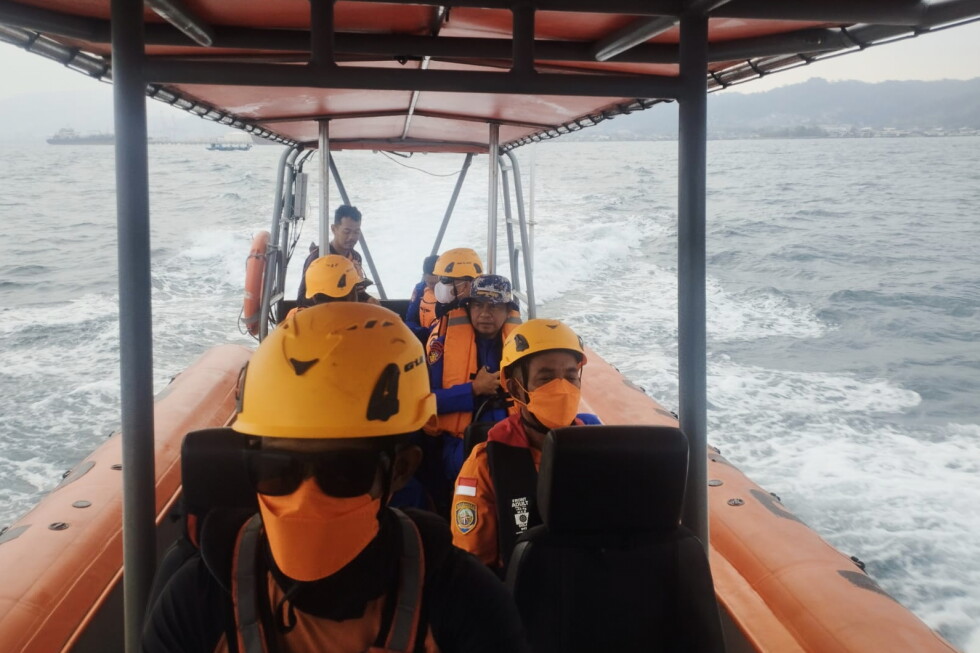
JAKARTA, Indonesia – Indonesian search and rescue teams have launched an urgent operation to locate eight people missing at sea after their vessel failed to return from a reporting trip to the erupting Anak Krakatau volcano, regional disaster officials confirmed Wednesday.
Al Amrad, head of Banten province’s Search and Rescue Office, told reporters the missing group includes five photojournalists, two boat crew members, and one local route guide. The team departed Carita, a coastal town in Banten, on Monday aboard a speedboat bound for the volcanic island, which sits in the busy Sunda Strait separating Indonesia’s main islands of Java and Sumatra.
The final communication from the expedition came at 6:13 p.m. Monday, when a journalist on board sent a message to a relative confirming the group had reached the waters surrounding Anak Krakatau. No contact has been established with the team since that transmission. Their last known position was roughly 18.5 kilometers, or 11.5 miles, from the mainland coast. Search operations were formally launched Tuesday, but as of Wednesday, rescuers have not been able to locate the vessel or determine its fate, Amrad added.
The five missing journalists hold assignments for a range of domestic and international media outlets, including Indonesia’s national state news agency Antara, Turkey’s global news service Anadolu Agency, and multiple other local and foreign organizations.
Anak Krakatau’s most recent active phase began with a major initial eruption that concluded Sunday, though the volcano has continued to produce intermittent blasts that hurl lava, thick ash, and superheated volcanic rock from its open crater. The initial eruption event triggered widespread disruption across western Indonesia, forcing temporary closures of regional airports Sunday and Monday. The closures upended travel plans for more than 341,000 passengers, with disruptions recorded for nearly 2,961 total flights, 622 of which were international services. In response to falling volcanic ash, national education authorities also permitted affected schools to switch temporarily to remote online learning to protect students from respiratory hazards.
Geologically, Anak Krakatau – meaning “Child of Krakatau” – formed from the volcanic remnants of the original Krakatau volcano, whose catastrophic 1883 eruption destroyed most of the original landmass and sent enough ash into the stratosphere to trigger temporary global cooling. In 2018, another major eruption of Anak Krakatau triggered a devastating tsunami that swept across coastal areas of Sumatra and Java, killing at least 430 people. The volcano has been classified at Indonesia’s second-highest volcanic alert level since July, with official warnings barring residents, visitors, and commercial fishing vessels from entering a 3-kilometer (1.9-mile) exclusion zone around the active crater.
Indonesia sits along the Pacific Ocean’s seismic “Ring of Fire,” the horseshoe-shaped belt of tectonic faults that accounts for the vast majority of the world’s earthquake and volcanic activity. The country is home to more than 120 active volcanoes, making volcanic eruptions a recurring natural hazard for communities across the archipelago.
This report included contributions from Associated Press journalists Fadlan Syam in Jakarta and Edna Tarigan in Surabaya.