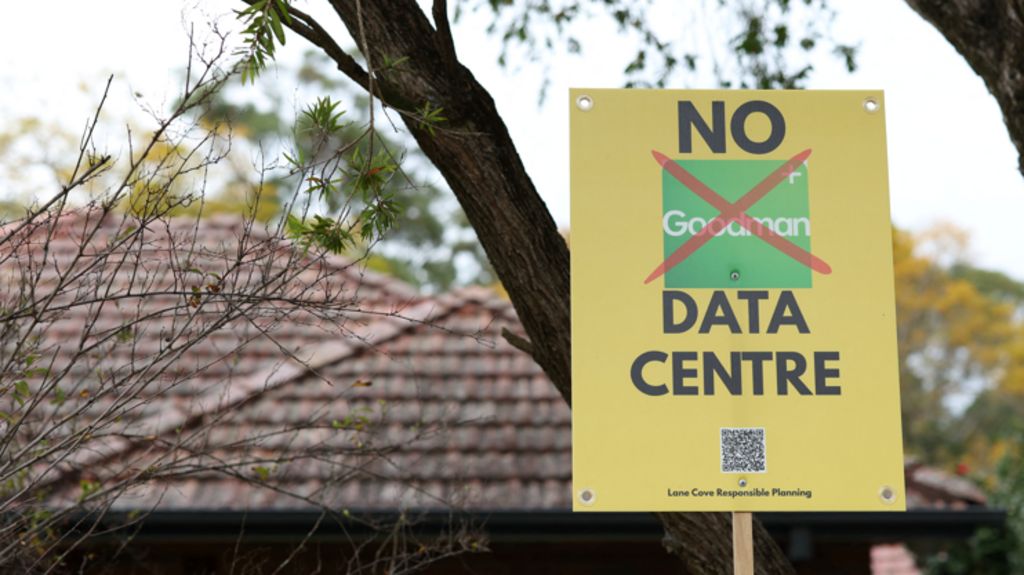
A proposed A$1.2 billion ($841 million) data centre development just meters from residential homes in Sydney’s Lane Cove suburb has been officially canceled, after months of coordinated pushback from local residents and advocacy groups. The project, codenamed Project Mars, was spearheaded by Australia’s largest property firm Goodman Group, which had planned to build a 90-megawatt facility just 20 meters from the nearest occupied home.
Goodman Group confirmed its withdrawal of the development application in an official letter addressed to the New South Wales Department of Planning, marking a major victory for local community organizers who had rallied against the proposal since planning kicked off in early 2025. The controversial project drew widespread public pushback during the official consultation period: of the 374 public submissions received, only nine expressed support for the build. Local news outlet In the Cove reports this is the largest volume of submissions ever recorded for a data centre development application in the state.
The cancellation of Project Mars lays bare a growing national tension in Australia over the rapid expansion of data centre infrastructure, a boom driven by the global surge in generative AI adoption over the past several years. Australia has emerged as a top global destination for new data centre construction, thanks to its abundant available land, vast clean energy resources, and substantial natural gas reserves. The federal and state governments have actively courted investment from global AI and technology firms seeking to host new infrastructure, positioning the country as a regional hub for AI operations.
Yet the rapid influx of large-scale data centre projects has sparked fierce pushback from local communities across the country. These facilities are notoriously energy and water-intensive, and their construction near residential areas often brings prolonged disruption to daily life, noise pollution, and strain on local utility networks. The Lane Cove dispute has become a high-profile example of this growing friction, as communities push back against unplanned development near populated neighborhoods.
In its statement withdrawing the application, Goodman Group noted that since it began planning in March 2025, it had completed extensive technical studies, held stakeholder talks, and participated in required community consultation. The company added that both shifting policy and regulatory frameworks for large-scale data centre development, and the clear opposition expressed by the local community, led it to the decision to abandon the project.
The withdrawal comes just one month after the New South Wales state government unveiled a new fast-track approval program designed to speed up data centre development. Under the scheme, qualifying projects that meet strict industry standards and commit to funding expanded local water and energy infrastructure will receive planning approval within just 75 days, a move intended to attract more technology investment to the state.
Anthony Roberts, the New South Wales Legislative Assembly member who represents Lane Cove, celebrated the cancellation in a post on the Lane Cove Responsible Planning Group Facebook page, calling the outcome “a huge win for the Lane Cove West community.” He emphasized that the victory sends a clear message to future developers: appropriate site selection and community input are non-negotiable for large-scale projects.
“Data centres have an important role to play, but developments of this size and scale need to be appropriately located and planned with the surrounding community in mind,” Roberts said.