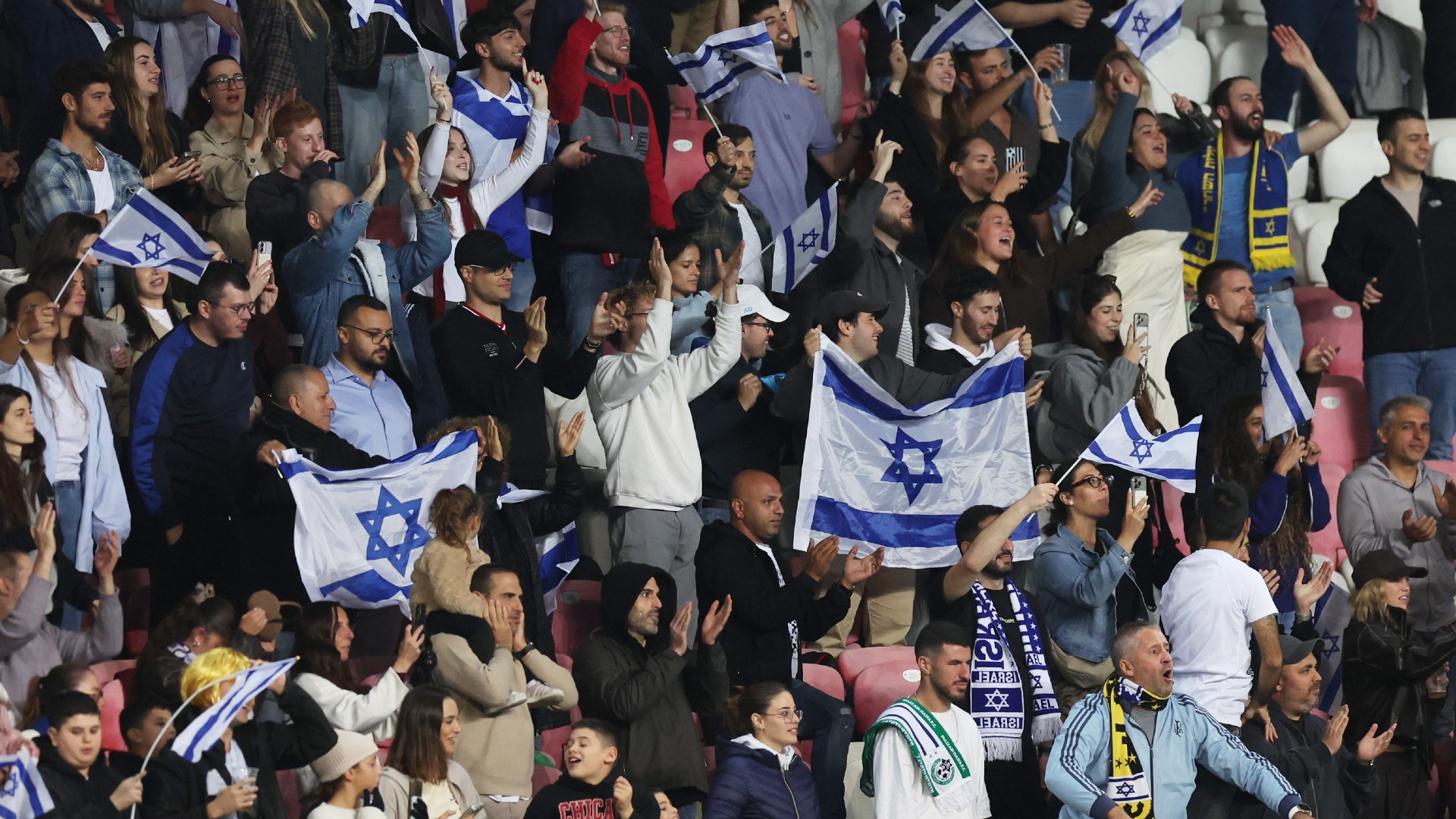
A lopsided 3-0 defeat for Israel at the hands of the Republic of Ireland in a UEFA Nations League fixture has sent shockwaves through Israeli football, triggering immediate calls for the head of the national team to step down. The match, held Sunday in Debrecen, Hungary after Israel was forced to play its home fixture outside the country due to ongoing conflict, has become far more than just a sporting result, with recriminations flying over both on-field performance and geopolitical context.
Ireland’s squad had considered boycotting the match over the Israel-Hamas war in Gaza, only confirming their participation 24 hours before kickoff. Irish goalkeeper Gavin Bazunu withdrew from the squad at the eleventh hour, publicly citing his opposition to what he called “atrocities in the region”. Pre-match tensions boiled over when the two teams refused to exchange handshakes before kickoff, and Irish players wore black armbands to honor all civilian lives lost in the Gaza conflict, while they bowed their heads during the playing of Israel’s national anthem, according to Ireland’s national broadcaster RTE.
The match itself was over by halftime, with Irish forwards Troy Parrott, Adam Idah, and Jack Moylan all finding the back of the net to put Ireland 3-0 up before the break. Played in front of a largely empty stadium, the result was a humiliation for an Israeli side that many within the country had framed as a chance to push back against Irish criticism of the country’s military campaign.
After the final whistle, Irish manager Heimir Hallgrimsson defended his team’s pre-match stance and praised their performance. “In tough times, that’s where you find your leaders, that’s where characters step up,” he told RTE. “I think everybody that has watched the game saw proud Irishmen fight for their nation.” Hallgrimsson had sparked fury from the Israel Football Association (IFA) before kickoff with comments that “We’re not playing with genocide, we’re playing against genocide. We’re playing against Israel, we’re not playing with Israel.” The IFA dismissed his remarks as the product of “stupidity, ignorance and hypocrisy”.
Israeli head coach Ran Ben-Shimon quickly took public responsibility for the humiliating loss. “I truly apologise to the people who sat at home expecting to see a fighting team,” he told Israeli media after the match. “I’m ashamed of what I saw, but the responsibility is mine and not the players.” Daniel Peretz, Israel’s starting goalkeeper and a current Southampton FC player, echoed his coach’s sentiment, apologizing on behalf of the entire squad. “I’m ashamed of how we looked,” he said, adding that he believed Ireland’s anti-Israel stance stemmed from “ignorance”.
Israeli outlet Sport 5 reported that Ben-Shimon held an unusual closed-door meeting with his players in the dressing room after the match, where he told the squad “We embarrassed ourselves and the fans in Israel”. Looking ahead, Ben-Shimon said the team could only make amends by picking up victories in their upcoming two fixtures: a match against Kosovo on Thursday, followed by the return Nations League fixture against Ireland next Sunday.
That return fixture was originally scheduled to be held in Ireland, but the Football Association of Ireland relocated it to Backa Topola, Serbia, a country whose government maintains close diplomatic ties with Israel, over fears of large anti-Israel protests in Ireland.
While Ben-Shimon still retains the public support of IFA chairman Shino Zuaretz, unnamed IFA sources told Israeli news site Ynet that the association would push for Ben-Shimon’s resignation or dismissal once the current international match window concludes. Israeli football commentators have been almost uniform in their criticism of Ben-Shimon’s pre-match preparation and in-game tactical decisions, framing the defeat as one of the most embarrassing moments in the history of Israeli national football.
Former Israeli international Avi Nimni wrote for Israeli sports outlet One on Monday that the result left him with “sleeplessness, shock, a feeling of dizziness combined with deep disappointment” after what he called an “unthinkable disastrous display”. “We suffered a deadly knockout that will echo forever in all our hearts,” Nimni wrote, adding that full blame for the defeat lay with Ben-Shimon. If no changes are made quickly, Nimni argued, Ben-Shimon’s tenure will only be remembered as “a disgrace that will never be erased”.
Ynet columnist Guy Leiba pointed out that the entire public build-up to the match focused on responding to Ireland’s political stance and “teaching them a lesson”, but noted that “to prove something on the pitch, you need to know how to play football”. Nadav Yaacobi, writing for Sport 5, called Israel’s first-half performance “one of the most shameful and embarrassing halves in the history of the Israeli national team”, even without factoring in the charged national context surrounding the fixture.
Another former Israeli international, Omri Afek, framed the defeat as a national letdown. “An entire country sat and waited to see that our football players and our national team were also capable of rising to the occasion and showing that there are good things in our country,” Afek told Sport 5. He added that Israelis had been counting on the team to demonstrate that no one could “touch such exposed nerves” without a strong response, saying “This was an opportunity to give our country the evening it needs”.