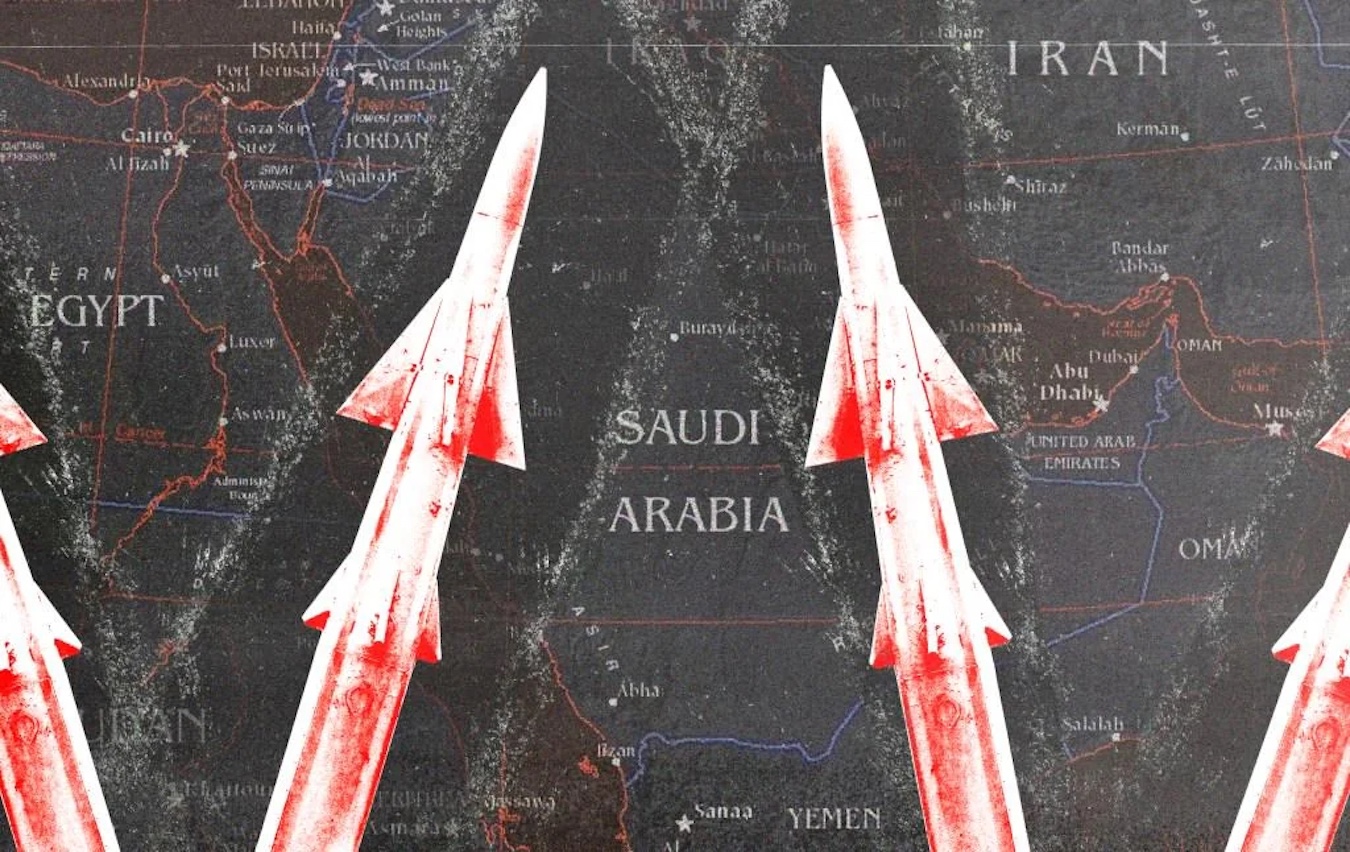
A proposed civilian nuclear cooperation agreement between the United States and Saudi Arabia has become one of the most divisive geopolitical flashpoints of 2026, exposing deep rifts between Washington’s stated nonproliferation goals and Riyadh’s long-term strategic ambitions amid a rapidly shifting Middle Eastern security landscape.
This month, The Washington Post published an exclusive report revealing that a classified U.S. intelligence assessment shared with Congress confirms Saudi Arabia has not closed the door on developing an indigenous nuclear weapons program. The disclosure has amplified bipartisan alarm among U.S. lawmakers over the nuclear pact championed by former President Donald Trump’s administration, which was finalized in July 2026 as part of a broader push to counter growing Chinese and Russian influence in the Persian Gulf region.
Under the terms of the multi-billion-dollar agreement, Saudi Arabia will initially cap uranium enrichment at below 5% — a level standard for civilian energy production — but will be permitted to raise enrichment to 20% in the future without first joining the International Atomic Energy Agency’s (IAEA) Additional Protocol. That framework requires far more intrusive, comprehensive inspections to verify no diversion of nuclear material for military uses.
Democratic members of Congress and leading nonproliferation experts have roundly criticized the terms, warning the agreement creates an unobstructed pathway for Saudi Arabia to produce weapons-grade fissile material. Critics warn this could trigger a regional nuclear proliferation spiral at a moment when tensions with Iran are already at breaking point following the outbreak of war between Iran and Israel in February 2026. Opponents have also raised allegations of conflicts of interest, pointing to ties between senior Trump administration associates, U.S. nuclear contractor Westinghouse Electric, and Trump’s senior adviser and son-in-law Jared Kushner.
While the U.S. State Department has defended the pact, arguing it upholds pragmatic nonproliferation standards, and Saudi Arabia has repeatedly insisted its nuclear program is exclusively for peaceful civilian energy use, congressional opponents have moved quickly to mobilize legislation to block the deal during a mandatory 90-day statutory review period. Political analysts widely expect any blocking measure to face a presidential veto, leaving its fate uncertain.
The roots of the current standoff stretch back years, long before the 2026 Iran war began. Saudi Crown Prince Mohammed bin Salman has openly stated for years that the kingdom will move quickly to acquire its own nuclear weapons if Iran successfully develops a nuclear device, a stance that has only hardened amid the ongoing regional conflict.
Consistent with this posture, Saudi Arabia has systematically leveraged U.S.-brokered normalization talks with Israel to secure permission for domestic uranium enrichment capabilities, even as it has developed Chinese-backed ballistic missile infrastructure. Riyadh has also openly warned Washington that it will turn to Beijing and Moscow for nuclear cooperation if the U.S. insists on strict nonproliferation safeguards.
This has left Saudi Arabia pursuing a deliberate dual-track hedging strategy: developing civilian nuclear energy while retaining the latent capacity to quickly build a nuclear weapon, a approach reinforced by Iran’s own steady progress toward weapons-grade uranium enrichment. While international sanctions and Saudi Arabia’s reliance on the U.S. security umbrella have deterred an immediate push for a nuclear weapon, the kingdom has retained all the technical infrastructure needed to accelerate production if it chooses.
The technical terms of the July 2026 agreement explicitly accommodate this latent capability. As nonproliferation analysts David Albright and Sarah Burkhard explained in an April 2026 report for the Institute of Science and International Security (ISIS), while 20% enriched uranium is not pure enough for a functional nuclear weapon, it is a critical stepping stone. Reaching the 20% threshold completes roughly 90% of the enrichment work required to produce 90% weapons-grade uranium. Albright and Burkhard note that just 200 kilograms of 20% enriched uranium can be quickly processed into the 25 kilograms of weapons-grade material needed for a single nuclear bomb. By allowing Saudi Arabia to reach this threshold without mandatory enhanced IAEA inspections, the agreement dramatically shortens the kingdom’s hypothetical “breakout window” to build a bomb, all under the cover of legitimate commercial energy development.
The February 2026 outbreak of full-scale war between Israel and Iran has already upended the core assumptions that shaped Saudi Arabia’s nuclear strategy, analysts note. In a July 2026 analysis for the Center for Strategic and International Studies (CSIS), researchers Michael Ratney and Abdullah Alhenaki argue that the war began without meaningful consultation from the U.S. — Saudi Arabia’s primary security guarantor — which completely reshaped Riyadh’s risk calculations. The conflict has turned the kingdom into a potential target for Iranian retaliation because of its ties to Washington and Israel, creating new vulnerabilities that did not exist when the original nuclear framework was negotiated. While heightened threats have reinforced Saudi Arabia’s reliance on U.S. air defense systems, Ratney and Alhenaki note that alignment with Israel’s war goals has magnified security risks for the kingdom without delivering any corresponding strategic benefits. When combined with Israel’s outright rejection of Palestinian statehood, the war has gutted the core rationale for Saudi diplomatic recognition of Israel, taking normalization off the table for the foreseeable future. This diplomatic stalemate has only pushed Riyadh to accelerate its efforts to diversify its foreign and security partnerships beyond Washington.
As Jean-François Seznec, a Middle East energy and geopolitics expert, argued in a September 2026 article for Responsible Statecraft, Saudi Arabia has grown increasingly frustrated with the U.S. habit of linking civilian nuclear cooperation to progress on Israeli normalization. In response, Riyadh has moved to build out an alternative security architecture, including the newly signed Mecca Agreement, a mutual defense pact with Pakistan and Turkey, alongside deeper strategic and economic ties with China.
China’s existing role in Saudi Arabia’s nuclear program is already well-documented. In August 2020, The Wall Street Journal reported that Riyadh had built an undisclosed uranium yellowcake extraction facility with technical assistance from Chinese state-owned nuclear firms, China National Nuclear Corp. and China Nuclear Engineering Group Corp., located near the northwestern city of Al Ula. The Saudi Energy Ministry has repeatedly denied the facility exists.
Faced with the reality that Saudi Arabia is already hedging toward China for nuclear and security cooperation, the Trump administration appears to have rewritten long-standing U.S. nonproliferation policy to retain influence in the kingdom. As Yoel Guzansky and Eldad Shavit argued in a July 2026 analysis for the Institute of National Security Studies (INSS), Washington has deliberately shifted its approach from preventing proliferation to managing long-term risk, using civilian nuclear cooperation as a tool to lock Saudi Arabia into the U.S. strategic orbit. Instead of insisting Riyadh abandon domestic fuel cycle capabilities — a demand that would almost certainly push Riyadh fully into the arms of Chinese and Russian nuclear suppliers — the U.S. is seeking to build decades-long institutional dependence through fuel supplies, technology transfers, workforce training and regulatory oversight. By positioning itself as the primary supplier and standard-setter for Saudi Arabia’s entire nuclear infrastructure, the U.S. retains critical transparency, operational leverage and inspection oversight to monitor any deviation from peaceful uses, counter geopolitical drift away from Washington and limit the risk of a sudden breakout to a nuclear weapon.
Despite this calculated strategic gamble, analysts warn the agreement carries severe structural risks for the entire Middle East. In a September 2026 analysis for the Observer Research Foundation (ORF), Cauvery Ganapathy argues that the U.S.-Saudi pact, which grants Riyadh a path to enrichment without standard IAEA Additional Protocol safeguards, is a clear example of strategic exceptionalism driven by great power competition. Ganapathy notes the deal exposes a stark double standard in U.S. policy, contrasting the loose terms for Saudi Arabia with the harsh scrutiny and sanctions imposed on Iran over its own nuclear program. She notes the concessions are strictly a product of U.S. national interest: Washington is willing to compromise on nonproliferation to counter Chinese influence, maintain long-term alignment with Riyadh, and pressure Saudi Arabia to resume normalization talks with Israel.
Most critically, Ganapathy warns that by waiving the requirement for Additional Protocol inspections, the U.S. could prompt other regional powers, most notably the United Arab Emirates, to demand renegotiation of their own 2009 “Gold Standard” nuclear agreements that explicitly ban domestic enrichment. By trading long-held nonproliferation principles for short-term transactional strategic influence, the U.S. risks triggering the very regional nuclear arms race it claims to be preventing. Far from locking Saudi Arabia into the U.S. orbit, the agreement allows Riyadh to leverage U.S. nuclear technology, Chinese diplomatic and military support, and the unstable regional security environment to build a sovereign nuclear weapons hedge that it can activate if its security needs change. In the long run, the pact could transform the Middle East from a region of managed nuclear deterrence into a volatile multipolar nuclear threshold zone, where regional powers set and pursue their own unrestricted nuclear agendas.