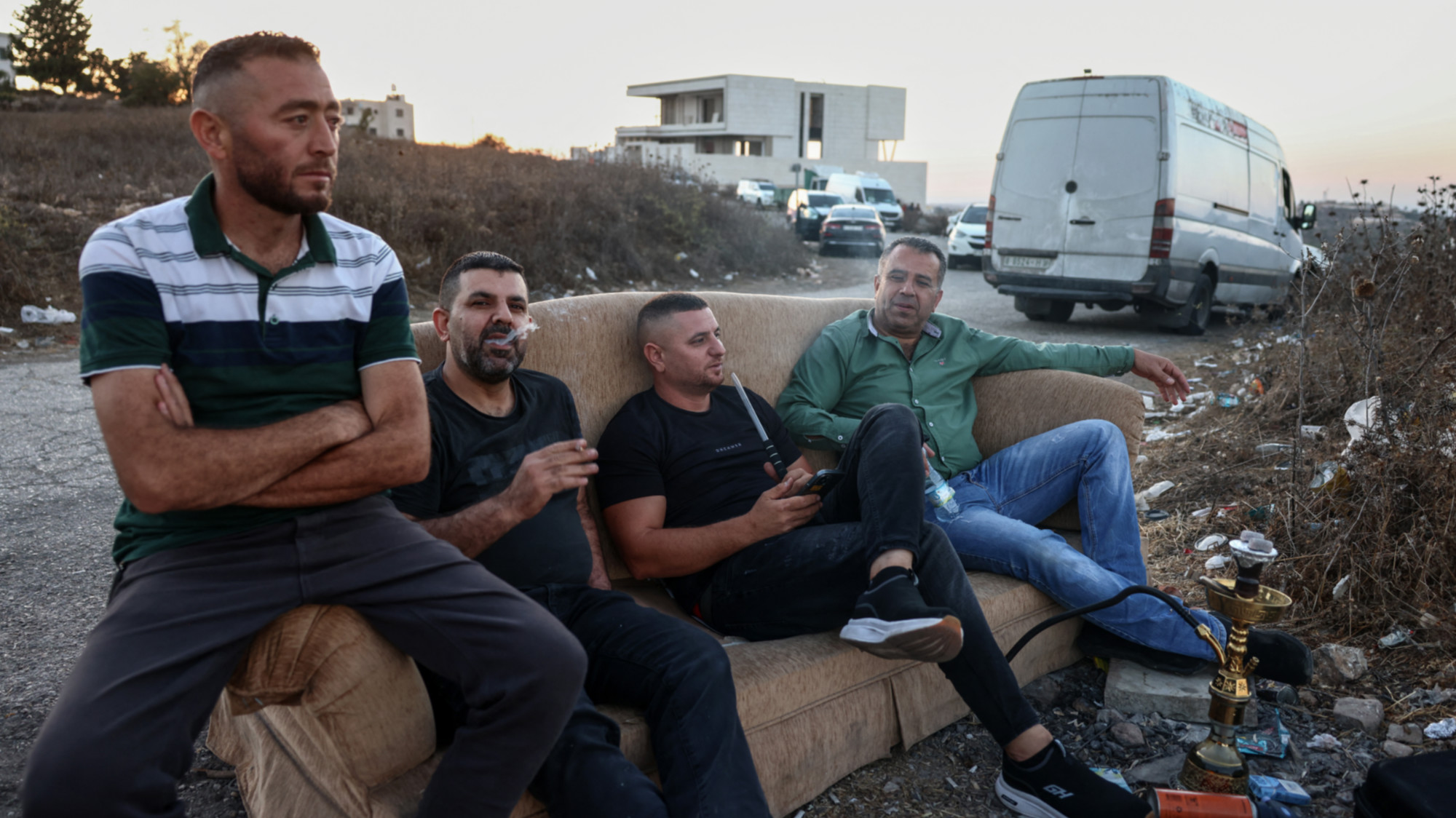
As the Jewish festival of Sukkot got underway on September 25, Israeli military forces have dramatically ramped up movement restrictions on Palestinian residents across the occupied West Bank, creating widespread disruption to daily routines and putting critical emergency medical services at severe risk. The enhanced security measures, which include a full territory-wide closure that will remain in effect until the holiday concludes on October 3, have seen Israeli troops block access to dozens of Palestinian towns and villages using iron barriers and large earth mounds, even on less-traveled secondary routes that many local residents rely on for daily travel.
Across the West Bank, existing permanent checkpoints have also seen sharply tightened security protocols, with some of the busiest crossing points — including the Atara and Ein Siniya checkpoints north of Ramallah, and the Jaba’ checkpoint northeast of Jerusalem — becoming major bottlenecks that leave Palestinians waiting for multiple hours to cross, particularly during morning and evening peak travel periods. These delays ripple across daily life: thousands of Palestinians who commute between communities for work, school, and family visits now face journeys that stretch from minutes to multiple hours, upending routine plans and leaving many stranded.
For Attaf Abu Aliya, a taxi driver based in the village of al-Mughayyir, located east of Ramallah, the new restrictions have turned his daily work into a prolonged ordeal. What would normally be a 30-minute drive from al-Mughayyir to the city of Ramallah now takes several hours to complete, with daily waits of four hours or more becoming routine. In an interview with Middle East Eye, Abu Aliya described how Israeli soldiers often hold up traffic for hours without conducting searches or allowing passage, an act he says is designed solely to make life harder for local Palestinians. “Students miss university classes, and everyone’s affairs are disrupted, all because of the whim of a single soldier,” he said. The situation grows even more volatile when Israeli settlers take control of checkpoints, he added: on multiple occasions, settlers have blocked traffic, smashed vehicle windows, and sprayed pepper spray on waiting passengers. Abu Aliya himself has been subjected to invasive searches and physical assault by soldiers during his waits at the checkpoint. “Our situation is truly tragic. That is the most accurate description of the lockdown and the tightened restrictions we are facing,” he said.
New data published on September 25 by the Palestinian Commission Against the Wall and Settlements underscores the scope of movement restrictions across the West Bank. As of this month, the organization counted 942 active checkpoints, closure points, and movement obstacles scattered across the territory. That total includes 824 permanent fixed checkpoints and closure locations, plus an additional 118 ad-hoc barriers such as earth mounds, dug trenches, and roadblocks that block access to community entrances. The United Nations has confirmed that restrictions have expanded beyond existing infrastructure in recent months, with new barriers erected regularly that further split apart connected Palestinian communities.
Beyond disrupting work and school, the tightened movement controls have created a life-threatening crisis for Palestinian emergency medical services, which require unimpeded access to patients across the West Bank. With most village and town entrances blocked and checkpoints creating hours-long backlogs, paramedic and ambulance teams face growing barriers to reaching time-sensitive emergencies and transporting critically ill patients to hospital care. Ahmed Jibril, director of the Emergency Medical Services Department at the Palestinian Red Crescent Society, told Middle East Eye that ambulances receive no priority or special exemption from the restrictions, and are often subjected to even more rigorous inspection protocols than civilian vehicles.
Just last week, Jibril said, an ambulance crew was blocked from reaching an elderly woman experiencing a medical emergency near Salfit by closed checkpoints and locked iron gates. By the time the crew was able to access the area via an alternate route, the woman had died. “Checkpoints might open after long waits, but the greater challenge lies in the iron gates, which are sometimes permanently closed,” Jibril explained. “We are forced to find rough, alternative routes, which affects how quickly paramedics arrive and, consequently, the lives of thousands of patients.” Jibril also added that Israeli soldiers regularly mistreat medical staff at checkpoints: in many cases, soldiers enter ambulances under the pretense of checking a patient’s condition, force all medical workers out of the vehicle, and confiscate the ambulance keys, causing further dangerous delays.
The United Nations Office for the Coordination of Humanitarian Affairs (OCHA) has long documented the widespread harm caused by these Israeli movement restrictions. The organization confirms that the controls systematically block Palestinian access to essential healthcare, education, employment, agricultural land, and other basic public services. Extended full closures like the one in place for Sukkot not only lengthen commute times and delay the delivery of humanitarian aid, but can also leave entire Palestinian communities isolated from critical services for days at a time.