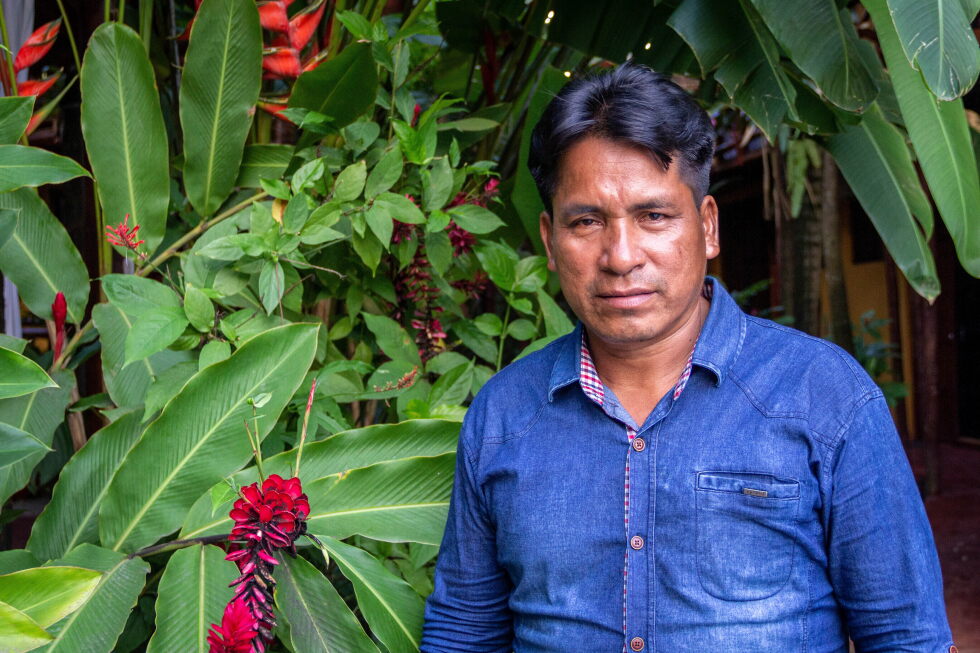
In a landmark ruling closely watched by environmental and Indigenous rights advocates globally, a Peruvian court has convicted four men of murder-for-hire in the November 2023 killing of Indigenous Amazon rainforest defender Quinto Inuma Alvarado, handing down stiff prison sentences that mark an unprecedented step toward ending impunity for violence against land and environmental activists in the region.
The convictions carry profound symbolic and legal weight, as they mark the first time in Peru’s history that such severe sentences have been issued for the killing of an Indigenous environmental defender. Genix Saboya Saboya and Limber Ríos Ruiz, the two men who directly carried out the attack, each received 35-year prison terms. Segundo Juan Villalobos Guevara, a local timber operator whom prosecutors proved ordered the assassination after Inuma publicly denounced his illegal logging operations, was sentenced to 28 years and four months in prison. Jerly Saboya Saboya, convicted as an accomplice in the plot, received a 15-year prison sentence. The court also ordered total compensation of nearly $300,000: roughly $223,500 for Inuma’s surviving family, and $74,500 for Axeldina Barbarán Tapullima, the companion who was shot and wounded during the attack. The convictions can still be appealed within five days of the defendants receiving the full written ruling.
Inuma, a 50-year-old leader of the Kichwa Indigenous community, was gunned down on November 29, 2023, while traveling by boat back to his home community of Santa Rosillo de Yanayacu in Peru’s northern Amazonian San Martin region. He was returning from a national gathering of environmental and land defenders when the attack occurred. For years, Inuma had led his community in documenting and denouncing illegal logging, drug trafficking, and outside encroachment on the community’s ancestral forest territory. Between 2016 and 2023 alone, community members filed 13 formal complaints with Peruvian prosecutors over environmental crimes and illegal activity on their land, according to the Lima-based Legal Defense Institute, which has supported the Inuma family and Indigenous organizations throughout the case.
Despite repeated warnings about threats to Inuma’s life, state protection failed. Peru’s Justice Ministry classified Inuma as high-risk in 2021 and ordered formal police protection for him and his brother, and local authorities issued official protection orders against illegal logging groups. But court documents cited by the Legal Defense Institute show police later admitted they could not conduct required preventive patrols in the remote Amazon territory, citing lack of funding for boats and extremely challenging terrain that limits state presence across much of the Peruvian Amazon.
The ruling came nearly three years, or 1,000 days, after Inuma’s assassination, following an eight-month trial that included on-site hearings in the Amazonian city of Tarapoto, where judges heard testimony from Inuma’s relatives, witnesses, and the attack’s surviving victim. Rights advocates say the lengthy sentences break a long pattern of impunity for killings of environmental and Indigenous defenders in Peru, which has one of the highest rates of violence against land activists in South America.
“This is a decisive step toward justice,” said Tom Younger, Peru program coordinator for the Forest Peoples Programme. “This ruling makes clear that impunity for killings of Indigenous defenders is not inevitable.”
Cristina Gavancho, a lawyer with the Legal Defense Institute, called the sentence “exemplary”, noting that it sets a critical precedent for future cases across the country. “This case is significant not only for the prison terms, but also because the court recognized the right to compensation for Inuma’s family and the survivor,” she said.
For Inuma’s family, the verdict brought a complex mix of relief and lingering grief. “We received the verdict with a mixture of happiness and sadness after waiting nearly three years for justice,” Kevin Arnol Inuma, the defender’s 30-year-old son, told the Associated Press. “Before, there was no response from the state, so attackers were not afraid to kill. Now this sets a precedent for Indigenous peoples, a precedent for environmental defenders. Although they can no longer give us our father back, we hope other families will not have to wait this long for justice. Now my father can rest in peace because justice has been done.” Even so, the family remains on edge: they still do not feel fully safe, and hold fears about the risk of those convicted being released in the future.
The gravity of the threat facing Indigenous Amazon defenders was underscored just 24 hours before the court issued its ruling, when another Indigenous leader was killed in a separate incident. Américo Pascuala Tomisha, a 57-year-old Ashéninka Indigenous leader and former head of the Onconashari Indigenous community, was shot dead Sunday while patrolling his community’s territory in Peru’s Ucayali Amazon region. Regional Indigenous organization ORAU reported that Pascuala encountered a group of outsiders illegally extracting copaiba oil from trees inside community land, and was killed in a confrontation after confronting the group. Pascuala had repeatedly reported incursions by outside settlers and illegal extractors before his killing, and ORAU has called on Peruvian authorities to launch a full investigation and expand protection measures for at-risk Indigenous leaders.
The killing came just weeks after Asháninka communities along the Peru-Brazil border issued urgent public warnings about armed incursions into their Indigenous territories. In July, Indigenous leaders in the Brazilian side of the border requested government protection after five armed men carrying machine guns entered their territory, threatened resident families, and searched for community leaders. In response to the rising cross-border violence, Brazil and Peru recently announced an agreement to strengthen joint cooperation to protect Indigenous territories along their shared Amazon border.
Inuma’s killing has become a symbol of the systemic risks facing Indigenous people who protect the Amazon, a region where illegal logging, unregulated mining, drug trafficking, and land grabbing have expanded rapidly into remote territories that lack consistent state presence. Environmental and human rights groups say while this ruling marks an important turning point, it also highlights how much work remains to protect at-risk defenders and prevent future killings in one of the world’s most critical carbon sinks and biodiversity hotspots.