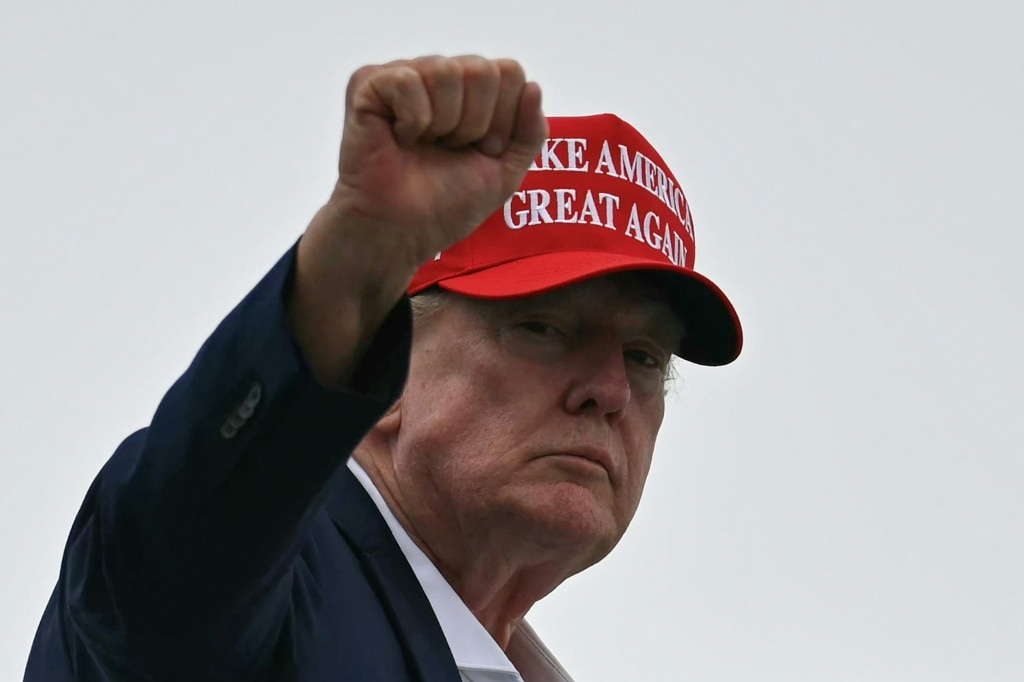
Six months after launching a military offensive against Iran that he predicted would end in a rapid, decisive victory, U.S. President Donald Trump has increasingly avoided discussing the ongoing conflict, shifting between boredom and outright denial as the war drags on and becomes a growing political liability ahead of pivotal midterm elections.
At an impromptu White House press event last week focused on renovations to the presidential residence, Trump spent far more time gushing about upgraded infrastructure than addressing the Iran conflict. After leading reporters on a walking tour of the South Lawn to showcase his recent construction changes, he talked at length about new helipad upgrades, the planned presidential ballroom, and imported granite paving stones – uttering the word “granite” 13 times over the 36-minute appearance, while mentioning Iran just three times. When pressed directly on the state of the conflict, Trump brushed off questions, claiming “the situation is so good.”
Official Pentagon data tells a far grimmer story: at least 18 American service members have been killed in the war, and more than 750 have been wounded. Casualty counts are far higher in Iran and neighboring Lebanon, where thousands of civilians and combatants have died since the conflict began in February, when the U.S. joined Israel in launching operations against Iran.
For Trump, the war has not unfolded according to his original plan. He initially expected a quick win, mirroring what he framed as a successful operation earlier this year that led to the capture of Venezuelan President Nicolas Maduro. After a brief ceasefire was announced in April, Trump prematurely declared “total and complete victory.” But the truce quickly collapsed, and Iran refused to capitulate to U.S. demands. As the conflict dragged on, Trump shifted his strategy from large-scale military action to economic pressure, while altering his justifications for launching the war – from pushing for regime change to preventing Iran from developing a nuclear weapon. Iran has also maintained control over the Strait of Hormuz, a critical global energy chokepoint that became a flashpoint only after the conflict began.
By June, Trump himself acknowledged his growing disengagement with the stalled talks, telling reporters “Frankly, I thought they started to get very boring.” Foreign policy experts point to Trump’s well-documented short attention span as a key factor in his shifting stance. “He was convinced that he could repeat what happened with Venezuela – a rapid show of force that ended quickly,” explained Garret Martin, a foreign policy expert at American University. “I think now he’s in a position where there is no easy exit.”
The political fallout from the conflict has already pulled Trump’s approval ratings down sharply. Since his return to office in 2025, his public support has steadily declined, with the drop accelerating after the war began. A Reuters/Ipsos poll conducted in mid-August put his approval rating at just 33 percent, the lowest mark of his current term. Other major national surveys also show Trump with net negative approval across the country.
Even core supporters from his Make America Great Again (MAGA) base are questioning the conflict. Trump ran on a campaign promise of avoiding new foreign entanglements, yet now the U.S. is mired in a conflict with no clear exit strategy. “Is there a rabbit in the hat? No, I think the hat is empty,” said William Galston, senior fellow at the Brookings Institution, in an interview with AFP.
The war has also had a direct impact on American household finances, stoking widespread voter anger. Gasoline prices have surged to well over $4 per gallon nationwide, up from a $3.14 average a year ago, and the energy price spike has driven broader inflation across consumer goods. Joe Plenzler, a 20-year veteran of the U.S. Marine Corps, summed up the discontent shared by many voters: “I think it’s completely unnecessary, and that it was a reckless war, and I think it’s going very badly. The impact on the American consumer has gone up tremendously.” Plenzler noted that dissatisfaction is growing even in rural Virginia, a typically solid Republican region.
The coming November midterm elections represent the first major political reckoning for Trump over the Iran war. Analysts warn that widespread voter discontent could cost Republicans their narrow majority in the House of Representatives, and potentially flip control of the Senate as well. A Democratic takeover of either chamber would derail Trump’s remaining legislative agenda and put him at risk of a third impeachment trial before his second term ends in 2029.
While Trump has largely avoided discussing the conflict in public, experts do not believe he has completely disengaged from managing it. His focus on building a legacy ahead of leaving office in 2029 means he will continue to look for a path out of the quagmire. “I think he cares about his standing in history,” Galston said. But he added that Trump seems to be prioritizing cosmetic projects over policy achievements: “Maybe he believes that statues and buildings and other things named for him will substitute for the kind of performance in office that makes you a memorable president.”