博客

  • Watch: Jury still unable to reach unanimous decision in Lindsay Clancy case

    Watch: Jury still unable to reach unanimous decision in Lindsay Clancy case

    The high-profile murder trial of Lindsay Clancy has hit another procedural snag, as the jury deliberating the case announced for the second time in as many days that it remains unable to reach a unanimous verdict.

    Deadlocked juries are not an uncommon outcome in high-stakes criminal cases, where jurors are required to weigh evidence, testimony, and legal instructions to reach a collective decision. In this instance, after two full days of closed-door deliberations, the panel delivered the update of their continued division directly to the presiding judge. The announcement leaves the case in limbo, with no clear path forward for a final ruling at this stage. Legal observers note that a deadlocked jury can lead to a number of outcomes, from the judge giving an ‘Allen charge’ to encourage further deliberations, to the prosecution deciding whether to seek a retrial if the case ultimately results in a mistrial.

    As of this update, no new timeline for deliberations has been made public, and court officials have not released any details regarding the nature of the divisions among the jury members.

  • How China’s censoring coverage of the Tibet flood disaster

    How China’s censoring coverage of the Tibet flood disaster

    In the wake of catastrophic flash floods and landslides that have devastated cross-border regions of Nepal and Tibet’s Xizang Autonomous Region, ongoing rescue operations have been overshadowed by a heated social media dispute over media coverage and information control of the disaster.

    The controversy ignited after a report from Laura Bicker, the BBC’s China correspondent, claimed that Chinese authorities had scrubbed viral footage of a massive flood and mudslide surge that swept through Gyirong Port, a key border trading hub on the Tibet-Nepal border. Bicker argued the removal was rooted in Beijing’s concerns over potential social unrest in the politically sensitive Xizang region.

    Critics of the BBC’s reporting quickly pushed back, with social media users sharing screenshots proving the same footage cited by Bicker had already been broadcast by multiple domestic Chinese outlets. One Chinese journalist publicly accused the outlet of spreading blatant misinformation, while other online observers noted nuanced, middle-ground perspectives are often erased in polarized debates over Chinese media censorship.

    Long-standing tensions frame this conflict: Beijing has repeatedly condemned what it frames as systemic bias in Western media reporting on Xizang, and pro-government social media users have amplified this narrative this week, centering their criticism on the BBC. At the same time, domestic and overseas Chinese social media users have long documented widespread state control over information in China, a pattern that has reemerged in the aftermath of the floods.

    As Bicker outlined in her report, the most tangible evidence of content restrictions is the removal of user-shared footage showing the flood wave swallowing Gyirong Port. While the clips initially spread across domestic platforms WeChat and RedNote, they were later made inaccessible to users. Beyond content removal, independent and foreign journalists are systematically barred from accessing the disaster zone. Allyson Horn, a correspondent with the Australian Broadcasting Corporation, confirmed she had submitted multiple requests to visit the affected area and was rejected each time, with other international reporters facing identical blocks.

    This blanket access restriction makes independent verification of official Chinese accounts of the disaster impossible for outside outlets. The combination of removed social media content and barred independent reporting has left Chinese state media with full control over the public narrative of the floods.

    State media coverage of the disaster has followed China’s long-standing crisis reporting playbook, which prioritizes content that avoids public panic or perceived threats to social stability. Coverage has centered almost exclusively on People’s Liberation Army rescue missions, President Xi Jinping’s oversight of the response, and Premier Li Qiang’s official visit to the affected region. Reporting has also included updates on road repair efforts and the delivery of relief supplies to impacted communities, but as The Guardian has observed, there has been a stark lack of coverage detailing the disaster’s impact on local residents, their destroyed homes and damaged communities. This stands in sharp contrast to the Nepali side of the border, where international reporters have been allowed to interview survivors without restrictions.

    Critics also accuse Beijing of concealing the true casualty toll from the disaster, but the restricted access to the region means no outside observers can confirm or refute competing claims about the number of fatalities.

    To contextualize current information controls, it is worth examining shifts in Chinese emergency reporting over recent decades. In some historical cases, Beijing has allowed far more open coverage of large-scale disasters: the 2008 Wenchuan earthquake, which killed over 70,000 people and left millions homeless in Sichuan province, saw Chinese state media launch extensive live coverage within hours of the quake, a practice that continued for weeks. China Central Television published regular updates to the death toll and covered rescue efforts in depth. While foreign reporters raised questions about the collapse of poorly constructed school buildings and calls for accountability for victim families, domestic Chinese outlets even covered some of these controversies, including debates over whether local officials had conducted proper construction quality inspections. This early coverage was widely hailed by international observers as an unprecedented breakthrough in open Chinese disaster reporting, with many noting the extraordinary level of transparency on display. Within weeks, however, the government cracked down on discussions of the collapsed schools over fears the issue would fuel anti-government sentiment.

    Over time, the standard approach for state media during crises has solidified: outlets are mandated to focus exclusively on “positive reporting,” while online censors remove any content that criticizes the government’s response or suggests official culpability. The 2011 Wenzhou high-speed train crash, which killed dozens of people, serves as a clear example of this model. Academic research shows that unlike the relatively open early coverage of the 2008 earthquake, the government enforced strict controls on permissible coverage of the crash. Officials ordered outlets not to deploy reporters to the scene, limited how often outlets could cover the incident, and barred any coverage that linked the crash to broader national high-speed rail expansion. Journalists were also forbidden from investigating the root causes and human impact of the crash, or sharing personal commentary on the incident on social media. Instead, they were instructed to prioritize heartwarming stories of bravery and collective action, such as local residents donating blood for victims, to encourage feelings of national unity and compassion rather than criticism.

    Since Xi Jinping took office in 2012, concerns over potential threats to party rule have led to even stricter controls on both traditional media and social platforms across China. The restricted, positive-only coverage of the Tibet floods aligns fully with this tightened policy framework.

    The ongoing dispute has also been amplified by growing geopolitical distrust between China and Western nations, which has deepened perceptions of biased coverage on both sides. Logistical barriers to accessing the disaster zone and first-hand sources have only further muddied the information landscape. China’s access restrictions leave Western journalists unable to independently confirm details on the ground, creating an information gap that fuels suspicion of censorship in the West and criticism of Chinese state media narratives. In turn, this criticism reinforces Beijing’s long-held claim that all Western reporting on Tibet is inherently biased, creating a feedback loop that justifies further information restrictions.

  • The 49ers set to embark on the NFL’s longest road trip for the season opener in Australia

    The 49ers set to embark on the NFL’s longest road trip for the season opener in Australia

    In what will go down as the longest road journey in National Football League history, the San Francisco 49ers are set to depart their Bay Area home base late Wednesday for Melbourne, Australia, where they will face off against the Los Angeles Rams in the 2025 NFL season opener on September 11. The unprecedented trip requires a massive logistical overhaul and careful preparation, as the 16-hour, 8,000-mile flight crosses the international dateline, turning a Wednesday departure from California into a Friday arrival in Australia.

    Team officials and medical staff have outlined detailed guidance for players covering everything from in-flight nutrition and hydration to post-arrival routines and sleep scheduling to combat the harsh effects of severe jet lag. Players have adopted a wide range of personal strategies to adjust to the 14-hour time difference.

    Second-year defensive lineman Keion White, an experienced world traveler who has already competed in NFL regular-season games in Germany and London, is approaching the trip with casual enthusiasm, unlike some of his teammates and head coach Kyle Shanahan who have openly expressed frustration over the taxing opener schedule. White’s unconventional game plan for beating jet lag relies heavily on sleep aid melatonin. “I don’t know if you can OD on melatonin, but I’m going to try,” he explained. “Take five melatonins, go to sleep on the plane. As soon as I wake up, I’m taking five more. Just keep rolling like that.”

    Once he lands, White plans to spend his first free day after mandatory team meetings exploring Melbourne. He intends to browse TikTok for activity ideas, navigate the city’s public transit system, and spend the entire day awake to reset his circadian rhythm as quickly as possible. “I’m an experience guy,” he said. “If I’m up, walking around, just going to do stuff, I’ll be up. Just go explore.”

    While both the 49ers and the Rams worked extensively with sports scientists and logistics teams during the offseason to develop their jet lag mitigation strategies — even sending advance staff to Australia to study time zone adjustment firsthand — the two franchises landed on completely opposite approaches. The 49ers opted for an early arrival strategy: landing two full days before the game to give players time to gradually adapt. Their schedule calls for a light practice on Saturday, a rest day on Sunday, three full regular practices from Monday through Wednesday, and kickoff on Friday morning. Immediately after the game ends, the team will fly back to California, landing in the Bay Area that same Friday afternoon, allowing them the entire weekend to rest before their Week 2 home game against the Miami Dolphins on September 20.

    Shanahan noted that he initially had reservations about the early arrival plan, but aligned with the recommendation from sports scientists and his players, ultimately agreeing the approach makes sense. “It’s a big adjustment on the body,” Shanahan said. “So, the recommendation for everybody has been to tell us when to go, and it’s made a lot of sense. I know how our players feel also. I was a little bit on the fence. Science wasn’t and what I was reported on and our players weren’t at all. So that helped me get off the fence.”

    In contrast, the Rams are taking the opposite tack: they will complete nearly all of their pre-game preparation at their California facility and only arrive in Melbourne roughly 24 hours before kickoff, betting that a shorter stay will minimize jet lag disruption. It remains to be seen which strategy will deliver better on-field results, with the answer only set to emerge after the opening whistle.

    The rushed lead-up to departure has created a whirlwind of behind-the-scenes work for the 49ers front office. Following the team’s final preseason exhibition game in Las Vegas on August 28, players got the Labor Day weekend off, returning to practice on Monday, just one day after the NFL’s mandatory deadline to cut rosters down to 53 active players. General manager John Lynch’s staff had to finalize roster cuts, build the 16-player practice squad, confirm injury statuses for all active players, and handle a host of unforeseen logistics hurdles before departure.

    “There’s a lot behind the scenes,” Lynch said. “Our logistics folks, our folks that work in the cafe, have just gone to tremendous lengths, our health and performance team, to make sure that we’re giving our players the best opportunity to feel right when they play down there in Australia. Everything from getting visas, which much more complicated than I ever knew, and they’ve been outstanding. … Hats off to those guys for pulling off a monumental task, and it’s not done yet.”

    Lynch recalled that securing valid passports for all players created last-minute scrambles, including one practice squad signee who required his parents to overnight his passport to the team facility. The chaos was even more pronounced for recently acquired offensive lineman Jarrett Patterson, who was traded from the Houston Texans to the 49ers just three days before departure. “They were like, hey, do you have a passport? We’re leaving for Australia in three days,” Patterson said. “I was like, ‘Whoa!’ It’s obviously a quick turnaround getting here a couple hours after I found out and now getting ready for Australia.”

    Despite the logistical headaches and physical toll of the cross-hemisphere trip, most 49ers players have embraced the unique opportunity. Cornerback Deommodore Lenoir said he would be willing to travel 30 hours straight just for the chance to play in an NFL regular-season game. For rookie cornerback De’Zhaun Stribling, the trip even comes with a bucket-list item he plans to check off before his first NFL regular season appearance: “I kind of want to see a kangaroo, just because,” he said. “To see how big they are.”
  • Maltese tycoon acquitted of orchestrating murder of renowned journalist

    Maltese tycoon acquitted of orchestrating murder of renowned journalist

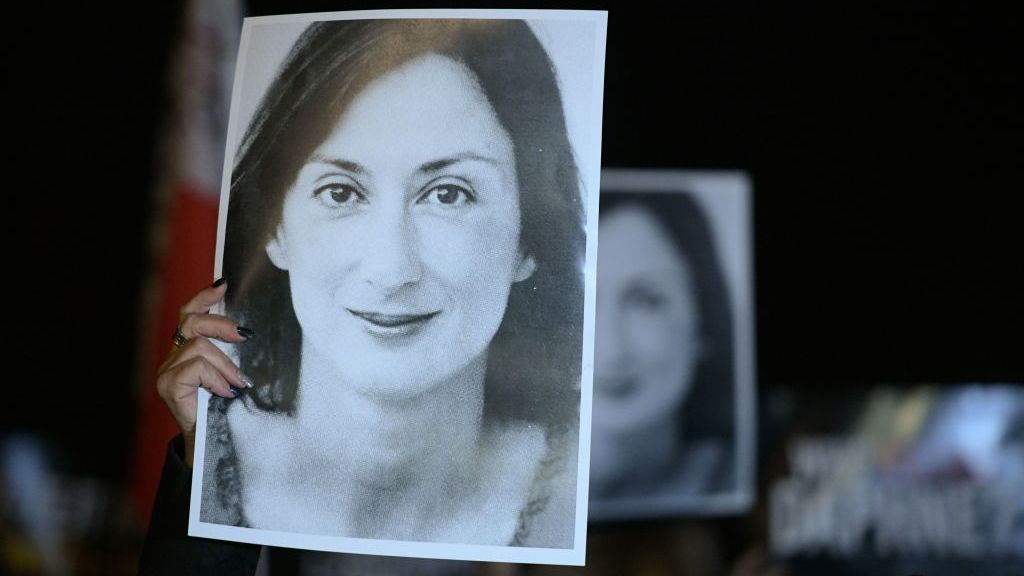
    Nearly nine years after investigative journalist Daphne Caruana Galizia was assassinated by a car bomb in Malta, a high-profile trial over her killing has delivered a shocking verdict that has reopened old wounds and reignited debates over impunity for corruption-linked violence in the European nation.

    On Thursday, a Maltese jury acquitted 44-year-old billionaire businessman Yorgen Fenech of all charges against him: complicity in murder and criminal conspiracy to commit murder. After eight hours of closed-door deliberation, the jury delivered the not-guilty verdict by an 8-1 margin. Courtroom observers described chaotic emotional scenes: Fenech’s family burst into cheers and cries of relief, while members of Caruana Galizia’s family wept openly at the verdict.

    Caruana Galizia, a 53-year-old award-winning investigative reporter, was killed in October 2017 while leaving her home. A fierce critic of Malta’s ruling establishment, she built a global reputation through her independent blog *Running Commentary*, where she exposed networks of political corruption, transnational money laundering, and organized crime stretching from Malta to offshore tax havens. She was a key contributor to the 2016 Panama Papers investigation, which exposed secret offshore financial holdings linked to top Maltese government officials, making her one of the most high-profile enemies of the country’s ruling elite.

    Her brutal assassination via a car bomb planted in her vehicle triggered mass public outrage and weeks of street protests across Malta, demanding full accountability for the killing and widespread speculation that senior political figures had sanctioned the attack. In the years since, three groups of defendants have been convicted in connection with the murder: brothers George and Alfred Degiorgio received 40-year prison sentences in 2022 for carrying out the killing, while Robert Agius and Jamie Vella were sentenced to life in prison in 2025 for supplying the explosive used in the attack.

    Prosecutors had argued during the three-month trial that Fenech, one of Malta’s wealthiest men, orchestrated the plot after Caruana Galizia began investigating his business dealings and was preparing to publish damaging information about him just months before her death. Fenech, who owned a company that Caruana Galizia had already reported on, has repeatedly denied all involvement in the killing. In his defense, he shifted all blame to Keith Schembri, the former chief of staff to ex-prime minister Joseph Muscat, who was one of Caruana Galizia’s main investigation targets.

    Both police and Schembri have denied any connection to the assassination: Schembri was never named as a suspect, and he has repeatedly rejected any claims of involvement. The political fallout from Caruana Galizia’s killing ultimately forced Joseph Muscat, who was never directly linked to the murder, to resign from office in January 2020.

    In the aftermath of Fenech’s acquittal, Caruana Galizia’s family released a scathing statement criticizing the systemic failures that have plagued the case from the start. “Nine years after Daphne’s brutal assassination, the institutional failures that enabled her murder remain unaddressed and unreformed,” the statement read. “Lasting justice means no person should ever face the same risks again. Our country failed to protect Daphne’s life. It owes it to her to prevent other lives being lost.”

    The verdict has renewed international scrutiny of press freedom and the rule of law in Malta, with press freedom advocates warning that the acquittal leaves the mastermind of one of the most high-profile journalist assassinations in European history unpunished, sending a dangerous message to investigative reporters across the continent.

  • Israel Katz says Palestinians will leave Gaza

    Israel Katz says Palestinians will leave Gaza

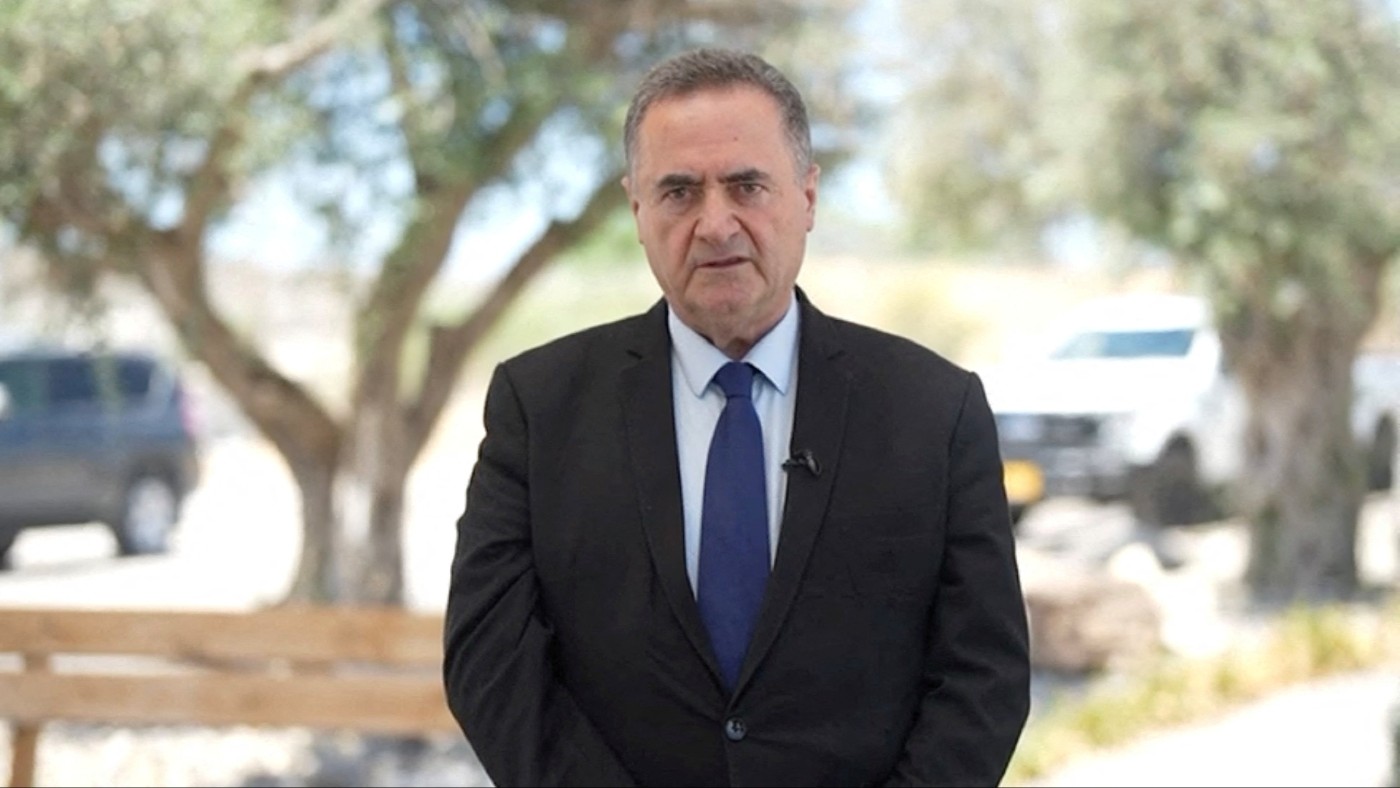
    In a public conference appearance this week hosted by Israeli media outlet Ynet and the Israel Democracy Institute, Israeli Defence Minister Israel Katz made an explicit public case for relocating the entire Palestinian population out of the Gaza Strip, framing mass emigration as the only viable long-term resolution to the ongoing conflict in the coastal enclave.

    Katz’s remarks marked one of the most high-profile endorsements of a long-simmering Israeli policy that has drawn fierce international condemnation over fears it amounts to forced displacement of Gaza’s residents. “There is no real solution for Gaza in the end without migration,” Katz told journalist Moran Azoulay during the on-the-record discussion. He went on to lay out a timeline for advancing the plan, saying momentum for relocation would pick up after Hamas fails to meet its commitments under existing agreements, clearing the way for Israel to escalate military and territorial action to facilitate the population movement.

    To back up his claim that relocation enjoys broad support among Gaza’s population, Katz asserted that consistent public opinion surveys show roughly 80 percent of Gazans want to leave the enclave. That figure aligns with a May survey conducted by the Coordinator of Government Activities in the Territories (COGAT), a unit that falls directly under Katz’s own defence ministry. The COGAT survey found that nearly 80 percent of respondents expressed interest in learning more about processes to resettle in third countries via the Rafah and Kerem Shalom border crossings.

    Katz acknowledged that the plan has so far been held up by two key barriers: Hamas blocks Gaza residents from leaving for resettlement, and no foreign nations have stepped forward to accept the displaced population. “We are fully prepared to move them out if it becomes possible — by sea, by air, by every way possible,” the minister said, adding that Egypt has already ruled out allowing relocation through its territory. He also noted that potential host countries are waiting for formal backing from the United States before agreeing to take in Gazans, explaining that former President Donald Trump froze the initiative rather than cancelling it entirely, amid heavy pressure from Arab nations opposing the plan.

    The controversy over Israel’s relocation plan has already forced the government to rebrand the initiative in an effort to blunt international criticism. At the end of June, Israeli officials confirmed that the plan would drop its original label of “voluntary migration” in favor of the rebranded “Freedom of Movement Plan.” Israel’s Channel 13 reported that Israeli security agencies including the Mossad were ordered to stop using the original terminology, which had sparked global backlash over allegations it masked a policy of forced ethnic cleansing. Reporting from Israeli newspaper Haaretz around the same time revealed that Shmuel Ben Ezra, head of Israel’s National Security Council, called an urgent meeting to discuss efforts to advance resettlement, with Mossad officials openly admitting they had yet to identify a single country willing to accept large numbers of displaced Gazans.

    Beyond his comments on Gaza relocation, Katz also addressed rising regional tensions during the conference, confirming that Israel is actively preparing for a potential large-scale attack from Iran during the upcoming Jewish holiday of Rosh Hashanah, which falls between September 11 and 13 this year. The defence minister stressed that Israeli security forces are fully prepared to respond with overwhelming force if Iran or its proxy groups launch an attack on Israeli territory during the holiday period.

  • What famous scenes are in the epic Bayeux Tapestry?

    What famous scenes are in the epic Bayeux Tapestry?

    One of Europe’s most celebrated and storied medieval artifacts is preparing to step into the international spotlight once again. The 70-meter-long Bayeux Tapestry, an extraordinary embroidered masterpiece that vividly recounts the dramatic events of the 1066 Norman Conquest of England and the decisive Battle of Hastings, has been announced to go on public display at London’s iconic British Museum.

    For centuries, this intricate textile work has captivated historians, art lovers and casual visitors alike, weaving together a visual narrative of one of the most transformative turning points in medieval European history. Stitched with vivid detail more than 900 years ago, the tapestry captures dozens of key moments from the lead-up to the conquest, including Harold Godwinson’s swearing of an oath to William of Normandy, the preparation of William’s invasion fleet, and the chaotic, brutal clash of arms at Hastings that would redefine the future of England. Many of its most famous scenes, such as the depiction of King Harold’s death at the battle and the mysterious ‘Halley’s Comet’ panel that has fascinated astronomers and historians for generations, remain instantly recognizable to anyone with an interest in medieval history.

    Long housed in its permanent home in the French town of Bayeux, the upcoming British Museum display marks a rare opportunity for audiences across the United Kingdom and international visitors to engage with the tapestry in person, without traveling to Normandy. The exhibition is expected to draw huge crowds of history enthusiasts, families, and cultural tourists, shining a new light on this one-of-a-kind historical artifact that bridges the gap between medieval craft and world-changing political events.

  • Russell Westbrook joins upstart basketball league Project B as co-founder and chief strategy officer

    Russell Westbrook joins upstart basketball league Project B as co-founder and chief strategy officer

    Fresh off his official retirement from the NBA last month, legendary nine-time All-Star, two-time scoring champion and 2017 league MVP Russell Westbrook is stepping into a groundbreaking new role in global basketball: co-founder and chief strategy officer of upstart mixed-gender professional league Project B.

    Westbrook isn’t just lending his name to the new venture, which is scheduled to tip off its global tour in January 2027 across major cities in Europe, Asia, and the Americas. The basketball icon holds a significant ownership stake in the league and will serve as a voting member of its board of directors, granting him sweeping influence over the organization’s strategic direction and long-term growth.

    In an official statement announcing his appointment, Westbrook emphasized that his new mission aligns with the core values that shaped his 16-year Hall of Fame-caliber NBA career. “At every step of my career, what was most valuable to me was making sure everyone had a seat at the table,” Westbrook said. “With Project B, we’re challenging the norm and bringing a new vision to the intersection of premium sport, culture, and entertainment. We’re reimagining the experience with players not only as key value drivers, but also as shareholders and decision makers.”

    Questions have naturally emerged about whether Westbrook will step onto the court as a player for the new league, but current official details offer no indication that he plans to join the playing roster. Project B has already begun building out its operational framework, launching its women’s division earlier and filling key executive positions for its upcoming men’s side. This past summer, the organization named former Atlanta Hawks general manager Landry Fields as its head of men’s basketball, the first major leadership hire for the men’s circuit.

    To date, more than a dozen high-profile women’s basketball stars have already committed to competing in Project B, including standout names such as former WNBA MVP Nneka Ogwumike, 2024 No. 1 overall draft pick Azzi Fudd of the Dallas Wings, two-time WNBA champion Alyssa Thomas, All-Star Jonquel Jones, three-time All-Star Jewell Loyd, and Seattle Storm rookie Awa Fam. League organizers also expect a large pool of talented young emerging players from across the globe to join the rosters, building a diverse, competitive global product.

    One of the most notable promises the upstart league has made is a pay upgrade for its women’s athletes: Project B confirms that top player salaries on the women’s side will exceed the current maximum compensation offered by the WNBA, a move that addresses longstanding conversations about pay equity in professional women’s basketball.

  • Al-Khair Foundation strongly denies UK Lawyers for Israel allegation of Hamas links

    Al-Khair Foundation strongly denies UK Lawyers for Israel allegation of Hamas links

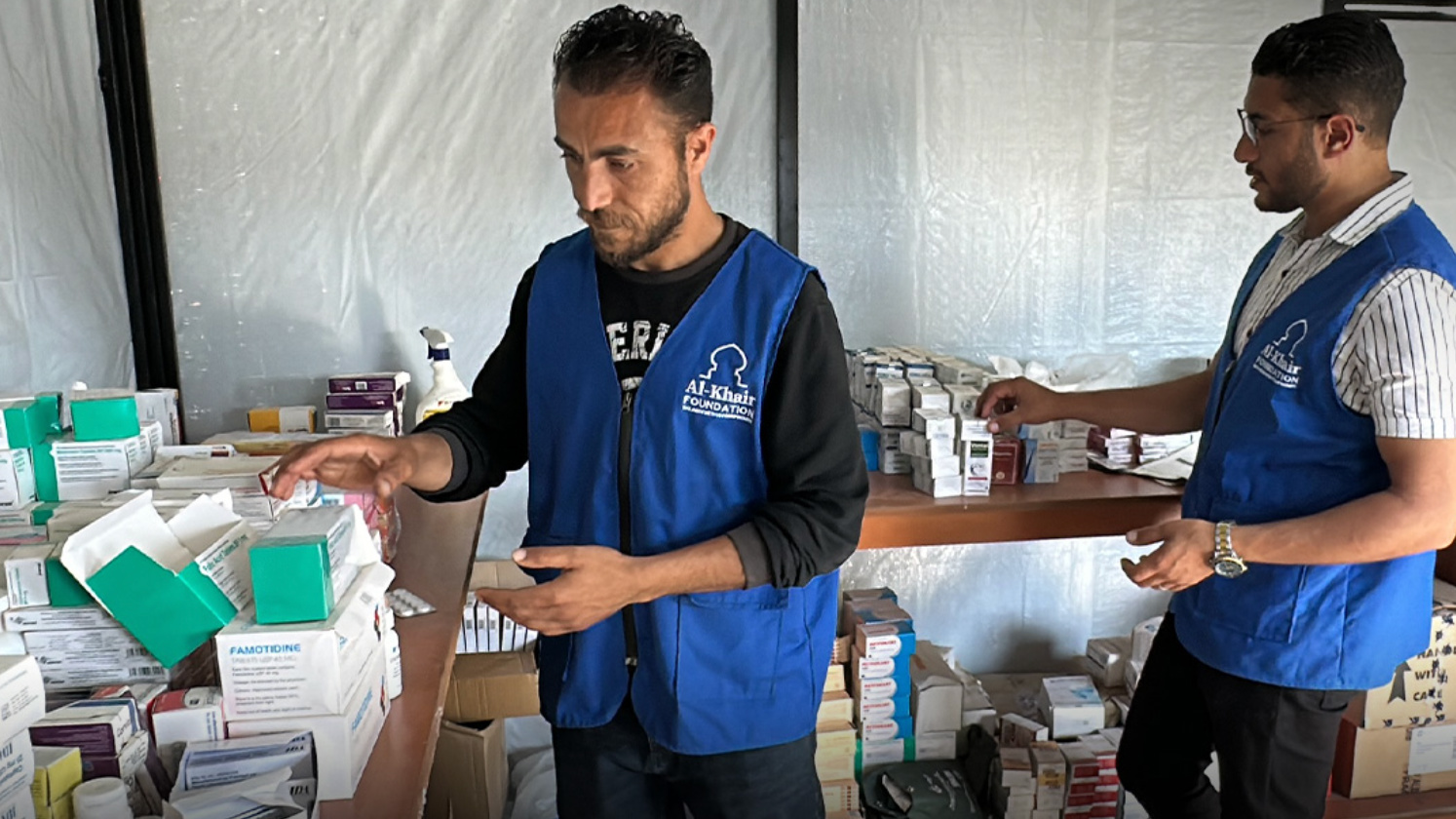
    A prominent UK-based international aid organization is at the center of a high-stakes regulatory investigation after a pro-Israel advocacy group formally accused it of ties to the proscribed militant group Hamas, prompting firm denials from the charity and renewed scrutiny of partisan efforts targeting Palestine solidarity work in Britain.

    The Al-Khair Foundation, which delivers critical humanitarian aid to vulnerable populations in Gaza, is now the subject of parallel probes by the Charity Commission for England and Wales and the UK Department for Education. The investigation was launched following a formal complaint submitted by UK Lawyers for Israel (UKLFI), an advocacy group that has long targeted organizations and individuals critical of Israeli government policy.

    The chain of events that led to the probes began in July, when Mohammad Yousef Hasna was arrested in the UK at the request of American federal law enforcement. US prosecutors have charged Hasna with providing material support to Hamas, which is listed as a banned terrorist organization by both the US and UK governments. Al-Khair Foundation has clarified that Hasna was never a direct employee of the organization, noting he worked for a separate partner charity that carries out humanitarian relief work in Gaza. No charges have been filed against Al-Khair itself in relation to the case.

    Within hours of learning of Hasna’s arrest on suspicion of terrorism-linked offenses, Al-Khair proactively submitted a mandatory serious incident report to the Charity Commission — a step the organization took before the regulator opened its formal inquiry. In an official statement released this week, the charity forcefully pushed back against all allegations of connections to Hamas or any other proscribed group.

    “We unreservedly condemn violence and extremism of all kinds,” the statement read. “Al-Khair Foundation as an organisation categorically denies any allegation of channelling support to, supporting or assisting Hamas or any proscribed entity in Gaza or elsewhere.” To address the inquiry fully, the charity has appointed an independent consultant to conduct a full factual review, with findings to be shared alongside all required legal and operational documentation for the investigation.

    The Department for Education’s parallel investigation centers on four schools operated by Al-Khair Foundation: three based in London and one in Oldbury, West Midlands. The charity emphasized that the school network operates completely independently from its international humanitarian aid programs, and has no connection whatsoever to Hasna. “The schools recognise the need for questions from the Department for Education and are responding to all of them,” the organization added.

    This investigation is not an isolated incident: for years, the Israeli government has repeatedly leveled unsubstantiated accusations of Hamas links against international charities that deliver aid to Gaza, where a decades-long blockade and escalating humanitarian crisis have left more than two million residents dependent on outside assistance. Al-Khair reaffirmed its commitment to serving vulnerable communities in the territory, noting its programs have reduced food insecurity and sustained life-saving support for thousands of families amid extremely challenging operating conditions. “We hope the inquiry process will allow us to present evidence that will establish the facts of the work of AKF, and the realities of our humanitarian operations in Gaza,” the charity said.

    Behind the complaint lies a long pattern of advocacy by UKLFI, which was founded in 2011 and has become a leading actor in pressuring UK-based organizations and individuals that express support for Palestinian rights or criticism of Israeli government policy. The European Legal Support Centre’s Britain Index of Repression, which documents systemic efforts to suppress Palestine solidarity activism across the UK, lists UKLFI 128 times. The centre’s research shows that UKLFI frequently acts as an initiating or escalating actor in campaigns against Palestinian solidarity activity, using formal complaints, legal threats, and public pressure to push schools, universities, employers, and public bodies to launch disciplinary proceedings or cancel planned events. This pattern of activity, the centre argues, has created a “chilling environment” where even lawful Palestine-related organizing is often abandoned out of fear of costly legal action and professional reputational harm.

  • ‘Below the dignity of the office’: Canadian officials condemn Pete Hegseth cadet post

    ‘Below the dignity of the office’: Canadian officials condemn Pete Hegseth cadet post

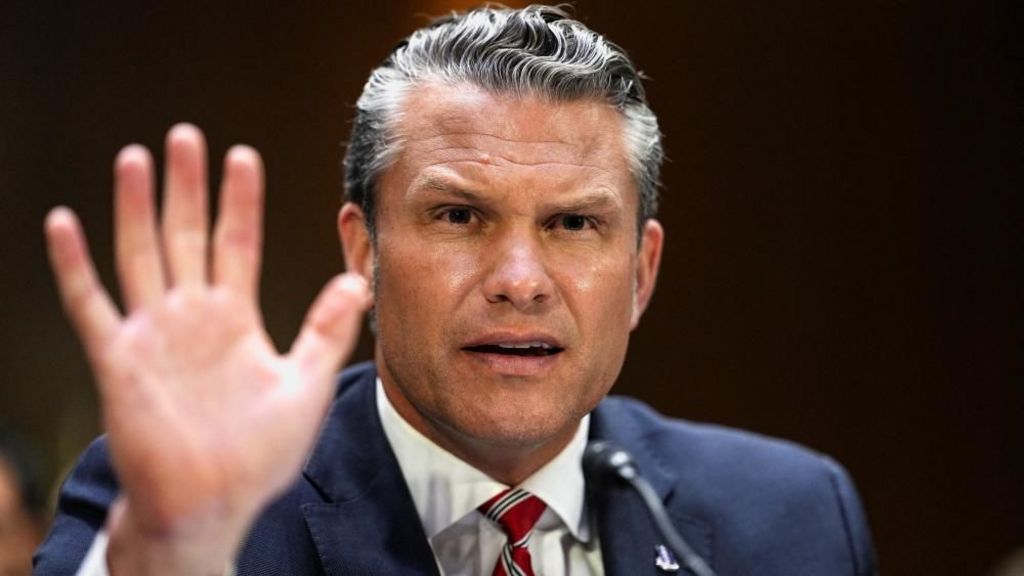
    A controversial social media post from U.S. Defense Secretary Pete Hegseth has ignited widespread outrage across Canada, deepening already strained bilateral relations that are roiled by an escalating trade dispute between the two North American allies. Hegseth shared an image pulled from a local Canadian cadet training program’s social media account, which shows a young female cadet accepting an achievement award from her female instructor. To the post, he added a Canadian flag emoji and the caption “this is real”, a comment widely interpreted as a deliberate attempt to disparage Canada’s entire military establishment by mocking the physical appearance of the two women in the photo.

    Canadian Defense Minister David McGuinty was among the first senior officials to condemn the action, stating Tuesday that Hegseth’s social media jab fell far below the standard of dignity expected for a cabinet-level defense secretary. The controversy comes at a moment when U.S.-Canada relations are already at a multi-decade low: the two nations are locked in a bitter trade dispute that has repeatedly devolved into personal insults and public taunts, and the Trump administration has spent years arguing that Canada unfairly relies on U.S. military power for its national defense while failing to meet its own alliance spending commitments.

    Canadian Prime Minister Mark Carney made clear Tuesday that there will be no resumption of stalled trade negotiations until the Trump administration ends its pattern of provocative public attacks. “Any trade discussions will only begin again when the Americans stop doing memes, stop throwing shade, stop trying to be tough and start being serious about having those discussions,” Carney told reporters.

    When pressed for comment on Hegseth’s post, the Pentagon offered only a terse response, saying the content “speaks for itself” and declining further clarification. Canada’s national cadet program, which falls under military oversight, provides leadership development and practical skills training to young Canadians between the ages of 12 and 18, making the mockery of teen participants particularly inflammatory for Canadian audiences.

    The Army Cadet League of Canada, a civilian non-profit that supports the national program, issued an official statement strongly condemning the attack. The organization emphasized that “directing derogatory commentary toward youth who are actively working to better themselves and serve their communities is unacceptable,” and added that it rejects any form of online harassment or mockery of cadets’ hard-earned achievements.

    Canada’s Chief of the Defence Staff, General Jennie Carignan, told public broadcaster CBC that military officials have already reached out directly to the two cadets involved in the incident to offer support and align on next steps. “We are consulting with them on how they want to go about doing this,” Carignan said, confirming that the cadets’ preferences will guide any official response from the Canadian Armed Forces.

    Multiple Canadian lawmakers from across the political spectrum have joined the condemnation, including Scott Anderson, a Conservative Member of Parliament from Vernon and a former military reservist. In a public post directed at Hegseth, Anderson argued that the U.S. defense secretary had failed to uphold the basic “responsibility and decorum” that comes with his high office. “You have chosen to set both aside and insult two female Canadian non-combatants, and to intentionally shame them before millions. You should be ashamed,” Anderson wrote. He added that while the U.S. and Canada are deeply connected through shared economies, integrated continental defense systems and intertwined cultural ties, the two remain sovereign nations, and Hegseth’s behavior crosses a fundamental line of respect. “Our economies, our continental defence and our cultures are irretrievably intertwined and yet we are two distinct nations. Canadians and Americans should have no problem with each other, but I have a problem with you,” Anderson added.

    The current tensions between the two nations trace back to last month, when planned bilateral trade talks collapsed after both sides traded accusations of last-minute demands that derailed a tentative preliminary agreement. In the immediate aftermath of the breakdown, the U.S. imposed 50% tariffs on roughly $20 billion worth of Canadian imports, and Canada has announced matching retaliatory tariffs set to take effect next week. The exchange of tariffs has been accompanied by a steady stream of personal and political insults: Ontario Premier Doug Ford publicly called U.S. President Donald Trump a “loser”, Trump has made the outlandish proposal to rename Lake Ontario to “Lake America”, and U.S. Transportation Secretary Sean Duffy went so far as to falsely claim Canada “doesn’t have a military”.

    Despite the current downward spiral in relations, the U.S. and Canada have a decades-long history as close defense partners, including Canada’s long-standing deployment of troops alongside U.S. forces in the War in Afghanistan. In recent months, Canada has also significantly ramped up its defense spending after years of falling short of NATO’s mandatory spending targets, a move that was intended in part to address long-standing U.S. criticism of Canada’s defense contribution.

    For Hegseth, the international backlash adds to a growing list of domestic challenges he currently faces. A veteran himself, Hegseth has already been under significant pressure in Washington following a string of high-profile departures of senior military leaders from the Pentagon, and growing public criticism of the Trump administration’s handling of the ongoing war with Iran. He has also built his public profile around pushing for strict standards for the appearance and physical fitness of U.S. troops, framing his agenda as a push to restore what he calls the military’s “warrior ethos.”

  • Jury in Malta acquits businessman in killing of investigative journalist

    Jury in Malta acquits businessman in killing of investigative journalist

    VALLETTA, Malta – In a verdict that has sent shockwaves across the Mediterranean island nation and reverberated through European media and accountability circles, a Maltese jury has acquitted Yorgen Fenech, the high-profile local businessman accused of orchestrating the 2017 car bomb killing of iconic anti-corruption investigative journalist Daphne Caruana Galizia. The outcome comes nearly eight years after the assassination that upended Maltese politics, forced a sitting prime minister from office, and pulled back the curtain on deep-rooted impunity within the EU’s smallest member state.

    Caruana Galizia, 53, was killed instantly on October 16, 2017, when a remote-detonated explosive device attached to her vehicle blew up as she drove away from her home. For years before her death, the fearless reporter built a reputation for aggressive, unflinching investigations into public and private sector corruption across Malta’s political divide. Her work, much of it published in the wake of the 2016 Panama Papers leak, exposed alleged links between top officials in then-Prime Minister Joseph Muscat’s inner circle and secret offshore accounts in tax havens. She did not spare opposition leaders or prominent business figures from scrutiny, and by the time of her murder, she was defending herself against more than 40 active libel suits filed by the figures she had targeted.

    Fenech, who was formally indicted on charges of criminal conspiracy and complicity in murder in 2021, was accused by prosecutors of ordering the killing and funding the plot. He had consistently maintained his innocence throughout the trial, and on Wednesday, the jury delivered a unanimous not guilty verdict on both counts. He is the final defendant to be tried among six people charged in connection with the assassination plot.

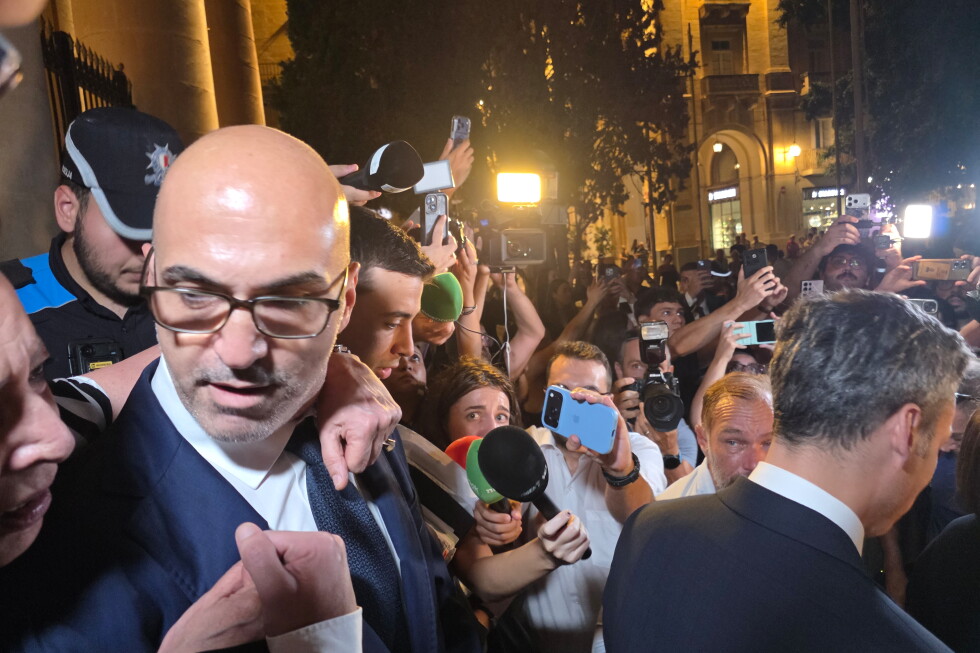
    The case has long been intertwined with Malta’s political upheaval. Fenech was a key figure in a business consortium that secured a controversial, multi-million-dollar government contract to construct a new power plant on the island. His dramatic 2019 arrest, carried out as he attempted to leave Malta aboard his private yacht, triggered months of widespread mass protests across the country that ultimately forced Muscat to step down from office. Following Wednesday’s acquittal, Fenech left the Valletta courthouse without issuing any public statement, walking through a chaotic crowd of shouting hecklers to a waiting getaway car.

    Caruana Galizia’s family, which has led a years-long campaign to secure full accountability for her death, was present for the reading of the verdict. Her three sons left the courtroom immediately after the ruling without comment, releasing a formal statement to the public hours later via Facebook.

    The statement called the verdict a denial of the justice Caruana Galizia deserved. “Nine years after Daphne’s brutal assassination, the institutional failures that enabled her murder remain unaddressed and unreformed. Lasting justice means no person should ever face the same risks again. Our country failed to protect Daphne. It owes it to her to prevent other lives being lost,” the family wrote.

    As is standard practice in Maltese criminal proceedings, no recording devices or press cameras were permitted inside the courtroom during the trial.

    Five other co-defendants have already been convicted or granted immunity for their roles in the plot. Brothers George and Alfred Degiorgio pleaded guilty to carrying out the killing in 2022, and each received a 40-year prison sentence. Earlier this year, Jamie Vella and Robert Agius, who were convicted of supplying the explosive device used in the attack, were sentenced to life in prison – Malta’s maximum available penalty for murder. Vincent Muscat, another co-conspirator, pleaded guilty to his role in 2021 and was sentenced to 15 years behind bars. Melvin Theuma, a taxi driver who admitted to acting as a middleman in the plot, received a presidential pardon in 2019 in exchange for his testimony against Fenech and other co-defendants.

    A 2021 independent public inquiry into the assassination concluded that the Maltese state bears direct institutional responsibility for Caruana Galizia’s death, finding that a culture of impunity tolerated and enabled by the highest levels of government created the conditions for the killing to occur.