博客

  • The world banned landmines and cluster munitions. Can it stop killer AI before it is too late?

    The world banned landmines and cluster munitions. Can it stop killer AI before it is too late?

    For centuries, armed conflict has retained one core human element: the final decision over who lives and who dies has rested with a human being. A frontline soldier could choose to wound rather than kill an exposed opponent; a military pilot could question flawed intelligence and abort a strike that would harm innocent people. But rapid advances in artificial intelligence and weapons technology are erasing that critical human check on lethal force, as fully autonomous weapons systems move from concept to battlefield deployment.

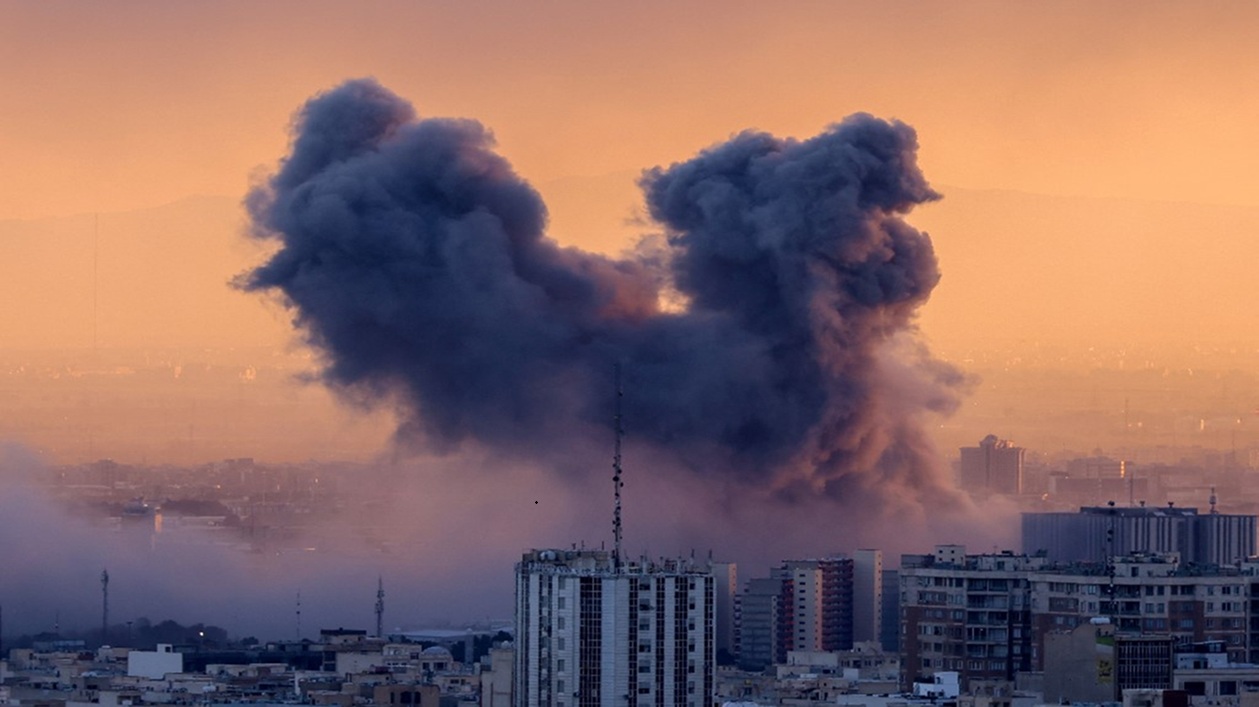
    Activists and humanitarian organizations warn that these unregulated systems already are causing catastrophic civilian harm, with early deployment examples linked to the ongoing conflict between the US, Israel and Iran. AI-powered targeting tools were first fielded by Israel during its military campaign in Gaza, and have since been used in strikes across Iran, with data showing more than 1,000 targeted hits in the conflict’s first 24 hours – a pace of attack that military analysts say is only possible with automated targeting systems.

    For more than a decade, the global advocacy coalition Stop Killer Robots has led the push to head off this unregulated new era of warfare, lobbying national governments to adopt an international ban on weapons that can select and engage targets without any form of human oversight. Nicole van Rooijen, the coalition’s executive director, explained to Middle East Eye that the core danger of these systems comes from their core design: built specifically to kill, they eliminate the checks and balances that human decision-makers bring to the battlefield, and their deadly output is entirely dependent on the quality of data fed into their algorithms.

    A stark example of this risk, van Rooijen noted, is the February 28 US airstrike on Shajareh Tayyebeh Primary School in Minab, Iran. The strike killed 156 people, 120 of whom were children, making it the deadliest single attack of the entire conflict. Preliminary investigations point to outdated and inaccurate intelligence fed into an AI targeting system as the root cause of the civilian massacre. “It is false promises of being more accurate, more precise, yet the results are worse, not for their militaries but for civilians on the ground. They pay the brunt of it,” van Rooijen said. She added that without ground troops to verify target identities in volatile conflict zones, algorithmic errors become almost inevitable.

    Beyond flawed intelligence, the fundamental accuracy of AI targeting is deeply questionable. Independent specialists who study AI integration into military operations estimate that these systems have a reliability rate of just 25 to 50 percent – even in the best-case scenarios, a failure rate that van Rooijen compares to the indiscriminate damage of carpet bombing. A second critical risk is that autonomous weapons drastically lower the political barrier to declaring war, since nations no longer need to risk their own soldiers’ lives to launch an attack. “No one wants to see their soldiers die on foreign land, so that calls for some restraint. You think twice about sending your own people,” van Rooijen said. “If it is all automated, you can just send machines. Israel and the US have been threatening Iran for decades, but never actually went through with it, and I do not think it is a coincidence… it gives you a false sense that you can do it quickly… and come back a winner.”

    Compounding these dangers is the complete lack of global governance for the technology. To date, there is no internationally agreed definition of what constitutes a fully autonomous weapons system, and no binding treaty regulating their development, testing, trade or deployment. This regulatory vacuum has created what van Rooijen calls a “free for all” arms race, where large technology corporations can profit from the development of deadly tools at the expense of civilian lives. She points out that even civilian products like new cars or commercial airplanes have far more regulatory safety guardrails than AI integrated into military kill chains.

    Human rights campaigners say there is clear historical precedent for banning dangerous weapons before they become a normalized part of warfare, pointing to the 2008 Convention on Cluster Munitions that prohibited the widely harmful weapons. Bonnie Docherty, senior arms advisor at Human Rights Watch (HRW) and a key negotiator of the cluster munitions treaty, says the campaign for autonomous weapons regulation follows the same core humanitarian principle: preventing unnecessary human suffering caused by unaccountable weaponry.

    For Docherty, the most fundamental objection to autonomous weapons is an ethical one: machines can never grasp the inherent value of a human life, so delegating life-or-death decisions to algorithms is morally unacceptable. “An autonomous weapon system is a machine and a machine cannot truly understand the value of a human life,” she explained. “To give that machine the power to kill… is ethically inappropriate. Whoever is taking a life should be able to understand the significance of it.”

    HRW research has also confirmed that autonomous weapons systems can replicate and amplify existing algorithmic biases, with lethal consequences for marginalized groups. “We looked at the discrimination front and particularly at race, gender and disability,” Docherty said. “For example, on the disability front, artificial intelligence may have trouble distinguishing a cane from a gun.”

    Major military powers including the US, Israel, Russia and China have so far resisted regulation, arguing that existing international humanitarian law is sufficient to govern the new technology – an argument Docherty says is identical to the one used by opponents of the cluster munitions ban two decades ago. She noted that what broke the deadlock on cluster munitions was Israel’s widespread use of the weapons in southern Lebanon in 2006, which left thousands of unexploded submunitions scattered across civilian land that continue to kill and maim local residents to this day. “I feel like I am having a deja vu,” Docherty said. “A lot of these arguments, you could just plug in the same weapons system.”

    In recent weeks, global institutional leaders have ramped up pressure for action. The United Nations Secretary-General and the President of the International Committee of the Red Cross (ICRC) have reissued their call for a binding international treaty governing autonomous weapons, three years after they first set a 2026 deadline for nations to agree on new rules. Now, leaders warn that the 2026 deadline is no longer feasible, and the world is rapidly approaching an irreversible moral red line.

    The ICRC believes that increasingly advanced autonomous capabilities are already being integrated into weapons across multiple active conflicts, used for both defensive and offensive operations even in densely populated civilian areas. While formal verification of battlefield use remains difficult, ICRC legal adviser Georgia Hinds says the trend of growing integration is clear, ranging from cutting-edge state military systems to cheap commercial off-the-shelf technologies that are being adapted for combat.”While it is very hard for us to verify… we are seeing this increasing integration of autonomy into weapons in many conflicts, from sophisticated military capabilities down to more commercial off-the-shelf systems that are being adapted,” Hinds told Middle East Eye.

    A critical upcoming opportunity for action will come in November, when national governments gather in Geneva for the Seventh Review Conference of the Convention on Certain Conventional Weapons (CCW), the five-yearly global meeting on conventional arms regulation. For years, the UN Group of Governmental Experts on Lethal Autonomous Weapons Systems has been drafting a regulatory framework that would ban the most dangerous fully autonomous systems and place restrictions on others. The group’s final working session is taking place this week, with its draft text set to go before the full November conference.

    Campaigners and humanitarian experts are optimistic that the conference can approve a move to formal negotiations for a full legally binding treaty, a step that has been 13 years in the making. “It really would not take much now to convert that into a binding instrument,” Hinds said. “In November, the decision needs to be taken to move to formal negotiations. Rolling over discussions that have now been ongoing for nearly 13 years in the group of governmental experts is not acceptable. There is really only one option in November for us.”

    If governments approve the move to formal negotiations, a final treaty could be finalized in just a matter of months, most likely as an additional protocol under the existing CCW framework. But Hinds cautions that the path forward is not guaranteed, and even if progress is delayed at the conference, campaigners will continue pushing for action through alternative pathways.

    The core goal, Hinds emphasized, is to regulate the technology before it spreads too widely to control. As autonomous weapons become more common, cheap commercial systems become easier for non-state armed groups to adapt for lethal use, falling outside the scope of existing regulatory and accountability mechanisms. “The [more] opportunity for these systems to proliferate, the easier it becomes to adapt a commercially available system… it is also likely to be used by non-state actors who fall outside of those more regulated investigation mechanisms,” Hinds said. “All of these things again increase accountability concerns for me. So yes, I think it’s a big risk.”


  • China presses the US for answers after a man dies hours after entering ICE custody

    China presses the US for answers after a man dies hours after entering ICE custody

    The death of a 51-year-old Chinese national in U.S. Immigration and Customs Enforcement (ICE) custody in the U.S. commonwealth of the Northern Mariana Islands has drawn a formal demand for accountability from Chinese authorities, and has reignited long-simmering worries about the safety of immigrant detainees held by U.S. border agencies.

    According to official statements from ICE, the detainee, identified as Lianyong Wei, passed away on August 23 at a Saipan hospital, just two days after he was first arrested by local law enforcement. Wei was taken into custody by the Northern Mariana Islands Department of Public Safety on August 21 on criminal charges connected to an alleged assault on a family of five in their residence. The following day, ICE assumed custody of Wei as he awaited deportation proceedings.

    ICE officials confirmed that on the morning of August 23, a routine cell check by a guard at the Saipan detention facility found Wei unresponsive. He was immediately transported to a local hospital emergency department, where clinical teams attempted life-saving interventions before pronouncing him dead. The agency has confirmed that the exact cause of his death remains under active investigation.

    Records from ICE show Wei first entered the Northern Mariana Islands in February 2019 on a 14-week authorized stay. U.S. immigration authorities initiated formal deportation proceedings against him in July 2026, and his next immigration hearing was scheduled to take place in the current month.

    Following notification of Wei’s death, the Chinese Consulate General in Los Angeles issued an official statement outlining its formal demands to U.S. authorities. “We have expressed serious concerns to the relevant U.S. authorities over this incident and required a timely and thorough investigation into the cause of Mr. Wei’s death, notification of the findings, measures to prevent any recurrence of similar incidents, and assistance to the family of the deceased in handling the aftermath,” the consulate said.

    Associated Press tracking of detainee deaths shows Wei is at minimum the fifth Chinese national to die while in ICE or U.S. Border Patrol custody since March 2025. Of the four prior deaths, two have been officially ruled suicides, while the remaining two were attributed to pre-existing or acute medical complications.

    Wei’s death comes amid a broader spike in detainee fatalities that has alarmed public health researchers, immigrant rights advocates, and foreign governments. Since President Donald Trump returned to the Oval Office in January 2025, at least 57 immigrants held in ICE custody have died, a mortality rate that has drawn widespread criticism from watchdog groups.

    A key unanswered question surrounding this latest death is whether Wei received the mandatory medical intake screening that ICE policies promise all detainees within their first 12 hours of being taken into agency custody. Medical and public health experts have repeatedly emphasized that comprehensive, timely intake screenings are a critical first step to preventing preventable deaths in detention facilities.

    Another point of public scrutiny is the length of time it took ICE to publicly confirm Wei’s death. Local authorities in the Northern Mariana Islands first announced the fatal incident on August 24, more than a full week before ICE released its own formal statement. The agency’s own internal guidelines require public announcements of detainee deaths within two business days of the incident.

    The Saipan ICE detention facility, where Wei was held, is a small facility that averages just 18 detainees in custody on any given day in 2026, per ICE public data. The entire Northern Mariana Islands is home to a total population of roughly 50,000 people.

    In the wake of Wei’s death, Anthony Torres, commissioner of corrections for the Northern Mariana Islands, confirmed that local officials are launching an internal review. “Following this incident, the Department is reviewing relevant procedures and will implement any necessary corrective actions to strengthen prevention and response measures,” Torres said in a formal statement.

  • Dutch central bank shifts billions in gold to London in ‘crisis preparedness’ move

    Dutch central bank shifts billions in gold to London in ‘crisis preparedness’ move

    In a strategic shift tailored to growing global political uncertainty, De Nederlandsche Bank (DNB), the Netherlands’ central financial authority, announced Wednesday it has completed a large-scale relocation of billions of dollars in gold reserves out of North America, framing the move as a proactive step to boost crisis preparedness.

    Between March and August 2025, 86 metric tons of gold were reallocated from storage facilities in New York and Ottawa, where the bank held a combined 313 metric tons of its total holdings. Prior to the operation, New York held 31.3% of DNB’s total gold reserves, while Canada’s capital held an additional 19.7%. Following the restructuring, both North American locations now hold just 18.5% of the bank’s total gold stockpile each, DNB confirmed.

    As of the end of 2025, DNB holds a total of 612.4 metric tons of gold, valued at approximately 72.2 billion euros ($83.6 billion).

    DNB Governor Olaf Sleijpen explained in an official written statement that the geographic restructuring is designed to improve the tradability of the institution’s gold reserves. “We expect that we will never need to draw on these emergency reserves, but we do need to strengthen our resilience and preparedness to navigate unexpected global shocks,” Sleijpen said.

    The relocation unfolded in three distinct phases, per DNB’s breakdown. Roughly 27 metric tons of gold were physically moved from North American vaults directly to the central bank’s heavily secured storage facility on a military base near Zeist, a town in central Netherlands. The bank declined to share additional details about the cross-Atlantic transportation process for the physical bullion. From the Zeist base, an equal volume of gold was then shifted to storage in London.

    The remaining portion of the reallocation was completed through financial transactions: DNB sold roughly 59 metric tons of its gold held in New York, then used the proceeds to purchase equivalent gold positioned in London.

    DNB noted that gold stored at the Bank of England meets strict modern international trade requirements, and is widely considered the most easily tradable gold in the global market. This positioning makes it far more accessible for the Dutch central bank to deploy quickly in the event of a major systemic or geopolitical crisis. By contrast, gold held in New York and Ottawa cannot be accessed or utilized as rapidly or directly when urgent action is needed, the bank added.

  • Charity aid bus travels to Ukraine for evacuations

    Charity aid bus travels to Ukraine for evacuations

    A carefully assembled humanitarian aid convoy carrying critical supplies has departed from the English county of Devon, bound for war-torn Ukraine, with a special yellow passenger bus set to remain in the country permanently to support life-saving civilian evacuation operations.

    This mission marks the ninth time driver Richard Stout has traveled to Ukraine with Totnes-based community charity Bob the Bus, which has long offered free transportation services to local residents across the town. Stout, who is leading the current convoy that pulled out of Stoke Gabriel early Wednesday, shared that he felt a quiet nervousness ahead of the crossing – a feeling rooted in a failed previous attempt when the bus suffered a mechanical breakdown mid-journey.

    Under the current trip’s logistics plan, Stout will drive the yellow bus across Europe to Poland, where he will hand it off to Adam Stewart, a representative of Ukranian Action Team Devon. Stewart will then complete the final leg of the journey, delivering the bus to the hard-hit city of Kharkiv in northeast Ukraine.

    Stout expressed his pride in contributing to the ongoing relief effort, saying, “I’m really pleased our bus is going to support this cause and I can be part of that.” Beyond the bus itself, every vehicle in the convoy is stacked to capacity with donated supplies essential for life on Ukraine’s front lines: these include emergency medical equipment, portable power banks to support off-grid communities, and specialized anti-drone netting donated by local fishing crews from Brixham.

    Once in Ukraine, the fleet will play a core role in evacuating vulnerable civilians trapped in active frontline zones. Stout emphasized the extraordinary danger these evacuation teams face, noting, “These incredibly brave people go in and rescue elderly and disabled people from those regions.”

    Having traveled to Ukraine multiple times, Stout has witnessed firsthand the deep toll the full-scale invasion has taken on ordinary Ukrainian people. “Everybody you meet in Ukraine has lost someone or knows somebody that’s been lost,” he said. He recalled a particularly moving experience during Ukraine’s Defender Day, a national holiday honoring the country’s veteran and fallen service members: “I happened to be in the square for the celebration – there were mothers, wives and children all holding up flags of their fallen loved ones. It was so heartbreaking to see.”

    This latest convoy brings the total number of vehicles donated by Ukranian Action Team Devon to 14. Joining the yellow bus on this trip are a fully functional ambulance and a rugged four-wheel-drive vehicle, built to navigate unpaved remote routes to deliver support to both civilians and troops in hard-to-reach border and frontline areas.

    Looking ahead, Stout confirmed that the group is already planning its next solidarity mission: preparations for a new aid convoy will resume at the end of October, as the charity continues its sustained commitment to supporting the Ukrainian people through the war.

  • Tiger Woods in court to reduce DUI charges after plea deal

    Tiger Woods in court to reduce DUI charges after plea deal

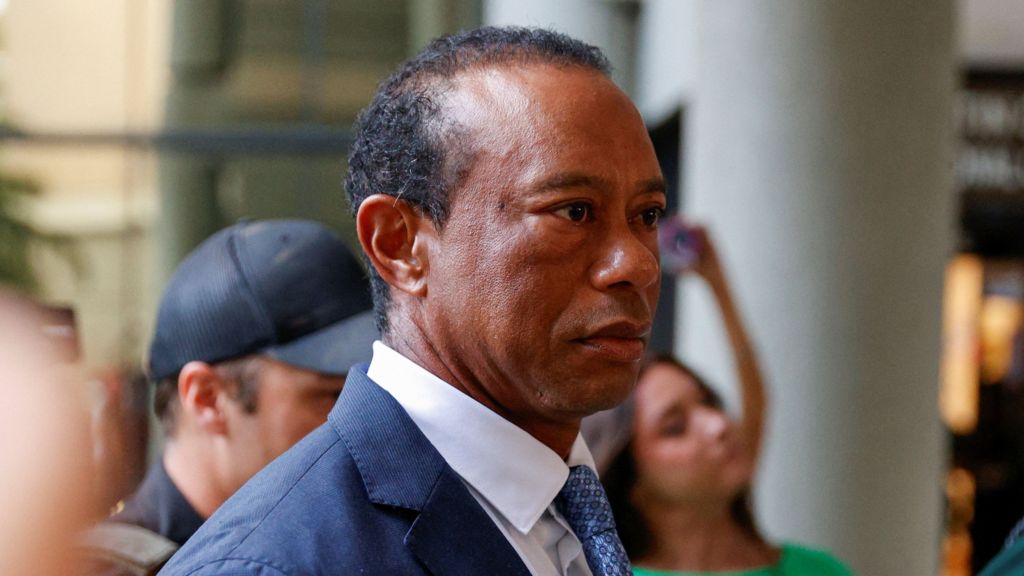
    Famous professional golfer Tiger Woods has appeared in a Florida court to finalize a plea deal that lowers his DUI charges, resolving a high-profile legal case that drew widespread public attention. As a core component of the agreement reached with state prosecutors, Woods has agreed to accept two key penalties: a five-year suspension of his driving privileges and a $1,000 monetary fine, which equals approximately £742. The plea negotiation process, which unfolded over recent weeks, concluded with the court formally approving the reduced charges in line with the terms both sides agreed to. The case first made headlines when Woods was arrested on suspicion of driving under the influence several months prior, prompting discussions about celebrity accountability and traffic safety regulations. Legal analysts note that the plea deal represents a negotiated resolution that avoids a lengthy public trial, with both prosecutors and the golfer’s defense team agreeing to the proposed penalty structure. While Woods has not publicly commented extensively on the details of the agreement since the court hearing, the resolution closes this chapter of the legal matter that placed the legendary athlete back in the spotlight for non-golf related reasons.

  • ‘It’s hard to balance emotions and professionalism’ says Nepal rescuer

    ‘It’s hard to balance emotions and professionalism’ says Nepal rescuer

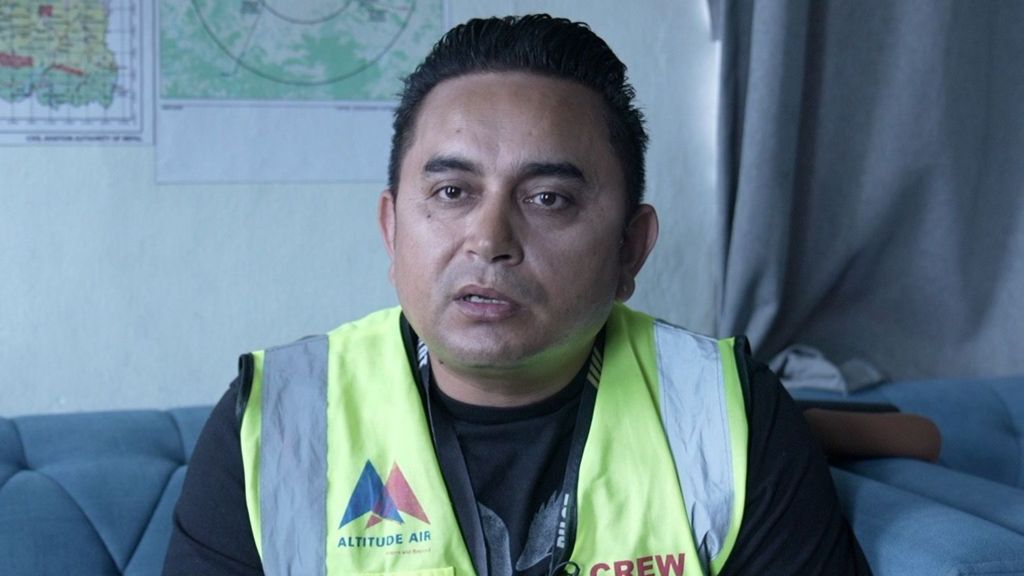
    For rescue professionals working in the aftermath of disasters and missing person cases, the line between compassion for desperate families and strict professional detachment often blurs. This struggle is laid bare by Bibek Khadka, a helicopter pilot with years of experience in rescue operations across Nepal’s rugged and often hazardous terrain. In an exclusive interview with the BBC, Khadka shared the constant emotional weight he carries as families of missing loved ones flood his communications with urgent pleas for help.

  • Turkey’s relations with Russia, China don’t mean turning its back on the West, Erdogan says

    Turkey’s relations with Russia, China don’t mean turning its back on the West, Erdogan says

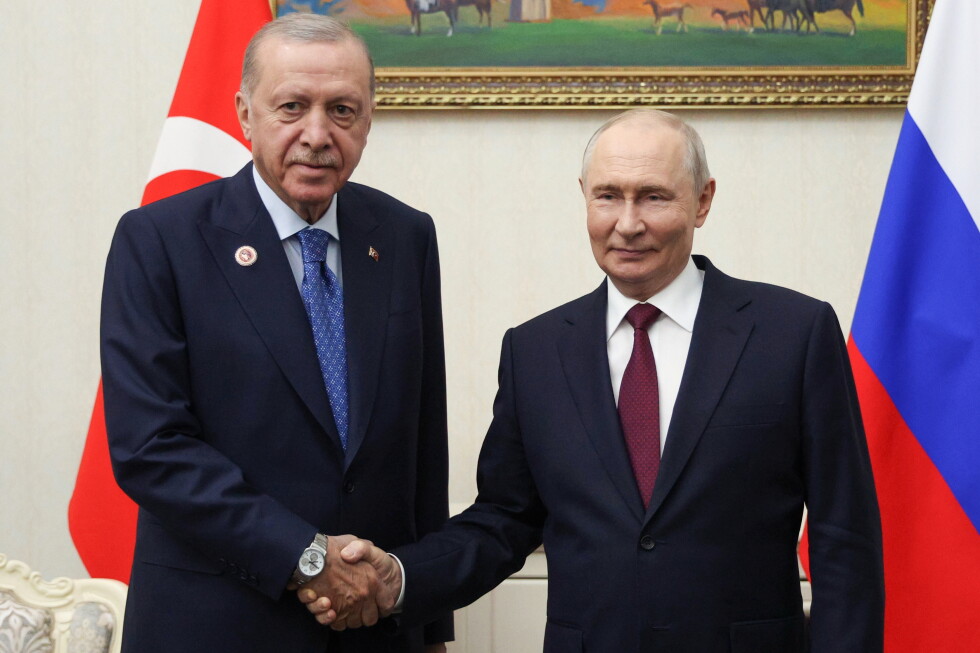
    Fresh off attending the Shanghai Cooperation Organization (SCO) summit hosted in Kyrgyzstan, Turkish President Recep Tayyip Erdogan issued a clear diplomatic reassurance Wednesday: Turkey’s push to strengthen economic and political ties with Eastern powers will not come at the cost of its relationship with the Western bloc. In on-the-record remarks to reporters traveling aboard his presidential aircraft en route back to Istanbul, Erdogan pushed back against speculation that Turkey’s ambition to gain full membership in the growing Eurasian security and economic bloc signals a strategic turn away from the West.

    “Turkey’s membership perspective in the organization does not mean a break from a bloc or turning our backs on the West,” the president emphasized, directly addressing widespread geopolitical analysis that frames Turkey’s deepening engagement with the SCO as a shift in its longstanding foreign policy alignment.

    The three-day summit in Kyrgyzstan’s Cholpon-Ata provided a high-profile stage for Erdogan to hold a closed-door bilateral meeting with Russian President Vladimir Putin, where the pair advanced talks on expanded nuclear energy collaboration between the two nations. Beyond energy cooperation, the two leaders aligned on their shared top priority for the ongoing war in Ukraine: an urgent end to hostilities through peaceful negotiation. Since the full-scale Russian invasion began in February 2022, Turkey has carved out a unique diplomatic niche, maintaining open, constructive ties with both Moscow and Kyiv while positioning itself as a key neutral mediator for global and regional security.

    A core focal point of Erdogan and Putin’s discussion was maritime security in the Black Sea, a strategic waterway where civilian commercial shipping has faced a sharp rise in attacks since Russia exited the landmark Black Sea Grain Initiative last year. Erdogan stressed that the ongoing instability threatens to reignite a global food security crisis, echoing warnings from global food security bodies that new disruptions to grain shipments from major exporter Ukraine would hit vulnerable populations in low-income regions hardest.

    “There is a need for a mechanism that will permanently ensure the safety of commercial maritime transport in the Black Sea,” Erdogan said. The president added that a durable security framework would be “beneficial” to prevent a “resurgence of the grain crisis” that pushed millions of food-insecure people deeper into hunger in 2022 and 2023.

    It was Turkey that led the 2022 brokering of the original grain deal, alongside the United Nations, which unlocked Ukrainian Black Sea ports to allow export of millions of tons of grain and sunflower oil, while also removing barriers to Russian exports of food and fertilizer. The agreement, which proved critical to stabilizing global food prices and preventing widespread hunger across Africa, the Middle East and South Asia, collapsed in July 2023 when Russia withdrew from the pact over unmet demands related to its own agricultural exports.

    Founded in 2001 as a Eurasian security and cooperation bloc, the SCO currently counts 10 full member states: Russia, China, India, Iran, Kazakhstan, Kyrgyzstan, Tajikistan, Uzbekistan, Pakistan and Belarus. The expanding bloc has increasingly been framed by geopolitical analysts as a counterweight to U.S.-led global institutional frameworks, though its core policy priorities and collective action mechanisms remain relatively undefined to date. Erdogan reaffirmed Wednesday that Ankara remains fully committed to its long-held goal of attaining full SCO membership, as Turkey continues to pursue a multi-directional foreign policy that balances longstanding ties to NATO and the European Union with growing economic and security partnerships across Eurasia.

  • Tensions tied to Ceuta migrant crisis overshadow a date usually reserved for celebration

    Tensions tied to Ceuta migrant crisis overshadow a date usually reserved for celebration

    Tucked along the northern coast of Africa, Spain’s tiny autonomous exclave of Ceuta has long marked its annual official holiday on September 2 as a quiet, local affair, largely overlooked by the Spanish mainland hundreds of kilometers away. But 2026 is different. Just over a month after the territory became the flashpoint of the most severe border crisis Spain has faced in modern history, what would typically be a day of celebration has been replaced by anger, political tension, and a nationwide wave of protest, as a lingering humanitarian crisis continues to strain the small territory and divide Spanish politics.

    The crisis unfolded in late July, when an unprecedented 72,000 people crossed the border from neighboring Morocco into Ceuta, a territory that is home to just 84,000 permanent residents. At least 90 people died during the dangerous crossing attempt, according to official estimates. While the vast majority of migrants either returned voluntarily or were escorted back to Moroccan territory within days, the Spanish national government confirms that roughly 5,000 people — including 1,200 unaccompanied minors — remain stranded in Ceuta weeks later. The mass arrival overwhelmed the exclave’s limited housing, medical, and social services, sparking widespread frustration among local residents, who have criticized the central government in Madrid for ignoring repeated advance warnings that a large-scale crossing was being organized.

    For Ceuta’s regional leader Juan Jesús Vivas, a member of Spain’s main conservative opposition Popular Party (PP), the event was far more than a migration crisis. “What happened to us was not a migratory crisis,” Vivas stated during an institutional commemoration for the holiday on Wednesday. “What happened was the violation of Spain’s territorial integrity.”

    The crisis has quickly become a central political battleground ahead of Spain’s national election scheduled for next year. The PP and far-right opposition party Vox have seized on the incident to ramp up pressure on the left-wing government of Prime Minister Pedro Sánchez, aiming to turn public anger over the crisis into support to oust the current administration.

    The main event marking this year’s holiday is a protest scheduled for Wednesday evening in Ceuta, with coordinated demonstrations planned in more than 200 cities and towns across the country. The officially nonpartisan Spanish Federation of Municipalities and Provinces is listed as the organizer, but the events have been heavily promoted by the PP and Vox, which has taken a hardline stance against irregular migration. Spain’s Territorial Policy Minister Ángel Víctor Torres dismissed the protests as a transparent political power play, telling national radio: “This is not to show support for the city of Ceuta or its residents; it is to attack the government of Spain.”

    In a bid to counter criticism that it has abandoned the exclave, the Sánchez administration this week announced a 309 million euro ($357 million) aid package to boost Ceuta’s social services, fund migrant housing support, shore up local security, and revitalize the territory’s economy damaged by the crisis. In a pre-recorded video address released Wednesday, Sánchez reiterated that his administration is deploying every available resource to help Ceuta return to normalcy and restore peace of mind for local residents.

    One of the most divisive points of the crisis is the question of what triggered the unprecedented mass crossing. Many Spanish political observers and opposition figures have questioned whether the Moroccan government could have done more to prevent the border breach, but Sánchez has repeatedly defended Moroccan authorities, noting they acted quickly to assist with the repatriation of most migrants. “There is no information from any of our intelligence services that points to the participation of Moroccan authorities,” Sánchez told Cadena Ser radio earlier this week.

    The prime Minister has instead blamed a misinterpretation of a recent Spanish Supreme Court ruling and coordinated disinformation campaigns on social media for encouraging the border rush. He went further to accuse social media accounts linked to Russia, Israel, and domestic right-wing groups of amplifying disinformation to exacerbate the crisis for political gain. The Sánchez administration has not released any public evidence to back up these claims, citing internal classified reports from the Spanish Foreign Ministry and the European Union’s diplomatic service. Both the Russian and Israeli governments have strongly rejected the accusations. Russian Foreign Ministry spokesperson Maria Zakharova told reporters: “Without facts, without materials backed up by numbers, dates, names there is simply nothing to talk about.”

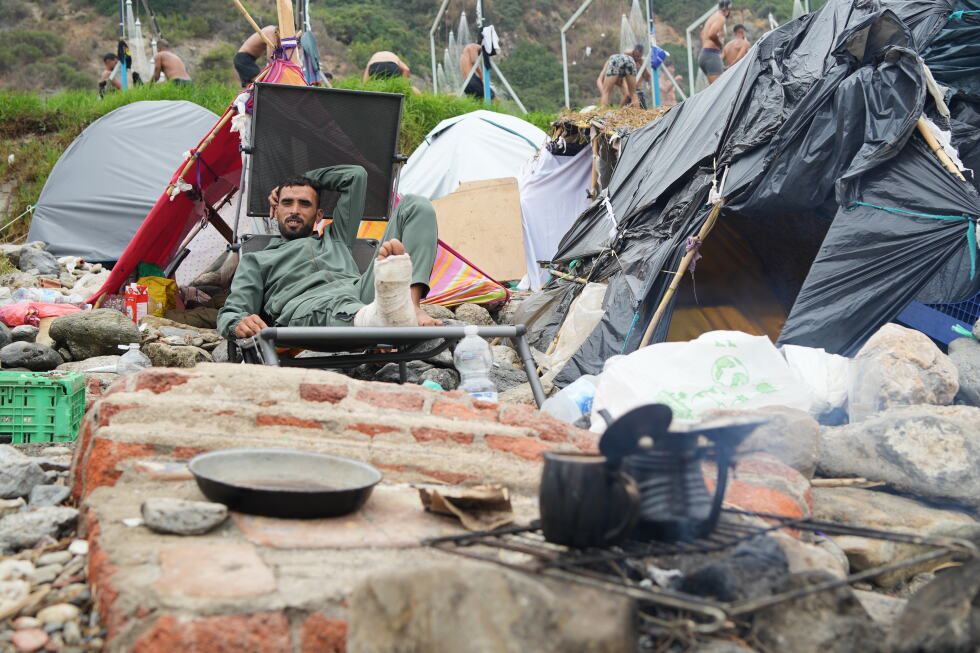
    Weeks after the initial border rush, daily life in Ceuta remains far from normal. Thousands of migrants still remain without formal housing, sleeping in makeshift camps along the city’s El Trampolín beach and in public spaces, despite ongoing efforts by authorities to register, shelter, and repatriate those eligible to return to Morocco. “We’re suffering and we want to get to Europe or find a solution right now. Here, we’re all sleeping on the beach and having a really hard time,” Nebil Tazi, a 24-year-old Moroccan migrant stranded in Ceuta, told the Associated Press. “We’ve been waiting for a month, waiting for a solution here, but there isn’t one.”

    Vivas, Ceuta’s regional president, has called on the central government to prioritize returning the exclave to stability and commit to permanently strengthening the border with Morocco, rather than relying on bilateral cooperation with Rabat to prevent future crises. “If we don’t do this, there will always be someone tempted to use migration as a tool for political ends,” Vivas warned.

    Ceuta’s September 2 holiday commemorates the 1415 arrival of the first Portuguese governor, just weeks after Portuguese forces seized the territory from local rulers. The territory was transferred to Spanish control in 1580, and has remained an overseas possession of Spain ever even as Morocco has continued to claim sovereignty over the area.

  • Faisal Islam: Why bond market wildfire is keeping world leaders up at night

    Faisal Islam: Why bond market wildfire is keeping world leaders up at night

    Global bond markets are experiencing unprecedented turbulence, with sovereign borrowing costs climbing to levels not seen in decades, driven by a confluence of geopolitical, corporate, and policy-driven factors that are reshaping the fundamental dynamics of government lending markets. This summer has delivered an unambiguous message to nations worldwide: access to capital will come at a steeper price than many had anticipated.

    The immediate catalyst for the current market unrest can be traced to ongoing disruptions in the Strait of Hormuz and a resurgence of armed conflict between the United States and Iran. These geopolitical frictions have sent energy prices soaring, stoked persistent global inflation, and forced markets to price in extended periods of elevated interest rates across the world’s largest advanced economies. Earlier in the year, many market participants held optimistic assumptions that Middle East tensions would de-escalate ahead of November U.S. midterm elections, with expectations that U.S. President Donald Trump would prioritize resolving the conflict before voters went to the polls. That optimistic outlook has proven unfounded, leaving markets adjusting to a new normal of sustained high energy prices, a long-running unresolved crisis in the Persian Gulf, and prolonged inflationary pressure that locks in higher interest rates for the foreseeable future.

    But geopolitical friction is only one piece of the broader story transforming bond markets. A far more structural shift stems from surging global demand for borrowed capital that extends far beyond government borrowing. Large technology sector giants have increasingly turned to global bond markets to raise hundreds of billions of dollars to fund massive investments in artificial intelligence infrastructure, particularly data centers designed to support next-generation AI models. This year alone, U.S. tech hyperscalers including Google, Amazon, and Meta have issued more than $219 billion (£162 billion) in new debt, with nearly one-third of that borrowing denominated in non-U.S. currencies including British sterling. For context, the total debt issued by these firms in all of 2025 was just $93 billion, and annual borrowing averaged less than $40 billion per year in the years prior to the AI investment boom. Some industry analysts forecast that total tech sector bond issuance could reach $400 to $500 billion by the end of 2026. This flood of corporate borrowing has intensified competition for capital in global bond markets, directly driving up borrowing costs for sovereign governments.

    Across East Asia, another major economy is contributing to the shifting landscape of global capital flows: Japan. Japan carries the highest sovereign debt-to-GDP ratio of any major advanced economy, while also holding the position of the largest single foreign lender to the U.S. federal government. Until recently, the Bank of Japan maintained its benchmark interest rate at near-zero levels, but gradual rate hikes to combat domestic inflation have pushed Japanese government bond yields to 30-year highs. The steady depreciation of the Japanese yen has further complicated market dynamics, but the underlying takeaway is clear: long-standing patterns of global capital movement are undergoing a permanent shift.

    Beyond supply and demand shifts and geopolitical shocks, the single most impactful factor pushing up sovereign borrowing costs is market assessment of the credibility of major nations’ borrowing and fiscal plans. Contrary to some popular narratives, the increase in yields is not driven by widespread fears of sovereign default among major economies. Instead, it reflects a straightforward market pricing rule: if a nation seeks to increase its borrowing without outlining a credible long-term fiscal plan, particularly when questions linger about the stability of its governing institutions, investors will demand a higher premium to hold its debt.

    Prominent leading economists differ on which factor is most driving the current bond market rout. Prominent market analyst Mohamed el-Erian identifies the surge in AI-related corporate borrowing as the most impactful new factor reshaping competitive dynamics in bond markets. Meanwhile, Lord Jim O’Neill, a former UK Treasury minister and leading economic commentator, argues that recent volatility is primarily rooted in uncertainty around U.S. fiscal policy, particularly the U.S. government’s uncoordinated efforts to calm surging Treasury yields.

    These global market shifts have particularly acute implications for the United Kingdom. Decades of persistent political instability, including repeated turnover in prime minister and chancellor roles, frequent policy U-turns, and the repeated failure to deliver on promised major structural economic reforms, have already led investors to price in a significant stability premium on UK gilts (British government bonds). Ahead of the latest general election, opposition Labour leader Sir Keir Starmer centered his economic strategy on delivering steady, incremental reform and policy stability to convince markets to lower UK borrowing costs. Many market participants were caught off guard when the Labour government, despite holding a landslide parliamentary majority, failed to push through proposed cuts to the UK’s welfare spending, adding further volatility to the UK gilt market.

    There are nascent positive signals in the UK’s underlying economic performance: UK economic growth has outpaced peer advanced economies through the first three quarters of 2026, even in the face of sustained elevated energy prices, and consumer confidence metrics have bounced back from earlier downturns. Prime Minister Burnham has sought to build on these tentative green shoots to drive broader economic recovery. However, the ongoing global bond market rout has raised serious new questions about the coherence and granularity of Burnham’s wider economic policy agenda. His campaign pledges of “more public control” of key economic sectors and expanded support for households struggling with the cost of living are widely interpreted as signaling increased government spending, a policy direction that has already alienated potential private investors looking at UK assets.
    Lord O’Neill, who previously served as an economic adviser to Prime Minister Burnham, recently stated that the prime minister’s upcoming 10-year economic plan, scheduled for release in November, must include clear commitments to address excessive public spending. Lord O’Neill argues that demonstrating decisive action to reform the state pension system and welfare spending will give the government fiscal space to pursue its prioritized infrastructure investment agenda. As global interest rates continue to climb, the difficult trade-offs facing the UK prime minister have only grown more challenging.

  • EU and Nato vow to step up pressure on Russia after ‘new escalation’ in Germany

    EU and Nato vow to step up pressure on Russia after ‘new escalation’ in Germany

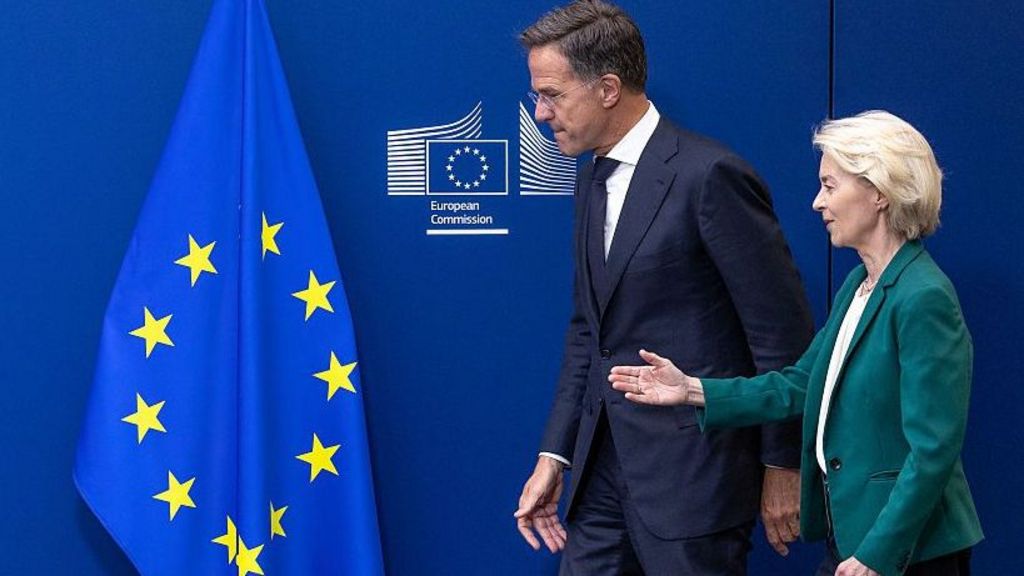
    In a sharp rebuke of escalating Russian hostile activity on European territory, European Commission President Ursula von der Leyen and NATO Secretary General Mark Rutte have formally accused Moscow of growing increasingly reckless, vowing a unified, robust response to what leaders frame as a dangerous new phase of hybrid aggression.

    The confrontation was triggered by last month’s attempted drone attack at Leipzig/Halle Airport, a critical NATO logistics hub that regularly hosts Ukrainian military transport aircraft. On Tuesday, the German government confirmed that weeks of police investigations and intelligence assessments conclusively tied the incident to Russia. Three drones were recovered in and around the airport: one was safely defused by a bomb disposal robot, a second collided with a cargo plane, and a third was discovered 10 days after the 4 August incident. German Interior Ministry officials note that the drones’ design, components, explosives, and triggering mechanisms match the signature of other proven Russian hybrid operations across Europe. Authorities have also identified two suspects linked to the plot: a Belarusian national holding a Russian passport who entered Germany on a tourist visa, and a dual Latvian-Russian citizen who flew into Berlin before departing two days ahead of the attempted attack. Moscow has forcefully denied all accusations, claiming Berlin has presented no concrete evidence to support its claims.

    In its first formal response to the proven attack, Germany has announced it will shutter the Russian consulate in Bonn and close the Russian House, a prominent cultural institution in Berlin that German security agencies have long suspected of operating as an unregistered Kremlin propaganda hub. The Kremlin has hit back sharply: Russian Foreign Ministry officials have pledged a “mirror-image” retaliatory measure, while President Vladimir Putin condemned Berlin’s actions as a “serious mistake” that directly contradicts the interests of the German people. When asked whether Moscow could cut full diplomatic ties with Berlin, Russian Deputy Foreign Minister Alexander Grushko acknowledged the possibility remained on the table, but said Moscow would give diplomatic channels a chance to de-escalate first. Some German political critics have argued Berlin’s current response is overly restrained, but German officials note they are prioritizing building a coordinated multilateral response alongside European and transatlantic allies, which could include expanded EU-wide sanctions and tighter entry restrictions for Russian travelers across the 27-nation bloc.

    Speaking alongside Rutte in Brussels, von der Leyen emphasized the unprecedented nature of the incident: “Leipzig marks a new escalation on European Union soil directly attributed to Russia. We have to step up and that means being ready to respond to Russia’s recklessness faster and better.” She added that the Leipzig attack is not an isolated event, but part of a growing pattern of increasingly dangerous Russian hostile actions targeting European critical infrastructure, including repeated drone incursions and sabotage attempts. Rutte echoed the condemnation, affirming that the entire 32-member NATO alliance – including the United States – stands in full solidarity with Germany. He noted that alliance members have seen a steady rise in direct malign activity on NATO territory, ranging from arson attacks on factories manufacturing defense equipment for Ukraine to the confirmed hybrid plot in Leipzig.

    As EU and NATO leaders met in Brussels, EU foreign ministers gathered in Wicklow, Ireland, to discuss further collective measures. French Foreign Minister Jean-Noël Barrot announced that European-level action could be targeting Russia’s shadow fleet of oil and cargo vessels that operates to evade existing EU sanctions. Barrot, alongside his counterparts from Belgium and the Netherlands, has already summoned the Russian ambassador in their respective capitals to formally protest the Leipzig attack. Lithuania’s Foreign Minister Kestutis Budrys pointed out a worrying trend: Moscow has calculated that it faces no meaningful political cost for its repeated hybrid operations against European allies, encouraging further escalation.

    In a separate development that adds to heightened security tensions, Germany reported multiple suspected sabotage incidents across the country in just 24 hours, including two separate attacks on electrical substations – one in eastern Germany and a second near Cologne in western Germany. While authorities have not yet attributed these attacks to any actor, Herbert Reul, Interior Minister for the state of North Rhine-Westphalia, confirmed the attack on power lines in Bergheim was deliberate, stating that the perpetrators “attacked the entire country.” Reul added that investigators are probing two leading hypotheses: foreign state-directed sabotage and attack by domestic left-wing extremist groups.

    Von der Leyen outlined the next steps for the bloc, noting that existing sanctions have already constrained Russia’s war capacity, but EU foreign ministers are currently negotiating new measures to “cut deeper into Russia’s war chest.” The EU has already approved a €90 billion loan package to support Ukraine’s government and military operations, and von der Leyen confirmed that Kyiv has requested additional billions in funding to acquire PAC-3 air defense missiles to protect civilian infrastructure from Russian missile and drone attacks. She also revealed that work is already underway on a joint European-Ukrainian anti-ballistic missile defense initiative, codenamed Project Freyja. Closing her statement, von der Leyen reaffirmed the unwavering commitment of the EU and NATO to supporting Ukraine: “Europe and NATO will not just maintain pressure on Moscow, we will increase it, and we will not stop – not until Russia stops bombing and killing innocent people in Ukraine.”