Almost a decade after the 2016 Brexit referendum and five years since the United Kingdom formally exited the European Union, one of the most divisive issues in modern British political history has burst back into the national spotlight.
It is easy to forget how all-consuming this debate was for years at Westminster. The saga stretches all the way back to the 2015 Conservative general election victory, when the party’s manifesto made a binding promise to hold a public in-out referendum on EU membership by the end of 2017. Then-prime minister David Cameron pursued a renegotiation of the UK’s membership terms to secure what he framed as a better deal for Britain, before the historic public vote was held on 23 June 2016.
The 2016 result did not end the debate – it only opened the door to years of bitter, protracted wrangling. Two general elections came and went in 2017 and 2019, and two successive prime ministers, Theresa May and Boris Johnson, grappled with the withdrawal process before the UK finally completed its exit at 11pm on 31 January 2020. By that point, voters on both sides of the debate were exhausted: regardless of whether they supported Leave or Remain, there was widespread hunger to move on to other policy priorities. Mainstream political parties picked up on this public fatigue, keeping their long-held positions on the EU out of the public spotlight and avoiding extended discussion of the issue.
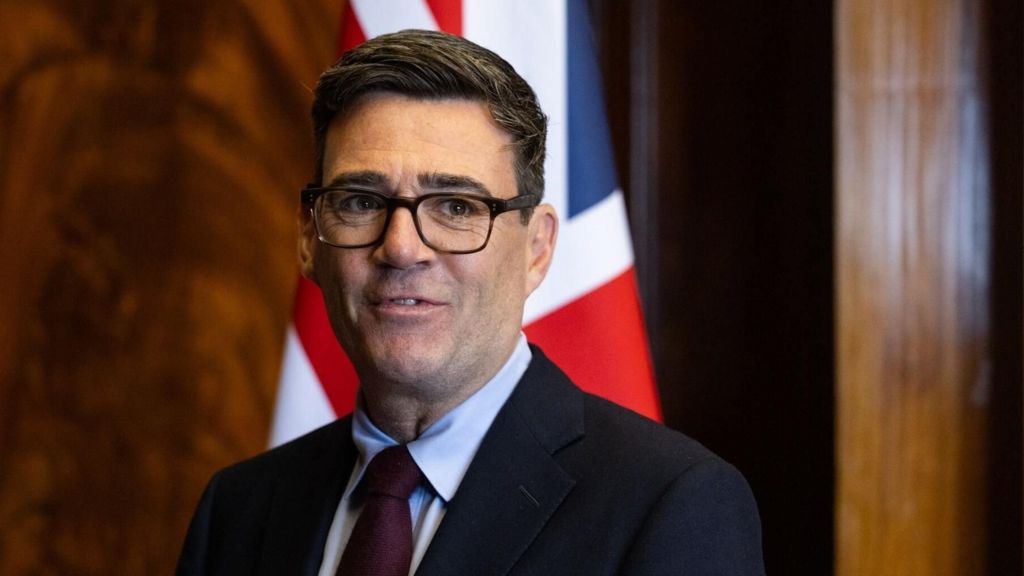
That political truce is now over, following the arrival of Andy Burnham in Downing Street – a shift that comes despite Burnham’s previous pledges to keep Brexit off the top of the political agenda. The new prime minister has repeatedly leaned into the argument that it is long past time to “face up to the reality that Brexit has done more harm than good” and that “the status quo is not good enough for Britain.” He first laid out this case at the annual Labour Party Conference last month, and doubled down on the position during a recent address to the House of Commons.
Burnham is advancing a two-part strategy for reorienting Britain’s relationship with Brussels. In the short term, he aims to “deepen” bilateral ties at a upcoming UK-EU summit in Brussels scheduled for 20 November, insisting that any planned expansion of cooperation will stick to Labour’s last general election pledge of rejecting membership of the EU customs union, single market, and the free movement of people. For the medium term, however, Burnham has left the door open to a new public vote: he confirmed recently that Labour’s next general election manifesto could include a promise for a second in-out referendum on Britain’s EU relationship. Addressing MPs, he sought to reassure voters of all positions, noting: “This country in the next decade needs to know where it is going. There are no assumptions here, and as I said, the British public will be the boss of whatever is decided.”
Critics have pushed back hard on the prime minister’s move, arguing that the issue was already settled by voters a decade ago. Lord Frost, a former Brexit minister and chief UK Brexit negotiator, wrote in the Telegraph that “[voters] weighed the arguments and made a decision. The least they are owed is politicians willing to defend it.”
In the five-week lead-up to the Brussels summit, Downing Street is focused on securing what it frames as tangible, short-term gains in three key areas: youth mobility, food and drink trade, and cross-border energy cooperation. Burnham argues that a pragmatic deepening of ties with the EU will cut levels of illegal immigration and drive national economic growth – a framing that has put him at odds with Conservative leader Kemi Badenoch, who has condemned the plan as a reckless rehash of old debates with little chance of meaningful progress.
The most explosive new element of the revived debate came when Burnham made unsubstantiated claims about Russian interference in the 2016 referendum. Appearing on The Rest Is Politics podcast, he said that upon entering Downing Street, he had asked officials whether Russia interfered in the 2016 vote, claiming: “I’ve had a clear answer that, yes, there was.” He offered no details on who provided this confirmation or what evidence supported the claim. In the House of Commons, he softened his language, using a double negative to say it was “inconceivable” that Russia did not attempt to interfere.
Political opponents immediately seized on the controversial claim. Reform UK leader Nigel Farage called the prime minister “a liar” in blunt terms. Former prime minister Boris Johnson added that he had asked the same question when he served as Foreign Secretary, and “they replied that there was no evidence of any successful interference in the 2016 referendum, by Russia or any other power.” The exchange has sparked a new row over the difference between attempted interference, confirmed interference, and successful interference that changed the outcome of the vote.
The re-emergence of the Brexit debate marks a historic shift: this is the first time since formal exit in 2020 that a sitting UK prime minister has openly and unflinchingly reopened discussion of whether Brexit is working, how it can be improved, and whether it has ultimately been a failure for Britain. Politically, the strategy is rooted in two key calculations. First, opinion polling consistently shows a majority of British voters now believe Brexit has not delivered on the promises its backers made ahead of 2016. Second, Burnham hopes to draw pro-European voters across the left of British politics – from the Liberal Democrats and Greens to the Scottish National Party and Plaid Cymru – into the Labour coalition ahead of the next election.
For now, the political landscape is set for a return to a familiar debate. As the conversation over Britain’s relationship with its closest neighbors resumes, British politics may be about to get a heavy dose of that old, divisive, all-consuming Brexit energy once again – with no clear end to the new round of wrangling in sight.