On Monday night local time, Yemen’s Houthi movement launched a large-scale attack targeting Saudi Arabia’s capital Riyadh, marking a sharp escalation of cross-border hostilities following a series of smaller strikes against the city over the preceding weekend. The Houthi group confirmed it deployed a ballistic missile to strike King Khalid International Airport in Riyadh, and simultaneously claimed responsibility for a separate attack on King Khalid Air Base located near the southwestern Saudi city of Khamis Mushait.
A Western diplomatic source based in Riyadh confirmed to independent outlet Middle East Eye that multiple explosions were detected across the capital, while unauthenticated social media footage circulating online purports to show large uncontrolled fires breaking out at impact sites. MEE has not been able to independently verify the authenticity of the circulated video footage. Following the attack, Saudi aviation authorities issued a formal Notice to Airmen advisory confirming King Khalid International Airport would remain closed to all commercial and general aviation traffic through October 17.
This attack comes just three weeks before Riyadh is set to host the high-profile Future Investment Initiative (FII), the kingdom’s flagship global investment conference that draws hundreds of top business leaders and policymakers from across the world to showcase Saudi Arabia’s economic opening under its Vision 2030 reform agenda. The strike also follows the high-profile last-minute withdrawal of the chief executives of ExxonMobil, Shell, and TotalEnergies from a separate major energy conference hosted in Riyadh earlier this week.
Opening the energy conference on Monday, Saudi Energy Minister Prince Abdulaziz bin Salman acknowledged persistent security risks while reassuring attendees of the kingdom’s commitment to their safety. “To everyone who travelled to Riyadh, thank you,” he told the gathering. “You know this country is safe and that we hold your protection at whole heart… Our gathering here does not mean the risk is gone.” Despite the security disruption, Prince Abdulaziz announced an ambitious expansion plan for Saudi oil exports that bypasses the Strait of Hormuz: the kingdom will repurpose an existing natural gas pipeline running parallel to its East-West oil pipeline to add up to 1.2 million barrels per day of additional export capacity within seven to eight weeks, bringing the kingdom’s total Hormuz-independent export capacity to as much as 10 million barrels per day.
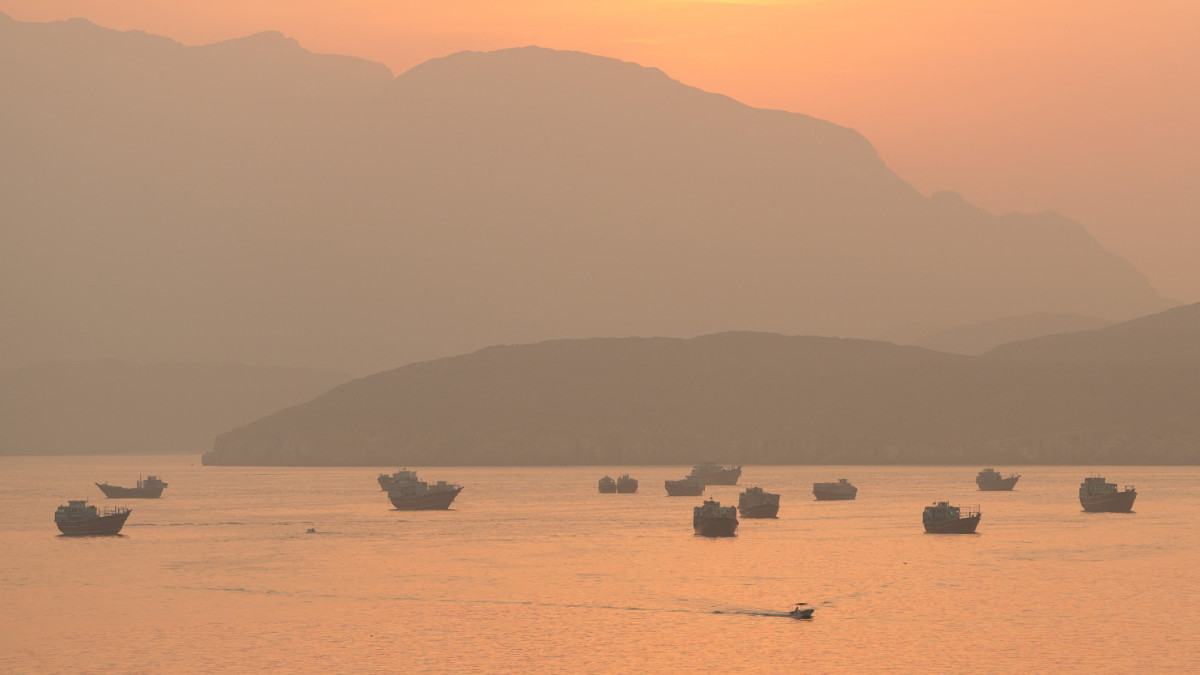
The Houthi attack on Riyadh unfolds against a backdrop of rapidly escalating tensions across the broader Middle East, as the region braces for a potential resumption of direct U.S.-Israeli military action against Iran. On Monday alone, Iran’s Islamic Revolutionary Guard Corps (IRGC) confirmed it had targeted a commercial supertanker attempting to exit the Strait of Hormuz, the world’s most critical chokepoint for global oil trade, marking the third vessel attack recorded in the strategic waterway over a 48-hour period.
While Washington and Tehran have avoided direct open military confrontation in recent months, the two powers are locked in a growing standoff over control and access to the strait, with each side moving to enforce competing blockades on commercial shipping. Iranian Revolutionary Guard-linked Tasnim News has publicly called for Tehran to impose a “sovereignty fee” on all commercial vessels transiting the strait, a demand that was a core sticking point that led to the collapse of a preliminary ceasefire agreement between the U.S. and Iran reached in June.
In a stark escalation of rhetoric published Monday, senior Iranian security official Mohsin Rezaei warned that Tehran would target critical infrastructure belonging to U.S. technology firms across the Middle East if hostilities resume. “The United States has extremely expensive assets in the UAE and around the Strait of Hormuz,” Rezaei noted. “We have not yet included these assets among our targets. But if war breaks out, many of these cables, data centres, artificial intelligence facilities and numerous other sites will be destroyed.”
The rising geopolitical risk has already roiled global energy markets: international benchmark Brent crude rose 2% on Monday to settle at $106 per barrel. With U.S. midterm elections scheduled for November 3, sitting President Donald Trump has come under increasing pressure to rein in rising fuel prices for American consumers. Trump has blamed the ongoing conflict in Ukraine for spiking U.S. diesel prices, and last week announced a controversial deal with Russian President Vladimir Putin that waives existing U.S. sanctions on Russian diesel exports, a move that drew widespread condemnation from supporters of Ukraine.
Analysts have noted that the sudden jump in U.S. diesel prices has aligned almost perfectly with the resumption of U.S.-Israeli military operations against Iran that began on February 28. Open-source photographs circulating online appear to show fuel trucks marked with Farsi script operating inside Russia, leading some analysts to conclude that Moscow has been forced to import diesel from Iran to offset widespread damage to Russia’s domestic energy infrastructure from months of long-range Ukrainian strikes. MEE has not yet been able to independently verify the authenticity of these images, and commentators have noted that Trump’s sanctions waiver could also open the door for Iranian diesel to enter global markets through Russia.
The large-scale Houthi attack on Riyadh has also amplified domestic and international pressure on Trump to reverse the current U.S. ceasefire with the Houthis that has been in place since May 2025. Speaking to reporters after the attack, which Houthi sources confirm killed at least 13 people and wounded hundreds more, Trump called the strike “not acceptable” and confirmed he would soon speak to Saudi Crown Prince Mohammed bin Salman to discuss next steps, including the possibility of U.S. forces joining Saudi military strikes against Houthi positions in Yemen.
The Houthi movement has issued a clear warning in response: any direct U.S. intervention in the conflict would immediately end the existing truce between the group and Washington. “If the US becomes involved in the aggression against Yemen, we will not deliberate over the decision to respond, rather, there will be a swift and painful response targeting the US and all its interests in the region,” Houthi political bureau member Mohammed al-Bukhaiti told AFP in a post-attack interview.
Saudi Arabia is currently moving to shore up its defensive posture through new regional security partnerships: Riyadh has turned to Turkey and Pakistan to bolster security assistance under the recently signed Mecca Pact. Separately, Israeli outlet Haaretz reported Monday that Saudi Arabia has rejected a formal Israeli offer to join joint military operations against the Houthi movement in Yemen, despite efforts by U.S. mediators to broker closer security cooperation between Riyadh and Tel Aviv targeting common regional adversaries.