博客

  • Trump anticipates better relationship with Colombia under new leader

    Trump anticipates better relationship with Colombia under new leader

    Colombia’s 2026 presidential run-off election has set the stage for a potential seismic shift in bilateral relations between the United States and the South American nation, after preliminary vote counts put right-wing contender Abelardo de la Espriella just ahead of his left-wing opponent, with former U.S. President Donald Trump already predicting a far warmer partnership between the two governments.

    According to unofficial but widely cited preliminary official tallies, de la Espriella holds a slim lead of just 0.96 percentage points over left-wing candidate Iván Cepeda — a margin of roughly 250,000 votes that marks the closest presidential election outcome in modern Colombian history. Cepeda has not yet conceded defeat, noting he will await the completion of a mandatory full vote cross-checking process that typically takes multiple days to finalize.

    Trump, who openly endorsed de la Espriella ahead of the run-off and previously labeled Cepeda a “radical Left Marxist”, has already moved to celebrate the preliminary result. Contradicting the narrow vote margin, Trump told reporters on Monday that de la Espriella had “won easily”, and later posted on his Truth Social platform that he is eager to collaborate with the president-elect to build a “powerful relationship” between the two nations.

    The projected election outcome comes after years of sour relations between Trump and outgoing Colombian left-wing President Gustavo Petro. The two leaders have traded harsh public insults: Trump previously called Petro a “sick man” and baselessly labeled him a “drug-trafficking leader”, while Petro drew fierce pushback by comparing Trump’s immigration policies to those of Nazi Germany. Most recently, after a U.S. military operation targeting Venezuelan leader Nicolás Maduro in January, Trump sparked controversy by saying a military operation against neighboring Colombia “sounded good”.

    When asked by a Colombian journalist how he expects bilateral ties to evolve following the election, Trump reaffirmed his optimistic outlook, saying “it’ll be better, he [de la Espriella] is going to be a great president”.

    De la Espriella campaigned on a hardline platform focused on combating drug trafficking and organized crime — a persistent crisis in Colombia, which remains the world’s largest producer of coca, the base ingredient for cocaine. A core campaign pledge from the candidate is to bring Colombia into the Shield of the Americas, a U.S.-led alliance of Latin American nations formed to counter cartel activity. Outgoing President Petro had previously dismissed the alliance, criticizing its inaugural Miami summit in March by saying the gathered member states were “the least experienced in the fight against drugs in the Americas”.

    De la Espriella has pledged deeper counter-narcotics cooperation with the United States, including proposals to launch airstrikes against drug trafficking groups and allow U.S. military bases to operate on Colombian soil. These plans have sparked concern among Cepeda’s supporters, who warn that a hardline security approach could lead to a resurgence of grave human rights abuses, echoing the country’s infamous “false positives” scandal. During Colombia’s decades-long internal armed conflict, over 6,400 civilians were killed by security forces and falsely presented as guerrilla combatants to inflate official kill counts.

    Addressing these concerns in his preliminary victory speech, de la Espriella stressed that while he would take aggressive action against drug traffickers and criminal “bandits”, all operations would adhere to the bounds of Colombian law and the national constitution. The winning candidate will be formally sworn in as Colombia’s next president on August 7.

  • Tech giant Oracle cuts 21,000 jobs as it embraces AI

    Tech giant Oracle cuts 21,000 jobs as it embraces AI

    In a revealing disclosure from its latest annual filing, American tech giant Oracle has confirmed it eliminated approximately 21,000 global positions over the past 12 months as it refocuses its entire business strategy around artificial intelligence. The software and cloud computing leader reported holding 141,000 full-time staff as of May 31, 2026, a sharp drop from the 162,000 employees it employed at the same point in 2025. The 13% workforce reduction marks one of the largest rounds of layoffs in the tech sector this cycle, and aligns with a sweeping industry trend as major technology firms pour hundreds of billions of dollars into developing and expanding AI-capable infrastructure such as high-performance data centers.

    Oracle explicitly noted in its filing that the integration of AI tools across its internal operations has driven these headcount cuts, and cautioned that additional workforce reductions may still be on the horizon. While senior insiders had shared reports of major layoffs on professional social platforms back in April, the full scope of the cuts had remained undisclosed until the annual report was submitted to regulators. The company has incurred roughly $1.8 billion in severance payouts and other restructuring costs over the past year, a massive jump from the $374 million in restructuring expenses it recorded in the prior fiscal year.

    Oracle acknowledged that its organizational overhaul carries tangible risks. In its filing, the firm warned that the restructuring process can be disruptive to operations, and that it may face shortages of skilled workers for critical roles, leading to temporary productivity dips that could ultimately impact bottom-line earnings. When contacted by the BBC, a company spokesperson defended the strategy, stating: “As our cloud and AI businesses grow, we will continually balance our resources and restructure our development group to help ensure we have the right people delivering the best cloud and AI products to our customers around the world.”

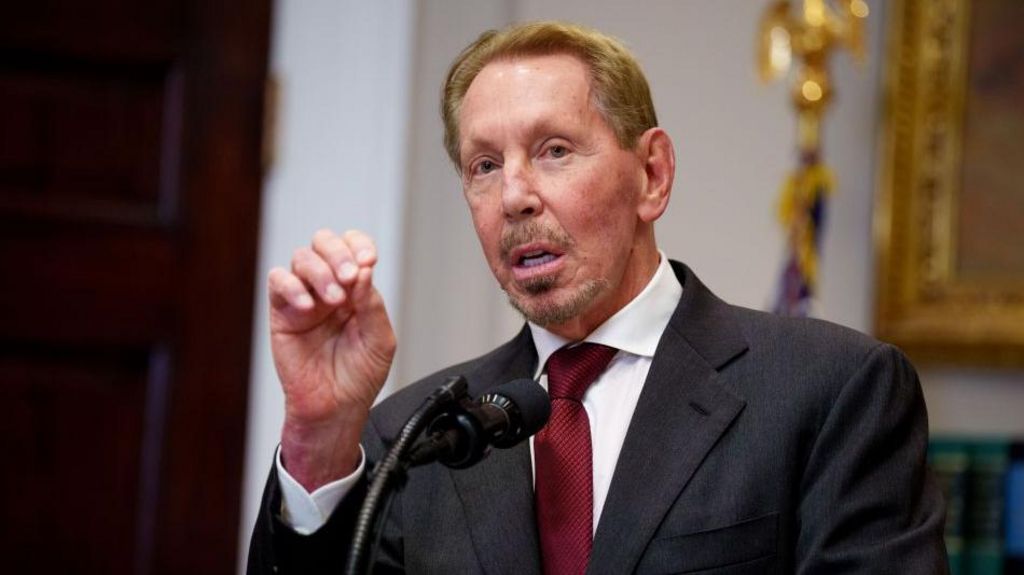
    Oracle is currently locked in a high-stakes race to expand its data center capacity to serve leading AI developers including OpenAI and Meta. Earlier reporting from the BBC has confirmed the firm plans to invest at least $50 billion in new infrastructure this year alone. Founded in 1977 by Larry Ellison, who remains one of the world’s wealthiest individuals and still serves as Oracle’s chief technology officer, the company has long been a major player in enterprise software and cloud services.

    Oracle’s layoffs are far from an isolated case. Tech rivals including Amazon and Meta, the parent company of Facebook, have both cut thousands of jobs in recent months as they redirect capital toward AI development. Employment trackers estimate that more than 100,000 tech workers have lost their jobs across the industry in the past 12 months. For most large tech firms, labor represents the single largest operating expense, making headcount reductions the most straightforward way to free up capital for AI investments. This year alone, Google, Amazon, and Meta have committed a combined total of roughly $650 billion to AI research and infrastructure expansion.

    Amazon currently plans the largest AI investment out of any major tech firm, with a $200 billion budget for AI projects and infrastructure over the next 12 months. The e-commerce and cloud giant, which employs more than 1.5 million people globally, has already cut around 30,000 jobs through multiple rounds of layoffs. In an internal memo sent to staff last October, a senior Amazon executive explained the restructuring, noting that the company needed to become “more leanly” organized because AI is “enabling companies to innovate much faster than ever before.”

  • Spider which uses spring trap to capture prey discovered in Australia

    Spider which uses spring trap to capture prey discovered in Australia

    In the remote, dense rainforests of northern Queensland, Australia, a team of researchers from Macquarie University has uncovered a remarkable new species of spider with a one-of-a-kind hunting strategy that has stunned arachnid biologists. The tiny arachnid, already nicknamed ‘ballista’ after the ancient stone-hurling battle weapon, has evolved a specialized catapult-like silk trap built exclusively to catch a single, dangerous target: aggressive green tree ants (*Oecophylla smaragdina*).

    Lead researcher Professor Ajay Narendra explained that targeting this notoriously risky prey required a completely unprecedented evolutionary adaptation. Green ants are formidable opponents for most spiders: they carry powerful chemical defenses, many can deliver painful stings, and they can call in swarms of backup colony members within minutes to overwhelm predators. To overcome these risks, the ballista spider developed a hunting mechanism that delivers what researchers call “exceptionally high power” to subdue prey before it can mount a defense.

    To document the spider’s unique behavior, the research team spent 10 nights conducting field observations in the tropical rainforest, capturing the trap mechanism using high-speed and infrared imaging technology. Their findings, published in the peer-reviewed journal *Current Biology*, detail the spider’s careful, hours-long trap-building process.

    During daylight hours, the ballista spider hides in small silk nests on the undersides of leaves on trees occupied by green tree ant colonies. After night falls, it descends roughly 50 centimeters to a nearby leaf, branch, or forest floor to begin construction. First, it anchors the trap with a sturdy silk anchor line. It then builds a cone-shaped scaffold made up of dozens of tensioned silk lines, before wrapping the entire structure in a thinner, more elastic silk layer and retreating back up to a waiting position above the trap.

    When a green tree ant approaches the snare and bites the silk, the tensioned structure triggers instantly, hurling the ant upward into a larger capture web above with extraordinary force. Researchers calculate the acceleration generates g-forces 15 times higher than the maximum extreme g-forces experienced by fighter jet pilots — a level of power never before recorded in a spider’s web.

    After the ant is launched into the upper web, the spider waits until the prey is fully immobilized before moving in to feed, eliminating any risk of counterattack from the ant. What makes this adaptation even more unusual is the spider’s extreme prey specificity: tests showed the ballista spider only catches green tree ants, even when other species of nocturnal ants were placed within reach of the trap. Researchers suspect the spider lures green ants specifically by adding species-specific pheromones to the trap silk, a strategy that triggers the ants to attack the structure unknowingly.

    Professor Narendra noted that this discovery breaks new ground for arachnology. “This seems to be the only case where a spider’s web is designed to catch a single prey species, and where the mechanism is triggered by the prey rather than by the predator,” he said. Co-researcher Dr. Jonas Wolff added that the trap mechanism evolved as a highly specialized way for the tiny spider to pick off individual hazardous ants one by one, moving them to a safe distance far from ant trails and colonies before the prey can alert the rest of the colony.

    The new species belongs to the genus *Propostira*, and was first spotted by Greg Anderson, a biomedical researcher and amateur arachnid researcher and photographer, before the formal study was launched. It is yet to receive a formal scientific name, but the common nickname ‘ballista’ has already been widely adopted by the research team in reference to the extreme speed and force of its hunting weapon.

  • Germany’s leader pledges to reform a creaking pension system and says ‘failure is not an option’

    Germany’s leader pledges to reform a creaking pension system and says ‘failure is not an option’

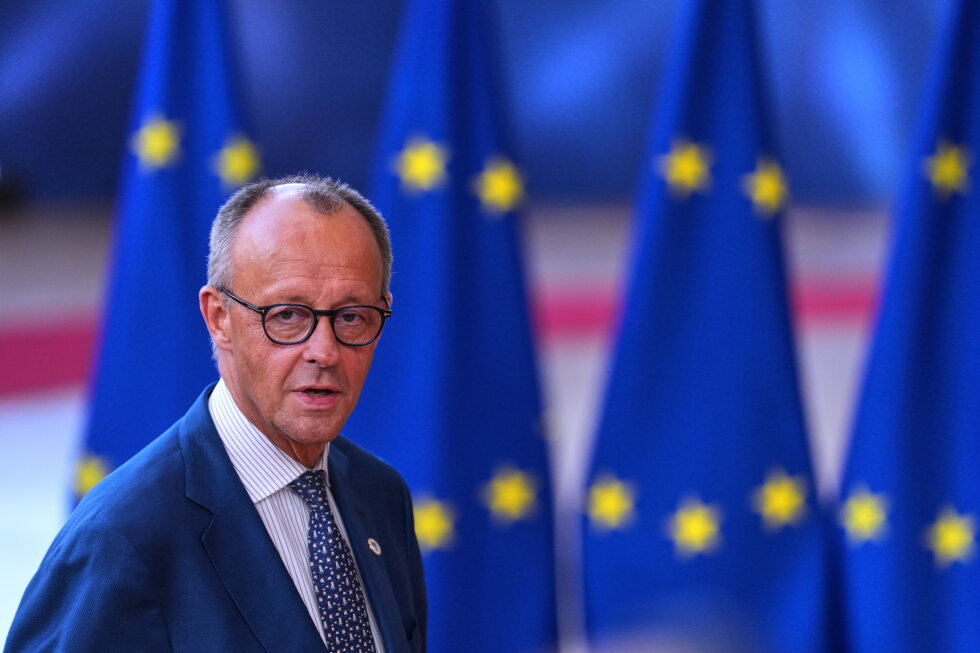
    BERLIN — One year into its tenure, the cross-center coalition government led by German Chancellor Friedrich Merz has announced an urgent push to enact sweeping reform of Germany’s long-strained public pension system, anchored by a gradual increase of the retirement age tied directly to rising life expectancy. Merz has framed the reform as non-negotiable, stating bluntly that “failure is not an option” for the unpopular administration, which swept into office promising to revitalize Europe’s largest economy.

    The coalition, pairing center-right and center-left parties, has faced plummeting public approval over the past 12 months. Voters have widely criticized the government for internal infighting and a perceived lack of tangible progress on the structural challenges that have held Germany’s economic growth back for years. After two consecutive years of contraction, Germany logged only modest growth in 2024, and official projections put this year’s GDP growth at a meager 0.5% — a forecast downgraded due to economic spillover from the ongoing war in Iran.

    Long-term headwinds have compounded these short-term growth headwinds: Germany’s 83.5 million population is steadily aging, creating an unsustainable imbalance where a shrinking pool of working contributors must fund benefits for a growing cohort of retirees. Beyond demographic pressure, the country also contends with rising competition from Chinese manufacturing, persistently elevated energy prices stemming from Russia’s full-scale invasion of Ukraine, and ongoing trade uncertainty created by U.S. President Donald Trump’s tariffs and trade threats. Deep structural flaws, including high domestic production costs, stagnant private investment, and ballooning costs for both health and public pension systems, have further suppressed economic momentum.

    On Tuesday, a government-appointed independent commission of policy experts and sitting politicians delivered a final report containing 33 targeted recommendations designed to stabilize the pension system for decades to come. The core goals of the proposals are twofold: protect current pension benefit levels from cuts, and avoid the need for drastic long-term increases to the payroll contribution that workers pay into the system, which currently stands at 18.6% of gross wages.

    The commission’s most high-profile proposal mirrors a model already used in Sweden, adding regulated market investments to individual pension accounts as a way to generate additional revenue and ease systemic financial pressure. The panel also recommends extending the gradual retirement age increase Germany implemented two decades ago, when the country raised the standard retirement age from 65 to 67. Under the new plan, starting in 2031, the retirement age would be adjusted automatically to match changes in life expectancy. According to German federal statistics office data, national life expectancy currently sits at 78.5 years for men and 83.2 years for women.

    Commission co-chair Constanze Janda emphasized that the adjustment would be mild, projecting that the retirement age would rise by roughly six months every decade if current life expectancy growth trends continue. Additional proposed changes include scrapping the mid-2010s policy that allowed workers with 45 years of contribution history to retire at 63 without any reduction in pension benefits, replacing that rule with a new minimum retirement age of 64. The panel also recommended raising the age threshold for workers to access reduced working hours ahead of full retirement from 55 to 58.

    Chancellor Merz confirmed Tuesday that his coalition plans to move quickly to implement the entire package of commission proposals, a commitment echoed by Labor Minister Bärbel Bas, co-leader of the center-left Social Democrats, the coalition’s junior partner. Despite the unified government pledge, the reform package faces a steep legislative path: the governing coalition holds only a narrow minority in parliament, and the proposals have already drawn sharp pushback from powerful German labor unions. Reaffirming his administration’s commitment, Merz repeated that inaction is not a viable solution to the country’s long-term demographic and fiscal challenges.

  • Estranged husband of former Scottish leader sentenced to 5 years and 3 months in prison

    Estranged husband of former Scottish leader sentenced to 5 years and 3 months in prison

    EDINBURGH, Scotland — In a landmark sentencing that has sent shockwaves through Scottish politics, Peter Murrell, the 61-year-old former chief executive of the Scottish National Party (SNP) and estranged husband of ex-Scottish First Minister Nicola Sturgeon, has been handed a five-year, three-month prison term for siphoning more than £410,000 ($540,000) from the pro-independence party to bankroll an extravagant personal lifestyle. The sentence was handed down on Tuesday at Edinburgh’s High Court, with credit already applied to account for time Murrell has already served behind bars.

    Judge James Young delivered a scathing rebuke of Murrell’s actions, framing the crime as a deliberate, systematic breach of public trust. “All told, this was a calculated crime of dishonesty,” Young told the court. The judge emphasized that the severity of the sentence was intentionally crafted to serve as a warning to senior leaders across all large organizations who may consider misusing their positional authority for personal gain. “One factor in the sentence which I imposed today will be to act as a deterrent to any senior officials in other large organizations who might be tempted to abuse their position in the way that you did,” he added.

    In a rare assessment, Judge Young noted that he could find no mitigating circumstances in Murrell’s personal or professional background to justify a reduced sentence. He acknowledged, however, that the relentless public scrutiny surrounding Murrell’s conviction will almost certainly bar him from any meaningful future employment, even after his release. “In truth, it is very difficult to get a clear picture for what drove your actions,” Young said, adding that many of the high-value goods Murrell purchased with stolen funds were never even used.

    Court documents and public reporting have laid bare the full scope of Murrell’s misuse of party funds. Beyond the major purchases that first drew attention — a high-end motorhome and a Jaguar electric SUV — Murrell spent stolen money on a sprawling array of personal items ranging from luxury goods to mundane household objects. The list includes premium Bremont watches, multiple high-end coffee makers, a robot lawnmower, Nintendo video games, an egg poacher, two premium toilet seats, and a DVD box set of the Danish political drama *Borgen* — a series Sturgeon once publicly stated she enjoyed. He also used party funds to buy a pendant that Sturgeon was frequently photographed wearing in public.

    Murrell’s defense attorney, John Scullion, told the court that his client has been completely cut off from his former political circles since his crimes came to light, and has already endured months of near-total social isolation. Scullion confirmed that Murrell accepts full responsibility for his actions and does not dispute the severity of his offenses.

    The conviction and sentencing wrap up a turbulent chapter for the SNP, Scotland’s long-dominant pro-independence party, which has been reeling from the scandal since it first emerged. Sturgeon, who led Scotland’s devolved government for over eight years before stepping down as SNP leader in February 2023, has repeatedly denied any knowledge of Murrell’s embezzlement scheme and has publicly distanced herself from his crimes. The investigation was launched less than two months after Sturgeon’s resignation, when police executed a search warrant at Murrell’s home on April 5, 2023.

    Since that initial search, the case has dominated front-page headlines across Scotland and the entire United Kingdom, sparking intense debate over the political future of the SNP and the ethics of political leadership. The unusual breadth of items purchased with stolen funds, ranging from luxury assets to trivial household goods, has captured widespread public attention, keeping the scandal at the top of the national political agenda for nearly a year.

  • How do you solve a problem like Ronaldo?

    How do you solve a problem like Ronaldo?

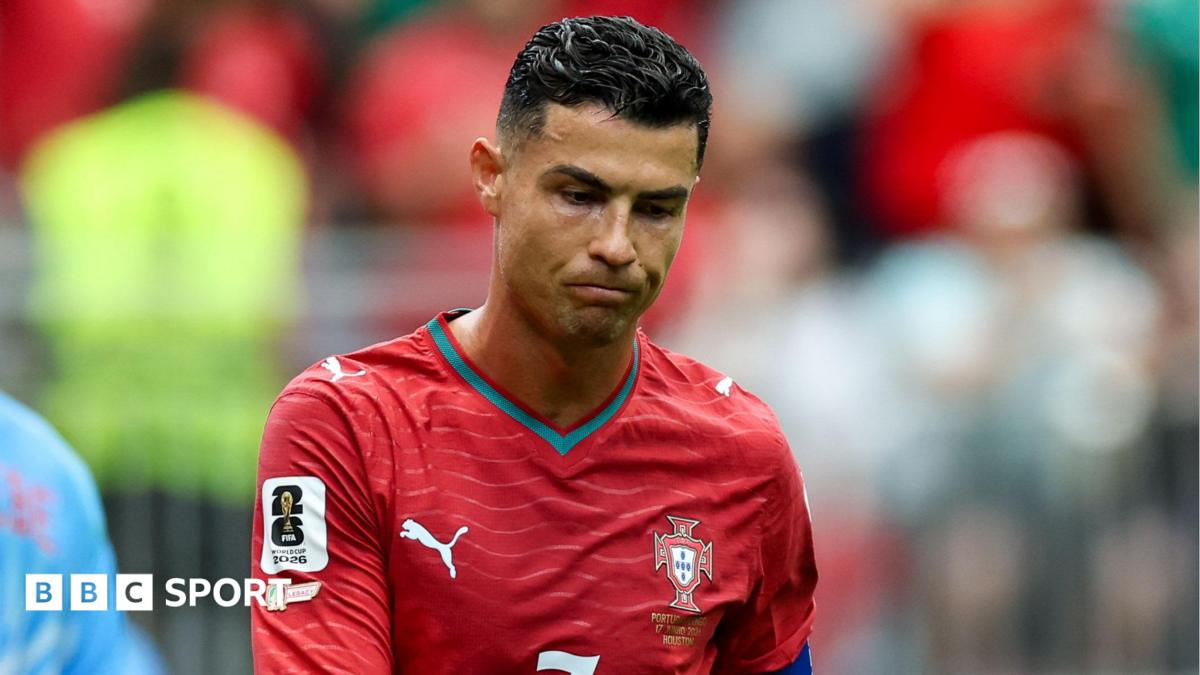
    What was supposed to be a celebratory, record-breaking final World Cup for Cristiano Ronaldo has instead devolved into a messy public feud that has split Portuguese football just days into the 2026 tournament.

    The 41-year-old, who is making his sixth and final World Cup appearance to match an all-time record, has been at the center of growing controversy since Portugal’s opening group-stage 1-1 draw with DR Congo. What stoked tensions most wasn’t the underwhelming result itself, but a seemingly harmless comment from 21-year-old Paris Saint-Germain midfielder Joao Neves, who scored Portugal’s only goal in that match. When asked about Ronaldo’s role in the current squad, Neves offered a measured response: he acknowledged Ronaldo’s legendary contributions to Portuguese football, but noted that the captain is just another squad member working to contribute, no different from any other player.

    That mild comment quickly spiraled out of control online. Thousands of diehard Ronaldo supporters flooded the social media accounts of Neves, playmaker Bruno Fernandes and other squad members, accusing them of disrespecting the captain. What makes this backlash extraordinary even for a global superstar of Ronaldo’s stature is that members of the forward’s own inner circle amplified the tension. Partner Georgina Rodriguez shared a reaction to a fabricated quote attributed to Neves’ girlfriend before deleting the comment, while Ronaldo’s sisters Katia and Elma Aveiro posted public content claiming a faction of the squad was trying to freeze the captain out of the team. Even Portugal’s highest-viewed television network, CMTV, in which Ronaldo holds a stake, saw a long-time legal and business representative for the striker cite a fake Zinedine Zidane quote in a public defense of the captain.

    The chaos quickly spilled over into Portugal’s closed training camp in Palm Beach, where reporters have repeatedly pressed squad leaders on whether the national team is now split between pro-Ronaldo and anti-Ronaldo factions. “This shouldn’t even be a topic of discussion,” defender Ruben Dias said in a tense press conference. The next day, full-back Diogo Dalot added: “We know there are a lot of people who don’t want Portugal to win,” declining to name those he was referring to, adding “If I had to do that, we’d never leave here. It’s not my role.”

    At the heart of the tension is a brutal on-pitch drought for Ronaldo that stretches back four years. The captain has now gone 10 consecutive matches across the World Cup and European Championship without scoring, dating back to a penalty against Ghana at the 2022 Qatar World Cup. In the opening draw with DR Congo, he took three shots—more than any other Portugal player—but failed to put any on target. That drought has reignited long-simmering questions about whether Ronaldo still deserves a starting spot in the squad, despite his historical legacy.

    Statistics from manager Roberto Martinez’s tenure underscore the unspoken reality of Ronaldo’s role: across 30 matches where Ronaldo started under Martinez, he has been substituted 13 times, but only once before the 60th minute. While Martinez publicly refuses to call Ronaldo untouchable, the numbers tell a different story of a starting spot secured by legacy, not current form.

    Luis Mateus, executive director of leading Portuguese football outlet A Bola, summed up the critique of Ronaldo’s current role: “His goals used to make up for his lack of defensive contribution. Now he is no longer scoring and he is affecting the entire attack. Mentally, because his team-mates still want to serve him even when there are better options, but also because he has become something of a square peg in the whole attacking process. He is on the pitch because of gratitude, not because of how he is playing.”

    A recent public poll conducted by Portuguese football website Zerozero found that 63% of participating Portuguese fans do not want Ronaldo to start in the team’s upcoming second group match against Uzbekistan. For the Portugal squad, only a convincing win against Uzbekistan—ideally with a Ronaldo goal to end his drought—can calm the ongoing public feud.

    This is not the first time Ronaldo has entered a World Cup facing heavy criticism for a goal drought. Back in 2010, he arrived at the South Africa tournament having not scored in a competitive match for Portugal in two full years. At the time, he brushed off pressure with a light-hearted quip: “Goals are like ketchup. When they come, they come all at once.” He ended that drought in a 7-0 group-stage win over North Korea, notching his only goal of the tournament before Portugal was knocked out in the round of 16 by Spain.

    Current Porto president and former top club manager Andre Villas-Boas framed the current moment as a necessary reckoning for a squad that still carries world-class talent. “It is now time to rethink a few things, to spend less time at the beach [a reference to recent off-field controversy around Ronaldo’s public appearances] and more time in the meeting room,” he said. “Our ambitions remain enormous, because this is a golden generation and we want the man who has given so much to our country to leave the game holding the World Cup trophy, the same way Messi did in Qatar. But the coach will manage his playing time as he sees fit. I still believe we have enough talent to leave a much better impression.”

    For now, that balanced, team-first approach remains the only path to quieting the noise that has overshadowed Portugal’s 2026 World Cup run before it has truly begun.

  • Ethiopia certifies results for watershed election

    Ethiopia certifies results for watershed election

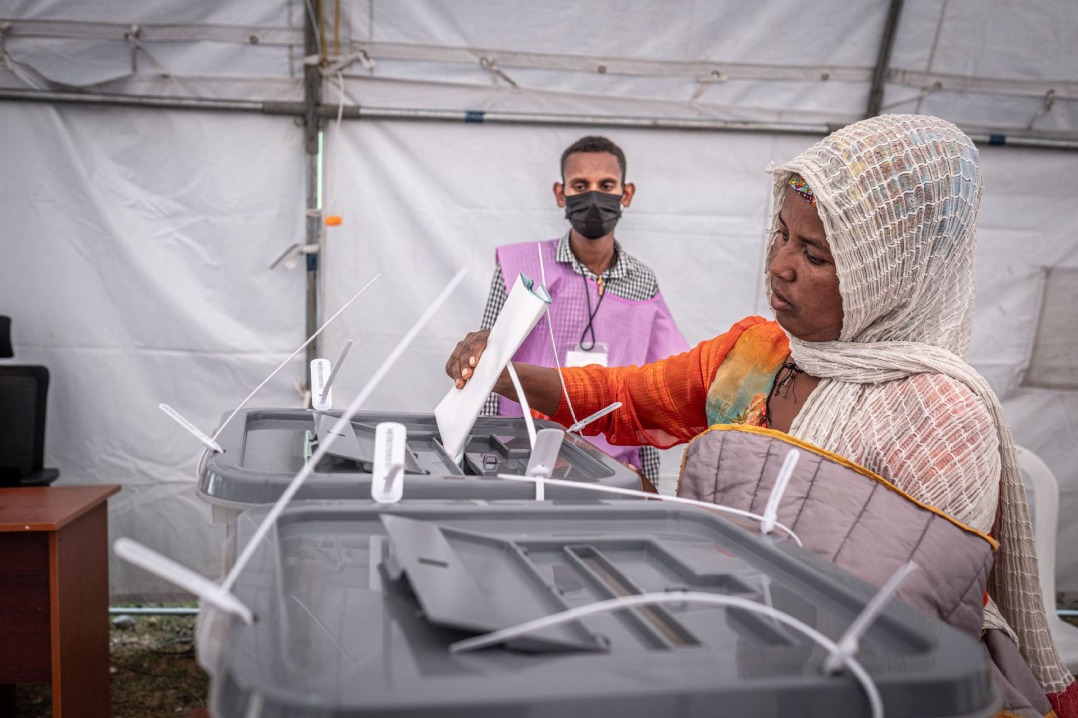
    One month after Ethiopians headed to the polls for the country’s seventh general parliamentary election, the National Election Board of Ethiopia (NEBE) has officially certified the final results, marking what observers and local officials are calling a defining milestone in the East African nation’s ongoing democratic evolution.

    Held on June 1, 2026, the election saw more than 50 million registered Ethiopians eligible to cast ballots across national constituencies, though voting was delayed in a small number of districts due to unresolved local security threats. When votes were counted, the ruling Prosperity Party secured a commanding position in the 547-seat House of Peoples’ Representatives, the country’s lower parliamentary body, taking 438 seats to retain its absolute governing majority.

    Under Ethiopia’s constitutional framework, the political party or coalition that wins a majority in the House of Peoples’ Representatives is granted the mandate to form a new national government and appoint the country’s prime minister. The official certification of results clears the way for the transition to the new administration to move forward.

    International observers have framed the election as a step forward for Ethiopia’s democratic institutions. Bankole Adeoye, African Union Commissioner for Political Affairs, Peace and Security, emphasized that the successful completion of the vote demonstrates significant progress in Ethiopia’s work to strengthen its democratic governance systems. He reaffirmed the AU’s longstanding commitment to supporting credible, inclusive electoral processes across the African continent, and expressed firm confidence that Ethiopia will continue advancing toward lasting domestic peace.

    Local political analysts, while acknowledging the democratic progress the election represents, have outlined clear priorities for the incoming government. Terecha Balcha, an Ethiopian researcher specializing in political science and international relations, noted that the vote marks another incremental advance along the country’s democratic journey, but stressed that the new administration must now center its work on fulfilling campaign pledges to voters and rebuilding widespread peace and stability across regions.

    Mekdes Mesfin, a lecturer in political science and international relations at Ethiopia’s Madda Walabu University, echoed that perspective, noting that Ethiopian voters will now expect the newly mandated government to turn its electoral support into measurable, tangible development gains for communities across the country. Addressing persistent peace and security challenges in fragmented regions of the country must sit at the top of the incoming administration’s policy agenda, she added.

    This report included contributions from Afework Eyayu on the ground in Ethiopia.

  • Armed group in Nigeria kills at least 20 people and exchanges gunfire with police

    Armed group in Nigeria kills at least 20 people and exchanges gunfire with police

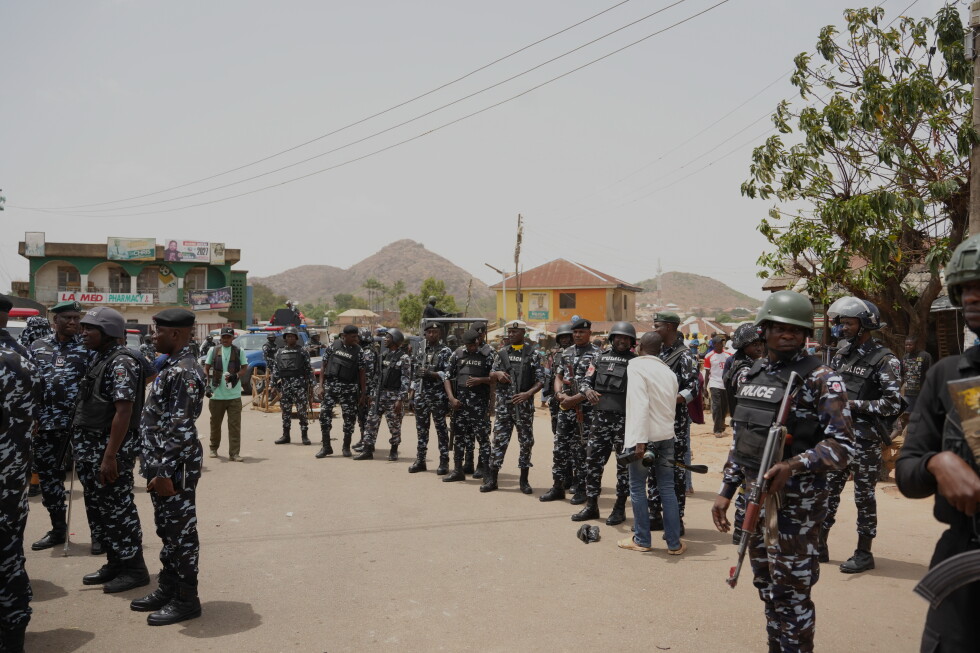
    Fresh reports from Nigeria confirm that a deadly armed attack on a rural community in the country’s north-central Plateau State has claimed at least 20 lives, police authorities confirmed Monday. The violent incident unfolded Sunday in Kawel, a small community located within Bokkos Local Government Area, according to an official statement released by Plateau State police spokesperson Alfred Alabo.

    Responding to emergency calls about the attack, law enforcement personnel were deployed to the scene rapidly, where they engaged the unidentified assailants in an exchange of gunfire. The shootout ultimately forced the attackers to withdraw from the area, Alabo confirmed. As of Monday, no suspects have been taken into custody, and no militant or armed organization has issued a claim of responsibility for the killing.

    Following the attack, local authorities have moved forward with processing the victims’ remains. Alabo noted that the bodies of those killed have already been turned over to their next of kin for burial, after family members requested to forgo formal autopsies.

    Plateau State Governor Caleb Mutfwang has ordered an immediate coordinated response to support affected residents, according to a statement from the governor’s spokesperson Joyce Ramnap. Mutfwang directed state emergency management and humanitarian assistance agencies to deploy all available resources to provide urgent relief, support, and aid to survivors and the families of the deceased.

    The attack is the latest episode of recurring intercommunal and insurgent-linked violence that has plagued central and northern Nigeria for years. According to United Nations data, a long-running insurgency centered in Nigeria’s northeast has killed more than 10,000 people and displaced millions from their homes since the conflict began. Armed criminal gangs have also maintained a persistent presence across the country’s northwest and north-central regions, carrying out frequent attacks on civilian communities. This killing marks the second deadly assault in Plateau State that has left 20 people dead so far this year: a nighttime raid on the Gari Ya Waye community in March also claimed 20 lives.

  • AI companies should release environmental impact, commit to clean energy, says UN chief

    AI companies should release environmental impact, commit to clean energy, says UN chief

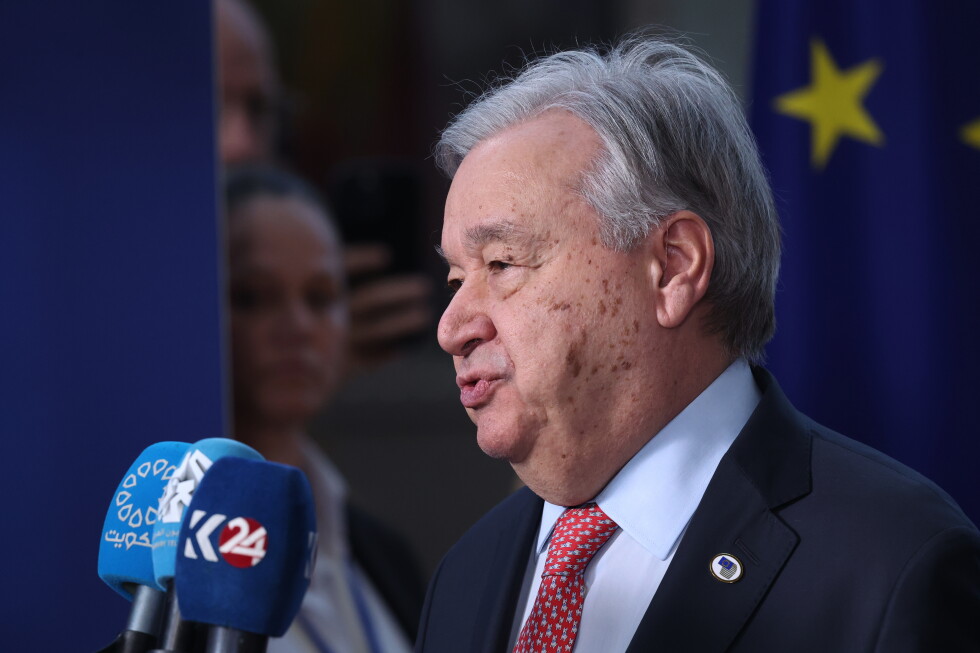
    Speaking at London Climate Action Week this Tuesday, United Nations Secretary-General António Guterres launched a bold new call for the global artificial intelligence industry to confront its underreported environmental impact, launching the AI Environmental Transparency Initiative to force greater accountability from technology firms powering the AI boom.

    Guterres demanded that AI developers and operators disclose full data on carbon emissions from their infrastructure, as well as the volumes of water and land consumed to run energy-intensive data centers. The push for transparency comes as local communities and regulators have increasingly raised alarms over the rapid proliferation of AI-focused data centers, whose environmental costs have largely been hidden from public view.

    Beyond transparency, the UN chief set a binding industry target: all AI facilities must run on 100% renewable energy – including wind and solar power – by 2030. “No more hidden costs,” Guterres told attendees of Europe’s largest independent climate conference. “No more shifting the burden onto those least able to bear it. It is time to come clean.”

    The explosive growth of generative AI and large language models has sent global demand for data center capacity soaring, undermining even the most ambitious climate pledges from the world’s largest tech firms. While industry leaders including Google and Amazon have already vowed to transition to clean energy by the end of the decade, the AI race has sent greenhouse gas emissions from data infrastructure climbing sharply, as regulatory delays and grid constraints slow the buildout of new renewable projects.

    Current global energy data from the International Energy Agency underscores the scale of the challenge: Coal still powers 30% of global data center electricity demand, while renewables account for just 27% of the sector’s supply, with natural gas contributing 26% and nuclear 15%. Over the next five years, projections show renewables will only meet half of the new electricity demand generated by the AI boom. A recent UN report warned that the combined water, energy and carbon footprint of AI infrastructure will double by 2030, with AI-related data centers set to consume nearly 3% of global electricity by the end of the decade – up from 1.5% in 2025. That puts the overall environmental footprint of the data center sector on par with some of the world’s largest national economies.

    Guterres acknowledged that AI carries significant potential to accelerate climate action, noting the technology can improve energy efficiency and cut global emissions across sectors. But he emphasized that affected local communities are too often left unaware of the harm caused by new data centers built near their homes, calling for radical transparency to redress this imbalance.

    The proposal comes as the UN prepares to convene global leaders for this year’s UN Climate Change Conference (COP29) in Turkey, where nations will negotiate new steps to hold global warming to the 1.5°C threshold set by the 2015 Paris Agreement. Last year marked the first time the three-year global average temperature breached this critical limit, increasing urgency for deeper emissions cuts across all sectors.

    In his address, Guterres reiterated his longstanding call for urgent global climate action, including deep cuts in methane emissions – a super pollutant responsible for roughly one-third of current global warming – and a rapid phase-out of coal, oil and gas. He framed the current global climate moment as a “Tale of Two Crises”, drawing on Charles Dickens’ classic novel *A Tale of Two Cities* to reflect the duality of progress and risk visible today.

    “For the climate agenda, this is indeed the best of times and the worst of times,” Guterres said. “The worst – because climate impacts are intensifying, tipping points are looming, and the energy crisis has exposed the deep risks of dependence on fossil fuels. But also the best – because the renewables revolution is well underway.”

    Guterres highlighted that progress in renewable energy is already accelerating: falling technology costs have driven rapid adoption, and in 2025, growth in clean power generation outpaced overall global electricity demand growth for the first time. Last year also marked a historic milestone, as renewables surpassed one-third of the global electricity mix for the first time in modern history, while coal’s share fell below one-third. China continues to lead the global clean energy transition, and fossil fuel generation is on a downward trajectory across most of Europe.

    But major barriers remain, Guterres warned, pointing specifically to policy shifts in the United States under the Trump administration, which has rolled back support for renewables and doubled down on domestic fossil fuel production. He also highlighted the ongoing global energy crisis exacerbated by conflict, calling the U.S. war in Iran “the mother of all energy shocks” that has further delayed the clean transition.

  • Afghan Taliban to hold rare, closed-door talks with EU officials on deportations

    Afghan Taliban to hold rare, closed-door talks with EU officials on deportations

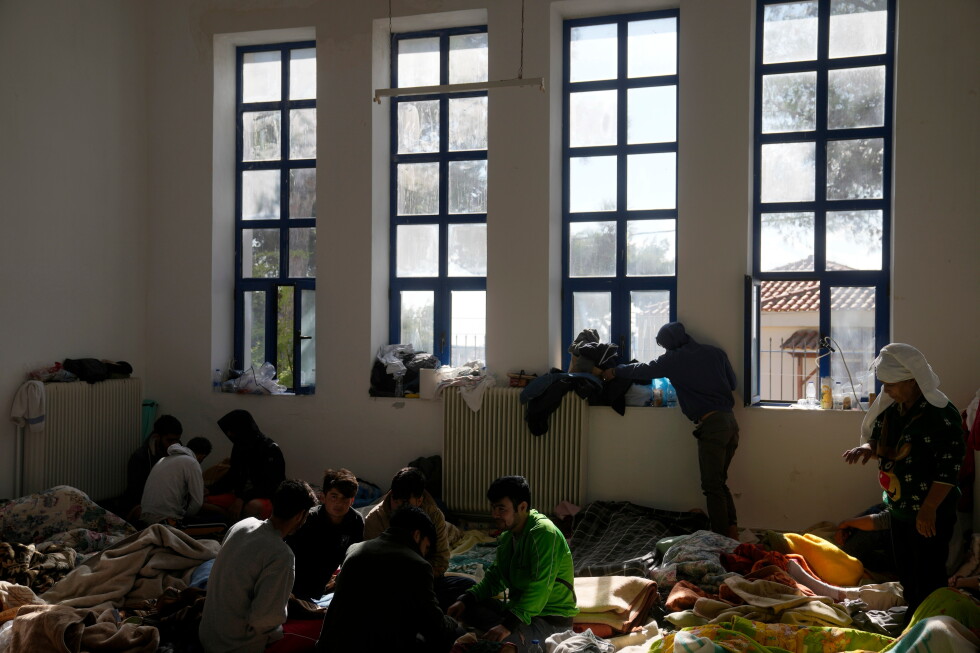
    BRUSSELS — In a quiet but significant shift in diplomatic engagement, a five-person Afghan Taliban delegation arrived in Brussels Tuesday for closed-door technical talks with European Union officials, a meeting centered overwhelmingly on accelerating the forced deportation of rejected Afghan asylum seekers and criminal migrants from the 27-nation bloc. The gathering marks only the second formal contact between EU institutions and the Taliban since the group seized control of Kabul in 2021 following the chaotic withdrawal of U.S.-led coalition forces, and it comes at a moment of growing political pressure from EU member states to tighten migration controls.

    Afghans currently make up one of the largest single groups of asylum seekers across the European Union. In recent years, a growing majority of EU national governments have pushed aggressively to expand and speed up deportations for Afghans whose asylum claims have been rejected, as well as those who have committed criminal offenses in their host countries. Data from European officials underscores the urgency driving the talks: as of late 2024, only 2 percent of the nearly 23,000 Afghans ordered to leave the EU have actually complied with deportation orders.

    The push for this week’s meeting follows an open letter signed in October by 20 EU member states, drafted in part by Belgian Migration Minister Anneleen Van Bossuyt, calling on the European Commission to ramp up collective migration policy action and coordinate formal technical talks with the Taliban on deportation procedures. “We can no longer afford a standstill,” Van Bossuyt said at the time the letter was released. “It is high time for a firm and joint approach, so that Europe can regain control over migration and security.” European Commission spokesperson Markus Lammert confirmed Monday that the talks are a direct response to that member state pressure, noting that leaders are specifically focused on creating pathways to deport individuals convicted of serious crimes who pose potential security risks. The first EU-Taliban technical meeting on this issue was held in Kabul back in January, and the EU has maintained a small permanent staff presence in the Afghan capital since that time.

    Notably, no EU member state has formally recognized the Taliban as the legitimate governing authority of Afghanistan, and EU officials have gone to great lengths to emphasize that the meeting does not constitute any shift in that official position. Belgian officials, who as hosts of EU institutions were required to issue visas to the delegation, stressed that the gathering carries no implicit recognition of the Taliban regime. “Belgium cannot confer legitimacy on a regime accused of serious human rights violations,” Belgian Foreign Minister Maxime Prévot said in a formal statement. “Making a meeting possible in the framework of our host-state policy does not amount to recognition, does not amount to legitimacy, and does not constitute an invitation by the Belgian government.” Visas issued to the Taliban delegation carry strict conditions: limited 24-hour territorial validity exclusively for Belgium, with no permission to travel to other countries in the Schengen Area’s border-free zone. The talks are also being held off-site, not in any official EU or Belgian government buildings, to reinforce the non-recognition stance. The European Commission has declined repeated requests for additional comment on the details of the closed-door discussions.

    The delegation, which includes New Zealand-born Taliban foreign ministry spokesperson Abdul Qahar Balkhi, arrives in Brussels at a moment of dual need for the Taliban regime. Already grappling with crippling international economic sanctions, widespread food insecurity, and a collapsing national economy, the Taliban has absorbed roughly 3 million forcibly repatriated Afghans from neighboring Pakistan and Iran over the past 12 months alone, a wave that has pushed the country’s already catastrophic humanitarian crisis to new breaking points. For the Taliban, engagement with the EU on deportation issues also represents a small but valuable crack in the diplomatic isolation that has isolated the regime since it took power in 2021, with the group eager to chip away at international pariah status and secure greater access to humanitarian and economic support.

    The talks have already sparked sharp condemnation from global human rights organizations, which argue that the EU’s push to cooperate with the Taliban on deportations directly undermines the bloc’s own stated human rights commitments, and puts deported Afghans at grave risk under the Taliban’s repressive rule. Since seizing power, the Taliban has imposed sweeping, draconian restrictions on the basic rights of Afghan women and girls, including bans on secondary and higher education, prohibitions on most forms of employment, and strict public dress codes that are enforced with violent penalties.

    “Any engagement with the Taliban needs to prioritize protecting human rights and accountability — not deporting people to danger there,” said Fereshta Abbasi, a researcher at Human Rights Watch. “EU countries are undermining their credibility by condemning Taliban abuses and pursuing accountability on one hand, while cooperating with the Taliban to forcibly return Afghans on the other.” Eve Geddie, Director of Amnesty International’s European Institutions Office, echoed that criticism, noting that “The desperate scenes of people — including EU staff — fleeing Afghanistan are a recent memory. It is unconscionable that the EU would now try and deport people to Afghanistan, which has only become more dangerous in the meantime.”

    The Brussels meeting comes as the EU has recently passed sweeping reforms to its collective migration and asylum rules, designed explicitly to expand deportation capabilities across the bloc. The new framework allows for the creation of regional “return hubs” for deportees, expands domestic surveillance powers for migration authorities, tightens external border controls, and explicitly allows for formal engagement with non-recognized regimes like the Taliban when it serves migration management goals. The shift comes as center-right and nationalist political parties across much of the EU have gained traction campaigning on stricter migration policies ahead of upcoming EU-wide elections, putting intense pressure on Brussels to deliver visible action on returns.