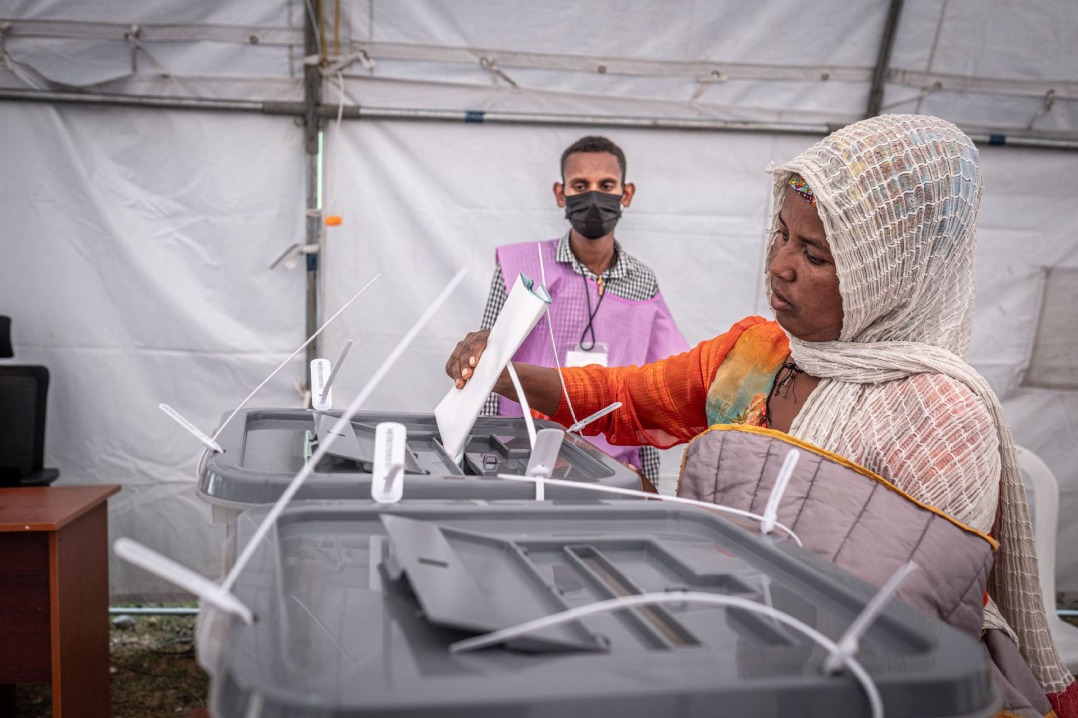
One month after Ethiopians headed to the polls for the country’s seventh general parliamentary election, the National Election Board of Ethiopia (NEBE) has officially certified the final results, marking what observers and local officials are calling a defining milestone in the East African nation’s ongoing democratic evolution.
Held on June 1, 2026, the election saw more than 50 million registered Ethiopians eligible to cast ballots across national constituencies, though voting was delayed in a small number of districts due to unresolved local security threats. When votes were counted, the ruling Prosperity Party secured a commanding position in the 547-seat House of Peoples’ Representatives, the country’s lower parliamentary body, taking 438 seats to retain its absolute governing majority.
Under Ethiopia’s constitutional framework, the political party or coalition that wins a majority in the House of Peoples’ Representatives is granted the mandate to form a new national government and appoint the country’s prime minister. The official certification of results clears the way for the transition to the new administration to move forward.
International observers have framed the election as a step forward for Ethiopia’s democratic institutions. Bankole Adeoye, African Union Commissioner for Political Affairs, Peace and Security, emphasized that the successful completion of the vote demonstrates significant progress in Ethiopia’s work to strengthen its democratic governance systems. He reaffirmed the AU’s longstanding commitment to supporting credible, inclusive electoral processes across the African continent, and expressed firm confidence that Ethiopia will continue advancing toward lasting domestic peace.
Local political analysts, while acknowledging the democratic progress the election represents, have outlined clear priorities for the incoming government. Terecha Balcha, an Ethiopian researcher specializing in political science and international relations, noted that the vote marks another incremental advance along the country’s democratic journey, but stressed that the new administration must now center its work on fulfilling campaign pledges to voters and rebuilding widespread peace and stability across regions.
Mekdes Mesfin, a lecturer in political science and international relations at Ethiopia’s Madda Walabu University, echoed that perspective, noting that Ethiopian voters will now expect the newly mandated government to turn its electoral support into measurable, tangible development gains for communities across the country. Addressing persistent peace and security challenges in fragmented regions of the country must sit at the top of the incoming administration’s policy agenda, she added.
This report included contributions from Afework Eyayu on the ground in Ethiopia.