BRUSSELS — In a quiet but significant shift in diplomatic engagement, a five-person Afghan Taliban delegation arrived in Brussels Tuesday for closed-door technical talks with European Union officials, a meeting centered overwhelmingly on accelerating the forced deportation of rejected Afghan asylum seekers and criminal migrants from the 27-nation bloc. The gathering marks only the second formal contact between EU institutions and the Taliban since the group seized control of Kabul in 2021 following the chaotic withdrawal of U.S.-led coalition forces, and it comes at a moment of growing political pressure from EU member states to tighten migration controls.
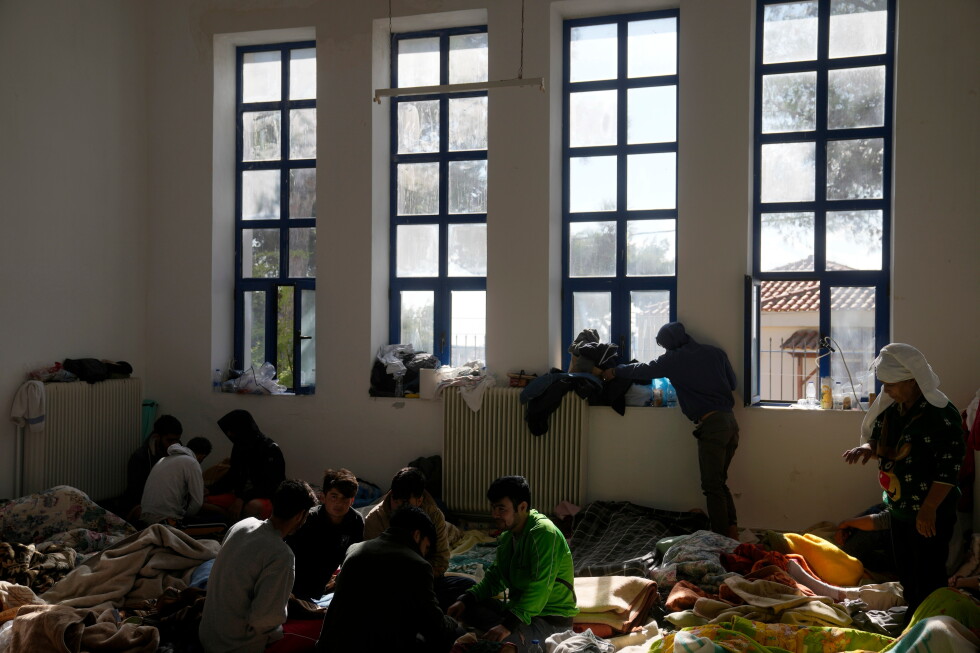
Afghans currently make up one of the largest single groups of asylum seekers across the European Union. In recent years, a growing majority of EU national governments have pushed aggressively to expand and speed up deportations for Afghans whose asylum claims have been rejected, as well as those who have committed criminal offenses in their host countries. Data from European officials underscores the urgency driving the talks: as of late 2024, only 2 percent of the nearly 23,000 Afghans ordered to leave the EU have actually complied with deportation orders.
The push for this week’s meeting follows an open letter signed in October by 20 EU member states, drafted in part by Belgian Migration Minister Anneleen Van Bossuyt, calling on the European Commission to ramp up collective migration policy action and coordinate formal technical talks with the Taliban on deportation procedures. “We can no longer afford a standstill,” Van Bossuyt said at the time the letter was released. “It is high time for a firm and joint approach, so that Europe can regain control over migration and security.” European Commission spokesperson Markus Lammert confirmed Monday that the talks are a direct response to that member state pressure, noting that leaders are specifically focused on creating pathways to deport individuals convicted of serious crimes who pose potential security risks. The first EU-Taliban technical meeting on this issue was held in Kabul back in January, and the EU has maintained a small permanent staff presence in the Afghan capital since that time.
Notably, no EU member state has formally recognized the Taliban as the legitimate governing authority of Afghanistan, and EU officials have gone to great lengths to emphasize that the meeting does not constitute any shift in that official position. Belgian officials, who as hosts of EU institutions were required to issue visas to the delegation, stressed that the gathering carries no implicit recognition of the Taliban regime. “Belgium cannot confer legitimacy on a regime accused of serious human rights violations,” Belgian Foreign Minister Maxime Prévot said in a formal statement. “Making a meeting possible in the framework of our host-state policy does not amount to recognition, does not amount to legitimacy, and does not constitute an invitation by the Belgian government.” Visas issued to the Taliban delegation carry strict conditions: limited 24-hour territorial validity exclusively for Belgium, with no permission to travel to other countries in the Schengen Area’s border-free zone. The talks are also being held off-site, not in any official EU or Belgian government buildings, to reinforce the non-recognition stance. The European Commission has declined repeated requests for additional comment on the details of the closed-door discussions.
The delegation, which includes New Zealand-born Taliban foreign ministry spokesperson Abdul Qahar Balkhi, arrives in Brussels at a moment of dual need for the Taliban regime. Already grappling with crippling international economic sanctions, widespread food insecurity, and a collapsing national economy, the Taliban has absorbed roughly 3 million forcibly repatriated Afghans from neighboring Pakistan and Iran over the past 12 months alone, a wave that has pushed the country’s already catastrophic humanitarian crisis to new breaking points. For the Taliban, engagement with the EU on deportation issues also represents a small but valuable crack in the diplomatic isolation that has isolated the regime since it took power in 2021, with the group eager to chip away at international pariah status and secure greater access to humanitarian and economic support.
The talks have already sparked sharp condemnation from global human rights organizations, which argue that the EU’s push to cooperate with the Taliban on deportations directly undermines the bloc’s own stated human rights commitments, and puts deported Afghans at grave risk under the Taliban’s repressive rule. Since seizing power, the Taliban has imposed sweeping, draconian restrictions on the basic rights of Afghan women and girls, including bans on secondary and higher education, prohibitions on most forms of employment, and strict public dress codes that are enforced with violent penalties.
“Any engagement with the Taliban needs to prioritize protecting human rights and accountability — not deporting people to danger there,” said Fereshta Abbasi, a researcher at Human Rights Watch. “EU countries are undermining their credibility by condemning Taliban abuses and pursuing accountability on one hand, while cooperating with the Taliban to forcibly return Afghans on the other.” Eve Geddie, Director of Amnesty International’s European Institutions Office, echoed that criticism, noting that “The desperate scenes of people — including EU staff — fleeing Afghanistan are a recent memory. It is unconscionable that the EU would now try and deport people to Afghanistan, which has only become more dangerous in the meantime.”
The Brussels meeting comes as the EU has recently passed sweeping reforms to its collective migration and asylum rules, designed explicitly to expand deportation capabilities across the bloc. The new framework allows for the creation of regional “return hubs” for deportees, expands domestic surveillance powers for migration authorities, tightens external border controls, and explicitly allows for formal engagement with non-recognized regimes like the Taliban when it serves migration management goals. The shift comes as center-right and nationalist political parties across much of the EU have gained traction campaigning on stricter migration policies ahead of upcoming EU-wide elections, putting intense pressure on Brussels to deliver visible action on returns.