博客

  • US to probe petrol price gouging claims, Trump says

    US to probe petrol price gouging claims, Trump says

    Amid shifting global energy markets following months of heightened volatility tied to the Iran conflict, former U.S. President Donald Trump has publicly announced he has directed the Department of Justice to launch an immediate investigation into major domestic energy companies, accusing the firms of exploiting consumers by failing to pass falling crude oil costs onto drivers at the gas pump.

    In a social media post that has drawn new attention to post-conflict energy pricing, Trump argued that gasoline prices have not declined nearly as quickly as he expected, even as global crude costs have pulled back sharply from their recent peaks. “The big Oil Companies are not dropping their price at the pump commensurate with the sharply lower prices they are paying for Oil,” Trump wrote in the post. “Those prices are dropping like a rock! In other words, customers are being ‘gouged.’”

    Trump did not name any specific oil and gas companies in his announcement, and as of press time, neither the Department of Justice nor the White House has issued an official response to requests for comment from the BBC.

    The current pricing tension traces back to late February, when a joint strike by the U.S. and Israel against Iran triggered widespread disruption to global energy supplies. In response to the attack, Tehran closed the Strait of Hormuz, the strategic chokepoint through which roughly a fifth of the world’s daily oil shipments pass. The closure sent global energy markets into chaos, pushing the international Brent crude benchmark to a near-$120 per barrel high in May, up from a pre-conflict level of around $70 per barrel.

    In recent weeks, as diplomatic peace talks have made incremental progress, global crude prices have retreated significantly, falling to roughly $76 per barrel as of the latest reporting. While that marks a major drop from the May peak, the benchmark remains above pre-conflict levels. The same trend has played out for U.S. consumers: average regular gasoline prices have fallen from April’s peak above $4 per gallon to roughly $3.90 per gallon, but still remain far higher than they were before the Iran conflict began.

  • Chinese Ambassador Xie Feng calls for renewing friendship between the people of China and the US

    Chinese Ambassador Xie Feng calls for renewing friendship between the people of China and the US

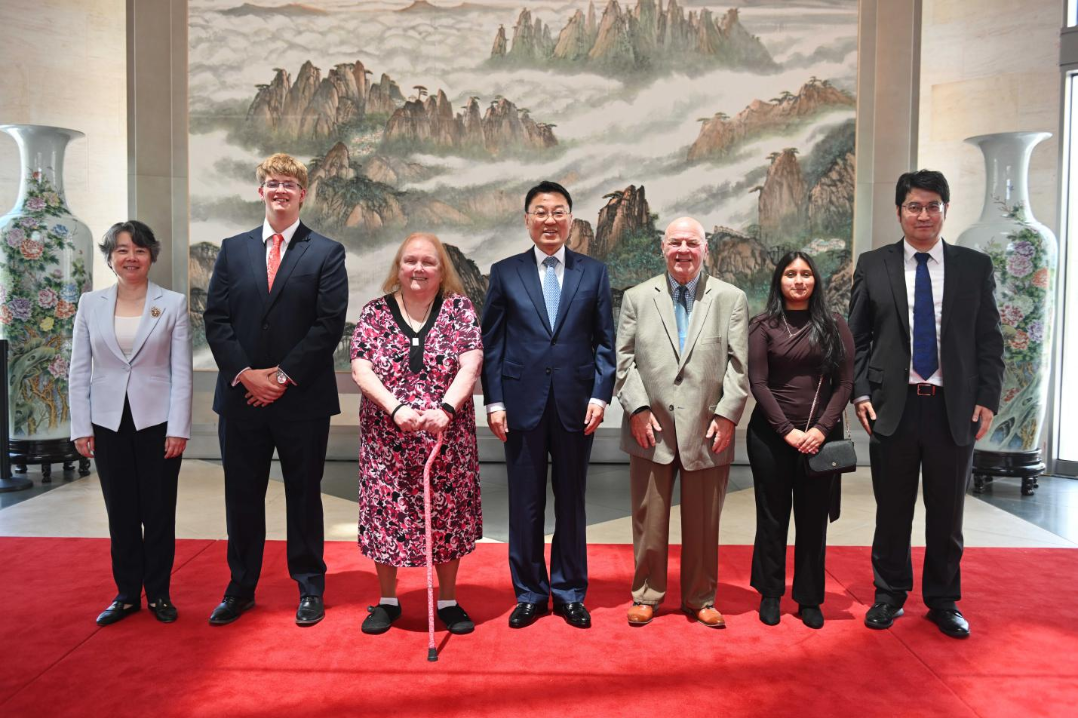
    On June 19, Chinese Ambassador to the United States Xie Feng gathered a diverse group of long-time and new American friends at the Chinese Embassy in Washington D.C. for a gathering centered on reconnecting and rebuilding grassroots bonds between the two nations. Attendees included figures from across different sectors of U.S.-China exchange: Ronald Sakolsky, a veteran supporter of China’s desertification control initiatives; Gail Chou, an educator who spent 12 years teaching in Luoyang, Henan Province; and Ryan Corkery and Angelie Melara, young participants in the “50,000 in five years” China-U.S. youth exchange program.

    Opening the gathering, Ambassador Xie highlighted the historic significance of the recent China-U.S. summit held in Beijing, noting that the meeting laid out a new shared vision for bilateral relations and opened a fresh chapter for people-centered friendly engagement between the two countries.

    “To deliver on the important consensus reached by our two presidents, and to renew the long-standing friendship between Chinese and American people, we must work together and step up with new collective contributions,” Xie told attendees. He offered three key guiding principles for advancing grassroots China-U.S. relations: prioritize small, concrete actions to turn high-level vision into tangible outcomes; encourage American friends who have experience in China to share their personal stories, helping more Americans understand the deep historical roots of people-to-people friendship between the two nations; and invest in nurturing a new generation of cross-cultural friendship envoys.

    “Let us act on the important consensus between the two presidents, and renew friendship between the people of China and the U.S.,” Xie concluded his call to action.

    Following the ambassador’s remarks, participating American guests shared their own deeply personal stories of connection to China, reflecting on the bonds that have shaped their perspectives and lives. Sakolsky spoke with evident affection as he recalled his decades of experiences traveling and working in China. “When I first visited China, all I wanted was to see the Terracotta Warriors, walk alongside the Yellow River and stand on the Great Wall — and truly live like a local Chinese person,” he said. “When I turned down a special treatment offer and chose to share a room with my Chinese colleagues on one trip, I knew I had truly become part of their community. I’m no celebrity; I’m just an ordinary teacher who wants to say thank you to China, and do whatever I can to give back out of gratitude.”

    Calling the gathering a meaningful reunion of friends connected by shared memories of China, Sakolsky added that he is committed to advancing a new era of people-to-people and youth exchanges between the two countries.

    Chou shared touching, intimate details of her 12 years living and working in China, saying “I feel homesick for China — it is my home away from home. The warmth and gratitude my Chinese students showed me will always stay with me, and never fail to touch my heart.”

    Corkery, the young exchange participant, echoed the theme of small connections overcoming deep divides. “It’s the little, everyday moments that make it clear: even with language and cultural differences, there are universal things that bring us together, and those are the things we should keep our focus on,” he said.

    Melara, another young participant who only spent 10 days in China as part of the exchange, noted that even her short stay reshaped her entire worldview. “It completely changed how I think about the world, and how I approach new ideas and different cultures,” she said.

  • These traditionalist Catholics are defying Pope Leo XIV, and embracing their outsider status

    These traditionalist Catholics are defying Pope Leo XIV, and embracing their outsider status

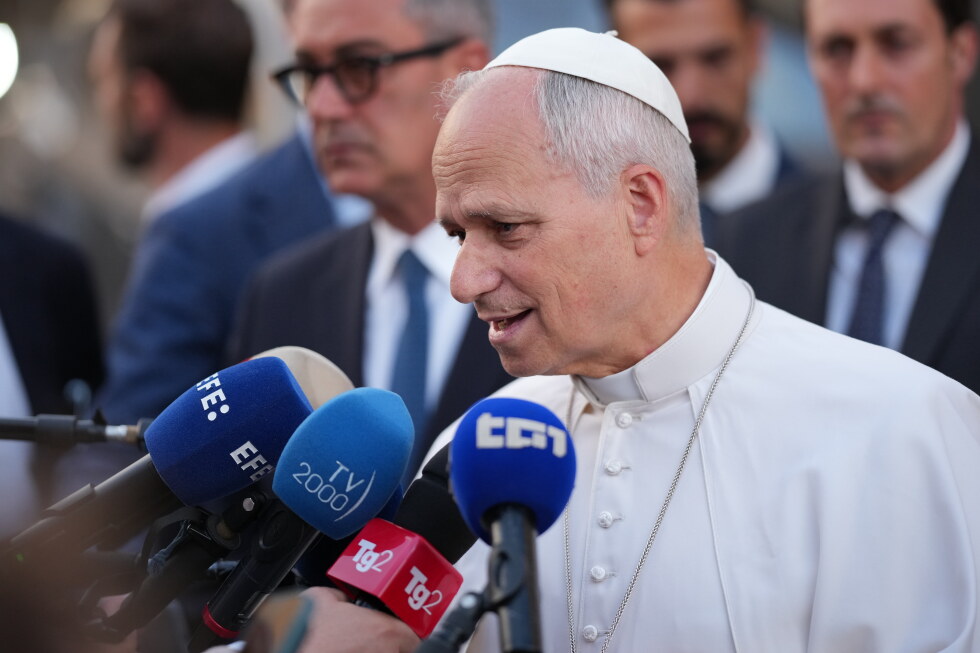
    Decades after the Society of St. Pius X first split from the Roman Catholic Church over modernizing church reforms, the breakaway traditionalist group is preparing to redefine its schismatic identity with a bold, unprecedented act. On July 1, at the group’s Swiss seminary in Ecône — the same location where its 1988 original break from Rome occurred — the SSPX will consecrate four new bishops without the required papal consent, marking the largest expansion of its leadership in 36 years and a direct challenge to the authority of Pope Leo XIV.

    Founded in 1970 by Archbishop Marcel Lefebvre to oppose the reforms of the Second Vatican Council, which replaced the centuries-old traditional Latin Mass with vernacular services in local languages, the SSPX first cemented its split from the Vatican in 1988, when Lefebvre ordained four bishops without Rome’s approval. The Vatican immediately issued automatic excommunication for all involved, and the group has never held formal legal status within the global Catholic Church. Still, the SSPX has seen steady global growth in the decades since its schism, drawing a new generation of conservative Catholics drawn to traditional liturgy. Current SSPX statistics put its global membership at 2 active bishops, 733 priests, 264 seminarians, and more than 400 religious brothers and sisters across 50 countries, with a network of parishes, schools and seminaries operating as a parallel ultra-traditional Catholic structure outside Vatican control.

    SSPX leaders frame the upcoming consecrations as a practical necessity: the two remaining bishops from the 1988 ordination are elderly, and the group says it needs new leadership to serve its expanding global flock. SSPX Superior General Rev. Davide Pagliarani has invoked a self-declared “state of necessity” to justify the unsanctioned rite, arguing that the post-Vatican II Catholic Church has drifted into heresy and abandoned core traditional tenets. After Pagliarani announced the plans, the Vatican extended an invitation for talks to resolve the dispute, but decades of unresolved theological disagreements left the two sides at a deadlock. In an official statement announcing the four nominees — Pascal Schreiber of Switzerland, Michael Goldade of the U.S., and Michel Poinsinet de Sivry and Marc Hanappier of France — the SSPX denied seeking to seize power or establish a parallel hierarchy within the Catholic Church, claiming the sole purpose of the rite is to preserve the administration of traditional sacraments for its followers.

    Far from hiding the contentious act, the SSPX has planned a large, highly public four-day event that will be livestreamed to a global audience, with arrangements made for thousands of expected attendees. Organizers have secured accommodations at dozens of local hotels and private homes, coordinated carpooling from more than 100 regional locations, and even set up a pre-paid ticketing system for daily meals via a festival-style wristband. For attendees looking to take home a memento of the event, the group is selling a limited-edition $92.50 “Cuvee des Sacres” gift set of four wines, each bottle labeled with a symbol of episcopal office: a miter, ring, cross and crozier.

    This open, media-savvy embrace of schism marks a new chapter for the anti-modern group, according to theological experts. Massimo Faggioli, a theology professor at Villanova University — Pope Leo XIV’s alma mater — describes the movement as “Traditionalism 2.0”: while the SSPX holds an anti-modern, integralist theological agenda, it has fully adopted digital branding and modern event organizing to grow its brand among young conservative Catholics. “Their game is not about getting back into the fold, but getting back into the monopoly of that ultra-traditionalist identity,” Faggioli explained, noting that the level of advance planning for the event makes clear the group never intended to back down from the consecrations.

    The Vatican has already issued clear warnings: any bishop participating in the rite, as well as the four new bishops, will incur automatic excommunication for what the Holy See calls a “schismatic act” and “grave offense to God.” For Pope Leo XIV, who has worked to ease tensions with traditionalist Catholics that escalated under his predecessor Pope Francis, the challenge has been met with a measured resignation. The pope told reporters last week he was considering a final appeal to the SSPX to reverse course, but emphasized that the choice ultimately rests with the group. “Division among Christians is always painful for the church,” he said. “However, they refuse to accept certain fundamental elements of the church, starting with various points of the Second Vatican Council. And while I regret that choice, we must move forward.”

    Reaction from other traditionalist Catholic groups that remain in communion with Rome has been mixed. Many of these groups opposed Pope Francis’ crackdown on the traditional Latin Mass and share the SSPX’s concerns about a perceived doctrinal crisis in the modern church, but they uniformly condemn the unsanctioned consecrations as an act of unlawful disobedience. Joseph Shaw, head of the Latin Mass Society of England and Wales, noted that the SSPX’s decision to hold a large public event — rather than hiding the rite like smaller fringe groups — ensures followers can confirm the validity of their sacraments, saying “they (the SSPX) have the resources to do it nicely.” Other traditionalist critics have called the consecrations “grievously unlawful” and rejected the “state of necessity” justification, while also accusing the Vatican of hypocrisy for applying harsh pressure to the SSPX while negotiating with progressive German bishops whose reforms also contradict official Catholic doctrine. In a recent move that appears to pre-empt that criticism, the Vatican officially rejected a German request to allow laypeople to preach homilies, restating the longstanding rule that only priests and deacons may hold this role.

  • Pages of friendship: Fresh insights into China from US teens

    Pages of friendship: Fresh insights into China from US teens

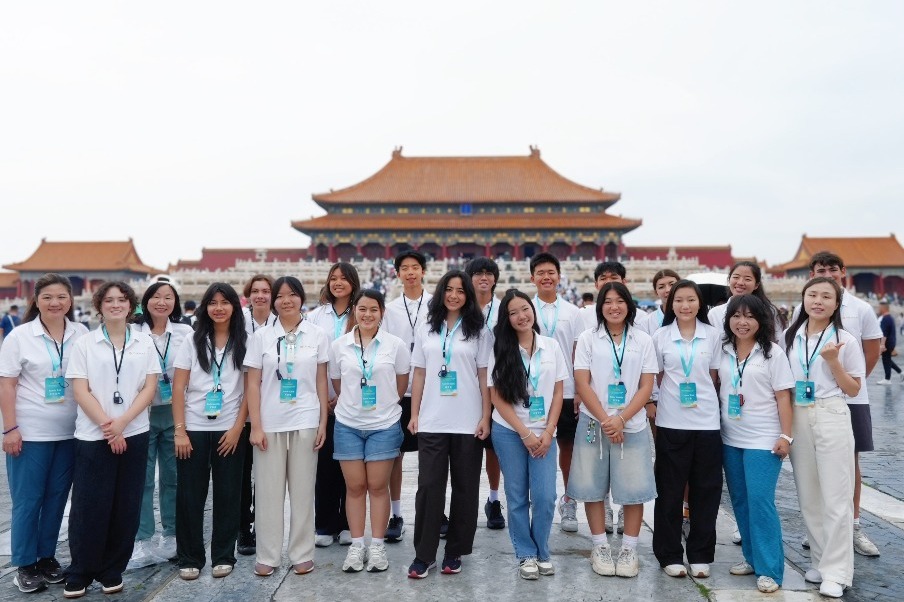
    When young American travelers cross continents to explore China, their personal travel notebooks become far more than just a log of sightseeing destinations—they turn into intimate, unvarnished chronicles of cross-cultural connection that challenge preexisting narratives about the world’s most populous country. A new feature published by China Daily on June 24, 2024, invites readers to step into the shoes of a group of U.S. high school travelers, flipping through their handwritten journal entries to encounter China through the curious, open-minded lens of global youth.

    Instead of relying on secondhand media narratives or political talking points, these teen travelers build their understanding of China through first-hand encounters: walking the winding stone battlements of the Great Wall, wandering through the imperial courtyards of the Forbidden City, striking up conversations with local peers who share their love of music, sports, or art, and discovering unexpected common ground that bridges geographical and cultural divides. Organized as part of broader youth exchange efforts, the project centers young voices to reframe the U.S.-China people-to-people connection, moving beyond polarized public discourse to highlight the human bonds that form when young people get to meet each other face to face.

    China Daily reporter Xia Ji guides readers through the collection of journal pages, pairing handwritten excerpts and personal reflections with on-the-ground context from the trip. What emerges from the pages is not a polished, official portrait of the country, but a raw, authentic collection of impressions: the awe of standing at the top of the Great Wall at sunrise, the joy of swapping social media handles with a new Chinese friend who loves the same K-pop group, the surprise of finding how many shared values and daily experiences cut through long-held stereotypes. Each entry adds a new layer of fresh, youthful insight that deviates from standard media coverage, offering a reminder that grassroots, youth-led exchange remains one of the most powerful tools for building mutual understanding between nations.

    This feature is part of China Daily’s broader 2025 “A Date with China” special coverage series, which focuses on elevating personal cross-cultural stories and people-to-people ties between China and the rest of the world. The series also includes other narratives of longstanding connection, from an American educator who has spent decades working with China’s deaf community to initiatives boosting economic and cultural cooperation between China and partner nations across the globe.

  • Fears grow for civilians as paramilitary group closes in on strategic Sudanese city

    Fears grow for civilians as paramilitary group closes in on strategic Sudanese city

    As Sudan’s brutal civil war enters its fourth year, a build-up of paramilitary forces around the key central city of El-Obeid has sparked urgent global warnings that the region could face a new wave of mass civilian violence, echoing the catastrophic 2024 attack on El Fasher.

    In an official statement, a spokesperson for United Nations Secretary-General António Guterres emphasized the global community’s commitment to preventing a repeat of El Fasher’s atrocities in El-Obeid. Last year, when the Rapid Support Forces (RSF) captured El Fasher after a three-day assault, more than 6,000 people were killed. UN investigators have concluded the attack carried all the hallmarks of genocide.

    The UN Security Council has formally expressed alarm over confirmed reports of substantial RSF troop and weapons reinforcements deployed across areas surrounding El-Obeid in North Kordofan. The United States, United Kingdom and multiple European nations have also issued joint warnings of sharply escalating risks of large-scale atrocities against the city’s half-million residents.

    Strategic analysts who spoke to the Associated Press note that RSF deployments around the city are clear indicators the paramilitary group is preparing a full-scale offensive to retake control of El-Obeid, a critical stronghold that the Sudanese Armed Forces (SAF) broke out from a more than year-long RSF siege in early 2024. The RSF has not issued any immediate response to requests for comment on the troop build-up.

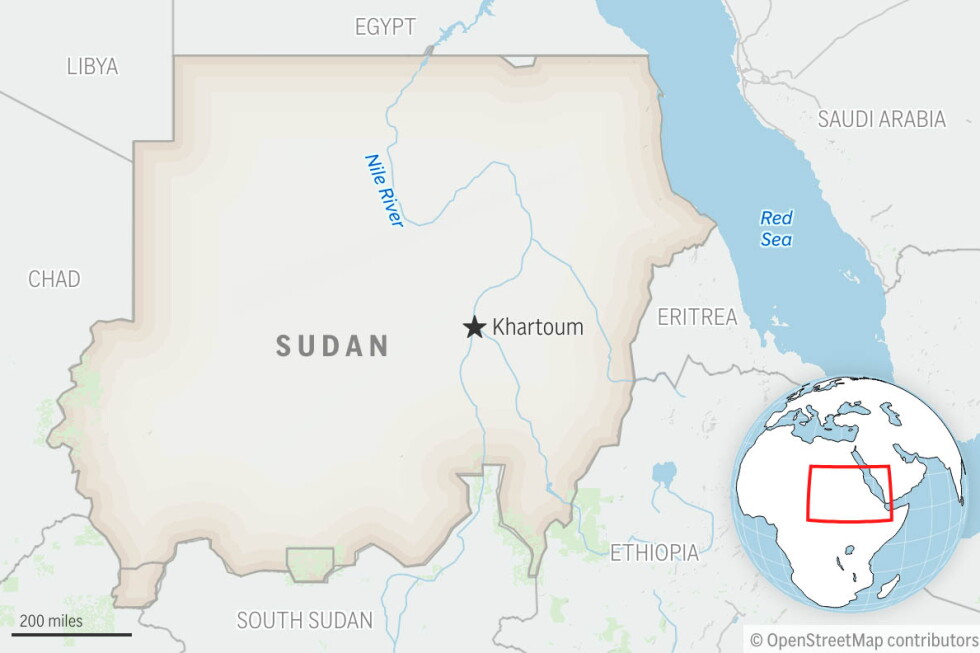
    El-Obeid holds unique strategic importance for both warring parties in Sudan’s ongoing conflict. Situated along Sudan’s primary east-west highway that connects outlying regions to the Nile Valley and the capital Khartoum, the city hosts a large military air base and an infantry division, making it a key logistical hub for the SAF’s campaign against the RSF.

    Nathaniel Raymond, executive director of the Humanitarian Research Lab at the Yale School of Public Health, explained that El-Obeid’s significance extends beyond military strategy. “El Obeid is important beyond even the strategic implications because it shows what happens when you have two forces that are highly depleted attempting to gain advantage on the other in high proximity,” he said. If the RSF seizes control of the city, it would open a clear path for the group to threaten Khartoum and Omdurman — territories the SAF retook last year — trigger widespread civilian chaos, and block humanitarian organizations from resuming operations in the capital region, Raymond added.

    Unlike the 2024 assault on El Fasher, which followed an 18-month siege and was driven largely by ethnically motivated violence, experts frame a potential El-Obeid offensive as a tactical rather than explicitly genocidal move. Still, Raymond warned that even a tactical takeover would likely lead to widespread reprisal killings of civilians perceived to be allied with the SAF.

    Ali Mahmoud Ali, a Sudan researcher for the Armed Conflict Location & Event Data Project (ACLED), noted that while the RSF is capable of cutting off El-Obeid from multiple directions, maintaining a full blockade would require the paramilitary to commit significant manpower, armored vehicles and military equipment that it can ill afford. Even so, if the RSF manages to capture and hold the city, the humanitarian situation “could deteriorate rapidly,” Ali warned.

    For months, El-Obeid’s civilian population has already lived under the constant threat of RSF drone strikes, which have destroyed critical civilian infrastructure including power stations, residential neighborhoods, bridges and key supply routes, according to UN documentation. Taghreed al-Rashid, a 35-year-old El-Obeid resident reached by phone, said while she feels some security from the presence of SAF troops, she grows increasingly anxious over targeted attacks on residential areas and public markets. A recent drone strike on a local power plant triggered a citywide water crisis, forcing al-Rashid to pay $5 per barrel of clean water — a crippling expense for most residents.

    “Despite everything we’re going through, we’re determined to stay in the city because forced displacement is an even harder struggle,” al-Rashid said.

    ACLED data confirms that drone-related fatalities have skyrocketed across the Kordofan region in 2025, with at least 2,670 total deaths (including both combatants and civilians) recorded this year — a 600% increase in drone-related deaths and an 81% increase in drone attacks compared to 2024. Another resident, Magdy Abdou, said he is still able to move to local mosques and markets without immediate risk, but lives in constant fear of future strikes on critical infrastructure. A takeover of El-Obeid would also allow the RSF to launch drone strikes from much closer range, expanding their striking capacity across SAF-held territory.

    Ravina Shamdasani, a spokesperson for the UN Office of the High Commissioner for Human Rights, said ongoing attacks on infrastructure have left El-Obeid’s residents facing severe shortages of food, fuel, clean water, healthcare and transportation. “Many civilians are trapped. Those who are able to flee are doing so. The imminent offensive must be halted, and civilians enabled to safely leave the city,” she said.

    Analysts remain divided over the RSF’s likelihood of capturing the city. Raymond argues that the RSF’s fighting capacity has been significantly eroded by sustained SAF defenses and intertribal conflict, leaving the group short on personnel to repel an expected SAF counterattack. However, Ali notes that the RSF has now deployed air defense systems in Abu Zabad, West Kordofan, which could serve as a logistical hub for operations targeting El-Obeid and the nearby city of Dilling, likely intensifying clashes across the region. Since the SAF broke the initial siege last year, the RSF has launched repeated attempts to reimpose a blockade from multiple directions.

    The SAF also maintains its own drone capabilities. An anonymous SAF official, speaking on condition of anonymity because he was not authorized to brief media, confirmed that recent SAF drone strikes destroyed an entire RSF battalion and more than 50 armored vehicles in West Kordofan, halting the group’s advance toward North Kordofan and El-Obeid. The official added that the military has developed a coordinated plan to defend El-Obeid’s airspace from incoming RSF drones.

    Federico Donelli, an associate professor of international relations at the University of Trieste, noted that the SAF has prioritized the defense of El-Obeid and the critical east-west corridor to the Nile Valley since last year, reflecting the military’s focus on holding key supply and transport routes. “Overall, the SAF appears capable of mounting an organized initial defense, but the key open question is whether it can sustain it against a faster, better-equipped RSF push,” Donelli said.

  • South Koreans expecting a home-game feel for World Cup group match against South Africa

    South Koreans expecting a home-game feel for World Cup group match against South Africa

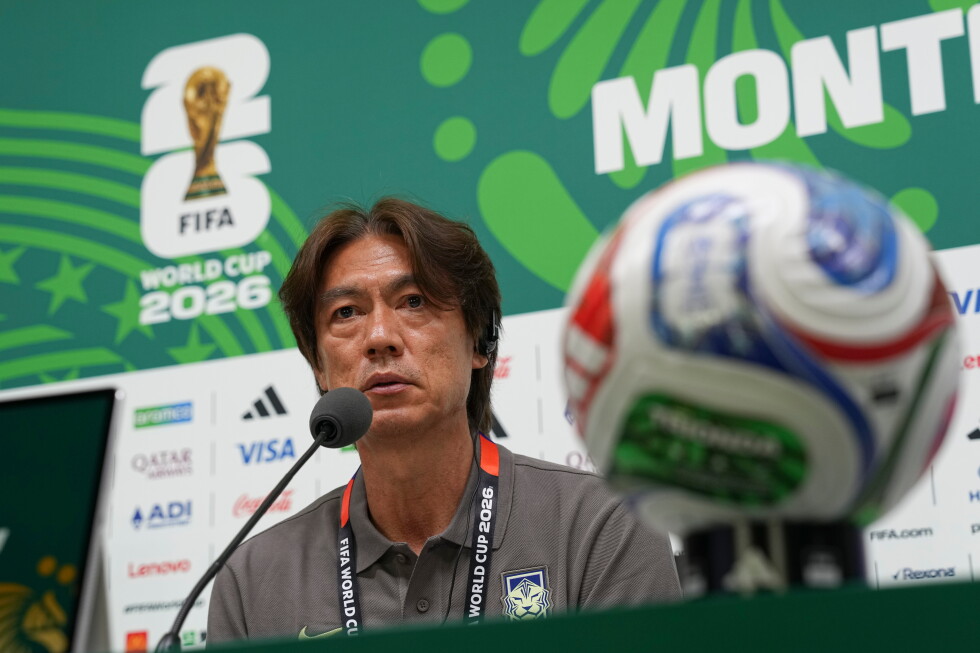
    As South Korea prepares for its final Group A World Cup clash against South Africa in Monterrey, Mexico, head coach Hong Myung-bo says his side is set to receive an extraordinary boost: a raucous, home-field-style atmosphere built on years of cross-cultural football camaraderie. The warm welcome is no accident, tracing back to a historic 2018 World Cup upset that forged an unbreakable bond between fans of the two nations.

    When South Korea stunned defending champion Germany 2-0 four years ago, the result unexpectedly pushed Mexico through to the tournament’s knockout round. Overjoyed Mexican fans took to the streets outside South Korea’s Monterrey consulate, celebrating with a chant that has since become a symbol of the friendship: “Coreano, hermano, ya eres Mexicano” — “Korean brother, you are now Mexican.” That moment of gratitude has blossomed into sustained support for the South Korean national team during this co-hosted World Cup, which is being held across the United States, Mexico and Canada.

    Hong, who knows high-stakes World Cup football well as captain of South Korea’s iconic 2002 semifinal squad, says the outpouring of support from local fans is an unexpected gift for his players. After seeing Mexican fans turn out in force to back the Taeguk Warriors during their opening 2-1 victory over the Czech Republic in Guadalajara, Hong is expecting an equally enthusiastic crowd for Wednesday’s decisive match.

    “We may feel like this is our home ground tomorrow, and that is a very big gift to our players,” Hong said. “We will use that very well so we can play a good game tomorrow.”

    Beyond visiting traveling supporters, the Monterrey region already has deep ties to South Korea. Roughly 5,000 South Korean immigrants have settled in the area, most clustered in the Pesquería district just east of Monterrey National Airport. The community grew after South Korean automotive manufacturer KIA Motors opened a major local plant, drawing workers and businesses that strengthened economic and cultural links between the two countries. This tournament’s draw put all of South Korea’s group stage matches in Mexican host cities, cementing the team’s connection to the region ahead of the decisive clash.

    For visiting fans like Lee Ha-young, who traveled all the way from Seoul to support the team, the warmth of Mexican hospitality has already turned the country into a home away from home. While the two fan cultures differ — Mexican fans are far more outwardly expressive of their passion than the more reserved cultural norm in South Korea, Lee notes — shared love of the game has erased any divides.

    “Mexican fans have a lot of energy – more energy than us,” Lee said. “We have the same energy in our hearts, but it’s really hard to express because in Korean culture it’s not easy to express our feelings.”

    Lee added that many traveling South Korean supporters initially hoped the team would play at least one group stage match in the United States, where star Son Heung-min plays club football for LAFC. But the warm welcome from Mexican fans has changed all those expectations. “But the Mexican people have been really warm to us, so now I think tomorrow we will feel like home here in Monterrey,” she said.

    The stakes of Wednesday’s match could not be higher for both sides. Following a narrow 1-0 loss to host Mexico in their second group fixture, South Korea currently sits second in Group A with three points from two matches. South Africa and the Czech Republic are tied on one point apiece after playing out a 1-1 draw in their opening encounter. A win or even a draw will be enough for South Korea to lock in a spot in the knockout round, while South Africa must secure a full three points to guarantee it avoids elimination.

    If South Korea holds on to second place in the group, it will advance to a Round of 32 match in Los Angeles — a destination that would offer another comfortable, familiar setting for the team. The Los Angeles metro area is home to more than 300,000 Korean-Americans, who would likely turn out in force to support the national side. Still, for visiting fans like Lee, there’s something special about the welcome in Mexico that makes the experience unforgettable.

    “We might have to go to the U.S., for the round of 32,” Lee said. “But I don’t want to leave, I want to stay here in Mexico.”

  • A Serbian town is known for raspberries that are exported around the world

    A Serbian town is known for raspberries that are exported around the world

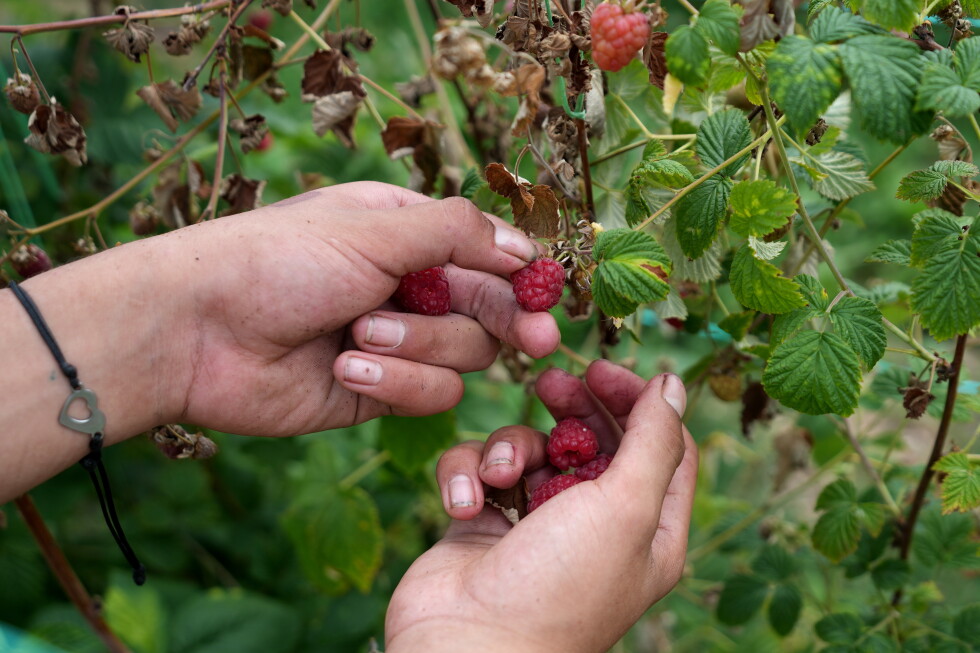
    Tucked into the hilly countryside roughly 100 miles southwest of Serbia’s capital Belgrade, the small municipality of Arilje carries a lofty international title: Serbia’s undisputed ‘raspberry capital’, a reputation that has spread far beyond the Balkan Peninsula’s borders.

    With a total population of just 17,000, this tiny region punches far above its weight in the global raspberry trade. Serbia currently ranks among the world’s top three raspberry exporting countries, and Arilje alone contributes roughly one-fifth of the nation’s total raspberry exports. Each year, the region’s plantations produce between 15,000 and 20,000 tons of premium berries, which are shipped as far as North America’s United States and East Asia’s Japan. Most of the harvest — around 90 percent — is frozen for export, where it goes into food processing, retail produce sections, jams, yogurts and baked goods across Europe, while the remaining 10 percent is sold fresh in domestic markets. A small but growing number of local producers have also begun direct-to-consumer online sales of fresh berries and all-natural fruit juices.

    What makes Arilje uniquely suited to raspberry growing is its combination of gently rolling terrain and mild, consistent climate, conditions that cannot be easily replicated elsewhere. ‘We are born, we live and we die with raspberries,’ explained Mileta Pilcevic, leader of the local raspberry producers’ association. ‘Arilje is unique in the world. You can’t find a smaller place with such a large concentration of raspberry production.’

    Unlike large-scale commercial berry operations in many other countries, Arilje’s raspberries are cultivated entirely without synthetic chemical inputs, and every step from weeding to hand-harvesting is done manually to preserve the fruit’s distinctive, globally celebrated flavor, aroma and quality. Growing high-quality raspberries is a labor-intensive, long-term commitment: a new raspberry orchard takes a minimum of two years to reach full maturity, and the delicate fruit requires constant, attentive care throughout the growing season. ‘Nothing must be done with machines or chemicals,’ Pilcevic emphasized.

    For generations, Arilje’s raspberry farms have been passed down as multi-generational family operations, and during the early summer harvest season, growers rely on a large workforce of seasonal laborers — including migrants from South Asian countries such as India — to complete the picking on time. Local grower Nada Marinkovic noted that the manual work is grueling, made harder by the intense summer sun during picking season, but essential to maintaining the industry’s high quality standards. Weeding and plot maintenance are also completed entirely by hand, she added.

    In recent years, however, the centuries-old industry has faced growing threats that have created deep uncertainty for local producers. Unpredictable extreme weather, linked by climate scientists to human-caused climate change, has disrupted growing cycles and devastated yields. This year, for example, output is projected to drop by 20 to 30 percent compared to average levels, a direct aftermath of a severe drought that hit the region last year.

    Compounding the climate challenge is the persistent instability of wholesale purchase prices for raspberries. Pilcevic explained that too often, the prices offered to growers leave them with little to no profit, leaving them without financial buffer to cover unexpected costs from weather-related crop losses or other emergencies. This economic insecurity has already led to public protests from producers in the past, and Pilcevic warned that more action could come if conditions do not improve. ‘It is not our job to be on the road but in the orchard,’ he said. ‘But, believe me when I say that we will be on the road if we have to.’

  • Asian stocks are mixed after big tech sell-off

    Asian stocks are mixed after big tech sell-off

    HONG KONG – Global financial markets entered a new phase of volatility on Wednesday, as a broad sell-off of high-flying artificial intelligence-linked technology stocks that started on Wall Street spilled across Asian trading floors, leaving regional benchmarks mixed. The pullback comes after months of steep gains for tech and semiconductor shares in Japan and South Korea, driven by feverish investor enthusiasm around the global AI boom, making the sharp two-day decline a key test of market sentiment.

    U.S. stock futures also pointed to conflicting direction early Wednesday, as investors continued digesting the previous session’s losses on Wall Street. On Tuesday, the benchmark S&P 500 dropped 1.4%, the tech-heavy Nasdaq composite slid 2.2%, and the Dow Jones Industrial Average closed down a modest 0.1%. Leading the downward move were major U.S. tech and semiconductor names: memory chip giant Micron Technology plummeted 13.2%, while AI leader Nvidia shed more than 4.1% of its value.

    In South Korea, one of the markets most exposed to the AI chip supply chain, the benchmark Kospi index managed a slight 0.5% rebound to 8,241.23 on Wednesday, clawing back a small fraction of the 10% nosedive it took a day earlier. The recovery was uneven across the country’s top tech stocks: Samsung Electronics gained 3.7% a day after it plunged 12.3%, while another top blue chip, SK Hynix, continued to fall, dropping 3.6%.

    Japan’s Nikkei 225, which has surged to record highs this year fueled by AI-related gains, extended its losses for a second session, dropping 1.1% to 68,991.77, after falling 3.6% on Tuesday. Across other tech-heavy Asian benchmarks, Taiwan’s Taiex fell 2.5%, echoing the global pullback for AI-linked shares. Hong Kong’s Hang Seng Index edged up a marginal 0.1% to 23,364.72, while mainland China’s Shanghai Composite slipped 0.3% to 4,096.14. Australia’s S&P/ASX 200 posted a small 0.1% gain to close at 8,797.00.

    Analysts note the sharp swings highlight how quickly volatility has risen for the tech stocks that have led global market gains this year. “This is an illustration of rising volatility” in AI-exposed equities, explained James Reilly, senior markets economist at Capital Economics. Reilly noted the volatility is particularly pronounced in South Korea, where domestic retail investors have taken on a growing share of trading activity in recent months. The pullback has sparked ongoing debate among market participants over whether the decline is merely a broad profit-taking exercise after months of gains, or a sign of shifting investor sentiment toward overvalued tech names.

    Beyond equities, global commodity markets also moved lower on Wednesday, with oil prices falling as geopolitical tensions in the Middle East eased slightly. More commercial vessels have resumed transits through the Strait of Hormuz, a critical chokepoint for global oil supplies, and diplomatic talks between the U.S. and Iran aimed at a permanent de-escalation of conflict have made progress, according to market observers.

    “Price movements suggest the market expects a fairly rapid recovery in Persian Gulf oil supplies,” ING commodities strategists Warren Patterson and Ewa Manthey wrote in a client note. They added that while vessel traffic through the strait has increased in recent days, volumes remain far below pre-conflict levels. International benchmark Brent crude fell 0.7% to $76.30 per barrel on Wednesday, and U.S. benchmark West Texas Intermediate crude also dropped 0.7% to $72.70 per barrel. While prices have fallen below the $80 per barrel mark in recent trading, they remain elevated compared to the roughly $70 per barrel seen in late February before the outbreak of the latest regional conflict.

    In currency markets, the U.S. dollar held steady against the Japanese yen, holding at 161.55 yen. The euro weakened slightly, trading at $1.1364, down from $1.1382 in previous trading.

    Looking ahead, U.S. investors are turning their focus to upcoming inflation data due Thursday, which will shape the Federal Reserve’s next interest rate moves. The May personal consumption expenditures price index (PCE), the Fed’s preferred measure of inflation, is the key upcoming data point. Most economists currently predict the central bank will hold interest rates steady through the remainder of 2024, and is unlikely to implement additional rate hikes. Bond yields have remained elevated in recent sessions, as persistent inflation concerns have been amplified by global energy market shocks.

  • Archaeologists find huge Viking textile production site in Denmark

    Archaeologists find huge Viking textile production site in Denmark

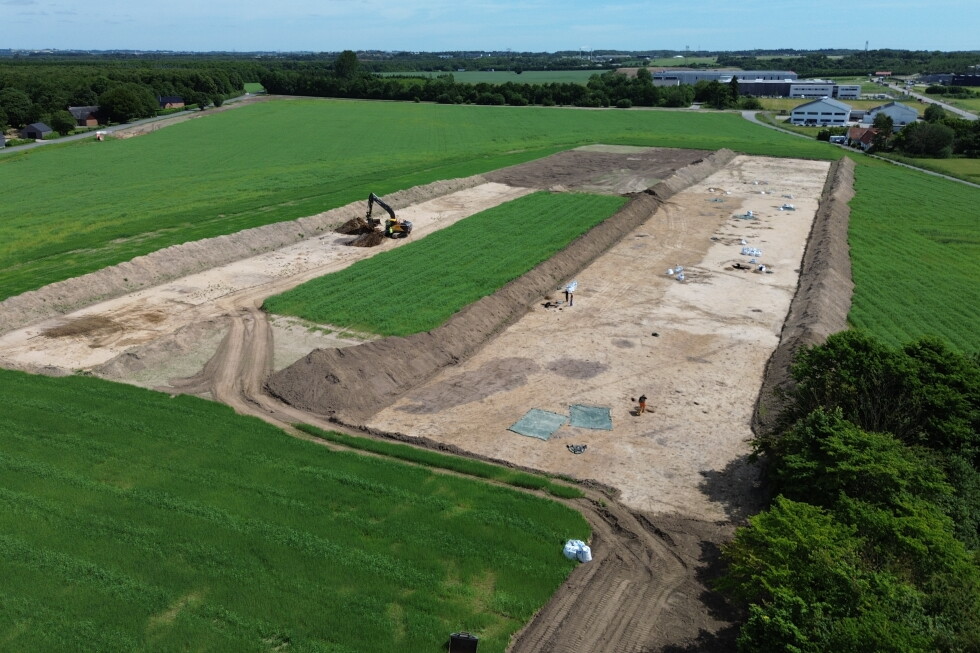
    Archaeologists from Denmark’s Moesgaard Museum have uncovered an unprecedented large-scale Viking Age industrial site near the city of Aarhus, a discovery that upends long-held outdated stereotypes about Viking societal complexity. Dating back between 600 and 950 CE, spanning the late Iron Age and early Viking Age, the 100,000-square-meter settlement is located in Søften, just 10 kilometers north of Aarhus on the Jutland peninsula.

    After a 10-month excavation led by senior archaeologist Liv Stidsing Reher-Langberg, the team confirmed the site’s clear specialization in large-scale textile manufacturing — a feature that sets it apart from all other known Viking-era settlements recorded to date. The dig uncovered over 30 semi-submerged pit houses, structures that served as both workshops and worker accommodations during the Viking period, alongside a dedicated zone for processing raw flax. Artifacts recovered from the site include spindle whorls, loom weights, silver trade coins, decorative glass beads, and domestic pottery, all of which confirm the site’s core function as a centralized production hub.

    The layout of the settlement, which separates production areas from craft zones and includes a single distinct residential structure, indicates that the entire operation was overseen and controlled by a powerful authority figure who held centralized control over local resources and output. The discovery did not come as a complete surprise: amateur detectorists had been recovering silver coins from the area for 30 years, and a trial dig conducted 18 months prior, ahead of planned construction for a new highway and industrial park, confirmed the presence of significant ancient remains.

    “When we opened the initial test trenches, we quickly realized the site extended far beyond our initial estimates, with pit houses and production features stretching across the entire area,” Reher-Langberg explained of the moment the team grasped the scale of their find.

    Moesgaard Museum historian Kasper Andersen noted that the Søften site fills a critical gap in research into the economic, political and social structures of early Viking-era Jutland. At the time, Aarhus — then called Aros — was already a major hub for royal power and international trade, and just four kilometers from Søften, archaeologists uncovered a noble Viking settlement in Lisbjerg just last year. Andersen argues that outlying specialized production sites like Søften supplied goods that fed into Aros’ extensive international trade networks, connecting rural Danish production to markets across Europe and beyond.

    “A settlement of this scale and specialization cannot be explained by local demand alone,” Andersen emphasized. “It has to be understood as a node in a much larger, interconnected international commercial network.”

    The find directly challenges the pervasive outdated stereotype of Vikings as unorganized, barbaric raiders with no complex social or economic structure. “To create a centralized production site like Søften, you need a highly organized society with structured production lines and established trade outlets for output,” Andersen said. “These textiles were made for a market far larger than the immediate local area.”

    Reher-Langberg plans to conduct further analysis, including carbon dating and pollen testing, to answer remaining open questions, such as what specific types of textiles were manufactured at the site and how long the hub operated continuously.

  • South African prisons open art galleries to showcase inmates’ work

    South African prisons open art galleries to showcase inmates’ work

    Against a backdrop of crippling overcrowding, rampant violence, and some of the world’s highest rates of repeat offending, South Africa’s correctional system is testing an unconventional solution to rehabilitation: turning prison spaces into public art galleries that showcase work made by incarcerated people.

    The initiative, launched by South Africa’s Department of Correctional Services in partnership with justice advocacy group Just Detention International-South Africa, has opened nine dedicated prison arts and crafts galleries across the country since 2023. The flagship site at Leeuwkop Correctional Facility, located in Johannesburg, currently features work from 34 participating inmates, opening a rare window into the personal stories, cultural roots, and transformative journeys of people living behind bars in a nation grappling with a persistent national crime crisis.

    South Africa’s recidivism rates are among the highest on the planet, with estimates stretching as high as 95% depending on how repeat offending is measured. Correctional officials widely agree that high rates of reoffending are a primary driver of the severe overcrowding that plagues the country’s prison system. Overcrowding, compounded by systemic underfunding, administrative mismanagement, and widespread gang activity, has created a culture of endemic violence within South African correctional facilities.

    It is against this urgent context that department officials developed the arts program, designed to address multiple systemic flaws at once: helping inmates process pre-incarceration trauma, build marketable creative skills, earn independent income, and lay the groundwork for stable, law-abiding lives after release.

    “For them to also see that this can be a way of living, it helps because now they are able to manage their own finances, albeit at a small scale,” explained Makgothi Thobakgale, national commissioner of the Department of Correctional Services. “As they leave here to serve parole and finish their sentences, this is the most effective way of making it a point that they don’t do crime again.”

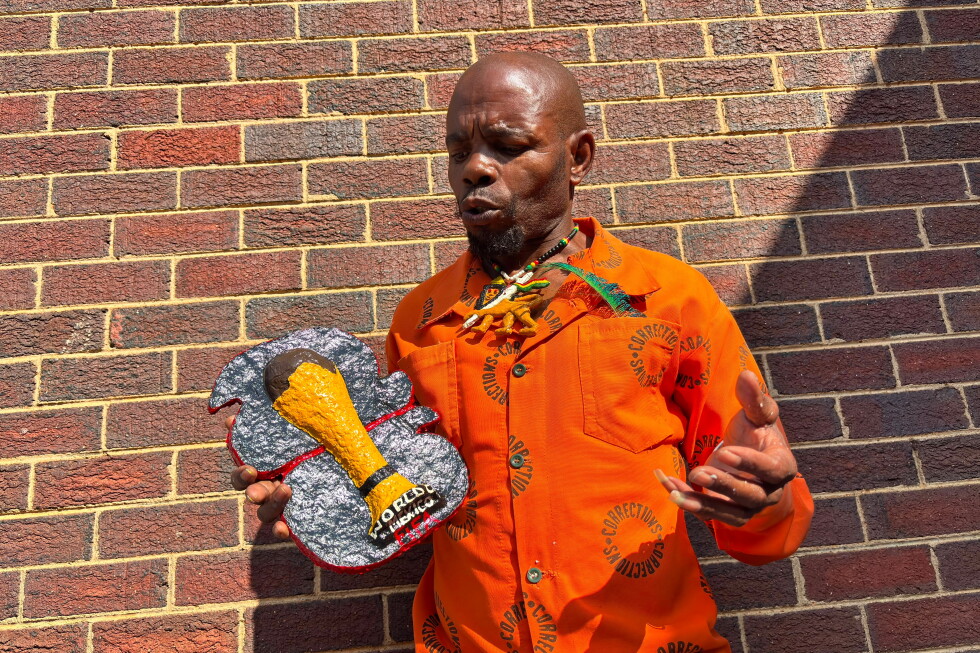
    For 51-year-old Freddy Mongkoai, who is serving a 12-year murder sentence for his role in a vigilante justice killing, the program has already reshaped his daily experience of incarceration. He joined the art initiative last October and has since experimented with painting and papier-mâché sculpture, including a detailed replica of the FIFA World Cup trophy that demonstrates his growing technical skill.

    “I get a peaceful and healed mindset when I do my art,” Mongkoai told the Associated Press. “It encourages me to be strong and present. I can focus, so it gives me peace of mind.”

    One of Mongkoai’s most beloved pieces is a striking grayscale portrait of a woman balancing firewood on her head and a child on her back, a work inspired by childhood folklore he learned growing up in Limpopo province. “The elders would tell us that there is a woman carrying firewood on her head and a baby on her back, while being followed by a dog, on the moon,” he said. “That is my favorite because it reminds me of my childhood.”

    The Leeuwkop exhibition reflects a wide range of themes and experience levels, from Mongkoai’s culturally rooted portraiture to a simple pencil drawing bearing the urgent message “STOP GBV” that spotlights South Africa’s ongoing crisis of gender-based violence. Themes of home, family, and personal memory appear repeatedly across the show, program organizers note.

    Unlike formal clinical art therapy led by licensed practitioners, the initiative is framed as a voluntary, therapeutic creative outlet that prioritizes emotional processing over technical artistic skill. Unathi Mahlati, a senior program officer at Just Detention International-South Africa, which has partnered on the project since 2024, explained that the vast majority of incarcerated people in South Africa enter facilities with unprocessed trauma, and few services exist to help them work through those experiences.

    “A lot of them have experienced a lot of trauma before coming into the facilities, but there’s not a lot of services for them to process and metabolize that trauma,” Mahlati said. “We emphasize that it’s not about skill. It’s a creative expression to process trauma. Correctional facilities have an environment that is very rigid and very dogmatic. So we give people a chance to just be.”

    All art created through the program is available for purchase by the visiting public, with prices ranging from roughly 50 rand ($3) for small, simple pieces to more than 2,000 rand ($120) for large, complex works. Proceeds are split between restocking program art supplies and providing small stipends to participating artists — giving incarcerated people a rare opportunity to earn independent income beyond traditional prison work like farm labor and furniture manufacturing. Selected works are also displayed at major public events across South Africa, including the Comrades Marathon Expo and Makhanda’s National Arts Festival, giving artists access to much larger audiences.

    For Mongkoai, the program has fostered a bold new vision for his life after release: he plans to open his own art gallery, turning the practice that healed him in prison into a lifelong career.