博客

  • Sydney woman wakes from induced coma more than a week after shark attack

    Sydney woman wakes from induced coma more than a week after shark attack

    Nearly two weeks after a brutal shark attack left her fighting for life at one of Sydney’s most popular public beaches, a local teacher has achieved a surprising early recovery milestone that has lifted the spirits of her family and the broader community.

    Leah Stewart, a 34-year-old mother of one, was mauled by a shark while swimming close to shore at Coogee Beach on Saturday, June 13. The attack left her with multiple lacerations across her arms and legs, massive blood loss, and required emergency medical intervention that included the amputation of one of her arms and multiple consecutive surgical procedures.

    Immediately after the attack, Stewart was rushed to a nearby hospital in critical condition, where medical teams placed her in an induced coma to support her recovery. More than a week later, on the following Tuesday, her brother Joshua shared that clinicians had lowered her sedative medication, allowing Stewart to wake briefly for the first time since the incident.

    During that brief period of consciousness, Stewart told her mother and partner, who were at her bedside, that she loved them, and asked after the wellbeing of her young daughter. In a public online update shared with the hundreds of community members who have offered support to the family since the attack, Joshua described the early awakening as nothing short of a miracle.

    “This is a lot faster than anyone expected, and for us this feels like a miracle and is everything so many of us have hoped and prayed for over the past week,” Joshua wrote.

    He went on to confirm that Stewart remains in intensive care, having undergone five full days of surgery in the week following the attack, with more planned reconstructive procedures scheduled in the coming weeks. While warning that the 34-year-old still faces a long, challenging road to recovery and remains in critical care, Joshua emphasized that the early awakening is a hugely encouraging first step that has given the entire family renewed hope for her long-term recovery.

    Stewart’s attack is one of a growing string of deadly shark encounters recorded across Australia in 2025. In January, four separate attacks occurred across the country in just a 48-hour window, including one on a young boy at a Sydney beach who later died from his injuries. Just last month, two more fatal attacks were recorded: a spearfisher was killed by a shark in Queensland, and 38-year-old Steven Mattaboni, a father of two, died after being bitten by a 4-meter great white off the coast of Western Australia.

  • North Korea’s Kim claims progress on nuclear-armed navy as new warship is placed into service

    North Korea’s Kim claims progress on nuclear-armed navy as new warship is placed into service

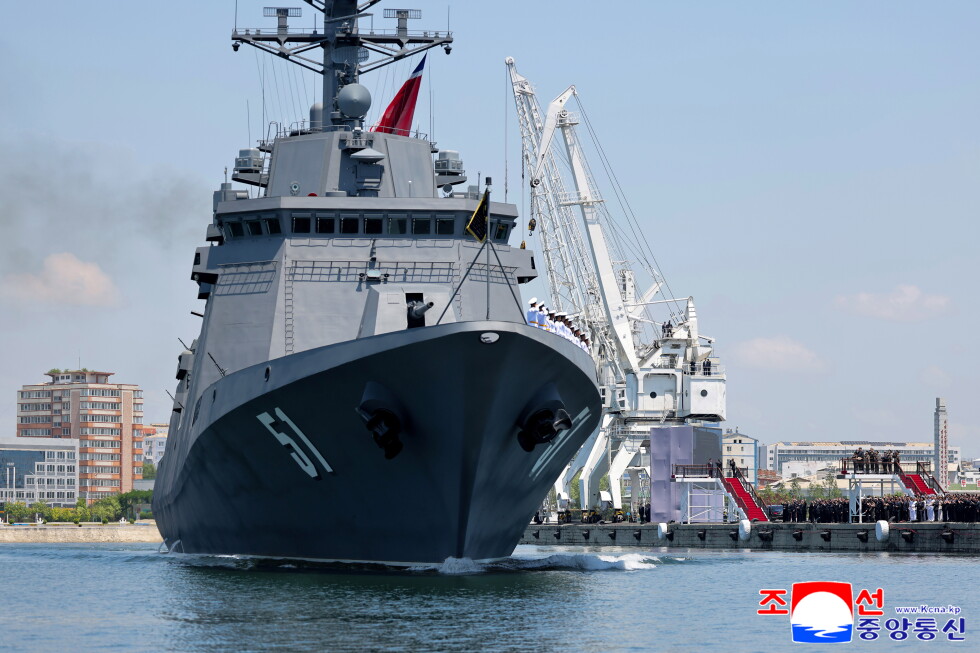
    In a significant milestone for Pyongyang’s expanding maritime military ambitions, North Korea has officially brought a 5,000-ton guided-missile destroyer into active naval service, with leader Kim Jong Un framing the new vessel as a public symbol of the country’s advancing naval and nuclear development programs, state media confirmed this week. The official Korean Central News Agency (KCNA) reported that Kim Jong Un attended the formal commissioning ceremony held Tuesday in the western port city of Nampo, where he emphasized that the launch of the destroyer, named the *Choe Hyon*, proves North Korea’s plan to equip its entire navy with nuclear-capable systems is progressing on schedule.

    Following the ceremony, the *Choe Hyon* was formally assigned to the defense of North Korea’s western coastal waters, the report added. Kim first unveiled the vessel to the public in April 2025, and has since positioned it as a transformative leap forward for the country’s military, expanding its operational reach at sea and boosting its capacity to launch preemptive strikes against adversary targets. According to KCNA, the warship comes outfitted with a full suite of advanced weaponry, including anti-aircraft defense systems, anti-ship missiles, and both nuclear-capable ballistic and cruise missiles. In the months leading up to its deployment, North Korea conducted a series of sea trials for the *Choe Hyon*, multiple of which included test launches of cruise missiles Pyongyang claims are capable of carrying nuclear warheads.

    In his keynote address at the commissioning, Kim marked a clear break from North Korea’s past naval posture. “It has clearly become a thing of the past when our navy existed as a force for defending the sea off our land,” he said. “It is rising into a full-fledged service equipped with strategic means as the program of equipping the Navy with nuclear weapons is following its planned course unerringly.”

    For years, Kim Jong Un prioritized the development of land-based ballistic missile programs, but in recent years he has shifted his focus to expanding naval capabilities as a core pillar of North Korea’s military modernization. Work is already ongoing on a nuclear-powered submarine, and expanding naval power was a central priority when Kim outlined his five-year military development plan at the Workers’ Party Congress last February. That plan included explicit calls for developing intercontinental ballistic missiles capable of being launched from underwater platforms.

    After a March missile test conducted from the deck of the *Choe Hyon*, Kim stated that his push to nuclear-arm the navy would “constitute a radical change in defending our maritime sovereignty, something that we have not achieved for half a century.” While state media did not elaborate on the context of this remark, many outside analysts believe the comment signals North Korea may be preparing to formally announce a new maritime boundary that would overlap with waters currently controlled by South Korea. Tensions between the two Koreas have risen sharply in recent months, and Kim has repeatedly rejected the legitimacy of the Northern Limit Line, the disputed sea boundary drawn by the U.S.-led United Nations Command at the close of the 1950-1953 Korean War. This poorly demarcated line has been the site of multiple deadly inter-Korean skirmishes over the past decades.

    The *Choe Hyon* is the first of two planned 5,000-ton destroyers in its class. North Korea unveiled a second hull, the *Kang Kon*, at its northern Chongjin shipyard in May 2025, but the vessel suffered significant damage during a botched launch ceremony that prompted a public rebuke from Kim. After emergency repairs, Pyongyang announced the *Kang Kon* was relaunched in June, though outside defense experts have cast doubt on whether the vessel is fully seaworthy and operational. Kim confirmed Tuesday that the *Kang Kon* will be commissioned for active service in the near future, and added that North Korea has separate plans to construct an even larger 10,000-ton destroyer in coming years.

    South Korean government officials and independent defense analysts largely believe the *Choe Hyon* was constructed with significant technical assistance from Russia, amid rapidly deepening military cooperation between Moscow and Pyongyang over the past several years. Even so, some experts have raised questions about whether the new destroyer is actually ready for full, frontline active service, casting doubt on the reliability of its onboard systems.

    Since Kim Jong Un’s high-profile nuclear diplomacy with then-U.S. President Donald Trump collapsed in 2019, Pyongyang has dramatically accelerated the expansion of its nuclear weapons arsenal, while deepening its political and military alliances with both Russia and China. Though Kim has maintained a hard-line confrontational stance toward Seoul’s current conservative government, he has left open the possibility of resuming diplomatic talks with Washington, repeatedly reiterating Pyongyang’s core demand that the U.S. abandon its precondition of denuclearization to restart negotiations.

  • Eight people with alleged ties to Antifa collectively sentenced to 450 years in prison over ICE centre protest

    Eight people with alleged ties to Antifa collectively sentenced to 450 years in prison over ICE centre protest

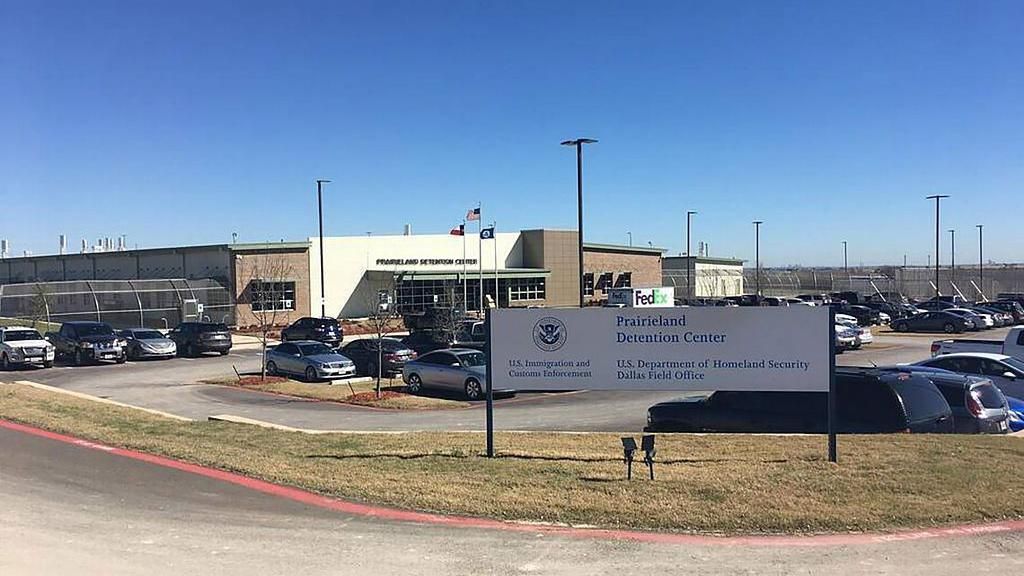
    On a Fourth of July holiday last summer, a chaotic demonstration outside a federal immigration detention facility in rural Prairieland, Texas — just south of Dallas — ended with a law enforcement officer shot in the neck, extensive property damage, and this week, historic lengthy prison sentences for eight people U.S. prosecutors have linked to the leftist anti-fascist movement Antifa. Collectively, the group has been sentenced to 450 years behind bars, in a case that has reignited fierce national debates over political protest, domestic terror labeling, and the scope of federal punishment for ideological activism.

    The harshest sentence, 100 years in prison, went to Benjamin Hanil Song, the 38-year-old former U.S. Marine Corps reservist prosecutors identified as the cell’s leader. Song was convicted of attempted murder of a law enforcement officer, after the officer was wounded by gunfire during the unrest. Per U.S. Department of Justice (DOJ) records, Song faced a mandatory minimum sentence of just 20 years for the conviction, making the 100-year term a far harsher penalty than required by statute.

    In a written statement released Tuesday through defense advocates and multiple media outlets, Song claimed he fired his weapon only because he believed the officer was about to open fire on an unarmed protester. His mother, Hope Song, has pushed back against all allegations that her son intended to harm anyone, telling the Associated Press that the narrative of the attack has been distorted to fit a broader political narrative. The other seven defendants received sentences ranging from 30 to 70 years: Maricela Rueda was handed 70 years, five co-defendants (Cameron Arnold, also known as Autumn Hill, Savanna Batten, Zachary Evetts, Bradford Morris, also known as Meagan Morris, and Elizabeth Soto) each received 50 years, and Daniel Rolando Sanchez-Estrada was sentenced to 30 years.

    Acting U.S. Attorney General Todd Blanche issued a blunt statement following the sentencing, framing the penalties as a clear warning to ideologically motivated violent actors. “The sentences handed down today make clear that Antifa terrorists who attack law enforcement and federal facilities will face swift and uncompromising justice,” Blanche said, reiterating the DOJ’s commitment to cracking down on violent extremism that targets government institutions.

    According to the DOJ’s official account of the incident, the eight operatives belonging to what the agency calls the North Texas Antifa Cell launched the attack by launching and throwing explosive fireworks at the Prairieland detention center, before vandalizing multiple government vehicles and an on-site guard kiosk. The officer shot in the neck ultimately survived the attack, but the incident prompted a wide-ranging federal investigation and eventual 12-day jury trial that concluded earlier this year, after opening arguments on February 23.

    All eight defendants were convicted on a sweeping array of charges including felony rioting, illegal possession of weapons and explosives, providing material support to a terrorist organization, and obstruction of justice. But the case has been steeped in controversy from the start, with supporters and family members of the convicts arguing that the government has overstated the group’s ties to Antifa and imposed excessively harsh punishments for what was originally billed as a demonstration against U.S. Immigration and Customs Enforcement (ICE) detention policies.

    All eight defendants have repeatedly denied any formal affiliation with Antifa, saying they only attended the July 4 gathering to advocate for detained immigrants, a cause that has drawn widespread, mostly peaceful protest across the country for years. Multiple attendees of the demonstration have stated that the event was initially planned as a peaceful “noise demonstration” and that the outbreak of violence was unplanned and unexpected. Before the 2025 protest, the Prairieland facility had not seen any major disruptive activity, unlike many other ICE detention centers that have seen regular protests and even official visits from Democratic members of Congress.

    One additional defendant, Ines Soto, is scheduled to receive her sentence on July 1, and seven other people who pleaded guilty to one count of providing material support to terrorists ahead of trial will also be sentenced the same day.

    The labeling of the defendants as Antifa-affiliated domestic terrorists ties back to a 2025 executive order signed by former President Donald Trump, who formally designated the loosely organized movement as a domestic terrorist organization last September. Trump has long targeted Antifa as a core ideological enemy, blaming the movement for widespread violent unrest during multiple national protest waves in recent years.

    Critics of the designation and of the recent sentencing have pushed back on the DOJ’s framing, noting that Antifa is not a formal, centralized organization with fixed membership or leadership, but rather a loose ideological umbrella for groups and individuals that oppose far-right, fascist and racist politics. They also argue that holding individuals criminally liable for subscribing to a specific ideological belief violates fundamental First Amendment protections. The DOJ, however, has defended its framing, saying in a statement that the North Texas Antifa Cell is part of a larger militant network whose explicit ideological goal is the violent overthrow of the U.S. government, federal law enforcement, and the existing American legal system.

  • Iran’s ballistic missiles were ‘never on the table’ in US talks

    Iran’s ballistic missiles were ‘never on the table’ in US talks

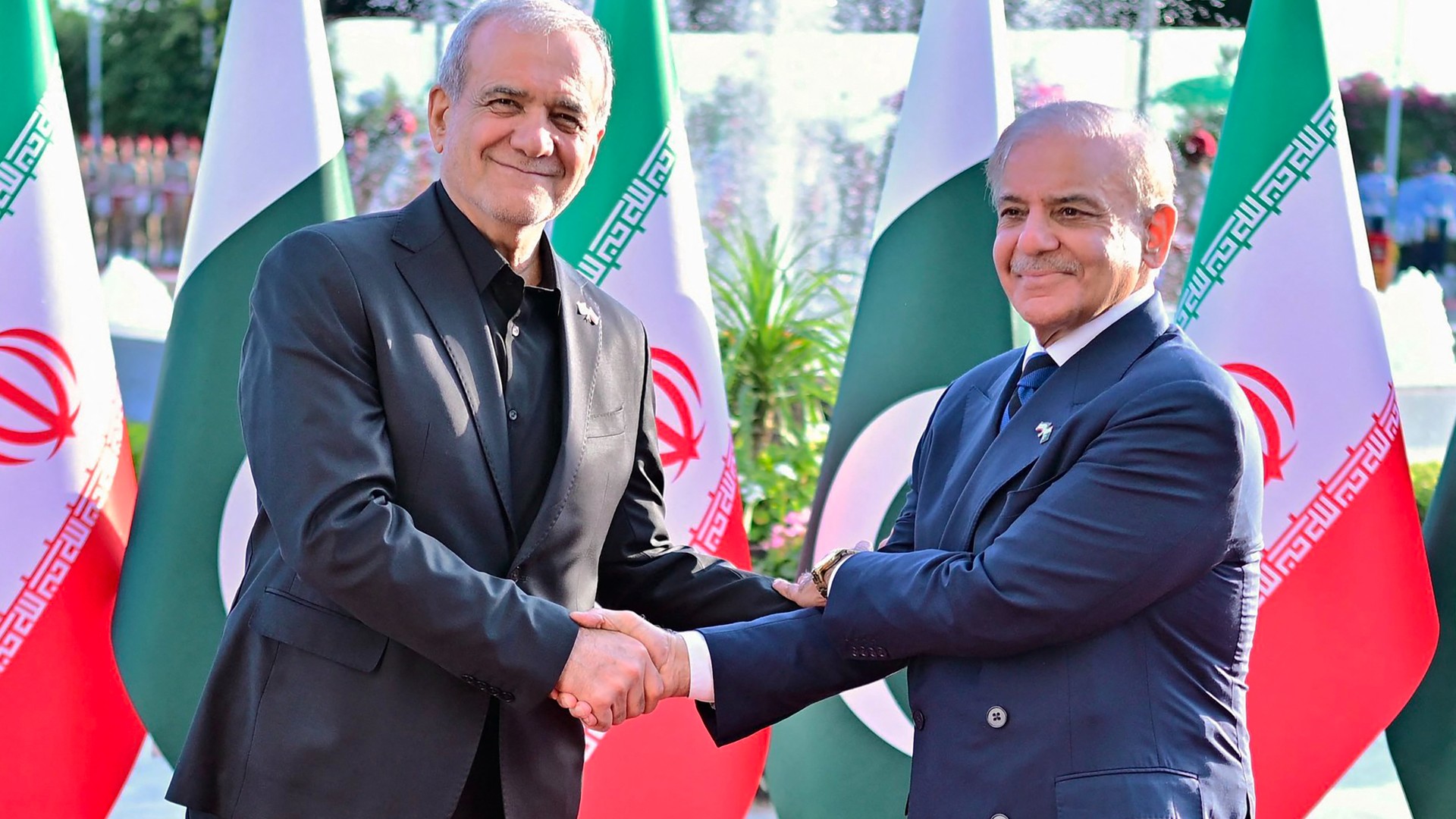
    In a landmark confirmation made Tuesday during Iranian President Masoud Pezeshkian’s official visit to Islamabad, Pakistan’s Prime Minister Shehbaz Sharif has publicly clarified that Iran’s ballistic missile program was never part of the agenda for ongoing US-Iran negotiations, contradicting long-standing claims from Washington and Tel Aviv that the program was a core casus belli for their conflict with the Islamic Republic.

    Speaking on the record about the Islamabad Memorandum of Understanding (MOU) that paused hostilities between the US and Iran to open diplomatic space, Sharif emphasized, “This MOU does not mention ballistic missiles. It was never on the table, it was never on the agenda and the Iranian side never even wanted to discuss it. This is not an impression, but a fact of the matter.”

    Sharif also pushed back against what he called global double standards on missile proliferation, saying, “There cannot be double standards; that some countries can have ballistic missiles and Iran shouldn’t have them. You cannot digest this kind of duplicity.”

    Iran’s president echoed and amplified Sharif’s remarks, stressing that his country’s defensive missile program will never be up for negotiation under any circumstances. “Iran will never compromise on our missile programme and capabilities and this shall never be part of any agreement between Iran and any other party,” Pezeshkian stated. He added that the country’s defensive arsenal acts as a critical deterrent: “If the missiles we have for our defence did not exist, Israel and the United States would have ploughed Iran just like Gaza, showing no mercy to either the old or the young.”

    The confirmation aligns with a recent shift in US policy: during last week’s G7 summit hosted in Paris, US President Donald Trump acknowledged that demanding the missile program be placed on the negotiating table was never a realistic goal. “I’m saying that if other countries have them, it’s a little bit unfair for them not to have some,” Trump told reporters in Paris.

    This public shift marks a stark reversal from the US’s opening war aims, which explicitly identified the elimination of Iran’s ballistic missile arsenal and production capacity as a non-negotiable core objective. A declassified 1 April US presidential memo made clear: “From day one, the objectives have been clear and unwavering: obliterate Iran’s ballistic missile arsenal and production capability… That is the clear objective of this mission.”

    Since the end of formal US military operations against Iran, none of Washington’s original primary war objectives—including regime change, the total destruction of Iran’s missile program, the elimination of Iran’s naval capabilities, and the seizure of Iran’s uranium stockpiles—have been achieved. Today, Washington has reframed its negotiation priorities around two core goals: keeping the Strait of Hormuz open (a status that held before the US launched its invasion) and preventing Iran from developing a nuclear weapon.

    Diplomatic progress has moved forward rapidly in recent days. On Monday, the US suspended economic sanctions against Iran as part of the first round of high-level talks held under the Islamabad MOU framework. US Vice President JD Vance, who leads the US negotiation team, described the day of talks as having yielded “good progress.”

    The lifting of US sanctions is expected to deliver major economic relief to Iran: before the US blockade was imposed in response to Iran’s temporary closure of the Strait of Hormuz, Iran produced roughly 4.6 million barrels of crude oil per day and exported 1.5 million barrels daily. The Islamabad MOU, which was mediated by Pakistan and Qatar, halted all US-Iran hostilities for a 60-day period to allow for in-depth technical negotiations. Following Monday’s successful High-Level Committee Meeting, Sharif announced that negotiators had finalized a roadmap to reach a comprehensive final agreement within the 60-day window. Mohammad Bagher Ghalibaf leads Iran’s negotiation delegation. On Tuesday, Trump reaffirmed that Washington is seeking a fair agreement with Tehran, adding that relations between the two countries are currently positive.

    Beyond bilateral US-Iran negotiations, the MOU also includes a commitment to end all ongoing hostilities in Lebanon. However, achieving a ceasefire there has proven far more complicated, as Israel has openly defied US efforts to end the conflict. Parallel direct negotiations between Israel and Lebanon are already underway independently of US-Iran talks.

    On Tuesday, the two countries launched their fifth round of direct negotiations in Washington. Lebanon’s delegation is pushing to revive earlier proposals that would require a full Israeli withdrawal from southern Lebanon. The three days of talks come after four prior negotiating rounds failed to deliver a permanent ceasefire or close the substantial gaps between the two sides’ positions.

    Beirut is expected to push for four core demands during this round: a binding timetable for Israeli withdrawal, the safe return of hundreds of thousands of internally displaced Lebanese people, the release of Lebanese detainees held by Israel, and the launch of post-conflict reconstruction efforts. For its part, Israel has linked any full withdrawal to the complete disarmament of Hezbollah, and insists that Israeli forces will maintain control over a large security buffer zone inside southern Lebanon until it is convinced that the Lebanese army can prevent Hezbollah from re-establishing a military presence in the area.

    The US-Iran MOU frames the Lebanon conflict as part of a broader regional ceasefire framework, and earlier talks near Lake Lucerne, Switzerland, produced a draft framework for a de-escalation mechanism between Israel and Hezbollah. This latest diplomatic development means the Washington talks are no longer the only diplomatic channel working to end the Lebanon war.

    This report was sourced from independent coverage by Middle East Eye, a outlet specializing in on-the-ground reporting and analysis of the Middle East, North Africa and global affairs.

  • ‘VAR went for a coffee’ – should Ghana have had penalty against England?

    ‘VAR went for a coffee’ – should Ghana have had penalty against England?

    A tense goalless friendly draw between England and Ghana ahead of the 2026 FIFA World Cup has ignited widespread debate over Video Assistant Referee (VAR) protocols, after a clear foul inside the England penalty area went unpunished by on-field officials and was not reviewed by VAR.

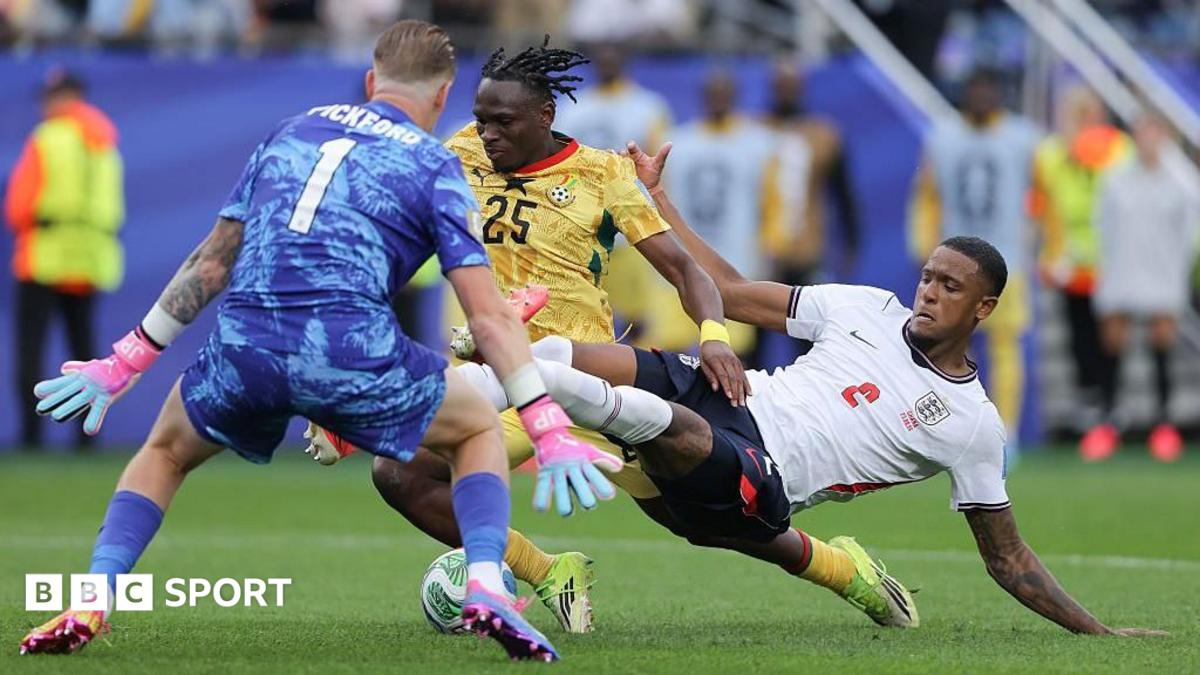
    Ghana boss Carlos Queiroz did not hold back after the match, venting his frustration over the late-game incident that saw his midfielder Prince Kwabena Adu brought down by England defender Ezri Konsa as Adu charged toward goal. Replays confirmed Konsa made contact with Adu’s knee and failed to touch the ball, a challenge that Queiroz insisted should have resulted in both a penalty and a red card for England.

    In a sarcastic rebuke of VAR’s performance, Queiroz questioned whether the system was even operational during the fixture. “Once again VAR went for a coffee,” he told reporters. “I’m not sure VAR is still working in the World Cup. We still have VAR? It’s working? It was a clear penalty, red card. You have any doubts about that?” He added a lighthearted caveat to his criticism, noting: “I’m sorry for my sarcasm, but if I say these kind of things seriously they punish me, so I hope you understand that I’m joking.”

    Queiroz’s complaints were echoed by multiple prominent football pundits and former elite players covering the match for the BBC, including several former England internationals. Former England and Manchester United striker Wayne Rooney said straight away that he believed the challenge deserved a penalty award. “Konsa takes a huge risk. His feet are off the floor when he comes flying in and he gets the man, not the ball. That could easily have been given in my view,” Rooney explained.

    Fellow ex-England defender Micah Richards echoed that assessment, noting that while England was pushing for a late winning goal, the rules of the game still required clear fouls inside the box to be punished. “On another day, that could have been a penalty,” Richards said.

    Even former 2010 World Cup assistant referee Darren Cann, who identifies as an England supporter, admitted the decision was incorrect. “As an England fan I am delighted that it wasn’t given, but I have to be honest, for me this should have been referred [to VAR], Cann told BBC One. “Konsa makes absolutely no contact at all with the ball, he brings down his opponent. He is airborne, he is out of control, he makes contact with the attacker. For me this was a penalty kick.”

    The incident has raised questions about why VAR did not intervene to review the call, a step that would be standard in most top-tier club competitions including the English Premier League. The difference, however, comes down to new protocol guidelines put in place for the 2026 World Cup by FIFA’s head of referees Pierluigi Collina. Collina has mandated a higher threshold for VAR overturns, with a policy of limiting interventions to preserve the flow of the game and defer more decisions to on-field officials. That policy is widely seen as the reason no review was initiated for the Konsa challenge.

    While Ghana walked away with a hard-fought respectable draw against England, the controversy has put renewed focus on FIFA’s adjusted VAR rules ahead of the tournament, sparking debate over whether the new threshold will lead to more contentious incorrect decisions as teams prepare for the 2026 World Cup.

    This report was first published in June by BBC Sport, ahead of the 2026 FIFA World Cup.

  • Crimson Thread: The new Israeli separation wall that cuts through the ‘breadbasket of Palestine’

    Crimson Thread: The new Israeli separation wall that cuts through the ‘breadbasket of Palestine’

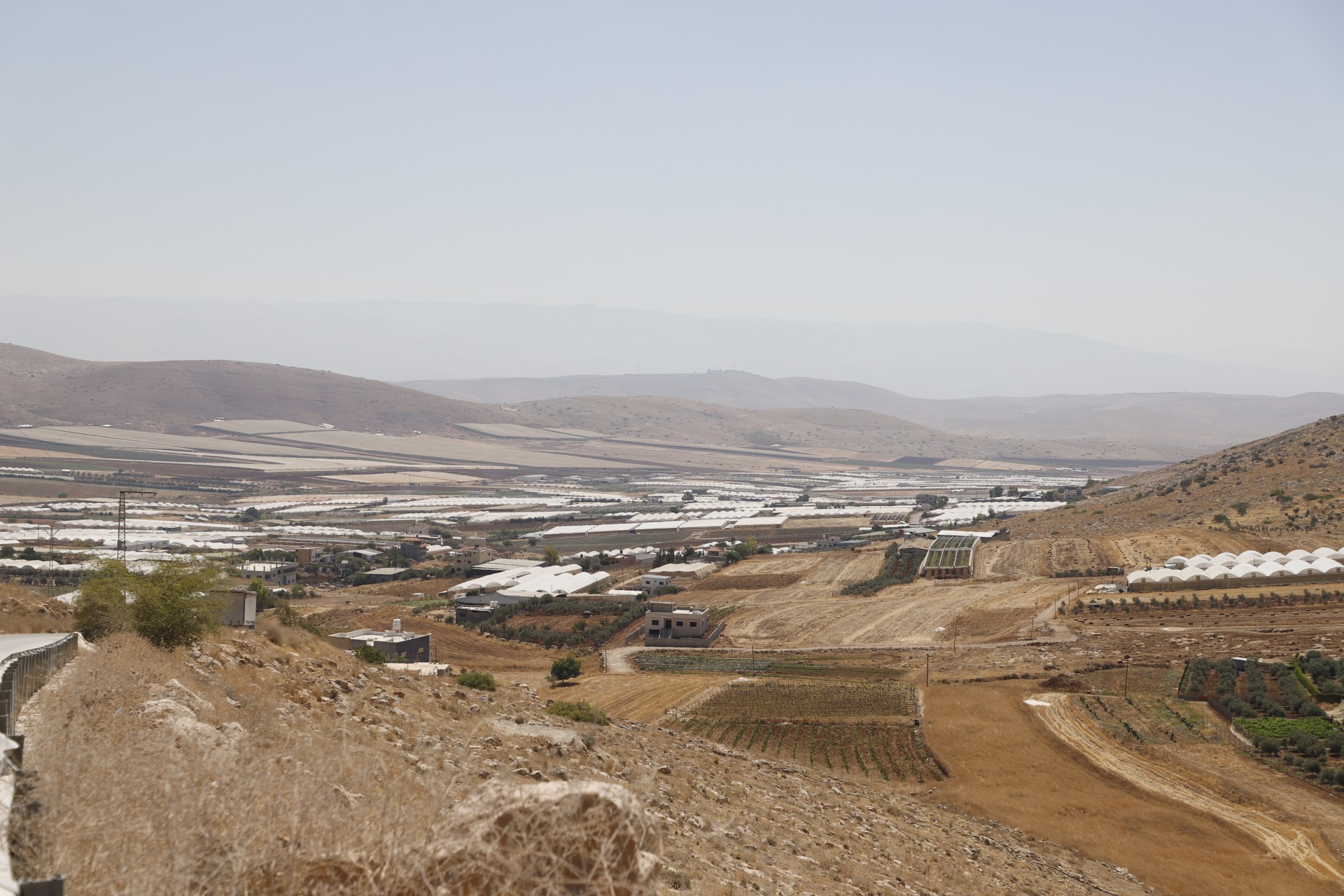
    The rolling fertile fields of the Buqe’aa Plain, long known as the breadbasket of Palestine, have become ground zero for a sweeping Israeli land seizure initiative that is upending the lives of hundreds of Palestinian farming and herding families in the northern Jordan Valley. For Khairallah Bani Odeh, a lifelong Palestinian herder and farmer who once worked his family’s lands in the village of Atouf, displacement has turned his new home in Tammoun, south of Tubas, into nothing short of an open-air prison.

    Months after being forced to abandon his ancestral lands, Bani Odeh is one of dozens of families pushed out by a confluence of escalating settler violence, deliberate water access cuts, and the ongoing construction of Israel’s “Crimson Thread” infrastructure project. The ambitious initiative calls for a 22-kilometer, 50-meter-wide separation wall and adjacent military road to be carved through eastern Tubas, cutting off Palestinian communities from vast swathes of their most productive agricultural and grazing land.

    For generations, Bani Odeh and his neighbors sustained themselves through sheepherding and small-scale agriculture, their livelihoods tied directly to access to the Buqe’aa Plain’s fertile soil and local water networks. But from the moment construction crews moved in earlier this year, that foundation collapsed. According to Bani Odeh, Israeli settlers used bulldozers to destroy main water lines that fed hundreds of hectares of farmland across the plain, killing growing crops and cutting off critical water supplies for livestock. Without access to water, he was forced to buy expensive water from neighboring villages, walking miles to haul what he could for his herd. When settlers burned his standing barley crop, life in Atouf became untenable, forcing his family to relocate.

    Three months after leaving, Bani Odeh says he still feels trapped. He struggles to find new grazing land for his remaining livestock, and he counts every day until he can return to his ancestral home. His experience is far from unique. Across Atouf and surrounding communities, thousands of residents are facing catastrophic losses of land, water, and livelihoods as the Crimson Thread project progresses.

    Local estimates show more than 20,000 dunams (2,000 hectares) of agricultural land are already suffering severe drought and damage as a result of destroyed water infrastructure. For communities that rely almost entirely on livestock farming, shrinking pastureland and limited water access are pushing production costs sharply higher and forcing farmers to cull their herds, eroding their primary source of income.

    Anis Bisharat, a local vegetable farmer who once tended thriving plots of melons, okra, cucumbers, and zucchini, has watched his entire season wither after the water cuts. With irrigation no longer possible, his crops have suffered irreversible damage, and the project has also closed the traditional access road to the plain, forcing him to travel twice the distance and pay double the fuel costs to reach what little of his land he can still access.

    Muhammad Gharaibeh, another long-time farmer in the region, says the project is part of a far broader plan to seize more than 70,000 dunams of Palestinian land, facilitated by a settler outpost built on a hill overlooking the plain that has enabled repeated targeting of local agricultural activity. “This plain is the breadbasket of Palestine, and most of the fruits and vegetables distributed in the West Bank come from here,” Gharaibeh explained. With water lines cut, more than 40,000 dunams of standing crops are now without irrigation. With the scorching Palestinian summer just beginning, Gharaibeh says the entire growing season is at risk of total loss. “My crops have been without water for two weeks, and this is just the beginning,” he lamented.

    Preliminary data from the Atouf Village Council confirms the scale of the crisis: 24,000 dunams of land belonging to roughly 300 local farmers are currently facing drought and damage from ongoing bulldozing operations. That affected area makes up roughly a quarter of the entire 96,000-dunam Buqe’aa Plain.

    Details of the Crimson Thread project first emerged publicly in November last year, when Israeli newspaper Haaretz reported that the barrier and military road would stretch across Palestinian territory from Ein Shibli in the central Jordan Valley to the Tayasir military checkpoint. Shortly after the report, Israeli authorities issued formal military seizure orders for 1,042 dunams of Palestinian land along the planned route. Since the start of 2024, construction crews have operated continuously to advance the project, which researchers and local residents say will ultimately cut off thousands of additional dunams from Palestinian access entirely.

    The humanitarian and political fallout of the project is rooted in long-standing Israeli restrictions on Palestinian presence in the Jordan Valley, which makes up roughly 30 percent of the occupied West Bank. A recent April report from Israeli human rights organization B’Tselem found that the Jordan Valley has some of the strictest limits on Palestinian access and residency in the entire occupied territory. As of April, the group reported that more than 4,100 Palestinians across 62 communities in Areas B and C have already been displaced by a combination of Israeli state restrictions and settler violence. Currently, 53.4 percent of the Jordan Valley is classified as Israeli “state land,” 45.7 percent is designated as military firing and training zones, and roughly 20 percent is set aside as nature reserves — designations that all but bar Palestinian access and use.

    Mu’taz Bisharat, a leading expert on Israeli settlements in the West Bank, told Middle East Eye that the Crimson Thread project represents a dramatic tightening of Israeli control over the Jordan Valley, and a direct threat to the continued existence of Palestinian communities in the region. Bisharat noted that the deliberate destruction of water infrastructure is an intentional attack on the foundation of Palestinian life in the area, leaving little option for families but displacement. “Today, 70 percent of the land in this area has been lost due to the compounded crimes committed by the Israeli occupation against the Palestinian people, the Palestinian presence, and Palestinian agriculture. Nothing remains for the Palestinian citizen,” he said.

    Bisharat added that the new barrier and road are intended to redraw de facto boundaries in the Jordan Valley, cutting the region off from the rest of the occupied West Bank in a quiet, ongoing process of annexation that continues out of the global media spotlight. “The annexation process is taking place on the ground in full view of the entire world,” he said. “It has been halted in the media, but it hasn’t stopped on the ground.”

  • Google’s YouTube settles social media addiction case with teen

    Google’s YouTube settles social media addiction case with teen

    A growing legal reckoning over social media’s harmful impact on children’s mental health gained a new development this week, as Google-owned YouTube has reached an amicable settlement in a youth addiction lawsuit filed by a 15-year-old plaintiff from Florida. The case marks the latest in a string of legal defeats and settlements for major tech platforms facing hundreds of claims that they deliberately designed their services to hook underage users, exacerbating a widespread youth mental health crisis across the United States.

    The minor, identified only by the initials R.K.C. in court filings to protect his privacy, brought allegations against YouTube and multiple other leading social media companies, claiming that their platform design choices intentionally fostered compulsive, addiction-like usage patterns. In a brief statement shared with the BBC, Google spokesperson José Castañeda confirmed that the dispute had been resolved without further litigation, noting that the company remains focused on developing age-appropriate products and robust parental control tools to meet its safety commitments to families.

    YouTube’s settlement does not end R.K.C.’s legal campaign against big tech: the teen is still pursuing claims against Instagram parent Meta, ByteDance-owned TikTok, and Snap Inc. That combined trial is scheduled to open on July 27 in Los Angeles, overseen by Los Angeles Superior Court Judge Carolyn Kuhl. This proceeding is the second bellwether trial in a coordinated judicial effort to resolve more than 1,000 similar youth mental health and addiction claims consolidated in California courts.

    The first bellwether trial concluded earlier this year, delivering a landmark ruling against major platforms. The plaintiff, 20-year-old K.G.M. from California, brought parallel claims that Meta and YouTube had deliberately designed their platforms to addict young users. Like the current case, both Snap and TikTok reached confidential out-of-court settlements with K.G.M. before the trial began. Ultimately, a jury delivered a historic verdict finding Meta and YouTube liable for the mental health harms the plaintiff experienced, awarding her $6 million in damages.

    That same week, a separate jury in New Mexico ordered Meta to pay $375 million in damages for deceiving users about the safety of its platforms for minor users. According to court documents, R.K.C.’s allegations mirror the arguments that proved successful in the first bellwether trial. He specifically claims that algorithm-driven features such as infinite scroll and automatic content playback, which continuously serve new content to users without requiring active input, pushed him into compulsive usage that developed into addiction. The behavior caused lasting harms including chronic anxiety and severe sleep deprivation, among other health issues.

    In a joint statement following YouTube’s settlement, R.K.C.’s legal team, led by attorneys John Morgan and Emily Jeffcott, doubled down on their core critique of big tech practices. “As jurors saw in the first bellwether trial, leadership at these social media companies have been strategizing for years to hook children early and maximize their usage,” the statement read.

    Google has repeatedly pushed back against claims that it fails to prioritize youth safety, noting that the company has worked for more than a decade to build responsible YouTube experiences in partnership with families. In 2015, the company launched YouTube Kids, a standalone, curated version of the platform designed exclusively for minor users. Just last month, YouTube also reached a settlement in another impending trial, brought by a Kentucky school district that accused the major platforms of creating a youth mental health crisis among its student body. All four companies named in that suit — YouTube, Meta, Snap and TikTok — opted to settle rather than proceed to trial. The school district had sought two key outcomes: changes to the allegedly addictive platform design features, and compensation for the costs districts have incurred supporting students dealing with anxiety, depression, and even self-harm linked to compulsive social media use. That trial was set to open in mid-June at the U.S. District Court in Oakland, California, as part of a large multi-district litigation (MDL) encompassing thousands of similar claims across the country. The next scheduled trial in this federal MDL, brought by a coalition of U.S. states against Meta, is set to begin in the same Oakland court this coming August.

  • Stanford was their golden ticket – could AI help or hinder that?

    Stanford was their golden ticket – could AI help or hinder that?

    Nestled in the heart of Silicon Valley, Stanford University has long stood as the global cradle of technological innovation, counting the co-founders of Google, dozens of AI industry pioneers, and countless breakthrough inventions among its storied legacy. This year, however, as the institution welcomed one of its most famous alumni—Google CEO Sundar Pichai—to deliver its 2026 commencement address, the campus became the backdrop for a raw, public reckoning with the technology that Stanford helped bring to life: artificial intelligence.

    Across American college commencement ceremonies this year, a clear message has emerged from graduating cohorts: top speakers have been warned to avoid the topic of AI, and those who broach it have often been met with vocal pushback. Even former Google CEO Eric Schmidt faced boos from audiences when he referenced the technology at other graduation events. For Pichai, whose company is one of the world’s leading AI developers, the writing was on the wall before he took the stage. He opened his address with a lighthearted joke, noting that every person he spoke to had given him the same guidance: avoid AI. Even with that self-censorship, more than 200 students stood in unison, shouted chants for Palestinian liberation, and walked out of Stanford Stadium mid-speech.

    The protests were not rooted solely in anxiety over AI’s societal impact. Many demonstrators carried signs calling out Google’s controversial Nimbus contract, which provides AI tools to the Israeli military, and decried the tech giant’s past partnerships with U.S. Immigration and Customs Enforcement (ICE), referencing the agency’s harsh, often deadly immigration enforcement actions under the Trump administration. After the walkout, the group relocated to an alternative campus commencement headlined by prominent pro-Palestinian activist Mahmoud Khalil, who gained global attention during 2024 Gaza war protests at Columbia University when ICE attempted to deport him despite his legal permanent resident status. Pichai, who earned his master’s degree from Stanford, declined to comment on the protest when approached by the BBC after the ceremony.

    Stanford occupies a unique space in the global AI ecosystem. The term “artificial intelligence” itself was coined on campus by pioneering computer scientist John McCarthy in 1955, and the university has incubated generations of AI leaders, from OpenAI CEO Sam Altman to Fei-Fei Li, often called the “Godmother of AI” who currently serves as a Stanford professor. Today, the $400,000 price tag for a four-year undergraduate degree at Stanford remains widely seen as a golden ticket to top roles in the tech industry, and major firms headquartered within 15 miles of campus—including Google, Apple and Meta—still scout the institution for top talent annually, admitting less than 4% of tens of thousands of annual applicants. For this graduating cohort, who entered as undergraduates in 2021—just one year before OpenAI’s ChatGPT upended daily life and work around the world—AI is not an abstract future concept: it is an immediate, transformative force that is already reshaping their career prospects, education and worldview.

    In interviews with the BBC shortly after Pichai’s address, graduating students expressed a wide spectrum of views on AI, from cautious optimism to deep dread, but nearly all agreed that the technology’s impact is already unavoidable. For Ifdita Hasan, a computer science and AI major, AI is a tool that unlocks unprecedented opportunity for scientific exploration and progress. “I feel optimistic about AI. I think AI gives us the opportunity to learn more about the universe. It’s a tool that people should try to use and try to adapt to,” she said. Hasan added that she is not surprised by the widespread backlash, noting that early societal anxiety is a common response to every transformative emerging technology—including the internet, which faced similar skepticism in its early days. “But I would encourage people to be optimistic about AI—to try to learn and explore more,” she said.

    Other students are far less sanguine, particularly as they enter a job market already being upended by AI adoption. A 2025 Stanford study found that employment for early-career U.S. workers has dropped sharply in fields most vulnerable to AI disruption, including software development, and a recent analysis from the Federal Reserve Bank of New York confirmed that recent graduates across the country are already struggling to secure stable employment. Atash Heil, an Earth Systems major focused on environmental policy, says the speed of AI’s advancement over the past four years has been jarring. He described a recent visit to an AI art exhibit as a deeply unsettling experience, days before his own graduation. “I thought it was scary, especially on my graduation day, to see that. The future is… that? I want art to be made by humans. That’s what makes it art, right?” he said. Like many of his peers, Heil criticized the unregulated, ethics-free approach that many major AI companies have taken to rolling out new tools: “It has to be done ethically, and it’s not being done ethically these days.” Even so, Heil, who will soon start a role working on climate resilience in New Orleans, acknowledges that AI can be a force for good—including helping build more accurate climate prediction models to guide adaptation work.

    Lucy Zimmerman, a computer science major who worked as a teaching assistant during her time at Stanford, has witnessed AI’s impact on education first-hand. She says she has noticed a clear gap between the polished take-home assignments students submit—many of which she suspects are completed with AI assistance—and their performance on in-person, proctored exams. In response, many departments have already reinstated in-person exam proctoring and oral assessments to curb AI-assisted cheating. Zimmerman also expressed concern about the rise of “cognitive offloading,” the growing practice of relying on AI to complete problem-solving and critical thinking tasks that build core cognitive skills. “I’m worried about future generations, and for my generation,” she said. Despite these concerns, Zimmerman will soon start a role as a software engineer at a San Francisco tech startup, putting her at the center of the ongoing AI boom.

    Colbey Harlan, a psychology major, echoed this mixed outlook. He has used AI to help jumpstart creative writing projects, and found it particularly helpful for managing his ADHD. Even so, he worries about the hidden environmental cost of AI’s rapid expansion: data centers powering large language models consume massive amounts of energy and natural resources. “I’m not a fan of how it’s destroying the environment. Data centres are taking a lot of resources, a lot of energy,” he said. “I’m kind of at a point where it’s like – ‘Okay, AI is cool, but can we just stop progressing it?’ because if we continue, things are going to get out of control.”

    For many graduates, the uncertainty of AI’s long-term impact is part of what makes this moment so charged. Management Science and Engineering graduate Harry Kaplan, who participated in Stanford’s annual Wacky Walk graduation tradition carrying an inflatable palm tree, described Stanford as the global center of tech innovation, and said the institution’s legacy of breakthroughs is a source of pride for the graduating class. Still, he said it is too early to know what AI’s long-term impact will be on his career and generation. “It’s an exciting place to be. It feels like we’re at the edge of something,” he said. For this cohort of Stanford graduates, standing at that edge means navigating both the unprecedented opportunities and existential risks of a technology that will define the rest of their lifetimes.

  • Pharrell sends Vuitton surfing as Jeremy Allen White, Missy Elliott and Victor Wembanyama look on

    Pharrell sends Vuitton surfing as Jeremy Allen White, Missy Elliott and Victor Wembanyama look on

    PARIS – On the opening night of Paris Fashion Week’s menswear season Tuesday, Pharrell Williams delivered a dramatic yet grounded debut for Louis Vuitton’s Spring-Summer 2027 men’s collection, framing a surf-inspired narrative that prioritized design over flashy spectacle to close out the first day of shows.

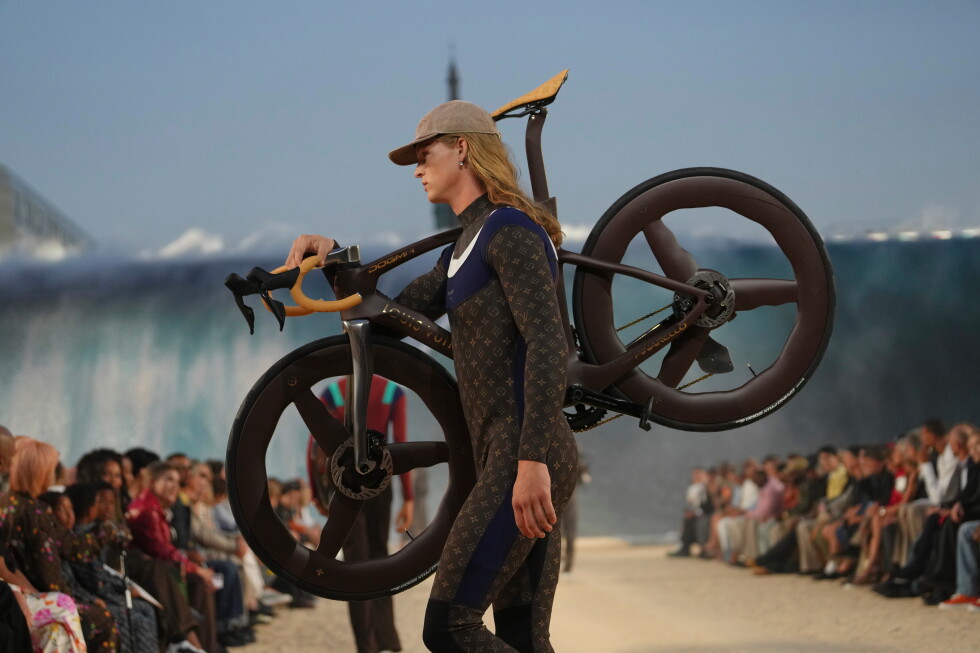
    Against a sandy outdoor set built along the Seine, Williams constructed a production that felt both cinematic and intentional: a 20-foot towering curling wave structure that could swallow the entire runway in its barrel, mist spraying into the cool Paris evening; a projected full moon rising over the dunes, with artificial stars twinkling above the catwalk; and a sleek glass-walled silver camper van parked between sand dunes, a subtle nod to Louis Vuitton’s origins as a luxury trunk and travel brand. The star-studded front row drew A-list names from across entertainment and sports, including Jeremy Allen White, Charles Melton, rapper Future, hip-hop legend Missy Elliott, NBA rookie Victor Wembanyama, K-pop stars Jackson Wang and BamBam, and singers Lola Young and Coco Jones, among other notable guests.

    When the lights dimmed and the show began, models emerged one by one from the hollow of the giant wave, embodying what Williams calls the “dandy surfer”: a figure equally at home on the boardwalk after a morning of catching waves and in a downtown boardroom for a midday meeting. Blending the laid-back practicality of surf culture with the refined elegance that has defined Williams’ tenure at Louis Vuitton, the collection pulled core motifs from ocean life, reinterpreting them for high-fashion menswear.

    Wetsuit technical fabrics were merged with traditional suiting material, emblazoned with the brand’s iconic monogram for a functional yet luxurious twist. Outerwear featured lived-in, weathered finishes that mimicked the effect of sun and salt water on fabric; hoodies came sun-faded and soft, accented with gilded LV monogram drawstrings. Denim and wool coats boasted hand-dyed shibori-style indigo gradients that evoked the gradient of the ocean, while statement bomber jackets were covered in intricate dense beadwork for texture and visual weight. Williams also brought back his signature trompe l’oeil techniques, with fabric surfaces printed and shaped to mimic entirely different materials, revealing intricate handcraft on close inspection.

    Post-surf comfort shaped a range of relaxed layering pieces, including robe-like overcoats and soft unstructured jackets designed to feel as cozy as a cotton towel thrown over damp, cold shoulders after a session. The collection also circled back to Williams’ creative roots with a new line of flat-soled skate shoes, a nod to his early days in skate culture and his founding of streetwear labels Billionaire Boys Club and Ice Cream, in collaboration with Japanese designer Nigo. This cross-pollination of subcultures gave the surf theme a sharper, more accessible edge, positioning the line for strong commercial performance.

    Throughout his leadership at Louis Vuitton, Williams has become known for over-the-top, viral-worthy show productions: his debut collection turned Paris’ historic Pont Neuf bridge into a gilded Damier-patterned runway, while past shows have featured full orchestras, interactive game sets, custom built cottages and camera-ready front rows designed for social media virality. Tuesday’s show retained the high production value audiences have come to expect, opening with a cinematic short film starring pro surfers Mikey February and Julian Wilson, and featuring a curated soundtrack from Quavo, Williams and Angélique Kidjo, paired with live performances from the L’Orchestre du Pont Neuf and the Voices of Fire choir. But unlike past spectacles that sometimes overshadowed the clothing, the massive wave set served as a backdrop, not the main event—allowing the collection to hold its own against the dramatic staging.

    In a nod to the collection’s ocean theme, Louis Vuitton also announced a partnership with marine conservation non-profit Coral Gardeners. The luxury brand will fund the out-planting of 1,000 new coral colonies and the restoration of 250 square meters of damaged reef habitat in French Polynesia, scheduled for completion in 2026.

    As Williams took his final bow at the end of the show, the towering wave still loomed behind him. For the first time in his Vuitton tenure, the headline-making set did not overshadow the design: this time, the clothes were not swept away by spectacle.

  • Germany rail network comes to complete halt nationwide due to IT malfunction

    Germany rail network comes to complete halt nationwide due to IT malfunction

    Germany’s national rail operator Deutsche Bahn has implemented a full suspension of all passenger and freight train services nationwide after a critical IT failure struck the country’s digital railway communication infrastructure.

    The outage originated from a widespread malfunction in the digital railway radio network, according to a company spokesperson. This technical breakdown has compromised all internal communication systems relied on by operations teams to coordinate safe rail movement across the network. As a result, all trains currently in operation have been ordered to remain stopped at the nearest stations, with no new services cleared for departure until the issue is fully resolved.

    Technician teams have been deployed across the country and are working around the clock at full speed to diagnose the root cause of the malfunction and restore full network functionality. The company has already warned passengers of extensive disruptions that will last through the recovery period, with widespread delays and mass service cancellations unavoidable at this stage.

    Deutsche Bahn has issued an urgent advisory urging all prospective rail passengers to avoid unnecessary travel wherever possible, and to arrange alternative transportation options for trips that cannot be rescheduled. As this is an ongoing breaking development, no estimated timeline for service restoration has been released as of yet.

    This story remains under active development, with new details expected to be published as soon as they become available. Readers can access real-time updates through the BBC News mobile application for smartphones and tablets, or by following the BBC Breaking News account on the social platform X for the latest alerts.