博客

  • Daniel Muñoz scores and Colombia edges Congo 1-0 to reach the knockout stage at the World Cup

    Daniel Muñoz scores and Colombia edges Congo 1-0 to reach the knockout stage at the World Cup

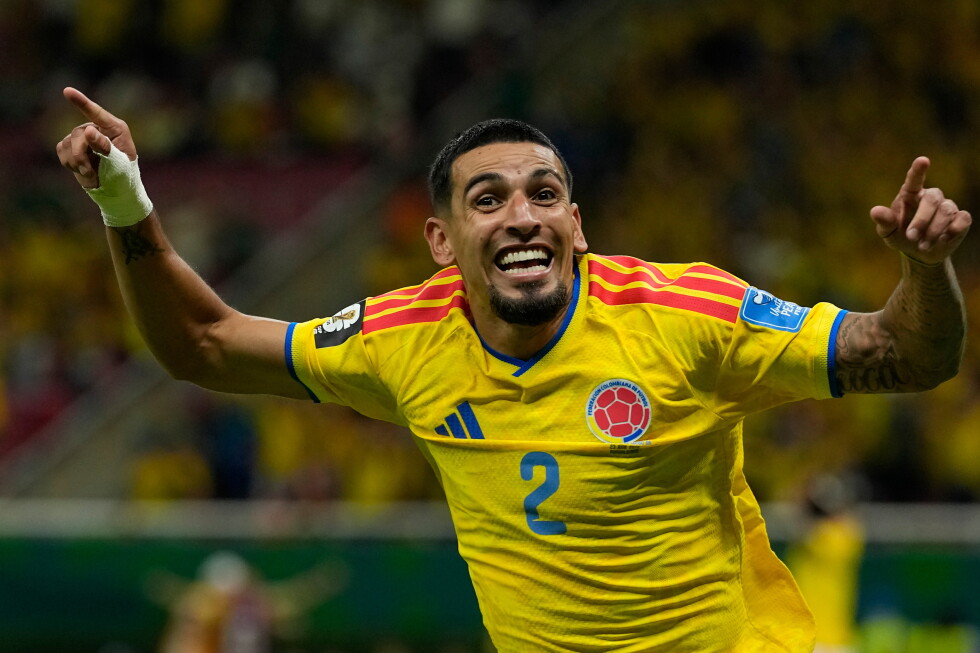
    GUADALAJARA, Mexico – A 76th-minute strike from right-back Daniel Muñoz has secured Colombia a hard-fought 1-0 victory over Democratic Republic of Congo on Tuesday, punching Los Cafeteros’ ticket to the 2026 FIFA World Cup knockout stage and leaving the underdog Congolese side on the brink of elimination.

    For more than three-quarters of the Group K clash, DR Congo’s organized defense and a sensational early performance from goalkeeper Lionel Mpasi frustrated Colombia’s high-powered attack. Mpasi, whose team entered the match ranked 47th globally, turned away five difficult scoring chances for Colombia in the opening 20 minutes alone, keeping the heavily favored South American side off the score sheet through much of the contest.

    Muñoz broke the deadlock when a deflected pass fell to him inside the 18-yard box, and the full-back buried a crisp left-footed strike past Mpasi, who had no chance to stop the effort. The goal marked Muñoz’s second of the tournament, and it proved to be the difference despite a tense late flurry from DR Congo. In stoppage time, DR Congo came agonizingly close to grabbing an equalizer twice: first, Colombia goalkeeper Camilo Vargas produced a spectacular save to deny Nathanael Mbuku’s long-range effort, then he pushed away Chancel Mbemba’s header from the subsequent corner kick to preserve the clean sheet and the win.

    Colombian star forward Luis Díaz saw two late goals ruled out in consecutive minutes in the second half: the first disallowed for a foul in the 79th minute, and the second called back for an offside decision one minute later.

    The result cements Colombia’s position atop Group K with six points from two opening matches, holding a two-point lead over second-place Portugal and a five-point advantage over DR Congo. Earlier the same day in Houston, Portugal delivered a dominant 5-0 rout of Uzbekistan, with captain Cristiano Ronaldo netting a brace in the victory.

    DR Congo, which is making just its second World Cup appearance and first in 52 years, caught global attention in its opening match with a shock 1-1 draw against Ronaldo’s Portugal. The underdog side has faced significant disruptions to its World Cup run, however: an Ebola outbreak in its home country disrupted preparations, and travel restrictions have prevented hundreds of Congolese fans from traveling to the tournament in North America. One high-profile fan who overcame quarantine barriers to attend the Guadalajara match was Michel Nkuka Mboladinga, who earned viral fame during the Africa Cup of Nations for holding a silent statue pose in honor of assassinated Congolese independence leader Patrice Lumumba. Mboladinga maintained his iconic pose for the full 90 minutes of Tuesday’s clash after missing DR Congo’s opening draw due to quarantine rules.

    Colombia, which missed out on qualification for the 2022 World Cup in Qatar, enters its final group stage match against Portugal on Saturday sitting in a strong position. Ranked 11th in the world – third among South American nations behind only Brazil and Argentina – Colombia opened its campaign with a 3-1 win over Uzbekistan. A draw against Portugal will be enough for Colombia to claim the top spot in Group K, and the same result would also see Portugal advance to the knockout round.

    The match also marked a milestone for Colombian playmaker James Rodríguez, who earned his 10th World Cup appearance, joining Colombian legends Freddy Rincón and Carlos Valderrama as the only players to reach that mark for the nation. Colombia heads into the final group stage match with a historic unbeaten streak in open play, having never finished a World Cup fixture scoreless across 23 previous tournament appearances.

  • NATO’s Trump whisperer heads to the White House to soothe the president ahead of next month’s summit

    NATO’s Trump whisperer heads to the White House to soothe the president ahead of next month’s summit

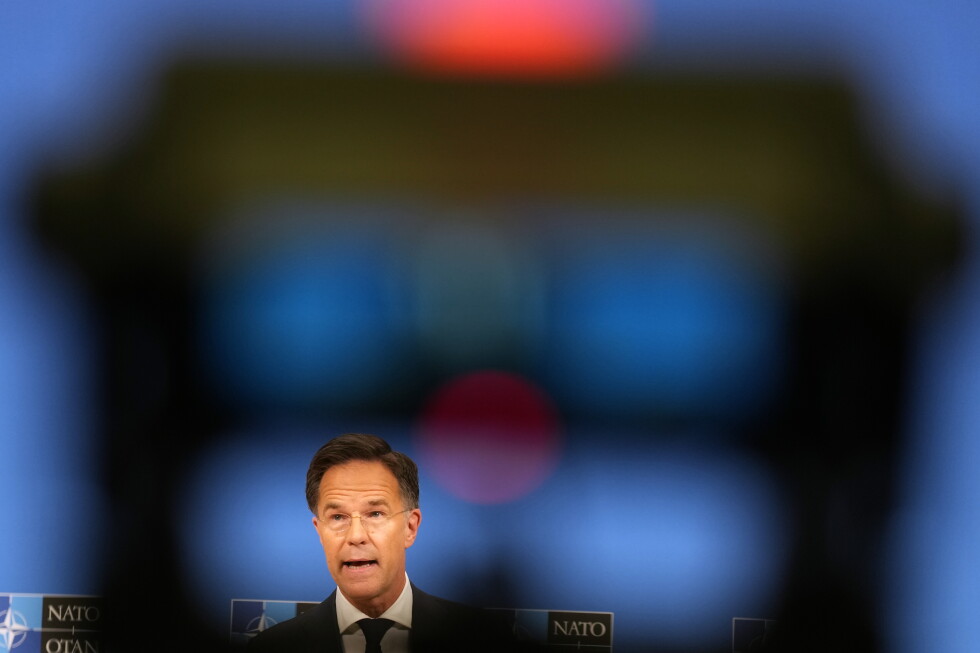
    Two weeks before NATO’s annual leadership summit in Turkey, the transatlantic military alliance is facing one of its most significant internal challenges in modern history: convincing a second-term U.S. President Donald Trump to reverse threats to withdraw from the 76-year-old bloc. At the center of this diplomatic push is NATO Secretary-General Mark Rutte, who will meet Trump face-to-face at the White House on Wednesday, leaning on his reputation as a skilled negotiator who has repeatedly defused tensions with the unpredictable American leader.

    Trump’s criticism of NATO is not new. For years, he has argued that the United States bears an unfair share of the alliance’s collective defense burden, claiming European nations have long underfunded their militaries while relying on Washington for security. But his grievances have grown far sharper in recent months following the outbreak of the U.S.-Israel led war against Iran, which NATO allies were not consulted on prior to its launch in late February. Trump has openly fumed that many member states rejected his request to support U.S. efforts to reopen oil trade through the Strait of Hormuz, and several allies have publicly criticized his military strategy in the region. Most recently, U.S. Defense Secretary Pete Hegseth amplified these criticisms during a visit to NATO headquarters in Brussels last week, where he announced the Pentagon would launch a six-month review of the size of the American military footprint across Europe. Hegseth also echoed Trump’s complaint that European allies have refused to allow the U.S. to use bases on their territory for strikes against Iran, deepening the rift between Washington and the bloc.

    Founded in 1949 to counter Soviet threats to European security during the Cold War, NATO is built on the core principle of collective defense: an armed attack on one member is considered an attack on all. To date, the mutual defense clause has only been invoked once, when the alliance rallied to support the United States immediately after the September 11 terror attacks in 2001. Today, the 32-member bloc is facing unprecedented uncertainty following Trump’s return to the White House, with the Pentagon already signaling it may cut troop numbers in Europe to reallocate resources to other global threat hotspots. This is not the first time Trump has unsettled NATO allies: last year, his surprise threat to annex Greenland, a semi-autonomous territory belonging to alliance member Denmark, sparked widespread diplomatic alarm across the continent.

    Rutte, who has earned the nickname “Trump whisperer” for his unique ability to charm and placate the U.S. president, has made keeping the United States in NATO his top priority. Over the past months, he has leaned heavily on a strategy of deliberate flattery to ease Trump’s frustrations, repeatedly crediting the president for pushing NATO member states to increase their collective defense spending. Last year, Trump pressured alliance leaders to commit to spending 5% of their annual GDP on defense by 2035, a target far higher than the existing 2% goal many countries have yet to meet.

    Ahead of Wednesday’s White House meeting, Rutte doubled down on this approach during a primetime interview on Fox News – a network Trump is known to watch closely. Rutte openly threw his support behind Trump’s Iran strategy, telling viewers, “I’m completely behind him on this.” He also sought to downplay the dispute over European military bases, framing the issue as a handful of “isolated cases” rather than a widespread rejection of Trump’s agenda.

    Rutte’s willingness to cater to Trump’s style has at times raised eyebrows among diplomatic circles. During last year’s NATO summit, he drew attention for referring to Trump as “daddy” in a private exchange, before sending a fawning text message that echoed the president’s characteristic capitalization of key phrases: “Europe is going to pay in a BIG way, as they should, and it will be your win.” Trump, in a move that surprised even Rutte, shared the private message publicly on his social media channels for the entire world to see. The NATO secretary-general repeated the gesture in January, sending another warm personal note that closed with “Can’t wait to see you. Yours, Mark” – which Trump once again shared publicly.

    As the alliance prepares for its summit in Turkey next month, all eyes are on Wednesday’s meeting to see if Rutte’s charm offensive can once again soften Trump’s threats of withdrawal, and stave off the most existential challenge NATO has faced in decades.

  • First of its kind queer museum in San Francisco Chinatown amplifies Chinese LGBTQ+ artists

    First of its kind queer museum in San Francisco Chinatown amplifies Chinese LGBTQ+ artists

    Against a backdrop of rising restrictions on LGBTQ+ rights across parts of the United States and systematic constraints on queer advocacy in China, a groundbreaking new cultural institution has opened its doors in one of the nation’s oldest Chinatowns, carving out a permanent public space for Chinese and Chinese diaspora LGBTQ+ artists to share their unfiltered stories.

    The brainchild of Chinese artist and longtime LGBTQ+ activist Xiangqi Chen, the OUT Museum celebrated its opening with a rainbow ribbon-cutting ceremony at the end of May 2025, timed intentionally to fall between Asian American Pacific Islander Heritage Month and Pride Month. Located directly across from the Chinese Historical Society of America Museum in San Francisco’s iconic Chinatown, the bilingual facility fills a long-standing gap in cultural representation for a community that has historically been sidelined and erased in both mainstream Chinese and Western queer spaces.

    For Chen, the museum’s launch in San Francisco is the culmination of a years-long journey that began when she first began organizing for LGBTQ+ communities in her native China. More than six years ago, while still based in Shanghai, Chen launched a Kickstarter crowdfunding campaign for what would eventually become the OUT Museum, drawing more than 2,000 individual donors. Even then, however, she knew the project could never come to fruition in her home country, where explicit public LGBTQ+ advocacy and expression face growing government restrictions. Chen, who ran a grassroots community center for lesbians in Shanghai for years, ultimately left China in 2022 after a widespread crackdown on queer organizing spaces during the COVID-19 pandemic. She arrived in the U.S. on a J-1 visiting scholar visa at Georgetown University, and by 2024, her work caught the attention of San Francisco’s arts community following a high-profile exhibition at the city’s Asian Art Museum. That opportunity led to a residency with the Chinese Culture Center of San Francisco, which agreed to serve as an incubator for the new museum.

    Though the museum’s initial iteration is modest—housed in a single room, open only on Saturdays, and featuring fewer than a dozen works by creators from China and the global Chinese diaspora—its impact is already resonating deeply across local and national queer Asian communities. The debut exhibition showcases a diverse range of mediums, from fine art photography and self-published zines to interactive multimedia installations. One interactive piece invites visitors to use colored thread to trace their own personal journeys of gender and sexual self-discovery, turning passive viewing into collective connection. For Hong Kong-born artist Dixon Ngai, who contributed a hand-painted Chinese porcelain wine pot inspired by the classic Cantonese opera *Di Nü Hua (The Flower Princess)*, the OUT Museum fills a critical void that no generic queer art exhibition has addressed before. Unlike broader LGBTQ+ shows that often marginalize Asian voices, Ngai explained, the OUT Museum centers the specific, intersectional experiences of Chinese queer people, allowing their perspectives to finally receive the visibility they deserve.

    In the weeks since opening, Chen says she has been profoundly moved by feedback from an unexpected group: long-time Chinese immigrants to California, both queer and cisgender straight. Visitors have shared deeply personal stories, from a 60-year-old transgender man who immigrated to the U.S. in the 1970s specifically to access gender-affirming care that was unavailable in his home country, to a straight mother seeking resources to better connect with her adult gay son, who later emailed Chen to thank the museum for creating a space that helped her embrace her child’s identity.

    Helen Zia, a celebrated author, queer activist, and member of the OUT Museum’s advisory board, notes that these reactions confirm the institution’s core mission: elevating the visibility of Chinese, Chinese American, and Asian American LGBTQ+ people and affirming their place in both Asian American and broader queer history. Zia, who has organized for queer rights in San Francisco Chinatowns for decades, points to how dramatically community attitudes have shifted just in the last 20 years. When she distributed pro-marriage quality flyers in Oakland’s Chinatown in 2008, she faced regular harassment, including yelling and spitting from opponents, with thousands of protestors from Asian churches gathering weekly to condemn same-sex relationships. Later that same year, after the California Supreme Court struck down the state’s same-sex marriage ban, Zia was among the first same-sex couples to legally wed in the state. Even today, amid growing backlash against LGBTQ+ rights across the U.S., Zia says the museum’s existence sends a vital message: “See our humanity. Here’s the beautiful art that we create and imagine and contribute to the world.”

    For Chen, the contrast between the ability to create a public queer museum in San Francisco and the constraints on queer expression in China is stark. While the Chinese Psychiatric Association declassified homosexuality as a mental disorder in 2001, same-sex couples still lack legal access to marriage and adoption, and public queer advocacy remains heavily restricted. Chen explains that while subtle queer art exhibitions could occasionally be held in China as recently as the 2010s, shifting policy has eliminated even that limited space today; explicit identification as queer or open discussion of LGBTQ+ themes in public art is no longer permitted.

    Even in the U.S., LGBTQ+ rights face growing threats, from state-level bans on gender-affirming care to recent political attacks on Pride-related initiatives. Just weeks before the OUT Museum opened, San Francisco’s MLB team the Giants faced national controversy after players added anti-LGBTQ+ Bible verses to their official Pride Night caps, highlighting that even in traditionally progressive California, shifts in attitude are creating new tensions. Still, for the Chinese creators behind the OUT Museum, the social and political landscape of the Bay Area represents a transformative shift from the constraints they faced in China. Ngai summed up the community’s perspective: “Here in San Francisco, in California, we enjoy the air of freedom, there is equal human rights, there is security. So, we are very proud to be ourselves.”

    Chen is set to make her first appearance at the San Francisco Pride Parade this year, dressed as a warrior from Cantonese opera to promote the museum. For her, the opening of the OUT Museum is just the beginning, not the end of the project. Organizers plan to expand the exhibition roster and add more operating days in the coming months, with a long-term goal of growing the institution into a permanent, larger hub for Chinese queer art and activism. “We still have a long way to go,” Chen says.

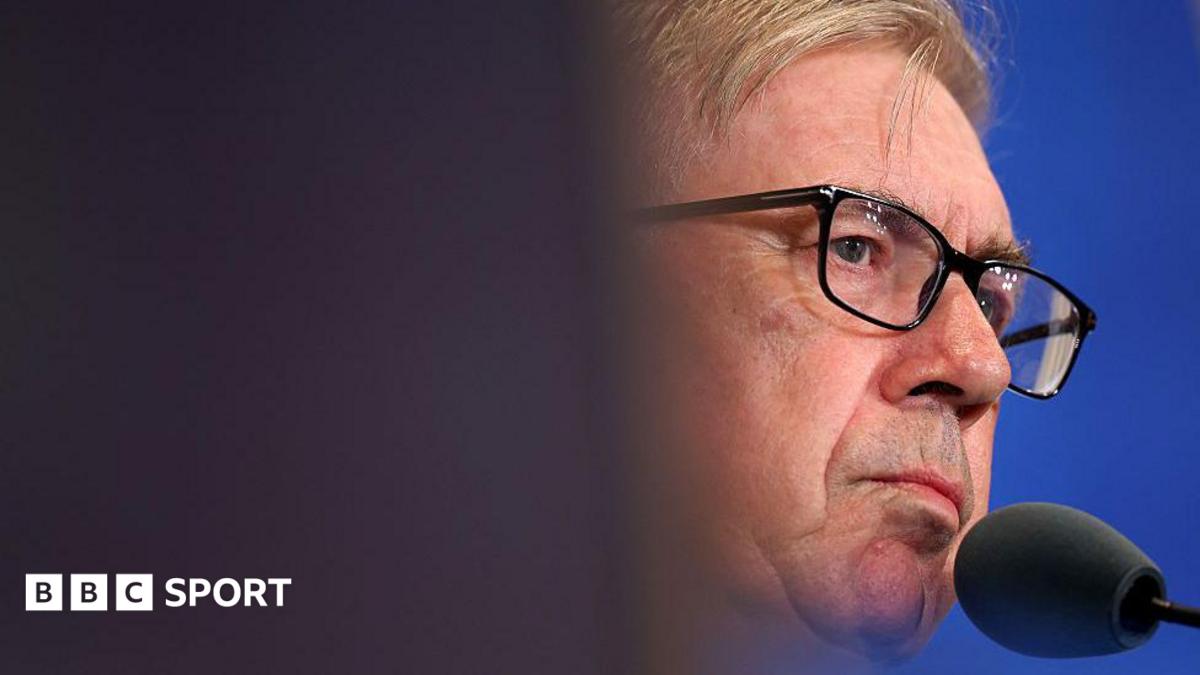
  • Ancelotti’s quest to end Brazil’s 24-year wait for World Cup glory

    Ancelotti’s quest to end Brazil’s 24-year wait for World Cup glory

    Miami, June 24 – After a delayed arrival that stretched hours past the originally scheduled start time, Brazil men’s national football team head coach Carlo Ancelotti finally stepped into a packed converted locker room at Miami Stadium late Monday to face hundreds of assembled journalists ahead of Brazil’s third Group C 2026 FIFA World Cup match against Scotland on Wednesday. What was meant to include ample discussion of the upcoming fixture instead centered almost entirely on questions about Brazil’s star-studded squad, their quest to end a 24-year World Cup title drought, and the long-awaited return of record goalscorer Neymar.

    Neymar, Brazil’s all-time leading marksman with 79 international goals, is set to make his first appearance for the Selecao in nearly three years against Scotland. The 34-year-old attacker, who last played for Brazil in October 2023 and missed Brazil’s 1-1 Group C opener against Morocco through injury, has been the subject of fierce public debate in his home nation after being selected for the squad over Chelsea’s Joao Pedro. Despite his historic goalscoring record, Neymar does not enjoy universal adoration across Brazil, with many questioning his place in the squad ahead of younger, in-form alternatives.

    But Ancelotti offered a full, positive update on the former Barcelona and Paris Saint-Germain forward’s fitness ahead of the match, confirming he is fully available to feature. “He is available. He trained very well this week. He is fit and ready to play,” Ancelotti told reporters. “We are very happy. He is a high-quality player. He can play half-time or the whole 90 minutes. He’s very well, he worked very hard. So he is ready. His attitude is very good and he is in good spirits. He’s a good player, a great team-mate, he’s very serious and we want to put him back to play as soon as possible. He brings experience, knowledge and is doing very well.”

    While Neymar’s return dominates headlines, most analysts and fans pin Brazil’s World Cup hopes on Real Madrid superstar Vinicius Jnr, who Ancelotti previously managed at club level before taking the Brazil job in 2025. Vinicius has already proven his impact at this tournament, notching two goals in two matches including a stunning equalizer that rescued a point against Morocco after Brazil fell 1-0 early and struggled to break down the North African side’s elite defensive organization. Ancelotti made it clear that the in-form winger will remain a core piece of his game plan moving forward, even with a squad packed full of elite attacking talent.

    “He’s playing very well,” Ancelotti said. “We need to use him even though we have other fantastic players. We have experience, quality and legs. I’m completely satisfied with all of them. I have to put all the players to adapt to the style of the team.”

    That ability to integrate A-list talent into a cohesive, winning unit is what has made Ancelotti one of the most successful managers in the history of the sport. The Italian tactician is already the most decorated manager in UEFA Champions League history with five titles, and the only manager to claim league championships across all five of Europe’s top domestic leagues. A World Cup triumph with Brazil would cap his legendary career and cement his legacy as the greatest manager of all time, a milestone that would carry extra historical weight: Brazil ended its previous 24-year World Cup title drought on American soil, when the iconic 1994 side led by Romario and Bebeto claimed the trophy at USA ’94.

    While Brazil’s preparations center on their own star power, Ancelotti made clear he has not underestimated Scotland, who enter the fixture still looking for their first win of the 2026 tournament. The Scots have managed just two shots on target across their first two group matches, but put in a strong late push against Morocco in Boston that tested the 2022 semi-finalists, and Ancelotti highlighted their organized, physical style. “Difficult game, as usual,” he said. “Scotland has quality, they are fighters, they play really well organised. They have really good players, good individuals in Scott McTominay, John McGinn, that are experienced players who are used to playing this type of game. It will be a very difficult game as usual. We are ready to play a difficult game.”

    “They are a strong team. They have a very clear strategy. Usually play 4-4-2, long balls. They will try and do a lot of crossing. We need to control the match in that sense.”

    Scotland has already prepped contingency plans for potential weather delays that could impact the fixture, as organisers navigate tournament conditions across multiple American host cities. For Brazil, the focus remains on pulling their talented group together to chase a long-awaited sixth World Cup title, with Wednesday’s match offering the first chance for Brazilian fans to see their record goalscorer back in the famous yellow shirt.

  • Top Army general who was last US soldier to leave Afghanistan is suddenly leaving his post

    Top Army general who was last US soldier to leave Afghanistan is suddenly leaving his post

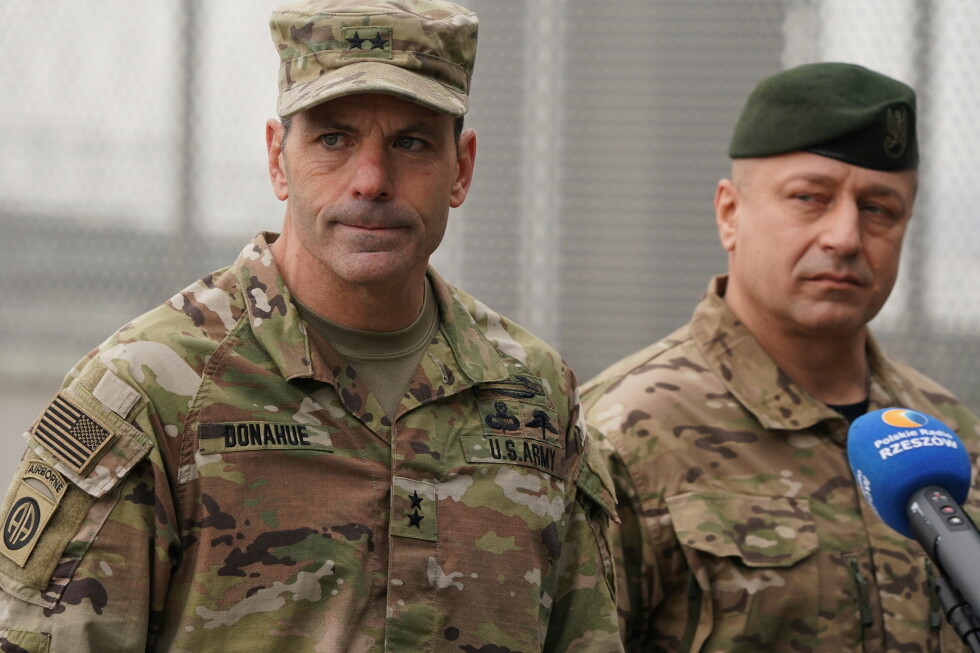
    WASHINGTON — The U.S. Army confirmed late Tuesday that the commander of American ground forces across Europe and Africa, a four-star general best known for making history as the final American service member to exit Afghanistan in 2021, is stepping down from his command role unexpectedly after just 18 months on the job.

    Gen. Christopher Donahue, who holds dual posts leading both U.S. Army Europe and Africa and NATO’s Allied Land Command, will officially hand over his command on July 2, according to an official Army statement shared with The Associated Press. His early departure marks the 20th near-top military leader to retire or leave their post prematurely since Defense Secretary Pete Hegseth took office, launching a high-profile push to reduce the number of senior general officers under his slogan “less generals, more GIs.”

    Maj. Gen. Christopher Norrie, Donahue’s current deputy, will step in to handle all command responsibilities on an acting basis while a permanent replacement is finalized, the statement added.

    A graduate of the U.S. Military Academy at West Point, Donahue built his decades-long military career as a special operations leader, heading elite Delta Force units during combat tours in Iraq and Afghanistan before taking command of the 82nd Airborne Division from 2020 to 2022. It was during that tenure that he oversaw security operations at Kabul’s Hamid Karzai International Airport during the chaotic 2021 U.S. troop withdrawal from Afghanistan. On August 30 that year, Donahue became the final American soldier to leave the country, bringing an end to a nearly 20-year war launched after the September 11, 2001 terrorist attacks. This historic moment was captured in an iconic night-vision photograph showing the general boarding the final U.S. C-17 cargo plane to depart Afghanistan.

    Hegseth, alongside President Donald Trump, has repeatedly targeted the 2021 Afghanistan withdrawal for political criticism, launching a new Pentagon review of the operation despite multiple prior assessments. The original withdrawal agreement with the Taliban was negotiated during the Trump administration’s first term, and last May Hegseth ordered a fresh probe even after the Pentagon, U.S. Central Command, the State Department, and Congress had already completed exhaustive reviews that included hundreds of witness interviews and analysis of thousands of pages of visual and documentary evidence. It remains unclear what new insights the latest review is intended to uncover.

    Despite the political controversy surrounding the withdrawal, Donahue’s leadership during the Kabul evacuation earned bipartisan praise from lawmakers across the political spectrum. Within Army ranks, he was long viewed as a rising star, with many senior observers expecting he would eventually go on to lead the Army service or be selected as Chairman of the Joint Chiefs of Staff.

    One senior Army official, speaking on condition of anonymity to discuss internal sensitive deliberations, told the AP that Donahue’s exit aligns with ongoing discussions to downgrade the U.S. Army Europe and Africa command from a four-star billet to a three-star position. The proposed restructuring comes amid repeated public criticism of European NATO allies from Hegseth. Just last week, the defense secretary announced a six-month Pentagon review of U.S. force posture in Europe, framing the assessment as an effort to push NATO toward an irreversible shift that puts European allies in the lead for their own territorial defense. “It’s a review that some countries will fail and others will pass with flying colors,” Hegseth told alliance representatives last week.

    The Pentagon has not issued an immediate formal response to news of Donahue’s departure, which was first broken by The Atlantic.

  • Clean sweep for Mamdani-backed candidates in New York’s Democratic primary

    Clean sweep for Mamdani-backed candidates in New York’s Democratic primary

    In a seismic political shift that has upended New York’s Democratic landscape, three progressive candidates endorsed by New York City’s Democratic Socialist Mayor Zohran Mamdani have secured a clean sweep in key congressional primary elections, ousting moderate incumbents and party establishment favorites in a result that underscores the growing influence of the party’s far-left wing ahead of November’s midterms.

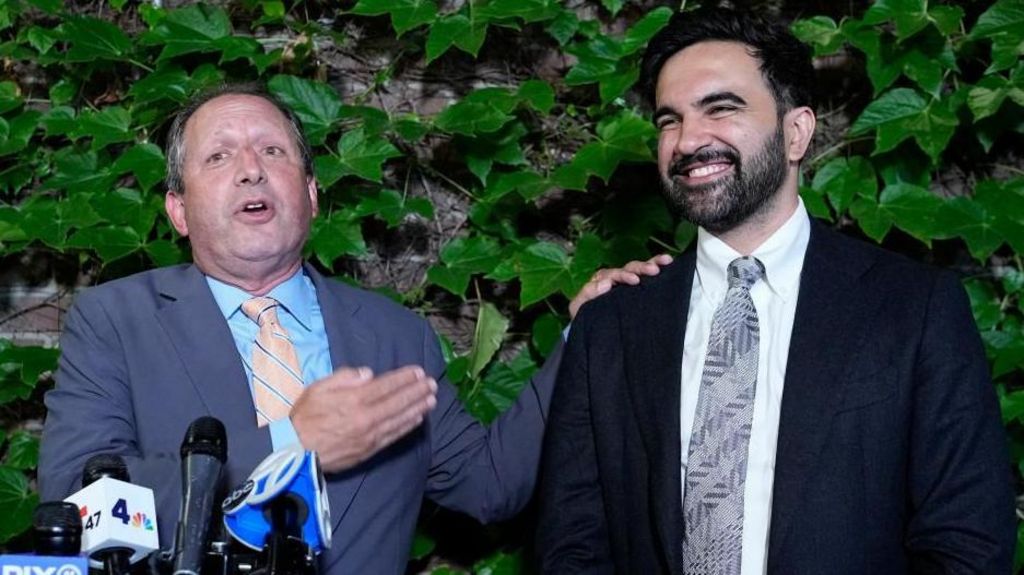
    The highest-profile upset came in New York’s 10th Congressional District, where left-wing challenger Brad Lander defeated two-term incumbent Dan Goldman, an heir to the Levi Strauss denim fortune who rose to national prominence leading the first impeachment inquiry into former President Donald Trump in 2019. With nearly all ballots counted, Lander won by a lopsided margin of 65.7% to 34.1%, drawing backing from high-profile progressive leaders including Vermont Senator Bernie Sanders. The race became a flashpoint for national intraparty tension over the Israel-Gaza war: Lander has openly accused Israel of genocide in Gaza, a claim Israel denies, while Goldman enjoyed robust support from national pro-Israel groups. Goldman’s vocal defense of Israeli policy sparked fierce backlash from progressive activists across New York, culminating in a widely circulated incident over the weekend where a Brooklyn coffee shop publicly banned the congressman, calling him a “genocide enabler” in a since-deleted social media post. Notably, both Lander and Goldman identify as Jewish.

    Two other Mamdani-endorsed candidates also claimed primary victory on Tuesday. In the 7th District, Assemblywoman Claire Valdez unseated incumbent Brooklyn Borough President Antonio Reynoso. In the 13th District, Darializa Avila Chevalier, a doctoral student and prominent participant in pro-Palestinian protests at Columbia University, won her race to claim the Democratic nomination. All three winning progressive candidates have campaigned on two radical progressive pledges: abolishing U.S. Immigration and Customs Enforcement (ICE) and implementing higher taxes on wealthy Americans.

    In another high-profile primary race, political newcomer Jack Schlossberg, grandson of former President John F. Kennedy and son of former U.S. Ambassador Caroline Kennedy, fell short in his bid for the 12th District seat being vacated by long-serving Congressman Jerry Nadler. The 33-year-old Harvard Law graduate and Vogue correspondent, who built a following for his quirky social media content, lost to Assemblymember Micah Lasher, a former aide to Nadler. Mamdani declined to endorse any candidate in that open race.

    Speaking to supporters ahead of the final vote counts, Mamdani framed the progressive primary wins as part of a broader ideological project to reorient the Democratic Party around working-class interests. “It’s not just a question of electing more Democrats. It’s a question of electing better Democrats,” he said. “When I look at these candidacies, I see in them a willingness to also put working people back at the heart of our politics.”

    The wave of progressive victories has sparked concern among establishment Democratic leaders in Washington, who warn that far-left candidates may struggle to win over critical swing voters in the general election this November. House Democratic Leader Hakeem Jeffries pushed back on the idea that the primary results signal a permanent ideological shift for the congressional caucus. “We have agreed to strongly disagree,” Jeffries said of Mamdani’s progressive project. “A handful of primaries that go in one direction or the other, in a given state or two, aren’t going to reshape who we are as House Democrats.”

  • UN warns Palestinian children ‘defenceless’ amid Israeli crackdown on NGOs

    UN warns Palestinian children ‘defenceless’ amid Israeli crackdown on NGOs

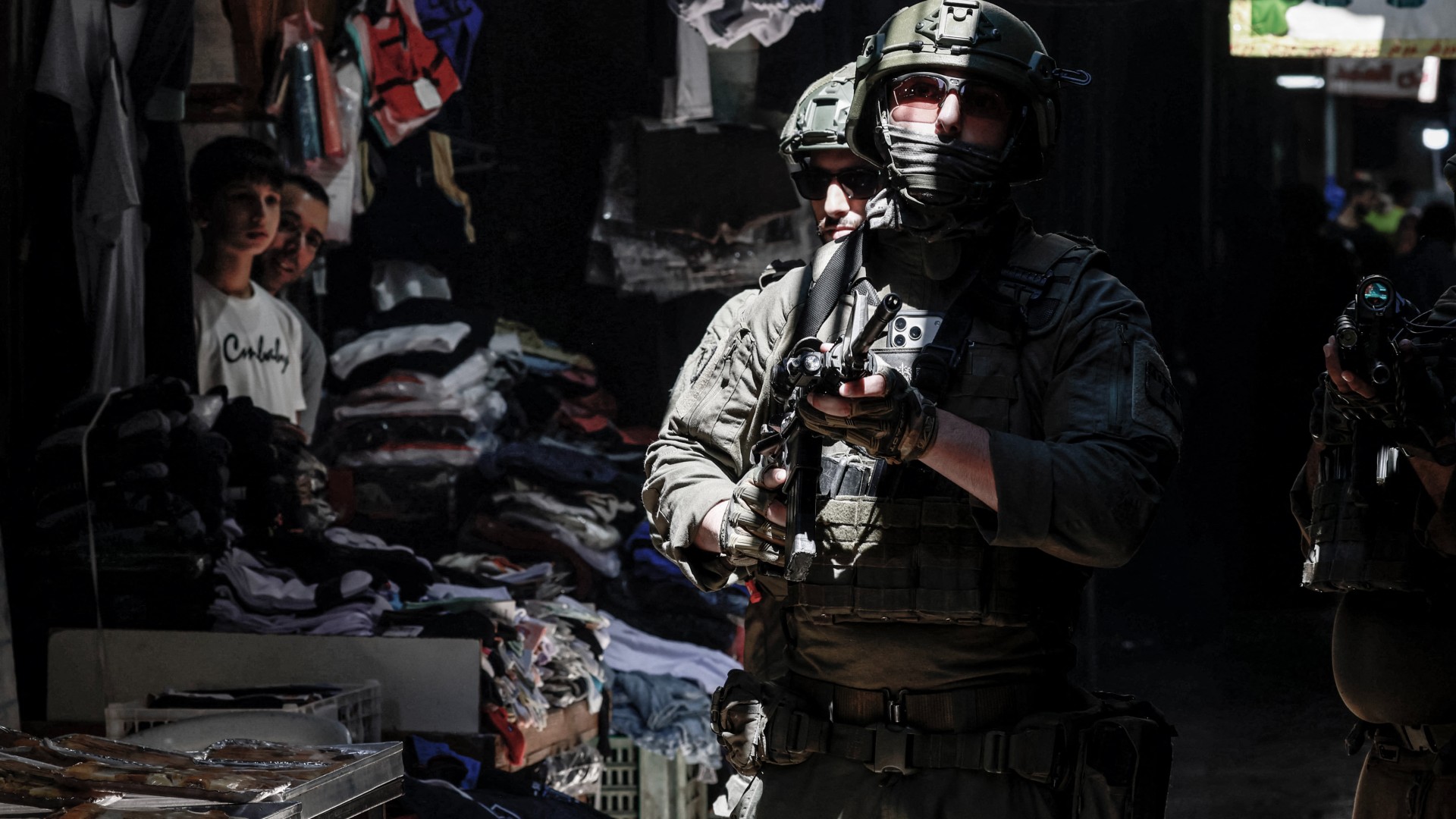
    On Monday, the United Nations Committee on the Rights of the Child issued a stark public warning: escalating restrictions imposed by Israel on independent human rights and humanitarian organizations operating across the occupied Palestinian territories have left Palestinian children growing more exposed and unprotected by the day.

    The 18 independent child rights experts that make up the committee, which operates under the umbrella of the UN Office of the High Commissioner for Human Rights (UN OHCHR), issued sharp condemnation of Israel’s policy of labeling Palestinian civil society organizations as terrorist entities. According to the committee, this designation provides Israel with legal justification to disrupt critical life-saving and advocacy work, through tactics that include military raids on organization offices, travel bans targeting staff, personal financial penalties, threats of arrest, deliberate destruction of organizational documentation, and in multiple cases, threats of secondary sanctions against international partners that work with the targeted groups.

    While the committee’s latest warning did not name the specific groups referenced, the pattern of restrictions stretches back years. In 2021, Israel formally outlawed six leading Palestinian human rights and advocacy organizations, among them Defense for Children International – Palestine, Al-Haq, Adameer, the Bisan Center for Research and Development, the Union of Agricultural Work Committees, and the Union of Palestinian Women’s Committees – all of which have a decades-long track record of defending Palestinian children’s rights.

    More recently, new bureaucratic registration requirements imposed by Israel have threatened to force even more groups to end their operations at a moment of catastrophic humanitarian need in the Gaza Strip. On December 30 of last year, 37 international non-governmental organizations received official notification that their operating registrations would expire the following day. After a two-month grace period, the organizations would be legally required to cease all activity across Gaza, the occupied West Bank and East Jerusalem. By January of this year, 53 international NGOs operating in the occupied territories issued a joint statement warning that these new measures would bring a complete halt to critical humanitarian programming.

    Israel’s Ministry of Diaspora Affairs defended the new restrictions publicly, claiming that organizations that failed to meet the country’s “security and transparency requirements” would have their operating licenses suspended. The ministry added that the restrictions also apply to any group that “refused to submit a list of their Palestinian employees in order to rule out any links to terrorism.” The 53 NGOs pushed back against this framing, noting that attempts to evaluate the impact of the deregistration policy using narrow, selective metrics fail to account for the on-the-ground realities of how humanitarian aid is actually delivered to vulnerable communities.

    Since a ceasefire took effect in Gaza on October 10, Israel has expanded this crackdown across all occupied Palestinian territories. One high-profile case involves Doctors Without Borders (Médecins Sans Frontières, MSF), which Israel moved to ban after the organization refused to hand over a list of its Palestinian staff. In February, 17 international aid organizations filed a petition with Israel’s Supreme Court to block the ban. While a temporary court injunction currently allows MSF to continue its operations, the Israeli government is still pushing for a permanent ruling to end the group’s work entirely.

    UN OHCHR emphasizes that these Israeli measures have left organizations unable to guarantee the safety of Palestinian children and families seeking life-saving support and legal advocacy, resulting in a situation where children are effectively left defenseless. “For more than three decades, these organisations have played a vital role in defending Palestinian children, including in the Israeli military courts, and in documenting grave violations against Palestinian children at the hands of Israeli forces,” the committee said in its statement.

    The committee warned that without the work of these independent groups, Palestinian children will be left even more exposed, and violations of their fundamental rights could continue without any accountability for perpetrators. The committee’s statement called on Israel to immediately lift all restrictions and barriers that target child rights defenders in the occupied Palestinian territories. It also urged the international community to use all available diplomatic and political tools to hold Israeli authorities accountable for these actions, and to prioritize the protection of Palestinian children’s fundamental rights.

    “Despite grave risks and limited resources, child rights defenders have continued to stand with Palestinian children and families in extraordinarily dangerous conditions,” the committee added. “They must be protected, not punished.”

  • Watch: Football fans celebrate in Ghana after draw with England

    Watch: Football fans celebrate in Ghana after draw with England

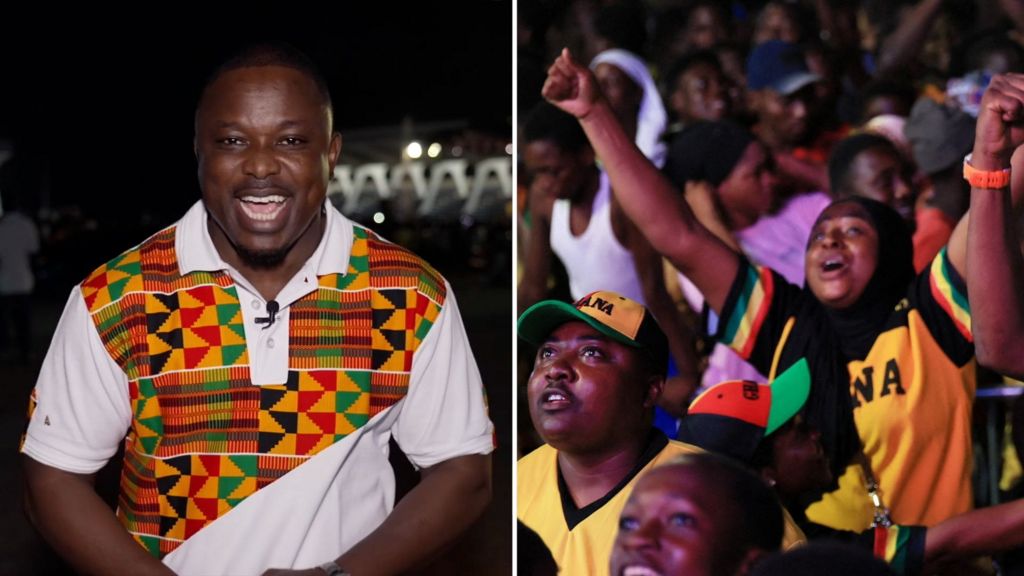
    In a display of unbridled passion and national pride, thousands of Ghanaian football supporters gathered at Accra’s iconic Black Star Square on Wednesday to celebrate their national team’s impressive 0-0 draw against England in the 2022 FIFA World Cup group stage.

    Ghana-based correspondent Thomas Naodi was on the ground at the central public space to capture the electric atmosphere, reporting on sea of black, red, yellow and green Ghanaian flags that waved across the plaza as fans sang traditional battle chants, danced to upbeat afrobeats, and embraced one another in shared excitement.

    Many supporters had crowded around public screenings across the country to watch the Qatar-based match, and after the final referee’s whistle blew, thousands made their way to Black Star Square— the historic heart of Ghana’s national identity, where the country’s independence was declared in 1957— to mark the moment. The Black Stars, making their fourth World Cup appearance, held off repeated attacks from the higher-ranked three-time tournament champions, securing a hard-fought point that gave the side a fighting chance to advance to the knockout stage of the competition.

    Even with the result falling short of a win, fans said the team’s performance against one of the world’s top football sides exceeded expectations and filled them with national pride. “We came into this match written off by everyone, but we held our own against England,” one long-time Black Stars supporter told Naadi on site. “That’s a win for us in our hearts.”

    The gathering stretched late into the night, with street vendors selling national memorabilia and local snacks to the crowd, and the sound of vuvuzelas and celebratory horns echoing across central Accra.

  • Sydney woman wakes from induced coma more than a week after shark attack

    Sydney woman wakes from induced coma more than a week after shark attack

    Nearly two weeks after a brutal shark attack left her fighting for life at one of Sydney’s most popular public beaches, a local teacher has achieved a surprising early recovery milestone that has lifted the spirits of her family and the broader community.

    Leah Stewart, a 34-year-old mother of one, was mauled by a shark while swimming close to shore at Coogee Beach on Saturday, June 13. The attack left her with multiple lacerations across her arms and legs, massive blood loss, and required emergency medical intervention that included the amputation of one of her arms and multiple consecutive surgical procedures.

    Immediately after the attack, Stewart was rushed to a nearby hospital in critical condition, where medical teams placed her in an induced coma to support her recovery. More than a week later, on the following Tuesday, her brother Joshua shared that clinicians had lowered her sedative medication, allowing Stewart to wake briefly for the first time since the incident.

    During that brief period of consciousness, Stewart told her mother and partner, who were at her bedside, that she loved them, and asked after the wellbeing of her young daughter. In a public online update shared with the hundreds of community members who have offered support to the family since the attack, Joshua described the early awakening as nothing short of a miracle.

    “This is a lot faster than anyone expected, and for us this feels like a miracle and is everything so many of us have hoped and prayed for over the past week,” Joshua wrote.

    He went on to confirm that Stewart remains in intensive care, having undergone five full days of surgery in the week following the attack, with more planned reconstructive procedures scheduled in the coming weeks. While warning that the 34-year-old still faces a long, challenging road to recovery and remains in critical care, Joshua emphasized that the early awakening is a hugely encouraging first step that has given the entire family renewed hope for her long-term recovery.

    Stewart’s attack is one of a growing string of deadly shark encounters recorded across Australia in 2025. In January, four separate attacks occurred across the country in just a 48-hour window, including one on a young boy at a Sydney beach who later died from his injuries. Just last month, two more fatal attacks were recorded: a spearfisher was killed by a shark in Queensland, and 38-year-old Steven Mattaboni, a father of two, died after being bitten by a 4-meter great white off the coast of Western Australia.

  • North Korea’s Kim claims progress on nuclear-armed navy as new warship is placed into service

    North Korea’s Kim claims progress on nuclear-armed navy as new warship is placed into service

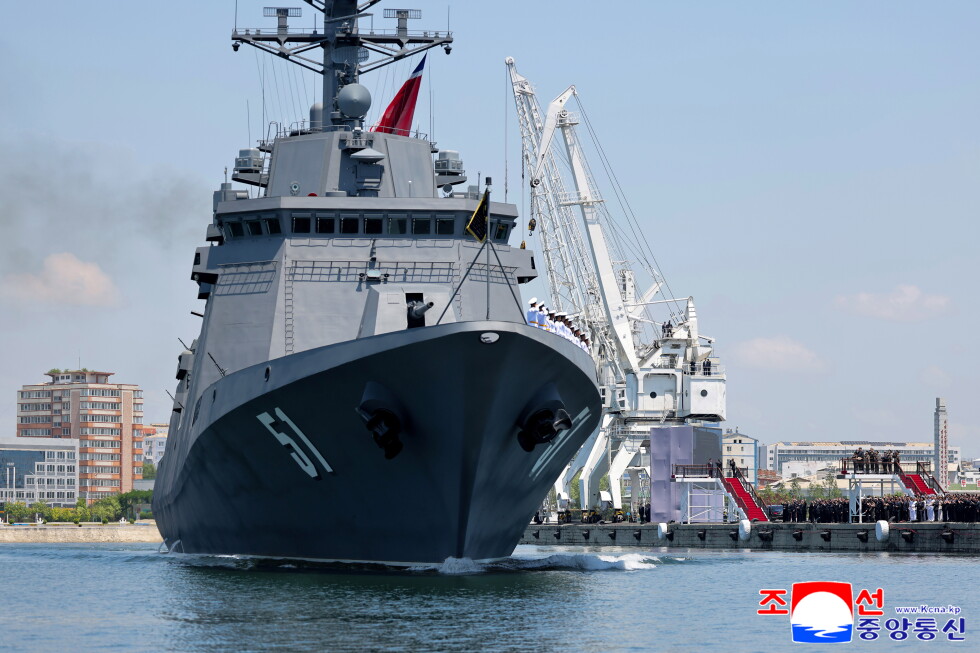
    In a significant milestone for Pyongyang’s expanding maritime military ambitions, North Korea has officially brought a 5,000-ton guided-missile destroyer into active naval service, with leader Kim Jong Un framing the new vessel as a public symbol of the country’s advancing naval and nuclear development programs, state media confirmed this week. The official Korean Central News Agency (KCNA) reported that Kim Jong Un attended the formal commissioning ceremony held Tuesday in the western port city of Nampo, where he emphasized that the launch of the destroyer, named the *Choe Hyon*, proves North Korea’s plan to equip its entire navy with nuclear-capable systems is progressing on schedule.

    Following the ceremony, the *Choe Hyon* was formally assigned to the defense of North Korea’s western coastal waters, the report added. Kim first unveiled the vessel to the public in April 2025, and has since positioned it as a transformative leap forward for the country’s military, expanding its operational reach at sea and boosting its capacity to launch preemptive strikes against adversary targets. According to KCNA, the warship comes outfitted with a full suite of advanced weaponry, including anti-aircraft defense systems, anti-ship missiles, and both nuclear-capable ballistic and cruise missiles. In the months leading up to its deployment, North Korea conducted a series of sea trials for the *Choe Hyon*, multiple of which included test launches of cruise missiles Pyongyang claims are capable of carrying nuclear warheads.

    In his keynote address at the commissioning, Kim marked a clear break from North Korea’s past naval posture. “It has clearly become a thing of the past when our navy existed as a force for defending the sea off our land,” he said. “It is rising into a full-fledged service equipped with strategic means as the program of equipping the Navy with nuclear weapons is following its planned course unerringly.”

    For years, Kim Jong Un prioritized the development of land-based ballistic missile programs, but in recent years he has shifted his focus to expanding naval capabilities as a core pillar of North Korea’s military modernization. Work is already ongoing on a nuclear-powered submarine, and expanding naval power was a central priority when Kim outlined his five-year military development plan at the Workers’ Party Congress last February. That plan included explicit calls for developing intercontinental ballistic missiles capable of being launched from underwater platforms.

    After a March missile test conducted from the deck of the *Choe Hyon*, Kim stated that his push to nuclear-arm the navy would “constitute a radical change in defending our maritime sovereignty, something that we have not achieved for half a century.” While state media did not elaborate on the context of this remark, many outside analysts believe the comment signals North Korea may be preparing to formally announce a new maritime boundary that would overlap with waters currently controlled by South Korea. Tensions between the two Koreas have risen sharply in recent months, and Kim has repeatedly rejected the legitimacy of the Northern Limit Line, the disputed sea boundary drawn by the U.S.-led United Nations Command at the close of the 1950-1953 Korean War. This poorly demarcated line has been the site of multiple deadly inter-Korean skirmishes over the past decades.

    The *Choe Hyon* is the first of two planned 5,000-ton destroyers in its class. North Korea unveiled a second hull, the *Kang Kon*, at its northern Chongjin shipyard in May 2025, but the vessel suffered significant damage during a botched launch ceremony that prompted a public rebuke from Kim. After emergency repairs, Pyongyang announced the *Kang Kon* was relaunched in June, though outside defense experts have cast doubt on whether the vessel is fully seaworthy and operational. Kim confirmed Tuesday that the *Kang Kon* will be commissioned for active service in the near future, and added that North Korea has separate plans to construct an even larger 10,000-ton destroyer in coming years.

    South Korean government officials and independent defense analysts largely believe the *Choe Hyon* was constructed with significant technical assistance from Russia, amid rapidly deepening military cooperation between Moscow and Pyongyang over the past several years. Even so, some experts have raised questions about whether the new destroyer is actually ready for full, frontline active service, casting doubt on the reliability of its onboard systems.

    Since Kim Jong Un’s high-profile nuclear diplomacy with then-U.S. President Donald Trump collapsed in 2019, Pyongyang has dramatically accelerated the expansion of its nuclear weapons arsenal, while deepening its political and military alliances with both Russia and China. Though Kim has maintained a hard-line confrontational stance toward Seoul’s current conservative government, he has left open the possibility of resuming diplomatic talks with Washington, repeatedly reiterating Pyongyang’s core demand that the U.S. abandon its precondition of denuclearization to restart negotiations.