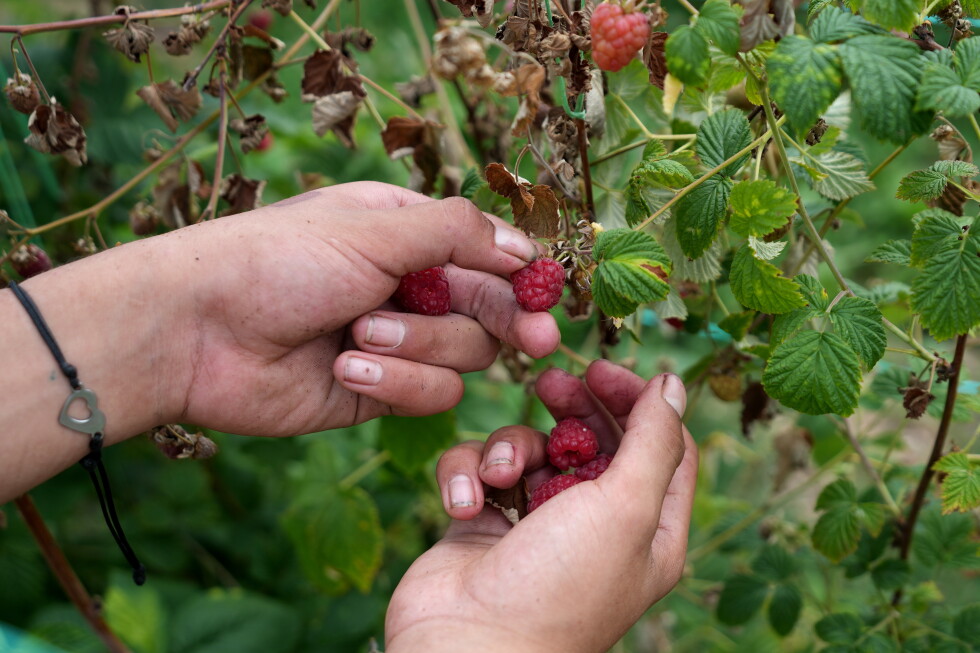
Tucked into the hilly countryside roughly 100 miles southwest of Serbia’s capital Belgrade, the small municipality of Arilje carries a lofty international title: Serbia’s undisputed ‘raspberry capital’, a reputation that has spread far beyond the Balkan Peninsula’s borders.
With a total population of just 17,000, this tiny region punches far above its weight in the global raspberry trade. Serbia currently ranks among the world’s top three raspberry exporting countries, and Arilje alone contributes roughly one-fifth of the nation’s total raspberry exports. Each year, the region’s plantations produce between 15,000 and 20,000 tons of premium berries, which are shipped as far as North America’s United States and East Asia’s Japan. Most of the harvest — around 90 percent — is frozen for export, where it goes into food processing, retail produce sections, jams, yogurts and baked goods across Europe, while the remaining 10 percent is sold fresh in domestic markets. A small but growing number of local producers have also begun direct-to-consumer online sales of fresh berries and all-natural fruit juices.
What makes Arilje uniquely suited to raspberry growing is its combination of gently rolling terrain and mild, consistent climate, conditions that cannot be easily replicated elsewhere. ‘We are born, we live and we die with raspberries,’ explained Mileta Pilcevic, leader of the local raspberry producers’ association. ‘Arilje is unique in the world. You can’t find a smaller place with such a large concentration of raspberry production.’
Unlike large-scale commercial berry operations in many other countries, Arilje’s raspberries are cultivated entirely without synthetic chemical inputs, and every step from weeding to hand-harvesting is done manually to preserve the fruit’s distinctive, globally celebrated flavor, aroma and quality. Growing high-quality raspberries is a labor-intensive, long-term commitment: a new raspberry orchard takes a minimum of two years to reach full maturity, and the delicate fruit requires constant, attentive care throughout the growing season. ‘Nothing must be done with machines or chemicals,’ Pilcevic emphasized.
For generations, Arilje’s raspberry farms have been passed down as multi-generational family operations, and during the early summer harvest season, growers rely on a large workforce of seasonal laborers — including migrants from South Asian countries such as India — to complete the picking on time. Local grower Nada Marinkovic noted that the manual work is grueling, made harder by the intense summer sun during picking season, but essential to maintaining the industry’s high quality standards. Weeding and plot maintenance are also completed entirely by hand, she added.
In recent years, however, the centuries-old industry has faced growing threats that have created deep uncertainty for local producers. Unpredictable extreme weather, linked by climate scientists to human-caused climate change, has disrupted growing cycles and devastated yields. This year, for example, output is projected to drop by 20 to 30 percent compared to average levels, a direct aftermath of a severe drought that hit the region last year.
Compounding the climate challenge is the persistent instability of wholesale purchase prices for raspberries. Pilcevic explained that too often, the prices offered to growers leave them with little to no profit, leaving them without financial buffer to cover unexpected costs from weather-related crop losses or other emergencies. This economic insecurity has already led to public protests from producers in the past, and Pilcevic warned that more action could come if conditions do not improve. ‘It is not our job to be on the road but in the orchard,’ he said. ‘But, believe me when I say that we will be on the road if we have to.’