博客

  • Cambodia’s Supreme Court to rule on treason appeal of 2 journalists jailed for photos

    Cambodia’s Supreme Court to rule on treason appeal of 2 journalists jailed for photos

    PHNOM PENH, Cambodia — A high-stakes legal decision on the appeal of two Cambodian journalists convicted of treason for their border clash reporting is slated for Thursday at the country’s Supreme Court, a ruling that comes amid intensifying scrutiny over the court’s political alignment.

    Phorn Sopheap, a reporter with Battambang Post TV Online, and Pheap Pheara, of TSP 68 TV Online, were taken into custody last July following their reporting trip to the contested Cambodia-Thailand border. The pair stand accused of publishing photographs captured in a restricted military zone to Facebook, a charge they have repeatedly rejected. They maintain they received official authorization to access the area where they shot their imagery, and are now urging the Supreme Court to throw out their original convictions and 14-year prison sentences.

    One of the images, which documented land mines in the border region, was widely shared by Thai media outlets and supported Bangkok’s claims that Cambodia had recently deployed new mines along the disputed frontier — mines that Bangkok said injured Thai soldiers patrolling the area. Cambodia has consistently denied the allegation, asserting it abides by international bans on land mine use and that any ordnance found in the area is likely leftover from decades of internal conflict that concluded in the late 1990s.

    The border skirmishes, which erupted in two waves in July and December 2024, displaced hundreds of thousands of residents on both sides of the frontier and killed roughly 100 soldiers and civilians. While no new clashes have broken out since a ceasefire was reached in December, cross-border tensions remain elevated.

    The case against the two journalists stems from a December 2024 conviction handed down by Siem Reap Provincial Court, which found them guilty of “supplying a foreign state with information prejudicial to national defense” and handed down the 14-year sentences. A lower appellate court upheld the convictions in March, prompting a joint open letter from more than a dozen domestic and international press freedom organizations urging Cambodian authorities to drop all charges.

    Thursday’s hearing comes just days after the same Supreme Court upheld an incitement conviction against Rong Chhun, a high-profile opposition figure. That ruling has once again drawn international attention to the current government’s ongoing crackdown on dissent. The 56-year-old opposition leader was found guilty last year of inciting social unrest after meeting with villagers displaced by state-led infrastructure projects, a decision widely viewed as part of a broader pattern of legal action against government critics under Prime Minister Hun Manet’s administration.

    Human Rights Watch has argued that recent rulings from the Supreme Court make clear that the judiciary remains tightly controlled by the ruling Cambodian People’s Party. Cambodian government officials have repeatedly pushed back against these claims, asserting that the court operates entirely independent of political influence.

    The country’s political landscape has shifted little since Hun Manet, the American-educated son of long-time autocratic former Prime Minister Hun Sen, took office in August 2023. Under Hun Sen’s nearly 40-year rule, Cambodia faced widespread international condemnation for systemic human rights abuses, including harsh crackdowns on freedom of speech and association. To date, observers have documented almost no progress toward political liberalization under the new administration.

    Earlier this year, the New York-based Committee to Protect Journalists accused the Cambodian government of leveraging broad, vague national security laws to criminalize routine, legitimate reporting in the case of Sopheap and Pheara. The 2025 World Press Freedom Index from Reporters Without Borders, a Paris-based press advocacy group, ranks Cambodia 161st out of 180 included countries and territories, placing it among the nations with a “very serious” press freedom situation.
  • Aipac rebuffed as Mamdani-backed candidates sweep NYC Democratic primaries

    Aipac rebuffed as Mamdani-backed candidates sweep NYC Democratic primaries

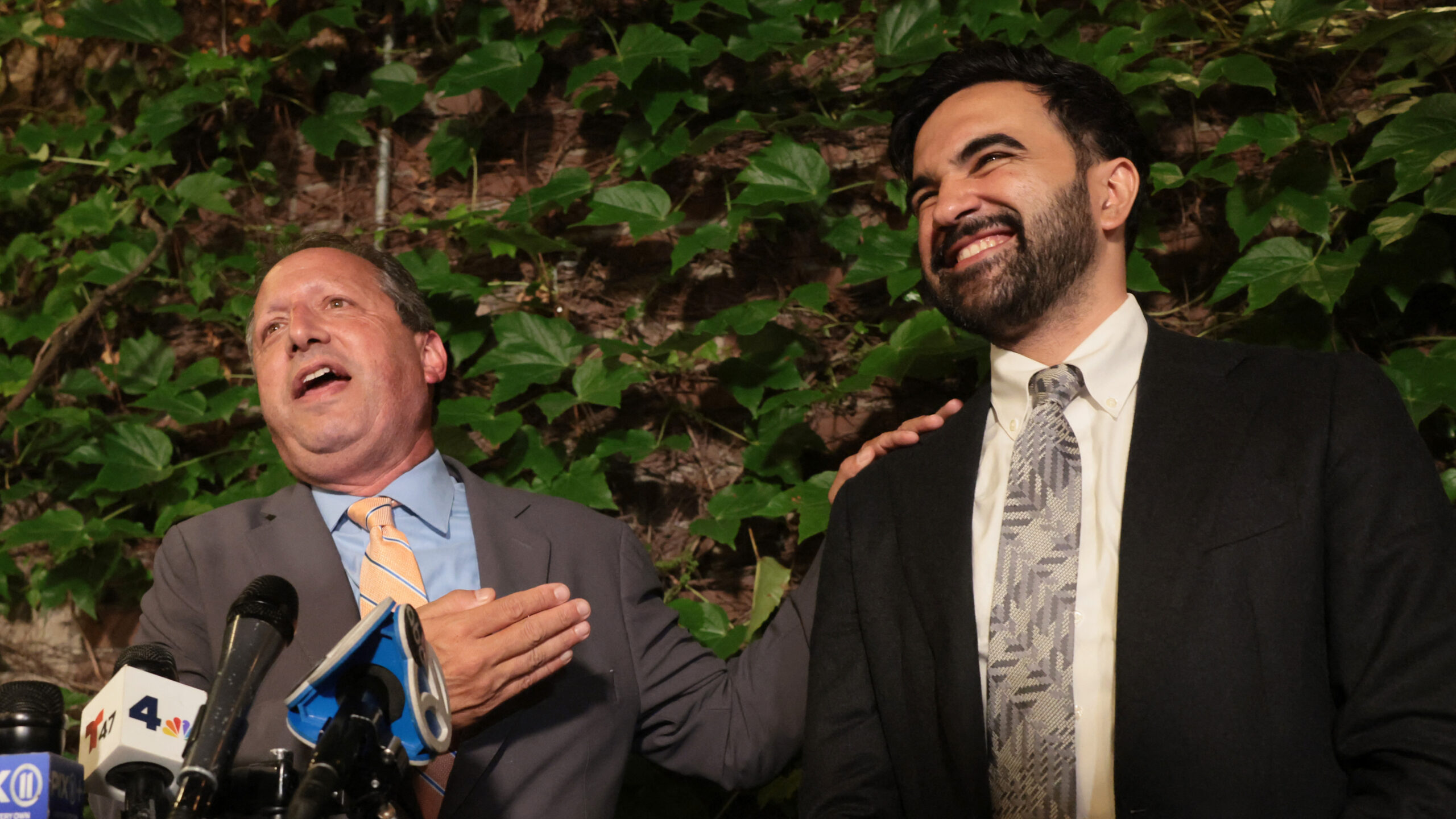
    In a landmark vote that sent shockwaves through New York’s Democratic Party, all three congressional candidates endorsed by New York City Mayor Zohran Mamdani secured upset victories in high-stakes Democratic primaries on Tuesday, marking the first major electoral test of the progressive mayor’s expanding political movement and cementing the left’s growing influence in state politics.

    The night’s outcomes delivered multiple significant upsets for the party’s old guard. Former city comptroller Brad Lander ousted incumbent Representative Dan Goldman, while state assembly member and ex-union organizer Claire Valdez defeated Brooklyn Borough President Antonio Reynoso to claim the nomination for the seat being vacated by retiring Representative Nydia Velazquez. The most stunning upset of the evening came when first-time candidate and public defense investigator Darializa Avila Chevalier unseated five-term incumbent Representative Adriano Espaillat, chair of the Congressional Hispanic Caucus.

    Beyond the congressional races, the progressive wave extended to state legislative contests: Palestinian-American democratic socialist Aber Kawas won the Democratic nomination for a Queens state senate seat, defeating establishment-backed assembly member Steven Raga. Overall, seven of eight candidates endorsed by the New York City chapter of the Democratic Socialists of America (DSA) won their primary contests, a statistic that underscores the movement’s expanding grassroots power.

    Progressive supporters immediately framed the clean sweep as far more than a series of isolated primary wins. They argue it confirms that Mamdani’s political project is not a one-off insurgency, but the start of a permanent ideological shift within New York’s Democratic Party, representing a clear rebuke to a centrist establishment that progressives say has long treated progressive voters as a constituency to be managed rather than a political force to be heeded.

    Mamdani took an unusually public, hands-on role in the primaries, stumping alongside the three congressional candidates and rallying voters around a shared “affordability agenda” tailored to address New Yorkers’ widespread anger over the city’s crippling cost of living. The mayor’s political framework ties domestic economic hardship directly to U.S. foreign policy priorities, a connection that crystallized around the single clearest dividing line of the 2026 primaries: the Israeli military campaign in Gaza.

    The Israel-Gaza conflict emerged as a defining litmus test for candidates, reflecting a growing gap between Democratic Party leaders and the party’s grassroots base. Lander, a Jewish progressive, was an outspoken critic of what candidates and supporters describe as Israel’s genocide in Gaza, while his opponent Goldman — who received backing from the powerful pro-Israel lobbying group AIPAC — positioned himself as one of Congress’s most prominent supporters of Israel. All three of Mamdani’s congressional nominees, alongside Kawas, held strong pro-Palestinian stances. Avila Chevalier previously helped organize pro-Palestinian protests at Columbia University, and Kawas centered her campaign on ending what she calls New York’s complicity in Israel’s actions in Gaza, pairing that foreign policy stance with domestic policy priorities including universal healthcare, tenant protections, immigration justice, and campaign finance reform.

    After the wins, chants of “Free Palestine” rang out at the movement’s victory party, a moment that political observers described as historic. “Don’t underestimate the significance of a packed room full of supporters chanting ‘Free Palestine!’ at a victory party for a candidate who won a major party congressional primary while calling for Palestinian liberation and calling Israel out for genocide and apartheid,” sociologist Anthony Zenkus wrote on social media shortly after the results were called. Policy analyst Yousef Munayyer added that Palestine has become far more than a moral issue for voters: “it is increasingly a measuring stick for how out of touch with your voters you are. Hard to think of any issue, among any party, at any time in history, where there was a bigger gap between the party establishment and their voters.”

    Avila Chevalier’s defeat of the well-funded, longtime incumbent Espaillat proved particularly notable, with progressives arguing it proves that traditional advantages of incumbency, establishment fundraising, and institutional party backing no longer guarantee protection from primary challenges in New York City.

    Alongside anger over U.S. policy toward Gaza, the progressive sweep was fueled by widespread New York voter anxiety over housing and economic affordability, an issue Mamdani has centered since his own mayoral campaign. The mayor’s core political argument — that working and middle-class New Yorkers are being priced out of their homes, squeezed by rising costs for rent, childcare, and healthcare, and failed by an economic system that prioritizes landlords, corporate interests, and the wealthy — resonated across all of the winning candidates’ campaigns. The group framed their candidacy as part of a new generation of Democrats that treats economic justice issues as the core, not an afterthought, of anti-establishment politics.

    The victories also come amid heightened anxiety among Democratic voters over the agenda of second-term President Donald Trump, who has ramped up restrictive immigration policies, attacked public services, and expanded executive power. Progressives say the results show that Democratic voters want candidates who will confront Trumpism with an ambitious agenda that addresses both domestic material hardship and voter anger over U.S. foreign policy in Gaza.

    Online and political reaction to the primary results was sharply polarized. Progressive activists, Palestinian rights organizers, and DSA members celebrated the sweep as a long-awaited breakthrough for a movement that spent years building local power through grassroots tenant organizing, mutual aid networks, and anti-war mobilization. Many compared the outcome to Alexandria Ocasio-Cortez’s historic 2018 primary upset that first catapulted a New York democratic socialist to Congress. Political commentator Zachary Donnini summed up the mood of progressives, writing, “The Democratic Tea Party is here. Tonight is shaping up to be one of the more consequential nights in recent Democratic politics, with Mamdani- and DSA-endorsed candidates reforming the party.”

    But the wins also triggered alarm among centrist Democrats and conservative commentators, who warn the party risks shifting too far left, alienating voters in competitive swing districts ahead of November’s midterm elections. President Trump seized on the results to argue that Democrats are abandoning the political center, and top Democratic Party leaders have privately raised concerns that the rise of the progressive left will complicate general election campaigns in closely divided districts. The growing divide has already put Mamdani on a collision course with establishment Democratic figures, including House Minority Leader Hakeem Jeffries, who backed incumbent Dan Goldman in his primary against Lander.

    Going into November’s midterm elections, debates over the future of the Democratic Party are only expected to intensify, as the party attempts to balance energizing its progressive base with competing for competitive general election seats. Still, the immediate takeaway from Tuesday’s voting in New York is unambiguous: Mamdani’s progressive coalition has proven it can win beyond the mayor’s office, defeating entrenched incumbents and establishment-backed candidates in high-stakes congressional races. For a Democratic Party grappling with widespread voter anger over affordability, Trump’s agenda, and the war in Gaza, the message from New York is clear: the insurgent progressive left is no longer a marginal force in the party.

  • How one Indian textile worker copes with extreme heat in factory work and cramped living quarters

    How one Indian textile worker copes with extreme heat in factory work and cramped living quarters

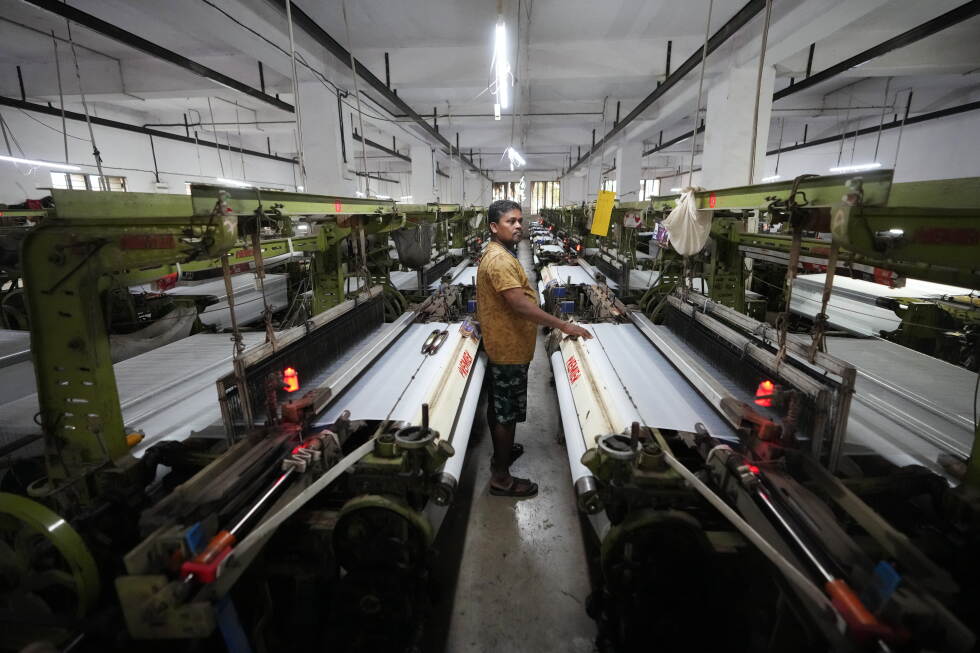
    Long before the first hint of sunrise stains the sky over Surat, India’s sprawling synthetic textile manufacturing hub, 35-year-old migrant worker Sibaram Pradhan is already awake. Seated cross-legged on the concrete floor of a cramped plywood cubicle he shares with nine other migrant men, Pradhan breaks into a sweat before his day even begins. This summer, climate-amplified extreme heat has left no corner of India untouched, wrapping both days and nights in a suffocating blanket of humidity and high temperatures that lingers even at 6 a.m.

    Like hundreds of thousands of fellow migrants from Odisha, the eastern Indian state he calls home, Pradhan commutes 2,000 kilometers to work in one of Surat’s thousands of power loom factories. He is one of millions of South Asian workers trapped in a cycle of grueling labor: substandard overcrowded housing and brutally hot, poorly ventilated, deafening factory floors, conditions that grow more dangerous by the year as climate change intensifies regional heatwaves.

    “I’m a poor person. I have come all this way from Odisha to Gujarat just to put food on the table,” Pradhan explains. “We have no choice but to work to survive.”

    The first task of his long day is a quick video call to his wife and two children, who remain in Odisha. Once that is done, he offers a quick prayer to a small portrait of his deity taped to the plywood wall of his cubicle, then joins a queue stretching down a dark, narrow hallway for access to the shared bathroom facilities. Up to 100 workers share just two toilets and a handful of water taps, relying on buckets to bathe.

    More than 200 migrant workers are housed across two converted warehouse floors split into thin plywood cubicles. With only a handful of ceiling fans to circulate stagnant, warm air, the entire complex offers almost no ventilation. This summer, temperatures have already climbed past 38 degrees Celsius (100 degrees Fahrenheit), turning both factories and worker housing into oppressive, stifling spaces that offer little relief from the heat. Pradhan rushes through his morning routine: any late arrival to the factory means a dock in his daily pay.

    Inside the factory walls, Pradhan’s shift stretches up to 12 hours. He is responsible for loading polyester yarn onto power looms, monitoring for broken threads, checking bobbin placement, and maintaining uniform fabric quality across up to 15 machines at once. He moves constantly between the units, enveloped in a constant roar of noise that can reach 130 decibels — a volume equivalent to a gunshot fired at close range, or a high-speed train passing just meters away.

    The unrelenting heat forces Pradhan to work in only a sleeveless undershirt and shorts. He drinks water almost nonstop and regularly wrings sweat out of his clothing to keep it from becoming soaked and heavy. The job requires constant vigilance around the unguarded, fast-moving heavy machinery: “Even if we’re exhausted, we have to stay focused, because people lose fingers to these machines all the time,” Pradhan says. “If you get hurt, you have to pay all your own medical bills, and you don’t get paid for the days you can’t work.”

    Nearly all factories rely on nothing more than ceiling fans to cool machinery and workers, with no systemic ventilation to flush out accumulated heat. After hours of exposure to the sweltering conditions, many workers report frequent dizziness, splitting headaches, and persistent chronic fatigue. Heat exhaustion and dehydration-related illnesses and even deaths are alarmingly common among the workforce, says Siba Malik, a leader of Surat’s power loom worker union. Experts warn that national heat-related death tolls are almost certainly drastically undercounted, due to inconsistent reporting protocols on death certificates, leaving reliable official statistics out of reach.

    Virtually all of Surat’s textile workforce is made up of internal migrants, the vast majority of whom hail from Odisha’s Ganjam district, one of India’s regions most vulnerable to climate-driven natural disasters. Workers report that repeated cyclones, flooding, and erratic rainfall have destroyed small-scale farming, the traditional livelihood in the district. Combined with chronic water shortages and a lack of local infrastructure and alternative work opportunities, these climate shocks have pushed hundreds of thousands of people to seek factory work in Surat. A 2023 nonprofit report estimates that as many as 800,000 Ganjam district natives currently work in Surat’s textile sector.

    “There is simply no work to be found in our home villages,” says Seemanchal Sahu, another power loom worker who has lived and worked in Surat for more than 15 years. “If we could make a living there, we would never have left.”

    Malik, a former power loom worker himself, notes that the vast majority of these workers lack health insurance, paid leave, or any other basic labor protections, leaving them extremely vulnerable to illness or injury. Any interruption to work means an immediate stop to their income. He has spent years organizing workers to collectively demand better working conditions and basic benefits, but progress has been slow. Workers have little leverage to push for change: they are dependent on the meager wages factories offer, which range from 600 to 750 Indian rupees (approximately $6 to $8) per day, or pay based on how many meters of fabric they produce.

    After finishing his 12-hour shift around 7 p.m., Pradhan walks back to his housing complex, where the heat offers no reprieve. Nighttime temperatures in Surat regularly hover around 30 degrees Celsius (86 degrees Fahrenheit), so the cubicles remain just as hot and stuffy after dark as they are during the day. If the bathroom queue is not too long, he will take a quick second bucket bath, then head to the on-site canteen for dinner, which usually consists of lentils, rice, and cheap seasonal vegetables like eggplant or potato. Fish is only served once a week.

    After eating, Pradhan usually spends an hour or so socializing with other workers at a nearby street tea stall, since sitting inside the overheated cubicle is unbearable. When he finally returns to his room to sleep, the conditions still work against him. “It’s just as hot inside the room at night,” Pradhan says. “We can’t sleep properly. I wake up three or four times every single night.”

    Even with his grueling seven-day-a-week schedule, Pradhan spends roughly one-fifth of his income on rent and food at the complex, but still manages to send roughly 6,000 rupees ($63) home to his family in Odisha every month. His routine rarely changes, broken only by rare holidays like Diwali or the Odia New Year, when he travels back to his home state to visit his family.

    Through all the hardship, Pradhan holds onto one hope: that his children will be able to build a better life than he has. He is saving to send them to school, so they can get stable, professional jobs that do not require the backbreaking, dangerous labor he endures every day. “I know exactly how hard this work is,” he says. “I will never let my children end up here.”

  • Undav has 3 goals and 2 assists off bench and still can’t gain spot in Germany’s starting lineup

    Undav has 3 goals and 2 assists off bench and still can’t gain spot in Germany’s starting lineup

    EAST RUTHERFORD, N.J. – In a 2024 FIFA World Cup Group E storyline that has captured global soccer attention, 29-year-old German striker Deniz Undav boasts one of the most electrifying scoring rates in the tournament – yet he remains stuck on Die Mannschaft’s bench heading into the final group stage match against Ecuador.

    Across just 69 minutes of World Cup game time, Undav has notched three goals and two assists, meaning he contributes to a goal roughly every 13.8 minutes. That astonishing rate outpaces some of the biggest names in world soccer: Lionel Messi (37.4 minutes per contribution), Kylian Mbappé (48.8) and Erling Haaland (51.2) all trail far behind the in-form German forward.

    For many players, being benched despite such elite production would spark frustration and public pushback. But Undav says he has fully embraced his role as a super-sub for the tournament favorites.

    “If I weren’t happy, if I wasn’t content, I wouldn’t be here,” Undav told reporters at a Wednesday press conference, a day ahead of the Ecuador matchup. “I accept the role.”

    Germany enters the match already having secured top spot in Group E, marking a major turnaround after consecutive early group stage exits following the country’s 2014 World Cup title. Die Mannschaft will kick off their knockout round run next Monday in Foxborough, Massachusetts, against the third-place finisher from another group, likely either Paraguay or Australia. A win against Ecuador would give Germany its 12th consecutive victory, tying a national team record set between 1979 and 1980.

    For Ecuador, the stakes could not be higher. The South American side has just one point from its first two group matches, meaning only a full three points from a win over Germany will keep their knockout round hopes alive.

    German head coach Julian Nagelsmann confirmed Wednesday he plans only mandatory lineup rotations for Thursday’s match, forced by two key defensive absences. Center back Nico Schlotterbeck will miss the remainder of the tournament after tearing a ligament in his left ankle during Saturday’s win over Ivory Coast, while left back Nathaniel Brown is sidelined with an adductor injury. Real Madrid’s Antonio Rüdiger is expected to step in for Schlotterbeck, and Hoffenheim’s David Raum will take Brown’s place at left back.

    “We want to prepare ourselves for the knockout phase,” Nagelsmann explained. “We all say that Deniz really would deserve to be in the starting lineup but we have an idea for the team, we talked about it with Deniz and other players, and tomorrow we will do the rotations that are necessary.”

    Undav’s path to World Cup contention has been far from conventional. The striker cut his teeth in Germany’s lower divisions, playing for Havelse, Braunschweig and Meppen between 2017 and 2020, before moving to Belgian second-tier side Union Saint-Gilloise, where he helped the club earn promotion to the top flight. He earned his first move to a top European league in 2022, signing with England’s Brighton & Hove Albion in the Premier League, before switching to VfB Stuttgart for the 2023-24 Bundesliga season.

    Last season, Undav enjoyed a breakout campaign in Germany’s top flight, finishing second in the league with 19 goals – trailing only Tottenham Hotspur star Harry Kane’s 36. He made his senior Germany debut in March 2024, and has an incredible nine goals in 11 international appearances to date, with just three of those outings coming as a starter.

    His World Cup performances have followed this same super-sub pattern: he entered the 7-1 opening win over Curaçao in the 64th minute, immediately notching one goal and two assists, then came off the bench in the 60th minute against Ivory Coast, scoring twice to lead Germany to a 2-1 comeback victory.

    Nagelsmann sparked controversy earlier this year after a March friendly against Ghana, when he commented that Undav only scored the match-winning 88th-minute goal because he came into the game with fresh legs, and lacked the stamina to start. The coach apologized for the remarks shortly after, and on Wednesday both he and Undav appeared fully aligned on the striker’s role.

    “Whether I’m in the starting lineup or coming on later, it doesn’t matter,” Undav said, sitting alongside Nagelsmann at the press conference. “It’s important that the team wins. I joined from the bench twice and we won both games. I’m very happy about that.”

    In another lineup confirmation, Nagelsmann announced he will stick with 40-year-old veteran goalkeeper Manuel Neuer between the posts for the remainder of the tournament. Neuer returned to the national team for this World Cup after a two-year absence, pushing backup Oliver Baumann out of the starting spot. Nagelsmann added that goalkeeper coach Andreas Kronenberg spoke directly to Baumann about the decision, and the backup understood the call.

    “Oliver really understood,” Nagelsmann said. “I understand completely from the human side, and if we only approached it that way it would be obvious, but we have to look at the large picture. It’s not always pleasant to make these decisions but those decisions have to be made.”

    Undav’s breakout tournament has even created an unexpected supply issue for German kit supplier Adidas. The company briefly ran out of the letter “V” to print fan jerseys, due to soaring demand for shirts with Undav’s name alongside fellow fan favorites Kai Havertz and Aleksandar Pavlovic. Stock has since been restocked, and Undav says he is honored by the outpouring of support.

    “My friends, my family already have a jersey. I really didn’t have to order anything new,” Undav joked. “I’m very honored by it.”

    While Germany is focused on fine-tuning for a deep tournament run, Ecuador is fighting to avoid an early exit. The South Americans entered the World Cup on a 19-game unbeaten streak, but suffered a brutal 1-0 opening loss to Ivory Coast after conceding a 90th-minute winner. They followed that result with a scoreless draw against Curaçao, outshooting their opponents 28-10 but being denied by 15 saves from Curaçao goalkeeper Eloy Room, including two first-half shots off the crossbar from John Yeboah and Alan Minda.

    “I am convinced that we have a chance to meet our goals,” Ecuador head coach Sebastián Beccacece said Wednesday. “We’ll have the taste of happiness if we win and the taste of sorrow if we don’t, and that’s life for you.”

    Beccacece also addressed an incident following Saturday’s match at Kansas City’s Arrowhead Stadium, where his wife and daughters were confronted by an angry Ecuador fan frustrated with the team’s results. The coach said his family was unharmed, and he framed the confrontation as a product of passionate fan disappointment.

    “I talked to my wife, my daughters. They told me what happened. I haven’t seen it,” Beccacece said. “The first thing I asked was whether anything serious had happened. They said no. Nothing. And at the end of the day, I interpret this as a fan feeling hurt because of the results. I think anyone should be able to express themselves without reaching this level of confrontation.”

  • Trump holds housing cost relief hostage to noncitizen voting act

    Trump holds housing cost relief hostage to noncitizen voting act

    In a sudden Wednesday announcement that upended weeks of bipartisan legislative progress, former and current U.S. President Donald Trump scrapped a planned public signing ceremony for a broadly popular housing affordability overhaul, demanding Congress first advance his controversial election security proposal before he puts pen to paper on the housing measure.

    The bipartisan housing bill had already cleared major congressional hurdles with overwhelming bipartisan support: the Senate passed the legislation 85-5 on Monday, followed by a 358-32 House vote just one day later. The White House had previously confirmed Trump backed the bill, and a public signing event was scheduled to take place in the U.S. Capitol’s Statuary Hall, a venue set up to mark the legislative win. But hours before the event was set to begin, Trump took to his Truth Social platform to call off the ceremony and reject the bill for the time being.

    In his post, Trump labeled the housing overhaul, which is designed to bring down soaring U.S. housing costs, as a “minor” measure. He added, “Today’s Housing News Conference and Signing is hereby cancelled until such time as we pass the desperately needed SAVE AMERICA ACT, which I consider to be a National Emergency.”

    The SAVE America Act, a top legislative priority for Trump, targets noncitizen voting, an extremely rare occurrence in U.S. elections. Despite Trump’s push for the bill, Republican Senate leaders have already privately warned the president that the legislation lacks enough votes to pass the upper chamber.

    The housing overhaul, spearheaded by Senate Banking Committee Chairman Tim Scott, a South Carolina Republican, and the committee’s ranking Democratic member Elizabeth Warren of Massachusetts, includes a set of provisions aimed at easing the nation’s persistent housing affordability crisis. The bill would cut red tape that drives up construction costs, expand eligible uses for federal housing grants, and implement a ban on institutional investors purchasing large blocks of single-family homes—practices widely blamed for pushing up home prices for everyday buyers. Scott had praised the legislation earlier this week as a rare example of nonpartisan lawmaking that addresses a widespread, cross-partisan economic need.

    For Republican congressional leaders, the housing bill was crafted to tackle affordability, a top policy issue expected to dominate the upcoming November midterm elections amid ongoing stubborn inflation across the U.S. economy. Most congressional opposition to the bill came from a small bloc of hardline House conservatives led by Florida Representative Anna Paulina Luna, who has pledged to block all legislation coming from the Senate, and even some House rules resolutions, until the upper chamber advances Trump’s election security measure.

    Speaking at a Wednesday morning press briefing, House Speaker Mike Johnson, a Louisiana Republican, confirmed that he had spoken with Trump earlier that day. Johnson clarified that Trump is only delaying signing the housing bill to pressure Congress to pass an election security grant program through the budget reconciliation process— the same fast-track legislative procedure that Republicans used to pass their major earlier policy bill and allocate $70 billion for immigration enforcement.

    Johnson explained the Republican proposal: “You have to put it on a reconciliation bill. We believe that if you create a grant program that ties it to reconciling the budget and you allow blue states, if they come to their senses and they want to avail themselves of election integrity proposals and ideas and policies, they can draw down from a federal fund and use those funds. We’re willing to invest heavily in that.”

    The Speaker told reporters he had assured Trump that congressional Republicans can pass the election security measure if the caucus unites behind the effort. “As you know he has a window of time before he has to sign a bill and he’s going to use a bit more of that window of time. And we’re going to go through this together,” Johnson said, adding that he expects Trump will ultimately sign the housing bill within the 10-day window allotted for presidential approval.

  • US Congress welcomes Taiwan’s parliamentary leader to Washington, affirms support for the island

    US Congress welcomes Taiwan’s parliamentary leader to Washington, affirms support for the island

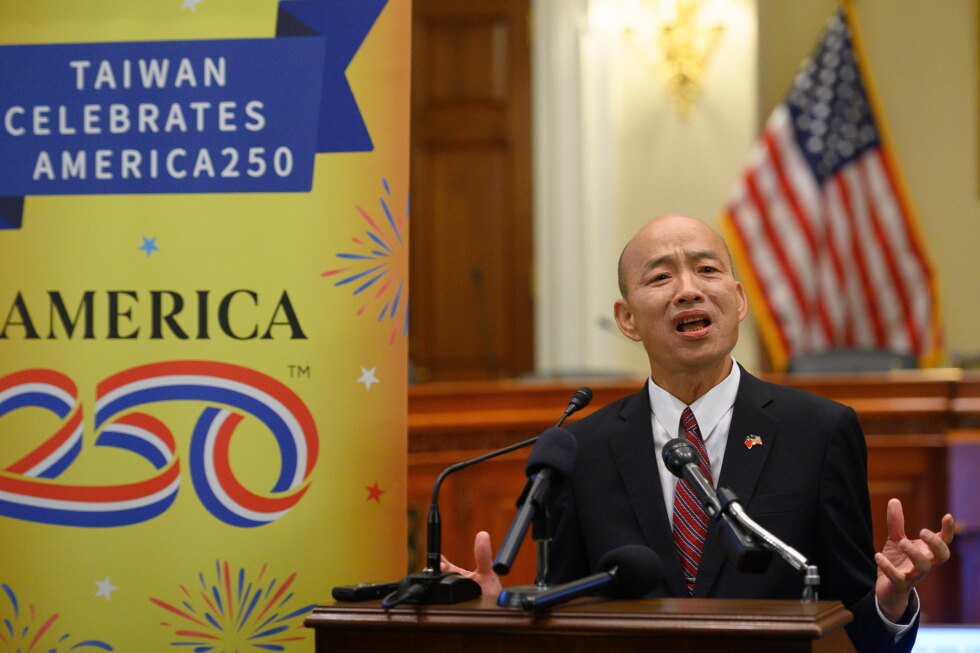
    Against a backdrop of shifting U.S.-China tensions and a pending review of a major arms deal, over 30 bipartisan members of the U.S. House of Representatives gathered Wednesday in Washington D.C. to reaffirm robust U.S. backing for Taiwan, during an official reception welcoming Han Kuo-yu, the president of Taiwan’s Legislative Yuan.

    The high-profile gathering, held at the Longworth House Office Building, drew some of Capitol Hill’s most prominent figures from both major parties, including former House Speaker Nancy Pelosi (D-CA), House Democratic Caucus Vice Chair Ted Lieu (D-CA), and former House Foreign Affairs Committee Chair Michael McCaul (R-TX). Opening the welcome remarks, McCaul left no ambiguity about U.S. congressional sentiment, stating, “It’s very important to me to say that the United States supports you, Mr. Speaker.” Echoing this unified stance, Pelosi emphasized that cross-party and bicameral support for Taiwan is long-standing, framing the backing as rooted not just in a commitment to regional peace, but also in critical shared economic interests tied to global maritime trade security.

    Han is leading an eight-person parliamentary delegation that arrived in Washington Tuesday evening, following a preliminary stop in Phoenix, Arizona. That stop highlighted the deep economic interdependence between the U.S. and Taiwan: Phoenix is currently the site of new, cutting-edge fabrication facilities being built by Taiwan Semiconductor Manufacturing Company (TSMC), the world’s leading advanced chipmaker whose products underpin the global artificial intelligence boom. TSMC’s expansion in Arizona has become a leading example of Taiwan’s outsized importance to the U.S. economy and tech supply chain. Before meeting with House members, Han held closed-door discussions with U.S. senators; the delegation declined to share specific details of those talks, but noted the warm reception from senators matched the enthusiastic welcome House members extended.

    The Taiwan issue remains one of the most contentious flashpoints in U.S.-China relations. Beijing formally claims Taiwan as part of its sovereign territory and has repeatedly vowed to take control of the self-governing island by force if necessary. Under the long-standing Taiwan Relations Act, a U.S. domestic law, Washington is legally required to provide Taiwan with sufficient defense capabilities to deter any potential invasion from mainland China. The $14 billion arms sales package at the center of current debate already received preliminary approval from Congress months ago, but the Trump administration has held up the deal amid ongoing review. President Donald Trump, following his May diplomatic trip to Beijing, has publicly described the package as a potential bargaining chip in broader U.S.-China negotiations, a framing that drew sharp pushback from U.S. lawmakers on Wednesday.

    Secretary of State Marco Rubio has stated that long-standing U.S. policy toward Taiwan remains unchanged, but multiple members of Congress used Wednesday’s reception to press the Trump administration to move forward with the arms deal immediately. “I’m here today … to affirm in the strongest terms that Taiwan is not a bargaining chip. It is an island of freedom. And we need to do all we can to preserve it,” said Rep. Lloyd Doggett (D-TX), adding that the U.S. should expedite delivery of every defensive weapon Taiwan requests. Ted Lieu directly criticized the administration’s delay, saying, “I urge the administration to reverse that and to allow their arms sale to proceed.”

    A member of Taiwan’s opposition Kuomintang (KMT) party, Han struck a collaborative tone in his address, praising the U.S.’s 250-year legacy of democratic governance and noting that Taiwan shares the U.S.’s core commitments to freedom, democracy, and upholding a rules-based international order. He highlighted the deep economic ties between the two sides: the 23-million-person island has recently surpassed Germany to become the United States’ fourth-largest trading partner, a shift driven largely by global demand for Taiwan’s advanced semiconductors and other high-tech hardware.

    Han also used his visit to urge U.S. congressional support for expanding Taiwan’s international participation. Due to Beijing’s territorial claims, no United Nations member state can maintain formal diplomatic relations with both China and Taiwan, leaving just 12 small governments and the Holy See to formally recognize Taipei. Beijing has also successfully blocked Taiwan’s membership in most major intergovernmental organizations, including the World Health Organization. “On the international stage, Taiwan feels very lonely in its heart,” Han said. “I am here asking Taiwan’s good friends in Congress … to help us participate in global activities.”

    After his meetings in Washington, Han is set to depart Friday on the inaugural nonstop flight between Washington Dulles International Airport and Taiwan Taoyuan International Airport operated by Taiwanese carrier EVA Air, a new route that has been framed as another marker of deepening people-to-people and official ties between the U.S. and Taiwan.

  • Ivory Coast eyes knockout stage of World Cup with striker Elye Wahi expected back amid investigation

    Ivory Coast eyes knockout stage of World Cup with striker Elye Wahi expected back amid investigation

    CHESTER, Pennsylvania — For the Ivory Coast men’s national soccer team, the Philadelphia metropolitan area has emerged as an unexpected and fruitful home base during the 2026 FIFA World Cup. The West African side set up its training camp and team accommodations in the region, even hosting a pre-tournament friendly that drew roughly 10,000 local supporters, and has already kicked off its group stage campaign with a statement 1-0 win over Ecuador.

  • Scotland fans brave the heat and humidity to support their team at the World Cup against Brazil

    Scotland fans brave the heat and humidity to support their team at the World Cup against Brazil

    MIAMI GARDENS, Fla. – For thousands of die-hard Scottish football supporters, the trip to the 2024 World Cup marked a historic moment: their nation’s first appearance on the sport’s biggest global stage in 26 years. But for the kilt-clad, bagpipe-playing members of the iconic Tartan Army, the first lesson of their South Florida adventure came fast – summer heat in Miami is unlike anything most have ever experienced.

    In the days leading up to Scotland’s highly anticipated group stage matchup against Brazil this Wednesday, the faithful took over Miami Gardens’ beachside spots, waterfront bars and public spaces, ready to celebrate their team’s long-awaited return. What greeted them was a mercury peak hitting 93 degrees Fahrenheit (34 degrees Celsius), paired with unforgiving afternoon humidity hovering between 63 and 66 percent.

    “Right now in this kilt, I am sweating. Absolutely sweating. It’s crazy heat,” said Hayden Sutherland, one of the thousands of fans who traveled across the Atlantic for the momentous occasion. Sutherland and the Tartan Army have worked their way across the U.S. East Coast ahead of the match, starting with a fan tour stop in Boston before heading south to Florida. While partial cloud cover over the Hard Rock Stadium – home of the NFL’s Miami Dolphins – offered a small reprieve from the scorching sun, many fans said the swelter has been nonstop since their tour began.

    Ironically, the traveling supporters would not have found much cooler comfort back home. Scotland is currently facing an unseasonable, rare heat wave of its own, with Tuesday temperatures hitting an unexpected high of 84 degrees Fahrenheit (29 degrees Celsius). Even so, Miami’s combination of heat and thick humidity has proven to be a far greater test.

    “I’ve been to warmer places, but the humidity is just killing me,” noted Peter Wright, another traveling Scottish supporter. “Here, I can walk 100 meters and I’ve got a bit of sweat on. In Boston, I was walking miles and it was lovely.”

    Nearly all the traveling fans have held fast to beloved tradition, sporting the iconic knee-length Scottish kilt to matches and fan gatherings. Opinions are split on whether the traditional garment helps or hurts in the heat: some fans say the breathable woven fabric offers unexpected relief, while others report the thick material traps heat and adds to their discomfort.

    Outside the stadium, fans crowded into whatever shaded spots they could find, fanning themselves with program booklets, hats and any available flat surface. When asked how the group was coping with the extreme conditions, Wayne Sutherland – Hayden’s father – joked with a classic Scottish response: “Just beer. We’re two Scots. No water, just beer.”

    That heavy demand for cold beer has already left bars scrambling along the Tartan Army’s tour route. While Miami rolled out the welcome with a dedicated “beer barge” for the traveling supporters, Boston-area bars struggled to keep up as the group of thousands drank through local stock during their earlier stop.

    If the heat has dampened the group’s legendary enthusiasm, though, there is no sign of it. Despite Scotland falling to Brazil 3-0 after conceding a goal in just the seventh minute of play, the stands filled with Tartan Army supporters barely sat down for the full 90 minutes. All day long, from pre-game tailgates to the final whistle, the iconic fan chant “No Scotland, No Party” echoed across Miami Gardens – proof that even sweltering heat and a tough loss cannot dim the spirit of the world-famous Scottish fanbase that has waited 26 years for this moment.

    This report was contributed by Gracie Fisher, a student at the University of Georgia’s Carmical Sports Media Institute, as part of Associated Press World Cup coverage.

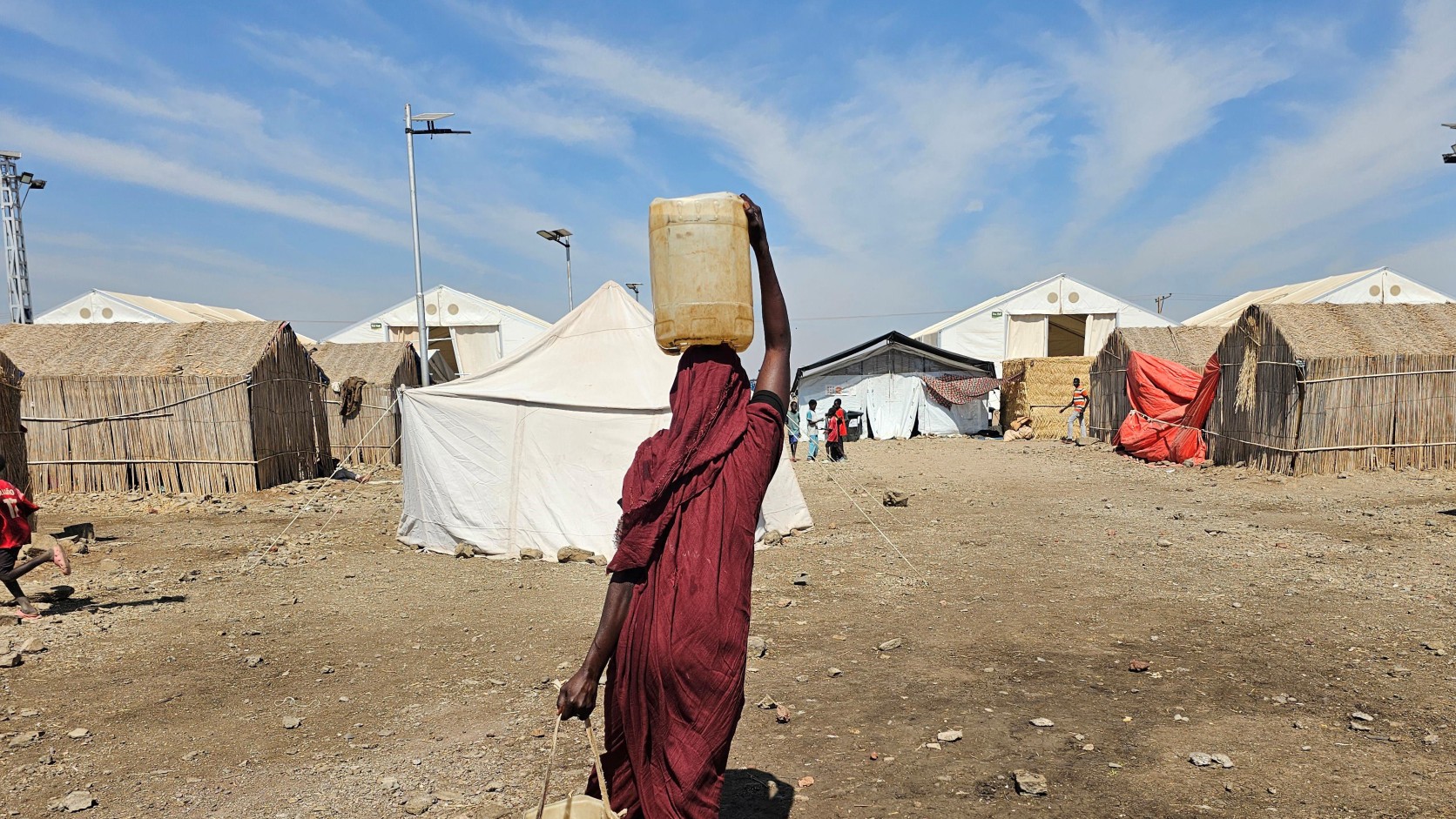
  • UN: RSF used rape and sexual slavery as weapons of war in Sudan since 2023

    UN: RSF used rape and sexual slavery as weapons of war in Sudan since 2023

    Three years into Sudan’s brutal civil war between the Rapid Support Forces (RSF) and the Sudanese Armed Forces (SAF), a bombshell new report from the United Nations Office of the High Commissioner for Human Rights (OHCHR) has laid bare the systematic use of sexual violence as a weapon of war, placing the overwhelming majority of documented abuses at the feet of the RSF and its allied militias. The analysis, which covers the period from the outbreak of open conflict in April 2023 through mid-April 2026, documents 546 verified incidents of conflict-related sexual violence across 16 of Sudan’s 18 states, impacting at least 838 people—most of whom are women and girls. The UN’s findings confirm that these acts are not isolated crimes of war, but coordinated, widespread tactics that may rise to the level of crimes against humanity and even genocide.

    According to the report’s verified data, 87 percent of all documented sexual violence incidents were carried out by men in RSF uniforms, affiliated fighters, and allied Arab militias. While smaller numbers of abuses were also linked to the SAF, associated security groups, the Joint Forces, and other armed movements, the scale and planning of RSF-perpetrated violence stands apart. The report outlines a clear pattern of coordinated operations: perpetrators arrive in armed convoys, divide operational roles—with some securing locations while others carry out assaults—and target communities along ethnic and political lines. More than 25 percent of verified incidents are gang rapes, in some cases involving 10 or more attackers assaulting a single victim. At least 85 women and girls were held as sexual slaves, forced to complete unpaid domestic labor for fighters and in some cases coerced into generating income for their captors. Many victims were chained, blindfolded, and held hundreds of kilometers from their homes, with at least 59 confirmed pregnancies resulting from rape.

    Ethnic targeting has been a central feature of the violence, the report confirms. In West Darfur, Masalit women were explicitly forced to identify their tribe before being assaulted, with perpetrators stating they aimed to force Masalit women to bear the children of Arab fighters. During the 2025 RSF offensive on the internally displaced persons camp at Zamzam, women were targeted based on whether their male relatives were affiliated with the SAF, with sexual assault used as punishment and intimidation. Zaghawa women and girls were disproportionately targeted during the RSF’s final 2025 offensive on el-Fasher. The report documents grotesque, firsthand accounts of atrocities: one victim saw her mother shot dead after begging for her daughter’s safety, before the daughter was gang-raped; another child witnessed her younger sister gang-raped to death. Even in detention facilities across seven states, sexual violence is rampant, with men making up an unusually high 20 percent of victims in these cases, including one Masalit man who died in 2025 from untreated injuries and psychological trauma sustained during sexual torture in RSF custody.

    OHCHR concluded there are reasonable grounds to confirm the RSF and its allies have committed widespread war crimes across Darfur, including rape, sexual slavery, torture, and cruel treatment. The coordinated, geographically widespread pattern of abuses in hotspots including El Geneina, Ardamata, Zamzam camp, and el-Fasher meets the threshold for systematic, widespread attacks on civilian populations, meaning these acts may also qualify as crimes against humanity. These findings echo a February 2026 conclusion from the UN fact-finding mission in Sudan that the RSF’s capture of el-Fasher bears the hallmarks of genocide, with sexual violence as a core component of the assault that targeted females ranging in age from 7 to 70 years old, including pregnant women.

    Beyond documenting the violence itself, the report highlights the critical danger of persistent impunity for perpetrators. Only 48 of the 546 verified incidents have ever been reported to law enforcement, and just two have moved to formal investigation. In areas under RSF control, no functional formal justice system exists to prosecute abusers. The report also criticizes the SAF: a 2024 amnesty offer for RSF defectors did not explicitly exclude those responsible for sexual violence, creating a pathway for perpetrators to avoid prosecution. In one disturbing case, a woman who was held and sexually assaulted by the RSF was later charged with collaboration by SAF-aligned security forces, and at least one woman has been sentenced to death on similar false charges.

    UN High Commissioner for Human Rights Volker Turk emphasized that unchecked impunity is deepening harm and locking Sudan into a decades-long cycle of violence. “Sexual violence is being used as a weapon of war. This is a war crime and, if committed as part of a widespread or systematic attack, a crime against humanity,” Turk said. “All perpetrators, including those exercising command responsibility, must be held fully accountable, and victims must be guaranteed access to effective remedy, including reparation.”

    The release of the report coincides with growing international alarm over the RSF’s ongoing offensive on el-Obeid, the capital of North Kordofan state, where sustained drone strikes have targeted civilian infrastructure, including key supply routes, fuel stations, and power grids. More than 500,000 people, including 200,000 internally displaced persons, have been cut off from access to basic services. On the same day the OHCHR report was published, six European nations—France, Germany, Ireland, Italy, the Netherlands, Norway, and the United Kingdom—issued a joint warning that the atrocities witnessed in el-Fasher must not be repeated in el-Obeid, which UK Foreign Secretary Yvette Cooper called “on the precipice of an atrocity.”

    While the joint statement called out unnamed external actors fueling the conflict, it stopped short of naming the United Arab Emirates, which has been widely documented as a key backer of the RSF. The UAE has repeatedly denied providing weapons or support to the RSF, but multiple independent investigations since mid-2023 have confirmed weapons transfers to the RSF via a dedicated airbridge through eastern Chad, with the UAE repeatedly identified as the primary supplier. Most recently, Middle East Eye revealed in April 2026 that the RSF receives covert support from an Ethiopian army base in Asosa, with matching military vehicles documented at the Port of Berbera in Somaliland, where the UAE maintains a permanent military base.

    On the same day the report was released, a human rights investigator told the UK Parliament that the British government failed to act to prevent atrocities in el-Fasher, citing “political capture” by the UAE and London’s desire to protect its economic and diplomatic ties with Abu Dhabi. Nathaniel Raymond, who delivered more than two dozen private briefings with warnings of impending mass atrocities, told lawmakers that the UK— as the UN penholder for Sudan—was the best positioned global power to prevent mass slaughter, but its warnings were repeatedly ignored. “The British government prioritises economic, security, and diplomatic relationships with the UAE above preventing the intentional starvation, forced displacement, and the genocidal slaughter of tens of thousands of civilians living in el-Fasher and its surrounding communities,” Raymond told Parliament’s International Development Committee.

    International efforts to hold perpetrators accountable are already underway, though they have yet to end the violence. The UN Security Council has imposed sanctions on four senior RSF commanders over Darfur atrocities, and the United States formally recognized that RSF actions constitute genocide, sanctioning RSF leader Mohamed Hamdan Dagalo (known as Hemedti) in January 2025. The International Criminal Court at The Hague is currently investigating both RSF and SAF commanders for individual criminal responsibility for war crimes and crimes against humanity committed since the conflict began.

    After three years of war, Sudan faces what the UN and European Union describe as the world’s worst humanitarian and displacement crisis. The conflict has killed tens of thousands of people, displaced more than 13 million, and pushed over 19.5 million to the brink of famine.

  • Vinícius Júnior scores 2 goals as Brazil beats Scotland 3-0 to reach World Cup knockout stage

    Vinícius Júnior scores 2 goals as Brazil beats Scotland 3-0 to reach World Cup knockout stage

    MIAMI GARDENS, Florida — In a commanding group stage finale that secured their place in the tournament’s knockout round, five-time FIFA World Cup winners Brazil delivered a dominant 3-0 victory over Scotland on Wednesday, powered by a sparkling brace from star forward Vinícius Júnior and a late welcome return of talisman Neymar from injury.

    Vinícius Jr. continued his scorching hot run of form across Brazil’s group stage campaign, becoming the only member of the squad to find the back of the net in all three of the team’s preliminary matches. He opened the scoring for Brazil just seven minutes into the contest, then grabbed his second of the night right before the halftime whistle. That double pulled him level with France’s Kylian Mbappé on four tournament goals, leaving him just one strike behind Argentina captain Lionel Messi, who currently leads all scorers at the competition with five goals. Midfielder Matheus Cunha added the third goal for Brazil to cap off the scoring.

    The most anticipated moment of the night came in the 76th minute, when 34-year-old Brazilian icon Neymar made his tournament debut after a right calf injury forced him to sit out the team’s first two group stage matches. Even before Neymar officially left the bench to start warming up along the sideline mid-way through the second half, the majority-Brazilian crowd packed inside Hard Rock Stadium began chanting his name in a thunderous show of support. When the forward finally trotted out onto the pitch to enter the match, the stadium erupted into deafening cheers from the home away from home crowd.

    Neymor currently stands as Brazil’s all-time leading goal scorer at the international level, with 79 goals across 130 appearances for the Seleção. The veteran forward has featured in every World Cup for Brazil over the past 16 years, notching eight total goals across his three previous tournament appearances.

    For Scotland, the match marked the end of their first World Cup campaign in 26 years, after qualifying for the tournament for the first time since 1998. The side quickly earned a reputation as one of the tournament’s most beloved underdog stories, drawing global attention for the passionate, party-like energy brought by their loyal fanbase, nicknamed the Tartan Army. Before the match, fans from Scotland had turned areas of Boston and Miami Gardens into lively celebration zones ahead of their team’s final group stage fixture. Despite the valiant effort, Scotland fell short of advancing out of the group stage for the ninth consecutive World Cup qualification attempt, extending their decades-long knockout round drought.