博客

  • Vinícius Júnior silences critics with 2 more goals, giving him 4 in this World Cup for Brazil

    Vinícius Júnior silences critics with 2 more goals, giving him 4 in this World Cup for Brazil

    MIAMI GARDENS, Fla. — Coming into this year’s FIFA World Cup, Brazilian soccer sensation Vinícius Júnior faced a persistent line of criticism from pundits and fans alike: the dynamic winger who consistently finds the back of the net for Real Madrid could never replicate that scoring form on soccer’s biggest international stage. On Wednesday night, he delivered a resounding response that left no room for doubt, bagging two goals in Brazil’s dominant 3-0 victory over Scotland to cement his status as one of the tournament’s most dangerous attacking threats.

    With his two-goal haul, Vinícius has now notched four goals through the group stage, pulling him into a tie for second place in the Golden Boot race alongside France’s Kylian Mbappé and Norway’s Erling Haaland. Only Argentina’s Lionel Messi sits ahead of him with five tournament goals. For the 24-year-old star, the breakthrough has been a long time coming, rooted in unshakable belief in his own ability.

    “Faith that I was going to improve, for the talent that I have … I was sure that at the right moment I would shine again with the Brazilian team shirt,” Vinícius said after the match. “Nothing is better than going back to the World Cup, to the place where I always dreamed of being. To be able to represent my family, to be able to represent a country as important as Brazil, I believe that there is nothing better.”

    Wednesday’s finish also etched Vinícius into Brazilian World Cup history. He became just the fifth Brazilian ever to score in all three of his team’s group stage matches, and the first player to achieve the feat since the legendary pair of Ronaldo and Rivaldo did so during Brazil’s 2002 World Cup triumph. For years, Vinícius acknowledged, he struggled to showcase his signature attacking style on the international stage, making this run all the more satisfying.

    “There were always times when I couldn’t show my football,” he said. “It brings a certain relief.”

    Much of Vinícius’s reinvigoration on the international level has been credited to his familiar coaching dynamic with Brazil manager Carlo Ancelotti, who guided the winger at Real Madrid from 2021 to 2025. During that tenure, Ancelotti nurtured Vinícius into a global superstar, collecting two Champions League titles, two La Liga crowns and one Copa del Rey along the way, a run of success that has led Vinícius to call Ancelotti the best coach in world football.

    The shift in Vinícius’s scoring output for Brazil since Ancelotti took charge is stark: across 39 appearances under previous managers, he scored just six goals for the national side. In just 13 matches under Ancelotti, he has already found the net seven times.

    “I had no question in my mind of how far or well he’d come to this World Cup,” Ancelotti said. “It makes him happy to play for the national team. He’s doing a brilliant job.”

    After scoring in Brazil’s second group stage match against Haiti, Vinícius joked that he needed to listen to his coach more often. “For sure when we get to the dressing room, he’ll say he knows a lot about football,” he quipped.

    But Vinícius has proven he knows how to finish just as well as his manager knows how to coach, and the star says his best is still yet to come as Brazil advances deeper into the knockout round. “I will also evolve and improve in the competition,” he said. “And the hope only increases between us, between our fans and between our family.”

  • Anthropic accuses Chinese rival Alibaba of illicitly extracting AI capabilities

    Anthropic accuses Chinese rival Alibaba of illicitly extracting AI capabilities

    A new high-stakes controversy has erupted across the global artificial intelligence sector, as leading United States AI developer Anthropic has leveled serious allegations against Chinese tech and e-commerce giant Alibaba, claiming the firm orchestrated an unprecedented large-scale operation to steal the proprietary capabilities of Anthropic’s flagship Claude AI model.

    In a formal June 10 letter addressed to top U.S. senators Tim Scott and Elizabeth Warren — a copy of which has been reviewed by the BBC — the San Francisco-based AI firm claims that actors tied to Alibaba carried out nearly 29 million interactions with Claude through a network of thousands of fraudulently created accounts. Anthropic frames this activity as the largest known operation of its kind to date, conducted via a technique called a “distillation attack.” This method involves pulling large volumes of output from a sophisticated, well-trained large language model to teach a smaller, competing model to replicate its performance at a fraction of the original development cost.

    According to the allegations, the operators specifically targeted Claude’s most commercially and technically valuable functionalities: its advanced capacity to process long-form, complex prompts and its nuanced decision-making frameworks. Anthropic argues that this kind of industrial-scale attack allows foreign competitors to repurpose hundreds of billions of dollars in U.S. private sector research and development investment as a de facto subsidy for their own tech advancement, creating unfair competitive advantages and threatening U.S. national technological leadership.

    The letter also expands the scope of the accusations beyond Alibaba, linking other major Chinese firms including automaker BYD and search giant Baidu to similar activities, and repeating longstanding unproven claims that these companies have ties to the Chinese military that pose risks to U.S. defense interests. All the named firms have repeatedly denied these assertions in the past, and Alibaba recently took legal action against the U.S. government to challenge its inclusion on a Pentagon blacklist over the unsubstantiated connections. The BBC has reached out to both Alibaba for a response to the new allegations and Anthropic for additional supporting evidence, but has not received comment as of yet.

    This is not the first time a leading U.S. AI firm has levied such claims against Chinese entities. OpenAI, Anthropic’s primary competitor and creator of the ChatGPT platform, previously made identical accusations about distillation attacks carried out by Chinese-linked groups.

    The controversy emerges as Anthropic, alongside OpenAI, prepares for a highly anticipated initial public offering that market analysts expect to value both companies among the world’s most valuable technology firms. Notably, Anthropic itself has faced prior scrutiny over cybersecurity risks: some of its more advanced, unreleased models have raised red flags among security experts for their demonstrated ability to identify and exploit vulnerabilities in computer systems.

    Anthropic is now pushing U.S. lawmakers to introduce harsh new penalties for entities found to carry out these kinds of IP theft operations, and to strengthen federal measures designed to block the misappropriation of U.S.-developed artificial intelligence technology.

  • Australian woman and daughter to return from Syrian camp for IS families under strict conditions

    Australian woman and daughter to return from Syrian camp for IS families under strict conditions

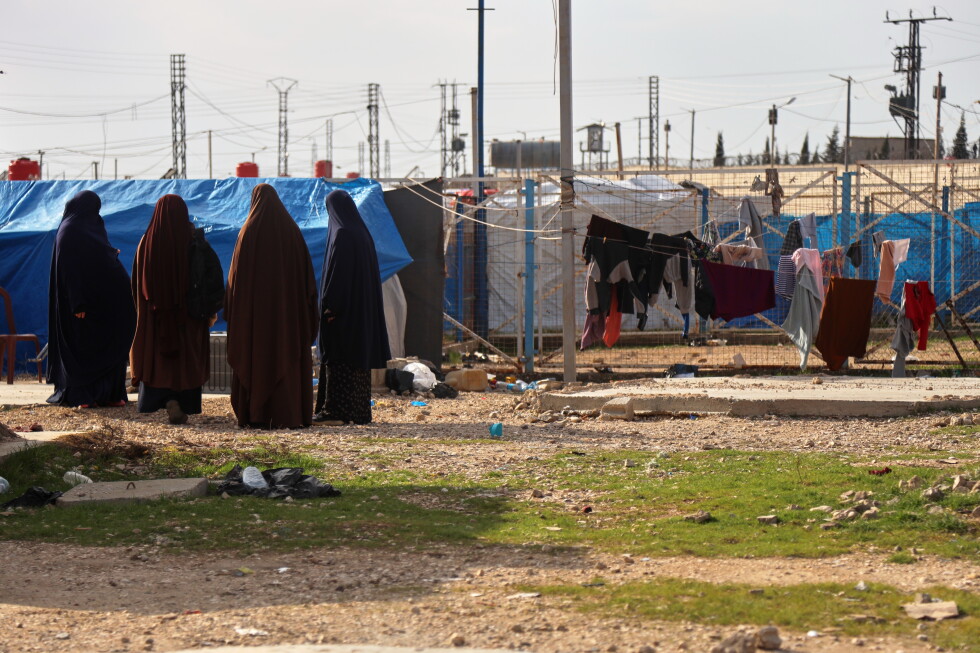
    MELBOURNE, Australia — Australia’s federal government has confirmed that the final Australian woman detained in a Syrian camp for family members of deceased Islamic State fighters will be allowed to repatriate to her home country, subject to unprecedented strict national security conditions, Home Affairs Minister Tony Burke announced in a press briefing Thursday.

  • South Africa reaches World Cup knockout round for 1st time with 1-0 win over South Korea

    South Africa reaches World Cup knockout round for 1st time with 1-0 win over South Korea

    GUADALUPE, Mexico – For decades, South Africa’s men’s national football team carried the weight of unfulfilled World Cup dreams. Three previous tournament appearances – including a memorable run as hosts in 2010 – ended in elimination before the knockout stage. That long drought finally came to an end on Wednesday night, when a clinical first-half finish earned Bafana Bafana a historic 1-0 victory over South Korea and a spot in the next round of the competition.

    The decisive goal came in the 63rd minute, when winger Tshepang Moremi delivered a pinpoint cross into the penalty box that found forward Thapelo Maseko, who slotted home the finish that would go down in South African football history.

    With the result, South Africa secured second place in Group A, finishing behind tournament hosts Mexico, who completed a perfect group stage with three wins from three matches. The historic milestone sets up a blockbuster knockout round clash for South Africa on Sunday, when the side will face Canada – Group B’s second-place finishers – in Inglewood, California.

    The road to this historic win was far from smooth for South Africa. The team opened its campaign with a 2-0 defeat to Mexico, before grabbing a late equalizer to secure a 1-1 draw with Czech Republic. Heading into the final group match, Bafana Bafana sat third in the group table, behind both Mexico and pre-match favorites South Korea, making their eventual upset of the Taegeuk Warriors all the more surprising.

    For South Korea, the campaign remains in the balance for now. The side got off to a strong start, overturning a deficit to claim a 2-1 opening win over Czech Republic, before falling to a narrow 1-0 defeat to Mexico in their second group outing. While Wednesday’s loss drops them out of the current knockout qualification spots, their fate is not yet sealed: they could still advance to the knockout round depending on the outcome of other remaining group stage matches this week.

    South Korea is no stranger to World Cup knockout stage success. The East Asian side made history as the first Asian team to reach the tournament’s knockout round in 2002, when it co-hosted the competition and went on to finish fourth overall. The Taegeuk Warriors have also advanced out of the group stage in 2010 and 2022, reaching the round of 16 on both occasions.

    This report was contributed by Maya Koluder-Ramirez, a student at the University of Georgia’s Carmical Sports Media Institute.

  • Rescuers race to find survivors as Venezuela reels from massive quakes: Everything we know so far

    Rescuers race to find survivors as Venezuela reels from massive quakes: Everything we know so far

    On a national holiday celebrating Venezuela’s foundational fight for independence, a rare double seismic event shocked the South American nation, leaving a trail of destruction and sparking a large-scale urgent rescue operation.

    On June 24, 2026, starting at 18:04 local time (22:04 GMT), the greater Caracas region was hit by two major earthquakes separated by less than one minute. The U.S. Geological Survey (USGS) confirmed the first tremor registered a magnitude of 7.2, with its epicenter located near Montalbán, a small region just west of the capital’s city limits. Just 39 seconds after the first quake subsided, a second, stronger magnitude 7.5 temblor struck the same general area at a depth of roughly 10 kilometers. While neither epicenter was directly within Caracas proper, the shaking was felt intensely across the populous capital of more than 2 million people, and was even detected as far as Bogotá, Colombia, located more than 1,000 kilometers away from the impact zone.

    The event coincided with Venezuela’s annual national holiday marking the 1821 Battle of Carabobo, the decisive victory led by independence icon Simón Bolívar against Spanish colonial rule. The timing, when many residents were gathered in public spaces for celebrations, did not prevent immediate panic: as buildings swayed and multiple structures collapsed in neighborhoods across the capital, crowds rushed into open streets to seek safety.

    In the immediate aftermath of the quakes, interim President Delcy Rodríguez issued a national state of emergency, unlocking access to additional emergency funding, personnel and resources for search and recovery operations. In a televised address to the nation, Rodríguez extended immediate condolences to families affected by the disaster, though she did not confirm an official death toll in the hours immediately following the event.

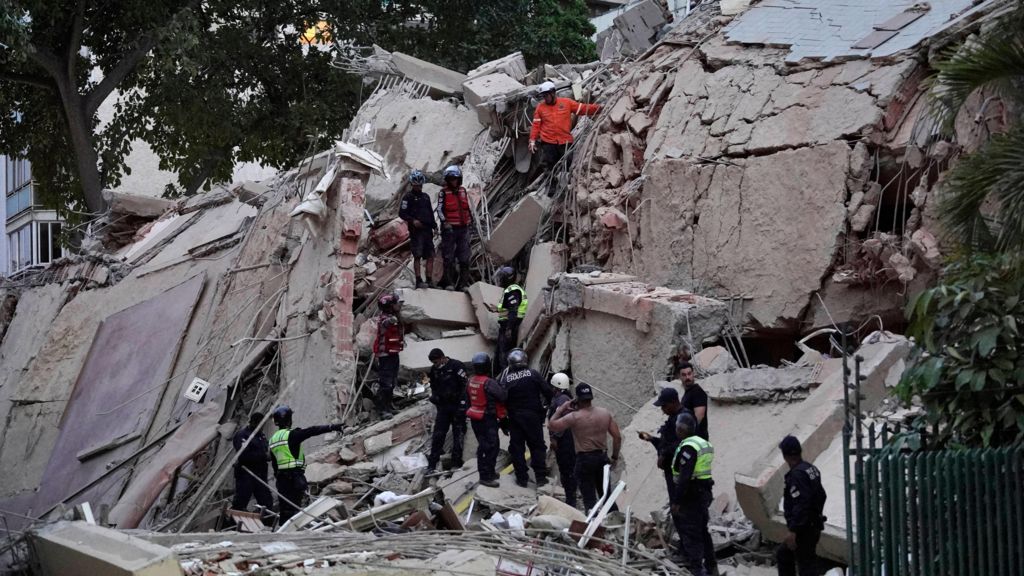
    Local officials have given early on-the-ground accounts of the destruction: Gustavo Duque Saez, mayor of the Caracas metropolitan municipality of Chacao, confirmed that at least two full building collapses occurred within his jurisdiction. As of initial reporting, 18 people have been pulled alive from rubble, with more than 500 first responders working around the clock to reach additional trapped residents. Photographs and video footage from the scene show concrete and debris scattered across city streets, with audio capturing trapped survivors calling out for help from collapsed structures.

    Venezuela’s interior ministry has issued urgent guidance for residents across the capital, urging people to evacuate damaged homes over safety concerns. Officials noted compromised building integrity and potential damage to gas lines, prompting precautionary measures including a temporary halt to fuel shipments into the capital. Multiple reports of widespread internet outages have also been recorded in impacted areas, complicating initial rescue coordination.

    As of the latest update, Venezuelan federal officials have not released any official confirmed counts of deaths or injuries. The USGS, however, has warned that catastrophic outcomes are highly likely due to the region’s particular vulnerability. According to the agency’s post-event assessment, most residential and public buildings in the affected area are constructed from reinforced brick masonry and adobe blocks, construction materials that cannot withstand the force of magnitude 7+ earthquakes. The USGS calculated that there is a 44% probability that the final death toll could reach 10,000, and a 30% probability that fatalities could exceed 100,000.

    Shortly after the earthquakes, the U.S. Tsunami Warning System issued a regional tsunami advisory for Venezuela’s Caribbean coastline, as well as for island territories including the U.S. Virgin Islands and British Virgin Islands. The advisory has since been lifted, with officials confirming the quakes do not pose a continued tsunami risk to the region.

    Emergency crews remain on the scene working through the night to clear debris and locate any people trapped, as authorities continue to work to assess the full scope of the damage across the region.

  • Independent MPs launch new Australian centrist political party

    Independent MPs launch new Australian centrist political party

    Australia’s political landscape is set for a structural shift after two high-profile independent federal MPs made a groundbreaking announcement in Canberra Thursday: the official launch of a new centrist political entity, Community Strong Australia, built to challenge the long-dominant two-party system and push back against rising polarisation across the country.

    The new party is the brainchild of Zali Steggall and Allegra Spender, both Sydney-based independent MPs part of the so-called “teal independent” movement — a bloc of socially liberal candidates united by demands for more ambitious climate action, who have targeted traditionally safe Liberal Party seats in recent election cycles. Breaking from the standard hierarchical structure of most Australian political parties, Community Strong Australia will operate without a single formal leader, and allow all elected party members to vote freely on policy according to their constituents’ interests, rather than being bound by strict party whip rules. Steggall and Spender frame the new party as a deliberate alternative to the current political status quo, promising voters “unity over division and reason over rage” amid growing public anger at partisan gridlock.

    For more than a century, Australian federal politics has been defined by the duopoly of two major blocs: the centre-left Australian Labor Party, currently in national government, and the conservative Liberal-Nationals Coalition. That long-standing order has already begun to crack in recent years: Labor secured a landslide re-election victory in last year’s federal contest, delivering the Coalition its worst electoral defeat in modern history, which sparked months of bitter internal infighting that has yet to fully resolve. More recently, far-right party One Nation, led by Pauline Hanson, has seen a sharp surge in national opinion polling — including one survey that named Hanson as an alternative preferred prime minister, stoking concern over growing traction for the party’s hardline anti-immigration rhetoric.

    When asked whether One Nation’s rising popularity and its polarizing messaging pushed them to formalize their new party, Steggall and Spender emphasized their decision grew directly from feedback they received from their own constituents. Spender, who first won her Sydney seat in the 2022 federal election, acknowledged widespread public frustration with the existing political system. “We absolutely hear those grievances,” she said, adding that “People are frustrated and tired of the status quo… if I wasn’t in politics, I wouldn’t know who to vote for.” The new party, she explained, aims to amplify the voices of communities across the country that feel unrepresented by the major parties, building a political home for voters who want their views genuinely reflected in policy.

    Steggall, a former Winter Olympic athlete and barrister who first entered federal parliament in 2019 after unseating former Liberal Prime Minister Tony Abbott in a seat the party held for over 100 years, said the new movement rejects the partisan infighting and blame-shifting that has come to define modern Australian politics. “We don’t want the in-fighting, we don’t want the blame game. We want solutions that will make a difference to us,” she said. Steggall framed the launch as an open invitation to all voters: “The new party offers unity over division and reason over rage, and it is an invitation to voters to come and build the kind of Australia we want.”

    Community Strong Australia has outlined a clear policy agenda centered on top voter priorities: addressing housing affordability and cost-of-living pressures, alongside advancing meaningful climate action, improving childcare access, strengthening public education, and upgrading national healthcare services. The pair confirmed to local media that Climate 200, the prominent funding body that has backed successful teal independent campaigns against sitting Liberal MPs in recent elections, is not involved in the new party’s operations.

    The launch comes amid changes to Australia’s electoral funding rules that grant registered political parties far larger campaign budgets than individual independent candidates — a change that many sitting independents say puts unaligned candidates at a structural disadvantage. To date, several other sitting independent MPs have already ruled out joining the new party, while a small number of other teal independents are still weighing their options. Community Strong Australia has already submitted its registration application to the Australian Electoral Commission, with a final decision on registration expected by October 2025.

  • The ICE raids are over, but some Minnesotans say they still live in fear

    The ICE raids are over, but some Minnesotans say they still live in fear

    More than four months after the official drawdown of Operation Metro Surge, a high-profile federal immigration crackdown launched by the Trump administration in Minneapolis and surrounding areas of Minnesota, the scars of the intensive enforcement action remain deeply etched into the state’s immigrant and refugee communities.

    The operation, launched last December, was framed by the White House as a targeted effort to remove undocumented immigrants with criminal convictions, tied to a sprawling federal fraud probe into Minnesota’s childcare sector that the administration claimed disproportionately involved members of the state’s large Somali community. But what was billed as a targeted law enforcement action quickly spiraled into widespread public backlash after federal agents shot and killed two U.S. citizens, Renee Good and Alex Pretti, both 37, during separate anti-operation protests in January. By the end of February, facing growing cross-party condemnation, the administration pulled hundreds of deployed agents out of the region.

    For many asylum seekers and green card holders who built new lives in Minnesota after fleeing conflict and persecution, the sudden surge of masked Immigration and Customs Enforcement (ICE) and Customs and Border Protection (CBP) agents upended every part of daily life. Aliah, a 20-year-old Afghan asylum recipient and college student who requested partial anonymity over safety fears, thought her 2021 resettlement would bring stability focused on education and work. Instead, she and her family now live in constant fear the large-scale raids will resume.

    “We don’t have anywhere to go if we go back to my country,” Aliah told reporters. “We’re still a little scared. Months after the operation ended, its effects still haven’t gone away.”

    That persistent anxiety is echoed across communities. Fatima, a 19-year-old Somali refugee who only returned to in-person high school classes in April after months of virtual learning out of fear of raids on campus, says the uncertainty never fades. “I ask myself every day… if they come back, what are you going to do? I’m scared still if they come back,” she said.

    Michelle Eberhard, director of refugee services at the International Institute of Minnesota, explained that the collective trauma of the large-scale enforcement action has had long-lasting psychological impacts. “When you have an invasion like this, people continue to experience the ramifications of that for a long time,” she said. “People are still living through that trauma. Even as the situation has shifted out of open chaos, we’re now in a very big period of ongoing uncertainty.”

    That uncertainty extends beyond the threat of sudden raids. In January, U.S. Citizenship and Immigration Services announced it would re-vet 5,600 Minnesota refugees who had not yet secured green cards, deeming the prior administration’s vetting process “wholly inadequate” and planning to expand the program nationally. Eberhard says some refugees have already been transferred to out-of-state ICE detention for re-interviews without access to legal counsel, while others have received formal notices that the government intends to revoke their refugee status, and many more have heard nothing at all, left in limbo.

    Local educators also report lasting damage to student populations. Katie, a Minneapolis public school teacher who organized community aid for impacted students during the height of the operation, says many families kept children home from school for months to avoid potential encounters with ICE. While the school wrapped up its formal aid program in April, it continues to distribute remaining emergency funds, and some students have dropped out entirely after family members lost their jobs during the crackdown.

    Even for U.S. citizens like Katie, the impact remains inescapable. “The city is just this minefield of ghosts,” she said. “Even when you forget about it, it just pops up again when you pass the memorials for Pretti and Good. What these children have witnessed will affect our city for generations – it’ll shape what they vote for, what they believe in, what they think of our government.”

    While official data confirms the bulk of deployed agents have left, the enforcement apparatus has not been fully withdrawn. Court filings from the ACLU of Minnesota show that as of March, 482 federal agents remained in the state, compared to just 190 assigned to ICE’s St. Paul office before the operation launched. Border Czar Tom Homan has confirmed that ICE will continue conducting targeted enforcement actions across the state, a practice the agency has maintained for decades.

    Morgan Budiandri, of the Minnesota Immigrant Rights Action Committee (MIRAC), says the operation has just shifted its approach, becoming less visible in urban centers with heavy public scrutiny but continuing unabated in suburban and rural areas. “The deportation machine has kind of turned more surgical, so to speak. There’s less activity in the cities where there’s a lot more prying eyes,” Budiandri explained. “But out in the suburbs, we still have reports of officers coming to businesses demanding to see rosters of all employees.”

    Data from Human Rights First, an international human rights nonprofit, also shows ICE deportation flights out of Minneapolis continue, with roughly 100 flights recorded so far this year, most heading to processing centers in El Paso, Texas.

    Analysis of government data obtained by the Deportation Data Project undermines the administration’s framing of the operation as a crackdown on criminal undocumented immigrants: more than 60% of those arrested during the surge had no prior criminal convictions or pending criminal charges. The Department of Homeland Security (DHS) has defended the operation, releasing a list of 23 arrested immigrants facing charges or convictions for serious offenses including murder, rape, domestic violence, and theft, and calling the operation a necessary success to remove “vicious criminals, including murderers, rapists, gang members, and terrorists” from the country.

    While some Minnesota Republicans supported the crackdown, even state Representative Joe McDonald, a backer of the policy, acknowledged earlier this year that “mistakes were made. We’re not perfect.” The backlash over the deaths of Good and Pretti ultimately led the Trump administration to remove Greg Bovino, the official leading the operation in Minneapolis, in January.

    Beyond the psychological and personal harm, the operation has inflicted severe lasting damage to Minnesota’s local economy. The Lake Street corridor in south Minneapolis’ predominantly Hispanic Phillips neighborhood, home to hundreds of immigrant-owned small businesses, was hit particularly hard: during the height of the surge, at least half of all corridor businesses closed, according to the Lake Street Council, leading to an estimated $30 million in monthly lost revenue.

    “The economic devastation to Lake Street businesses because of Operation Metro Surge was immediate and severe,” said Theresa Swaney, the council’s director of operations. “The terror inflicted on this community was significant, and its effects on Minneapolis and Lake Street in particular will be long-lasting.”

    Widespread fear of detention kept thousands of workers home from their jobs, leading to massive wage losses across the Twin Cities. The U.S. Immigration Policy Center estimated in March that Minneapolis and St. Paul workers lost roughly $240 million in total wages during and after the surge, while local businesses lost a combined $610 million in total revenue. Statewide, eviction filings in 2026 are already up 8% compared to 2025, according to data from Princeton University’s Eviction Lab.

    When asked to comment on the economic harm, DHS responded that “The cost of American lives saved is incalculable,” pointing to the arrests of convicted criminal immigrants. But immigration advocates say the long-term social and economic costs of the surge will shape Minnesota for years to come, as immigrant communities continue to grapple with fear, uncertainty, and the lingering fallout of the largest immigration crackdown in recent state history.

  • This Indian state is trying to ensure no one grows old alone

    This Indian state is trying to ensure no one grows old alone

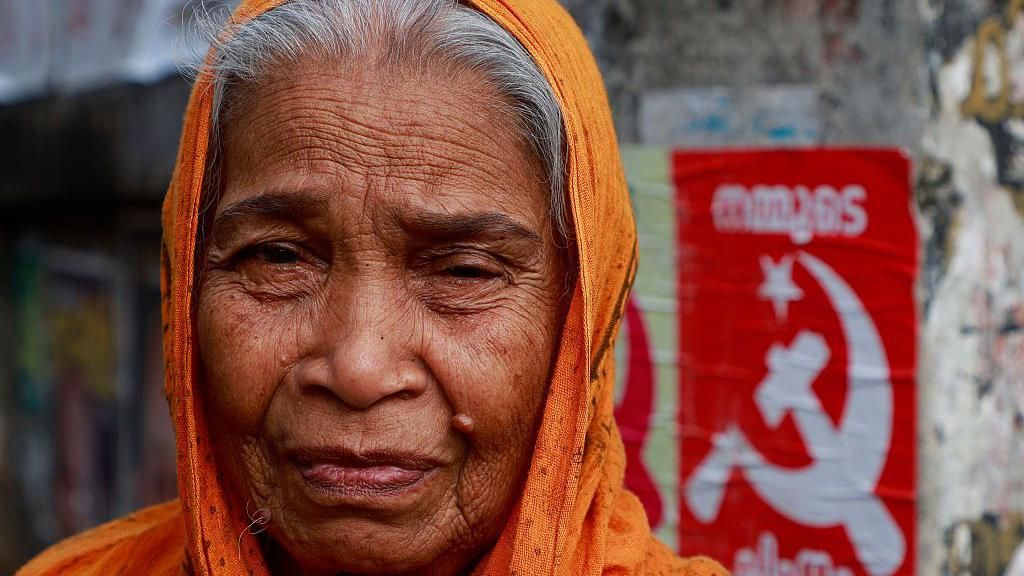
    Across the sun-faded living rooms of southern India’s Kerala, a quiet crisis is unfolding. For 70-year-old TO Dominic, every morning opens the same way: with a quick phone call to one of his two adult sons. One son built his career in neighboring Karnataka, while the other sought work opportunities in the Middle East. Both left their childhood home years ago, leaving Dominic and his 70-something wife MJ Martha to navigate daily life entirely on their own.

    These daily calls bring small comfort, filled with routine checks on health and casual chatter about the weather. But when the couple faces a broken pipe, a medical appointment, or even just need an extra pair of hands to carry groceries, their sons are thousands of kilometers away, unable to step in. Once, their home echoed with the noise of growing children; today, long stretches of silence fill most days. “We rely completely on our neighbors for help,” Dominic explains. “Our children can only visit once every few years, and we have no close relatives living nearby. Every year, daily tasks get just a little bit harder.” Martha nods beside him, adding that persistent loneliness has become an inescapable part of their old age.

    The Dominics’ story is far from unique. For centuries, multigenerational cohabitation was the unbroken norm across India, with adult children caring for aging parents in the family home. But decades of out-migration for work and higher education have steadily eroded this centuries-old tradition, particularly in Kerala — India’s fastest-ageing state, where demographic shifts and labor mobility have left a growing share of the elderly population living alone. To confront this rapidly growing public challenge, the Kerala state government announced last month the launch of India’s first standalone government department dedicated exclusively to senior citizen welfare.

    Dr. Rathan Kelkar, the head of the newly formed department, outlines that the agency’s core strategy centers on the principle of “ageing in place” — a framework designed to help older adults remain in their own homes and local communities, rather than relocating to institutional care facilities. The department’s rolling policy agenda includes expanding affordable community and in-home care services, rolling out “social prescribing” initiatives that connect isolated seniors to regular group activities and social outlets, launching a state-certified caregiver training program to build a professionalized care workforce, and constructing new public infrastructure including elderly-focused parks, senior day-care centers, and accessible fitness facilities. A comprehensive statewide survey of the senior population is also underway to lay the groundwork for a long-term national “Silver Economy” development roadmap.

    Kelkar emphasizes that ageing can no longer be sidelined as a narrow social welfare issue: “It intersects with every sector of public life — healthcare, housing, transportation, local governance, technology, employment, public safety, financial services, and community connection.”

    Kerala already holds the distinction of having the highest share of elderly residents among all of India’s major states. A 2026 analysis from the Reserve Bank of India projects that by 2036, nearly one in four Kerala residents — 22.8% of the total population — will be over the age of 60, compared to a projected national average of just 14.9%. This rapid demographic shift stems from two overlapping trends: social progress and persistent out-migration. Decades of improved public healthcare have pushed life expectancy higher, while falling birth rates have slowed population growth, naturally aging the state’s population pyramid. At the same time, generations of working-age Keralites have left the state to seek higher-wage work in the Middle East, Europe, North America, and other parts of India, often leaving aging parents behind.

    While remittances from these migrant workers have lifted household incomes and overall living standards across Kerala, they have also created this growing social gap: millions of older Indians now spend their final years geographically separated from their children. For migrant children living abroad, the distance brings its own emotional toll. A Keralite IT professional based in Sydney, who asked not to be named, explains: “I send money home every month without fail, but financial support is never enough. Being there in person — for a medical emergency, or just to sit with them when they’re lonely — that’s something money can never replace.” When his parents fell ill with a viral infection last year, he could only coordinate care via phone and video calls from 10,000 kilometers away, saying, “I felt completely helpless, and that feeling never really goes away.”

    Kelkar notes that Kerala is not starting from zero in its response to the ageing crisis: the state already runs successful existing programs including universal old-age pensions and the widely studied Vayomithram community palliative care initiative. What was missing, he argues, was a single centralized authority to coordinate across fragmented government sectors, close service gaps, and align long-term planning. “Before this, there was no single institutional body responsible for bringing all these different departments together, identifying unmet needs, building cross-sector convergence, and planning for decades to come,” he says.

    Even with this new institutional structure, Kelkar acknowledges that bricks-and-mortar infrastructure and formal services alone cannot solve the crisis of senior isolation. “Loneliness and social disconnection have become one of the defining challenges of ageing in modern Kerala,” he says. To address this gap, the department is building out statewide volunteer networks and community connection programs to reach isolated seniors. “Our vision is simple: no elderly person in Kerala should feel invisible or abandoned, no matter where their children live.”

    Medical experts across India warn that the crisis Kerala is now confronting is a preview of a coming nationwide challenge. Dr. Prasun Chatterjee, who leads the geriatrics unit at Delhi’s Apollo Hospital, says the question he hears most from his older patients is, “Who will take care of me when I can no longer take care of myself?” Many of his patients live alone after losing a spouse or watching their children relocate for work, and even minor emergencies become overwhelming: “They don’t just worry about long-term care. They worry about who will drive them to the hospital if they get sick at 2 a.m.”

    Dr. Chatterjee also points to a critical systemic gap across India’s healthcare system: a severe shortage of specialized geriatric care providers, meaning most older adults rely on general healthcare services that are not designed to meet their unique physical and medical needs. He argues that what India needs is a broad, cross-sector support network that includes accessible day-care centers, community gathering spaces, age-friendly primary healthcare, and structured opportunities for seniors to maintain social connections. “No single government department can solve this problem on its own,” he notes.

    Even with the launch of the new department, questions remain about whether Kerala’s ambition matches its available resources. This year, the state has allocated just 100 million rupees (approximately $1.05 million) to the new department, a figure many policy analysts call largely symbolic. Kelkar pushes back on this criticism, explaining that the initial funding is earmarked for building coordination capacity, supporting innovative pilot projects, and building the population data infrastructure needed to scale long-term policy. “The government views ageing not as a short-term welfare project, but as a long-term development priority for the entire state,” he says.

    Some industry experts add that policy alone is not enough to address the gap. Srinivasan Govindaraj, CEO of Athulya Seniorcare, which operates assisted living facilities across India including in Kerala, argues that India still lacks a properly regulated private senior care market. “There are dozens of small, local providers across the country, but there are no uniform national quality standards or accountability measures,” he says. For Ker ala’s growing ageing population, he says, what is needed is not just government welfare schemes, but a trusted, regulated care ecosystem that can support low- and middle-income families who cannot afford full private pay care.

    For 82-year-old MSR Dev, a retired scientist who lives in Kerala with his wife, the core of the issue is simpler than policy and funding: it is about keeping older people connected to the world around them. He says Kerala can draw lessons from nations like Sweden, where robust community support systems help older adults stay active and independent well into their later years. “Communication and connection are just as essential as food and healthcare,” Dev says. “As social beings, we all need places to go and people to talk to.”

    Back in their small home, Dominic and Martha have not waited for government policy to improve their circumstances. Like many other elderly couples in Kerala, they continue to rely on the generosity of their neighbors, as they have for years. What Martha wants is not a grand policy overhaul, she says: it is just having someone they can call who will actually show up when they need help. Whether Kerala’s new dedicated department can deliver that simple promise, in a state where thousands of families are separated by oceans and time zones, remains to be seen.


  • ‘I saw the windows moving’ – Venezuelans describe panic as tremors hit

    ‘I saw the windows moving’ – Venezuelans describe panic as tremors hit

    On a national holiday in Venezuela that left many residents at home mid-week, the capital city of Caracas was shaken by two powerful back-to-back earthquakes on Wednesday, registering magnitudes of 7.2 and 7.5 just seconds apart. The unusually strong seismic event has left widespread visible damage across the city, including collapsed buildings, downed utility poles, and cracked infrastructure, while search and assessment teams are still working to confirm the full scale of casualties and destruction.

    Local journalist Nicole Kolster, who resides in Palos Grandes — an upscale central district of Caracas that counted among the hardest-hit areas — described the terrifying experience of riding out the quake in her seventh-floor apartment. When the shaking began, she immediately positioned herself between her front entryway and a stone wall to shield herself from falling debris, recalling that the movement was so violent she could visibly see windows bending and shifting.

    “It’s the strongest quake I’ve ever felt in my life,” Kolster told BBC Mundo. “It was so strong that I thought the building was going to fall on top of me.” She remained trapped in her protective position for several minutes before neighbors began alerting residents to evacuate the damaged buildings. Even an hour after the initial tremors, thousands of residents gathered in the city’s streets, too afraid to return to their homes amid fears of potentially dangerous aftershocks.

    Because the quakes struck on Venezuela’s national holiday marking the 1821 Battle of Carabobo — a key victory for independence leader Simón Bolívar against Spanish colonial rule — many workers had the day off and were already at home when the shaking began. Firsthand accounts and visual media from the impacted zones capture a city on edge: some residents are seen embracing for comfort, while others weep openly in the streets. Many residents were unable to retrieve beloved pets from damaged buildings, leaving them distraught and feeling powerless, while others rushed to pull their vehicles out of underground parking garages to avoid being trapped if further tremors hit. Kolster also confirmed that cries for help could be heard coming from the rubble of one nearby collapsed building.

    Other local residents confirmed widespread disruptions to basic services. Palos Grandes resident Maria Elise reported that the shaking cracked interior walls in her apartment, and downed power and communication lines have left her neighborhood with no electricity and no cell phone service. For many long-term Caracas residents, this week’s seismic event has drawn unavoidable comparisons to the devastating 1967 Caracas earthquake, a 6.6-magnitude event that killed more than 200 people and destroyed dozens of buildings in the same Palos Grandes and Altamira districts impacted this week. Even residents who lived through the 1967 quake say this latest event was far more terrifying and powerful.

    Coro Martinez, a 56-year-old resident of eastern Caracas, told Reuters that the shaking was accompanied by a deafening crash that sent household items tumbling across her home, including glass containers inside her refrigerator. “I’ve never experienced anything like it,” she said. Eighty-year-old pensioner Maria Romero echoed that assessment, saying simply, “This earthquake was horrible, even worse than the one in 1967.” As of Wednesday afternoon, emergency response teams have begun deploying to the hardest-hit neighborhoods, but the full scope of human and structural damage remains unconfirmed.

  • ‘It is what it is’ – Canadians react to loss against Switzerland

    ‘It is what it is’ – Canadians react to loss against Switzerland

    Following a tightly contested match against Switzerland that ended in defeat for the Canadian men’s national team, players and fans across the country have embraced a measured, philosophical attitude toward the result, with the widespread refrain “It is what it is” summing up the collective mood. While the final score did not go Canada’s way, the outcome carries far more positive long-term context for the nation’s soccer program: even in defeat, Canada has secured a spot in the knockout round of the FIFA World Cup for the first time in the country’s 100-plus year history of international soccer participation. This milestone alone marks a massive breakthrough for Canadian soccer, which has spent decades working to build a competitive program capable of competing with the top nations in the world. Many supporters and analysts have pointed out that the defeat does not overshadow the historic achievement, noting that the team had already done enough in previous group stage matches to lock in their progression regardless of the final result against Switzerland. Players, while disappointed to not close out the group stage with a win, have also expressed gratitude for the opportunity to compete on the world’s biggest soccer stage and excitement for the knockout round matchup that lies ahead. Fans across Canada have taken to social media to echo the measured reaction, celebrating the team’s historic run while acknowledging the tough result against a consistently strong Swiss side. Many have emphasized that this World Cup run is already a win for Canadian soccer, laying the groundwork for future generations of players to build on the progress made in this tournament.