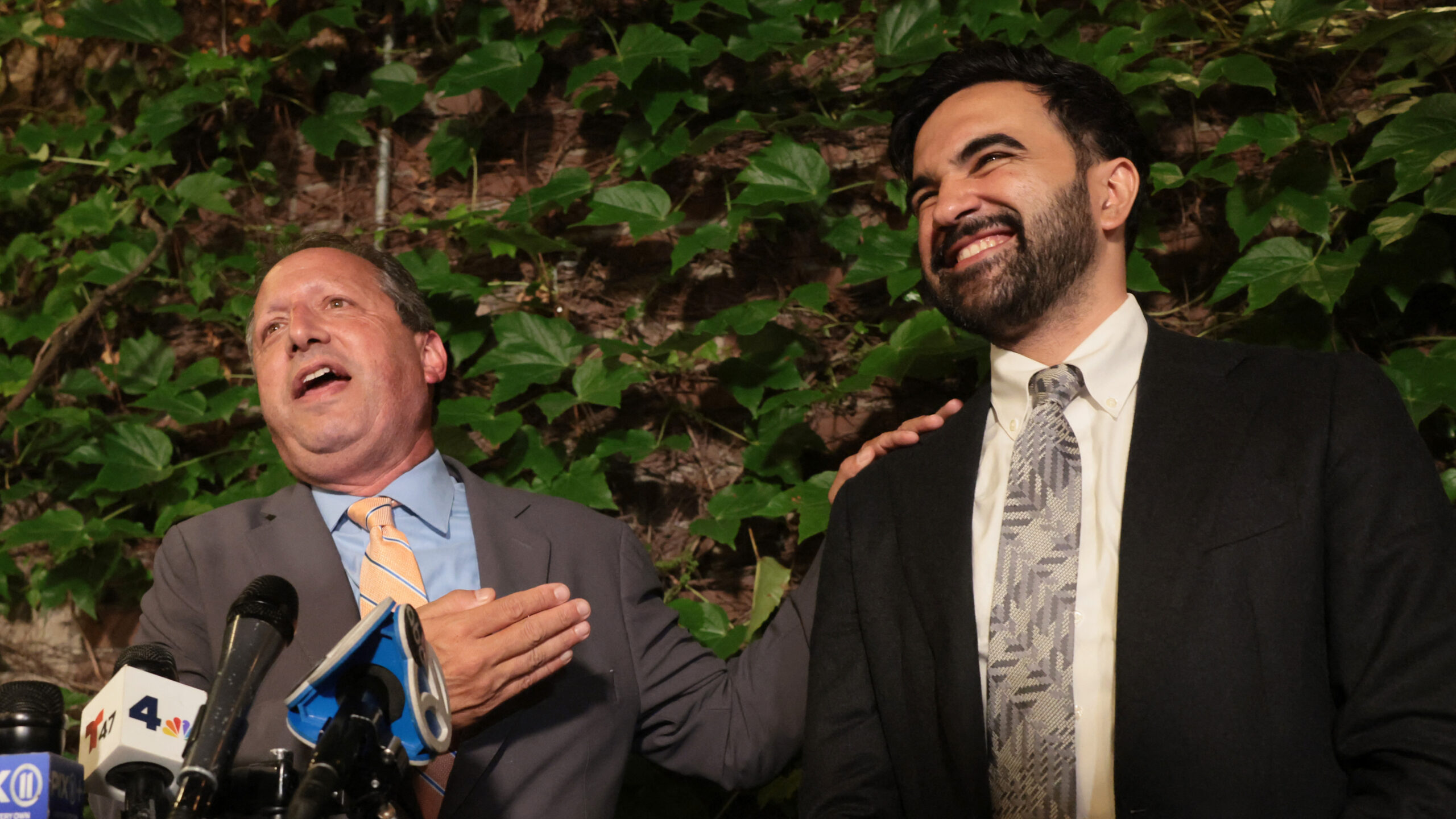
In a landmark vote that sent shockwaves through New York’s Democratic Party, all three congressional candidates endorsed by New York City Mayor Zohran Mamdani secured upset victories in high-stakes Democratic primaries on Tuesday, marking the first major electoral test of the progressive mayor’s expanding political movement and cementing the left’s growing influence in state politics.
The night’s outcomes delivered multiple significant upsets for the party’s old guard. Former city comptroller Brad Lander ousted incumbent Representative Dan Goldman, while state assembly member and ex-union organizer Claire Valdez defeated Brooklyn Borough President Antonio Reynoso to claim the nomination for the seat being vacated by retiring Representative Nydia Velazquez. The most stunning upset of the evening came when first-time candidate and public defense investigator Darializa Avila Chevalier unseated five-term incumbent Representative Adriano Espaillat, chair of the Congressional Hispanic Caucus.
Beyond the congressional races, the progressive wave extended to state legislative contests: Palestinian-American democratic socialist Aber Kawas won the Democratic nomination for a Queens state senate seat, defeating establishment-backed assembly member Steven Raga. Overall, seven of eight candidates endorsed by the New York City chapter of the Democratic Socialists of America (DSA) won their primary contests, a statistic that underscores the movement’s expanding grassroots power.
Progressive supporters immediately framed the clean sweep as far more than a series of isolated primary wins. They argue it confirms that Mamdani’s political project is not a one-off insurgency, but the start of a permanent ideological shift within New York’s Democratic Party, representing a clear rebuke to a centrist establishment that progressives say has long treated progressive voters as a constituency to be managed rather than a political force to be heeded.
Mamdani took an unusually public, hands-on role in the primaries, stumping alongside the three congressional candidates and rallying voters around a shared “affordability agenda” tailored to address New Yorkers’ widespread anger over the city’s crippling cost of living. The mayor’s political framework ties domestic economic hardship directly to U.S. foreign policy priorities, a connection that crystallized around the single clearest dividing line of the 2026 primaries: the Israeli military campaign in Gaza.
The Israel-Gaza conflict emerged as a defining litmus test for candidates, reflecting a growing gap between Democratic Party leaders and the party’s grassroots base. Lander, a Jewish progressive, was an outspoken critic of what candidates and supporters describe as Israel’s genocide in Gaza, while his opponent Goldman — who received backing from the powerful pro-Israel lobbying group AIPAC — positioned himself as one of Congress’s most prominent supporters of Israel. All three of Mamdani’s congressional nominees, alongside Kawas, held strong pro-Palestinian stances. Avila Chevalier previously helped organize pro-Palestinian protests at Columbia University, and Kawas centered her campaign on ending what she calls New York’s complicity in Israel’s actions in Gaza, pairing that foreign policy stance with domestic policy priorities including universal healthcare, tenant protections, immigration justice, and campaign finance reform.
After the wins, chants of “Free Palestine” rang out at the movement’s victory party, a moment that political observers described as historic. “Don’t underestimate the significance of a packed room full of supporters chanting ‘Free Palestine!’ at a victory party for a candidate who won a major party congressional primary while calling for Palestinian liberation and calling Israel out for genocide and apartheid,” sociologist Anthony Zenkus wrote on social media shortly after the results were called. Policy analyst Yousef Munayyer added that Palestine has become far more than a moral issue for voters: “it is increasingly a measuring stick for how out of touch with your voters you are. Hard to think of any issue, among any party, at any time in history, where there was a bigger gap between the party establishment and their voters.”
Avila Chevalier’s defeat of the well-funded, longtime incumbent Espaillat proved particularly notable, with progressives arguing it proves that traditional advantages of incumbency, establishment fundraising, and institutional party backing no longer guarantee protection from primary challenges in New York City.
Alongside anger over U.S. policy toward Gaza, the progressive sweep was fueled by widespread New York voter anxiety over housing and economic affordability, an issue Mamdani has centered since his own mayoral campaign. The mayor’s core political argument — that working and middle-class New Yorkers are being priced out of their homes, squeezed by rising costs for rent, childcare, and healthcare, and failed by an economic system that prioritizes landlords, corporate interests, and the wealthy — resonated across all of the winning candidates’ campaigns. The group framed their candidacy as part of a new generation of Democrats that treats economic justice issues as the core, not an afterthought, of anti-establishment politics.
The victories also come amid heightened anxiety among Democratic voters over the agenda of second-term President Donald Trump, who has ramped up restrictive immigration policies, attacked public services, and expanded executive power. Progressives say the results show that Democratic voters want candidates who will confront Trumpism with an ambitious agenda that addresses both domestic material hardship and voter anger over U.S. foreign policy in Gaza.
Online and political reaction to the primary results was sharply polarized. Progressive activists, Palestinian rights organizers, and DSA members celebrated the sweep as a long-awaited breakthrough for a movement that spent years building local power through grassroots tenant organizing, mutual aid networks, and anti-war mobilization. Many compared the outcome to Alexandria Ocasio-Cortez’s historic 2018 primary upset that first catapulted a New York democratic socialist to Congress. Political commentator Zachary Donnini summed up the mood of progressives, writing, “The Democratic Tea Party is here. Tonight is shaping up to be one of the more consequential nights in recent Democratic politics, with Mamdani- and DSA-endorsed candidates reforming the party.”
But the wins also triggered alarm among centrist Democrats and conservative commentators, who warn the party risks shifting too far left, alienating voters in competitive swing districts ahead of November’s midterm elections. President Trump seized on the results to argue that Democrats are abandoning the political center, and top Democratic Party leaders have privately raised concerns that the rise of the progressive left will complicate general election campaigns in closely divided districts. The growing divide has already put Mamdani on a collision course with establishment Democratic figures, including House Minority Leader Hakeem Jeffries, who backed incumbent Dan Goldman in his primary against Lander.
Going into November’s midterm elections, debates over the future of the Democratic Party are only expected to intensify, as the party attempts to balance energizing its progressive base with competing for competitive general election seats. Still, the immediate takeaway from Tuesday’s voting in New York is unambiguous: Mamdani’s progressive coalition has proven it can win beyond the mayor’s office, defeating entrenched incumbents and establishment-backed candidates in high-stakes congressional races. For a Democratic Party grappling with widespread voter anger over affordability, Trump’s agenda, and the war in Gaza, the message from New York is clear: the insurgent progressive left is no longer a marginal force in the party.