博客

  • Watch: Moment earthquake hits Venezuela and leaves buildings collapsed

    Watch: Moment earthquake hits Venezuela and leaves buildings collapsed

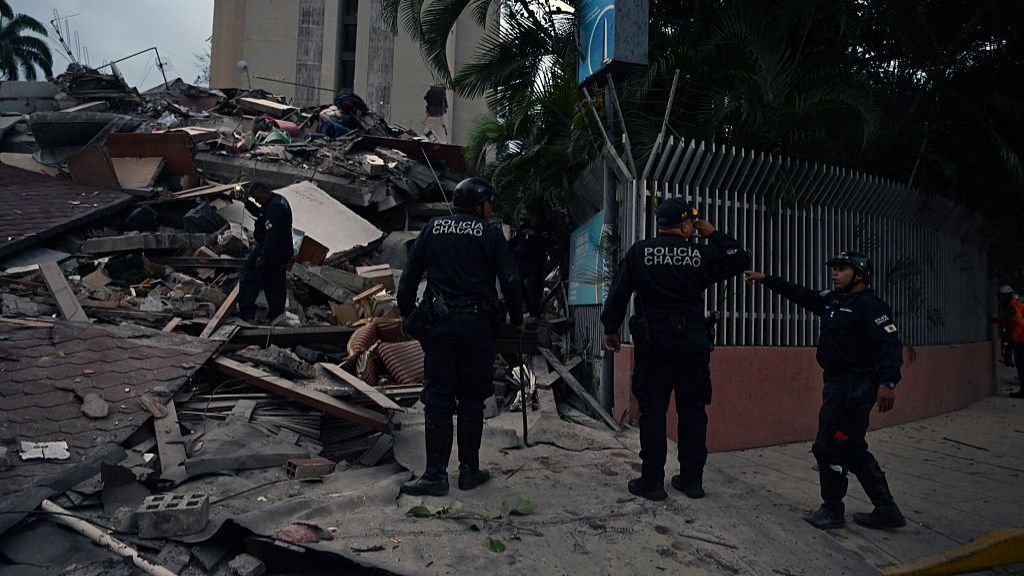
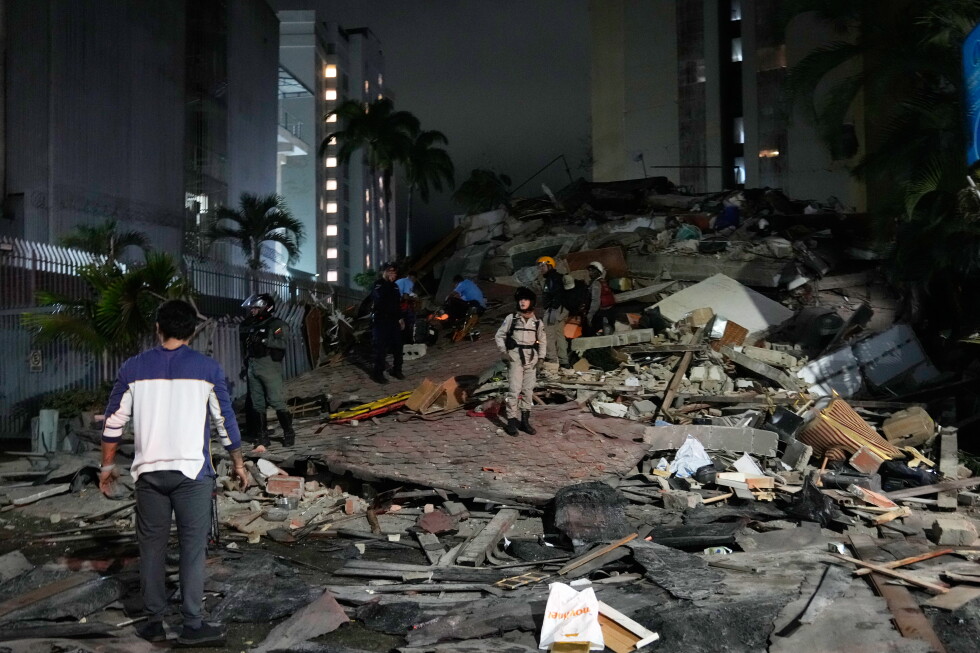
    A destructive earthquake has rocked Venezuela, leaving a trail of structural damage including collapsed buildings and forcing panicked residents to flee their homes in haste. Dramatic footage of the disaster and its immediate aftermath was captured by on-the-ground BBC journalists and local contributors, offering a raw, firsthand look at the chaos that unfolded in the moments after the tremor hit.

    The video documentation shows the scale of the destruction, with damaged infrastructure littering affected areas and residents moving frantically to reach safe ground away from unstable structures. Emergency responses are expected to ramp up quickly as authorities begin assessing the full extent of human casualties and property damage across the impacted regions, with local communities already grappling with the sudden disruption to daily life caused by the seismic event.

  • Trump asks Congress for $87bn, mostly for ‘urgent’ Iran war costs

    Trump asks Congress for $87bn, mostly for ‘urgent’ Iran war costs

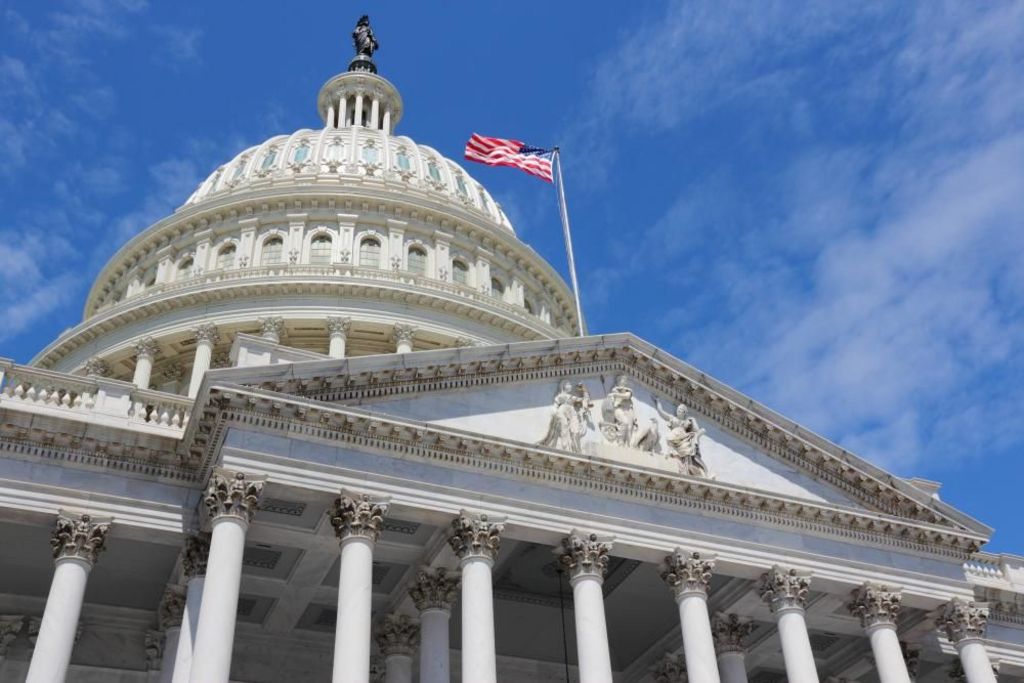
    In a historic rebuke of executive military authority unseen in half a century, the U.S. Congress has passed a bipartisan resolution ordering former President Donald Trump to end ongoing military action against Iran – a move that carries profound implications for the balance of power between Washington’s legislative and executive branches. Just one day after this landmark congressional vote, the White House submitted a formal $87.6 billion emergency funding request to Capitol Hill, the vast majority of which is earmarked for so-called ‘urgent war-related needs’ tied to the U.S. conflict with Iran.

    According to details released by the White House Office of Management and Budget, which delivered the official funding request to House Speaker Mike Johnson on Wednesday, $67 billion of the total package would go directly to the U.S. Department of Defense. That defense allocation breaks down into $21 billion for replenishing munitions stockpiles, $17.3 billion for frontline operational expenses, and $12.1 billion for classified defense programs. The remaining portion of the request is allocated to unrelated policy priorities: $11 billion in relief for American agricultural producers and $1.4 billion to support international response efforts against the ongoing Ebola outbreak in Central Africa.

    Despite the White House’s framing of the request as an emergency, the proposal faces steep, well-documented obstacles to passage. Public opposition to the Iran conflict remains high among American voters, and critical midterm congressional elections are scheduled for this coming November, leaving lawmakers wary of backing a unpopular military engagement. Currently, a fragile ceasefire holds between U.S. forces and Iranian military positions, but months of open conflict have severely depleted the Pentagon’s weapons and equipment stockpiles, creating the urgent logistical need the White House is attempting to address.

    Congressional Republicans, who hold majority control of both chambers, have openly voiced skepticism over the preliminary peace deal Trump reached with Iranian officials last week. On the same day the funding request was submitted, Trump held a tense, closed-door meeting with Senate Republicans at a Capitol Hill luncheon, after he unexpectedly scrapped a planned signing ceremony for a bipartisan housing bill with no public explanation. Multiple sources familiar with the meeting confirmed to CBS News, the BBC’s U.S. partner, that Trump lashed out at lawmakers over the previous day’s war powers resolution vote.

    The resolution itself, though largely symbolic in its immediate impact, marks the first time since the 1973 War Powers Resolution became law that Congress has successfully passed a measure compelling a sitting president to halt an ongoing military operation. The vote underscores growing cross-partisan pushback against unilateral executive military action, even within the president’s own party, and sets a potential precedent for future checks on presidential war-making authority.

  • Magnitude 7.1 earthquake rocks Venezuela as buildings shake in Caracas

    Magnitude 7.1 earthquake rocks Venezuela as buildings shake in Caracas

    A powerful 7.1-magnitude earthquake rocked central Venezuela on Wednesday, shaking buildings in the capital Caracas, causing structural collapses, and sending tremors as far as neighboring Colombia. According to data from the U.S. Geological Survey (USGS), the seismic event struck at 18:04 local time (23:04 BST), centered near the town of Montalbán, with a shallow depth of just 13.2 kilometers. Shallow earthquakes of this magnitude typically amplify ground shaking and increase the risk of widespread damage to infrastructure.

    Venezuela’s Interior Minister Diosdado Cabello confirmed in an appearance on state television that multiple buildings had collapsed in Caracas, matching on-the-ground accounts from witnesses. Local residents rushed to evacuate buildings immediately as the tremor hit, with one witness telling Reuters that visible cracks spread across their apartment walls and windows shattered during the quake. Photographic evidence captured by an Agence France-Presse photographer shows one prominent Caracas building, identified locally as a bank, reduced to rubble.

    Tremors from the quake were felt hundreds of kilometers away in Bogotá, the capital of neighboring Colombia, where local authorities ordered precautionary evacuations of many public and commercial buildings as a safety measure. The U.S. Tsunami Warning System has issued active tsunami threats for coastal regions of Venezuela, Aruba, and Bonaire, while tsunami advisories remain in effect for Puerto Rico and the British Virgin Islands.

    This is an ongoing developing breaking news story, with emergency response teams still conducting initial damage and casualty assessments. Additional updates will be published as more official information becomes available. Readers can access real-time updates via the BBC News mobile app, or by following the BBC Breaking News account on X.

  • The legal fight to get equal pay for Germany’s disabled workers

    The legal fight to get equal pay for Germany’s disabled workers

    Across Germany, a network of government-recognized sheltered workshops designated for disabled workers currently employs nearly 300,000 people. But a landmark legal case set to be decided over the coming year threatens to upend decades of discriminatory policy that has excluded this population from basic labor protections enjoyed by other German workers, including the statutory minimum wage and the right to organize.

    The lawsuit was filed on behalf of Jürgen Linnemann, a 57-year-old man who has worked in sheltered workshops his entire adult life. Under current German regulations, disabled workers in these specialized facilities are not classified as formal employees. This technical distinction exempts employers from paying the national minimum wage, excludes workers from standard labor protections, and bars them from joining trade unions to advocate for better conditions. For many workers, pay amounts to a small stipend far below what non-disabled workers earn for identical production work, which often supplies parts and finished goods to major international brands.

    Critics of the system argue that it creates a self-perpetuating cycle of segregation that traps disabled people from childhood. Hubert Hüppe, a former federal disability rights commissioner and one of the most vocal critics of Germany’s sheltered workshop model, explains that disabled people are often funneled into segregated education pathways from early childhood, with sheltered employment framed as their only viable option upon graduation. This pipeline leaves few opportunities to access the open labor market, with less than 1% of sheltered workshop workers successfully transitioning to mainstream private sector employment annually.

    Structural economic incentives embedded in German law further entrench this segregation. German companies with more than 20 employees are legally required to fill a minimum quota of positions with disabled workers, ranging from 1% to 5% depending on company size. Firms that fail to meet this quota must pay compensatory fines into a national fund that supports disability employment programs. Many companies opt to pay these fines rather than hire disabled workers directly, and the system provides an additional incentive for outsourcing: companies that contract production work to sheltered workshops can reduce the compensatory fines they owe. Even when workers do develop the skills to move into mainstream roles, workshop operators often have an incentive to retain their most productive employees to keep production running, blocking transitions to the open market.

    These structural flaws have drawn international criticism. A 2023 report from the United Nations Committee on the Rights of Persons with Disabilities specifically called out Germany’s overreliance on sheltered workshops and its extremely low transition rate to open employment as a violation of disabled people’s labor rights.

    The experience of Dirk Hähnel, a 50-something man who spent decades in sheltered workshops near Paderborn, illustrates the pipeline of segregation. Hähnel was originally placed in a mainstream primary school, but was transferred against his will to a segregated special school at a young age after officials recommended the move to his parents. When he graduated, he was told sheltered work was his only option. Unwilling to accept that outcome, he applied for an apprenticeship, but faced open discrimination when he disclosed his epilepsy during a job interview: the interviewer told him “we don’t employ idiots here.”

    The reporter who contributed to this investigation, a disabled journalist born blind, shared their own parallel experience: at age six, their primary school recommended placing them in a segregated school for children with learning disabilities because they mixed German and Arabic as a young child. Only their parents’ decision to ignore that recommendation allowed them to pursue a career outside the sheltered workshop system.

    Not all workers in sheltered workshops oppose the system, however. Medina Arnaut, a 35-year-old workshop worker and chair of her facility’s worker council, notes that many disabled people rely on the structured, low-pressure environment that sheltered workshops provide. Arnaut, who works at a Caritas charity-run workshop in Paderborn, says many of her colleagues previously worked in mainstream employment and left because the high-pressure environment exacerbated their health conditions. For this group, the existence of specialized workshop settings is a critical support.

    Even supporters of the model, however, acknowledge that the status quo is deeply flawed. Karla Bredenbals, director of the Caritas Paderborn workshops, agrees that the transition rate to open employment is unacceptably low. She cites ongoing systemic barriers outside the workshop system, including a lack of accessible infrastructure at many private companies and inadequate accessible public transportation that prevents disabled workers from commuting to mainstream jobs. Still, Bredenbals pushes back against the common practice of retaining high-productivity workers to meet production targets, calling it unethical: “Hanging onto people means we are robbing them of the chance to take responsibility for their own working lives.”

    On the question of minimum wage, Bredenbals notes that the issue is complex: formal employment requires workers to meet contractual productivity standards, and many disabled workers with severe impairments are not able to meet those requirements full-time. She argues any policy change must account for the diverse support needs of the workshop population.

    Linnemann’s case is being heard at the Münster Labour Court, with the next hearing scheduled for September 2026, and a ruling not expected until 2027. The case is backed by the Berlin-based human rights group Society for Civil Rights, and a ruling in Linnemann’s favor could extend employee status and minimum wage protections to hundreds of thousands of disabled workers across the country, reshaping Germany’s disability employment system permanently.

  • World Cup what to know: US faces decisions for final group-stage game against winless Turkey

    World Cup what to know: US faces decisions for final group-stage game against winless Turkey

    The final matchday of the FIFA World Cup group stage is set for Thursday, bringing with it a series of high-stakes encounters, tricky selection dilemmas for top coaches, and the potential for historic firsts for multiple nations across the tournament’s four remaining groups.

    For the United States Men’s National Team, the narrative heading into their final Group D clash against Turkey is defined by difficult roster decisions, rather than qualification pressure. Gregg Berhalter’s side has already locked in the top spot in Group D and a place in the knockout round, wrapping up their spot with consecutive wins over their first two opponents – a milestone the U.S. program has not achieved at a World Cup since 1930. The team’s six goals across those opening two matches also sits just one strike short of equaling the program’s all-time record for a single World Cup group stage.

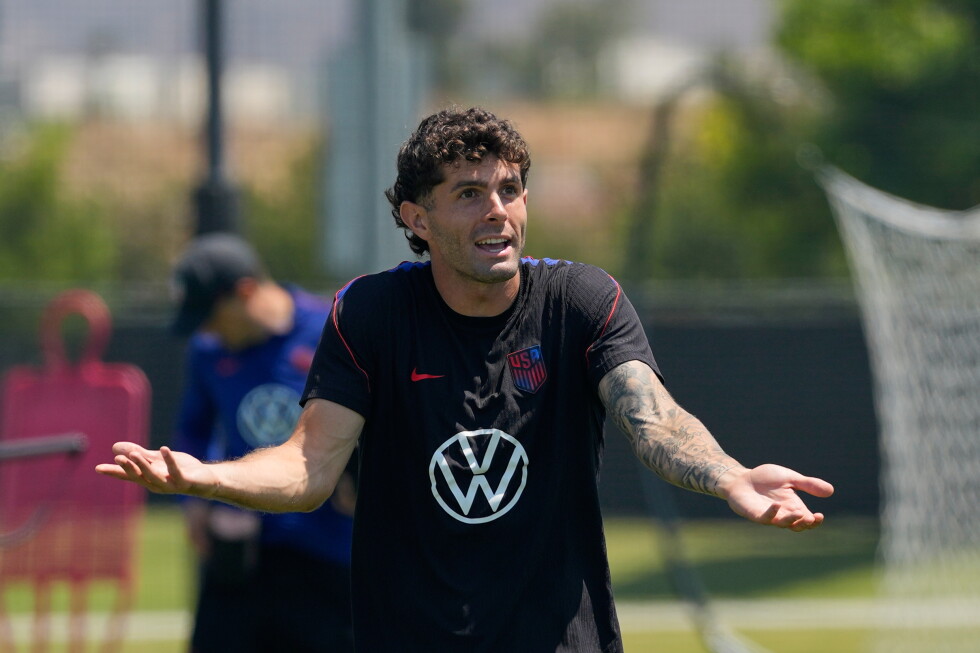
    Star attacker Christian Pulisic has returned to full team training after missing the Americans’ 2-0 victory over Australia, but head coach Mauricio Pochettino faces a tricky call on how much minutes to give his star, with the knockout round just days away and a guaranteed first-place finish already secured. The selection headache does not end with Pulisic: five key first-team players including Tyler Adams, Folarin Balogun, Chris Richards and Antonee Robinson all carry a single yellow card, and a second booking against Turkey would force them to miss the USMNT’s opening knockout round fixture. Their opponents, Turkey, are already eliminated from the tournament in their first World Cup appearance in 24 years, having failed to score a single goal across their opening two group matches.

    Thursday’s slate features six total matches across the United States, with a host of other storylines unfolding across every group. In Group D’s other final fixture, Paraguay and Australia will face off in Santa Clara, California, with the second knockout spot from the group still up for grabs. Australia only needs a draw to lock in second place and advance, while Paraguay can claim the spot with a win, and would still be in strong position for a best third-place finish with a draw. A loss for either side would leave their fate hanging on goal differential, adding extra tension to the encounter.

    The match carries extra personal meaning for Australia head coach Tony Popovic: exactly 20 years ago, Popovic scored his eighth and final international goal as a player in a friendly against Paraguay, the last cap of his international career. “I didn’t score many so I have to remind you of that,” Popovic said. “It was a special way to end my international career. To think that all these years later I’ll be the head coach and we’re up against Paraguay is special. That was a great day and hopefully tomorrow will be a special day for Australia against Paraguay once more.” Both sides will be missing key players: Australia will sit out injured defender Jacob Italiano and forward Mat Leckie, while Paraguay will be without suspended midfielder Miguel Almiron, who received a red card after a confrontation against Turkey. Coach Gustavo Alfaro confirmed that Miguel will start in Almiron’s place.

    In Group E, two contrasting narratives collide when Ecuador and three-time World Cup champion Germany face off in East Rutherford, New Jersey. Germany has already locked in first place in the group, but will be without starting defender Nico Schlotterbeck for the rest of the tournament after he suffered an ankle injury. For Ecuador, the match is a must-win: the side arrived at the tournament on a stunning 19-game unbeaten streak, but opened with a 1-0 90th-minute loss to Ivory Coast and followed that with a scoreless draw against Curacao, leaving them with just one point. Even a win would not guarantee advancement, but a loss would send the side home early.

    Also in Group E, Ivory Coast will face Curacao in Philadelphia with a historic milestone within reach. The African side is making its fourth World Cup appearance, and has never advanced to the knockout round. A win over Curacao would lock in that historic advancement, after the side opened with a 1-0 win over Ecuador and threw away a halftime lead to fall 2-1 to Germany. Ivory Coast’s previous best shot at knockout stage qualification came at the 2014 World Cup in Brazil, where they opened with a win over Japan before dropping their final two group matches. Curacao, the smallest nation at this year’s tournament, still holds an outside shot at advancement: the side needs a win over Ivory Coast and a win from Ecuador against Germany to overhaul the group’s top two, though their path is made far steeper by a 7-1 opening-match defeat to Germany that left them with a -6 goal differential.

    In Group F, the race for first place remains wide open heading into the final matchday, with the Netherlands and Japan both level on four points and a +4 goal differential. The Dutch face Tunisia, while Japan takes on Sweden, and both sides have pledged to focus entirely on their own matches rather than chasing updates on the other side’s result. “You have to focus on making sure you win the match,” said Netherlands head coach Ronald Koeman, whose side carries an ongoing 14-match unbeaten streak across World Cup play, excluding penalty shootouts. “We would love to be first in the group and of course the result will have an impact on that, but that’s not the most important thing. Playing this game is the most important thing.”

    Sweden, which sits on three points after a 5-1 loss to the Netherlands, can still claim top spot in the group if they defeat Japan and the Netherlands drop points against Tunisia. “It’s literally my first rodeo in terms of a World Cup so it’s going to be new to me,” said Sweden head coach Graham Potter. “But yeah, it’s best for us to try to get the positive results and focus on that.”

    The day also brings a slate of off-field and other on-field updates, including Lionel Messi celebrating his 39th birthday with Argentina’s squad during the tournament. In other results from earlier matchdays, Switzerland sealed first place in Group B with a 2-1 win over Canada, marking their seventh consecutive qualification to the knockout phase of a major international tournament (World Cup and European Championship). Bosnia-Herzegovina boosted their own qualification chances with a 3-1 win over Qatar, while Qatar’s Assim Madibo received a five-match ban after fracturing the leg of Canada’s Ismaël Koné during a group stage fixture. Brazilian superstar Neymar has arrived with the Brazil squad ahead of their upcoming match against Scotland, while Cape Verde goalkeeper Vozinha, who rose to stardom during the team’s World Cup run, is currently searching for a new club and has not ruled out a move to a Brazilian side.

    All six of Thursday’s matches will be broadcast across Fox, FS1, Telemundo and Peacock, kicking off at 4 p.m. EDT and running through the final 10 p.m. EDT kickoff between the U.S. and Turkey in Inglewood, California.

  • ‘Genocidaires’ delight’: Israeli Ben & Jerry’s flavour sparks social media backlash

    ‘Genocidaires’ delight’: Israeli Ben & Jerry’s flavour sparks social media backlash

    A new Israel-exclusive ice cream flavor from the locally independent Ben & Jerry’s operation has ignited fierce online controversy, reigniting long-simmering tensions between the ice cream brand’s Vermont-based co-founders, its global parent company Unilever, and its Israeli licensee over the ongoing conflict in Gaza and Palestinian rights.

    Unveiled this week via the official X account of the Israeli government, the new flavor, dubbed “Milk and Honey,” has been framed as the country’s “official ice cream flavor,” with promotional materials noting that all proceeds from the product will go toward supporting communities in southern Israel. Every ingredient used in the new batch carries explicit regional ties: milk and cream are sourced from Kibbutz Alumim, a community located meters from the Gaza separation fence that was targeted in the October 7, 2023 attacks; the chocolate Star of David inclusions are produced at a facility in Be’er Sheva in the Negev (Naqab) desert; and the honey comes from beehives maintained at Kibbutz Yad Mordechai, another southern Israeli border community.

    Since the 2022 sale of Ben & Jerry’s Israeli operations to local licensee Avi Zinger, the franchise has operated entirely independently of the global Ben & Jerry’s brand, but the release of Milk and Honey has drawn sharp criticism from social media users worldwide, many of whom have tied the launch to Israel’s ongoing military campaign in Gaza that has been widely condemned by international bodies and human rights groups. Critics have taken to social media to mock and condemn the flavor, with some editing product packaging to rename it “Genocidaires’ Delight,” while others left cutting comments such as “Mmm…tastes like genocide.” The release coincided with the publication of a new United Nations commission of inquiry report released the same week that concluded Israel has deliberately targeted Palestinian children and committed acts of genocide and war crimes in Gaza, as well as additional war crimes in the occupied West Bank. This finding aligns with multiple previous conclusions from leading genocide scholars, legal experts, and major global human rights organizations that have reached the same determination that Israel’s military campaign in Gaza amounts to genocide.

    Many social media commentators also highlighted the deep internal rift that has split the Ben & Jerry’s brand for years, noting that the global company’s co-founders and original board have repeatedly publicly endorsed Palestinian rights and have already labeled Israel’s war in Gaza a genocide. One commenter argued the new flavor was fittingly “the most Israeli ice cream in the sense that it was stolen from the original owners and Israelis are pretending it belongs to them.”

    The controversy is the latest chapter in a years-long dispute over the brand’s longstanding commitment to social justice activism, which its co-founders say has been systematically sidelined by parent company Unilever. The rift first opened in 2021, when co-founders Ben Cohen and Jerry Greenfield announced they would end sales of Ben & Jerry’s products in illegal Israeli settlements in the occupied West Bank, and declined to renew their license agreement with the Israeli franchise. Unilever, which acquired the brand in 2000 under a merger agreement that guaranteed the co-founders autonomy to pursue social justice values, responded by selling the entire Israeli operation to Zinger, prompting the co-founders to file suit against the company for breach of contract. The suit was eventually settled for an undisclosed sum.

    Tensions escalated dramatically after the outbreak of the 2023 Gaza war. Ben & Jerry’s global leadership filed a second suit against Unilever, accusing the parent company of silencing its repeated attempts to speak out in support of Palestinian rights. The brand alleges it was blocked from issuing four separate public statements: one calling for an immediate ceasefire in Gaza, one advocating for an end to U.S. military aid to Israel, one expressing support for pro-Palestinian student protesters on university campuses, and one calling for safe passage for Palestinian refugees fleeing Gaza to the United Kingdom. In 2025, co-founder Jerry Greenfield resigned from his position on the board, citing the complete erosion of the values-based autonomy he and Cohen had negotiated with Unilever, saying the company’s original mission had been fully silenced.

    Cohen has continued his campaign to “free” the brand from Unilever and its affiliate Magnum Ice Cream, and has become a high-profile activist calling for an end to the Gaza war. He was arrested in May 2025 during a protest against U.S. support for Israel at a U.S. Senate health committee hearing. Last year, he announced plans to release a watermelon-flavored ice cream — a well-known symbol of Palestinian solidarity — that would raise awareness of Palestinian suffering under occupation and call for permanent peace. Unilever blocked the planned release, prompting Cohen to announce he would produce the flavor independently.

    Middle East Eye reached out to Ben & Jerry’s Israel, Ben & Jerry’s USA, Cohen, Greenfield, and Zinger for comment on the new flavor and the ongoing controversy, and had not received responses at the time of publication.

  • Powerful 6.9-magnitude earthquake strikes off northern Japan. No tsunami warning

    Powerful 6.9-magnitude earthquake strikes off northern Japan. No tsunami warning

    A 6.9-magnitude seismic event shook the offshore area of Japan’s northern Iwate Prefecture on Thursday morning, prompting routine safety checks and emergency preparedness protocols across the country’s northeastern region, with no immediate reports of casualties or widespread destruction confirmed. The Japan Meteorological Agency (JMA) quickly issued an initial assessment, placing the quake’s depth at approximately 50 kilometers, or 31 miles, below the ocean floor. The United States Geological Survey matched JMA’s magnitude reading, aligning on the key details of the seismic activity.

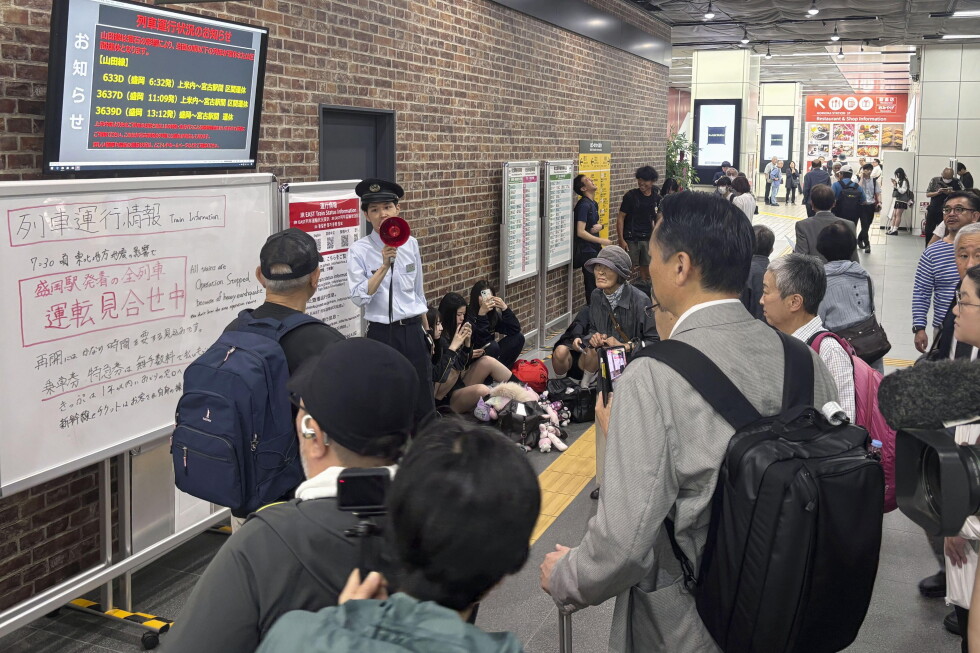
    This tremor hit during the bustling morning commute, a time when millions of Japanese residents were traveling to work and school, and light shaking was even felt as far south as the capital city of Tokyo. Critically, the JMA confirmed immediately after the quake that there was no threat of a tsunami following the seismic shift.

    The epicenter sits in a seismically active zone that has seen multiple significant tremors in recent months. In December alone, a separate quake in the same broader region triggered a seven-day national advisory warning for potential large-scale seismic activity.

    Top Japanese government officials moved quickly to coordinate response efforts. Chief Cabinet Secretary Minoru Kihara, the country’s top government spokesperson, confirmed that as of initial assessments, no injuries or structural damage had been documented. Prime Minister Sanae Takaichi told reporters in Tokyo that the government’s emergency response task force had activated immediately, placing public safety as its top priority. The prime minister added that teams are actively collecting on-the-ground data and standing by to launch relief operations if any damage is reported. She also issued a public warning for residents across affected northeastern prefectures to remain alert for possible aftershocks in the coming hours and days.

    On-the-ground reports from local communities echoed the official assessment of no major harm. Tomoko Nagane, principal of a public elementary school in the Aomori Prefecture town of Hashikami, spoke to public broadcaster NHK about the experience. She said she was en route to the school when the national earthquake early alert system activated on her phone, and she felt sustained moderate lateral shaking while driving. All students who had already arrived at the campus were unhurt, she confirmed, though a number of young children cried out of fear during the tremor. School officials canceled classes for the remainder of the day, and all students were safely returned to their families by mid-morning.

    NHK correspondents reporting from two of the closest major population centers, Sendai and Morioka, told viewers they felt shaking that lasted roughly two minutes, but had not observed any visible damage to infrastructure during initial checks. Broadcast footage from the region showed commuters continuing their daily routines as normal shortly after the tremor passed.

    In line with standard safety protocols, East Japan Railway Co., which operates intercity and local rail services across the Tohoku region, temporarily halted service on several bullet train and local commuter lines to allow structural and safety inspections of tracks and infrastructure.

    One key reassurance came for facilities with major seismic risk: government spokesperson Kihara confirmed that all nuclear facilities in the affected area, including the Fukushima Daiichi Nuclear Power Plant – the site of the 2011 meltdown following a massive quake and tsunami – and a spent fuel reprocessing facility in Aomori Prefecture, had not recorded any abnormalities from Thursday’s tremor.

    Japan sits along the Pacific Ring of Fire, an active tectonic boundary that makes it one of the most earthquake-prone nations on Earth, with a highly developed early warning and emergency response system designed to reduce harm from regular seismic activity.

  • Back-to-back powerful earthquakes slam Venezuela, collapsing buildings in the capital of Caracas

    Back-to-back powerful earthquakes slam Venezuela, collapsing buildings in the capital of Caracas

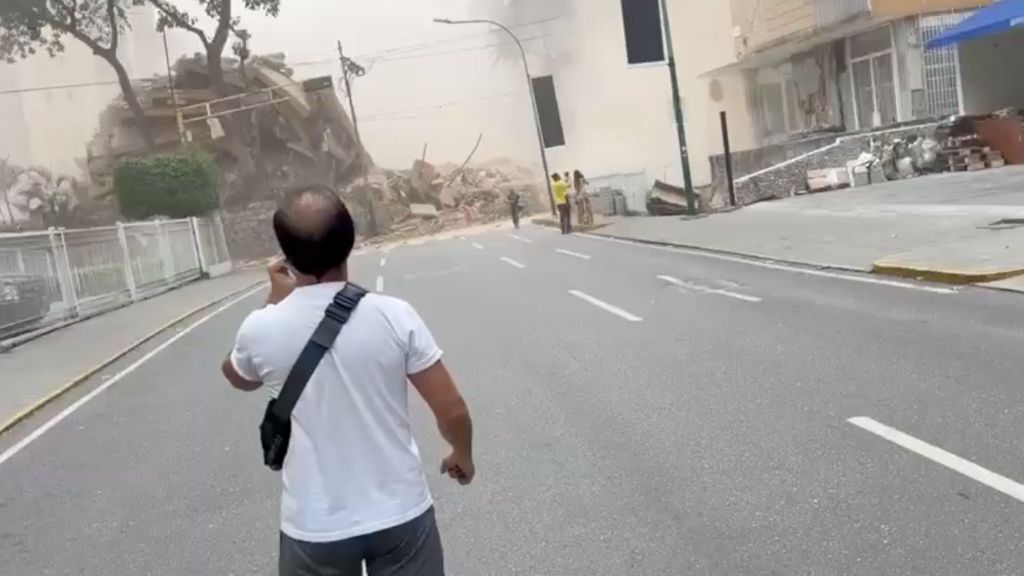
    On a Wednesday evening, Venezuela was hit by two successive powerful seismic events that left a trail of structural damage in its capital city of Caracas, sending panicked residents fleeing into the streets. Data from the United States Geological Survey (USGS) confirms that the first tremor registered a magnitude of 7.1, with its epicenter located 168 kilometers west of Caracas, off the Caribbean coast near the small community of Morón. Shallow in its origin, the quake struck at a depth of just 13 kilometers below the Earth’s surface.

    Remarkably, only 60 seconds after the first shock hit, an even stronger quake followed. The second seismic event measured 7.5 in magnitude, originating at a depth of 10 kilometers just 16 kilometers southwest of Morón. Geologists note that these two quakes rank among the most powerful seismic events to strike the South American nation in more than 100 years, making them an extremely rare geological occurrence for the region.

    In response to the undersea tremors, the U.S. Pacific Tsunami Warning Center issued an initial tsunami warning for the U.S. Virgin Islands, while Dominican Republic authorities also activated a public alert for their territory. A separate warning issued for Puerto Rico was canceled shortly after assessment confirmed no imminent tsunami risk to the island.

    In Caracas, the violent shaking left multi-story buildings swaying violently, forcing thousands of residents and workers to evacuate immediately. Eyewitness accounts from the capital show many residents remained gathered outside hours after the quakes, visibly shaken by the destruction around them. Entire building walls have collapsed, leaving interior rooms and home furniture exposed to passersby on the street. Plumes of dust from damaged structures could be seen rising over two densely populated Caracas neighborhoods—areas that are normally filled with busy patrons at local restaurants and small businesses on a weekday evening.

    Venezuela’s Interior Minister Diosdado Cabello confirmed that the tremors were felt across multiple states, noting that the upscale Altamira neighborhood of Caracas faced particularly alarming scenarios, with multiple homes and commercial structures suffering partial or full collapse. Cabello confirmed that injuries had been reported, and issued a public appeal for motorists across the capital to clear roadways to make way for ambulances and emergency response vehicles heading to impacted areas.

    Speaking on state-run television, Cabello addressed public concerns over the response effort: “We understand that some people may be desperate, but we are acting according to established protocols to activate aid and rescue efforts to help those who need it most. Be very careful with children and the elderly; call each other and check that no one has been harmed.” He also urged the public to remain outside of damaged structures, warning that aftershocks could further weaken compromised buildings and cause additional collapses.

    Roberto Damas, a long-term Caracas resident who was out in the city during the quakes, described the experience as surreal: “The building really shook from side to side. Unreal. The force was incredibly strong. We were walking and it was tossing us around. Everything in the apartment fell. Well, thank God we were able to get out.”

    The reporting on this developing disaster was contributed by Garcia Cano, reporting out of Bogota, Colombia, as rescue and assessment efforts continue across Venezuela.

  • This woman fought for her disappeared father – now she faces life in jail

    This woman fought for her disappeared father – now she faces life in jail

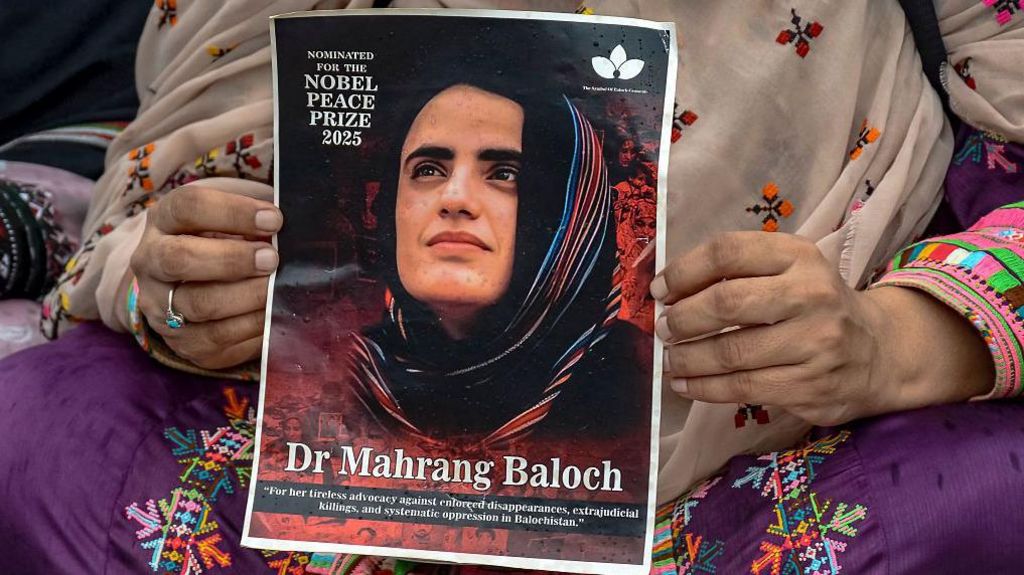
    Thirty-three-year-old Mahrang Baloch, a doctor turned human rights activist and 2025 Nobel Peace Prize nominee, has been sentenced to life in prison by a Pakistani anti-terrorism court, in a ruling that has drawn global attention to the long-running crisis of enforced disappearances in Pakistan’s restive southwestern province of Balochistan.

    Mahrang’s journey into activism did not begin as a political mission, but as a deeply personal fight for justice. When she was just 16 years old in 2009, her father Abdul Ghaffar Langove, a local political activist, was allegedly taken into custody by Pakistani security forces and never seen alive again. Nearly three years later, his tortured, decomposed body was found dumped in an unmarked grave in Lasbela district. Speaking in her final interview with the BBC before her 2025 arrest, Mahrang described the devastating discovery: her father’s body was still clothed in the same tattered outfit he wore the day he was abducted, bearing clear marks of brutal abuse. The trauma of this loss would go on to shape every chapter of her adult life.

    The crisis that Mahrang dedicated her life to addressing is one of the most intractable human rights issues in South Asia. For more than two decades, thousands of ethnic Baloch people have vanished across the province, according to human rights activists and local campaigners. Many of these disappearances are alleged to be carried out by state security forces as part of a counterinsurgency strategy targeting separatist groups that have waged an armed movement for an independent Balochistan since the late 1940s. Critics say the practice is also used to suppress peaceful dissent over the region’s long-running grievances: Balochistan is Pakistan’s largest province by territory, holding vast reserves of natural gas, coal, copper, and gold, but it remains the country’s poorest and most underdeveloped region, with restricted access for outside journalists, crumbling infrastructure, and widespread shortages of basic necessities like clean water and electricity.

    Pakistani government officials have repeatedly denied allegations of systemic enforced disappearances. Senior leaders including Balochistan Chief Minister Sarfraz Bugti argue that many reported missing people have joined separatist insurgent groups or left the province voluntarily, framing widespread claims of disappearances as “systematic propaganda” against the state. The government says roughly 80% of the more than 2,900 reported disappearance cases since 2011 have been resolved, while activists put the total number of missing people closer to 7,000. No independent body has been able to verify either figure. The crisis escalated dramatically after 2006, when prominent Baloch leader Nawab Akbar Bugti was killed in a military operation, sparking a surge in both insurgent attacks and state crackdowns.

    For Mahrang, the personal cost of this crisis deepened in 2017, when her brother was detained by security forces for nearly three months. “I had made my mother believe that what happened to my father wouldn’t happen to my brother. But it did,” she recalled. “I was scared of looking at my phone, because it might be news of my brother’s body being found somewhere.” That experience pushed her to step into formal leadership of the movement for missing persons. As a trained medical doctor, she rose to prominence through the Baloch Yakjehti Committee (BYC), an organization that campaigns against enforced disappearances and extrajudicial killings while advocating for greater local control over Balochistan’s natural resources.

    Over the next decade, Mahrang became the most recognizable face of the Baloch missing persons movement, leading massive peaceful protests, organizing a 1,600-kilometer long march from Balochistan to the capital Islamabad in 2023, and centering the voices of generations of Baloch women who have spent decades waiting for answers about their missing fathers, husbands, brothers, and sons. Despite facing repeated death threats, travel bans, and arrests, she built an international profile: she was named to the BBC’s 100 Women list in 2024, included in TIME magazine’s TIME100 Next list of emerging global leaders, and nominated for the 2025 Nobel Peace Prize for her human rights work.

    State officials have long accused Mahrang and the BYC of amplifying separatist narratives, allegations she consistently rejected. In her final pre-arrest interview, she emphasized her campaign was rooted in a demand for basic rights: “We want the right to live on our own land without persecution. We want our resources, our rights. We want this rule of fear and violence to end.”

    Mahrang was ultimately taken into custody in March 2025 while leading a protest in Quetta over the burial of 13 unclaimed bodies, which activists believe were missing Baloch people. Authorities claimed the dead were militants killed after a train hijacking in the Bolan Pass, a claim that could not be independently verified. On Monday, the anti-terrorism court convicted Mahrang and fellow activist Sibghatullah Shah of terrorism, sedition, and murder in connection with the 2024 death of a paramilitary soldier during a protest in Gwadar. Both activists deny all charges, and their legal team says they will appeal the verdict.

    Nadia Baloch, Mahrang’s sister and a member of her legal team, told the BBC the trial was fundamentally unfair. “It was not transparent,” she said, explaining that the court replaced the family’s chosen legal team with state-appointed lawyers after the family demanded an open public trial, and denied Mahrang access to witness statements and other key evidence. “She was not given a chance to a fair trial.” Nadia added that the family remains defiant in the fight to overturn the verdict, even as she acknowledged the emotional toll of the conviction: “I don’t have the courage to see her in prison, because I feel I have failed her by not getting Mahrang justice.”

    Authorities maintain the conviction is based on criminal conduct, not political activism, and frame the case as a law enforcement matter. But Mahrang’s supporters and family view the life sentence as an attempt to silence widespread dissent in Balochistan. Before her arrest, Mahrang said she had long accepted that imprisonment was a possible outcome of her work, and she did not fear it. According to her family, she remains resolute in prison, and her message to supporters remains unchanged: the struggle for justice will continue.
  • Philippines bans Gorebox gaming app after high school shooting

    Philippines bans Gorebox gaming app after high school shooting

    A horrific mass shooting at a Philippine high school that left three students dead and 20 more wounded has triggered an immediate government response, including a temporary ban on the ultra-violent video game Gorebox linked to one of the underage suspects.

    The attack, which unfolded on Monday at San Jose National High School in Tacloban, a city in southeastern Manila still known for the devastating 2013 Super Typhoon Haiyan that killed thousands, marks a deeply unusual incident in the country: while gun-related crime occurs regularly, mass school shootings carried out by minors are extremely rare. Police have confirmed the two attackers are aged 15 and 14, with the younger suspect documented as an active player of Gorebox, a first-person shooter developed by German studio F2Games.

    According to the game’s own listing on Google Play, Gorebox markets itself as a space where “creativity meets unrestrained destruction”, allowing players to “obliterate anything [they] desire” and engage in brutal combat using a wide arsenal of firearms and explosives. The International Age Rating Coalition has already assigned Gorebox an R18 rating, restricting it exclusively to adult players due to its extremely violent, explicit and unregulated content. Philippine law enforcement say the 14-year-old suspect had been sharing violent content online, and investigators believe he was “heavily influenced” by violent online materials.

    Within days of the shooting, Philippine cybersecurity authorities ordered the temporary block of Gorebox to facilitate a full investigation into any connection between the game and the attackers’ actions. “We cannot ignore possible online influences that may have contributed to this tragic incident,” the national cyber-security agency stated. Aboy Paraiso, undersecretary at the country’s Cybercrime Investigation and Coordinating Centre, explained that the temporary restriction will give authorities time to complete a thorough assessment of whether the game platform played any role in radicalizing the suspects. The BBC has reached out to F2Games for official comment on the allegations, and to date no conclusive scientific research has established a direct causal link between video game play and real-world violent behavior.

    Legal proceedings and follow-up investigations have already moved forward. As of Tuesday evening, murder charges have been formally filed against the 15-year-old suspect. Under Philippine juvenile justice rules, the 14-year-old suspect is too young to face criminal charges. Investigations into how the minors obtained their weapons have also revealed damning gaps in gun regulation: the 9mm pistol the younger suspect used belonged to his aunt, a serving policewoman who has since been suspended from duty, while the .38 caliber weapon carried by the 15-year-old was registered to his grandfather’s private security firm. A preliminary investigation into the attackers’ motives found the pair claimed they had endured prolonged bullying at the school, and all evidence collected so far indicates the attack was carefully planned. The suspects locked themselves in a school bathroom before carrying out the shooting, according to Philippine National Police spokesman Allan Rae Co.

    A close friend of the 15-year-old suspect, who spoke to the BBC on condition of anonymity, described the teen as unusually tense and unwilling to let insults from bullies go unchallenged. He often got into physical fights with peers who targeted him, and rejected advice to walk away from confrontations. The friend noted that the teen adopted military-style hairstyles and clothing, and appeared to have extensive knowledge of firearms, a likely influence from his grandfather’s work in the security industry. “I couldn’t think that someone could do such a heinous thing,” the friend told reporters.

    The shooting has already sparked urgent calls for policy reform across the Philippines. Party-list congressman Chel Diokno of the Akbayan party is pushing for harsher penalties for any individual or entity that enables minors to access illegal firearms. Philippine senators have announced they will resume a stalled investigation into the impact of violent online content on youth mental health and behavior. Senator Risa Hontiveros argued that unregulated online platforms have become “nests for brainwashing and radicalising our youth”, stressing that authorities cannot wait for another tragedy to act. Joy Belmonte, mayor of the populous Quezon City, called for a national review of school security protocols, noting that regular active shooter drills and simulations are needed to prepare students and staff for potential incidents. Education Secretary Sonny Angara echoed these concerns, saying the government does not want to see the kind of repeated copycat school shooting incidents that have become a public health crisis in the United States take root in the Philippines.

    This incident remains the deadliest school shooting involving minors in recent Philippine history, and it comes more than 15 years after the country’s worst ever mass shooting: the 2009 Maguindanao massacre, where a local mayor and his allies killed 58 people, most of them journalists covering a political dispute.