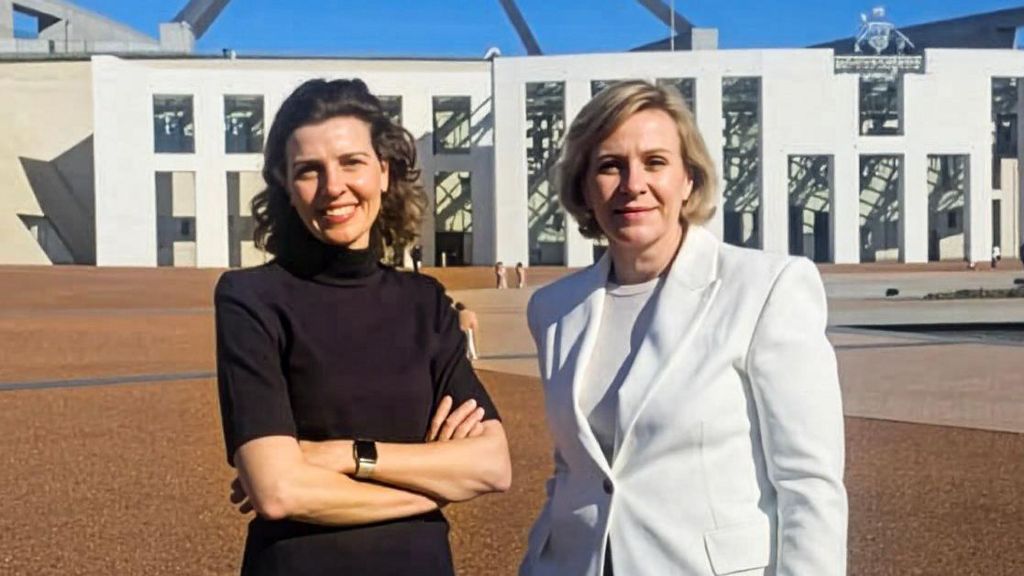
Australia’s political landscape is set for a structural shift after two high-profile independent federal MPs made a groundbreaking announcement in Canberra Thursday: the official launch of a new centrist political entity, Community Strong Australia, built to challenge the long-dominant two-party system and push back against rising polarisation across the country.
The new party is the brainchild of Zali Steggall and Allegra Spender, both Sydney-based independent MPs part of the so-called “teal independent” movement — a bloc of socially liberal candidates united by demands for more ambitious climate action, who have targeted traditionally safe Liberal Party seats in recent election cycles. Breaking from the standard hierarchical structure of most Australian political parties, Community Strong Australia will operate without a single formal leader, and allow all elected party members to vote freely on policy according to their constituents’ interests, rather than being bound by strict party whip rules. Steggall and Spender frame the new party as a deliberate alternative to the current political status quo, promising voters “unity over division and reason over rage” amid growing public anger at partisan gridlock.
For more than a century, Australian federal politics has been defined by the duopoly of two major blocs: the centre-left Australian Labor Party, currently in national government, and the conservative Liberal-Nationals Coalition. That long-standing order has already begun to crack in recent years: Labor secured a landslide re-election victory in last year’s federal contest, delivering the Coalition its worst electoral defeat in modern history, which sparked months of bitter internal infighting that has yet to fully resolve. More recently, far-right party One Nation, led by Pauline Hanson, has seen a sharp surge in national opinion polling — including one survey that named Hanson as an alternative preferred prime minister, stoking concern over growing traction for the party’s hardline anti-immigration rhetoric.
When asked whether One Nation’s rising popularity and its polarizing messaging pushed them to formalize their new party, Steggall and Spender emphasized their decision grew directly from feedback they received from their own constituents. Spender, who first won her Sydney seat in the 2022 federal election, acknowledged widespread public frustration with the existing political system. “We absolutely hear those grievances,” she said, adding that “People are frustrated and tired of the status quo… if I wasn’t in politics, I wouldn’t know who to vote for.” The new party, she explained, aims to amplify the voices of communities across the country that feel unrepresented by the major parties, building a political home for voters who want their views genuinely reflected in policy.
Steggall, a former Winter Olympic athlete and barrister who first entered federal parliament in 2019 after unseating former Liberal Prime Minister Tony Abbott in a seat the party held for over 100 years, said the new movement rejects the partisan infighting and blame-shifting that has come to define modern Australian politics. “We don’t want the in-fighting, we don’t want the blame game. We want solutions that will make a difference to us,” she said. Steggall framed the launch as an open invitation to all voters: “The new party offers unity over division and reason over rage, and it is an invitation to voters to come and build the kind of Australia we want.”
Community Strong Australia has outlined a clear policy agenda centered on top voter priorities: addressing housing affordability and cost-of-living pressures, alongside advancing meaningful climate action, improving childcare access, strengthening public education, and upgrading national healthcare services. The pair confirmed to local media that Climate 200, the prominent funding body that has backed successful teal independent campaigns against sitting Liberal MPs in recent elections, is not involved in the new party’s operations.
The launch comes amid changes to Australia’s electoral funding rules that grant registered political parties far larger campaign budgets than individual independent candidates — a change that many sitting independents say puts unaligned candidates at a structural disadvantage. To date, several other sitting independent MPs have already ruled out joining the new party, while a small number of other teal independents are still weighing their options. Community Strong Australia has already submitted its registration application to the Australian Electoral Commission, with a final decision on registration expected by October 2025.