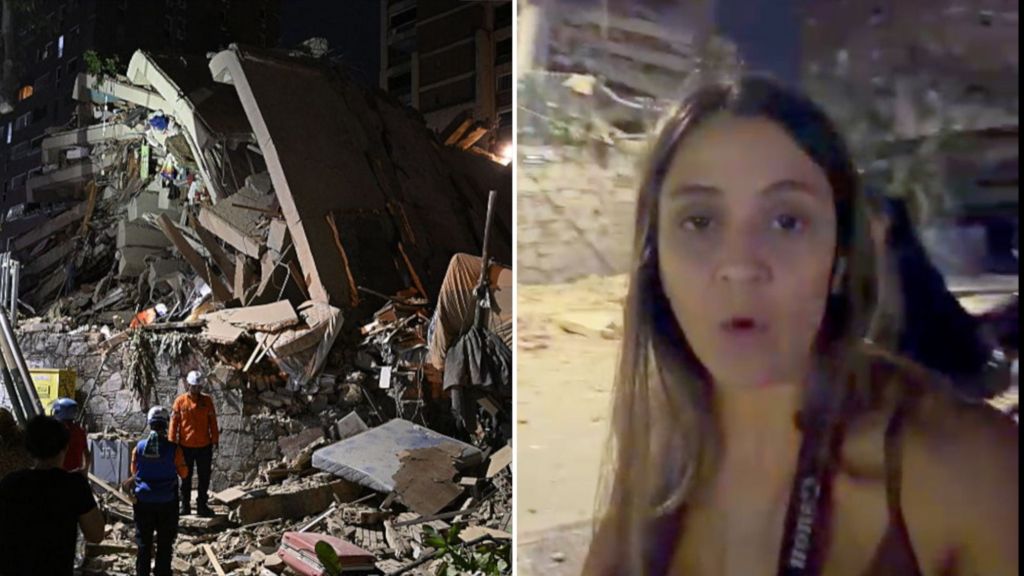
On a national holiday in Venezuela that left many residents at home mid-week, the capital city of Caracas was shaken by two powerful back-to-back earthquakes on Wednesday, registering magnitudes of 7.2 and 7.5 just seconds apart. The unusually strong seismic event has left widespread visible damage across the city, including collapsed buildings, downed utility poles, and cracked infrastructure, while search and assessment teams are still working to confirm the full scale of casualties and destruction.
Local journalist Nicole Kolster, who resides in Palos Grandes — an upscale central district of Caracas that counted among the hardest-hit areas — described the terrifying experience of riding out the quake in her seventh-floor apartment. When the shaking began, she immediately positioned herself between her front entryway and a stone wall to shield herself from falling debris, recalling that the movement was so violent she could visibly see windows bending and shifting.
“It’s the strongest quake I’ve ever felt in my life,” Kolster told BBC Mundo. “It was so strong that I thought the building was going to fall on top of me.” She remained trapped in her protective position for several minutes before neighbors began alerting residents to evacuate the damaged buildings. Even an hour after the initial tremors, thousands of residents gathered in the city’s streets, too afraid to return to their homes amid fears of potentially dangerous aftershocks.
Because the quakes struck on Venezuela’s national holiday marking the 1821 Battle of Carabobo — a key victory for independence leader Simón Bolívar against Spanish colonial rule — many workers had the day off and were already at home when the shaking began. Firsthand accounts and visual media from the impacted zones capture a city on edge: some residents are seen embracing for comfort, while others weep openly in the streets. Many residents were unable to retrieve beloved pets from damaged buildings, leaving them distraught and feeling powerless, while others rushed to pull their vehicles out of underground parking garages to avoid being trapped if further tremors hit. Kolster also confirmed that cries for help could be heard coming from the rubble of one nearby collapsed building.
Other local residents confirmed widespread disruptions to basic services. Palos Grandes resident Maria Elise reported that the shaking cracked interior walls in her apartment, and downed power and communication lines have left her neighborhood with no electricity and no cell phone service. For many long-term Caracas residents, this week’s seismic event has drawn unavoidable comparisons to the devastating 1967 Caracas earthquake, a 6.6-magnitude event that killed more than 200 people and destroyed dozens of buildings in the same Palos Grandes and Altamira districts impacted this week. Even residents who lived through the 1967 quake say this latest event was far more terrifying and powerful.
Coro Martinez, a 56-year-old resident of eastern Caracas, told Reuters that the shaking was accompanied by a deafening crash that sent household items tumbling across her home, including glass containers inside her refrigerator. “I’ve never experienced anything like it,” she said. Eighty-year-old pensioner Maria Romero echoed that assessment, saying simply, “This earthquake was horrible, even worse than the one in 1967.” As of Wednesday afternoon, emergency response teams have begun deploying to the hardest-hit neighborhoods, but the full scope of human and structural damage remains unconfirmed.