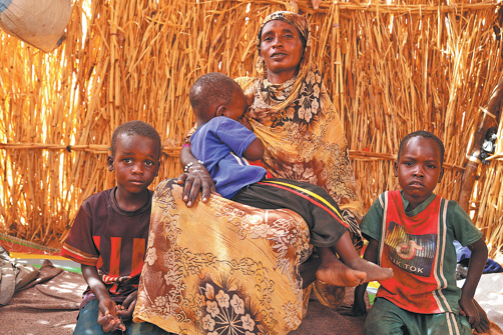
As the brutal power conflict between Sudan’s two main military factions enters its fourth year, active fighting has ramped up sharply across multiple regions of the country, leaving global aid watchers sounding urgent alarms over a rapidly worsening humanitarian crisis for millions of vulnerable civilians.
The ongoing confrontation, which first erupted in April 2023, pits the official Sudanese Armed Forces (SAF) against the paramilitary Rapid Support Forces (RSF), with violence now spreading simultaneously across the southeastern Blue Nile region and the western regions of Darfur and Kordofan.
On Tuesday, the SAF confirmed it had intercepted and downed a hostile drone north of Al-Tuwaysha town in North Darfur State. This confrontation marks just the latest in a growing string of aerial skirmishes, where uncrewed aerial vehicles have emerged as a primary weapon for both warring factions over the past several months.
Further east, in the Blue Nile region, the SAF’s 4th Infantry Division announced it had secured new territorial advances following a large-scale offensive across multiple eastern districts of the state. The military command confirmed in an official statement that operations pushed past the Abu Dugla and Ashambo areas, concluding with the full seizure of the Al-Bar district from forces it labeled “rebel elements.”
According to the statement, government troops captured stockpiles of weapons, military hardware, and a number of enemy combatants during the operation. Military officials added that offensive operations will continue in the region to secure Sudan’s border and protect civilian populations. After months of relative quiet, Blue Nile has reemerged as a key conflict zone as the SAF works to retake control of Kurmuk, a strategically critical border town.
Independent military observers note that the renewed push in Blue Nile forms part of a broader strategic shift by the SAF: expanding military operations beyond the long-standing conflict hotspots of Darfur and Kordofan to reassert state control over vulnerable border regions.
In western Sudan, however, the humanitarian outlook in North Darfur continues to deteriorate at an alarming rate. RSF-linked social media accounts published video footage Tuesday confirming RSF fighters had entered the Ambro area of North Darfur, just days after drone strikes hit the zone and drove displaced residents to seek shelter there from nearby conflict zones.
The North Darfur Coordination of Resistance Committees confirmed that thousands of civilians have fled the Orshi area for Ambro in search of safety, adding that targeted violations against civilian populations in the western parts of the state continue without interruption. The committee stressed that displaced residents are surviving in catastrophic conditions in makeshift camp sites, and has called for expanded independent humanitarian monitoring and urgent international intervention to address the growing crisis.
To the south in North Kordofan State, human rights organization Emergency Lawyers reported that repeated RSF drone strikes on the major city of El Obeid last week destroyed the city’s central power substation. The attack triggered widespread blackouts that cut off access to clean water, disrupted critical health care services, and halted local public transport. The group warned that continued attacks on civilian and critical infrastructure will speed up mass displacement from the city, and raise the risk of a full-scale humanitarian catastrophe in one of western Sudan’s largest urban hubs.
Current United Nations estimates place the total death toll from the 3-year conflict at more than tens of thousands of people, with over 7 million people displaced internally across Sudan and an additional 1.5 million fleeing to neighboring countries to seek safety. International aid organizations have repeatedly warned that access to food, clean water, and medical care is severely limited across most conflict zones, with the risk of mass famine and preventable disease outbreaks growing by the week.